Engagement Archive · Bombing of Chongqing ※
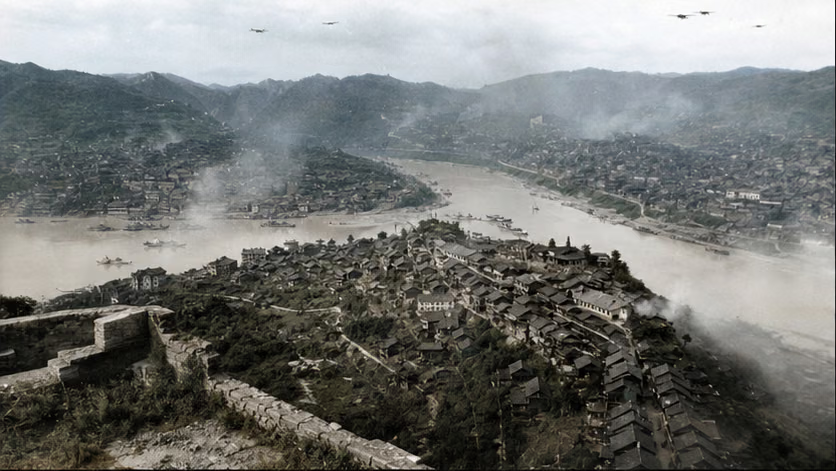
From 1938 to 1943, Japanese forces carried out five years of strategic bombing against Chongqing and cities in the rear area, launching more than 200 air raids on Chongqing and dropping more than 20,000 bombs -- the first Chinese city subjected to long-term indiscriminate bombing, where "indiscriminate bombing" as a form of atrocity is written down explicitly.
Engagement Data
| Item | Content |
|---|---|
| Time | 1938.2 – 1943.8; large-scale bombing concentrated in 1939–41 |
| Place | Chongqing (wartime provisional capital), as well as rear-area cities including Chengdu, Lanzhou, Kunming, and Xi'an |
| Belongs To | Fourteen-Year War of Resistance · Japanese "air offensive operations" ("No. 101" and "No. 102 Operations," etc.) |
| Perpetrating Side | Japanese Navy air units and Army air units (sorties from bases including Wuhan and Yuncheng) |
| Receiving Side | Chongqing civilians and evacuated population, National Government military and political organs, foreign legation and consular districts |
| Result | Chongqing was not bombed into collapse; after 1943, as air superiority changed hands, the bombing ended |
Belligerents
This was not a campaign. It was five years of aerial violence by one side against another side's city. The correspondence was:
| Item | Japanese Side | Chinese Side / Civilians |
|---|---|---|
| Air | In 1939–41, the main force of army and navy aviation was committed, often in formations on the order of one hundred aircraft (the figures for each raid are disputed) | Antiaircraft guns and fighter interception forces were limited; after 1942, Chinese and American air forces gradually recovered air superiority |
| Ground | -- | Air-raid shelters, warning systems, firefighting, rescue, evacuation -- a city endured the bombing through its capacity for social organization |
Terrain and Conditions
(For the larger situation, see *Fourteen-Year War of Resistance · War Overview*. Here only the city of Chongqing is recorded.)
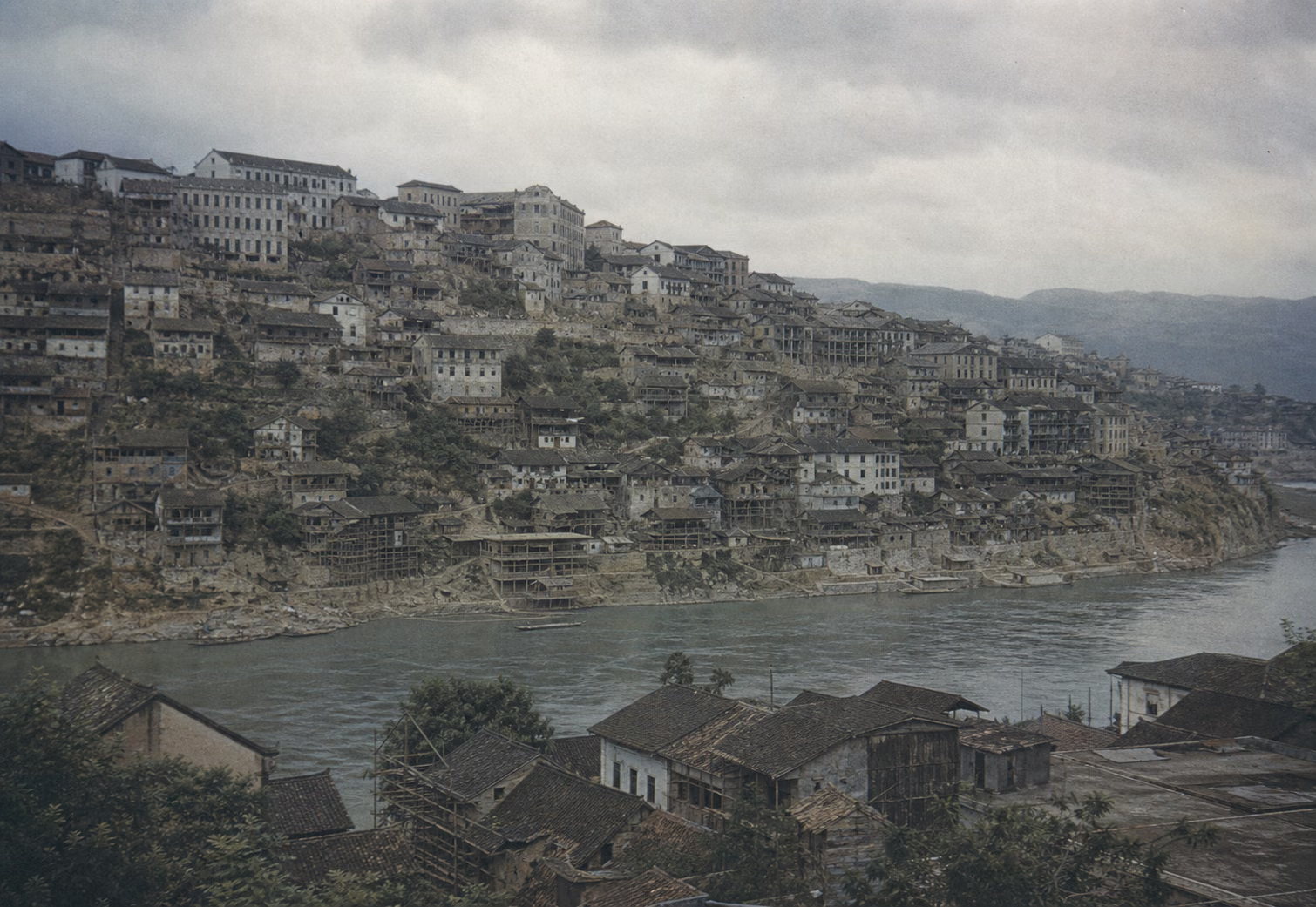
Provisional capital: In 1937.11 the National Government moved its capital to Chongqing. After 1938, the population surged from a prewar level of roughly more than four hundred thousand to the million level (population bases vary by account) -- organs, factories, schools, and refugees were all squeezed into this mountain city caught between two rivers.
Mountain city: Buildings layered up the slopes, narrow streets and alleys, bamboo-and-wood structures in continuous stretches -- inflammable, prone to collapse, and hard to evacuate. The fog season (autumn and winter) was natural air defense, so bombing concentrated in the fogless months of 5–9 each year: Chongqing people's calendar was divided from then on into "fog season" and "bombing season."
Why It Was Fought
In 1938.2, the Battle of Xuzhou had just opened along the Huai River line, and the ground front still lay far away in Central China; in the same month, Chongqing, 2,000 li away, was bombed for the first time. From then on, the war had one more line: not on the ground, but in the sky.
The city being bombed had become the provisional capital only the previous autumn. In 1937.11, the National Government announced that it would move the capital to Chongqing, and organs, factories, schools, and refugees went upriver. A mountain city of more than 400,000 people before the war was squeezed all the way to the million level (population bases vary by account). Caught between two rivers, with buildings layered up the slopes, narrow streets and alleys, and continuous stretches of bamboo-and-wood houses -- the entire political weight of continuing the War of Resistance pressed down on this city, and it was a city extremely vulnerable to bombing.
For Tokyo, the problem with Chongqing was that it could not be reached. The front had pushed westward, but Sichuan lay beyond the Three Gorges and the mountains, and Japanese ground forces had no capacity to advance west into Sichuan -- after the Battle of Wuhan, this was settled completely. Only aircraft could reach it. Imperial General Headquarters' choice was: do not assault the city; bomb the city directly -- in 1938.12, just after the Battle of Wuhan had been settled, Imperial General Headquarters ordered air-superiority offensive operations against China's interior (document number and wording remain to be verified), using aviation to cross the rear area and bomb the provisional capital directly. What it sought to destroy was not any one position, but the National Government's will to resist, forcing it to negotiate peace (wording such as "frustrate the enemy's will to resist," original text remains to be verified). The later large-scale actions were the "No. 101" and "No. 102" Operations and others. This was one of the world's earliest practices of long-term strategic bombing. Military targets and civilians were not distinguished -- "indiscriminate bombing" as a form of atrocity is written down explicitly here.
The rhythm of the bombing followed bases and weather. At first it was intermittent probing; after Wuhan fell in 1938.10, Japanese air bases advanced to Wuhan and Yuncheng, Chongqing came within the operational radius of army and navy air units, and from 1939 the bombing moved into large scale. Weather left the mountain city half a year: in autumn and winter, heavy fog sealed the river, making it difficult for Japanese aircraft to come overhead, so air raids concentrated from 5 to 9 each year -- Chongqing people's calendar was divided from then on into "fog season" and "bombing season."
This order was also bounded by material conditions: taking off from Wuhan and Yuncheng, Chongqing was already at the edge of the radius, bomb load had to yield to range, and escort fighters could not follow the whole way (aircraft ranges and escort arrangements remain to be verified) -- they could bomb it, but not for long and not accurately. On the Chinese side, there was even less capacity to strike back; after 1940, air defense was nearly reduced to alarms and caves (details of Chinese air force losses and replenishment remain to be verified). As for dissent: within Tokyo, disputes over how to allocate army and navy aviation strength among Central China, South China, and the Pacific ran through these years (decision records remain to be verified); whether anyone in the Japanese decision-making level opposed the path of "bomb the city to force peace" is not seen in currently available records (no dissenting record found). Within the Chinese side, too, no systematic dissent over air-defense deployment or even the choice of Chongqing as provisional capital has been seen (various accounts of the capital-relocation choice remain to be verified).
Tokyo was wagering on will: if it bombed long enough, this government would collapse, or would come to talk. The side being bombed had little power to strike back; antiaircraft guns and intercepting fighters were both limited. What truly received the bombing were alarms, air-raid shelters, firefighting, rescue, and evacuation -- a city enduring air raids through its capacity for social organization. The first few air raids in 1938 were still probes, and the mountain city did not yet know what bombing meant; to know that, it would have to wait until May 3, 1939.
Course of the Engagement
| Stage | Time | Key Points |
|---|---|---|
| Probing and opening | From 1938.2 | The first air raid on Chongqing; intermittent raids followed |
| May 3 and May 4 Bombings | 1939.5.3–5.4 | Large-scale bombing of the urban district, fires spreading across connected areas, several thousand dead and wounded (figures vary greatly by basis) -- Chongqing first understood what bombing meant |
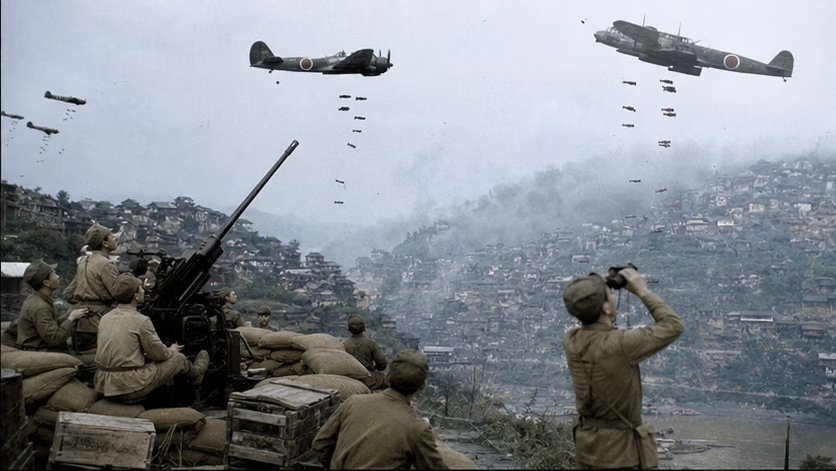
| No. 101 Operation | 1940.5–9 | Main forces of the navy air units committed; more than one hundred days of continuous bombing, with the largest single sortie exceeding one hundred aircraft (figure disputed); the 8.19–8.20 major bombing left urban fires burning for several days ("August 19" and "August 20," details unrecorded) |
| No. 102 Operation and fatigue bombing | 1941 | "Fatigue bombing": small formations in many batches took turns harassing the city, keeping the alarm up for an entire day and consuming the city inside air-raid shelters; 6.5 Jiaochangkou Great Tunnel Disaster (see below) |
| Decline and end | 1942–43 | The Pacific War drew away aviation strength, Chinese and American air forces counterattacked, and the bombing sharply decreased; the final air raid came in 1943.8 (dates vary by account) |
Over the five years, Chongqing suffered more than 200 air raids and more than 20,000 bombs were dropped (figures vary by basis).
June 5 Tunnel Disaster (1941.6.5) ※: During a Japanese night raid, too many civilians seeking shelter poured into the Jiaochangkou public great air-raid tunnel; management was chaotic, the tunnel doors were locked, and for several hours people suffocated and were trampled -- the dead ranged from more than one thousand to several thousand (the figures announced by the National Government, investigation figures, and popular memory diverge sharply; all bases are placed side by side as disputed). The image of bodies carried out by the cart became one of the deepest marks in Chongqing's collective memory. Questions of management responsibility and the defects in shelter construction immediately prompted public demands for accountability, and multiple officials of the Air Defense Command were punished (details unrecorded).
Casualties and Losses
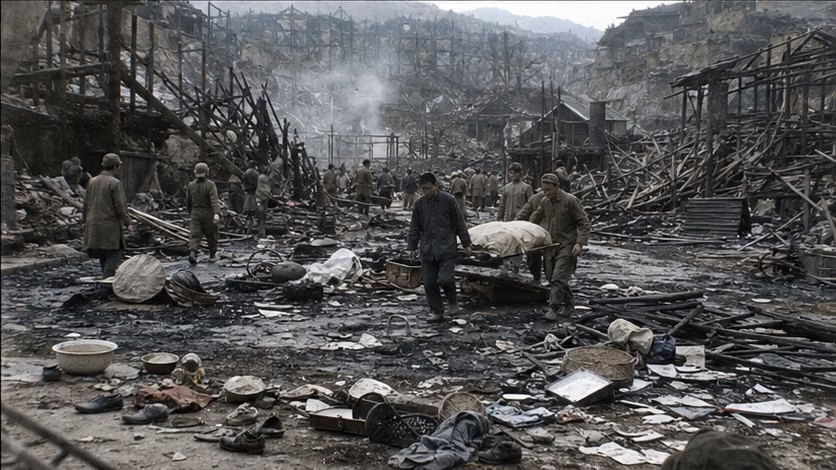
- Chongqing civilian deaths: more than 10,000 to 30,000, with large divergences among bases (official statistics, postwar investigations, and scholarly estimates are all placed side by side as disputed); the wounded were more numerous.
- Property losses: prosperous urban districts were repeatedly bombed and repeatedly rebuilt; civilian homes and shops were burned and destroyed in the tens of thousands of rooms (figure disputed).
- Also extending to rear-area cities: deaths and injuries from air raids in Chengdu, Lanzhou, Kunming, Leshan, Zigong, and other places are counted separately (this article is the main article; city-by-city details remain to be checked and supplemented).
- The intangible: for an entire generation of Chongqing people, childhood memory meant the sound of alarms, crowds at tunnel mouths, and firelight.
Aftermath
- The bombing did not produce the result the Japanese side wanted: the National Government did not waver because of the bombing, and "the more it is bombed, the stronger it grows" became the provisional capital's mobilizing slogan -- slogans are slogans, casualties are casualties; both accounts are recorded.
- After 1943, air superiority changed hands, and the sky over Chongqing quieted down.
- After the war: the Bombing of Chongqing was included in Tokyo Trial investigation materials on related crimes, but it did not receive a separate trial (procedural details unrecorded).
- Since 2006, victims of the Bombing of Chongqing and their bereaved families have brought civil compensation lawsuits in Japan, lost repeatedly, and continued to appeal -- one contemporary note: the legal pursuit of compensation for this bombing has still not been concluded (lawsuit progress remains to be verified).
Accounts of Those Present
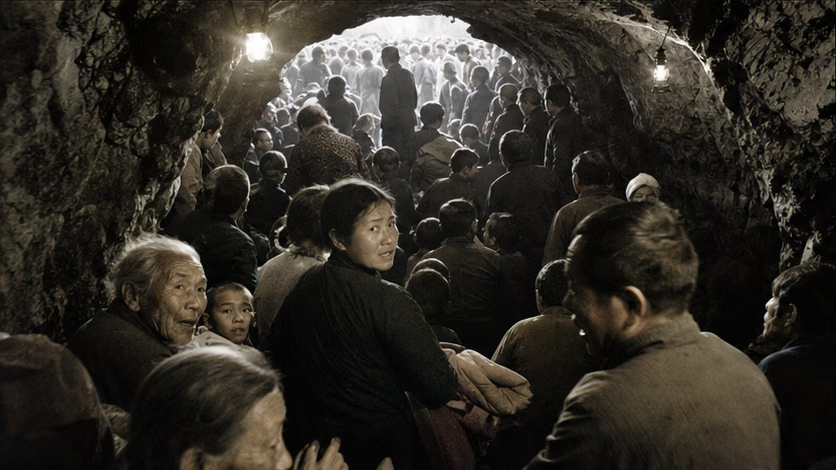
- The everyday act of "running for the alarm": once the alarm ball was raised (later changed to an alarm sound), the whole city helped the old and carried the young into shelters; when the all-clear came and people emerged, they first looked for whether their own house was still there. Oil lamps were lit in air-raid shelters, small stalls were set up, weddings were held -- a city moved normal life underground.
- The night of June 5: people were pressed against people in the tunnel, the doors opened inward, and when the crowd pushed toward the entrance the doors could not open (accounts of which way the doors opened remain to be verified); survivors recalled, "under my feet I was stepping on something soft; it was people."
- Fire: when bamboo-and-wood houses met incendiary bombs, they burned in connected stretches; firefighting relied on human-powered water hoses. During the May 3 and May 4 fires in 1939, half the sky could be seen glowing red from across the river.
- Recorders on the opposite bank: foreign journalists, missionaries, and legation and consular personnel left large numbers of firsthand records and photographs (such as reports by foreign journalists then stationed in Chongqing; specific titles remain to be verified) -- the existence of third-party bases is important for this article.
- Children in bombing season: schools moved to caves in the suburbs for classes, and "cave classrooms" became one scene of wartime Chongqing education.
The Ground
- The old peninsula city between two rivers: the Yuzhong Peninsula was the core target zone of the bombing, the dense zone of impact points on the map.
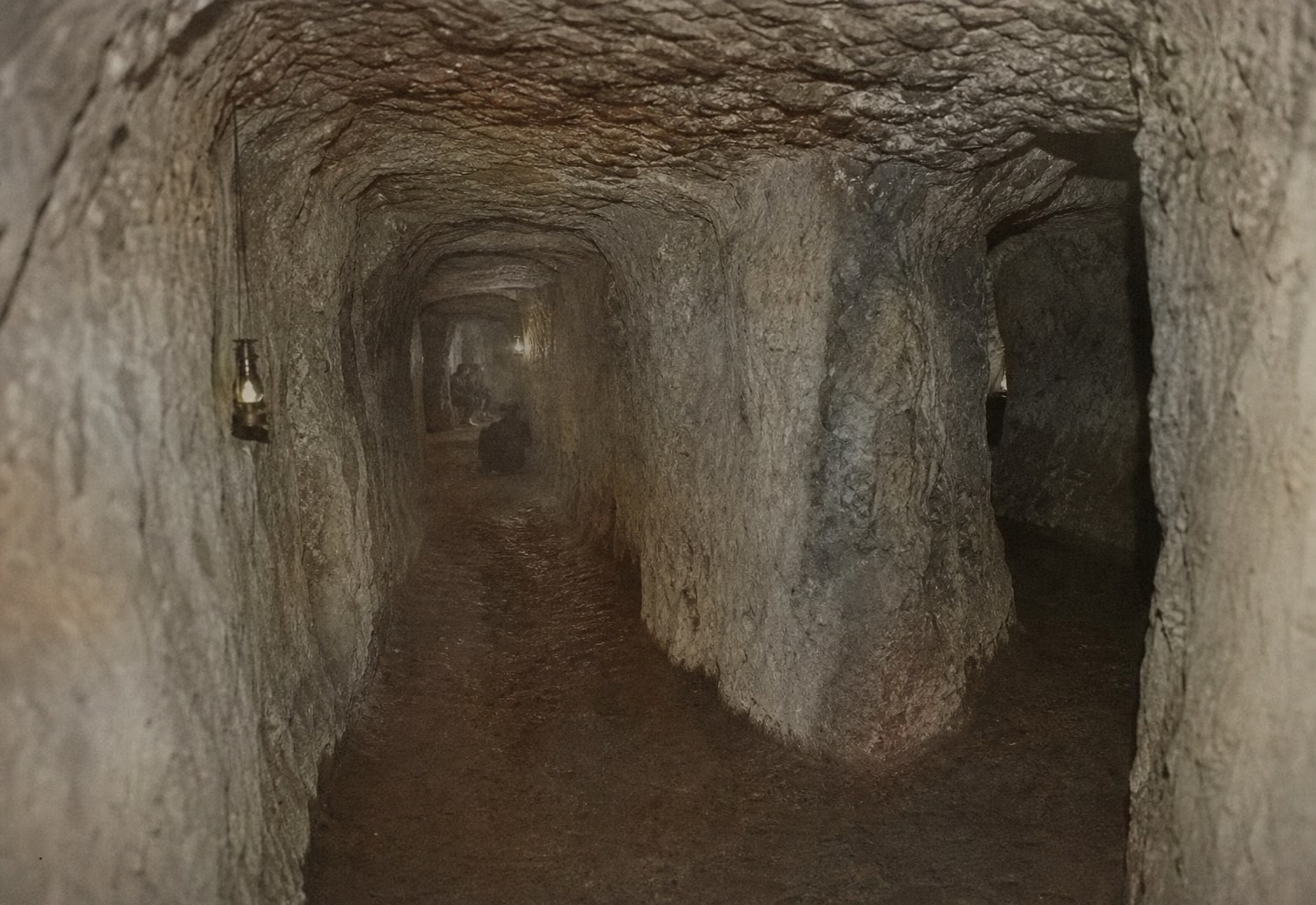
- Air-raid shelter network: public tunnels and private caves carved out of the mountain city's rock, with total length counted in kilometers (figure disputed) -- an underground city.
- Jiaochangkou Great Tunnel: a public tunnel with multiple interconnected entrances, the place where the disaster occurred -- the space itself became a mechanism of death.
- Fog season / bombing season: time was this city's fortification.
- The night city under blackout: the whole city extinguished its lights; only columns of searchlights remained.
How Each Side Records It
- Chinese side: it exists as both a major atrocity by Japanese forces and a memory of the provisional capital's endurance; "the more it is bombed, the stronger it grows" is the mainstream narrative, while the June 5 Disaster has long been a focus of accountability and reflection.
- Japanese side: war histories describe it as "air offensive operations"; accounts of civilian casualties diverge sharply from Chinese ones (Japanese-side wording remains to be checked); among Japanese civil society, researchers and citizen groups have taken part in collecting testimony and supporting litigation.
- International: the Bombing of Chongqing is often placed alongside the contemporary bombing of Guernica and the later bombings of Dresden and Tokyo in discussions of the historical context of "indiscriminate bombing" -- mirror relationships are not equivalence: Chongqing was the side passively subjected to bombing, while the bombing of Tokyo was a late-war Allied strategic bombing of Japan; the causality, scale, and contexts of the two differ.
Disputes and Sensitivities
- ※ Discipline for a main atrocity article: figures must always be marked with parallel bases (official / investigation / scholarship / Japanese side), taking neither the largest number for intensification nor the smallest number for dilution; death figures for the June 5 Disaster diverge sharply, and the disputed bases are placed side by side without choosing among them.
- Responsibility for the June 5 Disaster: both accounts must be recorded -- Japanese aircraft bombing and air-defense management failure. The latter involves wartime government responsibility; the narrative must rely on archives and avoid either side exploiting the issue.
- Mirror relationship: placing it alongside the bombing of Tokyo is sensitive in both Chinese and Japanese public-opinion fields.
- Civil litigation against Japan is still ongoing; related wording is limited to publicly available judgments and facts.
Sources and Open Questions
Known main sources:
- Chongqing Municipal Archives, Bombing of Chongqing archives (including investigations of losses from each air raid)
- Japanese Defense Agency War History Office, *Senshi Sosho* volumes related to air operations (Japanese official history)
- Public materials from the plaintiff group and legal team in civil compensation lawsuits against Japan over the Bombing of Chongqing
- Wartime reports and diaries by foreign journalists and diplomats stationed in Chongqing (third-party bases; specific titles remain to be checked)
Open questions: bases for the number of air raids and bombs dropped; casualty figures for the May 3 and May 4 Bombings; original Japanese orders and sortie numbers for No. 101 / No. 102 Operations; details of the 8.19–8.20 major bombing; each basis for deaths in the June 5 Disaster and original investigation reports, accounts of which way the tunnel doors opened, details of accountability; bases for Chongqing's wartime population; city-by-city casualty details for air raids in the rear area; handling details of related materials in the Tokyo Trial; latest progress in civil litigation; specific titles of firsthand records by foreign journalists; document number and wording of Imperial General Headquarters' December 1938 order for air-superiority offensive operations; Japanese aircraft range and escort arrangements; details of Chinese air force losses and replenishment; decision records on Japanese army and navy aviation-force allocation disputes; various accounts of the capital-relocation choice and records of related dissent.
All images on this site are AI-generated depictions. They are not historical photographs, not primary sources, and do not depict any real individual.