Theater Overview · Yunnan–Burma Theater (1942–45)
To preserve the last international transfusion line, one hundred thousand Chinese troops went abroad to fight for the first time: the opening campaign collapsed, and tens of thousands died in the rain forests of the Savage Mountains; two years later they returned, exchanging bodies for feet of ground at Songshan and Tengchong, and reopened the road. This was the only overseas theater of the War of Resistance, and the first counteroffensive Chinese troops won as an Allied army.
Engagement Data
| Item | Content |
|---|---|
| Part of | Fourteen-Year War of Resistance (for the larger situation, see *Fourteen-Year War of Resistance · War Overview*) |
| Time | 1942.3 first entry into Burma – 1945.1.27 junction at Mong Yu (China-India Road opened to traffic in 1945.2) |
| Location | North-central Burma, both banks of the Nu River in western Yunnan, and northeast India (training bases) |
| Chinese side | First Expeditionary Force, about one hundred thousand men (Du Yuming's Fifth Army, Gan Lichu's Sixth Army, Zhang Zhen's 66th Army); later: Chinese Army in India (Zheng Dongguo's New First Army, New Sixth Army, and others, U.S.-equipped) + Yunnan Expeditionary Force (Wei Lihuang, Eleventh and Twentieth Group Armies, about one hundred sixty thousand men) |
| Allied side | Burma Army (Alexander, Slim), U.S. forces (Stilwell, Merrill's Marauders), Flying Tigers / Fourteenth Air Force |
| Japanese side | 15th Army (Iida Shojiro) -> Burma Area Army; in western Yunnan and northern Burma, the 33rd Army (Honda Masaki), the 56th Division (garrisoning Songshan, Tengchong, Longling), and others |
| Result | First expedition failed and the Yunnan-Burma Road was cut; from 1943 to 1945, two-route counteroffensives reopened the China-India Road |
Belligerents
| Item | Chinese Side | Japanese Side |
|---|---|---|
| First expedition, 1942 | One hundred thousand men, equipped to domestic Chinese standards, without air superiority | Four division-level forces, complete superiority at sea and in the air, mobile envelopment |
| Counteroffensive phase | Chinese Army in India fully U.S.-equipped + U.S.-style training at Ramgarh -- the first modern Chinese force whose firepower exceeded its opponent's; western Yunnan forces partly U.S.-equipped | Garrison divisions relied on established fortress clusters as supplies gradually broke down |
| Airlift | The Hump route sustained the transfusion (for 1942–45 freight volume and crash figures, cross-reference *Air War and the Navy*) | Air superiority changed hands from 1944 onward |
Terrain and Conditions
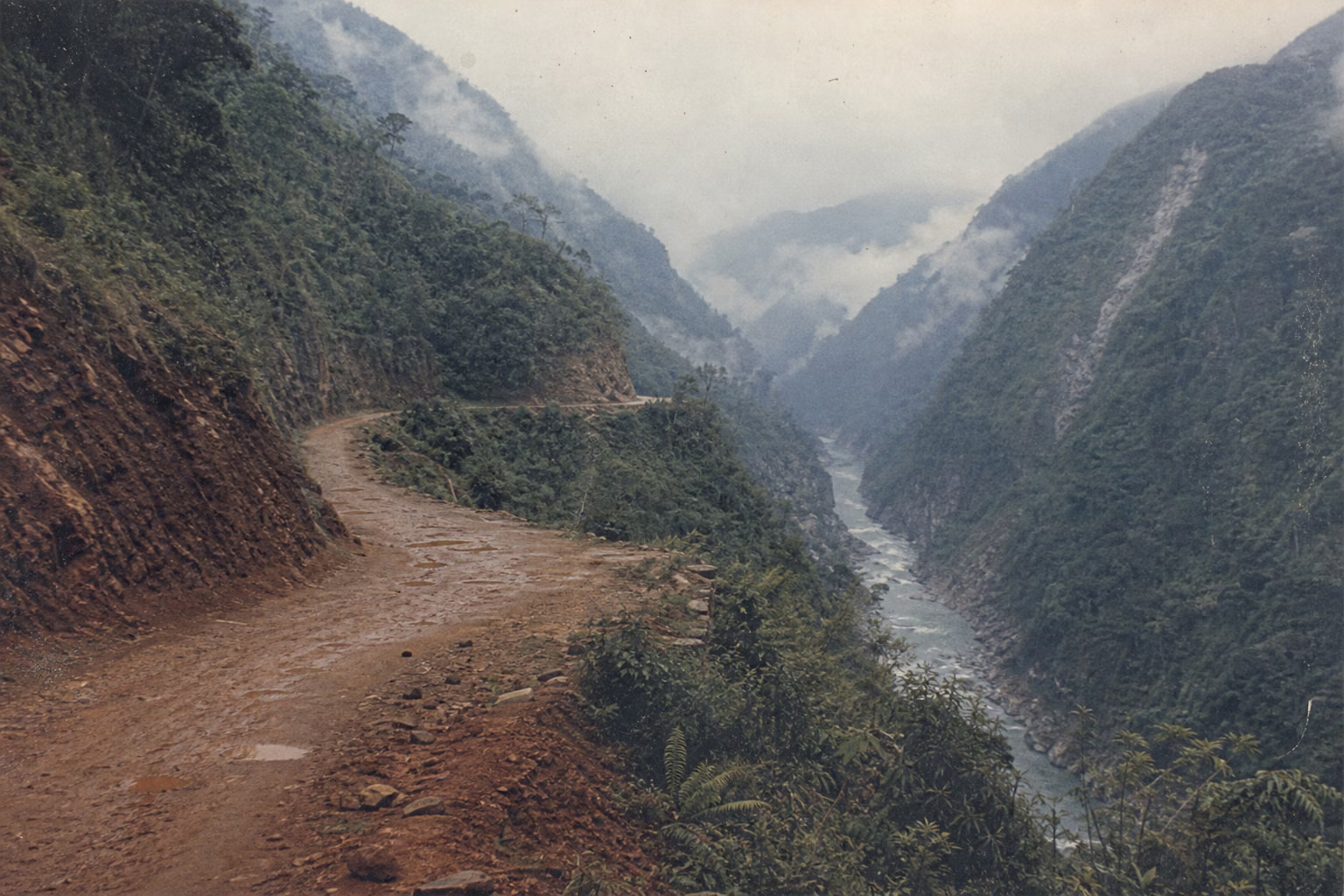
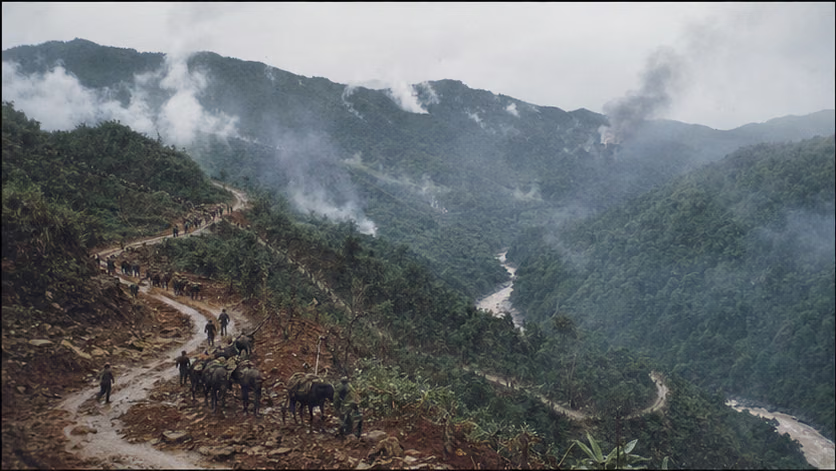
The Yunnan-Burma Road: an international corridor cut out in 1938 by two hundred thousand laborers (including large numbers of women, children, and elderly people building the road -- the account of the road builders ※); from 1940 onward it was the only overland line for foreign aid. Burma: a British colony, with complex ethnic relations -- the Bamar independence movement was pro-Japanese (Aung San's "Burma Independence Army" fought alongside Japanese forces, a third party on the battlefield), while Kachin and other hill peoples were pro-Allied; the Sino-British alliance was marked by mutual suspicion within the alliance (the British army's strategic orientation was to preserve India and abandon Burma). Terrain: tropical rain forest, the Nu River gorge, and the Gaoligong Mountains -- disease and terrain often killed more men than guns did.
Why It Was Fought
The good news from the Third Battle of Changsha was sent out in January 1942. At the same time, the news from elsewhere was all bad: Hong Kong fell on Christmas Day, British forces in Malaya retreated all the way toward the strait, Singapore surrendered on February 15, and in ten weeks of war Japanese forces swept away the foundations of the Western empires in Southeast Asia. For Chongqing, this string of distant defeats had one concrete consequence: the seaports had all been lost by 1938, the Yunnan-Vietnam Railway had been cut in 1940 when France yielded, and only one overland route remained for foreign aid -- the Yunnan-Burma Road, cut out by hand in 1938 by two hundred thousand laborers. The road began at Rangoon port in Burma.
What Burma was worth depended on which of the three account books one opened. For Tokyo, cutting the Yunnan-Burma Road would choke Chongqing's last transfusion line and, farther west, peer into the gateway to India; in January 1942, the 15th Army crossed the Thai-Burma border. For London, Burma itself was of little weight; what mattered was that it stood east of India -- preserving India was the bottom line, preserving Burma was not. For Chongqing, preserving the road meant preserving life. The same ground held three values, and this alliance had not reconciled its accounts from the first day.
The proposal for Chinese troops to enter the war had in fact been made at the very start of hostilities. The British side had many misgivings and long delayed acceptance, turning to urge the request only when Rangoon was in danger (the back-and-forth details of first refusal and later request remain unverified). In March 1942, one hundred thousand troops of the Expeditionary Force entered Burma by separate routes -- the only overseas theater of the War of Resistance had opened. When they set out, every side's misjudgment was already in place: Chongqing believed British forces would cooperate in defending Burma, while the British army's fixed direction was to fight and withdraw, covering India; the British side expected Chinese troops to fill the line and absorb losses, while the Chinese army's mission was to preserve the road; and not all Burmese people stood on the Allied side, as Aung San's "Burma Independence Army" was moving north with Japanese forces, and the allegiance of colonial society was itself a battlefield. An alliance in which all three sides kept their own accounts was bound to see its first cooperation collapse.
Resolve first fell onto paper: in December 1941, on the eve of the Pacific War, China and Britain signed the *Sino-British Agreement for the Joint Defense of the Yunnan-Burma Road* in Chongqing; in March of the next year, Stilwell took office, and Chiang Kai-shek personally went to Lashio to arrange deployments (details of his movements remain unverified) -- Chinese soldiers, a British colony, and an American chief of staff: the three-way fork in command was buried in the order of battle from the first day. When the decision was made, the Expeditionary Force did not know two things that would later prove fatal: in the British army's Burma account book, "abandonable" had been written; and supplies for one hundred thousand men were staked on a supply system then rolling westward with the retreat.
On March 8, Rangoon fell. The Expeditionary Force was still on the road into Burma, and the road it was supposed to preserve had already lost its starting point -- from then on, the battle changed from "preserving the road" to "retaking the road."
The resolve to retake the road waited more than another year. In August 1943, the Quebec Conference established the Southeast Asia Command and settled the counteroffensive in northern Burma; in November, the Cairo Conference secured a full plan for advance from both north and south, but less than a month after the conference, the amphibious operation in the Bay of Bengal was canceled, and the plan shrank back to a single northern Burma route (conference details remain unverified). What pushed the western Yunnan forces across the Nu River was Washington: in spring 1944, repeated cables pressed for action, ending with Lend-Lease materials used as leverage (the exchange of cables remains unverified), and Chongqing ordered the river crossing in April. The counteroffensive's family stock was weighed out by the Hump route: in the early period, monthly tonnage was counted in the thousands (the tonnage statistical basis remains unverified), Ramgarh equipment and the partial U.S. equipment for the western Yunnan forces were both allocated by cargo space, and the portion crossing the Gaoligong Mountains depended on human backs and pack animals. The Japanese forces' boundary was equally clear: their convoys were being strangled in the Pacific, and the garrison divisions in northern Burma and western Yunnan were gradually becoming isolated points; the grain and ammunition they had stored were meant to be eaten alone for two years. Open opposition on the table was all on the British side; within Chongqing, no record has been found of objection to sending troops or crossing the river.
In October 1943, the Chinese Army in India moved into the Hukawng Valley -- the very valley that had swallowed men the year before. The road was to be taken back from the place of burial.
Course of the Engagement
| Phase | Time | Key Points | Separate Articles |
|---|---|---|---|
| First entry into Burma | 1942.3–4 | Defense of Toungoo (the 200th Division alone for twelve days); Pyinmana and Yenangyaung (Sun Liren relieved British forces); the Battle of Mandalay miscarried -- British forces cared for their own westward withdrawal, while Lashio on the central route was outflanked | Defense of Toungoo, Battle of Yenangyaung |
| Great retreat | 1942.5–8 | Lashio lost, Myitkyina fell first, and the route home was cut: Du Yuming's force went through the Savage Mountains ※ (tens of thousands of non-combat losses), while Sun Liren's force went to India; Dai Anlan died for the country | Retreat Through the Savage Mountains |
| Western Yunnan standoff | 1942.5–44.5 | 5.5 Huitong Bridge at the critical moment (the bridge was blown to stop the enemy on the west bank of the Nu River -- details enter *Retreat Through the Savage Mountains*, cross-reference); two-year standoff along the Nu River; Japanese 56th Division built the Songshan, Tengchong, and Longling fortress positions | -- |
| Training and northern Burma counteroffensive | 1942.8–45.1 | Training at Ramgarh; from 1943.10, the Chinese Army in India, including the New First Army, counterattacked from India: Hukawng Valley, Mogaung Valley, and the hard fight for Myitkyina (1944.5–8) | North Burma Counteroffensive |
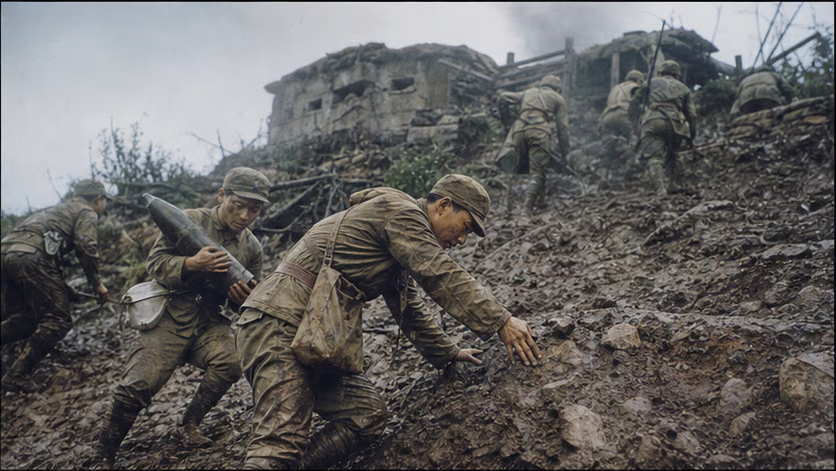
| Western Yunnan counteroffensive | 1944.5–45.1 | Forced crossing of the Nu River and uphill assault on the Gaoligong Mountains; three great bloody battles at Songshan (June–September), Tengchong (May–September), and Longling (June–November) | Battle of Songshan, Battle of Tengchong, Battle of Longling |
| Junction and opening to traffic | 1945.1.27 | The Chinese and Indian routes met at Mong Yu; the China-India Road (Stilwell Road) opened to traffic -- the transfusion line was rebuilt | -- |
Casualties and Losses
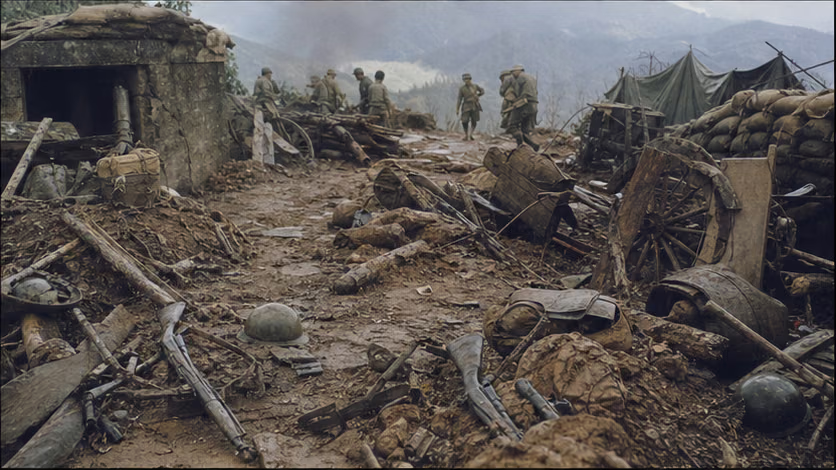
- First expedition: of one hundred thousand men, about forty thousand returned -- combat casualties were about ten thousand-plus, while more than thirty thousand died of sickness and hunger during the retreat through the Savage Mountains and elsewhere (different statistical bases are listed side by side; accounts vary): this was the War of Resistance's clearest case of "more people dying in retreat than in the campaign" ※.
- Counteroffensive: the Chinese Army in India and the western Yunnan forces suffered more than sixty thousand casualties in total (accounts vary by statistical basis); in the three battles of Songshan, Tengchong, and Longling, the western Yunnan forces took more than forty thousand casualties against a Japanese garrison of ten thousand-plus -- mountains of bodies for fortresses.
- Japanese forces: tens of thousands killed in northern Burma and western Yunnan (including formations wiped out in full: the Songshan and Tengchong garrisons' "gyokusai" -- the Japanese term).
- ※ Civilians and laborers: the people of western Yunnan who built the Yunnan-Burma Road and supported the counteroffensive at the front (casualties among Songshan and Tengchong laborers unrecorded); Burmese civilians were caught among armies from four sides (one line within the reach of available sources).
Aftermath
- From the opening of the China-India Road to victory in the War of Resistance was only half a year -- when the transfusion line was repaired, the transfusion was nearly over: the distinction between military return and symbolic meaning ("opening the road" itself proved counteroffensive capacity; this is the symbolic side).
- The U.S.-equipped units of the Chinese Army in India became an elite backbone of the postwar Nationalist Army (New First Army, New Sixth Army -- their next stop was the civil war in the northeast, a thread running through multiple articles; cross-reference *Chinese Civil War · Overview*).
- The long tail of Expeditionary Force veterans: veteran communities stranded in Burma (the civic actions of the 2010s to bring veterans back to China -- a contemporary memory segment); Tengchong National Martyrs Cemetery (built already in 1945, one of China's earliest cemeteries for fallen soldiers of the War of Resistance) and the Songshan site cluster became landmarks of western Yunnan memory.
- The command dispute between Stilwell and Chiang ran throughout (for the 1944 crisis, cross-reference the Battle of Henan–Hunan–Guangxi overview) -- a complete sample of politics within the alliance.
Accounts of Those Present
- Dai Anlan: commander of the division isolated at Toungoo, badly wounded during the retreat and died at Maobang village in northern Burma (1942.5.26), carried back to China wrapped in horsehide -- Mao Zedong's elegiac poem and the American decoration arrived together (details of the poem and decoration remain unverified): the CPC, KMT, and United States mourning one man together was rare among figures of the War of Resistance.
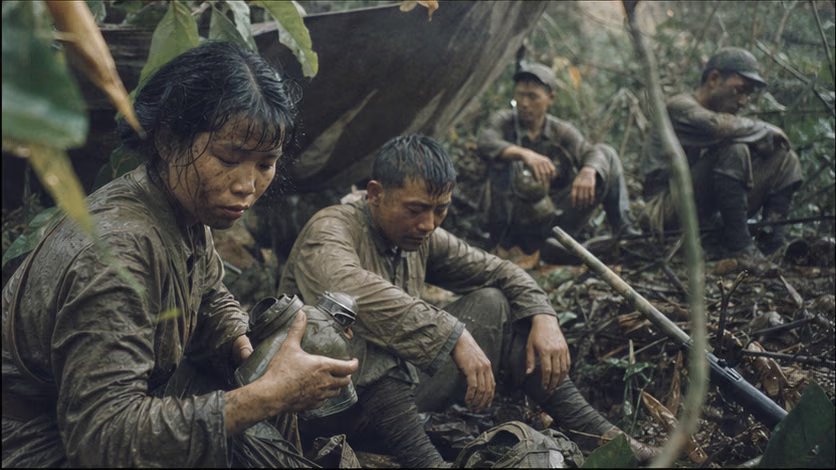
- The women soldiers of the Savage Mountains: women soldiers with the army died in the rain forest at a rate approaching total loss (survivor Liu Guiying -- a woman soldier who walked out of the Savage Mountains, late-life oral account -- oral-history level) ※.
- The boy soldiers of Songshan: large numbers of child soldiers were filled into the western Yunnan counteroffensive (the photograph of a nine-year-old "little soldier" under the U.S. military lens -- image verification remains unverified) -- the age structure beneath the mountain of bodies.
- The hands that built the road: two generations of road builders for the Yunnan-Burma Road and the China-India Road -- construction images in which women and children chisel stone and U.S. military machinery coexist; the saying that "one road builder was buried for every kilometer" (evidentiary level unverified).
- The magistrate of Tengchong: Zhang Wende's *Reply to Tajima* -- an open letter in which an occupied county magistrate refused Japanese forces' attempt to induce surrender ("the suffering people of Tengchong..." original text unverified), a famous document of literati resistance.
The Ground
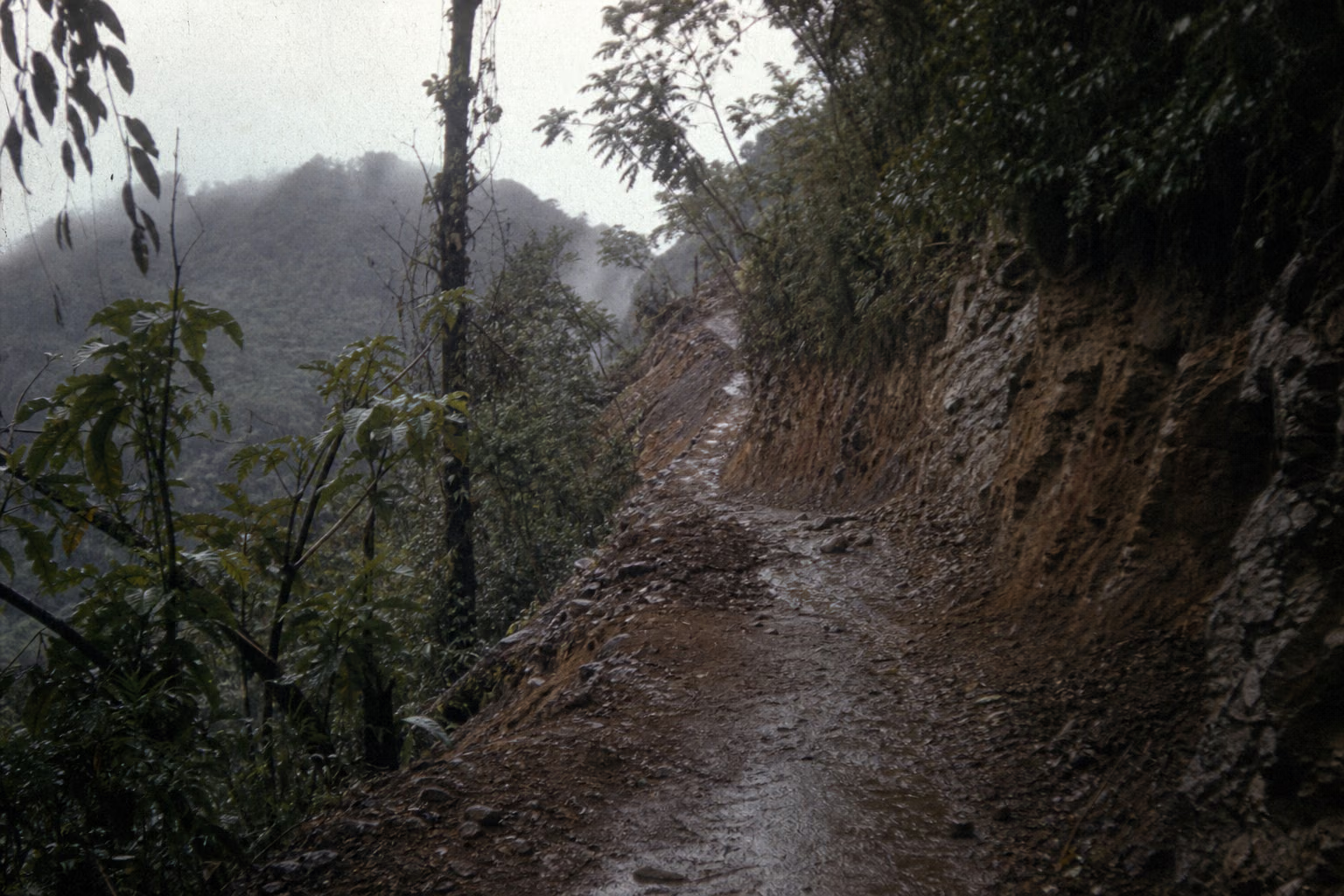
- Rain forest-gorge-fortress trilogy: the Savage Mountains (environment as the enemy), the Nu River and Gaoligong Mountains (vertical battlefield: uphill assaults toward passes at four thousand meters), and Songshan-Tengchong (tunnel-fortress assault) -- this theater has the steepest spatial types in the whole series.
- Bridge: one blast at Huitong Bridge fixed the front line for two years -- an extreme example of a single-point space changing the strategic situation.
- The Hump route: an aerial corridor as an "invisible battlefield" (see *Air War and the Navy*).
- National border: the war moved back and forth on both sides of the border -- the spatial narrative arc of "going abroad to fight" and "fighting back to the national gate."
How Each Side Records It
- Chinese side: the theater with the most dramatic narrative change -- because the Chinese Army in India and the western Yunnan forces belonged to the Nationalist Army system, mainland narratives long kept a low profile; they warmed again after the 1980s, and in the 2010s *My Chief and My Regiment* and the wave of veteran commemoration brought the subject into public view; on the Taiwan side, it always remained canon. The lateness of memory is recorded as part of the account.
- Japanese side: the "Burma front" is a major defeat field in its war-history writing (the defeat at Imphal is written together with northern Burma and western Yunnan); the Songshan and Tengchong "gyokusai" narrative.
- British and American sides: the Stilwell papers and British Burma campaign accounts each have their own position (polarized assessments of Chinese troops are listed side by side); American assessments of the combat power of the Chinese Army in India were very high (record unverified).
Disputes and Sensitivities
- Responsibility for the failure of the first expedition: British forces abandoning their allies and withdrawing west / the contrast between Du Yuming obeying orders and going through the Savage Mountains and Sun Liren disobeying orders and going to India (evaluations of the two men's decisions are listed side by side); the strategic dispute between Stilwell and Chiang.
- The reasonableness of the counteroffensive's cost (tactical review of Songshan-style "piecemeal reinforced assault").
- The presentation of Burmese nationalists' cooperation with Japanese forces (Aung San's historical position -- another side of Burma's father of the nation on this battlefield).
- The political history of veteran memory -- commemoration that arrived late.
Contents
Retreat Through the Savage Mountains is still treated under ※. Myitkyina is folded into *North Burma Counteroffensive*.
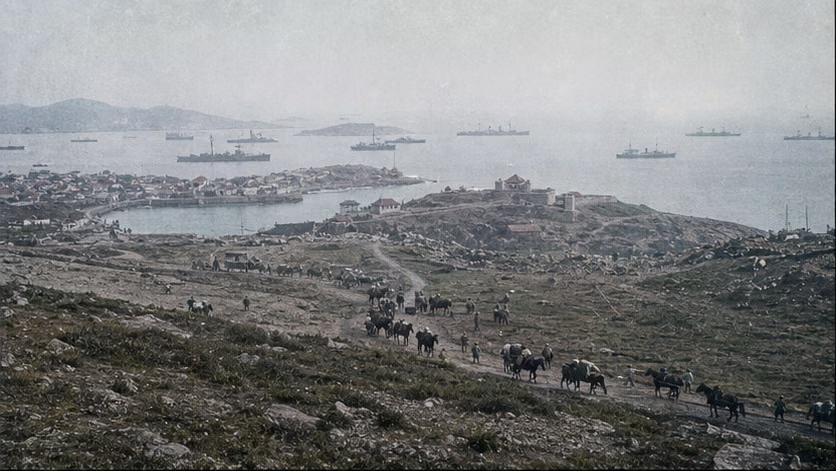 [Foreign war on Chinese soil] Siege of Tsingtao (1914)1914.08Three months after the First World War broke out, Japanese and British forces attacked the German leased territory of Tsingtao in Shandong, China: Europe's war opened an Asian front on Chinese soil. China declared neutrality and marked out a war zone, then watched Japanese forces move beyond it and occupy the entire Jiaozhou-Jinan Railway: one leaseholder was driven out, and a larger one arrived.
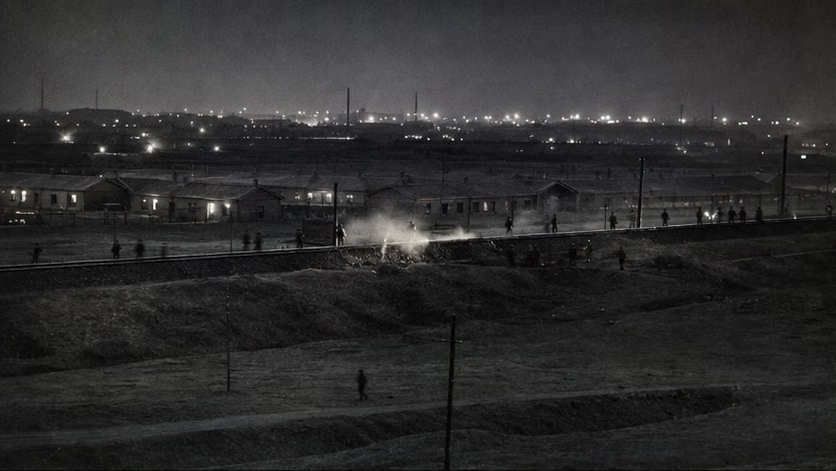 Mukden Incident1931.09A short stretch of railway blown up by the Kwantung Army itself, Shenyang lost in a single night, the entire Northeast lost in just over four months -- the Fourteen-Year War of Resistance is counted from here.
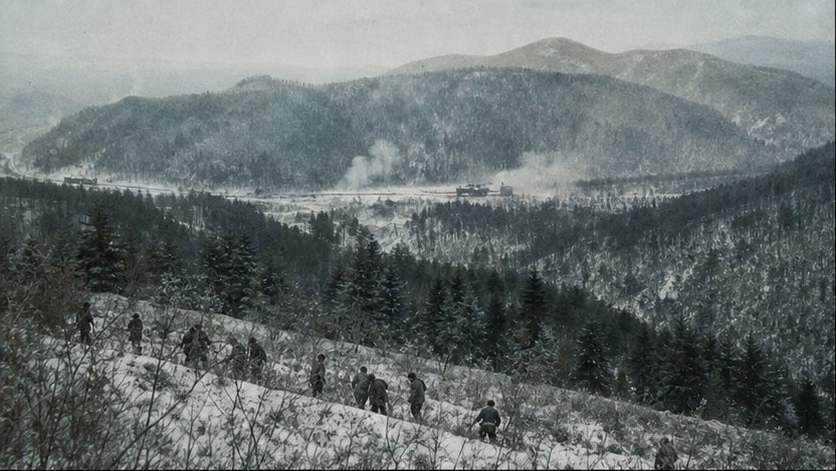 Northeast Volunteer Army and the Anti-Japanese United Army (1931–1942)1931.10After the Northeast fell, hundreds of thousands first rose with whatever arms they had and then scattered; later, a lone force held out in mountains at forty degrees below zero until only a little more than a thousand remained, and still would not put down its rifles -- the most isolated line of the Fourteen-Year War of Resistance.
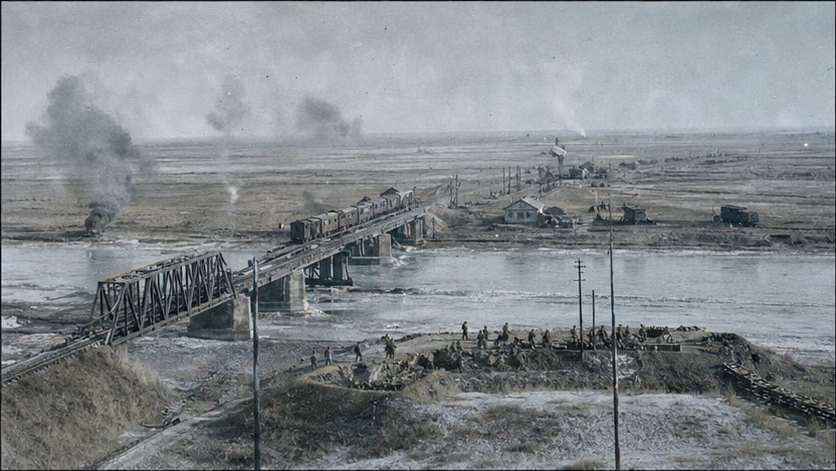 Resistance at Jiangqiao (Nen River Bridge)1931.10After the Mukden Incident, at the bridgehead over the Nen River, Ma Zhanshan said the first "no" to Japanese forces and fought for half a month -- the story of the "first shot of organized armed resistance against Japan" begins here.
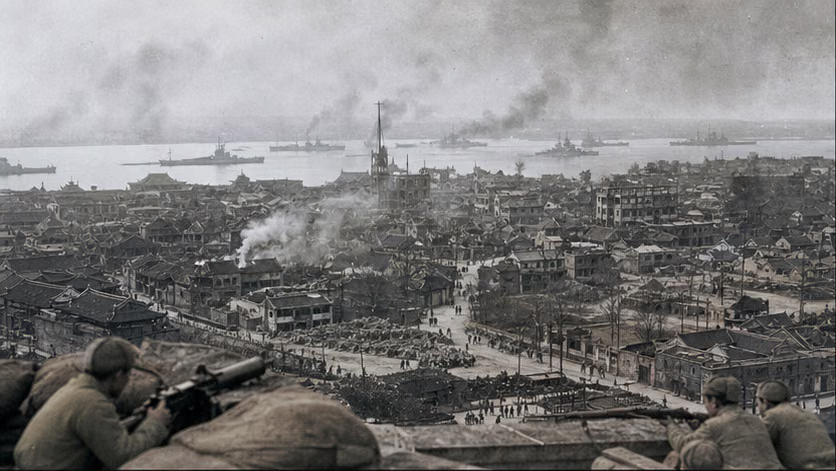 January 28 Incident (Battle of Shanghai, 1932)1932.01Less than half a year after the Northeast had been lost, Japanese forces again made trouble in Shanghai; the Nineteenth Route Army met them where they came, the Fifth Army arrived to fight beside it, and thirty-four days turned into a grinding seesaw - ending with a ceasefire agreement that tied the hands of Chinese troops in Shanghai and laid the unfavorable ground for the Battle of Shanghai (1937) five years later.
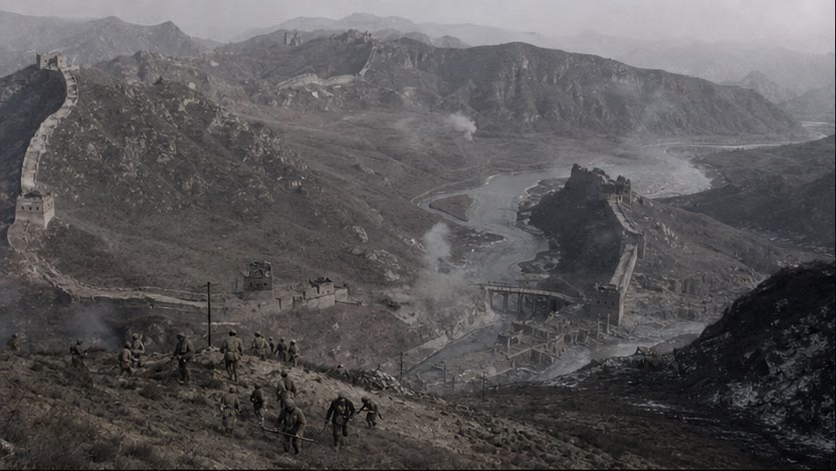 Defense of the Great Wall (1933)1933.01In the first five months of 1933, from Yuguan to Rehe and then to the passes of the Great Wall, Chinese forces fought a series of localized resistances against Japanese forces -- the blood shed at several passes was finally let away by a single Tanggu Truce.
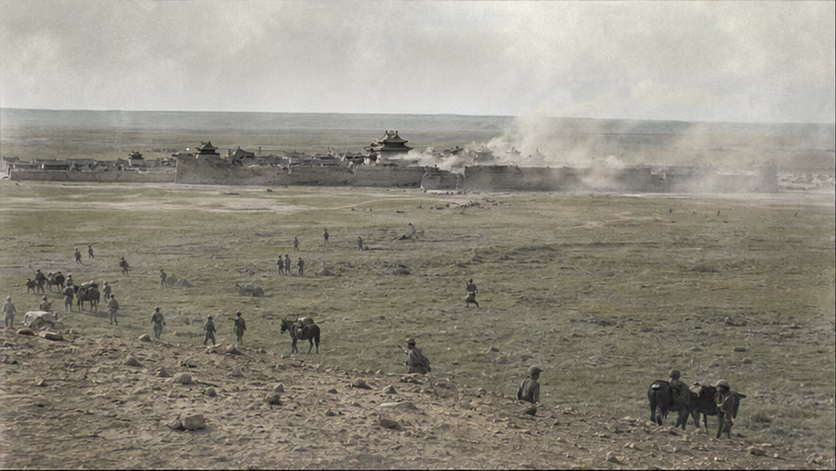 Chahar Resistance (1933)1933.05In the summer of 1933, Feng Yuxiang, Ji Hongchang, and Fang Zhenwu raised an allied army at Zhangjiakou and recovered Duolun - the first recovery of lost territory by Chinese troops since the Mukden Incident; afterward, this army was deprived of pay, pressured, and dissolved by its own government.
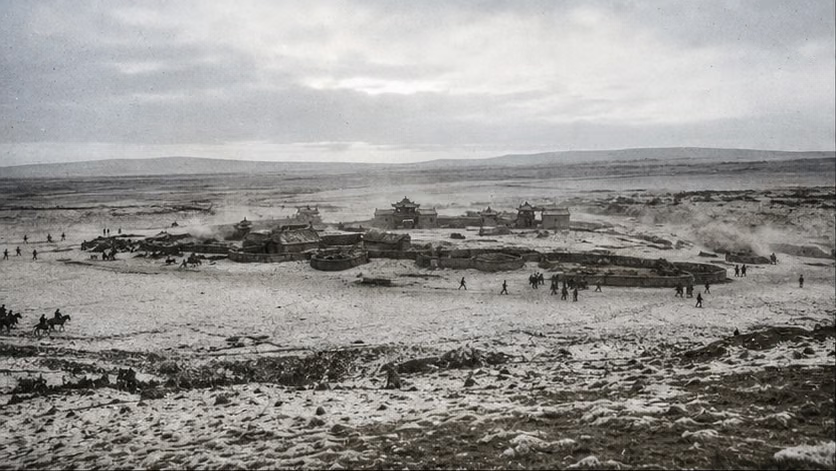 Suiyuan Resistance (1936)1936.11In the winter of 1936, Japan pushed puppet Mongol forces westward against Suiyuan; Fu Zuoyi's troops first held the front at Hongge'ertu, then in a snowy night raid struck Bailingmiao and took the enemy's lair -- a rare clean victory since the Mukden Incident; one month later came the Xi'an Incident.
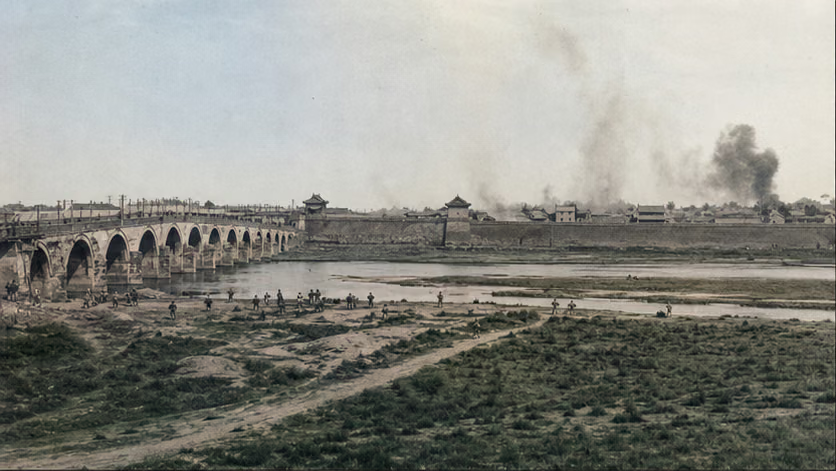 Beiping–Tianjin Operation1937.07In July 1937, from one night of gunfire at Marco Polo Bridge to the abandonment of Beiping, only twenty-two days passed -- the full-scale War of Resistance opened with a hurried and confused loss, while the three words "Marco Polo Bridge" became the call that mobilized an entire nation.
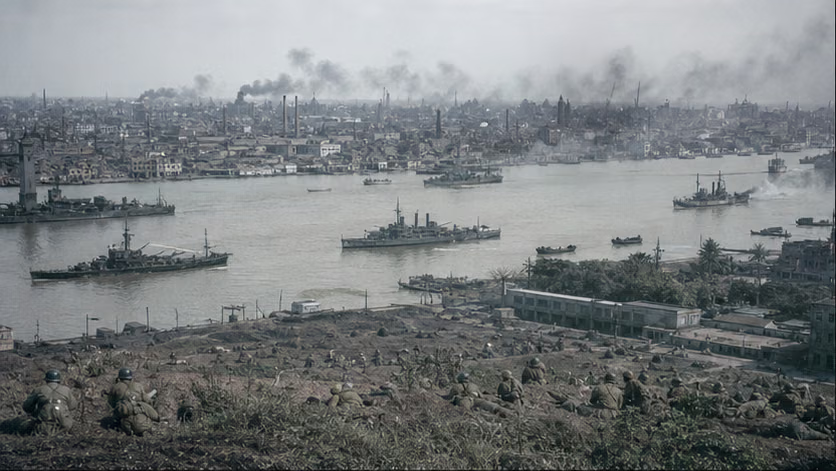 Battle of Shanghai (1937)1937.08China fed its fighting units into Shanghai batch after batch - 700,000 against 300,000, 3 months, more than 250,000 casualties - and did not hold the city, but held two larger things: Japan's timetable for "settling China in 3 months" was made void, and the provincial armies that had once been a loose plate of sand bled for the first time in the same trench.
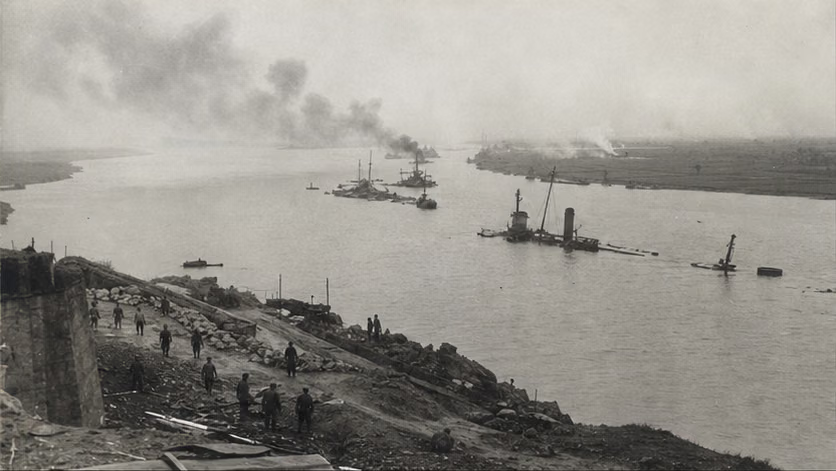 Air War and the Navy (1937–45, combined account)1937.08The Chinese navy began its war of resistance by sinking more than forty of its own vessels; the Chinese air force carried eight years of lost air superiority on the lives of a generation of pilots. This article records what happened in the sky and on the river: the curve by which air superiority was lost in full and then taken back, and the Chinese, Soviet, and American pilots who died for that curve.
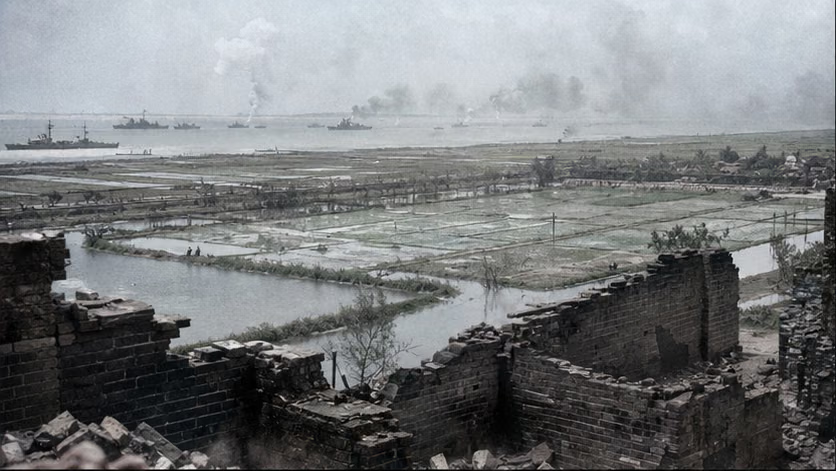 Battles of Baoshan and Luodian1937.09.01At Baoshan, six hundred men held a small city for three days; the whole battalion died there, and even the opposing side's battle reports recorded the name of battalion commander Yao Ziqing. At Luodian, a town of only a few streets changed hands more than ten times, with both sides feeding in thousands of lives each day - the four words "mill of flesh and blood" were first called out from here.
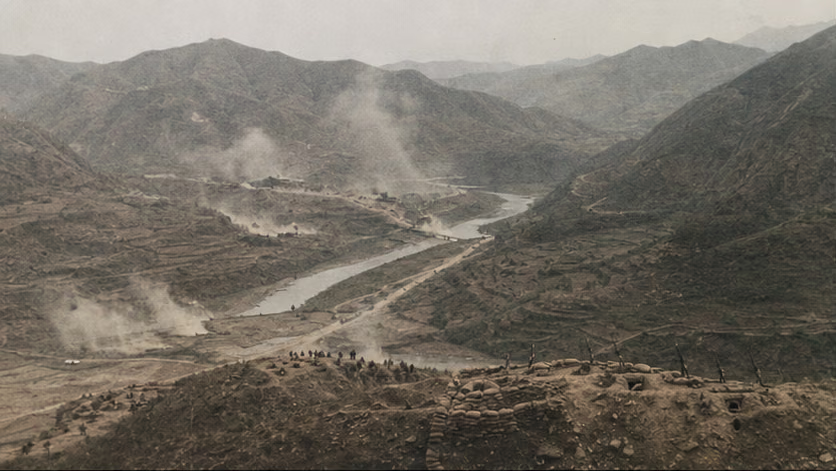 Battle of Taiyuan (1937)1937.09.11The largest campaign in North China: Yan Xishan's Jin-Sui Army, the Central Army moving south, and the Eighth Route Army, only recently reorganized, fought on the same map in Shanxi as three separate systems; at the front, Xinkou held for more than twenty days and did not let the Japanese forces through, but once Niangzi Pass broke on the flank, the whole line collapsed, and Taiyuan fell on 11.9. Before the smoke of the frontal campaign had cleared, the Eighth Route Army's three divisions had already remained in the mountains of Shanxi: the end of this battle was the opening of the battlefields behind enemy lines.
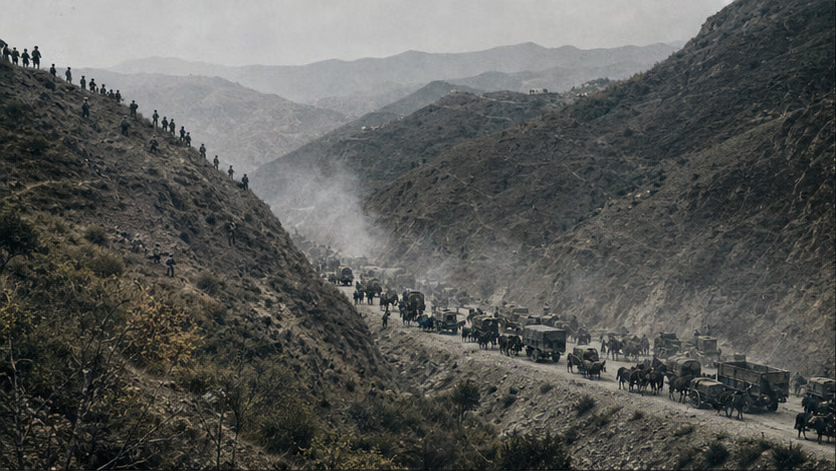 Battle of Pingxingguan1937.09.25The Eighth Route Army's first battle after taking the field: the 115th Division laid an ambush in the ravine of Qiaogou at Pingxingguan, trapped more than a thousand men of the Itagaki Division's baggage train and motor convoy, and suffered more than six hundred casualties of its own; the battle was not large, but its echo was enormous -- on this day, the myth that the "Imperial Army could not be defeated" publicly collapsed for the first time, and that asymmetry itself is something this archive has to record.
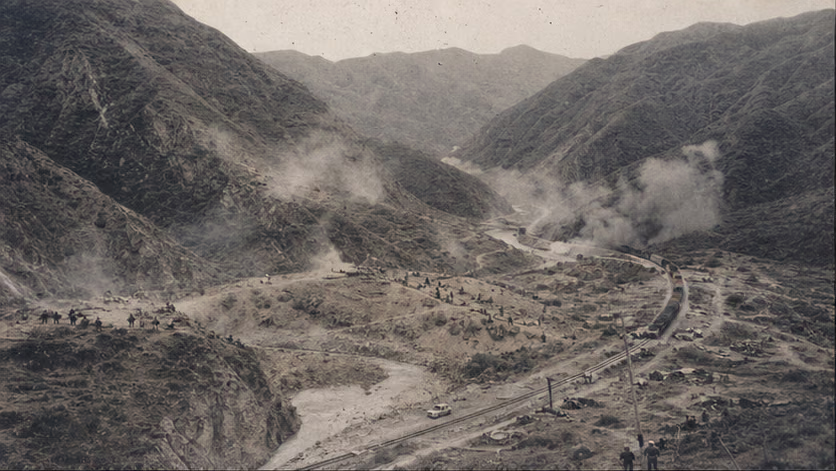 Battles of Xinkou and Niangzi Pass (1937)1937.10.13For more than twenty days at Xinkou, 80,000 defenders held the Itagaki Division on the front and did not yield a step -- the hardest positional battle fought by Chinese forces on the North China front; once Niangzi Pass on the eastern line fell, even the best defense at Xinkou had to withdraw -- **"Xinkou was not defeated; the defeat came at Niangzi Pass"**: the front held, the flank collapsed, and Taiyuan's fate was not decided before the Xinkou line.
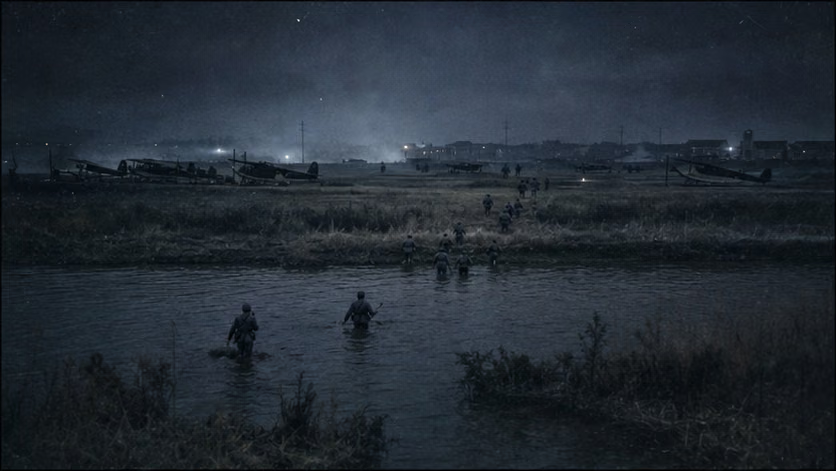 Night Raid on Yangmingbao1937.10.19When the Xinkou front was being pinned down by Japanese aircraft, a regiment of the Eighth Route Army slipped into Yangmingbao airfield in Daixian and burned more than twenty aircraft in a single night -- infantry took out an airfield, at the cost of one regimental commander and several dozen soldiers.
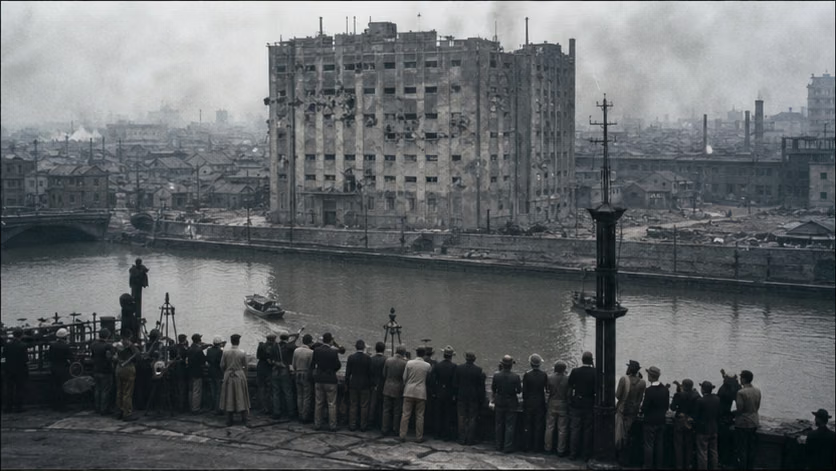 Defense of Sihang Warehouse1937.10.26Four hundred and eleven men held one warehouse for six days, while announcing eight hundred to the outside world -- across the Suzhou Creek, a million citizens in the concessions and reporters from around the world watched from the opposite bank. This was a battle consciously fought for the world to see; the soldiers on the stage, however, were truly dying. After the play ended, they were imprisoned for four years, and their regimental commander died under the knives of his own men.
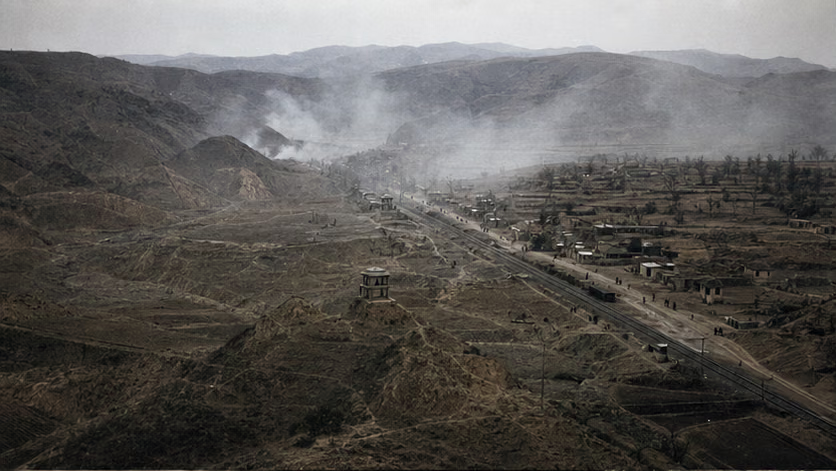 Battlefields Behind Enemy Lines (1937–45)1937.11After Taiyuan fell, the Eighth Route Army's three divisions broke themselves into smaller formations and slipped behind the Japanese occupation zones, using eight years to turn the "occupied areas" into a net the enemy could not chew through: this line had no grand campaign, only tens of thousands of small engagements, five "public-order strengthening" campaigns, countless villages burned down, and base areas with a population of one hundred million.
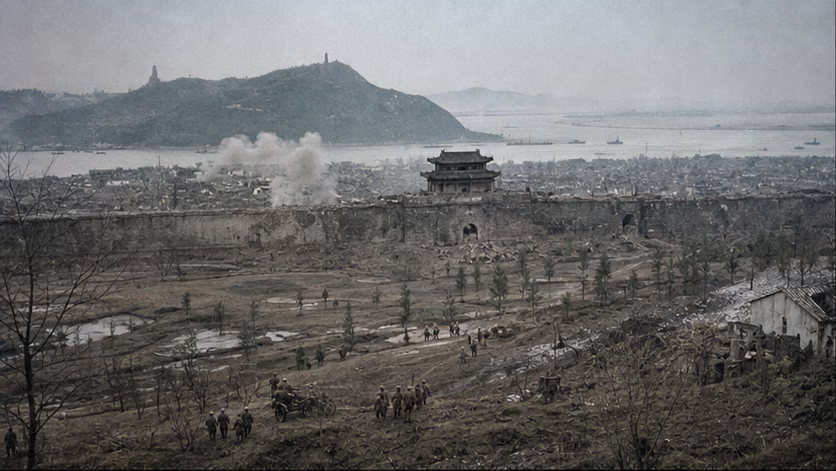 Defense of Nanjing (※ Nanjing Massacre)1937.12Before the routed forces from Shanghai had even been gathered in, the defense of the capital had begun - it held for 8 days; the order to withdraw came in haste, and there were no boats by the river; in the 6 weeks after the city fell, the deaths of 300,000 people turned the word "Nanjing" from the name of a city into a wound known across the world.
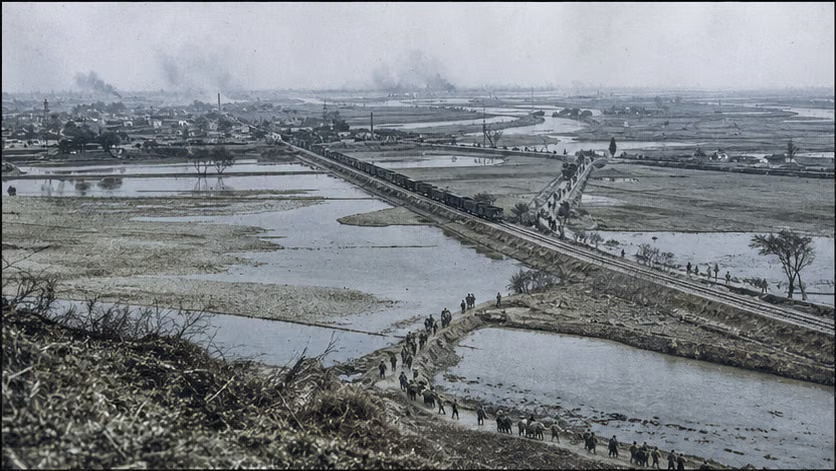 Battle of Xuzhou (1938)1938.01A group of "miscellaneous armies" long looked down on by the central authorities - Sichuan troops, Guangxi troops, Northwestern Army units, and Northeastern Army units - were braided into a single cord in Li Zongren's hands: 600,000 against 240,000, at Xuzhou, the junction of the Jinpu Railway, they won the first major victory of the full-scale War of Resistance; at the end, another 600,000 men broke out of the encirclement in organized formations, turning a defeated withdrawal into a "victorious retreat." The two words "miscellaneous armies" were washed clean by blood in this battle.
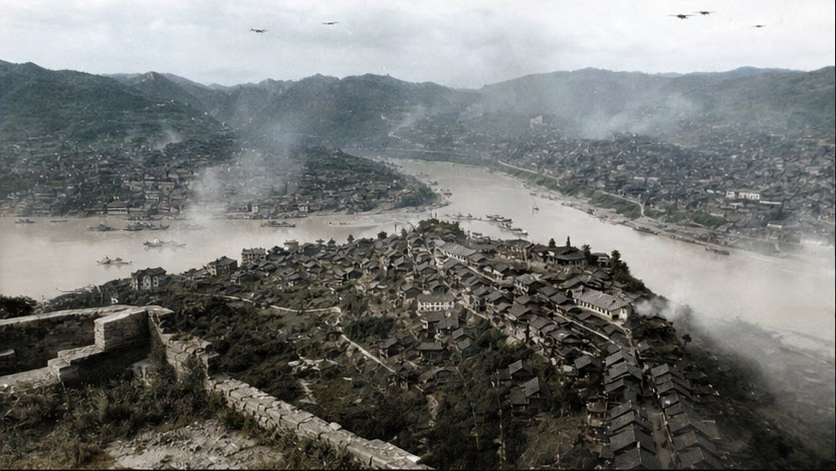 Bombing of Chongqing ※1938.02From 1938 to 1943, Japanese forces carried out five years of strategic bombing against Chongqing and cities in the rear area, launching more than 200 air raids on Chongqing and dropping more than 20,000 bombs -- the first Chinese city subjected to long-term indiscriminate bombing, where "indiscriminate bombing" as a form of atrocity is written down explicitly.
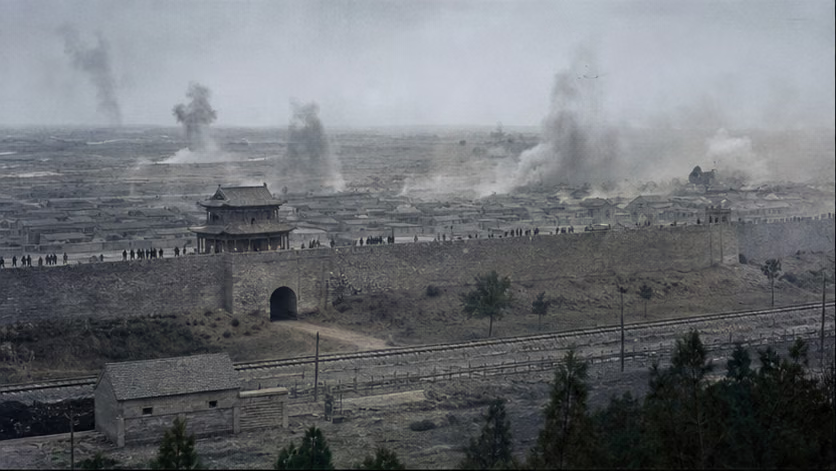 Defense of Tengxian1938.03.14One Sichuan force, the worst equipped and wanted by no one - the roughly three thousand men of the 122nd Division holding the city - held Isogai's Tenth Division at Tengxian for three days; divisional commander Wang Mingzhang died with the city, the division was fought out, and time was bought for the defense of Tai'erzhuang.
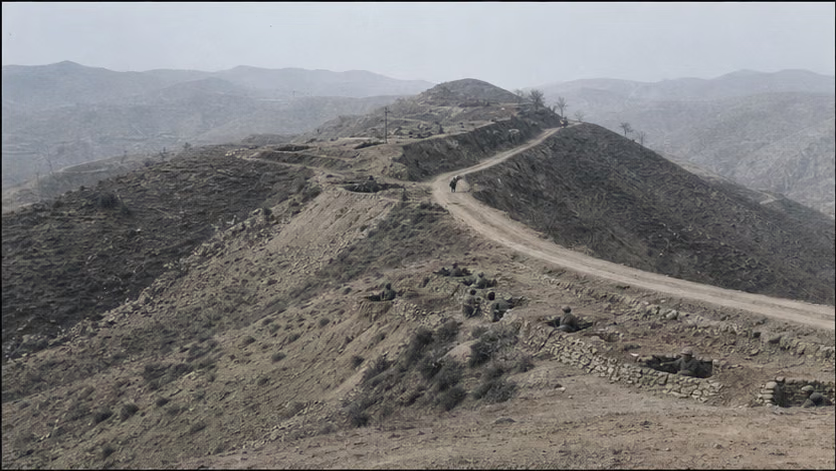 Ambushes at Shentouling and Xiangtangpu (1938)1938.03.16Two textbook ambushes in a single month: at Shentouling, troops spent the night tucked against the road on a bare ridge deemed "unsuitable for ambush"; at Xiangtangpu, 180 Japanese motor vehicles were burned in half a day. Liu Bocheng's method of "drawing out enemy relief forces and striking them" became, from then on, a standard grammar of warfare behind enemy lines.
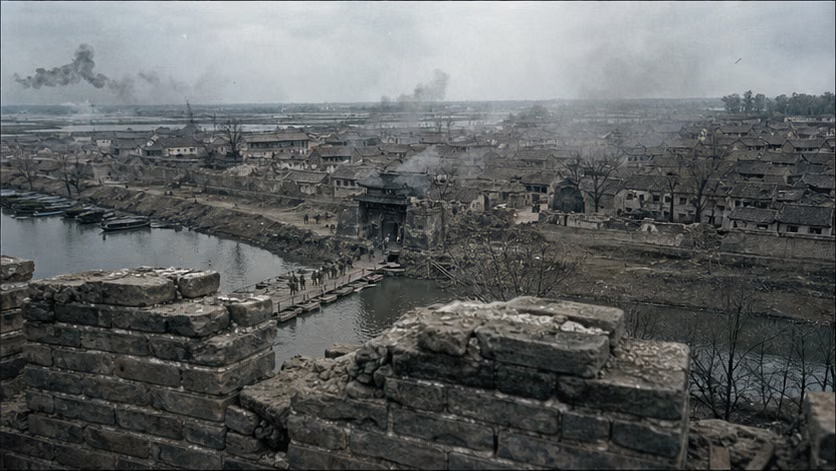 Battle of Tai'erzhuang1938.03.23Sun Lianzhong's old Northwestern Army troops held house by house for two weeks in a walled town beside the canal, while Tang Enbo's corps looped back along the outer line and attacked from inside and outside, driving back the Seya Detachment of Isogai's Tenth Division - the first major victory on the frontal battlefield since the full-scale War of Resistance began, and the country went almost mad with joy.
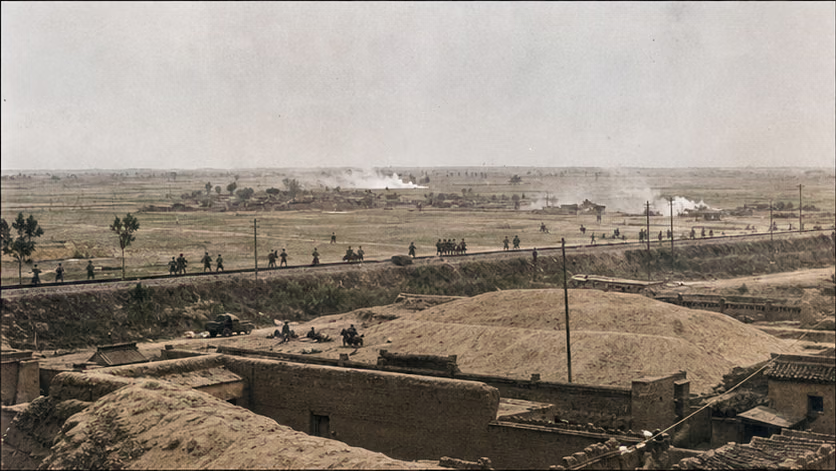 Battle of Lanfeng and the Huayuankou Breach (1938) ※1938.05After the breakout from Xuzhou, one Japanese division drove alone to the gates of Zhengzhou; more than ten Chinese divisions closed in but failed to destroy it, two army commanders abandoned cities in the face of battle, and one division commander was shot. The encirclement collapsed, and in the end Japanese forces were stopped by blowing open China's own Yellow River dike: 890,000 people (the postwar official basis) died in the yellow flood and the famine and epidemics that followed, and forty-four counties across Henan, Anhui, and Jiangsu were left as barren ground for ten years. This was the largest single case in the War of Resistance of "one's own people against one's own people."
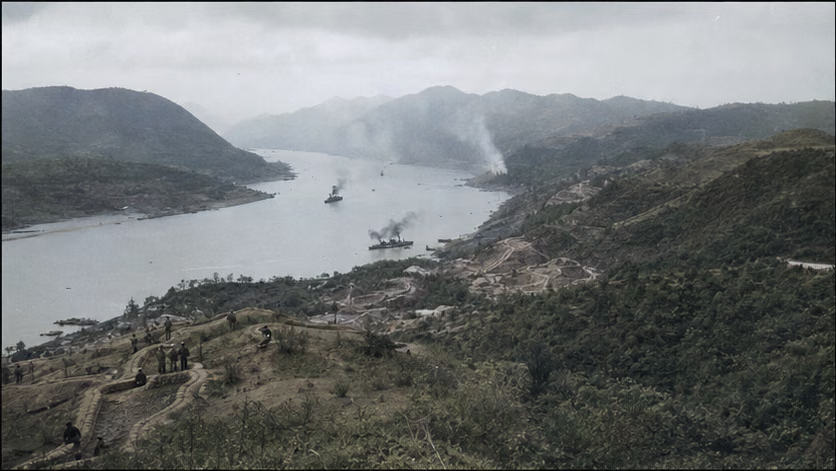 Battle of Wuhan (1938)1938.06One hundred and ten divisions arrayed themselves along both banks of the Yangtze and below the Dabie Mountains, holding against 250,000 Japanese forces advancing upstream - after four and a half months, Wuhan was still abandoned in the end, but the city was handed over intact, and the people withdrew singing; from this battle onward, Japan's four words "quick battle, quick decision" were made void, and the war was dragged into the stalemate it feared most.
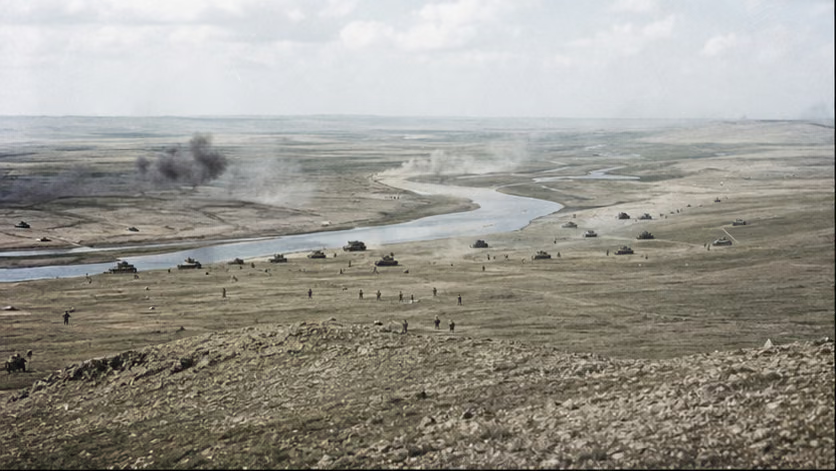 Zhanggufeng and Nomonhan [foreign wars on Chinese soil]1938.07At Zhanggufeng near the mouth of the Tumen River in 1938, and at Nomonhan on the Khalkha River in 1939, Japan and the Soviet Union fought two battles on the borderlands of China's Northeast - the ground lay on China's sovereign map, China was wholly absent; and the guns of Nomonhan changed the direction of the Pacific War, while also indirectly determining the later shape of the China theater.
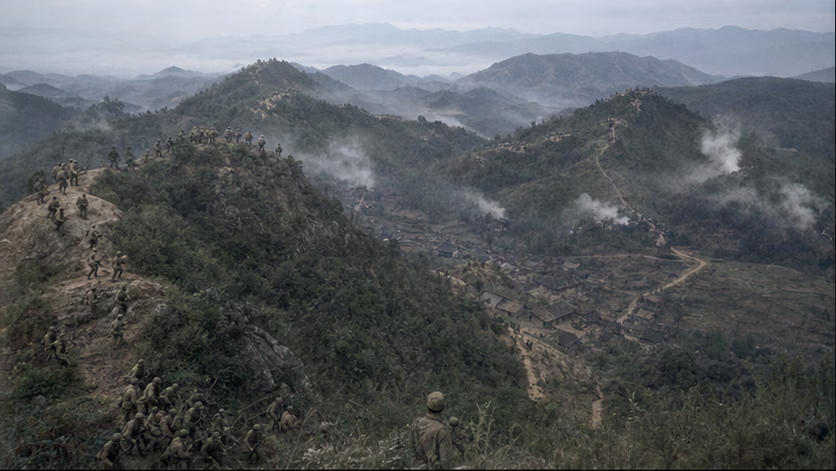 Battle of Wanjialing (1938)1938.09A Japanese division drove alone into the mountains of northern Jiangxi, was surrounded on all sides by Xue Yue's more than 100,000 men and fought there for more than ten days; even officers airdropped in to take over command could not break it out -- in the Fourteen-Year War of Resistance, this was the only battle that came **close** to annihilating an entire Japanese division.
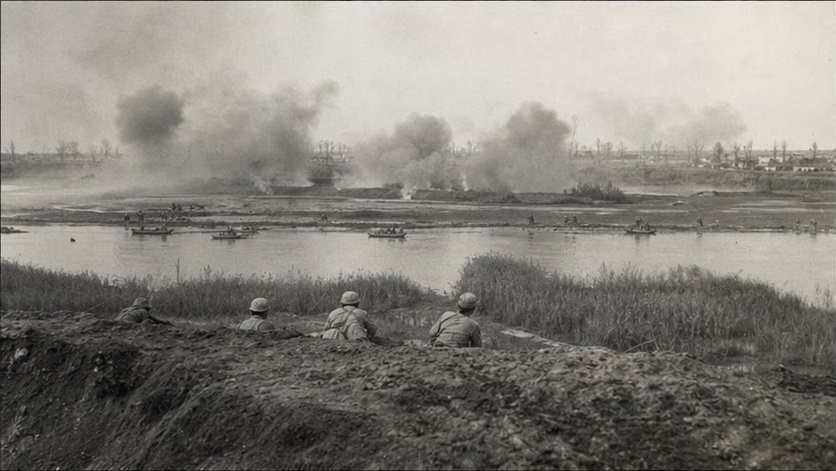 Battle of Nanchang (1939)1939.03The first major battle at the opening of the stalemate phase: Japanese forces used gas shells to cover a forced crossing of the Xiu River and opened the road with massed tanks, taking Nanchang in ten days; the Chinese side then counterattacked for more than a month, entered the city's outskirts, and fell short at the last step, while Chen Anbao, commander of the 29th Army, was killed in action.
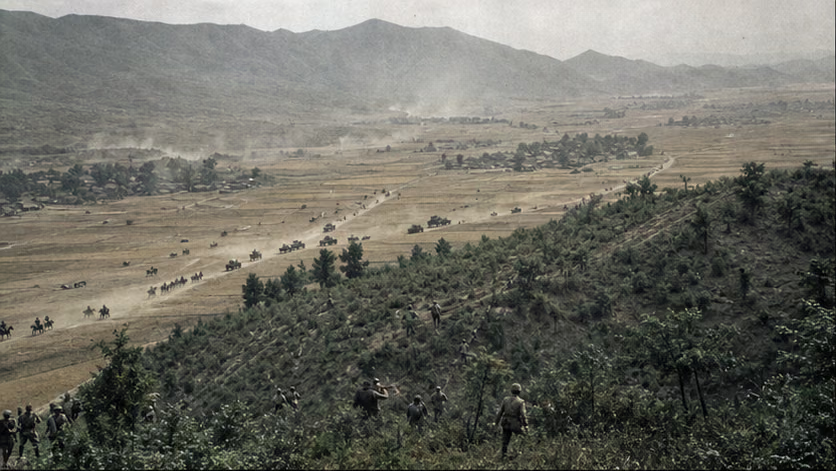 Battle of Suizhou–Zaoyang1939.05The Japanese Eleventh Army swept northern Hubei in an attempt to catch the main force of the Fifth War Area; Li Zongren avoided the strong points and struck the weak, while Zhang Zizhong led the right-wing corps east across the Xiang River for a flank attack; once Japanese forces had routed the opposition, they withdrew. The standard form of a stalemate-phase campaign appeared here in full for the first time: the Chinese side called it the "Great Victory of Suizhou–Zaoyang," the Japanese side called it "completion of the operational objective," and both sides won.
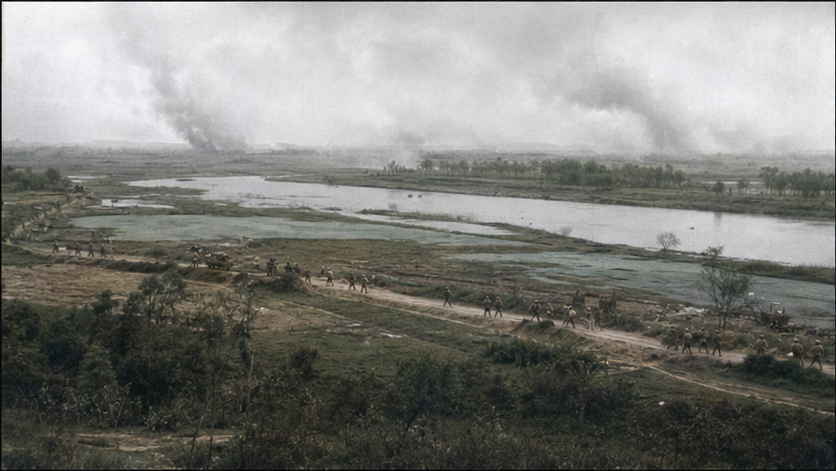 First Battle of Changsha (1939)1939.09Roughly 100,000 Japanese troops drove on Changsha along three routes; Xue Yue used the Xinqiang River-Miluo River-Laodao River water lines for successive resistance, destroyed roads, and stripped the countryside of usable supplies. Japanese forces reached Changsha's outskirts but could neither take the city nor hold their position, and withdrew on their own: the Chinese side proclaimed the "Great Victory of Northern Hunan," the Japanese side called it "completion of the objective," and another campaign was won by both sides. This was the beginning of Changsha's three defenses.
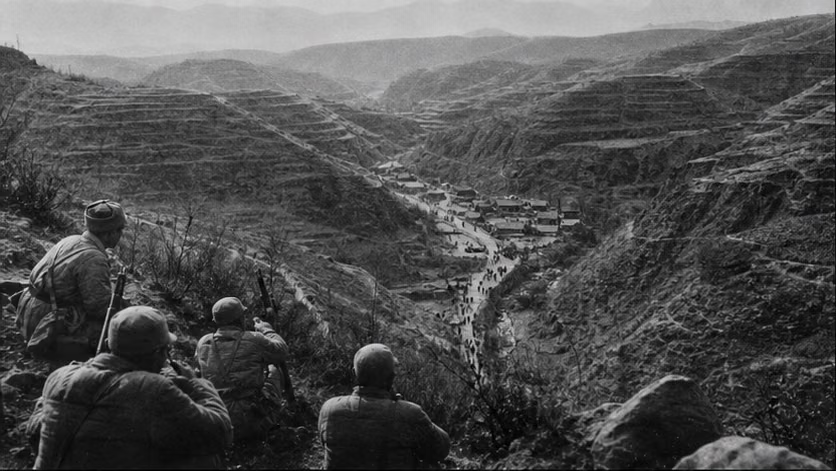 Battle of Huangtuling1939.11.03A mortar shell landed in an isolated courtyard in a Taihang Mountain gully and killed Lieutenant General Abe Norihide, the Japanese forces' "flower of famous generals" -- the highest-ranking Japanese commander killed by the Eighth Route Army; Tokyo radio mourned him, and only later did the squad leader firing the gun in the Taihang Mountains learn whom he had hit.
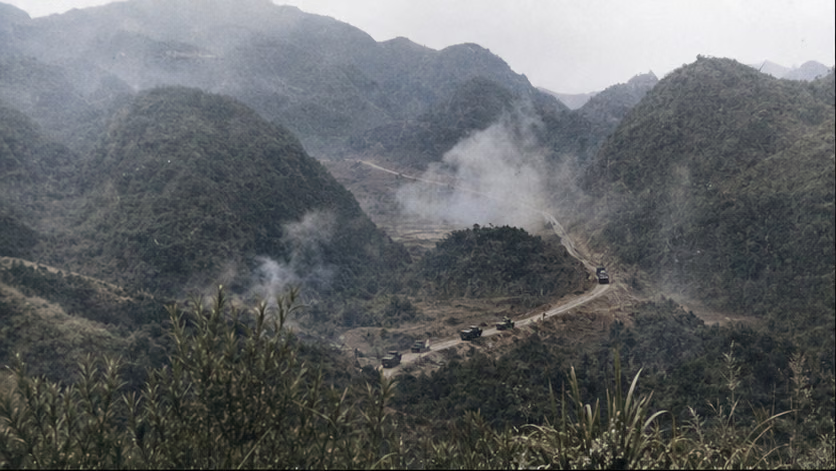 Battle of Southern Guangxi and Kunlun Pass1939.11.15Japanese forces landed at Qinzhou Bay and drove straight toward Nanning, aiming to sever the Guangxi-Vietnam international transport line; Du Yuming's Fifth Army, China's only mechanized army, forced three assaults to take Kunlun Pass, killed the enemy brigade commander Nakamura Masao, and won a costly victory; but after the turn of the year came the defeat at Binyang, Kunlun Pass was won and then lost again, and the overall campaign was still lost: local triumph, overall failure.
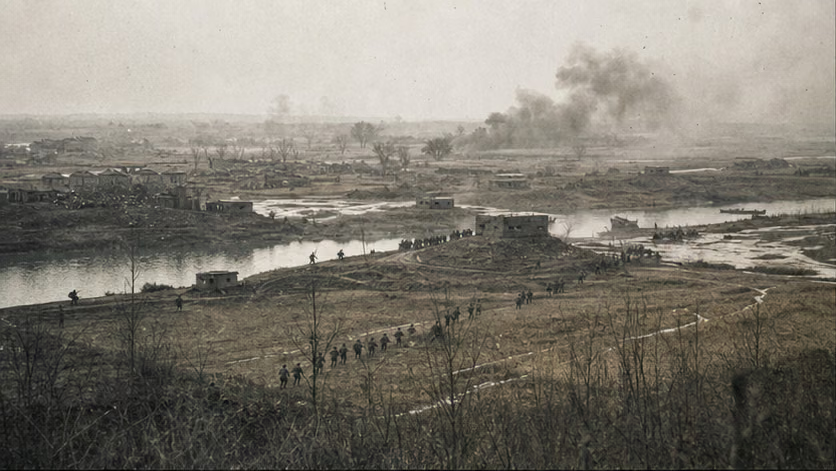 Winter Offensive1939.12In the winter of 1939, more than one hundred divisions across the frontal battlefield threw themselves at Japanese strongpoints at the same time, from Suiyuan to southern Guangxi. This was the only active full-front general offensive by Chinese forces in the Fourteen-Year War of Resistance, and it was also a general measurement of the frontal battlefield's offensive capacity: it measured that the will to fight was still there, and also measured the ceiling imposed by assault firepower.
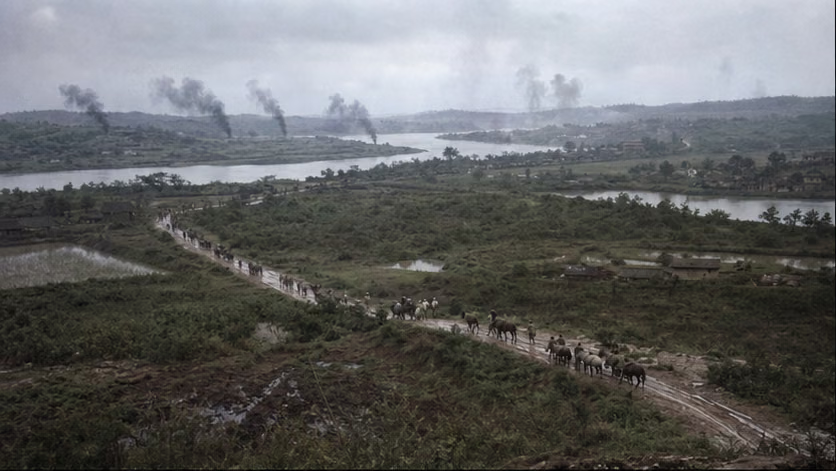 Battle of Zaoyang–Yichang1940.05The Japanese Eleventh Army struck northern Hubei again and took Yichang for the first time: an army-group commander-in-chief died on the firing line he had requested, and the gateway by which the Yangtze entered Sichuan was lost. The general's death and the gateway's loss belonged to the same campaign.
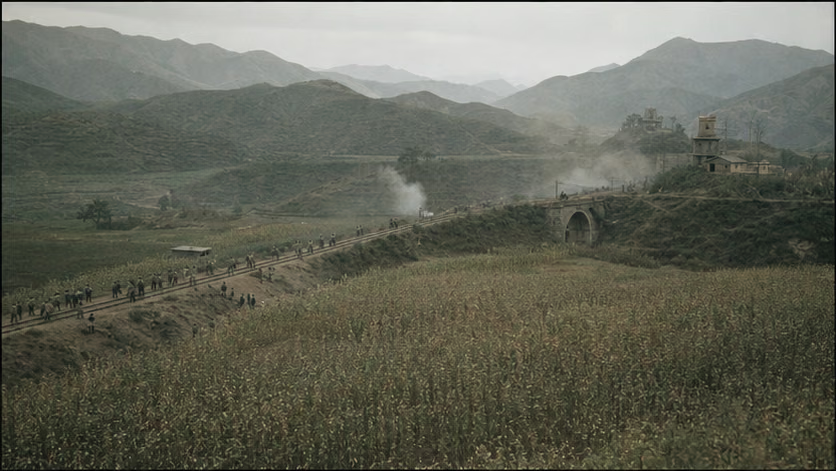 Hundred Regiments Offensive1940.08One hundred and five regiments tore up North China's railways in the same night: the largest active offensive on the battlefields behind enemy lines, with brilliant results and a heavy price; for the next forty years, this battle fought another, longer battle of its own: from achievement to charge to rehabilitation, the political life of one engagement lasted longer than its military history.
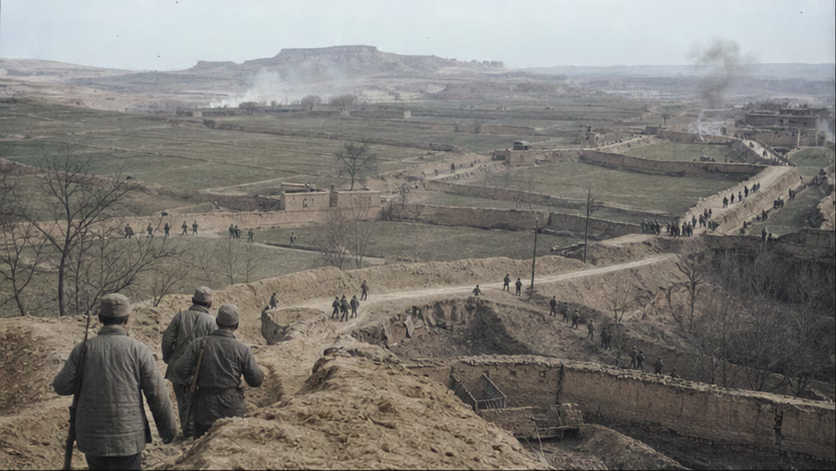 Counter-"Mopping-Up" Operations (1941–42, incl. ※ the "Three Alls")1941.01After the Hundred Regiments Offensive, Japanese forces changed the object of war in North China from armies to society itself -- "Three Alls" mopping-up, no man's zones, and the tightening of the "cage" cut the base areas' population and territory by nearly half in two years; counter-"mopping-up" was not one battle, but the way the entire military and civilian population of the base areas survived under strangulation.
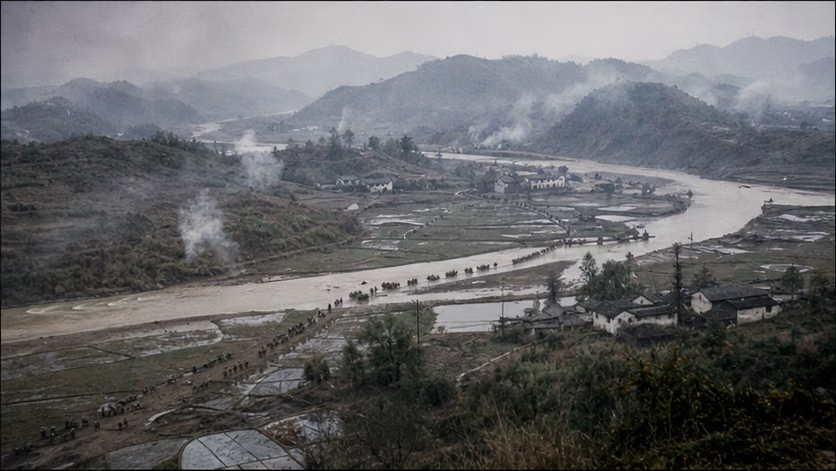 Battle of Shanggao1941.03A rare clean victory on the frontal battlefield during the stalemate phase: Luo Zhuoying's 19th Group Army, centered on Wang Yaowu's 74th Corps, prepared a pocket in advance and encircled the overextended 34th Division of the Japanese forces on both banks of the Jinjiang around Shanggao in northern Jiangxi. It badly mauled the division; although it did not annihilate it in a single encirclement, the Chinese side held the battlefield initiative throughout.
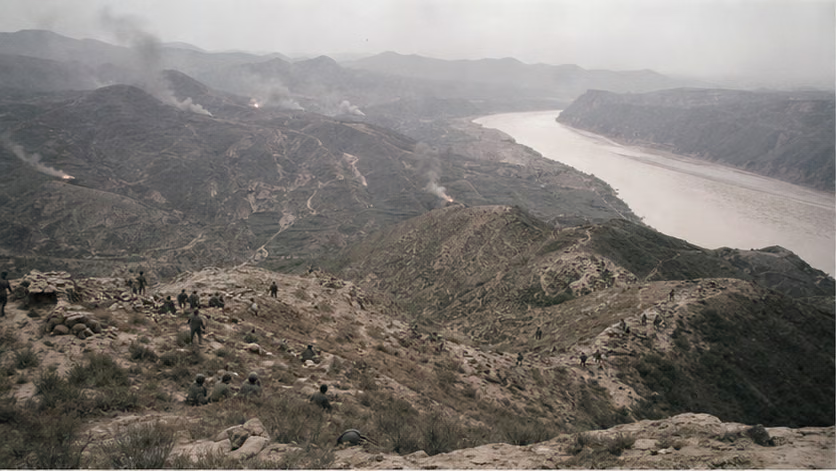 Battle of the Zhongtiao Mountains1941.05One hundred eighty thousand men had held a "great fortress behind enemy lines in North China" for three years; once Japanese forces closed the ring from all sides, it evaporated in little more than ten days -- not defeated by enemy strength, but by its own inner decay, where the systemic illness of the frontal battlefield rotted into its most complete specimen.
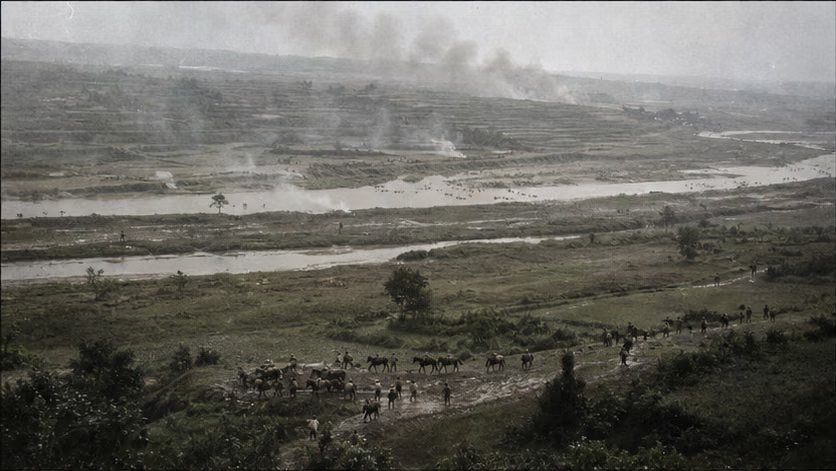 Second Battle of Changsha (1941)1941.09In the autumn of 1941, the Japanese Eleventh Army, roughly 100,000 strong, attacked Changsha again. Because the Ninth War Area's command communications had been decrypted and its armies were committed one after another only to be defeated in detail, Changsha fell for several days; afterward, both sides nevertheless declared "victory": the Chinese side called it the "Second Great Victory of Changsha," while the Japanese side called it the "completion of the objective of Operation Ka."
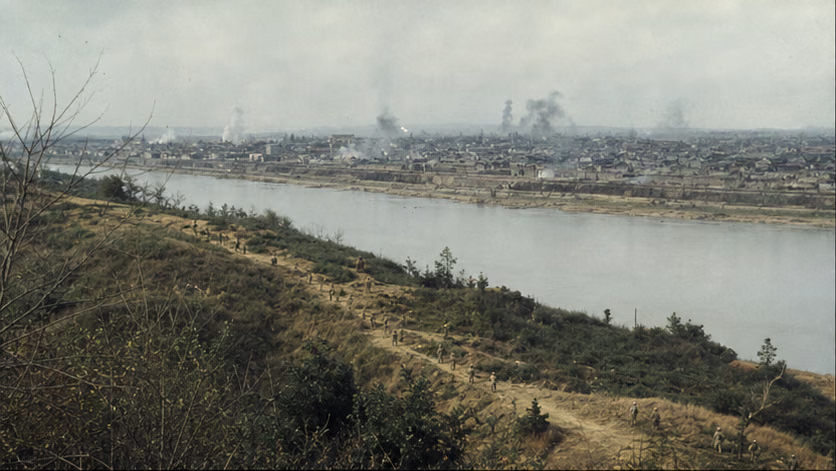 Third Battle of Changsha (1941–42)1941.12After the outbreak of the Pacific War, Japanese forces attacked Changsha for a third time in support of the Hong Kong operation; Xue Yue used the "Heavenly Furnace tactics" to lure the enemy into stalling below the city walls and then encircle it from all sides, and Japanese forces retreated in collapse after exhausting their ammunition and food--amid the Allies' line-wide defeats after Pearl Harbor, Changsha was the first victory.
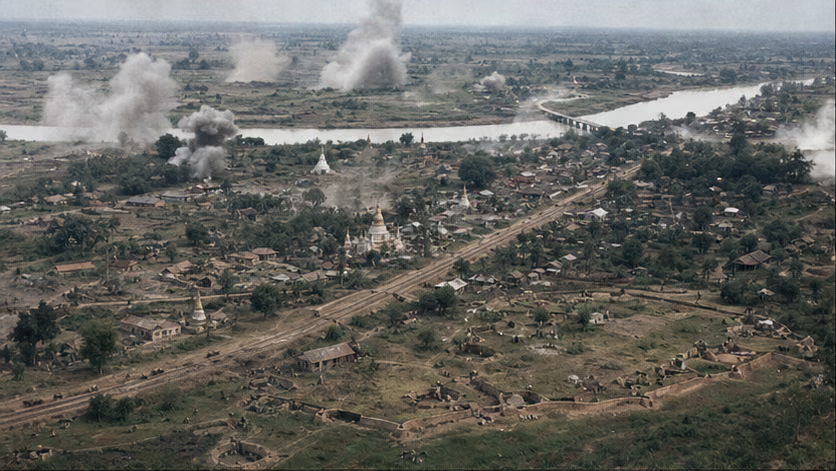 Defense of Toungoo1942.03The first battle fought by Chinese troops after crossing the national border: in a small city on the Burmese plain, the nine thousand men of the 200th Division held off a Japanese division for twelve days, covered the British withdrawal and the deployment of the main force, and then withdrew as an intact formation on the eve before the encirclement closed. The first battle already demonstrated that this army could fight with method on foreign ground.
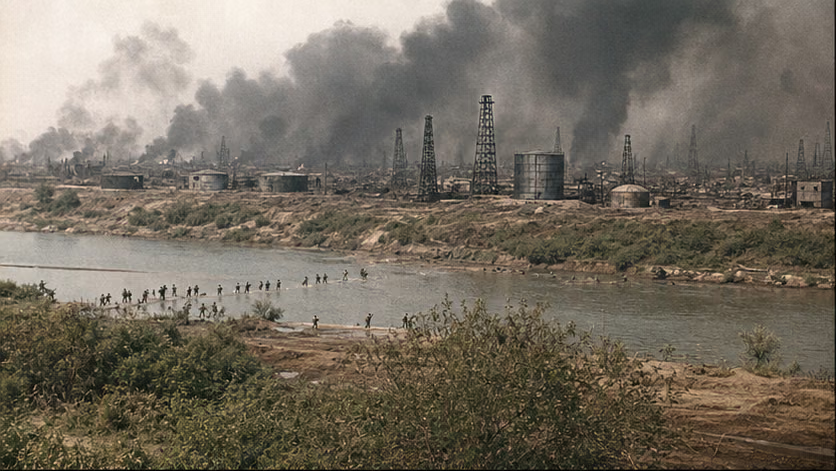 Battle of Yenangyaung1942.04One regiment of Chinese soldiers brought more than seven thousand British troops, with their vehicles, out of encirclement in the Burmese oilfields -- the first successful rescue of Allied forces by Chinese troops beyond China's borders. Among the British who were saved, some remembered it for the rest of their lives; in the official histories, the scale of this battle has been argued over on both sides for decades.
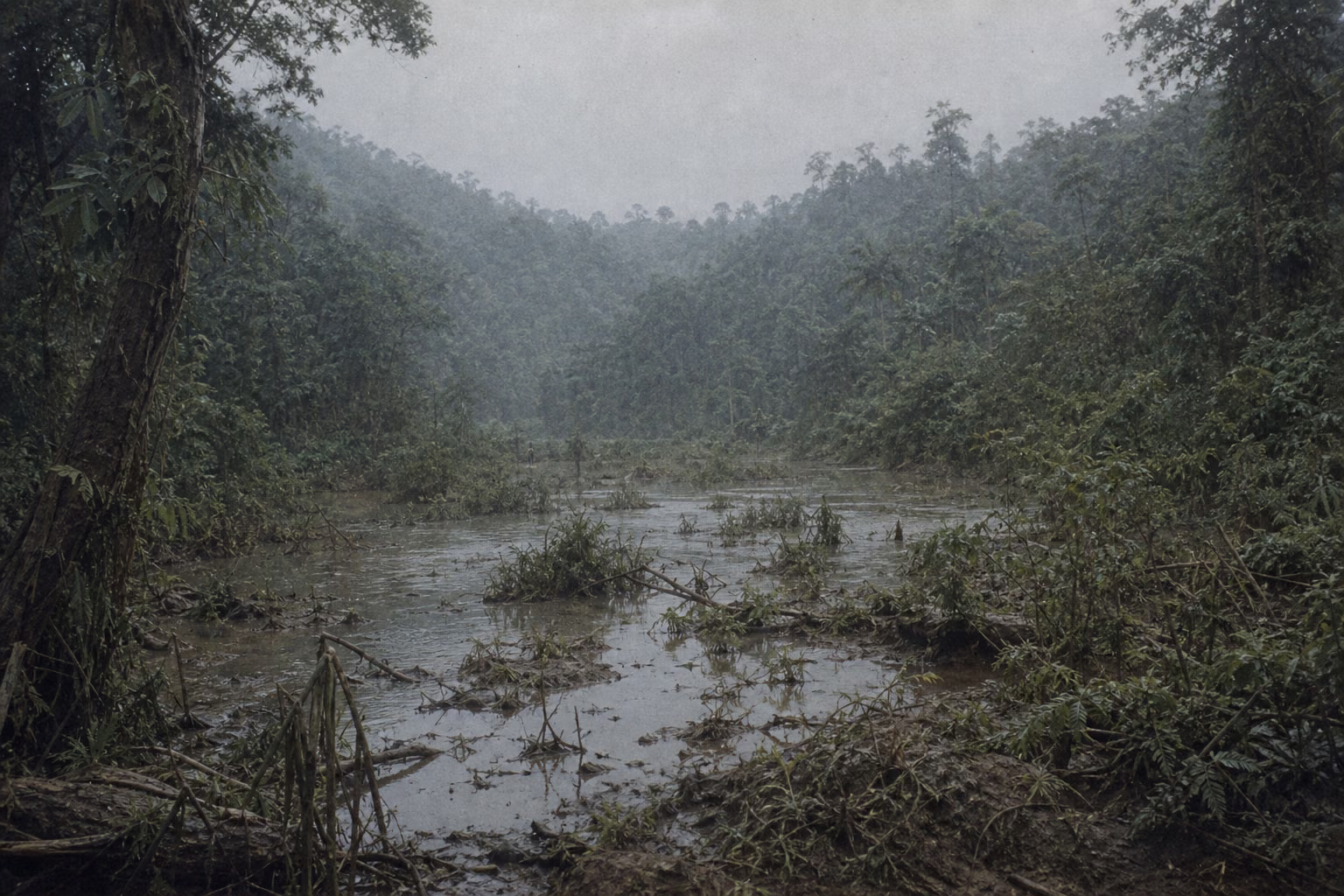 Retreat Through the Savage Mountains (※)1942.05.01Once Lashio was lost, the road home for the one hundred thousand men of the Expeditionary Force was gone: tens of thousands under Du Yuming's command were ordered to cross the primeval rain forest of the Hukawng Valley and return to China, and in the rainy season, among leeches, miasma, and hunger, more men died in the forest over two or three months than were killed in the whole Burma campaign. This was the quietest and most grievous passage on Whence We Came: the enemy scarcely fired a shot.
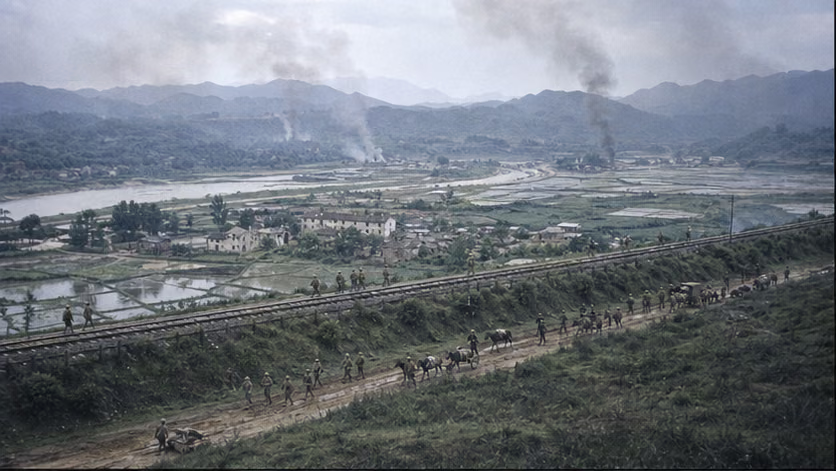 Battle of Zhejiang–Jiangxi (1942)1942.05.15After the B-25 crews from the Doolittle Raid crash-landed in Zhejiang and were rescued by Chinese civilians, Japanese forces launched the Zhejiang–Jiangxi operation: they took out airfields, struck the Zhejiang–Jiangxi railway, and, during their withdrawal, released biological weapons and carried out retaliatory village massacres along the line; the bill for bombing Tokyo was sent to Zhejiang's civilians.
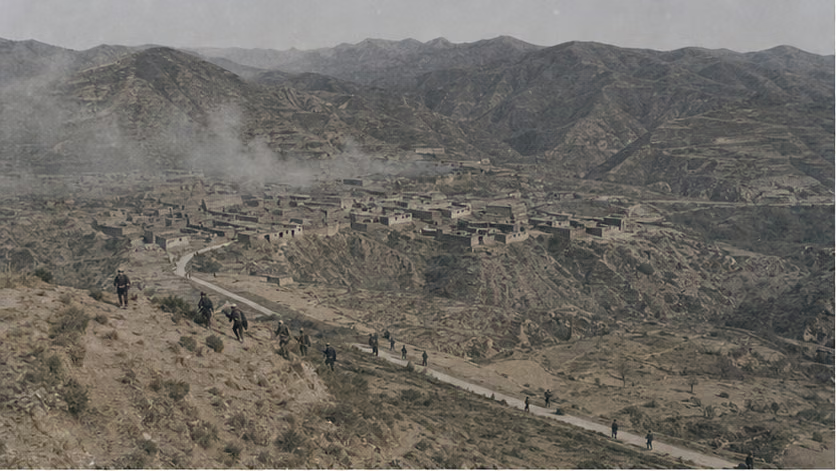 Siege of Qinyuan1942.11Japanese forces occupied Qinyuan county seat, and all 80,000 people in the county, under Party organization, collectively emptied it out: for two and a half years, the occupying forces held an empty city with no people, no grain, and no secure water supply, until in the end they withdrew on their own. A battle won without fighting a major battle: the most complete demonstration of the four words "people's war."
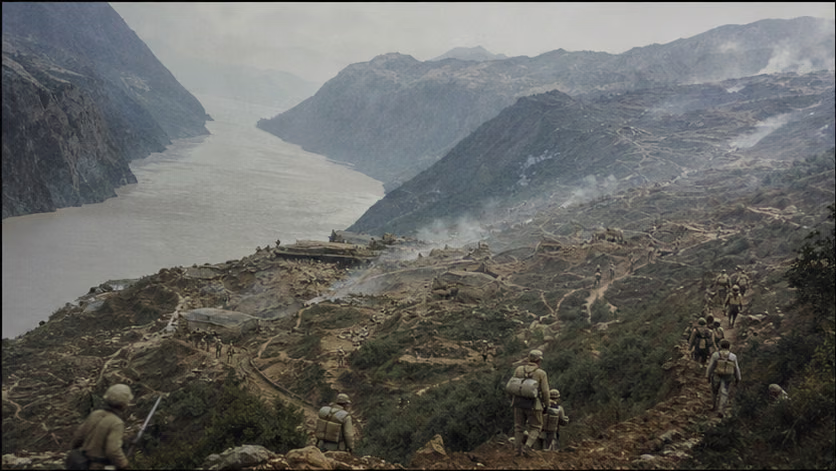 Battle of Western Hubei1943.05In the early summer of 1943, the Japanese Eleventh Army drove west into the Qingjiang River basin and reached Shipai Fortress at the mouth of the Three Gorges, the last river-defense gate shielding Chongqing; Hu Lien's Eleventh Division held Shipai, and after the Japanese offensive stalled, the whole line withdrew. The Chinese side called it the "Great Victory of Western Hubei"; the Japanese side recorded it as a turn back after objectives had been achieved -- two ways of remembering the same battle remain side by side.
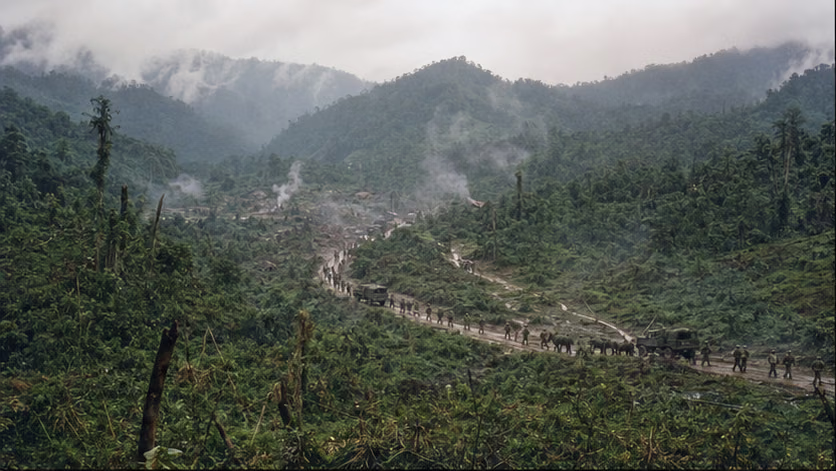 North Burma Counteroffensive (incl. Myitkyina)1943.10The defeated soldiers who had crawled out of the Savage Mountains two years earlier changed into U.S. equipment, trained for a year and a half, and fought their way back along the river valleys where their comrades had been buried -- Hukawng, Mogaung, Myitkyina: for the first time, the Chinese Army in India pressed Japanese forces down with firepower. Revenge starting from a place of burial became a textbook case.
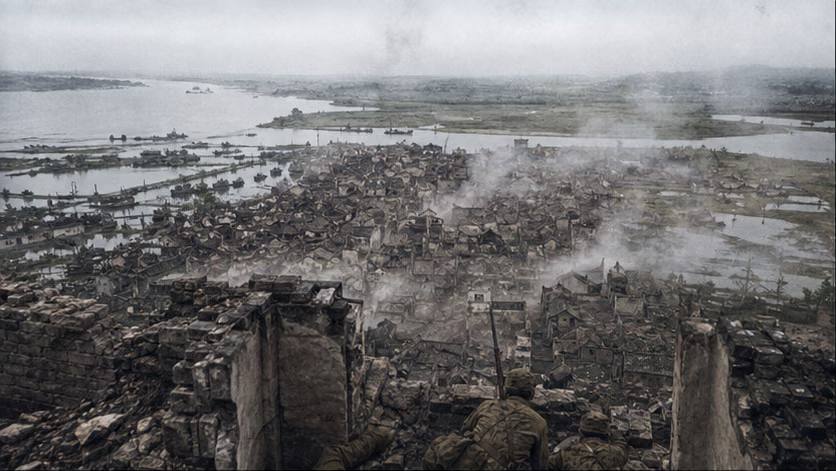 Battle of Changde1943.11Eight thousand "Huben" troops held for sixteen days in a city bombed flat and burned out; when the city fell, only a little more than two hundred remained — and the division commander who broke out alive was sent to a military court after he returned.
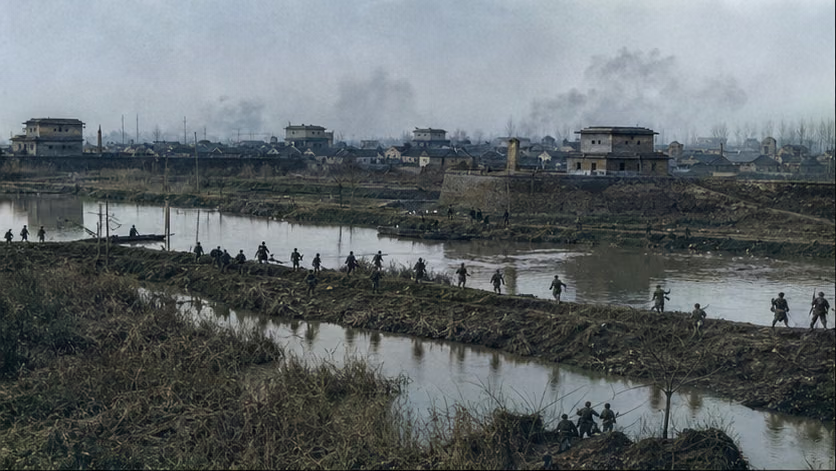 Battle of Cheqiao1944.03In spring 1944, the New Fourth Army's First Division assaulted the fortified town of Cheqiao and then struck relief forces in succession, capturing 24 Japanese soldiers in a single action -- the highest number of Japanese forces taken alive in any one engagement behind enemy lines; behind the lines in Central China, the war moved from enduring to striking, and the spring of counteroffensive began in this waterside market town in northern Jiangsu.
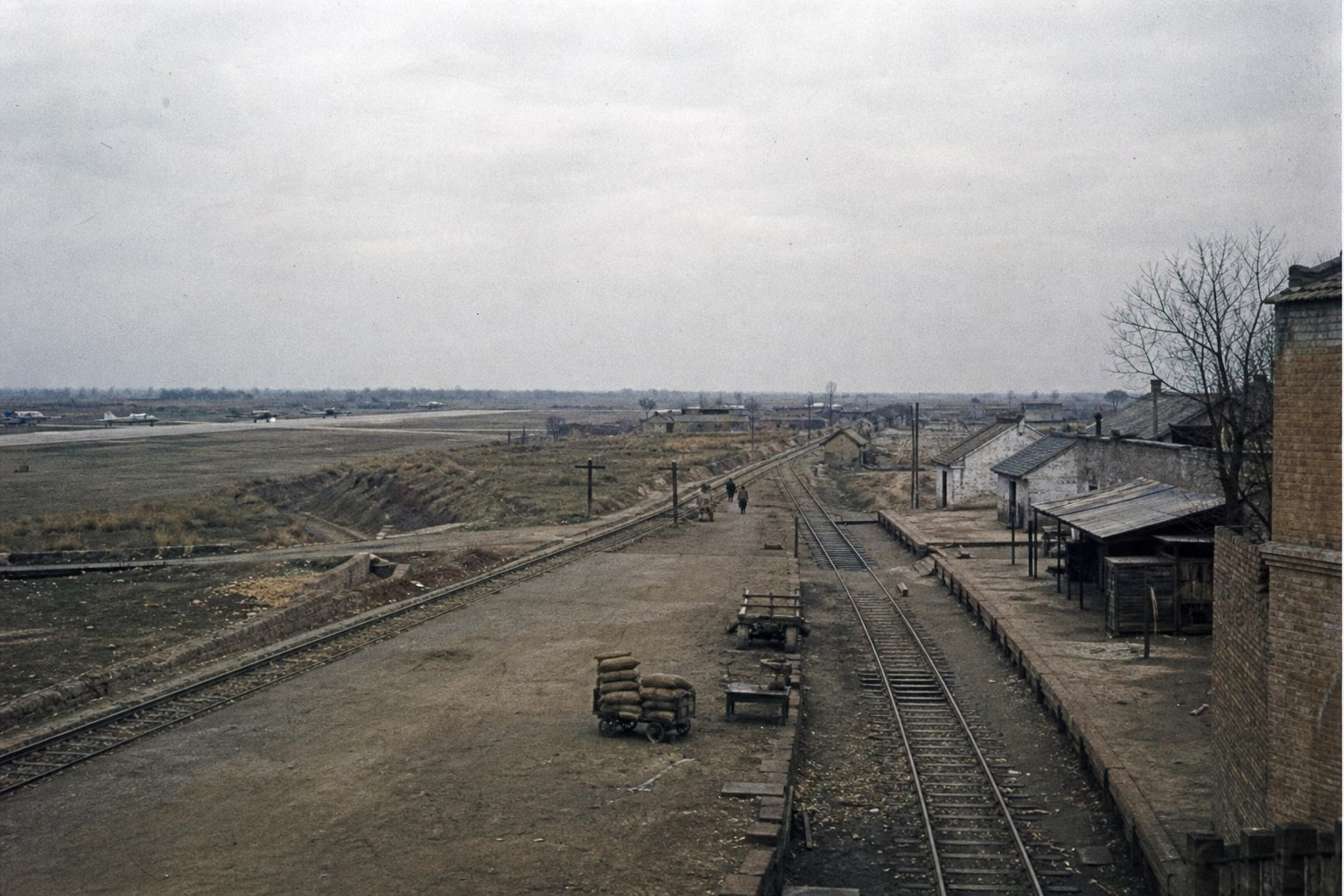 Battle of Henan–Hunan–Guangxi (Japanese "Operation Ichi-Go")1944.04The largest offensive in the history of the Japanese Army, and the largest collapse on China's frontal battlefield since 1938: in the year when the whole world was counterattacking, China was retreating in great strides.
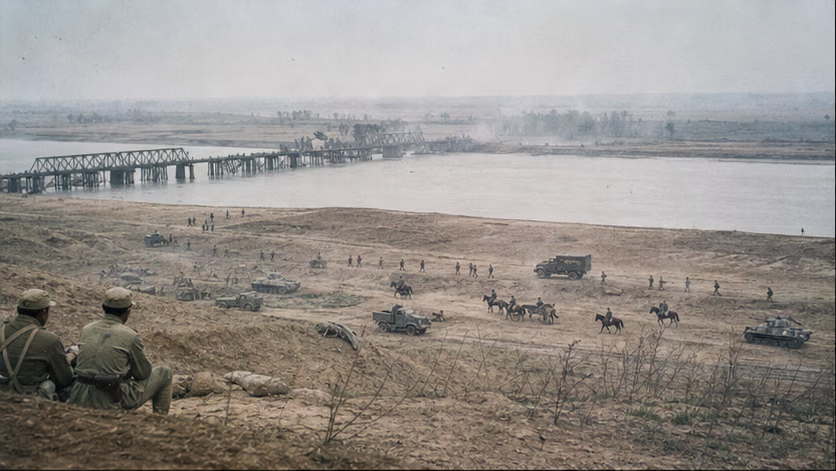 Battle of Central Henan (1944)1944.04.17Henan was lost in thirty-seven days -- in some places, civilians did not help the Nationalist Army, but instead took guns from routed soldiers. The account of popular allegiance had already filled up before the military collapse arrived.
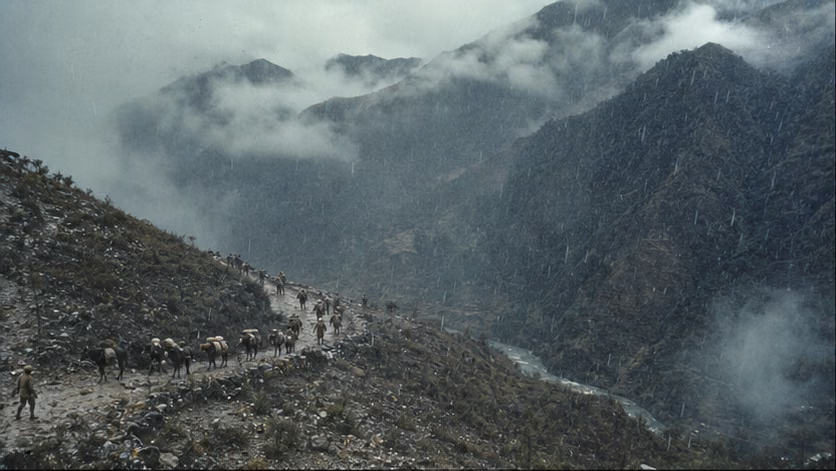 Battle of Tengchong1944.05.11After crossing the four-thousand-meter Gaoligong Mountains, the 20th Group Army reduced Tengchong city to scorched ground cleared house by house -- forty-two days of street fighting, the defending force annihilated, and the first walled county seat China recovered was a city with scarcely a few intact houses left. Three months after the city was recovered, the National Martyrs Cemetery had already risen: the first cemetery for fallen soldiers that Chinese people built for this war.
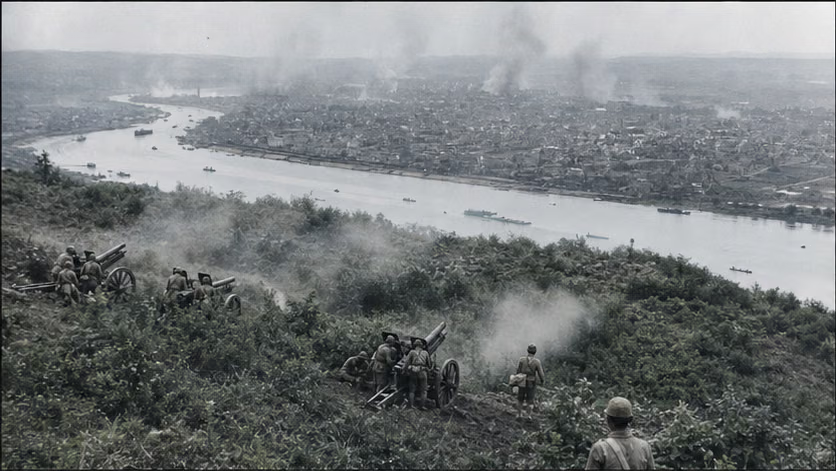 Fourth Battle of Changsha (1944)1944.05.27The same city, the same war-area commander, the same "Heavenly Furnace" - the first three times forged a myth; the fourth burned the city into it.
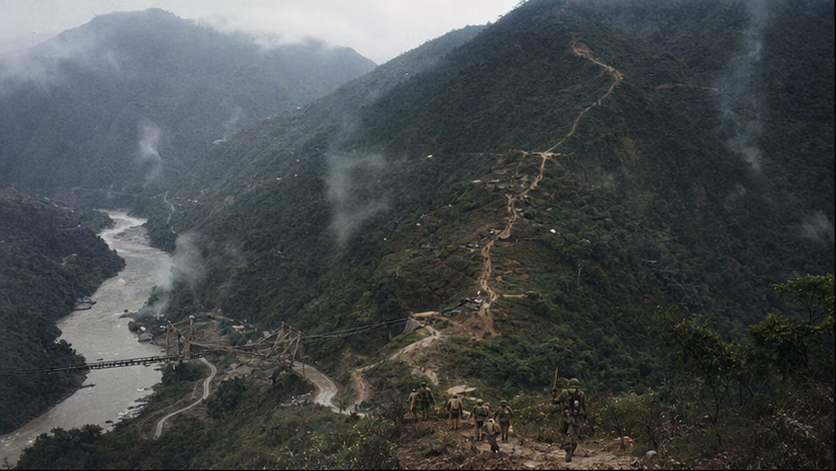 Battle of Songshan1944.06.04A mountain on the west bank of the Nu River; an underground fortress Japanese forces had spent two years building; one thousand three hundred defenders. The Chinese Expeditionary Force fought for ninety-five days and suffered 7,700 casualties, and in the end used three tons of explosives to blow the main peak, men and works together, into the sky -- ten battles for Songshan, and the defenders wiped out to the last. For the first time, Chinese troops reduced a Japanese strongpoint to "gyokusai"; for the first time, too, they learned what it meant to buy meters with lives in a fortified assault.
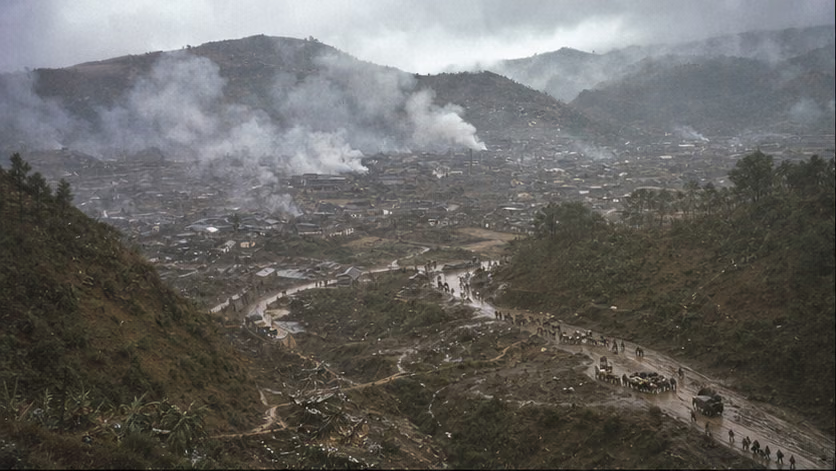 Battle of Longling1944.06.05The longest battle of the western Yunnan counteroffensive -- five months, three entries and three withdrawals. Longling was the crossroads between Songshan and Tengchong; Japanese reinforcements came up wave after wave from Mangshi, while the Expeditionary Force entered the city again and again only to be pushed out again. Only after Songshan was opened and Tengchong fell did Longling finally change hands. The campaign's outcome was ultimately decided by two other mountains.
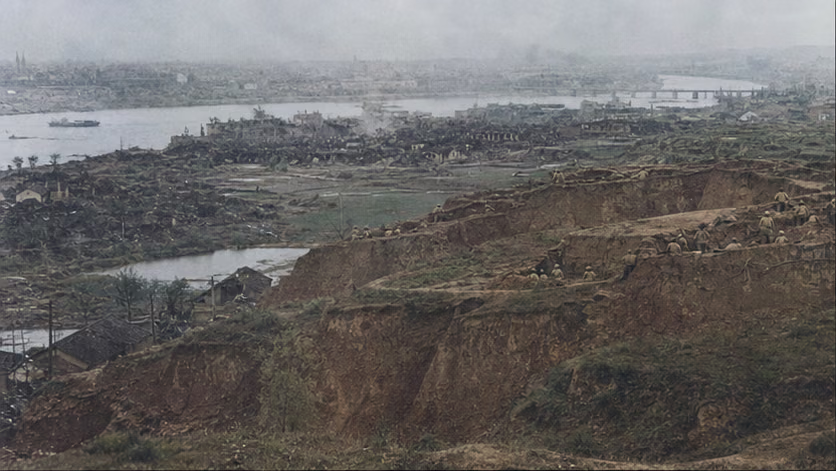 Defense of Hengyang1944.06.23A depleted remnant force of 17,000 men, still unreplenished, held off five Japanese divisions in succession for 47 days inside a city emptied by evacuation - the longest urban defensive battle on the Chinese battlefield.
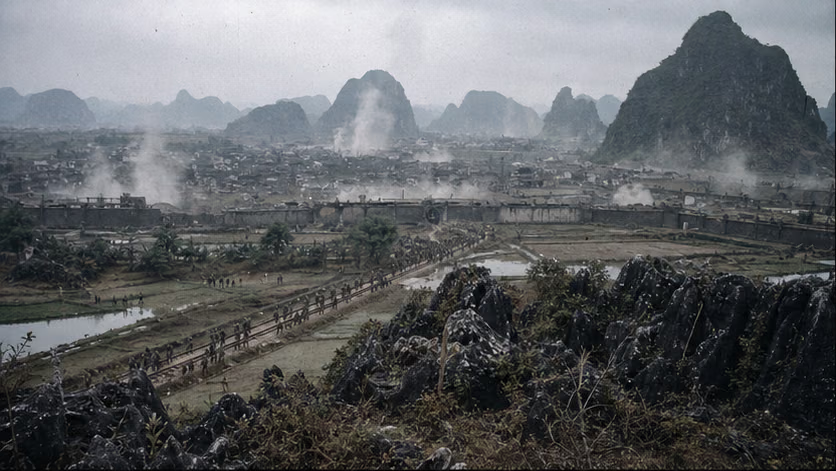 Battle of Guilin–Liuzhou1944.08The final leg of Operation Ichi-Go: Guilin and Liuzhou fell on the same day, Japanese forces once drove as far as Dushan in Guizhou, only a few hundred kilometers from Chongqing; the transport corridor had been "opened," but the war was already nearly lost.
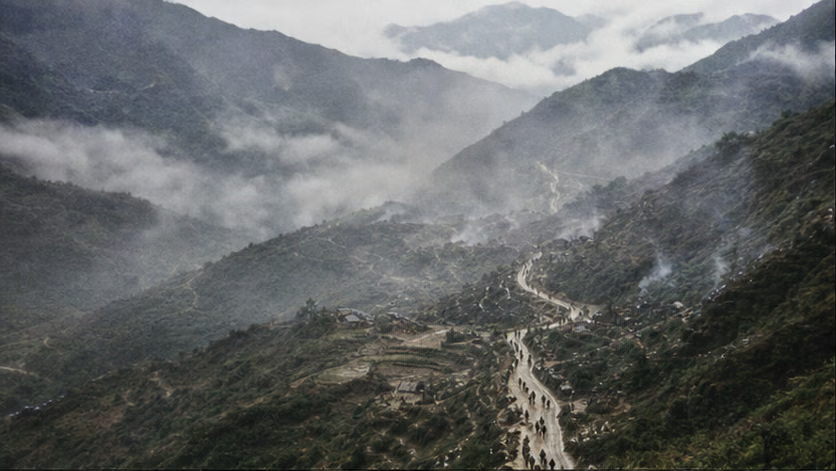 Battle of Western Hunan (Xuefeng Mountains)1945.04In the spring and summer of 1945, the Japanese forces' last large-scale offensive drove toward Zhijiang airfield; in the Xuefeng Mountains, Chinese forces held them point by point, encircled them, and drove them back -- the frontal battlefield's last major campaign closed in complete victory.
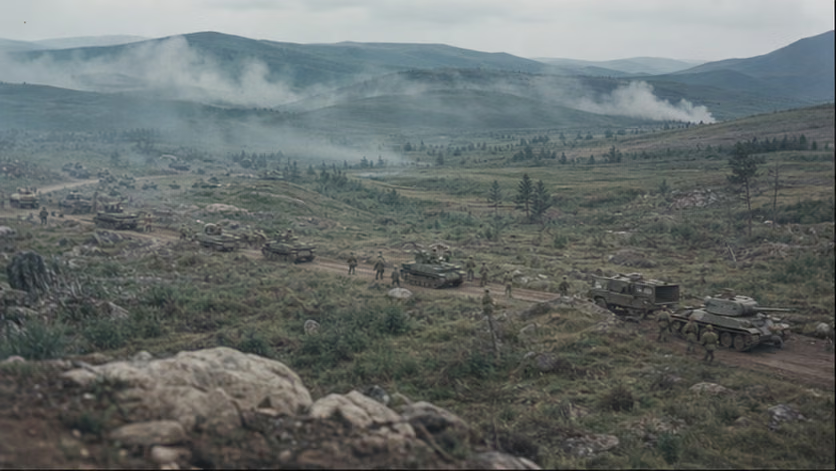 [Foreign war on Chinese soil] Soviet August Storm Offensive (1945)1945.08Three days after the atomic bombing of Hiroshima, 1.5 million Soviet troops poured into China's Northeast from three directions and crushed the Kwantung Army in little more than ten days -- the last great battle between foreign powers fought on Chinese soil. It ended fourteen years of occupation, and also emptied the Northeast's factories and decided the first chessboard of the civil war. Liberation and new trouble came from the same army.
Sources and Open Questions
Sources: *History of the Chinese Expeditionary Force* (multiple versions; final reference text unverified); memoir materials by Du Yuming, Sun Liren, and Zheng Dongguo; Japan Defense Agency War History Office, *Operations to Capture Burma* and *Irrawaddy Campaign*, various volumes; the Stilwell papers; field studies of the western Yunnan battlefield by Ge Shuya and others; Tengchong National Martyrs Cemetery and the Songshan site.
Open questions: casualty and strength statistical bases for each phase; composition of losses in the Savage Mountains; number of laborers on the Yunnan-Burma Road; details after Dai Anlan's death; original text of Zhang Wende's letter; American assessment materials for the Chinese Army in India; records of the actions to bring veterans back to China; text and signing process of the *Sino-British Agreement for the Joint Defense of the Yunnan-Burma Road*; Chiang Kai-shek's movements at Lashio; the evolution of the Quebec and Cairo Conferences' plans for the Burma counteroffensive and the course by which the Bay of Bengal amphibious operation was canceled; the exchange of cables pressing western Yunnan to cross the Nu River (including the phrasing about Lend-Lease materials); period-by-period freight volume of the Hump route; Ramgarh equipment distribution and the equipment level of the western Yunnan forces.
All images on this site are AI-generated depictions. They are not historical photographs, not primary sources, and do not depict any real individual.