Engagement Archive · Battle of Changde
Eight thousand "Huben" troops held for sixteen days in a city bombed flat and burned out; when the city fell, only a little more than two hundred remained — and the division commander who broke out alive was sent to a military court after he returned.
Engagement Data
| Item | Content |
|---|---|
| Time | 1943.11.2 – late 12; defense of Changde city 11.18 – 12.3 |
| Location | Changde, Hunan, and the west bank of Dongting Lake and the Yuan River basin |
| Part of | Fourteen-Year War of Resistance · Battle of Changde |
| Defending Side | Sixth War Area (acting commander-in-chief Sun Lianzhong); city defense by the 57th Division, 74th Army (division commander Yu Chengwan) |
| Attacking Side | Japanese Eleventh Army (commanding officer Isamu Yokoyama), with the 116th Division and two other divisions as the main assault force |
| Result | On 12.3 Changde city fell, and Yu Chengwan led more than two hundred survivors in a breakout; on 12.9 the Chinese counteroffensive recovered Changde, Japanese forces soon withdrew, and the front line was broadly restored |
Belligerents
| Item | Defending Side | Attacking Side |
|---|---|---|
| Strength | In the whole campaign area, more than 200,000 Chinese troops (counts vary by basis); more than 8,000 men of the 57th Division defended the city | About 100,000 men of the Eleventh Army, with three divisions as the main force around the city |
| Firepower | Light infantry division, mainly mortars, with ammunition dependent on pre-battle stockpiles | Divisional artillery + aviation; incendiaries used in the assault on the city; multiple Chinese records state that Japanese forces released poison gas ※ (Japanese archival evidence unverified) |
| Air | Chinese and American air forces provided support and airdropped supplies (many supplies fell outside the city, unverified) | Aviation cooperated in the assault on the city |
| Supply | Isolated city held to the death; food and ammunition based on long-term stockpiling | Designed as a quick battle; after the assault dragged on, the attacking side also became strained |
Terrain and Conditions
(For the broader situation of 1943 — the turning point in the world war and the stalemate on the Chinese battlefield — see *Fourteen-Year War of Resistance · War Overview*; this article covers only northwestern Hunan and Changde.)
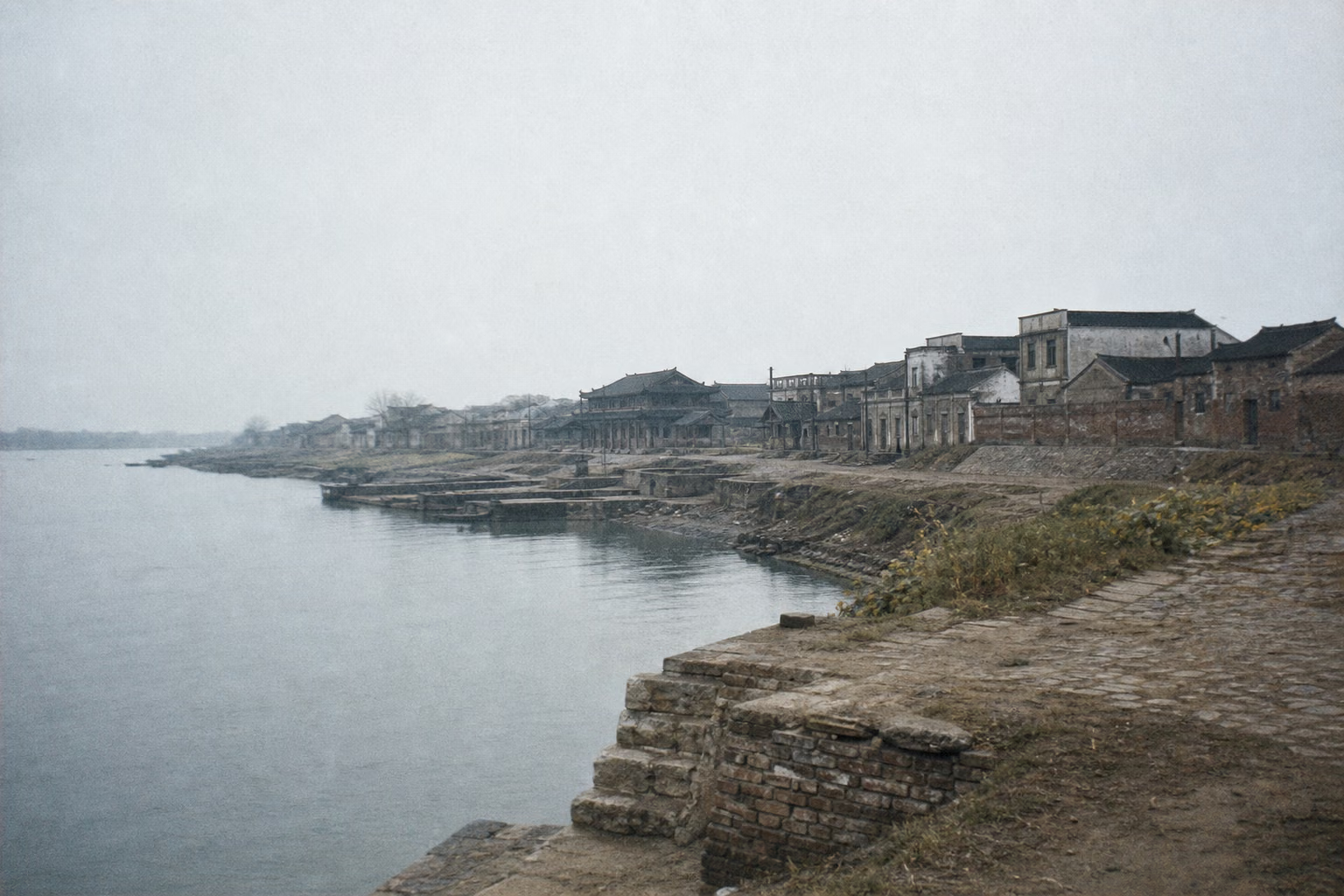
Changde: A materials entrepot on the west bank of Dongting Lake and the lower Yuan River, the grain and fodder transfer hub of the Sixth War Area, long called the gateway to western Hunan (phrases such as "throat of Sichuan and Guizhou" are unverified). A prosperous city in a land of fish and rice, crowded with wartime merchants and travelers.
Earlier wound: In November 1941, Japanese forces had airdropped grain carrying plague-infected fleas over Changde, causing a plague outbreak in a case of bacteriological warfare ※ — two years before this campaign. The two are often conflated, but their timelines are different (see open questions, unverified; the bacteriological-warfare case has not yet been written as its own article).
Why It Was Fought
In the same autumn when the Chinese Army in India entered the Hukawng Valley, the domestic frontal battlefield sounded again. The force that moved was still the Eleventh Army, and the commanding officer was still Isamu Yokoyama — the same army that had fought in the Battle of Western Hubei half a year earlier and, after being checked before Shipai, withdrawn according to plan. This time, the spearhead pointed toward the west bank of Dongting Lake.
Changde lay on the lower Yuan River and the west bank of Dongting Lake, a materials entrepot in a land of fish and rice. Crowded with wartime merchants and travelers, it was the grain and fodder transfer hub of the Sixth War Area and had long been called the gateway to western Hunan (phrases such as "throat of Sichuan and Guizhou" are unverified). For the Sixth War Area, this was the heart of supply and could not be lost.
Why Japanese forces advanced west at this moment is recorded in several ways on the Japanese side: to tie down Chinese forces and prevent their redeployment toward Yunnan and Burma — the Chinese Army in India was already fighting in northern Burma, and Chongqing was indeed drawing forces toward Yunnan and Burma; to seize the granary on the west bank of Dongting Lake; and to strike the main forces of the Sixth War Area. These explanations are listed side by side (this account unverified). Whichever one is chosen, the timing fits: in autumn 1943, the center of gravity on the Chinese battlefield was tilting southwest, and Japanese forces wanted to pull it back in Hunan.
The Chinese response was not the avoidance of battle seen in Zhejiang–Jiangxi. The high command designed a centripetal pocket: more than eight thousand men of the 57th Division, 74th Army would hold Changde city to the death, fixing the Japanese main force under the city walls, while the surrounding armies pressed back in from all four directions to form a counter-encirclement. In this design, the task of the defenders inside the city was the same as in the Defense of Toungoo: isolated, nailed to the spot.
Both sides miscalculated parts of the ledger. Isamu Yokoyama carried food and ammunition for a quick battle and did not calculate that eight thousand men would hold out for sixteen days in a city bombed flat and burned out. Japanese war histories later acknowledged that the stubbornness of the resistance exceeded expectations (wording unverified). Chongqing's design, in turn, bet on the pace of the surrounding armies, while the people in the city would later be able to see the direction from which relief troops were coming and still not wait long enough for them to enter the city.
On November 2, Japanese forces advanced west by separate routes, and outlying counties and towns fell one after another; the encirclement drew in toward Changde, civilians were evacuated, and the 57th Division completed its preparations to defend the city. In the end, the high command's design was broadly fought into being — at the cost of a city, and a division.
Course of the Engagement
| Phase | Time | Key Points |
|---|---|---|
| Perimeter and encirclement | 11.2 – 11.17 | Japanese forces advanced west by separate routes and took outlying counties and towns in succession (the sequence in which each point fell is unverified); the 57th Division completed preparations for city defense, deployed in the suburbs, and civilians were evacuated |
| Opening of the city defense | 11.18 – 11.24 | Suburban strongpoints contracted into the city one after another; Japanese forces attacked the East Gate and North Gate with force, and the first general assault was repulsed |
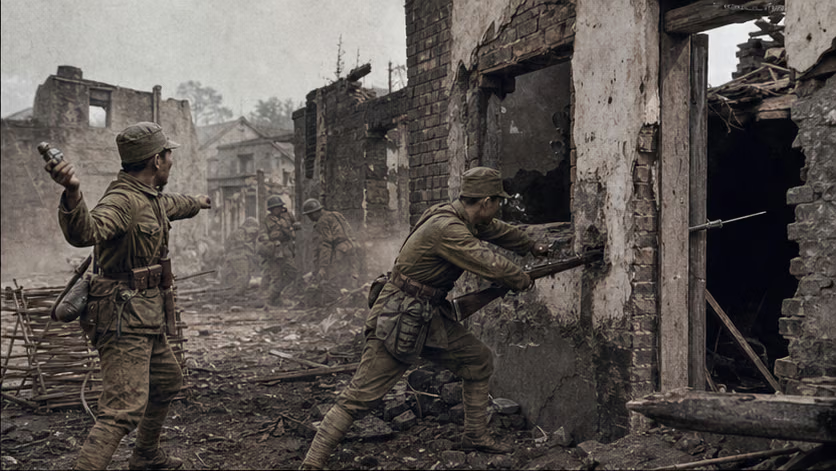
| Three general assaults | 11.25 – 12.2 | Aircraft bombed in waves and incendiaries burned the city; Chinese records state that Japanese forces released poison gas ※; blocks were fought for house by house, and the 57th Division repeatedly counterattacked with grenades and bayonets; officer and enlisted casualties neared exhaustion, and orderlies, cooks, and wounded soldiers all entered the line |
| City fall and breakout | Early morning, 12.3 | The city walls were breached in multiple places, and Yu Chengwan led more than two hundred survivors in a breakout to seek relief; regimental commander Chai Yixin led a small rear guard and was killed in action (regimental number unverified) |
| Counteroffensive and recovery | 12.3 – 12.9 and after | Relief forces outside the city pressed to the suburbs, and Changde was recovered on 12.9 (dates of recovery vary by basis); Japanese forces had half achieved their objectives and exhausted their supplies, soon withdrew, and by late December the pre-battle situation had broadly been restored |
Casualties and Losses
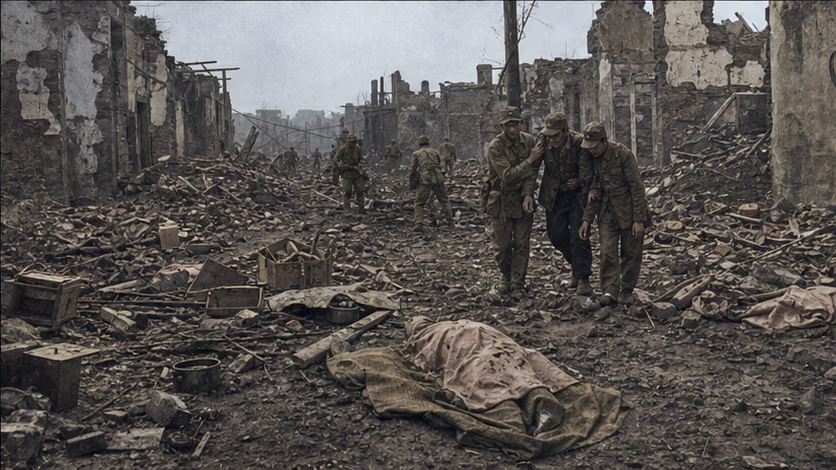
- Defending side: the 57th Division had more than 8,000 men; after the battle, several hundred survived (specific number unknown); Chinese casualties in the whole campaign area numbered in the tens of thousands (counts vary by basis).
- Attacking side: for Japanese casualties, Chinese battle reports claimed more than 40,000 killed and wounded (campaign-wide basis), while Japanese-side and later studies give figures as low as a little over 10,000 — the statistical boundaries differ, and the two sets are listed side by side; still unverified.
- Civilians ※: civilians who remained in the city were killed, and nearly the whole city became scorched earth (records fragmentary, unverified).
Aftermath
- Yu Chengwan was sent to court-martial for "breaking out without orders" and sentenced to death (the precise basis for the later commutation to imprisonment and release varies by account) — after holding until only two hundred men were left, he still had to stand trial. Public opinion was in uproar, and the officers and soldiers were unconvinced. Placed alongside Ding Ruchang and Fang Xianjue, this was the third example of "misfocused accountability": accountability fell on the exhausted defending general, while few took responsibility for the slowness like that at the Defense of Hengyang, in which relief forces could not fight their way in for 47 days, or for the handling of the surrounding operations (see the respective articles).
- Changde soon became a symbol of the "hero city." Zhang Henshui interviewed survivors of the 57th Division and wrote *Long Live the Huben* — China's first wartime documentary novel to write the biography of a single military unit.
- Japanese war histories acknowledged heavy losses in the assault on the city and that the stubbornness of the resistance exceeded expectations, and reviewed the failure to achieve the containment objective in this battle (Japanese wording unverified).
Accounts of Those Present
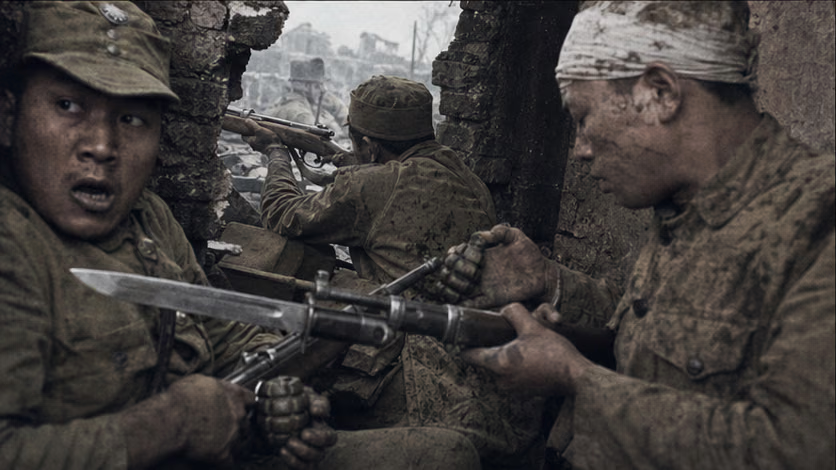
- "Ammunition exhausted, relief cut off, men gone, the city already broken...": the opening of Yu Chengwan's last telegram before the city fell; circulated versions differ (original text unverified).
- Chai Yixin: on the night before the city fell, he led the remnants as a rear guard to cover the breakout and was killed in action — the men who formed the division's rear guard did not come out.
- House-by-house fighting: artillery fire opened holes through the walls of civilian houses in the blocks, and one room after another was fought over; participants recalled bodies in the alleys piled high enough to block movement (specific record unverified).
- Eight thousand and two hundred: the more than eight thousand men who entered the city were reduced to a little more than two hundred at the breakout — this unit's casualty rate was, in the literal sense, being "fought out."
- *Long Live the Huben*: Zhang Henshui wrote a biography not of a commander-in-chief but of one division, with Yu Chengwan and the officers and men of the 57th Division as the protagonists — literature remembered them before the histories did.
The Ground
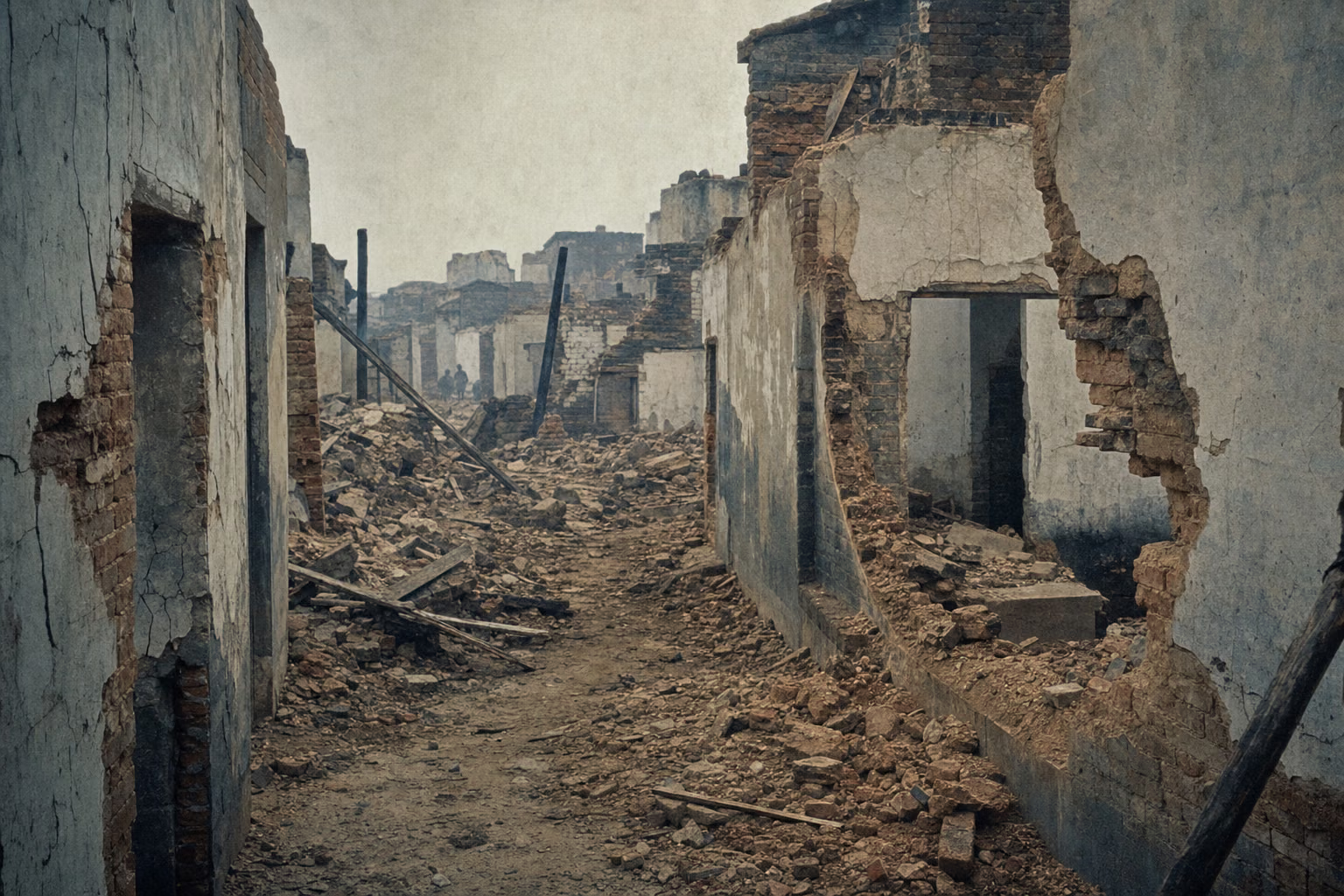
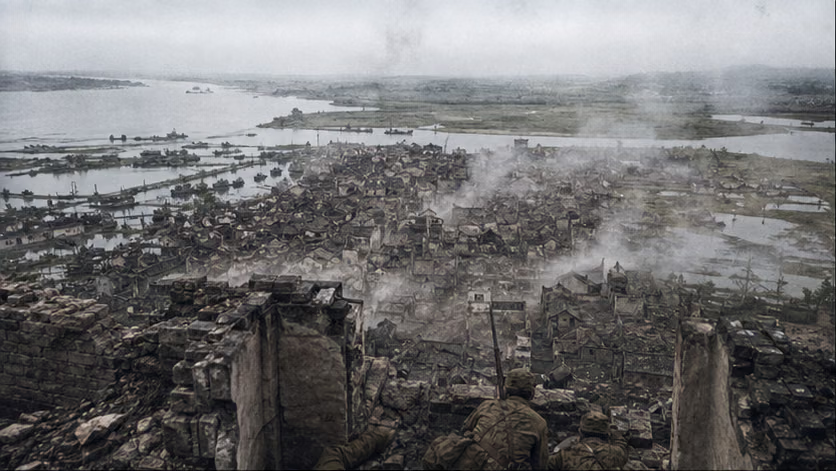
- The city bordered the Yuan River, joined hills to the west, and faced dense lake branches and river networks to the northeast — the axes of attack were limited by the water network, and the defenders' fire positions were layered through the streets and alleys.
- Street fighting took place in blocks burned by incendiaries: ruins, broken walls, civilian houses opened through, fighting house by house, with the scale measured as "one room."
- Inside and outside the city were two battles: inside, sixteen days of isolated defense; outside, relief forces advancing centripetally — the time lag of "able to see the direction of the relief troops, unable to wait until they arrived" is the narrative frame of this battle.
How Each Side Records It
- Chinese side: set beside the "Huben death-defense" are two injustices — the slowness of the relief forces, and Yu Chengwan's trial. The city-defense narrative and the accountability dispute have coexisted for eighty years.
- Japanese side: official war histories call it the "Changde annihilation operation," acknowledge the hard fight and major losses in the assault on the city, and give the defenders' resistance a relatively high evaluation (wording unverified).
- Overseas: after the battle was reported by foreign dispatches, it had considerable impact, and Changde was listed alongside Tai'erzhuang as a Chinese city name familiar to wartime foreign media (reporting details unrecorded).
Disputes and Sensitivities
- How to characterize the Yu Chengwan case: the two characterizations of "fleeing in the face of battle" and "breaking out after exhaustion" coexist; the exact course and documents of the judgment, commutation, and release remain unverified.
- Evidence levels for Japanese use of poison gas and incendiaries: Chinese records are numerous, while matching Japanese archival materials remain unverified.
- The 1941 bacteriological-warfare case and this campaign are often conflated — their timelines are different (cross-references between the two cases remain unverified).
- The two sets of casualty figures differ widely.
Sources and Open Questions
Known main sources:
- Zhang Henshui, *Long Live the Huben* (documentary novel, to be read against historical materials)
- Ge Xiancai, *A Participant's Account of the Bloody Battles of Changsha, Changde, and Hengyang* (the outside perspective of the Tenth Army's relief of Changde)
- Japanese Defense Agency War History Office, *Senshi Sosho*, relevant volumes (Japanese official history; volume title unverified)
Open questions: original text of Yu Chengwan's "last telegram"; Chai Yixin's regimental number and details of his death in action; judgment in the Yu case, course of commutation, and documents; exact date when Changde was recovered; statistical boundaries for casualties on both sides; Japanese archival materials on poison gas/incendiaries; cross-reference to the 1941 bacteriological-warfare case; records of civilian deaths inside the city; basis for total Chinese participating strength.
All images on this site are AI-generated depictions. They are not historical photographs, not primary sources, and do not depict any real individual.