Engagement Archive · Battle of Tengchong
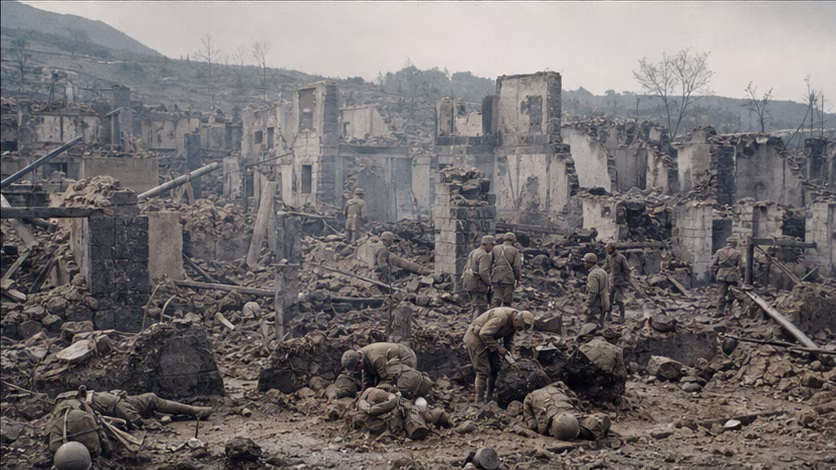
After crossing the four-thousand-meter Gaoligong Mountains, the 20th Group Army reduced Tengchong city to scorched ground cleared house by house -- forty-two days of street fighting, the defending force annihilated, and the first walled county seat China recovered was a city with scarcely a few intact houses left. Three months after the city was recovered, the National Martyrs Cemetery had already risen: the first cemetery for fallen soldiers that Chinese people built for this war.
Engagement Data
| Item | Content |
|---|---|
| Part of | Fourteen-Year War of Resistance · Yunnan–Burma Theater (for the overall picture, see *Yunnan–Burma Theater · Overview*) |
| Time | 1944.5.11 river crossing – 9.14 capture of the city (urban street fighting 8.2–9.14, forty-two days) |
| Location | Tengchong, Yunnan: the passes of the Gaoligong Mountains — Laifeng Mountain — Tengchong stone city |
| Attacking side | 20th Group Army of the Western Yunnan Expeditionary Force (Huo Kuizhang), about fifty thousand-plus men (figures vary by statistical basis), with U.S. air support |
| Defending side | Mainly the Japanese 56th Division's 148th Regiment (garrison commander Colonel Kurashige Yasumi, later replaced by Lieutenant Colonel Kaneoka), about two thousand-plus men (figures vary by statistical basis) |
| Result | On 9.14 the defending force was annihilated (in the "gyokusai" sequence); Tengchong was recovered -- the first county seat recovered in the War of Resistance |
Belligerents
| Item | Expeditionary Force | Japanese Forces |
|---|---|---|
| Strength | Group-army level against regiment level -- but mountain terrain and the stone city canceled the numerical advantage | Two years of defenses: city walls turned into works, houses connected to houses, fortresses and hidden bunkers everywhere |
| Firepower | U.S.-equipped mountain guns + direct B-25/P-40 support (Allied aircraft opened breaches in the city wall -- an innovation in fortified assault by bombing a city wall from the air, details unverified) | Relied on Ming-period stone city walls and volcanic-stone houses (the stone was exceptionally hard) |
| Terrain | Uphill assault on four-thousand-meter snow-line passes before the fortified assault | Waiting at ease for an exhausted enemy |
Terrain and Conditions
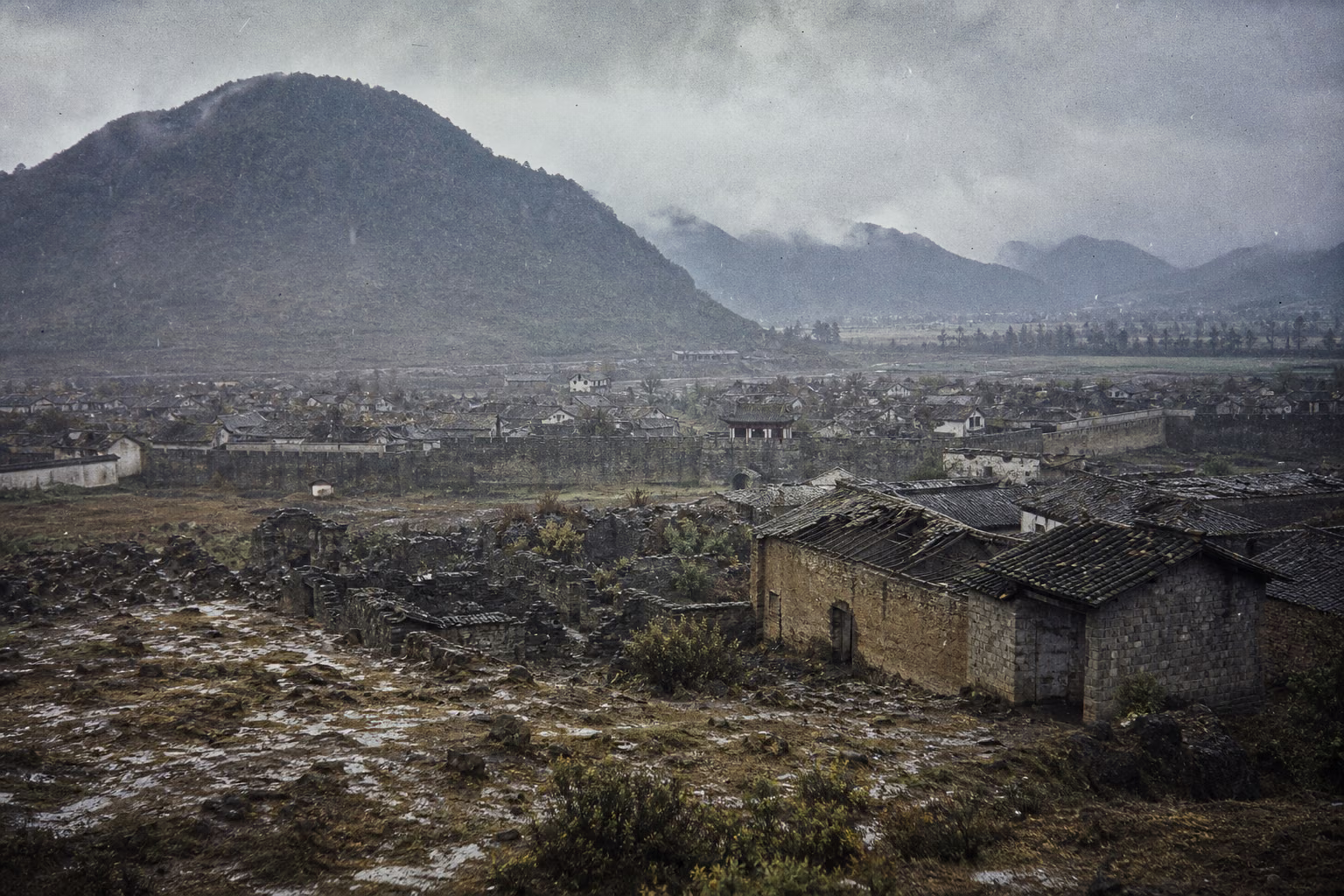
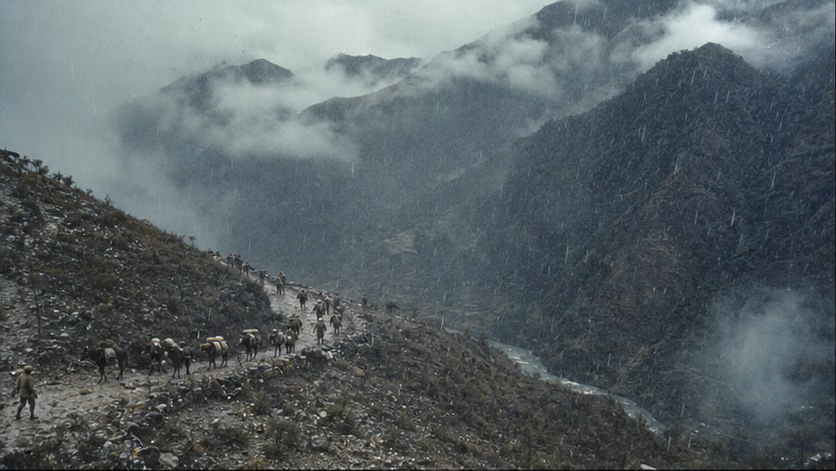
Tengchong: an overseas-Chinese hometown and jade trading town in western Yunnan, a Ming-period stone city; after its fall in 1942.5, it became the center of Japanese rule in western Yunnan. County magistrate Zhang Wende led the remnant government into the mountains, held out there, and refused Japanese forces' inducement to surrender (*Reply to Tajima* -- a famous document by a magistrate in occupied territory, cross-referenced in the overview); for two years, Japanese rule and the anti-Japanese county government coexisted in one county -- two governments for one county seat, the prehistory of recovery. The Gaoligong Mountains: the Beizhaigongfang, Nanzhaigongfang, and other passes stand more than three thousand meters above sea level, with hail in the May rainy season -- one of the highest-altitude battlefields in the world slaughterhouse (level of comparative phrasing).
Why It Was Fought
The collapse in the Battle of Central Henan (1944) had not yet reached bottom -- Luoyang would not fall until late May. In the same May, at the Nu River on the other end of the national border, the war began moving in the opposite direction: on China's map that year, the few arrows moving forward were in western Yunnan and northern Burma.
Since the Expeditionary Force's retreat in May 1942 and the blasting of Huitong Bridge, Chinese and Japanese forces had faced each other across the Nu River for a full two years. The account on this line was clear: for the China-India Road to open, northern Burma and western Yunnan had to advance toward each other from both ends -- over there, the Chinese Army in India had fought through the Hukawng Valley, with its spearhead pointed toward Mogaung and Myitkyina; if this side still did not move, the road would be open only halfway. Washington pressed repeatedly for this, and Chongqing finally ordered the river crossing (details of the decision-making exchanges unverified).
Tengchong was the first objective on the northern wing after the river crossing. This Ming-period stone city was an overseas-Chinese hometown and jade trading town in western Yunnan; after falling in May 1942, it became the center of Japanese rule in western Yunnan. For two years, a Japanese garrison sat in the city, while in the mountains stood the exile county government of sixty-two-year-old magistrate Zhang Wende, who refused to surrender -- two governments in one county. In terrain terms it mattered still more: under the counteroffensive plan, the 20th Group Army would cross the Gaoligong Mountains and take Tengchong as the northern wing, advancing alongside Songshan and Longling on the southern wing toward a converging attack on the Mangshi line. If Tengchong did not fall, the northern wing had no support point.
The arithmetic on paper was lopsided: the attackers had a group army of fifty thousand-plus men (figures vary by statistical basis), U.S.-equipped mountain guns, and American aircraft overhead; the defenders were mainly the 56th Division's 148th Regiment, two thousand-plus men (figures vary by statistical basis). But the account could not be reckoned that way -- the defenders had spent two years building works, linking the stone city walls and volcanic-stone houses into fortress clusters and waiting at ease; the attackers first had to assault uphill through the Gaoligong Mountain passes at more than three thousand meters, where hail still fell in May, fighting the mountain before fighting men. Numerical advantage had to be bought back layer by layer from the mountain and the stone.
The final push behind the order came from beyond the national border. In spring 1944, Roosevelt cabled several times to press the issue, eventually using Lend-Lease materials as leverage (exchanged cables unverified); in April, the order to cross the river went down to Expeditionary Force headquarters. Wei Lihuang had taken over this force only the previous winter -- it was the most intact capital Chongqing held, and its hesitation about staking it on the Gaoligong Mountains took nearly a year to resolve (Chongqing's specific considerations remain unverified).
The resolve on the opposite side was much simpler, and much more desperate: the 56th Division treated Tengchong as the support point of its northern wing in western Yunnan, and the 148th Regiment had received an order to hold to the death. Japanese forces were not unaware -- they could see the concentration across the river. What they miscalculated was the relation between men and mountain: above the snow line in the May Gaoligong Mountains, hail was still falling, and rainy-season mountain roads could not carry heavy equipment. By this account, crossing the mountains to assault a fortress uphill was not a rational option (Japanese records on their judgment of the river-crossing timing unverified). The Expeditionary Force's material boundary also pressed onto this mountain: shells, grain, and medicine all had to be carried by human backs and pack animals across passes above three thousand meters; if that still was not enough, they waited for airdrops. The rainy season left only a few months, and after that snow would close the mountains -- the timetable was not set by men, but by the mountain. On the defenders' side, every day of eating reduced stored grain by one day, and reinforcements were held down separately in the Songshan, Longling, and Myitkyina directions and never arrived. Debate over holding or abandoning the city has no place in the surviving Japanese records -- in the structure of military orders, there was only the path of holding to the death (whether the garrison had a withdrawal plan is unverified).
On May 11, the 20th Group Army forced a crossing of the Nu River.
Course of the Engagement
| Phase | Time | Key Points |
|---|---|---|
| Forced crossing and uphill assault | 5.11–6 | Forced crossing of the Nu River; uphill assault on the Gaoligong Mountain passes: high-mountain fortified assault in cold rain and hail, with heavy non-combat losses from freezing to death and falling from cliffs (non-combat casualty statistical bases vary by account) -- "fight the mountain first, then fight men" |
| Clearing the outer positions | 6–7 | Qiaotou and Jiangju were removed point by point; the Tengchong basin was encircled |
| Laifeng Mountain | 7.26–8.2 | Fortified assault on Laifeng Mountain, the high ground south of the city -- after several days of bloody fighting under air support, it was taken, exposing the urban area |
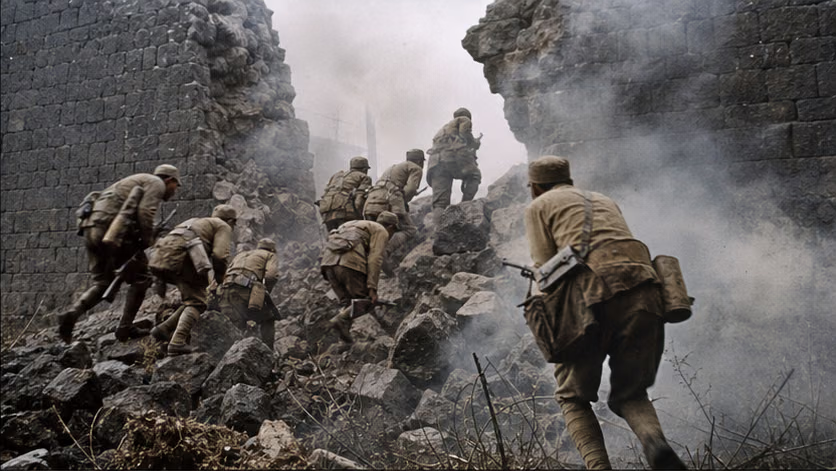
| Breaching the city | 8.2–8.13 | The stone city wall resisted artillery fire -- Allied aircraft dropped bombs that blew several breaches in the wall (details of the first case of "airborne breaching of a city" unverified); assault teams climbed the wall and fought over it repeatedly |
| Forty-two days of street fighting | 8.2–9.14 | Clearing house by house and bunker by bunker: volcanic-stone houses were as hard as blockhouses, and every courtyard had to be demolished; garrison commander Kurashige Yasumi was killed in mid-August at the command post in the Confucian Temple (details of the bombing death unverified); on 9.13 the remnants burned their flag and attempted a breakout, which failed, and on 9.14 the fighting ended -- the defending force was annihilated, with several dozen taken alive (including wounded and attached personnel, figures vary by statistical basis) |
Casualties and Losses
- Expeditionary Force: more than 18,000 casualties (more than 9,000 killed -- common statistical bases vary by account), including non-combat losses in the Gaoligong Mountains.
- Japanese forces: the garrison of about two thousand-plus was annihilated; "Tengyue gyokusai" entered Japanese war history (its statistical basis varies by account).
- ※ City and people: more than 90% of Tengchong city's buildings were destroyed in the fighting (figures vary by statistical basis) -- "what was recovered was a ruin"; the manpower of the overseas-Chinese hometown supported the front, and deaths during the two years of occupation (local-gazetteer statistical bases vary by account); evidence of a military comfort station established in Tengchong (western Yunnan "comfort women" system victim case -- the line of survivor testimony from Li Lianchun and others, unverified)※.
Aftermath
- With the northern wing fixed, the converging attack on Longling accelerated (see *Battle of Longling*); the meaning of western Yunnan counteroffensive's "first city": the recovery of national territory became concrete from here rather than abstract.
- National Martyrs Cemetery (completed in 1945.7): county magistrate Zhang Wende and local gentry advocated its construction, and Li Genyuan wrote the inscription "National Martyrs" -- 3,346 steles for the fallen were arrayed in formation (figure disputed), and a separate "Japanese grave mound" was built for Japanese corpses (the account that it faces the direction of kneeling before the national martyrs is at an unverified source level) -- China's earliest systematic cemetery for fallen soldiers of the War of Resistance, begun while the war had not yet ended: this time gap was the earliest practice of the later posture of "descendants touching the steles."
- Tengchong became the center of contemporary western Yunnan memory (the Western Yunnan War of Resistance Memorial Museum was expanded in 2013 beside the cemetery).
Accounts of Those Present
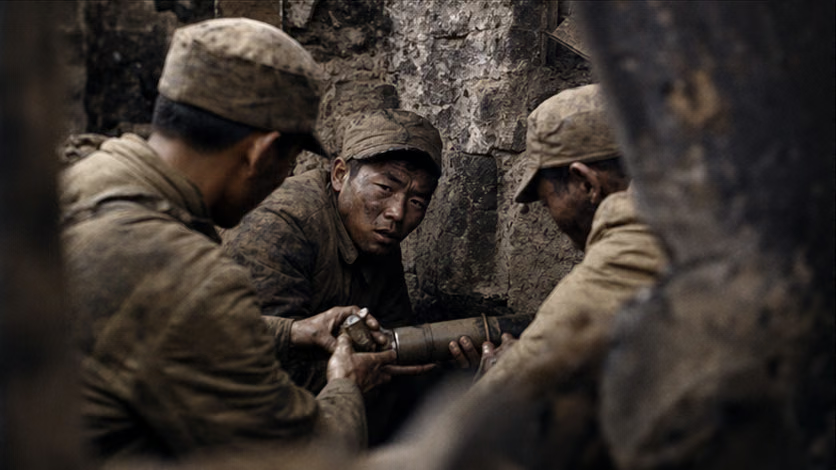
- Zhang Wende's cane: the sixty-two-year-old county magistrate used a cane to cross the mountains for his work and wrote *Reply to Tajima* to refuse surrender -- a model of a literatus fighting by document; after the recovery he resigned and returned home ("a person's integrity does not cash out because of victory" -- resignation reason unverified).
- Stone houses: volcanic-stone houses made every courtyard into a fortress -- the homes that Tengchong people had taken pride in turned back against the city during street fighting (the mutual devouring of architecture and war).
- The small steles of National Martyrs Cemetery: more than three thousand small foot-high steles bear only names and ranks -- an equal burial system of one stele for each person, officers and soldiers alike (details of the burial system unverified): the concrete origin point of this series' image of the "stele".
- Pack caravans and laborers: all supply over the Gaoligong Mountains depended on human backs and pack animals (laborer casualties unknown) -- the cost of each shell crossing the mountains was the hidden price list of this fortified assault.
The Ground
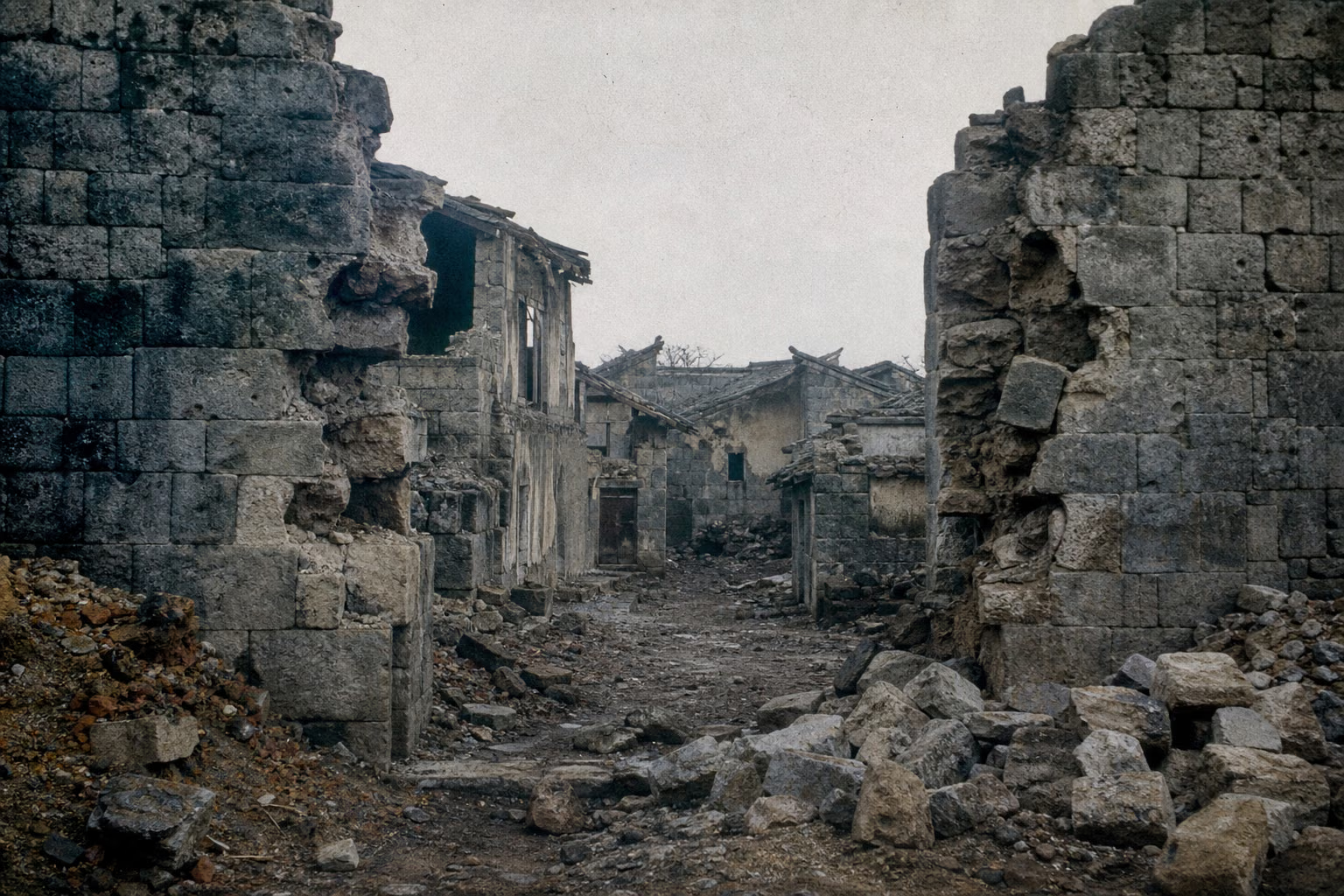
- A vertical battle: a several-thousand-meter height-difference axis from river surface to snow-line passes to basin to stone city -- the battlefield with the greatest vertical drop in the whole series.
- Stone-city fortified assault: breaching the wall, climbing the wall, and street fighting in three stages; courtyard-by-courtyard demolition of volcanic-stone buildings (together with the Songshan tunnels and the Hengyang cliffs, one of three samples of fortified assault).
- The overlooking relation between Laifeng Mountain and the city: another case in which a commanding height decided a city's fate.
- National Martyrs Cemetery: the endpoint of battlefield space is memorial space -- the battle ultimately closes at the cemetery.
How Each Side Records It
- Chinese side: the double symbol of the first recovered county seat + National Martyrs Cemetery; a density of local memory rarely seen nationwide (Tengchong families' memory of this battle continues to the present).
- Japanese side: the "Tengyue garrison gyokusai" entered war history; postwar visits to the graves by survivors and bereaved families (Chinese-Japanese civilian intersections at Tengchong, individual cases unverified).
- American side: air-support and liaison-group records (Stilwell-system assessments of the 20th Group Army's combat power unverified).
Disputes and Sensitivities
- Casualty statistical bases; the source level of the account about the direction faced by the "Japanese grave mound"; evidence concerning the comfort station (same standard as *Defense of Nanjing*).
- Huo Kuizhang had later reputational controversies after the war; they do not fall within this article's scope.
Sources and Open Questions
Sources: *History of the War of Resistance in Western Yunnan* (various editions unverified); inscriptions and archives at Tengchong National Martyrs Cemetery; collected writings of Zhang Wende; the Tengyue section in the Japanese *Army Operations on the Burma Front*; testimonies held by the Western Yunnan War of Resistance Memorial Museum.
Open questions: strengths and casualties on both sides; details of airborne breaching of the city; Kurashige Yasumi's death; number of cemetery steles and burial system; comfort-station case testimony; Zhang Wende's resignation text; exchanged cables in which the U.S. side pressed for crossing the river and the phrasing about Lend-Lease materials; Chongqing's hesitations over committing the Expeditionary Force; the text of the Japanese 56th Division's orders to the Tengchong garrison; Japanese records on their judgment of the river-crossing timing; the Gaoligong Mountains supply line and airdrop organization; whether the Tengchong garrison had a withdrawal plan.
All images on this site are AI-generated depictions. They are not historical photographs, not primary sources, and do not depict any real individual.