Engagement Archive · Assault on Jinzhou
Two years earlier, at Siping, the Northeast Field Army had paid its bitterest tuition; this time, in 31 hours, it smashed open Jinzhou -- the graduation examination for Siping's tuition.
Engagement Data
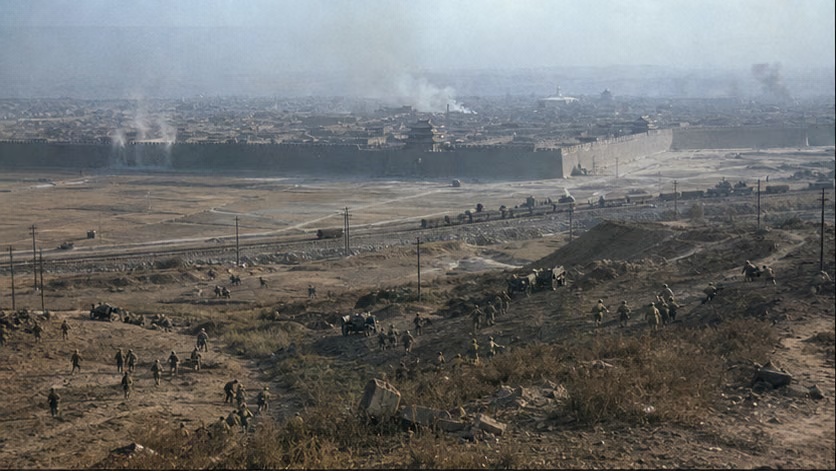
| Item | Details |
|---|---|
| Time | 1948.10.9 opening of the outer battle – 10.15 city taken (Yixian outpost action, 10.1) |
| Place | Jinzhou, Liaoning (throat of the Liaoxi Corridor; hub of the Beiping–Liaoning line) |
| Belongs to | Chinese Civil War · Liaoshen Campaign (the battle to "close the gate") |
| Attacker | Main force of the Northeast Field Army, 5 columns, about 250,000 (commanded by Lin Biao, Luo Ronghuan, and Liu Yalou; under direct command of the siege command post) (troop figures vary by account) |
| Defender | About 150,000 under Fan Hanjie, director of the Jinzhou command post of the Northeast "Bandit Suppression General Headquarters" (basis varies by account) |
| Result | General assault on 10.14; the city fell after 31 hours; Fan Hanjie captured -- Changchun and Shenyang then collapsed in sequence (see Liaoshen Campaign · Overview) |
Belligerents
| Item | Attacker | Defender |
|---|---|---|
| Strength | About 250,000 (5 columns plus the artillery column; basis varies by account), divided between the siege and the blocking of relief forces | About 150,000 defending the whole city (basis varies by account), mostly assembled from miscellaneous units, with uneven morale |
| Firepower | Artillery columns used in concentration; around 900 guns concentrated for the general assault (basis varies by account) -- by this point, the artillery arm of the Northeast Field Army had become a formed force | City-defense artillery and strong fortifications, but inferior in total firepower |
| Assault methods | Tunnel demolition, infantry-artillery coordination, and continuous multi-echelon assaults -- the full set of assault doctrine organized after Siping was now put to use | Outer high-ground strongpoints plus permanent works of city walls and moats |
| External aid | Blocking relief on the Tashan and Heishan axes provided security (see Battle of Tashan) | Hou Jingru's "Eastward Advance Corps" came from Huludao, and Liao Yaoxiang's corps came from Shenyang -- one was stopped at Tashan, the other lingered in Liaoxi |
Terrain and Conditions
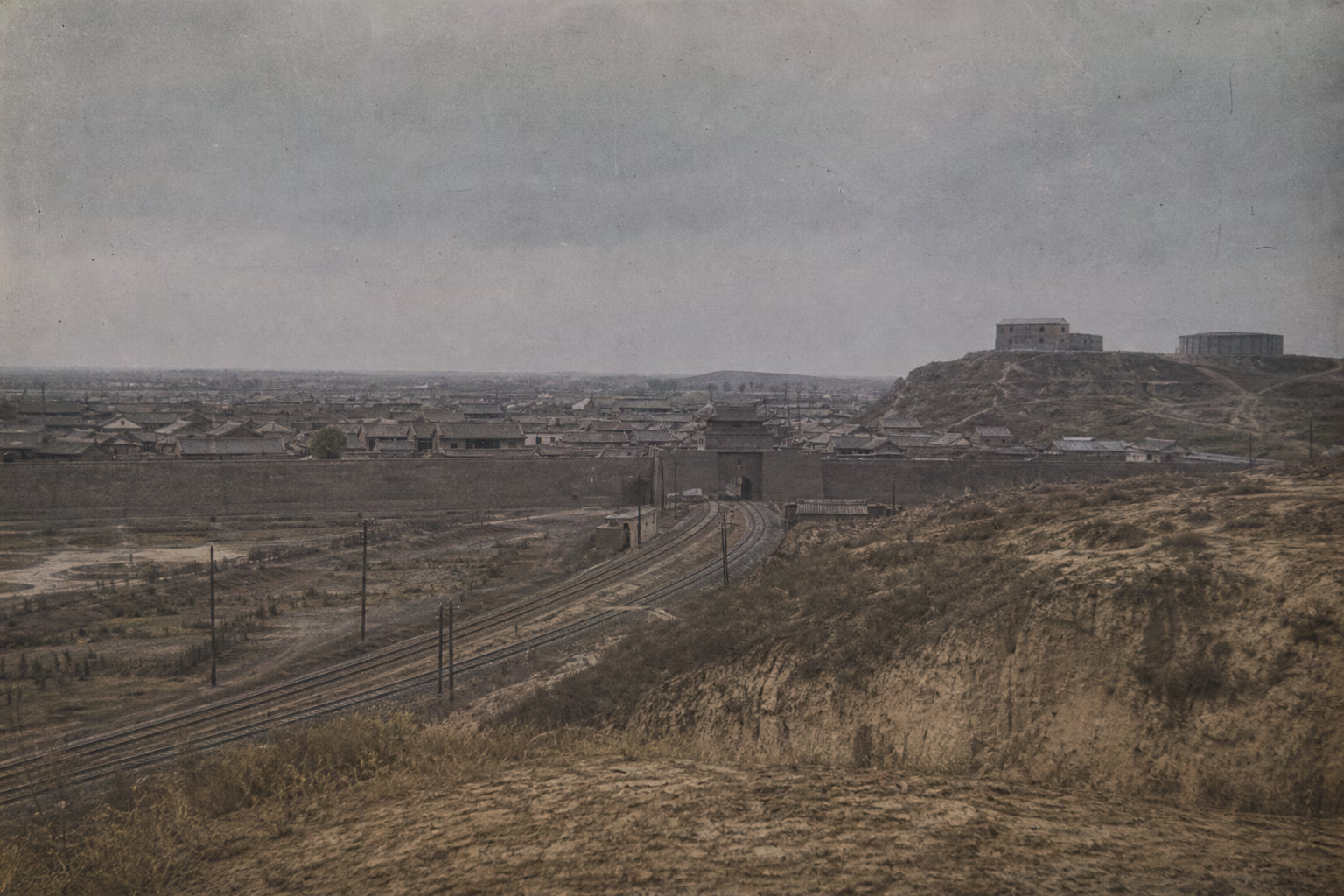
(For the larger situation in autumn 1948 -- the nationwide balance of forces and the dispute over whether to withdraw from or hold the Northeast -- see Liaoshen Campaign · Overview; this entry covers only Jinzhou.)
Jinzhou was the bar across the door between the Northeast and North China: the Beiping–Liaoning Railway passed through the city; beyond the city and past Shanhaiguan lay North China, while behind it lay Shenyang and Changchun. Whoever held Jinzhou would bolt shut the overland retreat of hundreds of thousands of Nationalist troops in the Northeast. The city itself was an old walled city combined with a modern railway hub, with a ring of high ground outside it -- the Peishui Chi water-distribution reservoir, Liangjia Mountain, and others -- forming natural barriers that the Nationalists developed into a group of permanent strongpoints. At the time of the battle, many civilians still had not been evacuated; the condition of civilians under siege artillery fire and street fighting is (record unverified).
Why It Was Fought
On the day Jinan fell, the war in the Northeast had in fact already been under way for twelve days: on 9.12, the Northeast Field Army opened operations along the Beiping–Liaoning Railway, beginning the Liaoshen Campaign. Inside the Pass, it had just been shown that a provincial capital defended by 100,000 men could not be held; beyond the Pass, the larger question was whether 550,000 elite Nationalist troops could still leave the Northeast.
After three years of work, the Northeast was the only theater in China where the balance between enemy and friendly forces had reversed: the liberated areas already held 97% of the land and 86% of the population (basis varies by account), and the Northeast Field Army together with local forces numbered over one million. The Nationalists, 550,000 in all, were confined to the three-point line of Changchun, Shenyang, and Jinzhou, their supply kept alive by airlift and sealift. Whether to withdraw or to stay was argued in Nanjing for a year without resolution, and the Jinzhou withdrawal corridor existed early but was left undecided (the decision history of the dispute between Chiang Kai-shek and Wei Lihuang is unverified). The Central Military Commission judged that the decisive battle lay here: the Northeast, with industry, grain, and manpower all present, was a complete strategic rear; if it was won, the nationwide balance of forces would turn over from this point.
But where to put the knife into the decisive battle was disputed for several more months. Jinzhou was the bar across the door between the Northeast and North China: the Beiping–Liaoning Railway ran through the city, and beyond the city and past Shanhaiguan was North China -- whoever took Jinzhou would bolt shut the overland retreat of hundreds of thousands of Nationalist troops in the Northeast. The Central Military Commission and the Northeast Field Army exchanged telegrams for months over "whether to attack Changchun first or Jinzhou first" (for the telegram history, see Liaoshen Campaign · Overview): attacking Changchun meant the main force had the northern Manchurian base area at its back, a steadier choice; attacking Jinzhou meant a long southward movement, with the risk staked entirely on the road. In September, the decision was fixed on Jinzhou. The reasoning was later summarized in two analogies: attacking Changchun was "pulling the tail," while attacking Jinzhou was "closing the gate." Once Jinzhou was taken, the Nationalist forces in the Northeast would become a turtle in a jar, and the posture of closing the gate to beat the dog would be formed.
The decision was a wager. Five columns of the Northeast Field Army, about 250,000 men (troop figures vary by account), moved south into Liaoxi, with their supply line suspended on a single thread. Hou Jingru's "Eastward Advance Corps" was at Huludao, and Liao Yaoxiang's corps was at Shenyang; relief forces from east and west were advancing toward each other. If Tashan and Heishan could not hold them off, the force attacking Jinzhou would have its back to the water. Fan Hanjie, defending the city, commanded about 150,000 men (basis varies by account), short in troop quality but abundant in fortifications -- an outer ring of permanent strongpoints at the Peishui Chi water-distribution reservoir, Liangjia Mountain, and other positions. His hope was precisely that those two relief forces would converge and break the encirclement. Inside the city and below its walls, both sides were in fact staking everything on the same question: would the relief troops outside the gate arrive or not?
On 10.1, the Northeast Field Army first took the northern outpost of Yixian; on 10.9, the battle for Jinzhou's outer defenses began. The closing of the gate began that day.
Course of the Engagement
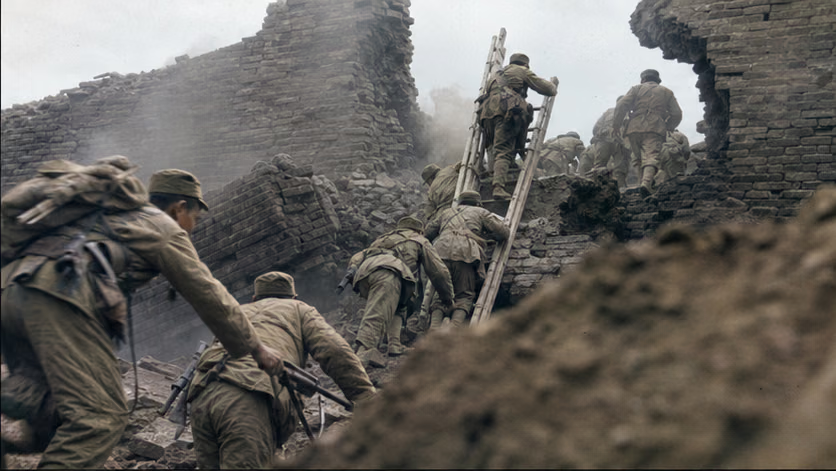
| Phase | Time | Key Points |
|---|---|---|
| Outpost: Yixian | 10.1 | Before attacking Jinzhou, the attacker first took Yixian to the north. On the day the city was taken, Zhu Rui, commander of the Northeast Field Army artillery, was killed by a mine while inspecting the breach -- one of the highest-ranking commanders killed in the entire war by the People's Liberation Army (see the overview for details) |
| Outer battle | 10.9–13 | Point-by-point struggle for the outer high ground. Peishui Chi: a strongpoint whose defenders encouraged themselves as "men forged of iron" (record of defender morale unverified); one attacking battalion was reduced to several dozen men before taking it (details unrecorded). Positions such as Liangjia Mountain also changed hands several times in bloody fighting -- the cruelty of the five days outside the city was no less than the assault on the city itself |
| General assault | Morning of 10.14 | After preparation fire by 900 guns (basis varies by account), attacks advanced from north and south: the northern group as the main attack, the southern group in support, with continuous multi-echelon assaults, using both tunnel demolition and ladders to scale the walls |
| Street fighting and fall of the city | 10.14–15 | After breaches were opened at multiple points in the city walls, the attack cut inward in depth; the defender's command system quickly disintegrated; by the evening of 10.15, the whole city was secured: 31 hours |
| Capturing the enemy | 10.15–16 | Fan Hanjie fled in disguise and was intercepted and captured southeast of Jinzhou (route details unverified) |
Casualties and Losses
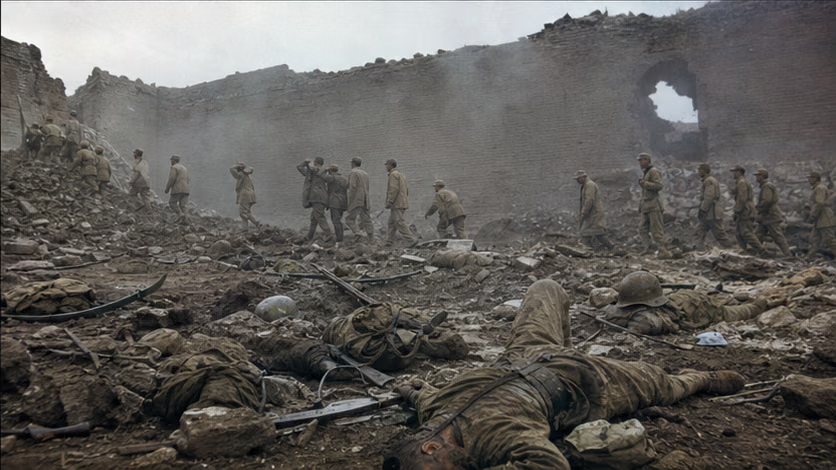
- Attacker: Casualties were heaviest at the outer positions such as Peishui Chi and Liangjia Mountain, while casualties in the general assault were relatively lighter -- this was precisely the effect of the assault doctrine; total siege casualties (basis varies by account). Zhu Rui's death was the highest-ranking loss.
- Defender: Most of the 150,000 defenders were annihilated or captured, together with a group of generals under Fan Hanjie (list unverified).
- Civilians: Civilian casualties during the siege artillery fire and street fighting (record unverified).
Aftermath
- The "gate" had been bolted: the Changchun defenders, hearing that Jinzhou had fallen, lost hope -- Zeng Zesheng revolted on 10.17, Changchun fell on 10.19; Liao Yaoxiang's corps abruptly lost its basis for either advance or retreat and was soon destroyed in Liaoxi; Shenyang was taken on 11.2. For the chain reaction by which one city, Jinzhou, moved the whole situation, see Liaoshen Campaign · Overview.
- The Northeast Field Army's ability to take fortified positions was recognized by the whole army after this engagement -- the earlier question of "whether the Northeast Field Army could fight large cities" (the shadow of Siping) was now dispelled.
- Fan Hanjie entered the war-criminals management center and later received a special pardon (cross-entry closing thread).
Accounts of Those Present
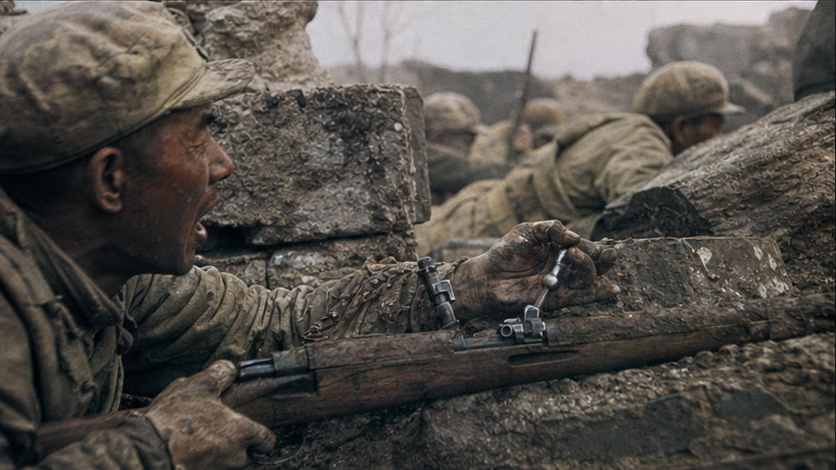
- Zhu Rui: Commander of the Northeast Field Army artillery, graduate of the Imperial Japanese Army Academy, and founder of the People's Liberation Army artillery. On the day Yixian was taken, he went to the breach to examine points of impact and study lessons for assaulting fortified positions, and was killed by a mine. Five days later, the artillery he had built arrayed 900 guns beneath Jinzhou's walls (connection unverified).
- Peishui Chi: A fortress converted from a water-distribution reservoir north of the city. The defenders posted the slogan "those who defend Peishui Chi are all men forged of iron" (wording and source level unverified); attacking battalion-level units went up in rotation and were reduced to several dozen men. After the war, this site became the hardest place-name in Jinzhou battle memory.
- 31 hours: Set against the prolonged duration and casualties of the Siping assault two years earlier -- the same army had not paid its tuition in vain.
- Fan Hanjie's escape: Disguised, traveling with companions, taking small roads, stopped for questioning and recognized (details unverified) -- the defending commander's last journey.
The Ground
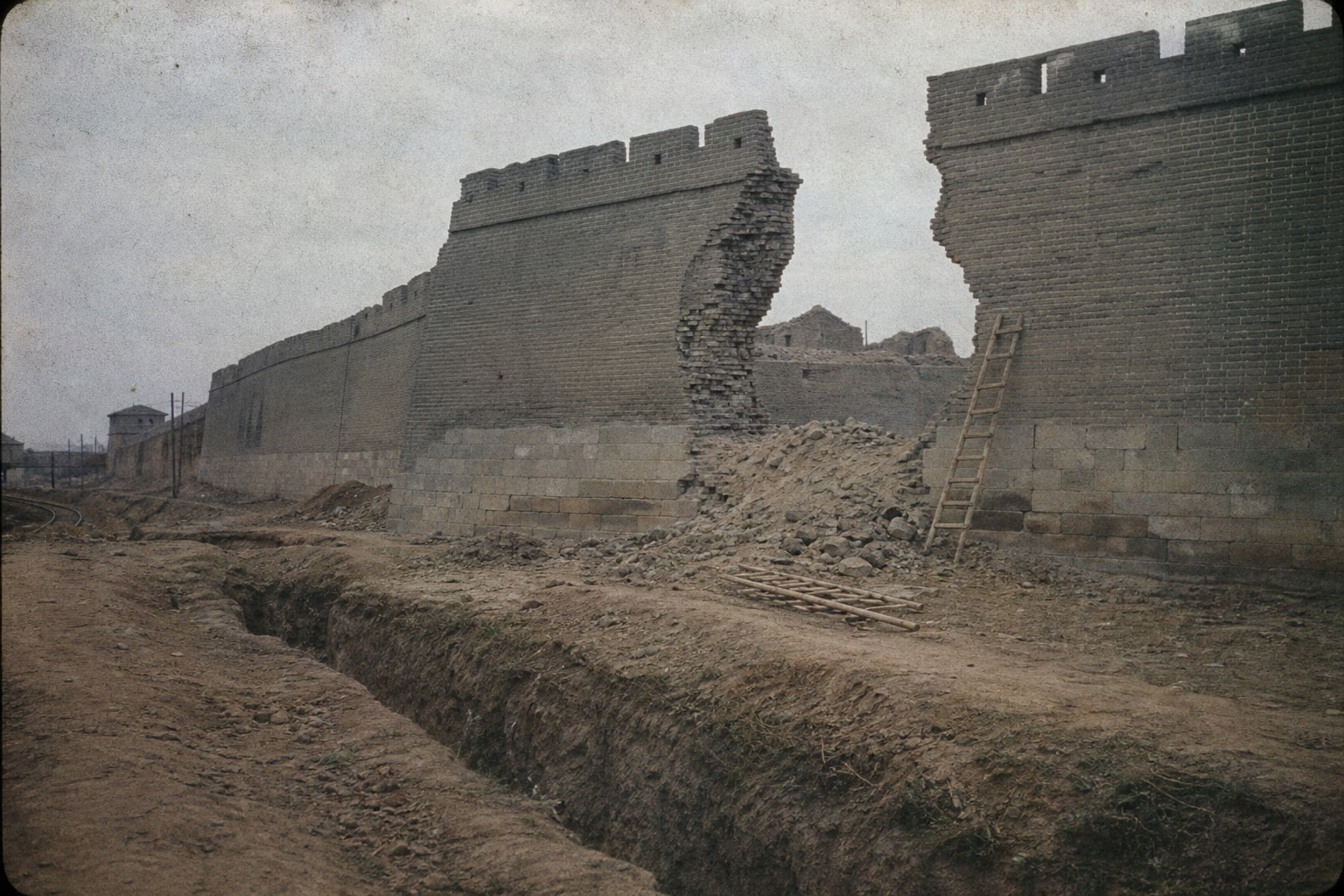
- The outer high-ground strongpoint group was the main body of Jinzhou's defense: Peishui Chi, Liangjia Mountain, the synthetic fuel plant, and others, each point independently supporting itself while giving mutual fire support -- before the city could be attacked, they had to be chewed away one bite at a time.
- Old city walls plus railway hub: the choice of breach points in the city walls and the continuous multi-echelon assault were themselves the examination paper of the "graduation exam."
- The geography of the Liaoxi Corridor: the city sat at the corridor's narrowest point, and relief forces from east and west had to pass through the two openings at Tashan and Heishan -- attacking the city and blocking relief were the two halves of one campaign.
How Each Side Records It
- CPC canon: the key battle of the Liaoshen decisive campaign and a model of assaulting fortified positions (the central section of Decisive Engagement: Liaoshen Campaign); the comparison between "31 hours" and Siping is the standard narrative.
- Taiwan side: the beginning of the collapse in the Northeast; critiques focus on the delay caused by the dispute over withdrawal or holding, and on the failure of the two relief forces to advance, rather than on the defense of the city itself. Fan Hanjie's troops being assembled from miscellaneous units and their unstable morale are often mentioned (Taiwan-side military histories vary by account).
- Popular memory: the severity of the fighting at Peishui Chi recurs repeatedly in local oral history from Jinzhou and in the recollections of participants.
Disputes and Sensitivities
- The statistical basis for the attacking force of "250,000" and the defenders' "150,000" (whether blocking-relief and outer-defense forces are included) -- both accounts coexist.
- The figure of "900 guns" varies among sources (basis varies by account).
- Civilian casualties receive little attention in either narrative -- this archive records only "record unverified" and adds no number.
Sources and Open Questions
Known main sources:
- History of the Northeast Liberation War and the Liaoshen Campaign series
- Battle reports and summaries from the siege command post and the participating columns (archival compilation unverified)
- Memoirs of Fan Hanjie and captured generals; the Taiwan-side History of the War of Suppressing the Rebellion, Northeast section
Open questions: the statistical basis for the attacking force of 250,000 and the defending force of 150,000; the number of guns in the general assault; the attacking battalion designation and casualty details in the battle for Peishui Chi; the specific place and circumstances of Zhu Rui's death; details of Fan Hanjie's capture route; records of civilian casualties during the siege; the source of the defenders' "men forged of iron" slogan.
All images on this site are AI-generated depictions. They are not historical photographs, not primary sources, and do not depict any real individual.