Engagement Archive · Seven Battles, Seven Victories in Central Jiangsu
Thirty thousand against 120,000: in forty-five days of interior-line fighting in Central Jiangsu, Su Yu fought seven engagements and won every one. In the first quarter after full-scale civil war began, this was the Liberation Army's first concrete proof that "this war can be won."
Engagement Data
| Item | Details |
|---|---|
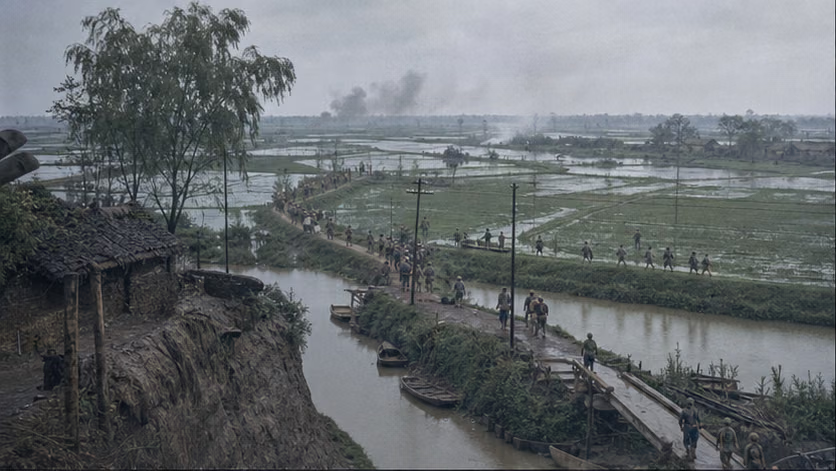
| Time | 1946.7.13 – 8.27, 45 days in all |
| Place | Central Jiangsu: the Taixing, Rugao, Hai'an, Libao, Dingyan-Linzi, Shaobo, and Huangqiao line |
| Part of | Chinese Civil War · Nationalist Army phase of full-scale offensive (1946.6 full-scale civil war broke out) |
| Central China Field Army | Commander Su Yu and political commissar Tan Zhenlin, with a main force of roughly over 30,000 |
| Nationalist Army | First Pacification Area (commander Li Mo'an), with roughly 120,000 troops committed to the offensive in Central Jiangsu |
| Result | Seven consecutive victories; Communist military histories state that more than 53,000 enemy troops were destroyed or captured (figures vary by statistical basis). Soon afterward, however, the two Huai cities fell, and the main Central China force moved north into Shandong |
Belligerents
| Item | Central China Field Army | Nationalist Army First Pacification Area |
|---|---|---|
| Strength | Roughly over 30,000 (including the First and Sixth Divisions and the Seventh and Tenth Columns; detailed order-of-battle designations remain unrecorded) | Roughly 120,000, including the Reorganized 83rd, 25th, 49th, 65th, and 21st Divisions, among other units (committed sequence pending verification) |
| Equipment | A mixture of Japanese weapons captured during the War of Resistance, self-made weapons, and local arms; few heavy weapons | Mainly semi-American-equipped; the Reorganized 83rd Division and similar units had strong firepower (degree of mechanization by division pending verification) |
| Mobility | On foot, familiar with the terrain, with support from local armed forces and militia | Based on roads and canals; fast-moving, but deployed along points and lines |
| Logistics | Local supply from the base area, with mass support for the front | Long rear supply lines and scattered strongpoints |
| Air | None | Air-force support (intensity of sorties pending verification) |
Terrain and Conditions
(For the wider situation in 1946--the breakdown of the Marshall mediation, the outbreak of full-scale civil war, and the balance of strength between the two sides--see *Chinese Civil War · Overview*. This section covers only Central Jiangsu.)
Central Jiangsu: an old base area of the New Fourth Army. During the eight years of the War of Resistance, this was the ground of the New Fourth Army's First Division. Su Yu had fought the decisive Huangqiao engagement and the Battle of Cheqiao here, and local administration, militia, and intelligence networks were all already in place. In the summer of 1946, land reform was unfolding; peasants who had just tasted the gains of land redistribution were being mobilized by the hardest phrase at the grassroots level: defend the fruits of land reform.
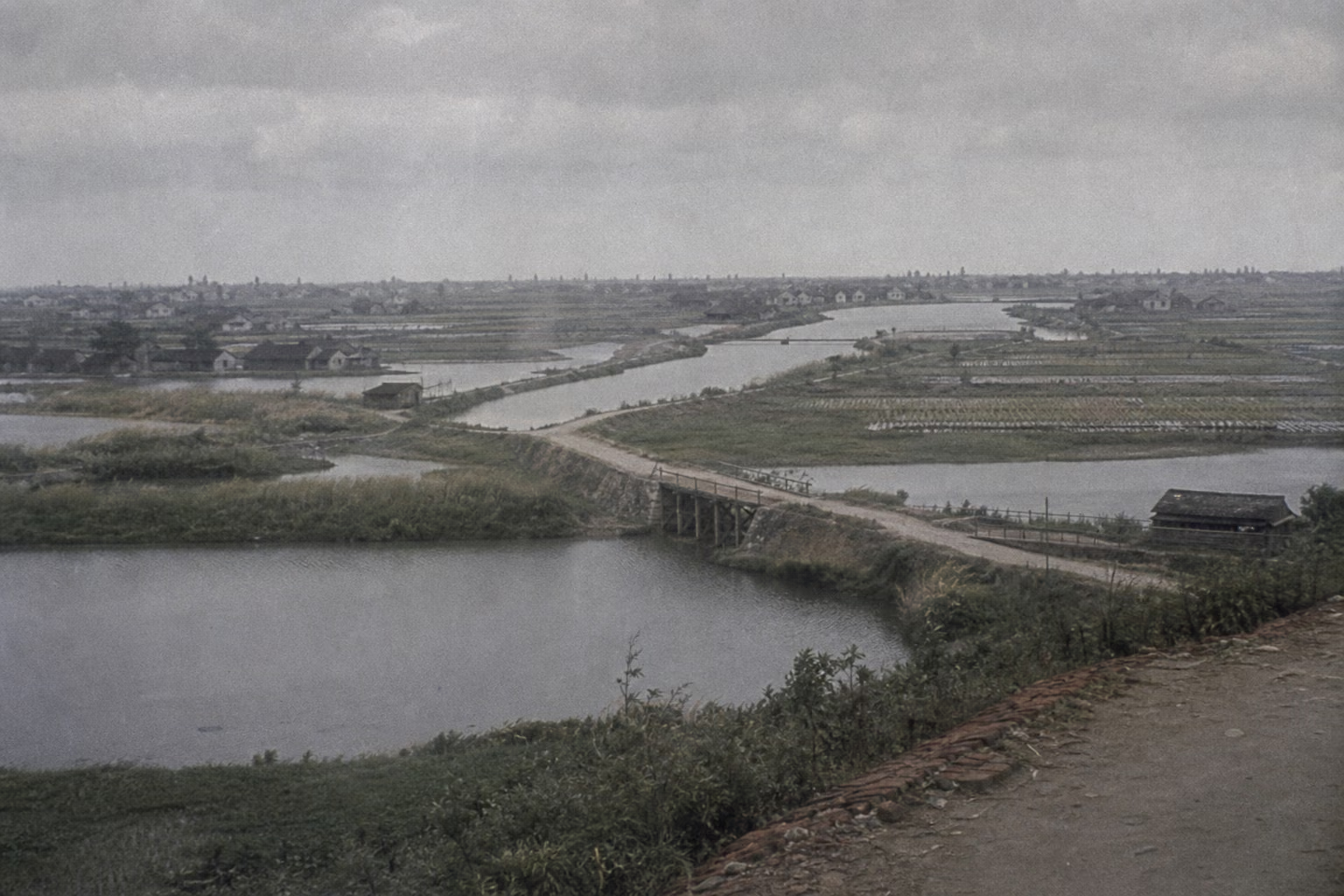
Terrain: a water-network plain north of the Yangtze River and east of the Grand Canal, cut through by rivers and channels. Large formations could not easily deploy; small units could infiltrate with ease. It favored interior-line defeat in detail and worked against a mechanized group advancing abreast.
The opposing side: the First Pacification Area's troops were stationed south of the Yangtze and along the river. From July onward they crossed north to attack, planning first to take Rugao and Hai'an, then strike north toward Huai'an, gradually compressing the base area along points and lines.
Why It Was Fought
After the Central Plains encirclement was torn open in late June, no one spoke of a ceasefire anymore. That summer, the Nationalist Army's full-scale offensive against the liberated areas spread across the map, accompanied by the talk of "settling the Communist forces within a few months." The first place where that claim would be tested was the liberated area nearest Nanjing and Shanghai: Central Jiangsu.
Both sides could calculate the value of this ground. For Nanjing, Central Jiangsu, lying too close for comfort, was a threat just outside the gateway to the capital and Shanghai: Li Mo'an's First Pacification Area, roughly 120,000 strong, crossed north from south of the Yangtze, planning first to take Rugao and Hai'an, then strike north toward Huai'an, compressing the base area step by step along points and lines. For the Communist side, Central Jiangsu was the old base area the New Fourth Army's First Division had worked for eight years. Huangqiao and Cheqiao had both been fought here, and local administration, militia, and intelligence networks were all already in place. In the summer of 1946, land reform was unfolding; peasants who had just tasted the gains of land redistribution heard the hardest phrase of grassroots mobilization: "defend the fruits of land reform." Add one more layer of terrain: the water-network plain north of the Yangtze and east of the Grand Canal broke large formations into pieces, while small units could infiltrate easily. The firepower and mobility advantage of 120,000 men had to be discounted once it entered the polders and waterways.
Whether to fight was not in question; where to fight had been debated. The Central Committee's original policy was for the main Central China force to strike on exterior lines: move west to the Tianjin-Pukou Railway and fight in the Nationalist rear. After weighing the situation, Su Yu judged that interior-line conditions in Central Jiangsu were more mature: familiar terrain, strong mass support, and dispersed enemy troops. Twice he "ventured a frank statement" to the Central Committee, recommending that several engagements be fought on the interior lines before moving out (dates and wording of the telegram exchange pending verification). The Central Committee accepted the proposal: the high command changed its established decision and listened to the person on the front line who could hear the guns. On Li Mo'an's ledger, the calculation was simple: 120,000 against more than 30,000, a four-to-one advantage, superior firepower from semi-American equipment, and victory by advancing in several columns and tightening the noose step by step. He did not account for an opponent who would not deploy for a set-piece fight at all, but would choose scattered troops, units in relief, and units on the move (Li Mo'an reflected on this failure in his late-life memoirs; original text pending verification).
On paper it was four to one, but both sides' numbers had to be discounted. Su Yu had more than 30,000 men, few heavy weapons, shells that diminished with every shot fired, and supplies raised locally from the base area. The captures and replenished prisoners from each engagement became the capital for the next one (engagement-by-engagement replenishment details pending verification). His confidence in fighting consecutive interior-line engagements rested half on front-line support: in Central Jiangsu, just after land redistribution, stretchers, grain, intelligence, and guides all came out of the villages. Li Mo'an's 120,000 also had to be discounted. Towns along the river and lines of communication all required garrisons, so the mobile strength that could be gathered for field operations looked far worse than the paper total (ratio of garrison to mobile strength pending verification). Once semi-American-equipped heavy equipment entered the waterways and polders, artillery tractors and trucks could not leave the roads; speed itself became tied down by points and lines. The most visible disagreement on the record was Su Yu's own two telegrams: the high command changed its established policy, and this was a dissenting view that was adopted. Views that were not adopted, or were not written down, did not leave no trace at all: within Central China there were discussions over the later abandonment of Hai'an and the loss of the two Huai cities (unverified); on the Nationalist side, existing records do not show differing opinions under Li Mo'an about the deployment of advance in several columns (no record of dissent found).
On July 13, the Central China Field Army struck first, attacking Xuanjiabao and Taixing. The first of the seven engagements disrupted the opposing side's offensive deployment. At the moment it began, neither side yet knew that, over the next forty-five days, seven engagements would be fought in succession across this water-network plain.
Course of the Engagement
| Engagement | Time | Main points |
|---|---|---|
| 1. Xuanjiabao-Taixing | 7.13–15 | The opening Xuan-Tai engagement attacked and destroyed the Reorganized 83rd Division's two leading regiments plus attached units (enemy losses inflicted pending verification), disrupting the enemy offensive deployment |
| 2. Southern Rugao | 7.18–23 | South of Rugao, the Central China Field Army met the Reorganized 49th Division, destroying its divisional headquarters and most of the division; division commander Wang Tiehan broke out with remnants after being wounded (details pending verification) |
| 3. Hai'an | 7.30–8.3 | The Seventh Column used "mobile defense" to resist the enemy by stages, blocking several enemy columns before voluntarily withdrawing from Hai'an. The withdrawal was clean; the Nationalist Army reported a "great victory," unaware that the opposing main force had already moved east to rest and reorganize |
| 4. Libao | 8.10–11 | Taking advantage of an enemy relief at Libao and the separation of head and tail, the Central China Field Army launched a surprise attack, destroying parts of two brigades, one newly relieved and one in handover (details of the opportunity assessment during the relief interval pending verification) |
| 5. Dingyan-Linzi | 8.21–23 | Moving into the enemy flank and rear, the attackers destroyed units including the Traffic Police Corps (the Traffic Police Corps was an armed special-service force equipped with American weapons) |
| 6. Shaobo | 8.23–26 | The Tenth Column and local armed forces held Shaobo, withstood the Reorganized 25th Division's fierce assault, and held the gateway toward the two Huai cities |
| 7. Rugao-Huangqiao Road | 8.25–27 | Along the Rugao-Huangqiao road, the Central China Field Army besieged a point and struck reinforcements, destroying units including the Reorganized 99th Brigade, bringing the seven engagements to a close |
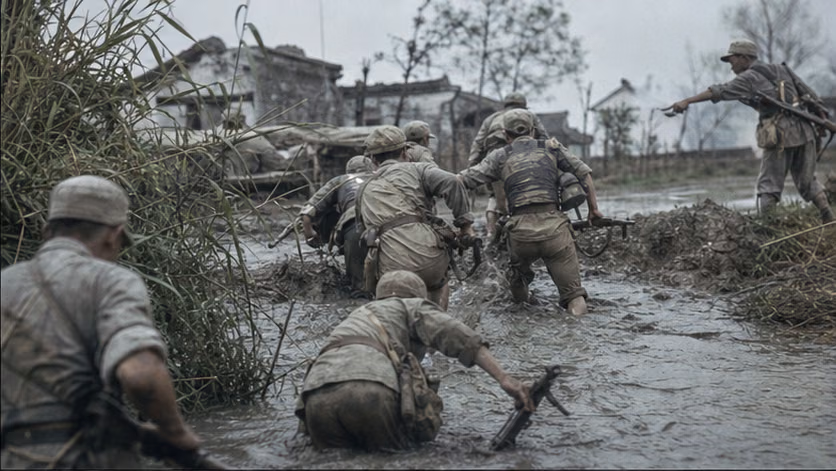
The common method across all seven engagements was this: do not deploy for the opponent's kind of battle; choose troops that are dispersed, changing positions, or on the move; concentrate three or four times their strength for a rapid decision; leave once the fight is over.
Casualties and Losses
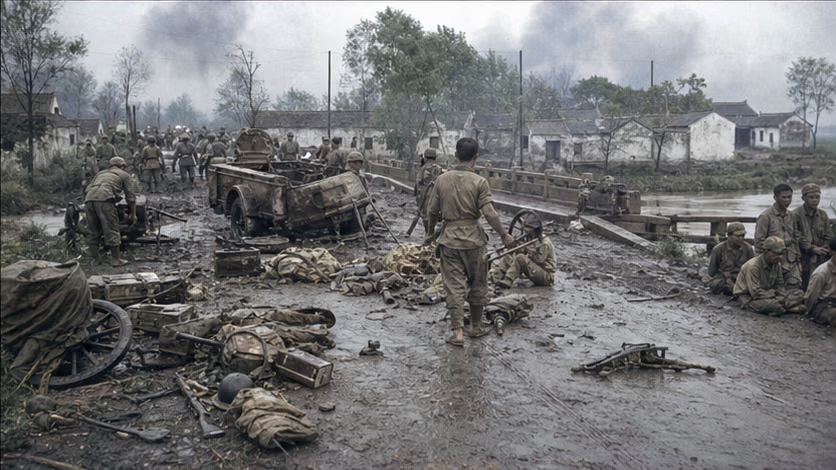
- Nationalist Army: Communist military histories state that more than 53,000 were destroyed or captured across the seven engagements (figures vary by statistical basis: whether they include killed, wounded, and captured; whether local units are included; boundaries require article-by-article checking).
- Central China Field Army: roughly 16,000 casualties (figures vary by statistical basis), with expenditure maintained through battlefield captures and replenished prisoners ("liberated soldiers"; see "Disputes and Sensitivities").
- Civilians: for casualties among the people of the old Central Jiangsu base area supporting the front, and for the burden of corvee and service, systematic figures are lacking (unverified here).
Aftermath
- Seven Battles, Seven Victories in Central Jiangsu shook the high commands on both sides. But the victories were won at points while the line was lost: the Nationalist Army shifted to a steadier advance, and in September the two Huai cities (Huaiyin and Huai'an) fell. The core area of the Central China base changed hands, and the Central China Field Army moved north into Shandong to join the Shandong Field Army. The next step was Northern Suqian (see *Battles of Northern Suqian and Southern Shandong*).
- The policy of "destroying the enemy on interior lines" was proven practicable in action, influencing early Chinese Civil War strategic deployments.
- At the level of propaganda, "seven battles, seven victories" became a confidence project for the first quarter of the war: amid the talk that the "Nationalist Army would settle the Communist forces within a few months," this was the first report card the liberated areas could show to the whole Party and to the people of the base areas (propaganda-history discussion pending verification).
Accounts of Those Present
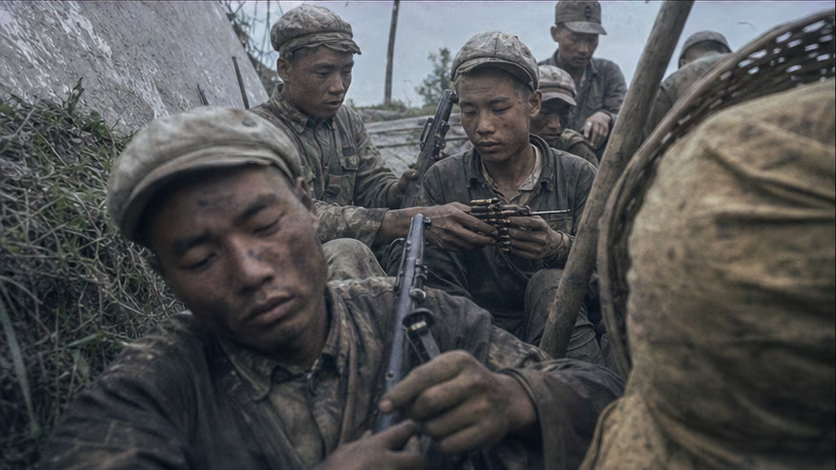
- "Ventured a frank statement": Su Yu's telegrams recommending interior-line operations were modest in wording but firm in substance; Mao Zedong replied by telegram and accepted the proposal. This exchange between commander and leader was later often cited as an example of letting "the person on the front line who can hear the guns" have the say (original telegram text pending verification).
- Holding and giving up Hai'an: Hai'an was a major town in Central Jiangsu. The Seventh Column used a small force to create the appearance of a "fight to the death," while the main force had already withdrawn to rest and reorganize. After occupying an empty town, the Nationalist Army reported a victory, completely misjudging the location and condition of the Central China main force.
- The relief gap at Libao: one enemy brigade was handing over while another was rotating in; on the same day and at the same hour, their head and tail failed to connect. This window was seized, and the fighting was settled in half a day. The source of the opportunity intelligence remains unclear (local intelligence networks or reconnaissance, pending verification).
- Wang Tiehan: commander of the Reorganized 49th Division, he broke out wounded after the defeat south of Rugao. He was the regimental commander at Beidaying who ordered return fire on the night of the Mukden Incident; another thread of history crossed the Central Jiangsu battlefield here (his postwar experience is only briefly noted; pending verification).
The Ground
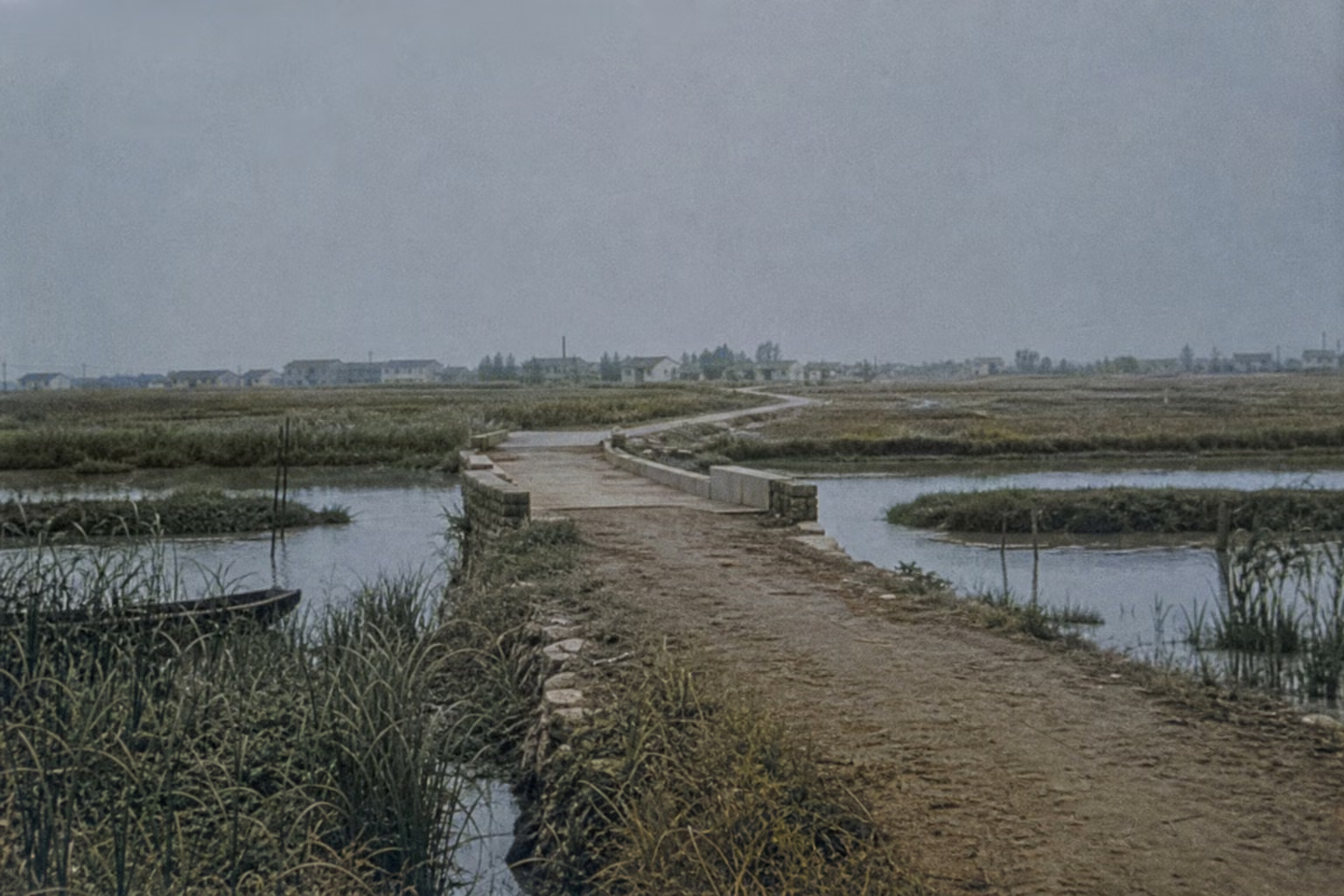
- Water-network plain: rivers, polders, and bridges cut up large-unit movement; infiltration depended on night roads and small boats.
- Road points and lines: the Nationalist Army occupied points (cities and towns) and held lines (roads), while the Liberation Army maneuvered across the "surface" between them. The spatial structure itself was a tactic.
- Rugao-Huangqiao-Hai'an triangle: the core of the old base area, dense with villages and good cover, forming the axis of the seven engagements.
- Scale: each fight was a rapid division- or brigade-level engagement, decided in one or two days and nights, not a protracted positional battle.
How Each Side Records It
- CPC canon: "Seven Battles, Seven Victories in Central Jiangsu" is listed as a model of early Chinese Civil War interior-line destruction of the enemy and as one of the representative achievements of Su Yu's military career.
- Taiwan-side "Counterinsurgency" narrative: Nationalist military histories give relatively little space to the Central Jiangsu episode, often recording it as early "progress" in pacification operations (the occupation of Hai'an and the occupation of the two Huai cities). The losses of seven brigade-level units are either folded into general figures or played down (specific wording in Taiwan-side military histories pending verification). Li Mo'an reflected on this failure in his later memoirs (memoir text pending verification).
- Later scholarship: Mainland scholarship has studied the episode largely within the canonical frame. In overseas and Taiwan scholarship, one focus is the coexistence of "victory in battle and loss of territory": tactical victory did not prevent the contraction of the base area, raising questions about the real cost-effectiveness of the interior-line enemy-destruction policy (representative studies pending verification).
Disputes and Sensitivities
- The statistical basis for 53,000 enemy losses inflicted: which units are included, how many were killed, wounded, and captured, and whether traffic police and local units are counted. Since corresponding Nationalist loss figures are lacking, the two statistical bases should be presented side by side and marked when they cannot be checked against each other.
- "Winning the engagements, losing the ground": after the seven victories, the two Huai cities fell and Central China withdrew north. This sequence of "victory and retreat" has to be squared in the narrative. The canonical treatment is "do not count the gain or loss of one city or one place; focus on destroying the enemy's effective strength." But what Central Jiangsu peasants endured after gaining land through reform and then losing the ground again is less often written in the canon (folk-memory level pending verification).
- "Liberated soldiers": the Central China Field Army replenished itself with prisoners while fighting. Captured soldiers, after "speak-bitterness" education, were incorporated into companies and turned their guns around. The Nationalist side viewed this as "coercion"; the Communist side viewed it as "class awakening." This phenomenon had already appeared at scale in Central Jiangsu (Central Jiangsu replenishment figure disputed), and every article in the series includes it; this article marks the beginning.
- Traffic Police Corps: the Traffic Police Corps destroyed at Dingyan-Linzi belonged to the Dai Li system as an armed special-service force, equipped with American weapons, standing somewhere between military and police. The two sides recorded differently whether it "counted as regular army" (unverified here).
Sources and Open Questions
Known main sources:
- Su Yu, *Su Yu's Memoirs of War* (relevant chapters)
- *Biography of Su Yu* and *Chronology of Su Yu* (CPC canonical system)
- Li Mo'an's memoirs (view of the Nationalist front-line commander)
- *History of the Chinese People's Liberation Army in the National Liberation War* (officially compiled history)
Open questions: the statistical basis for the 53,000 enemy losses inflicted and the engagement-by-engagement figures; the statistical basis for Central China Field Army casualties; the dates and original text of Su Yu's two "ventured a frank statement" telegrams; the Seventh Column's strength and the enemy-to-friendly ratio in the Hai'an blocking action; the intelligence source for the Libao relief gap; the details of Wang Tiehan's breakout south of Rugao and his postwar experience; the nature and equipment details of the Traffic Police Corps; the Taiwan-side military-history wording on the Central Jiangsu operations; folk-memory materials on Central Jiangsu land reform, front-line support, and loss of territory; Central China Field Army captures and prisoner replenishment by engagement; the ratio of Nationalist garrison to mobile strength; materials on internal Central China discussions over abandoning Hai'an and losing the two Huai cities; whether any objections existed under Li Mo'an to the deployment of advance in several columns.
All images on this site are AI-generated depictions. They are not historical photographs, not primary sources, and do not depict any real individual.