Engagement Archive · Battle of Laiwu
The East China Field Army deliberately yielded the empty city of Linyi and secretly wheeled north; in three days, in the valleys around Laiwu, it swallowed Li Xianzhou's 56,000-man group--the winning move in this battle lay not in firepower, but in deception and an inside connection: Han Liancheng, commander of the Reorganized 46th Division in the opposing Second Pacification Area, was a secret collaborator of the CPC.
Engagement Data
| Item | Content |
|---|---|
| Time | 1947.2.20 – 23 (the main annihilation action was largely settled within the single day of 2.23) |
| Place | The valley line around Laiwu and Tusikou, Shandong |
| Part of | Chinese Civil War · the Nationalist Army's "Southern Shandong Campaign" plan (the all-out offensive phase) |
| East China Field Army | Chen Yi and Su Yu; the main force, about 190,000 men, moved north (including local armed forces; statistical bases vary by account) |
| Nationalist Army | Northern line: Li Xianzhou's group under the deputy commander of the Second Pacification Area (73rd Army and Reorganized 46th Division), more than 56,000; southern line: Ou Zhen's group, 8 reorganized divisions |
| Result | The northern-line group was completely destroyed; Li Xianzhou and Han Jun, commander of the 73rd Army, were captured; after Han Liancheng left his command position before the lines and "escaped alone," he returned (in fact he had left by prior arrangement; the later process by which his identity was made public remains unverified) |
Belligerents
| Item | East China Field Army | Nationalist Army (northern-line group) |
|---|---|---|
| Strength | About 190,000 in the main force moving north (7 columns plus local armed forces; statistical bases vary by account), forming about 3:1 against the northern line | Li Xianzhou's group, more than 56,000 (73rd Army and Reorganized 46th Division; details of unit designations unrecorded) |
| Equipment | After the captures in Southern Shandong, artillery had begun to take shape, but the force was still mainly light infantry | The 73rd Army had American equipment; the Reorganized 46th Division was a Guangxi Clique force, with equipment a step below |
| Situation | Active deception: Linyi was made into an empty-city performance, while the main force moved north under concealment | The southern-line group advanced steadily abreast, while the northern line hung out alone, protruding, with front and rear disconnected |
| Intelligence | Knew the northern-line group's organization, position, and action plan (one source was the Han Liancheng line) | Misjudged the direction of the East China Field Army's main force, believing it had "suffered heavy casualties and could not continue fighting" |
Terrain and Conditions
(For the larger situation--eight months of all-out offensive, and the last planning for a focused offensive before the Nationalist occupation of Yan'an--see *Chinese Civil War · Overview*. This entry writes only about central Shandong.)
Linyi: The capital of the Shandong Liberated Area. After the Southern Shandong Campaign, Chen Cheng sat in Xuzhou and directed the "Southern Shandong Campaign," planning for Ou Zhen's southern-line group of 8 reorganized divisions to push north from the Longhai Railway toward Linyi, while Li Xianzhou's northern-line group moved south from the Jiaozhou-Jinan line toward Laiwu and Xintai; the two lines would advance toward each other and concentrate to annihilate the main force of the East China Field Army in the Yimeng Mountains. The Nationalist side judged that after the Subei and Southern Shandong battles, the East China Field Army had "suffered heavy casualties" and would have to hold Linyi at all costs--this judgment was wholly wrong.
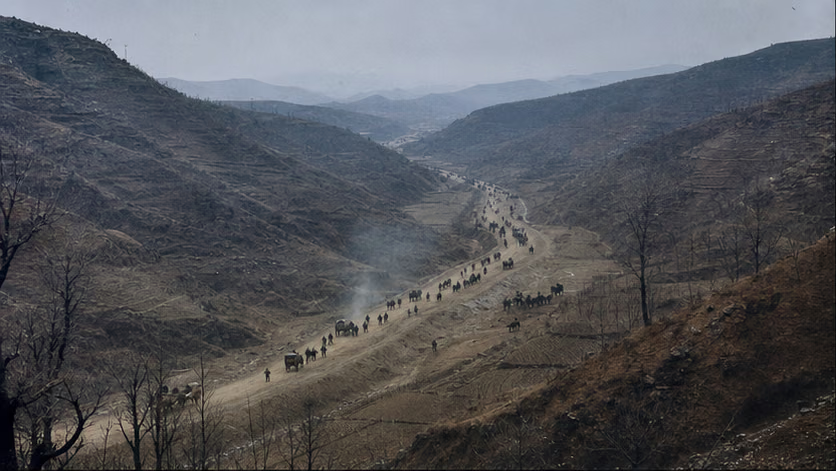
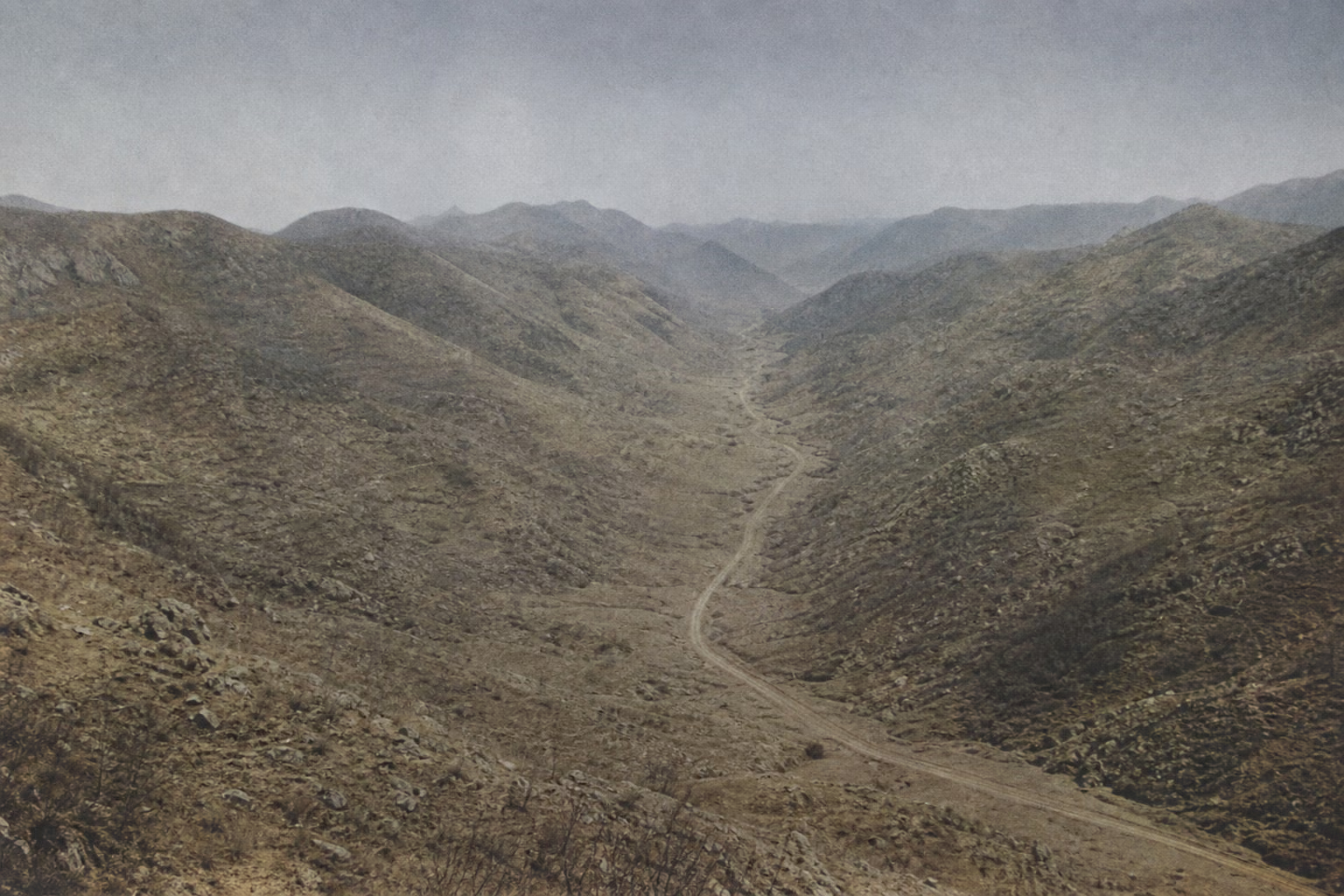
Yimeng: The mountain-heavy, poor-soil heartland of the base area, where the East China Field Army refitted the equipment captured in Southern Shandong and where the front-support system was mature. The area around northern-line Laiwu was a long, narrow valley, with limited north-south passages--once a large force entered the valley, blocking both ends made it a pocket.
Why It Was Fought
The First Rapid Column had been wiped out in the mud of Southern Shandong, shaking Xuzhou. Chen Cheng, sitting in command at Xuzhou, attributed the failures at Subei and Southern Shandong to advancing rashly in separate routes, and produced a steadier plan--the "Southern Shandong Campaign": Ou Zhen's southern-line group of 8 reorganized divisions would push north abreast from the Longhai Railway toward Linyi, while Li Xianzhou's northern-line group of more than 56,000 would move south from the Jiaozhou-Jinan line toward Laiwu and Xintai; north and south would advance toward each other, concentrating to annihilate the main force of the East China Field Army in the Yimeng Mountains. The plan rested on one judgment: after Subei and Southern Shandong in succession, the East China Field Army had "suffered heavy casualties and could not continue fighting"; Linyi was the capital of the Shandong Liberated Area and would have to be held at all costs--both judgments were wrong.
The East China Field Army did indeed have much to protect: Linyi as capital, its organs, supplies, and the newly refitted foundation of force all lay in Yimeng. But Chen Yi and Su Yu answered by going in the opposite direction: Linyi could be abandoned. The main force of about 190,000 would avoid the densely massed enemy on the southern line, secretly turn north, and eat the isolated, protruding Li Xianzhou group. After the decision to abandon Linyi was approved by the Central Military Commission (the telegram process for the decision remains unverified), the policy of "not counting the gain or loss of one city or one piece of ground" was this time wagered on the capital of a liberated area. Beyond the wager there was another card underneath: the East China Field Army knew the northern-line group's organization, positions, and action plan in full, and one source was Han Liancheng, commander of the Reorganized 46th Division--a lieutenant general from the Guangxi Clique and a secret collaborator of the CPC (this entry records only the publicly known level; details remain unverified). The opposite side's calculations lay spread open on this side of the table.
The account for the northward move had to be made in grain and fodder. Yimeng had many mountains and poor soil, and large-corps maneuver depended wholly on front support: grain and fodder were requisitioned along with the column, while civilian laborers, stretchers, and handcarts moved north all along the route (the scale of front support remains unverified); with light foundations, the force could insert itself into Laiwu in two days and nights. On the Nationalist side, the 8 reorganized divisions on the southern line advanced steadily abreast, pausing at each step, and could not move fast; the northern-line group hung alone, its supply line stretching longer and longer--the steadiness of the campaign plan had been bought with speed, and what the East China Field Army wagered on was precisely speed.
From February 10, the main force secretly moved north, while local troops left in the direction of Linyi disguised themselves as the main force and resisted step by step; on February 15, the southern-line group entered the empty city of Linyi, and the Nationalist side immediately announced a "great victory in Southern Shandong." When the victory report went out, the East China Field Army's columns were making a forced march of two days and nights toward Laiwu.
The northern line had not been without a way out: on February 16, Li Xianzhou's group, having sensed the northward movement of the East China Field Army's main force, once withdrew, but was soon ordered south again (details of the repeated orders remain unverified)--the stretch of valley it had yielded was then walked back into by itself. The order to contract came from Wang Yaowu, commander of the Second Pacification Area, and the order forcing the move south came from the campaign plan (details of this account remain unverified)--dissent had existed, but lost to the "great victory in Southern Shandong" that had already been reported (this is a structural inference, unverified). On the East China Field Army side, the capital was abandoned as soon as they said it would be; no existing record has been found of dissent over whether or when to abandon it.
On February 20, the encirclement was complete and the battle began--what was cut first was the retreat route at Tusikou.
Course of the Engagement
| Phase | Time | Key Points |
|---|---|---|
| Deception and abandonment of the city | 2.10–15 | The main force of the East China Field Army secretly moved north, while local troops remained in the Linyi direction, disguised themselves as the main force, and resisted step by step; on 2.15 the southern-line group entered the empty city of Linyi, and the Nationalist side at once reported a "great victory in Southern Shandong" |
| Northern line enters the trap | 2.15–19 | Li Xianzhou's group moved south to the Laiwu-Tusikou line; after sensing that the East China Field Army's main force had moved north, it contracted (on 2.16 it once withdrew, but was soon ordered south again; details of the repeated orders remain unverified) |
| Encirclement | 2.19–20 | The East China Field Army's columns completed the encirclement of Laiwu and Tusikou; on 2.20 the battle began, first cutting the Tusikou retreat route |
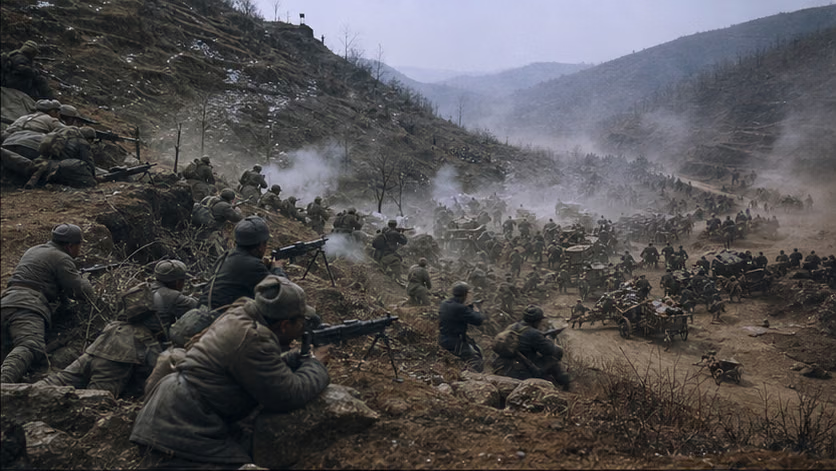
| Breakout destroyed | 2.23 | Li Xianzhou's group was ordered (or decided on its own; details of responsibility remain unverified) to break out from Laiwu toward Tusikou; Han Liancheng, by arrangement with the CPC side, left his command position before the breakout action began, and the Reorganized 46th Division lost command and fell into disorder first; the breakout column, in the valley between Laiwu and Tusikou, was struck by ambushes on both sides, blocked at head and tail, and the group collapsed within hours |
On Han Liancheng (marking the level): Han Liancheng came from a Guangxi Clique background, rose to lieutenant general in the Nationalist Army, and commanded the Reorganized 46th Division. His secret connection with the CPC can be traced back to the War of Resistance period (the level of direct contact, liaison channels, and specific arrangements in the Battle of Laiwu belong to the history of the covert front; public materials are limited, and this entry records only the publicly known level of "secret collaborator"; details remain unverified). On the day of the breakout he left his command position, causing command of the Reorganized 46th Division to break off--a key link in the rapid collapse of the northern-line group. After Laiwu, Han Liancheng for a time "broke through alone and escaped danger," returned to the Nationalist side without exposure, and continued to serve (his posting in Nanjing remains unverified); only at the end of 1948 did he transfer to the liberated areas (the timing and course of the transfer remain unverified). In 1955 he was awarded the rank of lieutenant general in the People's Liberation Army.
Casualties and Losses
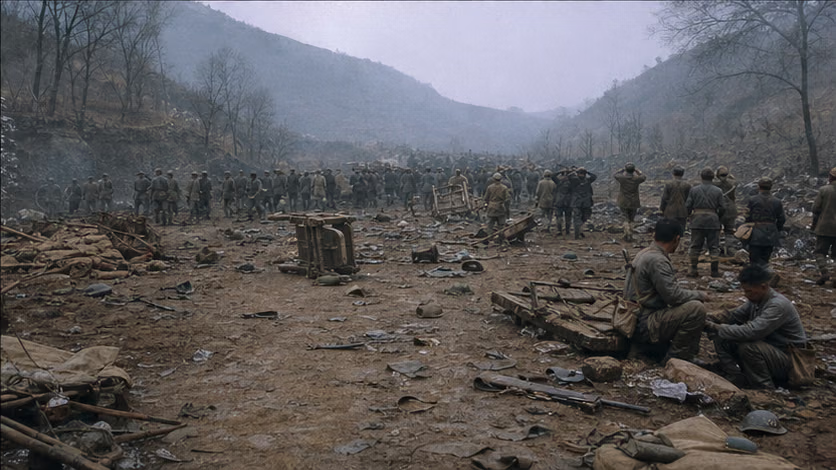
- Nationalist Army: more than 56,000 men of the northern-line group were destroyed (killed, wounded, and captured together; statistical bases vary by account), and many generals under Li Xianzhou and Han Jun were captured (list unverified). The southern-line group occupied empty Linyi and was not struck.
- East China Field Army: about 6,000–8,000 casualties (statistical bases vary by account)--a campaign-level annihilation battle completed at very small cost.
- Three days to destroy 56,000: a classic rapid annihilation battle in the history of the People's Liberation Army.
Aftermath
- The Nationalist Army's "Southern Shandong Campaign" plan collapsed, and Wang Yaowu, commander of the Second Pacification Area, contracted toward Jinan; the Nationalist offensive against Shandong was adjusted into a "focused offensive" advancing from east and west (foreshadowing the Menglianggu line; see the later entry).
- Wang Yaowu's famous saying has been handed down: criticizing the disastrous defeat on the northern line--"More than fifty thousand men were destroyed in three days; even if fifty thousand pigs had been let loose for the Communist army to catch, they could not have caught them all in three days." (This saying circulates very widely; the level of its original source and context remains unverified--it is often cited from recollections by Wang Yaowu's subordinates, and may not be a fully verifiable sentence directly spoken by Wang himself.)
- Han Liancheng continued to operate under cover until the end of 1948; his case became a classic episode in the history of the covert front.
- After Li Xianzhou was captured, he was imprisoned and reformed, received special pardon in 1960, and held posts in his later years (details of treatment remain unverified).
Accounts of Those Present
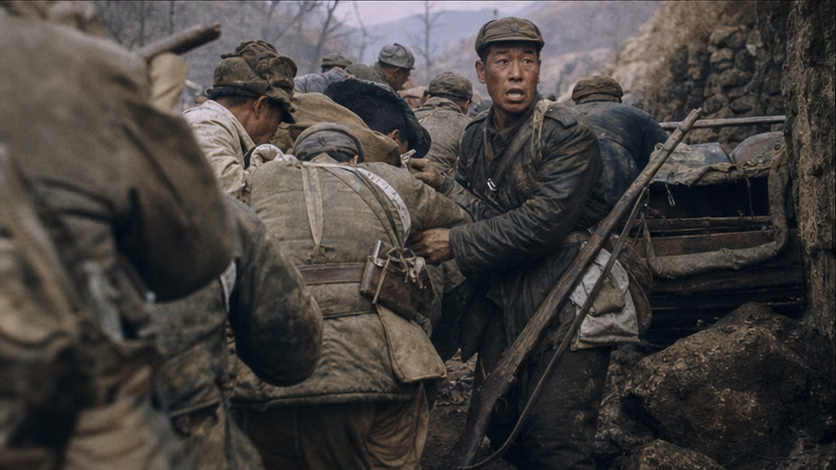
- The other side of the empty-city stratagem: Linyi was the capital of the Shandong Liberated Area, and withdrawal was a major political move--organs, population, and supplies were moved north in emergency. The canon writes of "active withdrawal," but there are few records of the feelings of the city's people that day (popular memory remains unverified).
- Han Liancheng's departure: Before the breakout began, the division commander "could not be found." The regiments of the Reorganized 46th Division could not find division headquarters, and front and rear both lost contact at the same time--the collapse of an army group began with one man's leaving the scene (the specific manner of his departure remains unverified).
- Li Xianzhou captured: In the confusion of the breakout, Li Xianzhou was wounded in the leg, changed into a soldier's uniform, mixed into the troops, and was discovered (there are several accounts of how he was found; unverified).
- "Fifty thousand pigs": Wang Yaowu's sentence spread because it spoke the truth--56,000 in three days were not beaten down so much as scattered and broken under encirclement.
- The East China Field Army's march: The main force made a forced march north in two days and nights, moving under concealment and avoiding the main roads (details of the march sequence and secrecy measures remain unverified)--for the deception to succeed, half depended on Linyi as an empty city, and half on the northward march going undetected.
The Ground
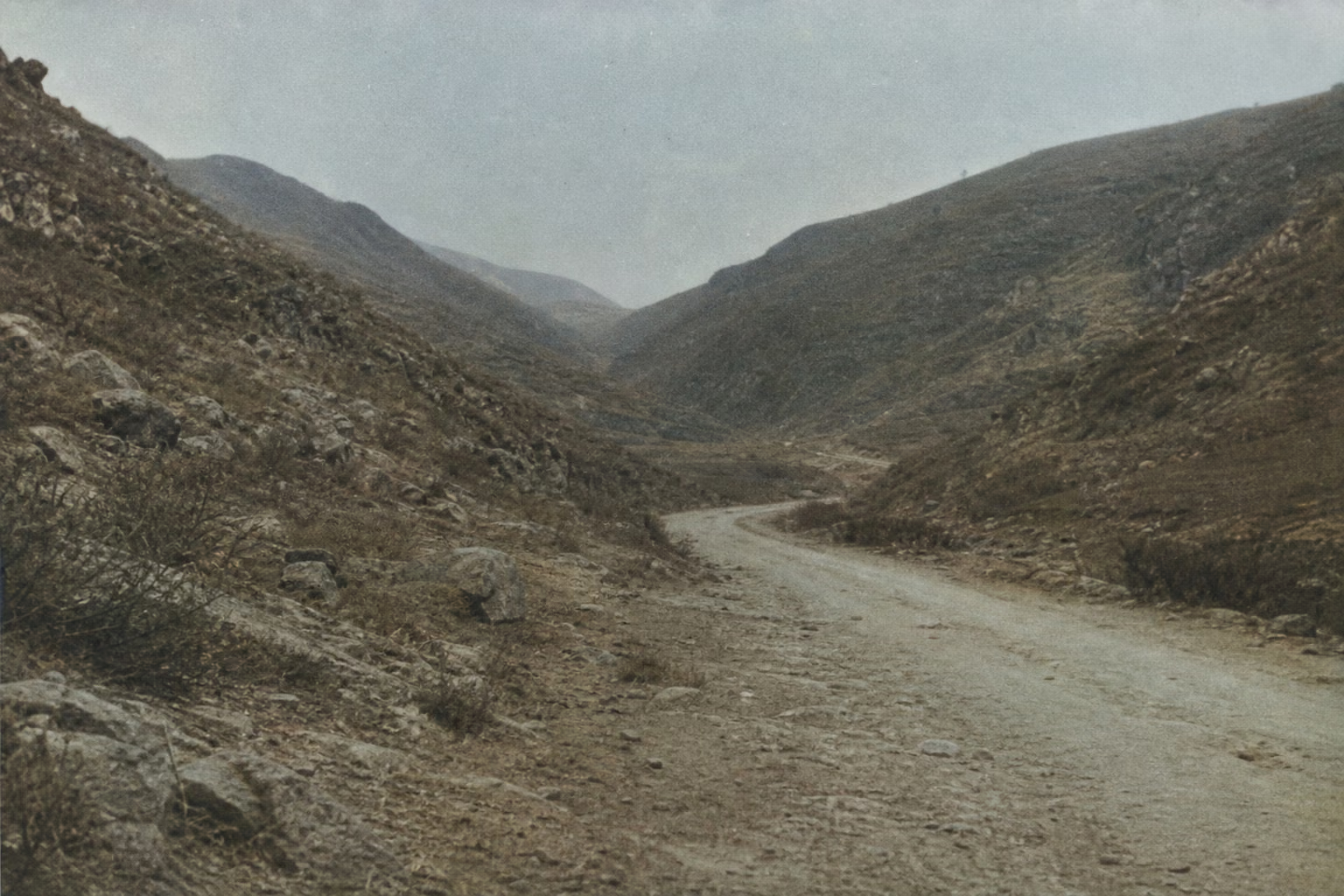
- Laiwu-Tusikou: a long, narrow valley of roughly a dozen-plus kilometers, with hills and high ground on both sides overlooking the road along the valley floor--once the breakout column entered, it was in the bag; as a spatial lesson in blocking the head and tail and striking the waist, it was textbook.
- Yimeng Mountains: the depth for the East China Field Army's concealed maneuver, and also the hinterland of front support.
- Linyi: political landmark versus military burden--the decision to abandon the city was itself a statement of spatial understanding.
- Scale: campaign space at the hundred-kilometer level of maneuver, decisive-battle space in a valley of only a dozen-plus kilometers--large maneuver, small annihilation.
How Each Side Records It
- CPC canon: The Battle of Laiwu is listed as a classic of mobile warfare in which one "made a show in the south and decided the battle in the north"; the Han Liancheng affair was gradually made public after reform and opening, becoming an important chapter in covert-front narrative (the process of disclosure remains unverified).
- Taiwan-side "pacification" narrative: Nationalist military histories attribute the disastrous northern-line defeat to command errors, mistaken judgment, and "Communist-spy infiltration"--Han Liancheng's name was long bound in Taiwan-side materials to "Communist spy" (specific wording remains unverified); the "fifty thousand pigs" phrase also circulates in Taiwan-side recollection materials.
- Later scholarship: Attention falls first on the actual degree to which the covert front contributed to the outcome of the battle (intelligence advantage versus force maneuver: which was the primary cause is debated in scholarship; representative studies remain unverified); second, on Wang Yaowu's responsibility in handling northern-line command; and third, on reflection over the strategic adjustment to a "focused offensive."
Disputes and Sensitivities
- Han Liancheng's level and identity: The publicly known level is "a Nationalist lieutenant general who secretly cooperated with the CPC over the long term"; the time when he joined the Party (one account says he had contacts early on; another says his secret Party membership remains unverified), his liaison personnel, and the specific exchange of instructions in the Battle of Laiwu all belong to covert-front materials, with limited public disclosure--this entry handles him according to the publicly known level of "secret collaborator" and does not add details beyond the public level.
- The dispute over "an inside connection deciding victory or defeat": Han Liancheng's role was a key link, but the East China Field Army's deception, maneuver, and encirclement were equally indispensable; "the intelligence dimension became the winning move" does not mean "one person won one battle."
- Source of "fifty thousand pigs": There are many circulated versions; the original context remains unverified, and different versions stand at different evidentiary levels.
- Statistical basis for the annihilation figure: 56,000 is the Communist-side figure; a corresponding Nationalist-side number is absent (unverified here).
- "Liberated fighters": Large numbers of prisoners from this battle were absorbed into the East China Field Army; the conversion of Guangxi Clique soldiers in the Reorganized 46th Division (and whether the divide between Guangxi Clique and Chiang-line forces affected that conversion) remains unverified in detail.
Sources and Open Questions
Known main sources:
- *Su Yu's War Memoirs* (chapter on the Battle of Laiwu)
- *Battle of Laiwu*, campaign history (military-science system)
- Biographies and public covert-front materials on Han Liancheng (*Invisible General Han Liancheng* and others; the level of materials needs to be distinguished)
- Recollection materials by Wang Yaowu's subordinates (direction for the source of the "fifty thousand pigs" phrase)
- Nationalist side: pacification military histories and Wang Yaowu-related archives (to be checked)
Open questions: the different statistical bases for both sides' troop strengths (the East China Field Army's northward-moving strength, and details of Li Xianzhou group's organization); the telegrams on the decision to abandon Linyi; the orders by which Li Xianzhou's group withdrew after 2.16 and then moved south again; whether the breakout was ordered or self-decided; Han Liancheng's Party-entry time and liaison level, the manner in which he left the scene on the day of the breakout, his post-battle "return" and later period undercover, and the details of his 1948 transfer to the liberated areas; the course of Li Xianzhou's capture and his circumstances after special pardon; the original source of the "fifty thousand pigs" phrase; the Nationalist-side military histories' wording in reviewing the disastrous defeat; and the statistical basis for East China Field Army casualties.
All images on this site are AI-generated depictions. They are not historical photographs, not primary sources, and do not depict any real individual.