Engagement Archive · Assault on Tianjin
Defenses encircling the city, built up for months by 130,000 men, were broken through in 29 hours - the real addressee of this battle was not Tianjin but Beiping; the speed at Tianjin became weight at the negotiating table.
Engagement Data
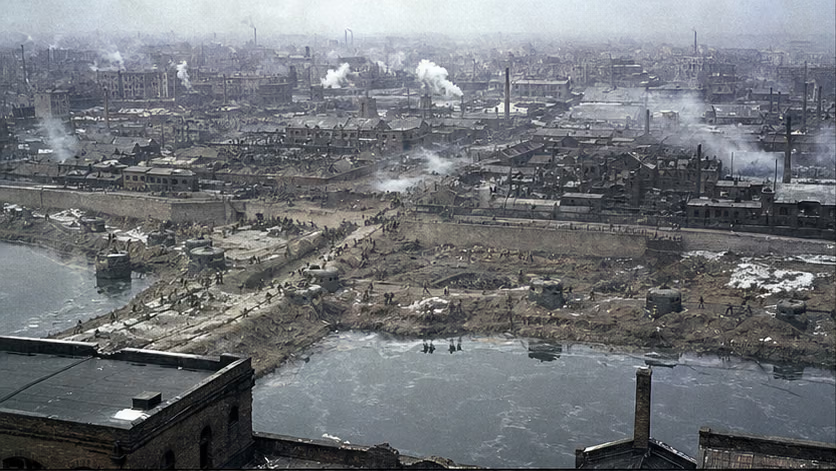
| Item | Details |
|---|---|
| Time | Morning of 1949.1.14 - afternoon of 1.15, 29 hours in all |
| Place | Tianjin urban area (from the encircling city-defense line to the city center on both banks of the Hai River) |
| Belonging | Chinese Civil War · Pingjin Campaign (the eastern wing of the "strike the two wings first" phase) |
| Defender | Tianjin Garrison Headquarters (commander Chen Changjie, under the Chiang-aligned North China "Bandit Suppression" command), about 130,000 |
| Attacker | Northeast Field Army Tianjin Front Command Post (commander Liu Yalou), 5 columns and special-arms units, about 340,000 men (statistical bases vary by account) |
| Result | On 1.15 the whole city was taken, the defending force was annihilated, and Chen Changjie was captured; the next day the PLA took over the urban area |
Belligerents
| Item | Defender | Attacker |
|---|---|---|
| Strength | About 130,000 (including security troops; combat effectiveness was uneven, and statistical bases vary by account) | About 340,000, part of the main Northeast Field Army after reorganization and replenishment following the Liaoshen Campaign |
| Firepower | City-defense artillery positions and a defensive fire network built into the works | Heavy-artillery group centered on the Northeast Field Army artillery column; one of the most concentrated uses of artillery in an urban assault during the Three Great Campaigns (unverified here) |
| Defense | Moat encircling the city, bunker clusters, and works in depth inside the city | Assault methods had already been practiced in the Liaoshen fighting (cf. Jinzhou and Shenyang) |
| Psychology | Ordered to hold to the death, with no hope of relief - Beiping was already in talks | Carried the momentum of Liaoshen, and knew this battle was being "fought for Beiping to see" |
| External aid | None (the Tanggu direction could hardly look after itself, and Beiping was cut off) | - |
Terrain and Conditions
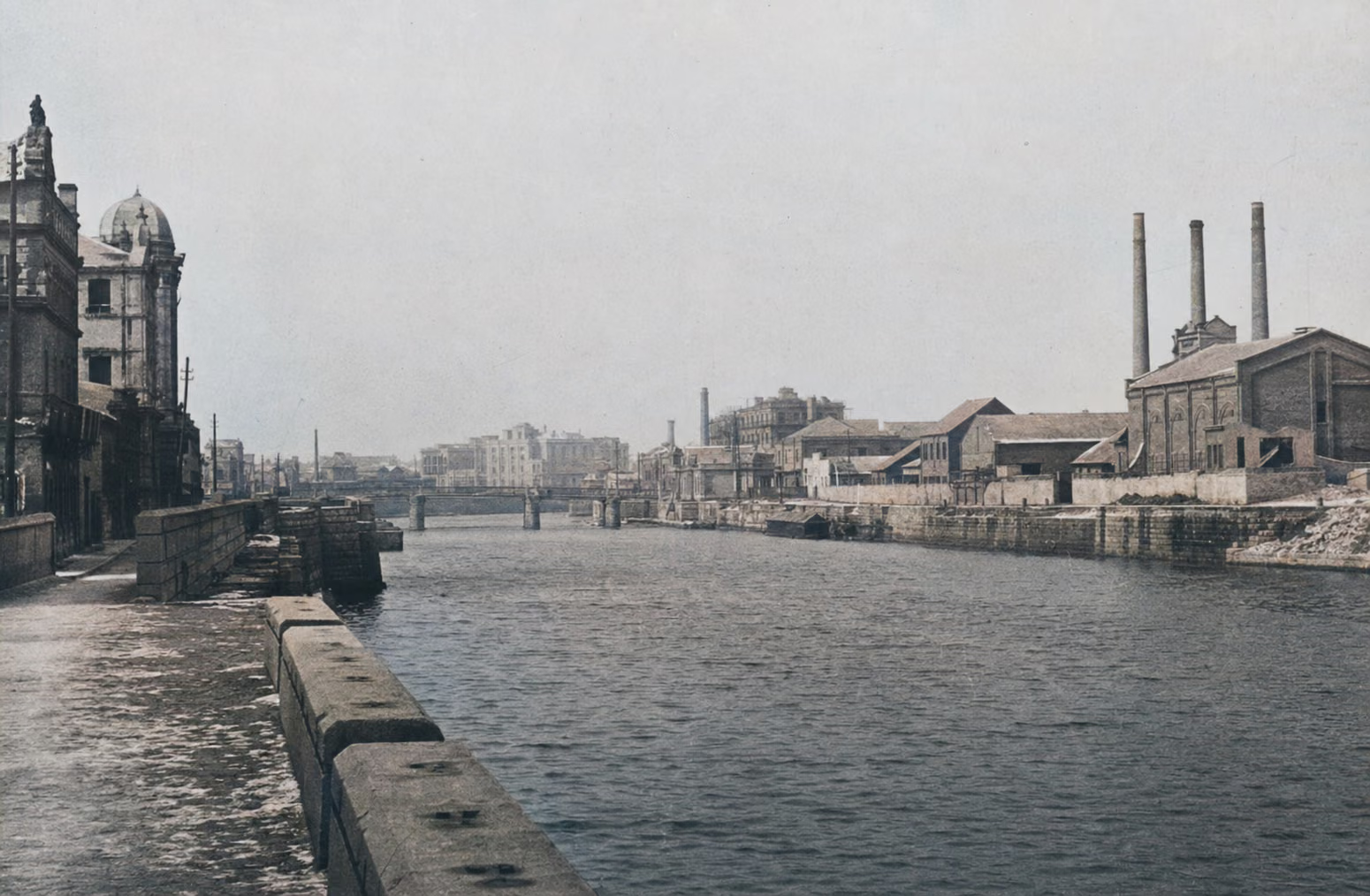
(For the larger situation at the end of 1948 - Liaoshen settled, North China isolated, fighting and negotiation combined - see "Pingjin Campaign · Overview"; here only Tianjin is covered.)
Tianjin: North China's largest industrial and commercial city, and the largest port in the north. The Hai River runs through the city to the sea; about 50 km from the Tanggu estuary, Tianjin was the seaward gate on the eastern side of Fu Zuoyi's group and the hoped-for line of southward withdrawal for Chiang-aligned units. Taking Tianjin meant cutting off the eastern end of the Pingjin line; Beiping would be left with only one condition: "encircled."
This city: a multi-centered urban layout left from the concession era, dense with banks, factories, and warehouses. During the siege in the winter of 1948, grain prices surged and the civilian situation tightened day by day - the specific conditions of civilian livelihood under siege and the Hai River's winter defenses (unverified here)※.
Why It Was Fought
Two days after the 35th Army was destroyed at the Battle of Xinbao'an, Zhangjiakou fell. Fu's own main forces had by then been used up, the Pingsui line was broken, and Fu Zuoyi no longer had the capital to withdraw westward to Suiyuan. Only two roads remained before him: negotiate, or leave by sea. The gate to that sea route was Tianjin: North China's largest industrial and commercial city, the largest port in the north, with the Hai River running through it and the Tanggu estuary about 50 km away - the hoped-for line of southward withdrawal for Chiang-aligned units, and the only exit on the eastern side of Fu Zuoyi's group. Inside the city were Chen Changjie's roughly 130,000 defenders, belonging to the Chiang-aligned side; the encircling works had been built up for months, with a moat and bunker clusters.
From December 1948, Fu Zuoyi had already been in secret contact with the CPC, but terms could not be settled. Beneath the walls of Beiping, both sides were waiting for a weight heavy enough to settle the scale. The Central Military Commission's sequence was to strike the two wings first: in the west, Xinbao'an and Zhangjiakou would consume Fu's own forces; in the east, Tianjin, this Chiang-aligned heavy force and seaport, would be eliminated, leaving Beiping wholly isolated and the negotiating table with no second arrangement left. The attack on Tianjin was the fighting half of "fighting and negotiation combined": fought for Beiping to see. The faster it was fought, the more clearly it could prove that Beiping's 600,000 defenders and an ancient capital had no third road - the speed at Tianjin became weight at the negotiating table.
Chen Changjie's calculation was another account book. He stated that he would hold firm (his telegram exchanges with Fu remain unverified), and what he followed was precisely Fu Zuoyi's order: only with Tianjin in hand would Fu have bargaining capital in the negotiations. The men defending it had no hope of relief - Tanggu could hardly look after itself, and Beiping had already been cut off - while the man behind them who gave the order was using this city, ordered to hold to the death, as a bargaining chip.
In early January, 5 Northeast Field Army columns and special-arms units, about 340,000 men (statistical bases vary by account), completed the encirclement and cleared the outlying strongpoints. Around January 13, they sent a letter urging surrender, which Chen Changjie refused (the texts of the letter and reply telegram remain unverified). On the morning of January 14, the guns began.
In fact, another outcome also lay on the table for this city - the one Beiping would have half a month later. But the negotiations needed Tianjin as a bargaining chip, and the defenders had been ordered to hold to the end: Tianjin did not live to see that option.
Course of the Engagement
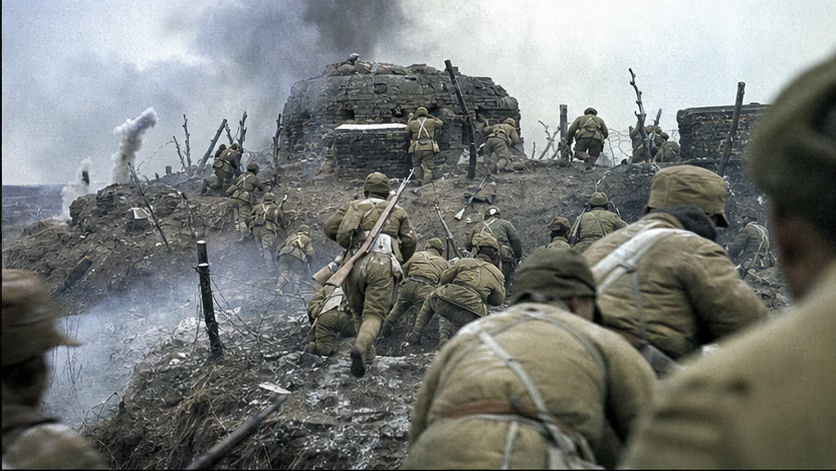
| Phase | Time | Key Points |
|---|---|---|
| Encirclement preparations | Early January | The Northeast Field Army completed the encirclement of Tianjin and cleared outlying strongpoints; the previously designated sixteen-character deployment was: "advance against each other from east and west, cut through the waist, south before north, divide first and then encircle and annihilate" (wording and original text unverified) |
| Final ultimatum | Around 1.13 | The attackers sent a letter urging surrender; Chen Changjie refused (the texts of the letter and reply telegram remain unverified) |
| General assault | Morning of 1.14 | The eastern and western routes advanced against each other; after artillery preparation they broke through the city defenses. Whether the moat froze in winter, and its effect on the breakthrough (unverified here) |
| Division in depth | All day on 1.14 | Multiple routes drove through the city, cutting the defenders' north-south links through the waist and dividing them into several mutually isolated blocks |
| Linkup at Jintang Bridge | Early morning of 1.15 | The eastern and western routes linked up at Jintang Bridge over the Hai River - the symbolic image of this engagement (the exact time varies by account and remains unverified) |
| Mopping up | Morning to afternoon of 1.15 | The Garrison Headquarters (toward Haiguang Temple in the former Japanese concession district, unverified) was taken, and Chen Changjie was captured inside a bunker; the whole city fell in 29 hours |
Casualties and Losses
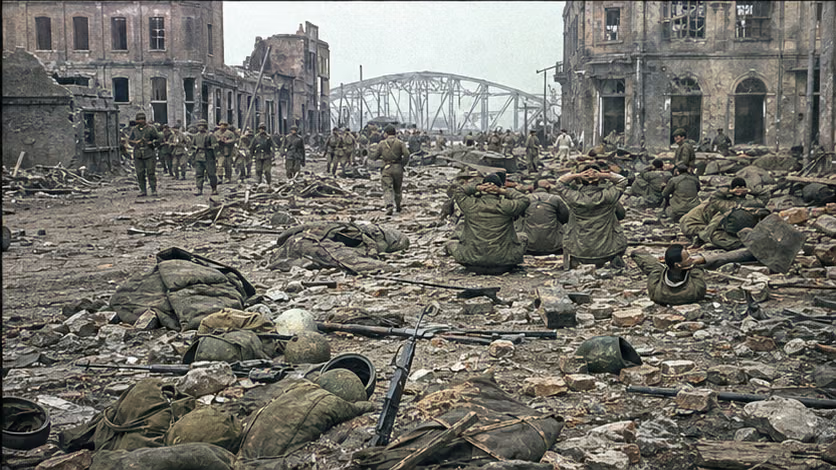
- Defender: the 130,000-man defending force was annihilated - about 11,000 killed or wounded and about 117,000 captured (CPC-side battle-report statistical basis, unverified); the composition of losses in Taiwan-side records (unverified here).
- Attacker: about 23,000 casualties (CPC-side military-history statistical basis, unverified) - this number for a 29-hour urban assault shows that the works were real.
- ※ Civilians: civilian casualties amid the fighting in the urban area, and damage to homes, commercial and industrial facilities (no reliable total; statistical bases vary by account); hunger and cold among civilians during the siege (records unverified).
Aftermath
- The weight on Beiping's negotiating table was settled overnight: final ultimatum on 1.16; on 1.21 Fu Zuoyi signed the "Agreement on the Peaceful Settlement of the Beiping Question"; on 1.31 Beiping was peacefully liberated (see the Pingjin overview).
- The "Tianjin method" took its name from this: against those who refused negotiation, annihilation by force - one of the three named methods for resolving remaining KMT forces, alongside the "Beiping method" and the "Suiyuan method" (source of Mao Zedong's summary phrase unverified; cf. the Pingjin overview).
- Chen Changjie entered the Gongdelin War Criminals Management Center and was later granted amnesty (whether he was included in the first 1959 amnesty list remains unverified); his late-life recollections and resentful words appear in "Accounts of Those Present."
- The Tianjin campaign was treated by the Northeast Field Army, and later in military instruction, as a standard model of urban assault (development of the teaching materials unverified).
Accounts of Those Present
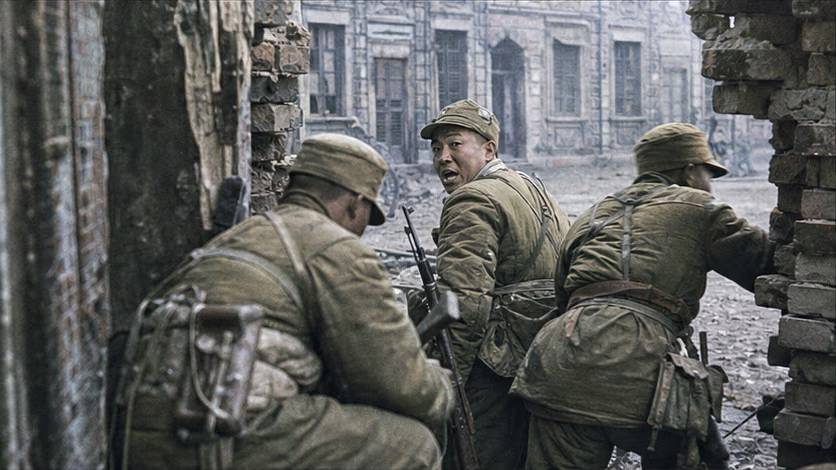
- "Mr. Fu wanted me to hold firm": Chen Changjie is said to have remarked after capture: I held out to the end because Mr. Fu wanted me to hold (wording and occasion unverified). The man defending obeyed orders to the end; the man who gave the order signed in Beiping 10 days later. Thereafter Chen entered Gongdelin, while Fu entered the cabinet as minister of water resources - two outcomes within the same group (see the Pingjin overview).
- The linkup at Jintang Bridge: in the early morning of 1.15, eastern and western assault teams met beside the bridge over the frozen surface of the Hai River; in participants' recollections, this was the emotional high point of the whole engagement - battle photographs and memoir versions differ (unverified here).
- The ending in the bunker: when the Garrison Headquarters' underground works were breached, Chen Changjie and his command staff had not had time to burn their documents (this detail in the records remains unverified).
- ※ The people inside the city: after more than 10 days of siege and a day and a night of hard fighting, civilians hid indoors and listened to shells pass through the city; civilian deaths and injuries, destruction of homes, and postwar accounts by Tianjin residents (unverified here) - victims are not a source of satisfaction.
The Ground
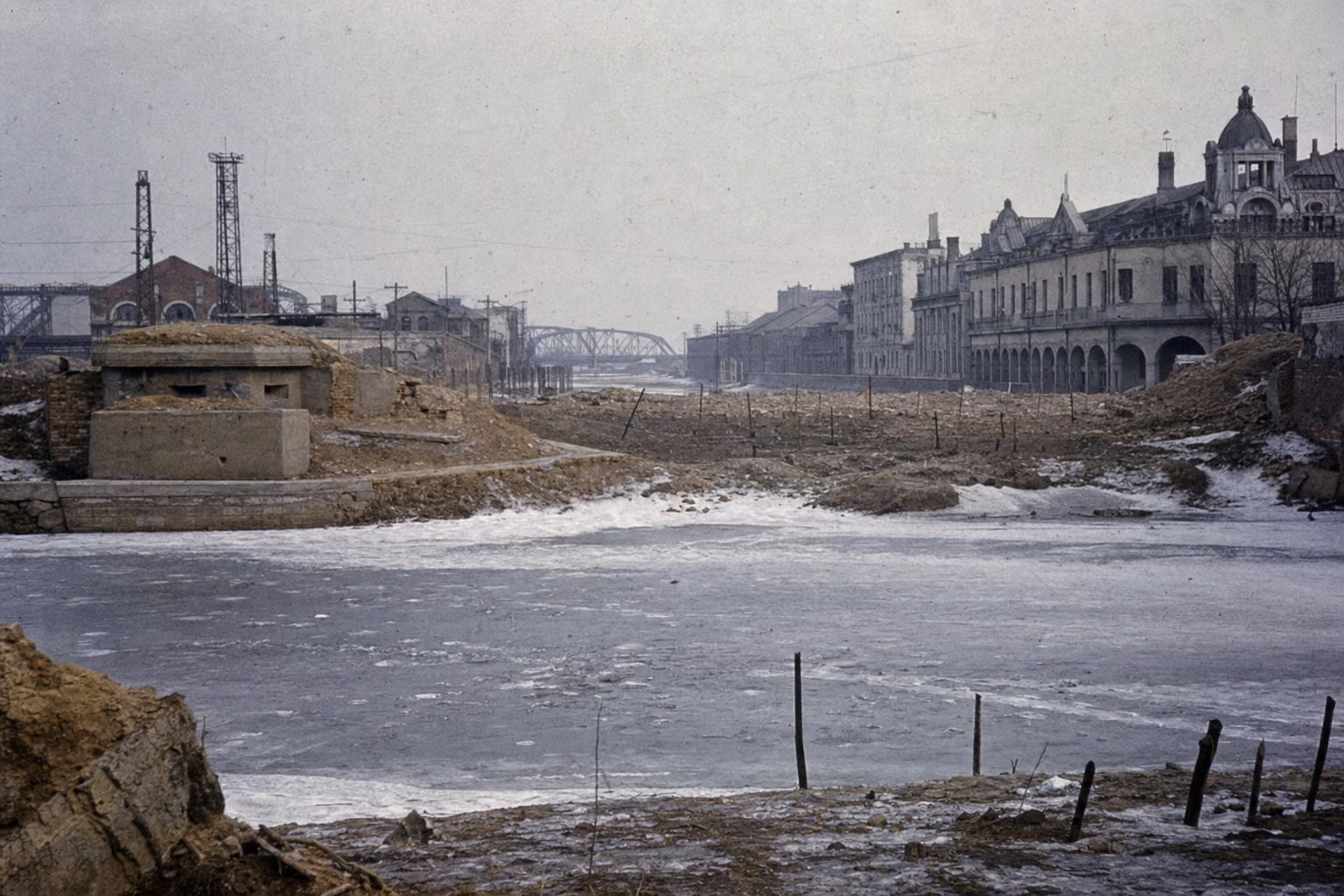
- The Hai River cuts the city into eastern and western halves, and bridges are lifelines: Jintang Bridge, Jinhua Bridge, and other iron bridges connect the two banks; the linkup point was the spatial hinge.
- A closed ring of works made from the encircling moat, bunker clusters, and minefields; the frozen river surface in winter was both obstacle and passage (for both attack and defense).
- The depth was a grid of city blocks: cutting through the city depended on street and lane axes, and the attackers' multi-route "cut through the waist" was a spatial operation.
- Vertical elements: the Garrison Headquarters bunker, high-building firing points, churches, and factory structures - the three-dimensional face of urban assault.
How Each Side Records It
- CPC canon: a textbook case of urban assault, the defining battle of the "Tianjin method"; Liu Yalou's front-command role stands as the weightiest entry in a famed commander's career.
- Taiwan-side accounts: the fall of Tianjin appears as the final blow in the collapse of North China during the "counterinsurgency" war; critiques focus on the command contradiction between "an isolated city without relief" and "defend or negotiate." Chen Changjie's defeat is often narrated alongside Fu Zuoyi's "defection" (original text of the Pingjin section of the History of the Counterinsurgency War unverified).
- Civilian and scholarly accounts: Chen Changjie's late-life recollections (the Gongdelin cultural-and-historical specialist series, Recollections of the Tianjin Resistance Battle) are first-hand material from the defender's perspective, and his resentful words have circulated widely. The causal structure linking negotiation and assault is one of the central unresolved questions in Pingjin studies.
Disputes and Sensitivities
- "Fought for negotiation": the battle involving Tianjin's 130,000 men was the bargaining chip for the peace of Beiping's 250,000 men - the negotiating table required Tianjin's blood. This structure has already been established in the overview; the causality exists, while moral judgment is not developed here.
- Chen Changjie's position: a soldier who obeyed orders to the end, an abandoned defending commander, a war criminal - these three identities coexist in different narratives. If his resentment in "Mr. Fu wanted me to hold" is substantiated, it would be one of the rare examples in this series of "the duty owed between comrades being crushed by the larger account."
- ※ There is no reliable count of civilian casualties, and the narrative must not fill the gap with rough figures; records of civilian livelihood under siege are thin, so the writing should remain restrained until further evidence is supplied.
- Casualty figures follow two sets of statistical bases from different source sides.
Sources and Open Questions
Known main sources:
- Chen Changjie, Recollections of the Tianjin Resistance Battle (Gongdelin cultural-and-historical specialist series)
- Liu Yalou-related recollections and Northeast Field Army Tianjin campaign summary materials (specific titles unverified)
- Pingjin Campaign series (PLA Press system)
- Taiwan-side History of the Counterinsurgency War, Pingjin section, and review literature related to the defense of Tianjin (archive item titles to be checked)
Open questions:
- The original wording and issuing level of the sixteen-character deployment;
- The statistical basis for the attacker's 340,000 men; the composition of regular army and security troops within the defender's 130,000;
- The statistical boundaries of casualties on both sides (whether outlying operations are included);
- The exact time of the linkup at Jintang Bridge and the versions in participants' recollections;
- The original source for Chen Changjie's "Mr. Fu wanted me to hold" remark (occasion, recorder);
- The location of the Garrison Headquarters and details of the bunker breach;
- Records of civilian livelihood during the siege and the Hai River's winter defenses;
- Any reliable statistical basis for civilian casualties and facility damage in the urban area;
- The source of Mao Zedong's summary phrase on the "Tianjin method";
- Chen Changjie's amnesty batch and his late-life trajectory.
All images on this site are AI-generated depictions. They are not historical photographs, not primary sources, and do not depict any real individual.