Engagement Archive · Battle of Chamdo
A nineteen-day campaign beside the Jinsha River, fought in order to make negotiation happen: after the main Tibetan force was destroyed, all prisoners were released and given travel money; Ngapoi Ngawang Jigme, the Chamdo governor-general, turned to become chief representative in the peace talks, and seven months later the Seventeen-Point Agreement was signed. This was the last engagement on Whence We Came's 113-year timeline: in the form of "fight for talks, release after the fight," it gave the war genealogy of the whole series a different kind of ending.
Engagement Data
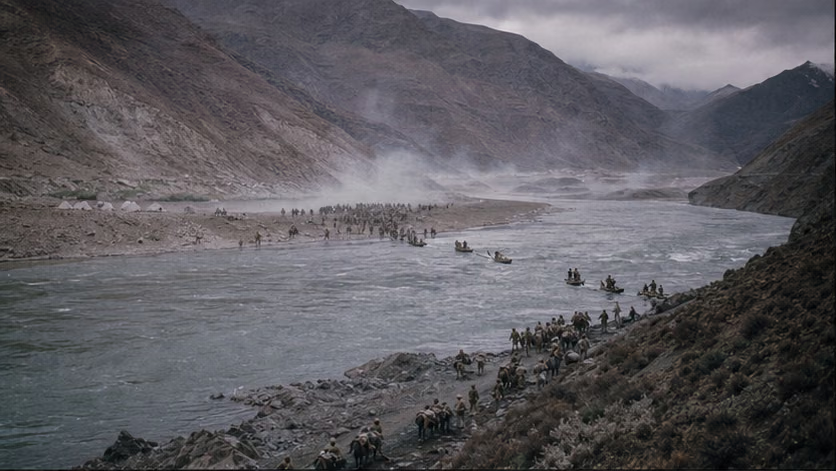
| Item | Content |
|---|---|
| Time | 1950.10.6 - 10.24, nineteen days |
| Place | Chamdo region west of the Jinsha River (today's Chamdo City, Tibet): Gangtuo crossing - Enda - Chamdo city |
| Part of | Chinese Civil War (for the overall war, see *Chinese Civil War · War Overview*) |
| Attacker | About 40,000 Southwest Military Region troops, chiefly the 18th Army (army commander Zhang Guohua), of whom about 23,000 took part (figures vary by account) |
| Defender | Main Tibetan force of 8 dapön (regiments), about 8,000 men (figures vary by account), under Chamdo governor-general Ngapoi Ngawang Jigme |
| Result | On 10.19 Chamdo changed hands; more than 5,700 Tibetan troops annihilated or captured (figures vary by account) -- all prisoners were educated, released, and given travel money; Ngapoi surrendered with his forces |
Belligerents
| Item | 18th Army | Tibetan Army |
|---|---|---|
| Strength and equipment | An absolute generational gap between a field army and an old-style army | Mainly old British-pattern weapons, no heavy firepower |
| Logistics | The plateau was the real opponent: in roadless areas, men carried loads and animals hauled them (tens of thousands in yak transport teams -- the epic dimension of logistics for the march into Tibet remains to be checked); the grain-discipline rule of "march into Tibet without eating from local supplies" (policy of bringing one's own rations) | Fighting on home ground |
| Politics | The military objective was the negotiating objective (Central documents and telegrams on the policy of "using battle to promote peace" remain to be checked) | The Kashag's delay of negotiations and hopes for foreign aid (its decision-making line varies by account) |
Terrain and Conditions
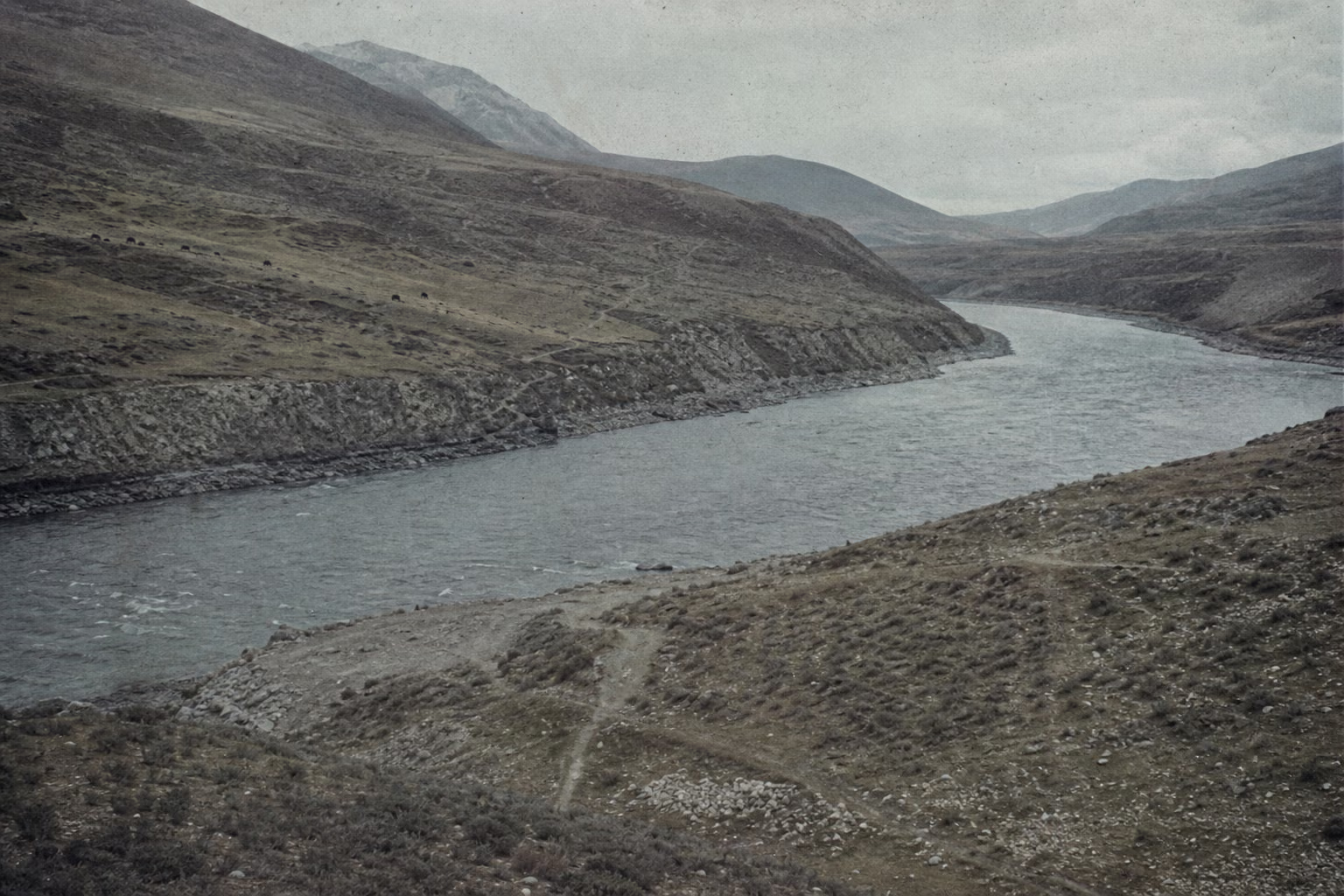
Chamdo in 1950: the gateway to Kham with the Jinsha River as boundary, at an elevation above 3,200 meters. International background: India's attention in the first years after independence, and British and American verbal support with actual absence (the line along which hopes for foreign aid collapsed remains to be checked); repeated invitations to negotiate from the Central Government to the Kashag were delayed again and again (the history of multiple contacts in 1950 remains to be checked) -- the campaign was the product of a negotiating deadlock.
Why It Was Fought
Fifty days after the Hainan closing move, the Korean War began; the Seventh Fleet entered the Taiwan Strait, and fighting in the southeast stopped at the strait. On the map of 1950, only one unsettled place remained: Tibet. The Central Government set a dual-track policy -- "the march into Tibet should be early rather than late," while "political settlement comes first." Invitations to negotiate went out round after round, only to be delayed repeatedly by the Lhasa Kashag authorities (the history of multiple contacts in 1950 remains to be checked); half the confidence behind that delay was staked on foreign support from Britain, the United States, and India -- but that support never went beyond words (the line along which hopes for foreign aid collapsed remains to be checked). Negotiation had stalled. The Battle of Chamdo was the product of that deadlock.
Why Chamdo: west of the Jinsha River, it was the gateway to Kham; the main Tibetan force, eight dapön totaling about eight thousand men (figures vary by account), was stationed there, and the Chamdo governor-general posted by the Kashag was Ngapoi Ngawang Jigme. The aim written into the campaign design was explicit: destroy the main Tibetan force at Chamdo, shake Lhasa, and bring about negotiations -- not to occupy depth for its own sake (campaign-objective documents and telegrams remain to be checked). From the day this battle was designed, it was meant to make negotiation happen.
Why October: contact had dragged on for more than half a year, and "early rather than late" had become the settled decision. In the same month, the War to Resist U.S. Aggression and Aid Korea opened in Northeast Asia -- in October 1950, the new regime placed its pieces on the Yalu River and the Jinsha River at the same time.
At dawn on October 6, units of the 18th Army crossed the Jinsha River by assault from Gangtuo and other crossings on multiple routes north and south. This battle could have been avoided -- the negotiating table had been there all along; precisely because it had been there for more than half a year and the other side still had not come, gunfire sounded on the Jinsha River.
Course of the Engagement
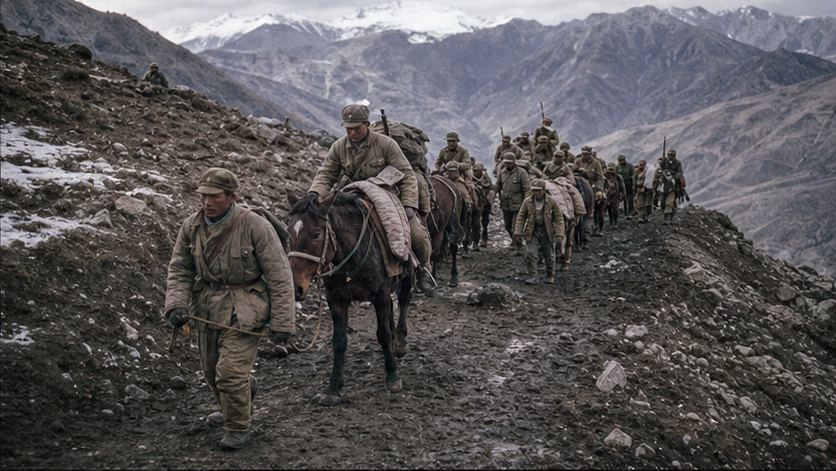
| Phase | Time | Key Points |
|---|---|---|
| Multiple river crossings | 10.6-7 | Several routes north and south crossed the Jinsha River by assault (Gangtuo and other crossings); the northern cavalry detachment made a long-range outflanking movement |
| Enda penetration | 10.8-16 | The northern route penetrated to Enda and cut Chamdo's western line of retreat -- a limit march of long-distance outflanking on the plateau (details of the cavalry detachment's day-and-night advance are unrecorded) |
| Chamdo changed hands | 10.19 | The defenders' westward withdrawal was blocked and they pulled back; Chamdo fell without a fight |
| Surrender and close | 10.19-24 | Ngapoi Ngawang Jigme laid down arms with his forces at Zhugu Monastery (his decision and circumstances remain to be checked); the campaign ended |
Casualties and Losses
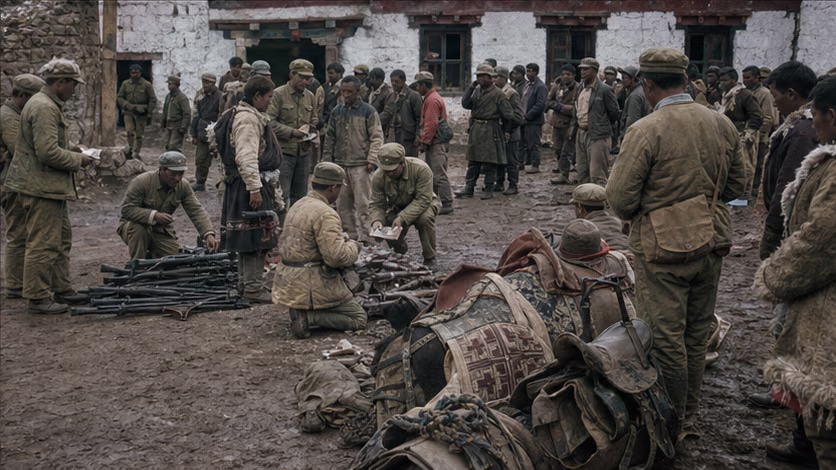
- Tibetan Army: more than 5,700 annihilated or captured (several hundred killed, the rest captured -- composition basis remains to be checked); all prisoners were released: educated, given travel money, and the wounded treated before being sent back -- the only engagement in this series with "zero POW camps", policy details remain to be checked.
- 18th Army: more than one hundred casualties (figures vary by account) -- the lowest-intensity closing engagement in this series.
- ※ Civilians: the fighting was brief and its spread limited; the issue of ula corvee labor requisitioned or hired for logistics, and the dispute over implementation of the "do not eat from local supplies" policy (this point remains to be checked), form the civilian-labor ledger of the Battle of Chamdo.
Aftermath
- Lhasa was shaken, and the pro-peace faction came to the fore; Ngapoi went to Beijing as chief representative -- on 1951.5.23, the *Agreement of the Central People's Government and the Local Government of Tibet on Measures for the Peaceful Liberation of Tibet* (the Seventeen-Point Agreement) was signed: the endpoint of the campaign was a paper agreement (the later entry into Lhasa was a peaceful stationing, 1951.10).
- The 18th Army remained in Tibet: road building (the Kang-Tibet and Qinghai-Tibet highways opened to traffic in 1954 -- one later line of "leaving roads to Tibet") and garrison duty -- a marker for the long history of dedication by the troops who entered Tibet.
- In the same month as the War to Resist U.S. Aggression and Aid Korea: in October 1950, the new regime used force in Northeast Asia and on the Qinghai-Tibet Plateau at the same time -- in the final month of Whence We Came, two lines closed at once (the structure of temporal juxtaposition).
- The series timeline closes here: from the first shot off Kowloon in 1839 to the travel money issued to prisoners at Chamdo in 1950 -- 113 years, in which the form and purpose of war completed a full arc.
Accounts of Those Present
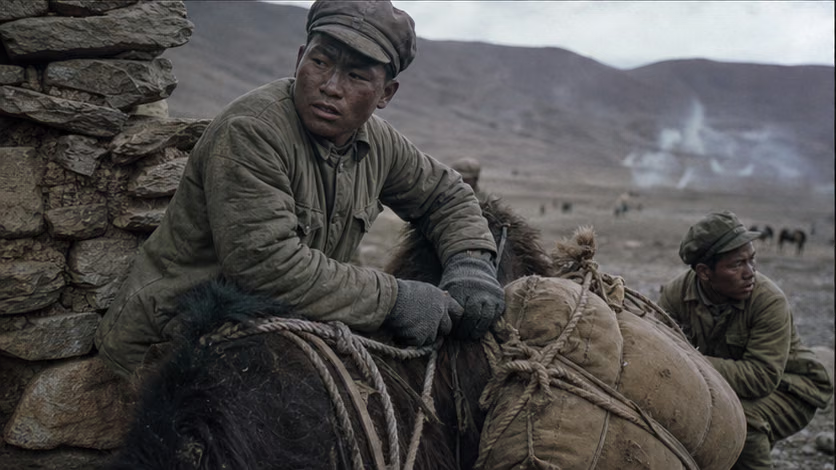
- Ngapoi Ngawang Jigme: a life that went from opponent in the campaign to negotiating representative and then to state leader (a brief account of his personal arc) -- among all "enemy-side principal commanders" in this series, the one with the most unusual ending.
- A prisoner camp that issued travel money: Tibetan prisoners received silver dollars and travel passes and went home (the oral-history layer from those present remains to be checked) -- they carried the first impression of the "Jinzhu Mami" back to their villages: a sample of prisoner policy as strategic communication.
- Yak transport teams: tens of thousands of yaks and pack workers crossed snow mountains to carry grain (logistical details unrecorded) -- the true protagonists of the plateau campaign were on the transport line.
- Zhang Guohua's daughter: the army commander's young daughter died of illness on the road into Tibet (the line of "I left my daughter on the road into Tibet" remains to be checked) -- the commander's private cost.
The Ground
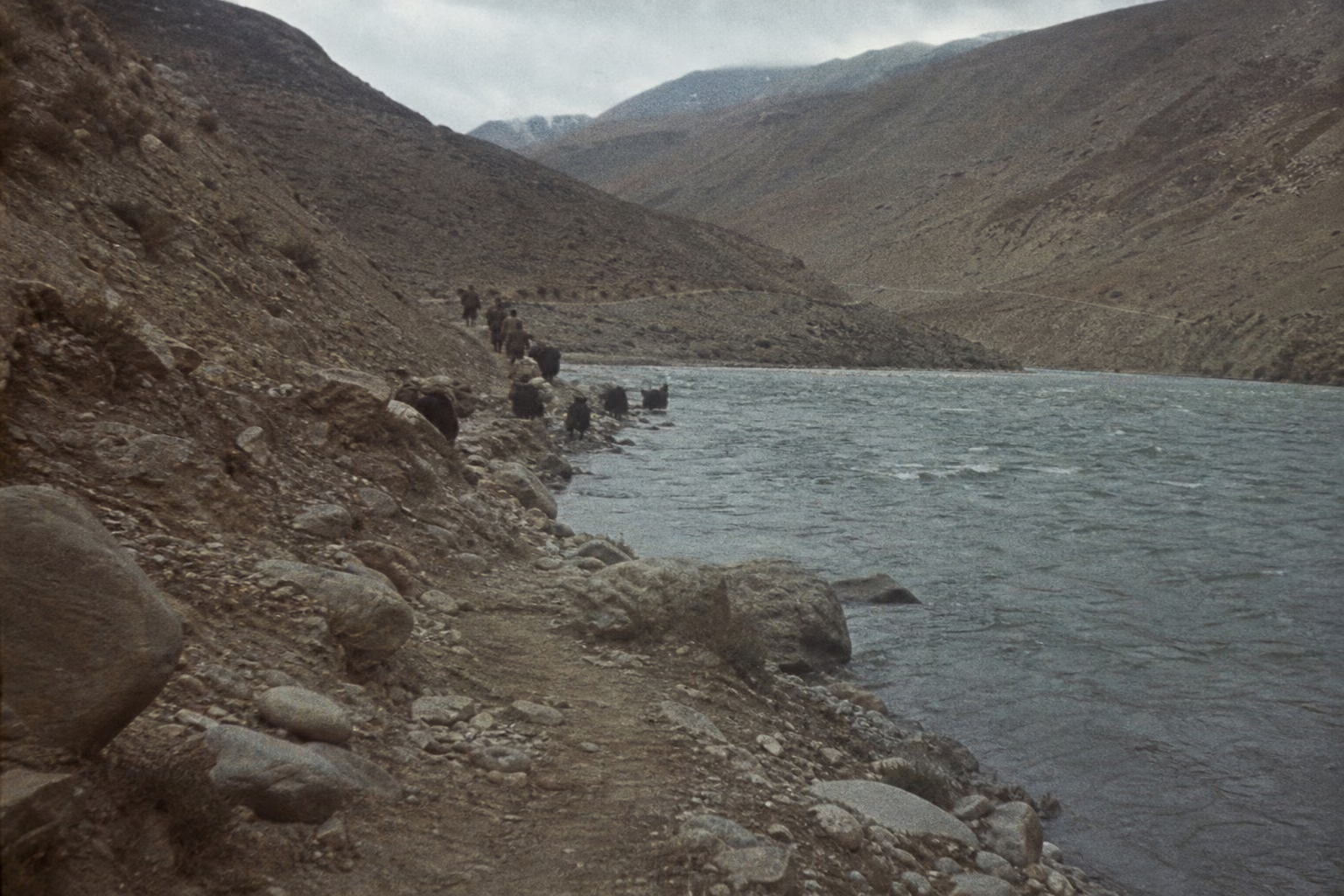
- Jinsha River crossing group: assault crossings over plateau rivers (forming the closing part of a "crossing" trilogy with river crossing and sea crossing).
- Enda outflanking line: a long-distance cavalry penetration at the four-thousand-meter elevation level -- the plateau as mechanism (oxygen shortage, snow mountains, and animal logistics -- the last of three poles in the "environmental battlefield" together with the Savage Mountains and Chosin Reservoir).
- Chamdo, the "city without battle": an empty-city change of hands achieved by an encirclement posture -- the only city in the whole series to end with "not fighting".
How Each Side Records It
- Chinese canon: the characterization that "the Battle of Chamdo opened the door to the peaceful liberation of Tibet"; the epic narrative of the 18th Army's march into Tibet.
- The existence of "differences" among Tibet-related narratives is itself a historical fact (differences between overseas Tibetan narratives and Chinese narratives; specific wording follows the state's established historical characterization).
- Academia: studies of negotiation history and prisoner policy; logistics history of the march into Tibet.
Disputes and Sensitivities
- Ethnic and religious dimensions: military and policy facts form the body of this article; historical characterization follows established wording; the existence of disagreement is also part of the historical fact.
- The debate over ula corvee labor and the implementation of grain policy; casualty and prisoner-composition bases.
Sources and Open Questions
Sources: *Historical Materials on the 18th Army's March into Tibet*; the documentary collection *Peaceful Liberation of Tibet*; writings and interviews related to Ngapoi Ngawang Jigme; commemorative materials on the Battle of Chamdo.
Open questions: troop strengths, casualties, and prisoner figures on both sides; campaign-objective documents and telegrams; details of prisoner policy; details of the Enda outflanking movement; documents on the process of signing the Seventeen-Point Agreement; the Zhang Guohua line.
All images on this site are AI-generated depictions. They are not historical photographs, not primary sources, and do not depict any real individual.