Campaign Overview · Pingjin Campaign (1948–49)
North China's 520,000 troops were settled in sixty-four days, with only two real fights: Xinbao'an and the twenty-nine-hour assault on Tianjin; Beiping's 600,000 defenders and an eight-hundred-year-old ancient capital were brought over through "surrounding without attacking, separating without encircling." Force established the terms, negotiation took the city: on the day Fu Zuoyi signed, a new proper name entered the history of urban attack and defense in China -- the "Beiping Method."
Engagement Data
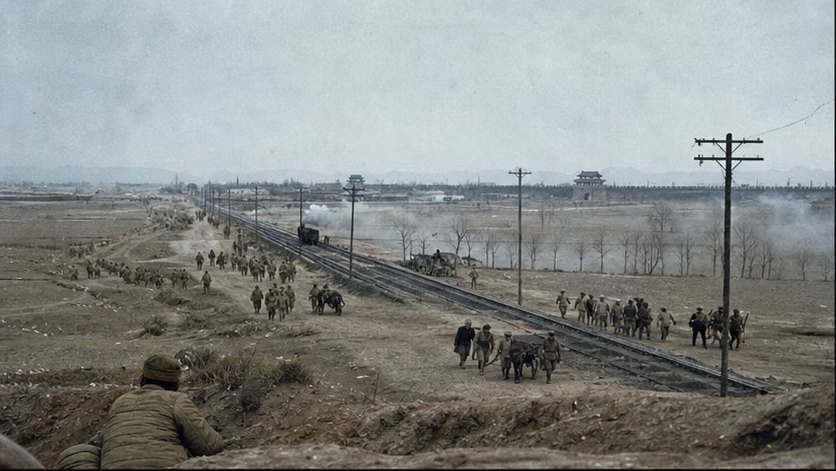
| Item | Details |
|---|---|
| Time | 1948.11.29 – 1949.1.31, sixty-four days |
| Place | Pingsui railway line (Zhangjiakou—Xinbao'an)—Pingjin railway line—Tanggu; the two cities of Beiping and Tianjin |
| War | Chinese Civil War (for the whole war, see *Chinese Civil War · Overview*) |
| Attacker | Northeast Field Army, 800,000 (secretly entered the Pass ahead of schedule) + North China Military Region, 200,000; one million in all (Lin Biao, Luo Ronghuan, and Nie Rongzhen, Pingjin Front Command) |
| Defender | Fu Zuoyi's North China "Bandit-Suppression Headquarters," 520,000: Fu's own forces (Pingsui line) and Chiang's forces (Pingjin line) in roughly equal parts -- one group, two hearts was the operational opening of the whole campaign |
| Result | 520,000 annihilated or reorganized: Xinbao'an and Zhangjiakou destroyed the main force of Fu's own troops; Tianjin was taken by assault, destroying 130,000 of Chiang's forces; Beiping's 250,000 accepted peaceful reorganization |
Belligerents
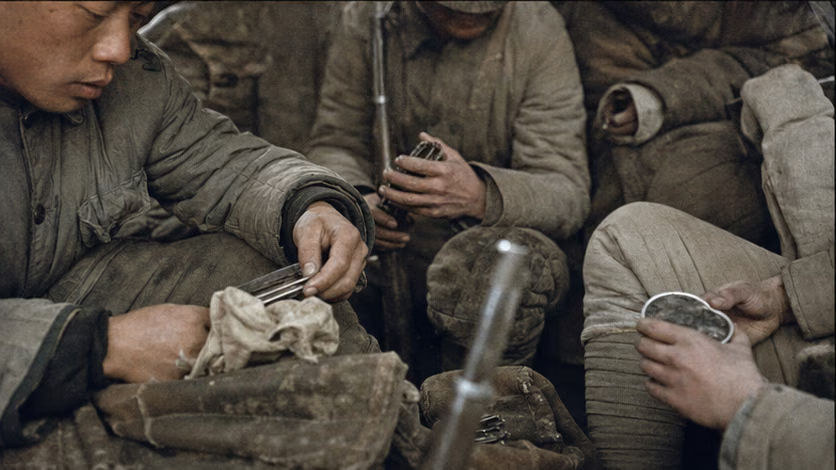
| Item | PLA | Nationalist Army |
|---|---|---|
| Strength | One million against 520,000 -- the first realization of the dividend from the Liaoshen victory | A long, thin line of troops stationed along a 500-li railway |
| Psychology | Carrying the force of Liaoshen | Fu Zuoyi's three minds: defend, negotiate, or leave (wavering among three plans: withdraw west to Suiyuan / withdraw south to Jiangnan / hold Pingjin) |
| Variable | Fu Dongju: Fu Zuoyi's daughter, a covert CPC member at his side (father-daughter tie and intelligence line -- level marked, "the deepest line") | Chiang-Fu mutual suspicion: Central Army troops monitored Fu's forces (the internal fracture of the North China group) |
Terrain and Conditions
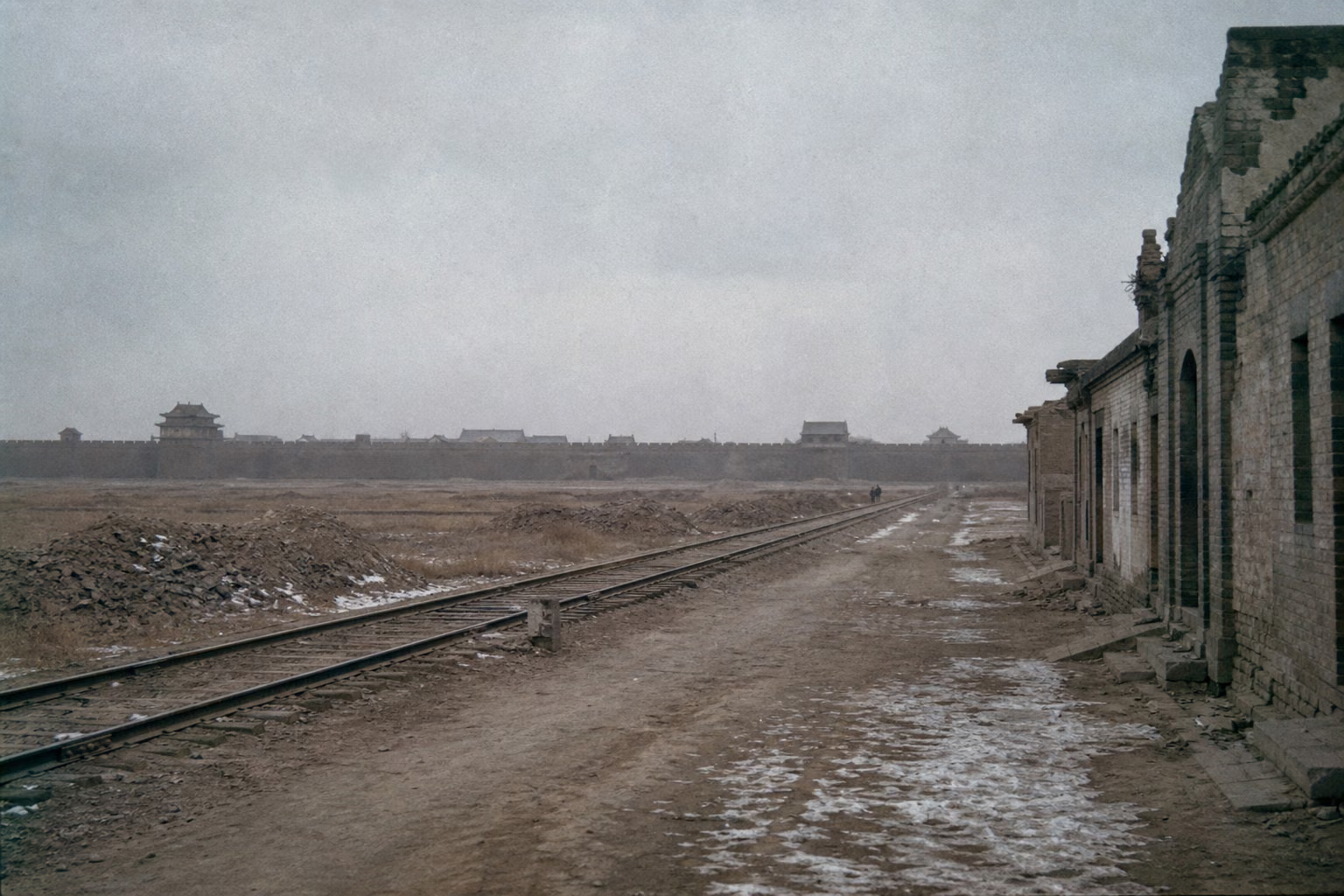
North China at the end of 1948: Liaoshen had been settled, and Fu Zuoyi's group had become a startled, isolated force; inside Beiping: student unrest, grain shortage, and the cultural weight of the old capital (the civilizational question drawn out by "whether to fight Beiping" -- the evidentiary level of the Liang Sicheng "list for protecting ancient buildings" story remains unverified); Suiyuan was Fu's old base, Tanggu the seaport Chiang wanted -- Fu's two routes of retreat were therefore the PLA's two "first-move points."
Why It Was Fought
After Liaoshen ended, the guns of the Northeast Field Army had not yet cooled. The board inside the Pass changed with it: on 1948 November 6, Huaihai opened, and the area east of Xuzhou became a cauldron; Fu Zuoyi's 520,000 troops in North China became, overnight, the largest live piece on the national board -- where it moved would affect the whole situation.
That piece had three roads: go west to Suiyuan and return to his old base, withdraw south across the river to reinforce the Yangtze defense line, or stay in Pingjin and watch the wind. Nanjing wanted a southern withdrawal -- the Xuzhou front was under pressure, and Chiang Kai-shek repeatedly signaled Fu Zuoyi to ship his forces by sea to Jiangnan (Chiang-Fu telegrams and correspondence unverified); Fu Zuoyi did not move. His accounting was clear too: among the 520,000 men, Chiang's and Fu's forces were roughly comparable (accounts differ on the statistical basis for force composition), how many could be taken away by sea, and whether the troops would still answer to Fu after crossing the river, were all question marks; to go west to Suiyuan would be tantamount to leaving Chiang's troops to Nanjing. To hold was the only choice that could preserve the loyalties on both sides at once. He dared to hold because of one judgment: the Northeast Field Army had fought fifty-two bloody days in Liaoshen, was exhausted by casualties and fatigue, and by ordinary reasoning would need several months of rest and reorganization -- those "several months" were the foundation of his entire timetable.
On the Yan'an side, the core of the decision was precisely to remove those "several months." The Central Military Commission sent repeated telegrams urging Lin Biao to end the rest period and enter the Pass early (dates and wording of the back-and-forth telegrams unverified): once the Northeast Field Army's 800,000 entered the Pass, Pingjin would be one million against 520,000. Why such haste? When Huaihai reached its middle stage, if Fu Zuoyi resolved at that moment to withdraw south, 500,000 fresh troops crossing the river would require the Yangtze defense line to be recalculated. The answer the Center wanted was: hold Fu's group in North China and settle it on the spot. For this reason, the Huaihai battlefield at one point slowed the final annihilation of Du Yuming's group (the telegram history of this decision remains unverified) -- the two battlefields were being directed by the same hand.
The Northeast Field Army's early entry into the Pass was not cost-free: Liaoshen casualties had not been replenished, recruits had not been trained, heavy equipment had to move a thousand li south, and winter clothing, grain, and roads were all tight. What supported this decision was the equipment and ammunition newly captured from the Nationalist Army in the Northeast, a logistics system built over three years, and a close calculation of Fu Zuoyi's window of hesitation.
Exploratory peace talks had in fact begun in November -- around the daughter, and through emissaries from both sides, covert contact continued (the sequence and levels of contact remain unverified). But for both sides, negotiation and fighting were never two roads; they were two ways of walking the same road: first hurt the two wings, and only then would the negotiating table have a price.
On 1948 November 29, North China troops surrounded Zhangjiakou; Fu Zuoyi sent his founding elite unit, the 35th Army, west to relieve it, and the campaign opened.
Why It Was Fought This Way
The Central Military Commission's general policy: hold Fu's group in North China and settle it on the spot -- do not allow it to withdraw south and strengthen the river defense, and do not allow it to flee west to Suiyuan: the Northeast Field Army entered the Pass secretly ahead of schedule (the campaign deception of concealed movement: newspapers still reported Lin Biao as being in Shenyang -- details unrecorded); the sequencing of "surrounding without attacking" (Zhangjiakou and Xinbao'an) and "separating without encircling" (Pingjin and Tanggu) -- cut off the two wings first, lock the retreat routes, then negotiate with the center: Pingjin was the model case for the overall design of combining fighting and negotiation.
Course of the Engagement (Four Stages)
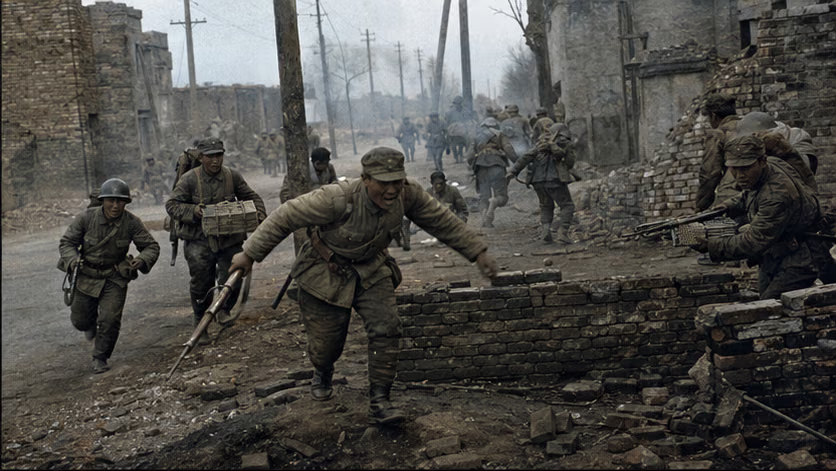
| Stage | Time | Main Points | Separate Articles |
|---|---|---|---|
| Seizing the western wing | 11.29–12.11 | North China troops feigned an attack on Zhangjiakou to induce Fu to send the 35th Army west in relief; the Northeast Field Army's advance elements first cut its return route at Xinbao'an -- "to encircle the 35th Army was to seize Fu Zuoyi" (the 35th Army was Fu's founding elite unit) | Battle of Xinbao'an |
| Severing both ends | 12.5–21 | The main force of the Northeast Field Army cut the Beiping-Tianjin and Tianjin-Tanggu links -- "separating without encircling" for an army of 500,000 was in place; Fu began secret contacts for negotiation (first negotiation line in mid-December) | — |
| First strike the two wings | 12.22–1.15 | 12.22, Xinbao'an destroyed the 35th Army; 12.24, Zhangjiakou was taken (54,000 of Fu's forces destroyed); 1.14–15, the twenty-nine-hour assault on Tianjin (Chen Changjie defended with 130,000, all annihilated -- his captured statement, "I held out to the end because Mr. Fu wanted me to hold out," remains unverified) -- Tianjin was fought for Beiping to see | Battle of Xinbao'an; Assault on Tianjin |
| Beiping Method | 1.16–31 | After Tianjin fell, a final ultimatum; 1.21, Fu signed the *Agreement on the Peaceful Settlement of the Beiping Question*; 1.22, the defending troops marched outside the city to await reorganization; 1.31, the PLA entered the city -- an eight-hundred-year-old ancient capital changed hands without a single cannon shot | — |
Casualties and Losses
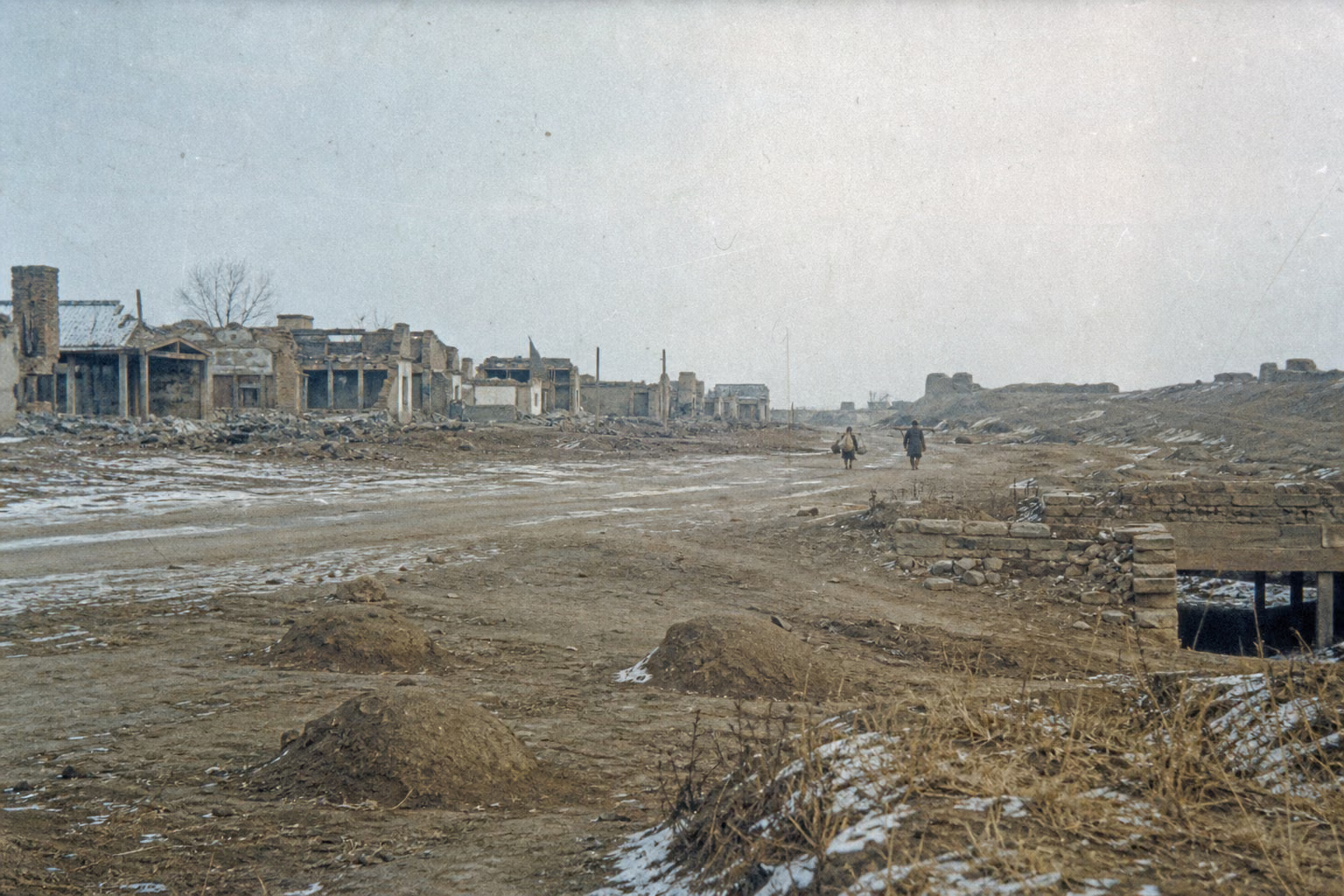
- Nationalist Army: 520,000 (380,000 destroyed in combat, including Tianjin's 130,000 and the two wings; 250,000 in Beiping peacefully reorganized -- statistical basis for composition unverified).
- PLA: 39,000 casualties (accounts differ on the statistical basis) -- the lightest among the three major campaigns.
- ※ Civilians: urban destruction and casualties during Tianjin's twenty-nine-hour city battle (accounts differ on the statistical basis); spillover in the Zhangjiakou-Xinbao'an war zone; Beiping's "zero" -- the peaceful method spared the old capital's civilians and cultural relics from war: this "cost that did not occur" is the most distinctive account in this article (placed beside the fought-out Tianjin, it is the measure of value for the "Beiping Method").
Aftermath
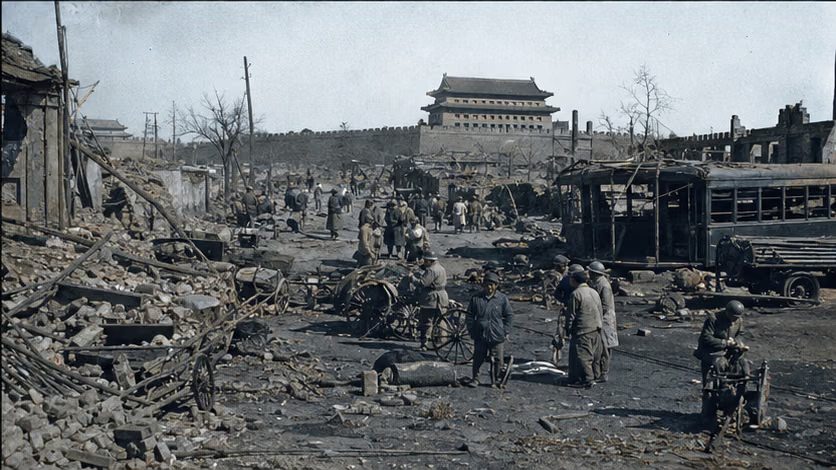
- All North China was settled; Fu Zuoyi's forces were reorganized, and Fu later served as Minister of Water Resources (a defeated commander-in-chief entering the cabinet of the new regime -- the personnel extension of the "Beiping Method"); Suiyuan was later resolved peacefully by the "Suiyuan Method" (Dong Qiwu uprising, 1949.9 -- one line on the method's replication).
- The "Beiping Method, Tianjin Method, Suiyuan Method" became three proper names for resolving remaining Nationalist forces (Mao Zedong's summary wording unverified) -- a taxonomy of the spectrum of violence: a rare campaign sample in this series in which "not fighting" was the optimal solution.
- The prerequisite for Beiping to become the capital of New China was laid here; the complete preservation of an ancient city and its cultural relics entered urban history.
- The later lives of Fu Dongju and other underground workers (the ending line of a person who remained low-key for life, unverified) -- the long tail of figures on the intelligence front.
How Each Side Records It
- CPC canon: a model of "combining fighting and negotiation" in which Beiping was taken without bloodshed; the united-front narrative of Fu Zuoyi as an "uprising general."
- Taiwan side: Fu's "surrender" as the final chapter in the three great collapses of the Campaign to Suppress Rebellion -- the "defection" narrative and Chiang's anger in his diary (unverified here); Chen Changjie's late-life resentment over "Fu wanted me to hold" and the contrast between the two men's circumstances in prison / inside the city (Chen entered Gongdelin, Fu entered the cabinet -- the cruel contrast of two endings within the same group).
- Scholarship: negotiation history (the evolution of conditions across the three negotiations), the archival treatment of Fu Dongju's intelligence line, and the evidentiary checking of the old-capital preservation narrative (the level of the Liang Sicheng list).
Disputes and Sensitivities
- The layers of Fu Zuoyi's decision-making motives (the general trend, family affection, cultural responsibility, self-preservation -- several causes side by side).
- The Chen Changjie-Fu Zuoyi case over "defending and negotiating": the negotiating table needed Tianjin's bloodshed as a bargaining chip -- the ethics of "fighting in order to negotiate" (the fate of Tianjin's 130,000 and the peace of Beiping's 250,000 were mutually causal; this structure is the sharpest part of the article).
- The Fu Dongju line involves the dual identity of family and intelligence.
- The aftermath of peacefully reorganized troops (reorganization and individual fates, unverified).
Contents
Zhangjiakou and the Beiping peace talks are incorporated into the relevant stages of this article.
Sources and Open Questions
Sources: *Pingjin Campaign* (book series); materials related to Nie Rongzhen and Fu Zuoyi; Chen Changjie, *Memoirs of the Tianjin Defense* (Gongdelin cultural-historical commissioner series); records of the three negotiation meetings (archive titles unverified); Taiwan-side *War History of the Campaign to Suppress Rebellion*, Pingjin section.
Open questions: the force-composition ratio between Chiang's and Fu's forces inside Fu Zuoyi's group; the force composition of both sides; texts on the evolution of negotiation conditions; the archival level of the Fu Dongju line; source for Chen Changjie's statement; source for the summary wording of the three methods; evidentiary checking of the Liang Sicheng list; Chiang-Fu telegrams and correspondence about southern withdrawal; the set of telegrams from the Center urging the Northeast Field Army to enter the Pass early; decision telegrams on slowing the annihilation of Du Yuming's group on the Huaihai battlefield; the sequence and levels of Fu-side peace-talk contacts.
All images on this site are AI-generated depictions. They are not historical photographs, not primary sources, and do not depict any real individual.