Engagement Archive · Battle of Shangdang
Mao Zedong was at the Chongqing negotiating table; Liu Bocheng and Deng Xiaoping were on the Shangdang battlefield in Shanxi -- the first battle opened during the negotiations, where the 17,000 men Yan Xishan had sent into the heart of the liberated area, together with 20,000 reinforcements, were swallowed up.
Engagement Data
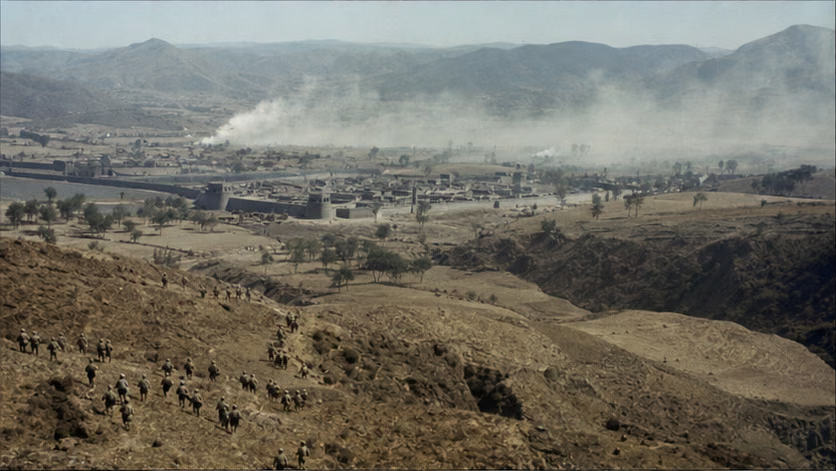
| Item | Content |
|---|---|
| Time | 1945.9.10 – 10.12 |
| Place | Shangdang region in southeastern Shanxi (centered on Changzhi, including the cities of Xiangyuan, Tunliu, Lucheng, Huguan, and Zhangzi) |
| Belongs to | Chinese Civil War · the period of negotiating while fighting before the outbreak of full-scale civil war (for the larger situation, see *Chinese Civil War · Overview*) |
| Besieging and relief-intercepting side | Forces of the Shanxi-Hebei-Shandong-Henan Military Region (Liu Bocheng, Deng Xiaoping), the Taihang, Taiyue, and Southern Hebei columns |
| Defending and reinforcing side | Yan Xishan's forces of the KMT Second War Area: Shi Zebo's unit, about 17,000 men, defended Changzhi and the surrounding cities; Peng Yubin's unit, about 20,000 men, came as reinforcements |
| Result | Shanxi-Hebei-Shandong-Henan forces first took the outlying cities, then ambushed and annihilated the reinforcements, and finally destroyed the defending force during the pursuit; Shi Zebo was captured, and Shangdang was recovered |
Belligerents
| Item | Shanxi-Hebei-Shandong-Henan Military Region | Yan Xishan's forces |
|---|---|---|
| Strength | Main force of 31,000, with local armed forces and large numbers of militia also participating (specific number unrecorded) | Shi Zebo's force of about 17,000 occupied the area first; Peng Yubin's relief force numbered more than 20,000, for a total of about 37,000 |
| Equipment | Mainly captured Japanese weapons, with few heavy weapons; this battle was mostly assaults on fortified positions and ambushes, and ammunition was replenished by capture | Yan's forces had their own system of manufactured firearms and supply from the Taiyuan Arsenal, and their city defenses were intact |
| Situation | Fighting on home ground: the heart of the base area, with popular front support and clear intelligence channels | A lone force deep inside: leaving the Tongpu Railway and entering a base area the other side had operated for years |
| Command | Liu and Deng hurried back from Yan'an to deploy at the front, determined to fight during the negotiations | Yan Xishan directed from Taiyuan; two batches of troops were committed in sequence and defeated in detail |
Terrain and Conditions
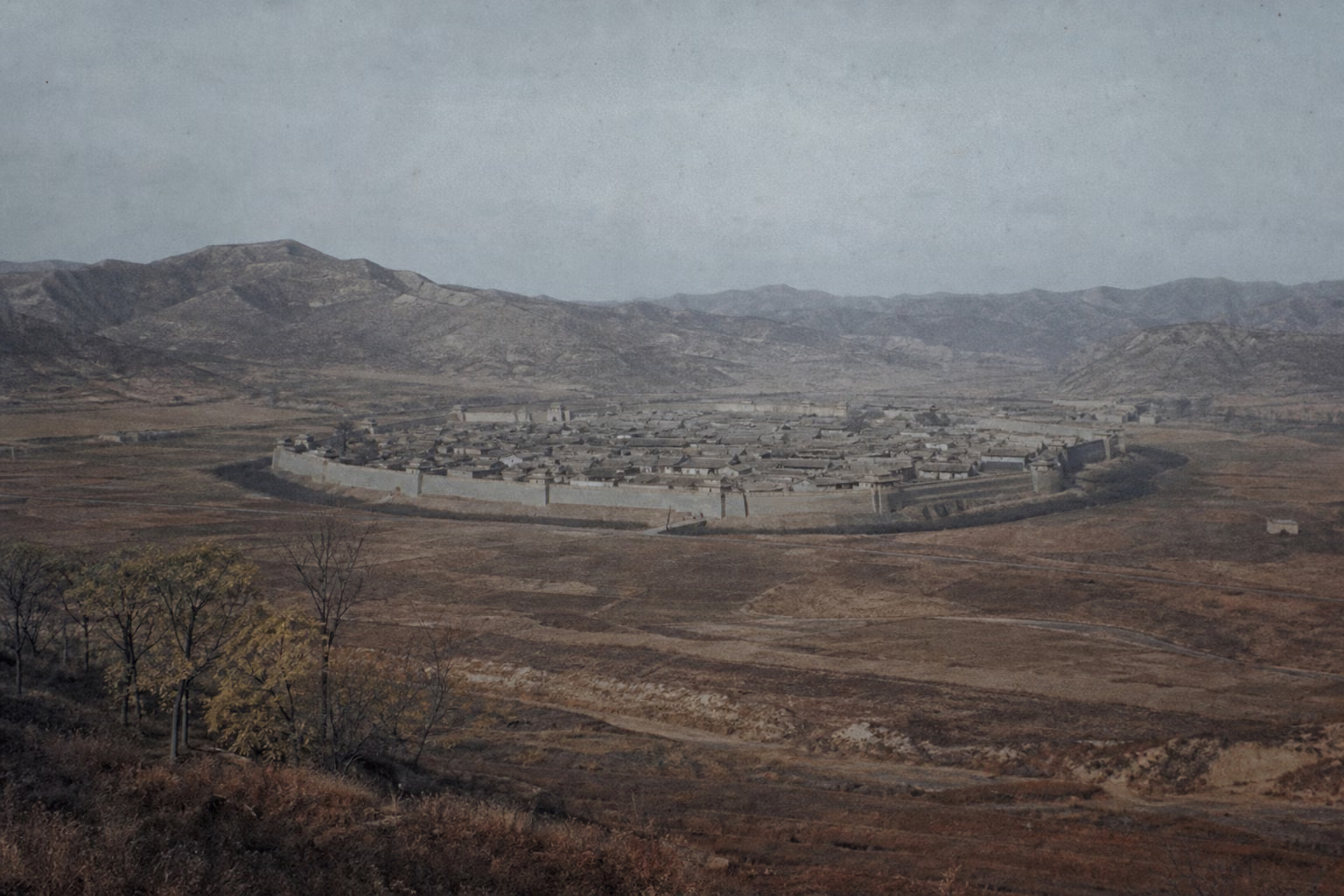
(For the larger situation in autumn 1945 -- Japan's surrender, the KMT-CPC race to take over, and the opening of the Chongqing negotiations -- see *Chinese Civil War · Overview*. This article covers only Shangdang.)
What kind of place Shangdang was: a group of basins on the plateau of southeastern Shanxi. The old saying described it as "dwelling at the summit of Taihang, allied with Heaven"; from its height it controlled Hedong and screened Luoyang, and generations of strategists fought over it. Changzhi (historically Lu'an) was the center of the basin, with strong walls and deep moats.
Who this ground belonged to: during the eight years of the War of Resistance, this was the heart of the Eighth Route Army's Taihang and Taiyue base areas: county governments existed, and villages had militia. Once Japan surrendered, Yan Xishan moved first to occupy Changzhi and six surrounding cities (many Shangdang counties were being surrounded and taken over by the Eighth Route Army; the detailed list of county seats seized by Yan's forces is unrecorded) -- in effect driving a nail into the belly of the Shanxi-Hebei-Shandong-Henan base area.
Why It Was Fought
The previous war ended faster than anyone had expected. In August 1945, two atomic bombs fell in succession, and the Soviet August Storm crushed the Kwantung Army in little more than ten days; on August 15, Japan announced its surrender, and the Fourteen-Year War of Resistance came to an end. But the word "surrender" immediately became a question for which no one had prepared an answer: to whom should the Japanese and puppet troops in the occupied areas lay down their arms? Whoever accepted the surrender would take over the cities, railways, and arsenals. Under Chongqing's orders, the right to accept surrender belonged to Nationalist commanders in each war area; from Yan'an's position, the troops that had fought behind enemy lines for eight years should accept the surrender where they stood, as a matter of course. "Taking over" became the first contest between the KMT and the CPC.
Shangdang stood at the front of that contest because the insertion there went deepest. This cluster of basins on the southeastern Shanxi plateau was described by the ancients as "allied with Heaven"; the area centered on Changzhi had been, for eight years of the War of Resistance, the heart of the Eighth Route Army's Taihang and Taiyue base areas, with county governments and village militia. For Yan Xishan, seated in Taiyuan, this was Shanxi provincial territory that had to be recovered; for the Shanxi-Hebei-Shandong-Henan Military Region, it was the belly of the base area. In mid-to-late August, Yan Xishan, in the name of surrender-accepting commander of the Second War Area, sent Shi Zebo with 17,000 men to occupy Changzhi and the surrounding cities; the next step would be all of southeastern Shanxi -- the nail had been driven in.
At the other end of the timeline was Chongqing. On August 28, Mao Zedong flew to Chongqing to discuss peace and nation-building face to face with Chiang Kai-shek; as Chiang negotiated, he also issued orders to advance to each war area. The CPC Central Committee's line was eight characters: meet force with force, fight for every inch -- what could not be yielded at the negotiating table would be won back on the battlefield; how the fighting went would determine the weight of the chips in the negotiators' hands. Liu Bocheng and Deng Xiaoping hurried back from Yan'an to Taihang. In early September they made the decision: concentrate 31,000 men from the Taihang, Taiyue, and Southern Hebei columns to fight at Shangdang and pull Yan's army out from the heart of the base area. On Yan Xishan's side, he dared send 17,000 men into a base area the other side had operated for eight years, and later dared send 20,000 reinforcements southward in batches along the Baijin line. In hindsight, he had estimated his opponent as still the force that only knew guerrilla war and could not take cities (Yan-side reviews vary by account in their statistical basis), and the troops he committed piecemeal were precisely what the other side defeated in detail.
Resolution, too, had to pass over the scale of material conditions. The 31,000 men were all the field main force the military region could concentrate; heavy weapons were thin, and assaults on fortified positions depended on explosives, scaling ladders, and men (the ammunition basis remains unverified). Yan Xishan had the Taiyuan Arsenal behind him, but the city was in the other side's interior, the Baijin line was cut, and all grain and ammunition for both defenders and reinforcements had to be carried over the mountains by mule and horse -- the factory was in Taiyuan and could not save Changzhi.
On September 10, the Taihang, Taiyue, and Southern Hebei columns launched attacks on the cities around Changzhi. The negotiations in Chongqing were still under way; the guns of Shangdang sounded first.
There was originally another path on the table: wait, and decide the ownership of the territory after Chongqing produced a result. But the orders to advance had not stopped, and Yan's army was already inside Changzhi -- for Yan'an, waiting meant accepting a fait accompli. From beginning to end, this battle was fought while the two men at the table continued talking. Whether there was any disagreement on the Communist side about fighting on this scale at this moment is not seen in existing records; whether anyone under Yan argued against sending a lone force deep inside is likewise not seen in the record (both unverified).
Course of the Engagement
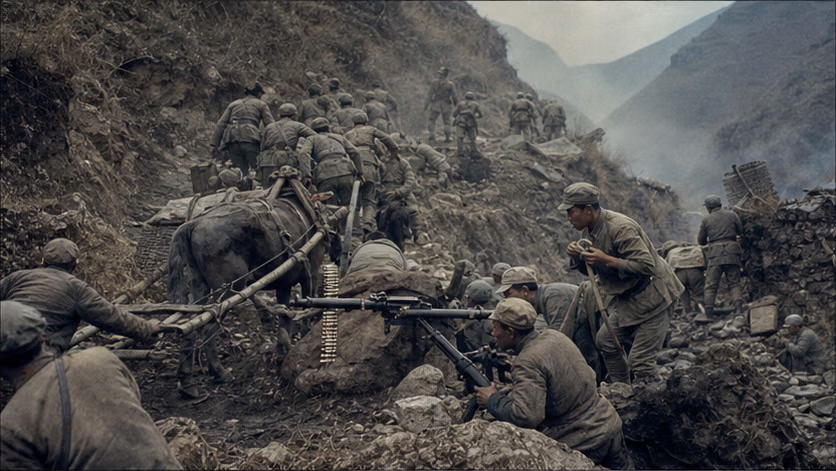
| Phase | Time | Main Points |
|---|---|---|
| Taking the perimeter | Around 9.10 – 9.20 | The campaign opened on 9.10; the Taihang, Taiyue, and Southern Hebei columns successively took Tunliu, Lucheng, Huguan, Zhangzi, Xiangyuan, and other cities (the day and hour each city fell are unverified). Defenders who resisted from strong city walls were destroyed city by city, and Changzhi became an isolated city |
| Encircling Changzhi | Late September | The main force encircled Changzhi, besieging it without rushing an assault and leaving a gap to induce Yan Xishan to send relief |
| Ambushing the relief force | Around 10.2 – 10.6 | Yan sent Peng Yubin with more than 20,000 men south along the Baijin line for relief; they were lured into an encirclement around Laoye Mountain and Mopannao northwest of Tunliu, and after several days of hard fighting were annihilated. Peng Yubin died (accounts differ between killed in action and suicide after defeat, unverified) |
| Pursuing and destroying the defenders | 10.8 – 10.12 | With relief cut off, Shi Zebo abandoned Changzhi on the night of 10.8 and fled west. Taiyue troops (Chen Geng's force) marched rapidly to block him, and on 10.12, east of the Qin River (around Taochuanbao, unverified), annihilated the force; Shi Zebo was captured |
Casualties and Losses
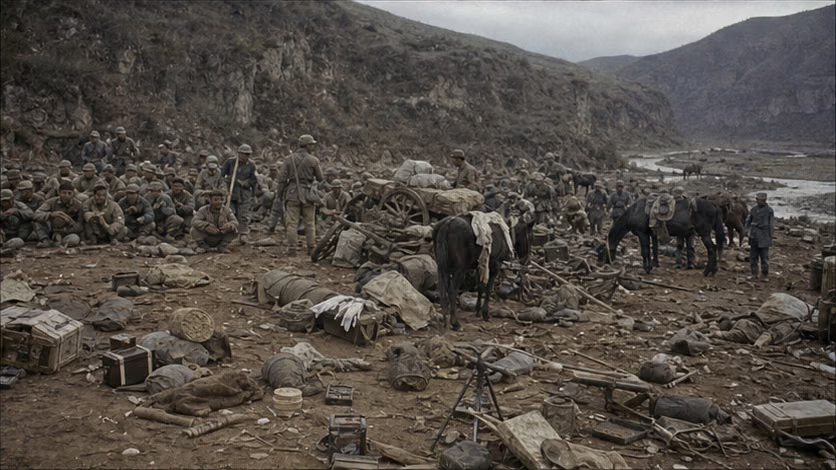
- Yan Xishan's forces: 35,000 destroyed (the common statistical basis, including the three routes of city defenders, reinforcements, and fleeing troops; there are also bases of 11 divisions, 13 divisions, and others, with the statistical boundary unverified), with Shi Zebo and several other generals captured, and Peng Yubin dead. Yan's mobile strength lost about one third through this battle (proportion unverified).
- Shanxi-Hebei-Shandong-Henan Military Region: about 4,000 casualties (the bases vary by account).
- ※ Civilians and prisoners: the battle took place in the heart of the base area. The people of the Taihang area supported the front on a large scale, and civilian laborers and stretcher teams moved with the army (scale unverified); Changzhi was besieged for several weeks, and the condition of residents inside the city (grain, water, coercion) remains to be checked. After the battle, large numbers of captured Yan troops were incorporated into the army after education -- an early sample in the opening phase of the Chinese Civil War of the "liberated soldier" phenomenon. This phenomenon would run through the three years of civil war that followed; here its beginning is noted.
Aftermath
- When the Double Tenth Agreement was signed on October 10, the Shangdang battle situation had just reached its endgame -- the chips for negotiation had been cast on the battlefield, and this battle was recorded in the Communist canon as the first model of "using fighting to promote negotiations."
- From this point on, Yan Xishan shifted to the defensive inside Shanxi Province and no longer had the strength to reach into the Shanxi-Hebei-Shandong-Henan interior on his own.
- On October 17, Mao Zedong delivered the report "On the Chongqing Negotiations" at a Yan'an cadre meeting, using the Battle of Shangdang to explain the effect of "meeting force with force"; summaries of Mao's idea that "the better the fighting, the better the negotiating" circulated widely (exact wording and source unverified).
- Captured officers and soldiers from Yan's army were incorporated in large numbers into the Shanxi-Hebei-Shandong-Henan forces, directly strengthening the troops for the Battle of Handan that followed immediately.
Accounts of Those Present
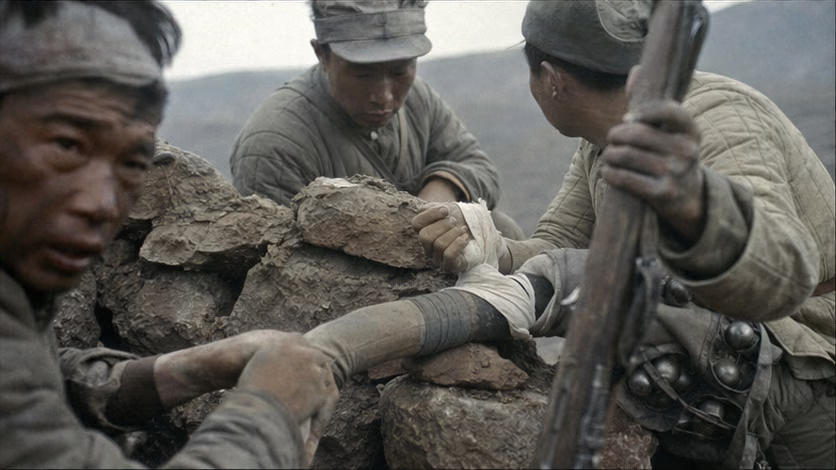
- A plane full of commanders: on August 25, Liu Bocheng, Deng Xiaoping, Lin Biao, Chen Yi, and more than twenty other CPC commanders from various war areas took a U.S. Army Observation Group DC-3 transport from Yan'an to Changning Airfield at Licheng in Taihang, then dispersed to their respective war areas (the list and date vary by account) -- this one aircraft was a key part of why the CPC war areas reacted so quickly after Japan's surrender.
- Gunfire at the negotiating table: as KMT and CPC representatives at Guiyuan in Chongqing argued through the clauses one by one, the guns in the Taihang Mountains were sounding at the same time. Chiang Kai-shek wanted to use military progress to press the negotiations; Mao Zedong answered by directing the battlefield by telegram -- from this point, "negotiating while fighting" became the norm for the next four years.
- Peng Yubin's death: the relief force was wiped out between Laoye Mountain and Mopannao; accounts of Peng himself being killed in action and of his suicide after defeat coexist (unverified here), and Yan-side documents' description of the circumstances of his death remains to be checked.
- Shi Zebo: after capture he received favorable treatment and was later released back to Taiyuan (time and process unverified) -- a policy sample from the early civil war of the CPC's "favorable treatment, education, and release" of high-ranking prisoners of war.
- Food under siege: removing the cities of Shangdang depended on the base-area population's support for the front -- stretcher teams and grain transport teams maneuvered with the main force, while Yan's troops, trapped in isolated cities, made local requisitions. Within one battle, the relationship between two kinds of armies and the people was already clear. ※ Details of Yan's army requisitions inside the cities remain to be checked.
The Ground
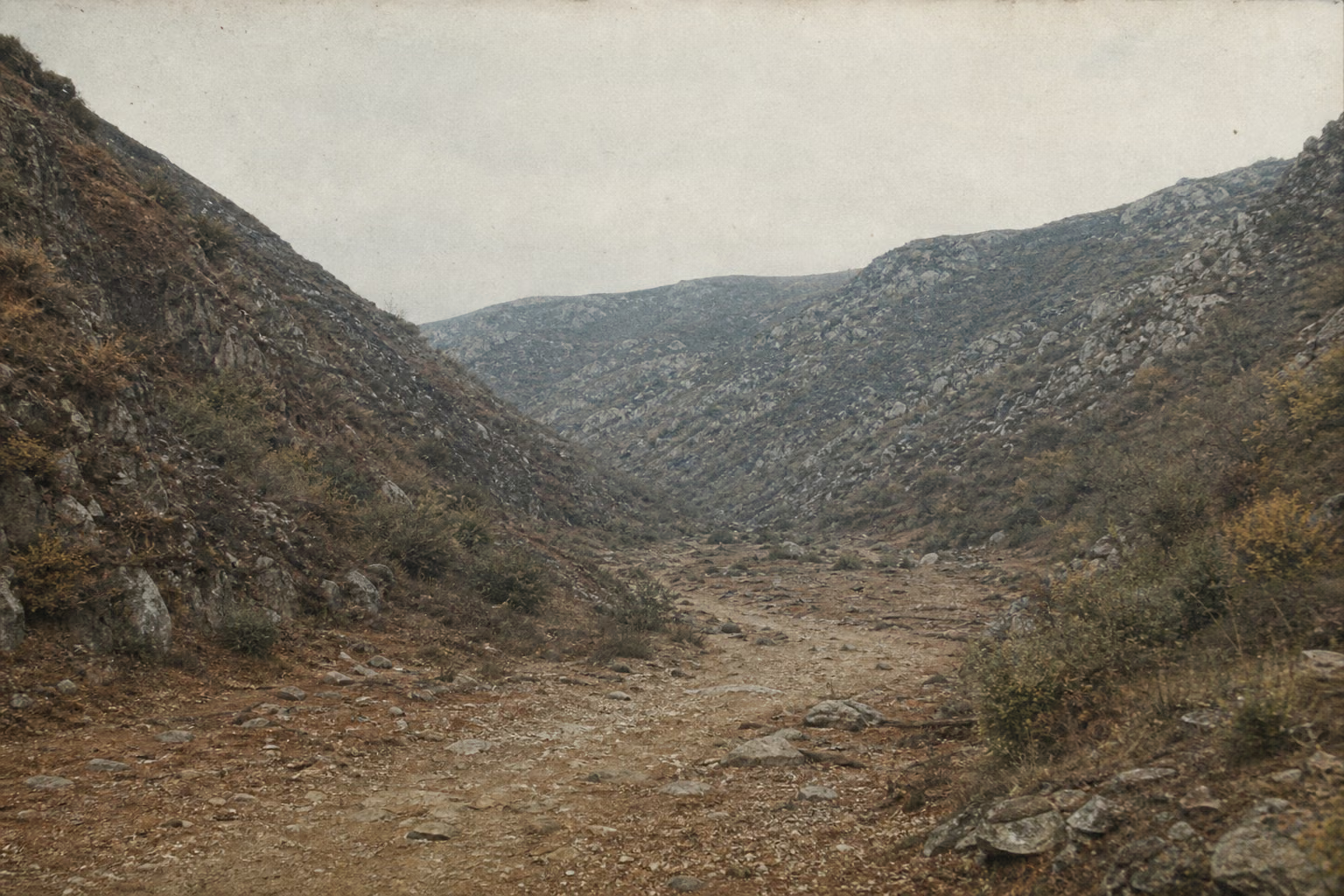
- The Changzhi basin is ringed by mountains, crossed by the Zhuozhang River system, and has strong walls and deep moats: a typical defensive cluster of "strong city + outlying satellite cities."
- Laoye Mountain and Mopannao: commanding heights northwest of Tunliu, the core terrain of the ambush -- the relief force was pressed into the river valleys below the heights and fought there.
- Qin River: the watercourse the defenders had to cross in fleeing west. Taiyue troops seized key points ahead of the enemy, and the river became the bottom of the closing pocket.
- Spatial rhythm: first pull out points (city assaults), then set the ambush (mountains), then pursue (river country); three forms of fighting were each carried through once within a single month.
How Each Side Records It
- Communist canonical narrative: an opening victory of the Chinese Civil War, the first battle example of the line "meet force with force, fight for every inch," and direct support for the Chongqing negotiations; it entered military-history textbooks.
- Taiwan side: recorded within the "pacification" narrative as the "Battle of Shangdang" (using the same place name, with the opposite characterization) -- Nationalist troops accepting surrender and taking over were attacked and encircled by Communist forces, making it an early example of "the Communist side sabotaging the ceasefire and attacking takeover troops" (the exact Taiwan-side war-history wording is unverified). Yan Xishan's later-life writings include painful accounts of this battle (*Three Hundred Years of China*, etc., unverified).
- Later generations and scholarship: generally regard it as the starting point of the "negotiating while fighting" pattern; as for the degree to which the battle's result affected the terms of the Double Tenth Agreement, scholarship offers only qualitative judgments and has difficulty quantifying it. That fact itself is recorded frankly here.
Disputes and Sensitivities
- Who acted first: whether Yan's forces were "ordered to take over" or "invading a base area" is characterized in opposite ways across the Taiwan Strait; after Japan's surrender, the ownership of the right to accept surrender in formerly enemy-occupied areas and base areas was the first domino in the entire postwar narrative.
- Opening fire during negotiations: in the CPC narrative, this was "using revolutionary two-handedness to deal with counterrevolutionary two-handedness"; in the Nationalist narrative, it was "using negotiations as cover for a military offensive." Each characterization has its own history.
- The boundary of the 35,000 enemy losses inflicted (whether local units and fugitives routed in flight are included) is unverified.
- The exact source of Mao's phrase "the better the fighting, the better the negotiating" is unverified, and any quotation must leave a trace.
Sources and Open Questions
Known main sources:
- *Biography of Liu Bocheng* and the relevant volumes of *Chronology of Deng Xiaoping* (CPC-side commanders' perspective)
- Mao Zedong, "On the Chongqing Negotiations" (1945.10.17, included in volume IV of the Selected Works)
- Yan Xishan's diary and later-life writings (Yan-side perspective)
- Taiwan-side official "pacification" war-history volumes (specific volumes remain to be checked)
Open questions: the day and hour each of the five outlying cities fell; the respective sources for the two accounts of Peng Yubin's death; the statistical boundary of enemy losses inflicted; the basis for Shanxi-Hebei-Shandong-Henan casualties; the process of Shi Zebo's release; the roster of those on the same 8.25 Yan'an-to-Taihang flight; the source of the phrase "the better the fighting, the better the negotiating"; Yan's army requisitions inside the cities and the condition of civilians during the siege of Changzhi; the scale of civilian labor support; the original Taiwan-side war-history characterization of this battle.
All images on this site are AI-generated depictions. They are not historical photographs, not primary sources, and do not depict any real individual.