Engagement Archive · Breakout from the Central Plains
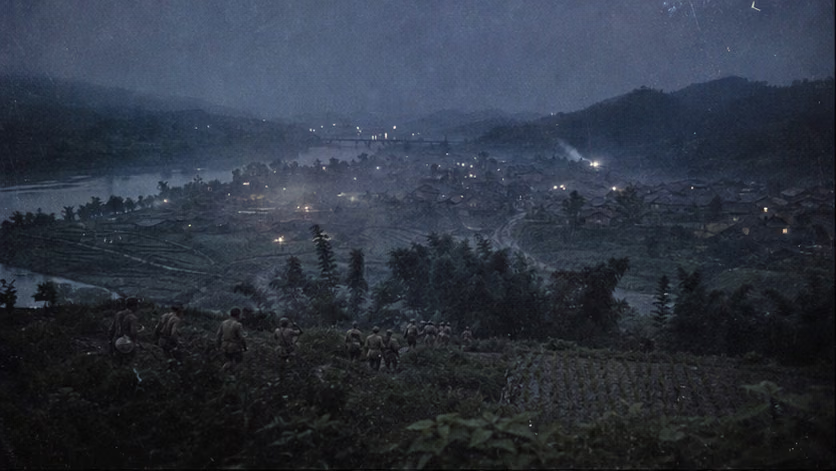
Fifty thousand men were enclosed for a full year by three hundred thousand in the mountains within a hundred li of Xuanhuadian in eastern Hubei; on the night of June 26, 1946, they broke out in separate routes--and that shot is recorded in common histories as the first shot of full-scale civil war.
Engagement Data
| Item | Content |
|---|---|
| Time | 1946.6.26 – late July (each route broke through and reached its destination at different times; Wang Zhen's force did not return north to Yan'an until late August; see the main text for the chronology) |
| Place | The Hubei-Henan-Anhui border area, centered on the Central Plains Liberated Area around Xuanhuadian in eastern Hubei (today's Dawu County, Hubei); breakout routes extended across western Henan, southern Shaanxi, northwestern Hubei, and Jiangsu-Anhui |
| Part of | Chinese Civil War · marker of the outbreak of full-scale civil war (for the broader situation, see *Chinese Civil War · Overview*) |
| Breakout side | Central Plains Military Region (Li Xiannian, Zheng Weisan, Wang Zhen, Wang Shusheng, and others), about 50,000 |
| Blocking side | Nationalist Army Zhengzhou Pacification Headquarters (director Liu Zhi), about 300,000 (the figure of 10 reorganized divisions and 25 brigades remains unverified), the encirclement having lasted a year |
| Result | The main force broke out in separate routes: the northern route entered southern Shaanxi, the southern route entered the Wudang Mountains, and Pi Dingjun's brigade moved east into Jiangsu-Anhui; the Central Plains Liberated Area was lost, and the troops lost more than half their strength, but the cadre core and unit designations were preserved, while 300,000 Nationalist troops had been tied down for a year |
Belligerents
| Item | Central Plains Military Region | Blocking Nationalist forces |
|---|---|---|
| Strength | About 50,000 (the entire Central Plains Military Region, including field army and local troops; there is also a figure of 60,000, unverified) | About 300,000, building layers of blockhouses for blockade |
| Equipment | Leftover stocks from the War of Resistance period, with ammunition scarce; enclosed for a year, with no rear-area resupply | A mixture of American and Japanese equipment, with superiority in both manpower and firepower |
| Logistics | Under economic blockade, grain and ammunition were both short; the force survived by pressing on the resident population and by strict austerity (details of the blockade remain unverified) | Railways and highways gave convenient access, and supplies were ample |
| Situation | Interior lines: a pocket position less than a hundred li across, with no road for retreat and only breakout available | Exterior lines: the ring of blockhouses gradually tightened, with a general offensive set for 6.26 and rapid annihilation on a deadline (the claim of "annihilation within forty-eight hours" remains unverified) |
Terrain and Conditions
(For the larger situation in the first half of 1946--the ceasefire order, the Political Consultative Conference resolutions, Marshall's mediation, and the fuse of full-scale civil war inside the Great Wall--see *Chinese Civil War · Overview*. This entry writes only about one corner of the Central Plains.)
How the Central Plains Military Region came into being: After victory in the War of Resistance, three large forces met in the Tongbai Mountains: the New Fourth Army's Fifth Division (Li Xiannian), the Eighth Route Army 359th Brigade Southbound Detachment (Wang Zhen), and troops of the Henan Military Region (Wang Shusheng). In October 1945 they formed the Central Plains Military Region--a base area wedged beside the National Government's bedchamber after its return to Nanjing, only a few days' march from both Wuhan and Nanjing.
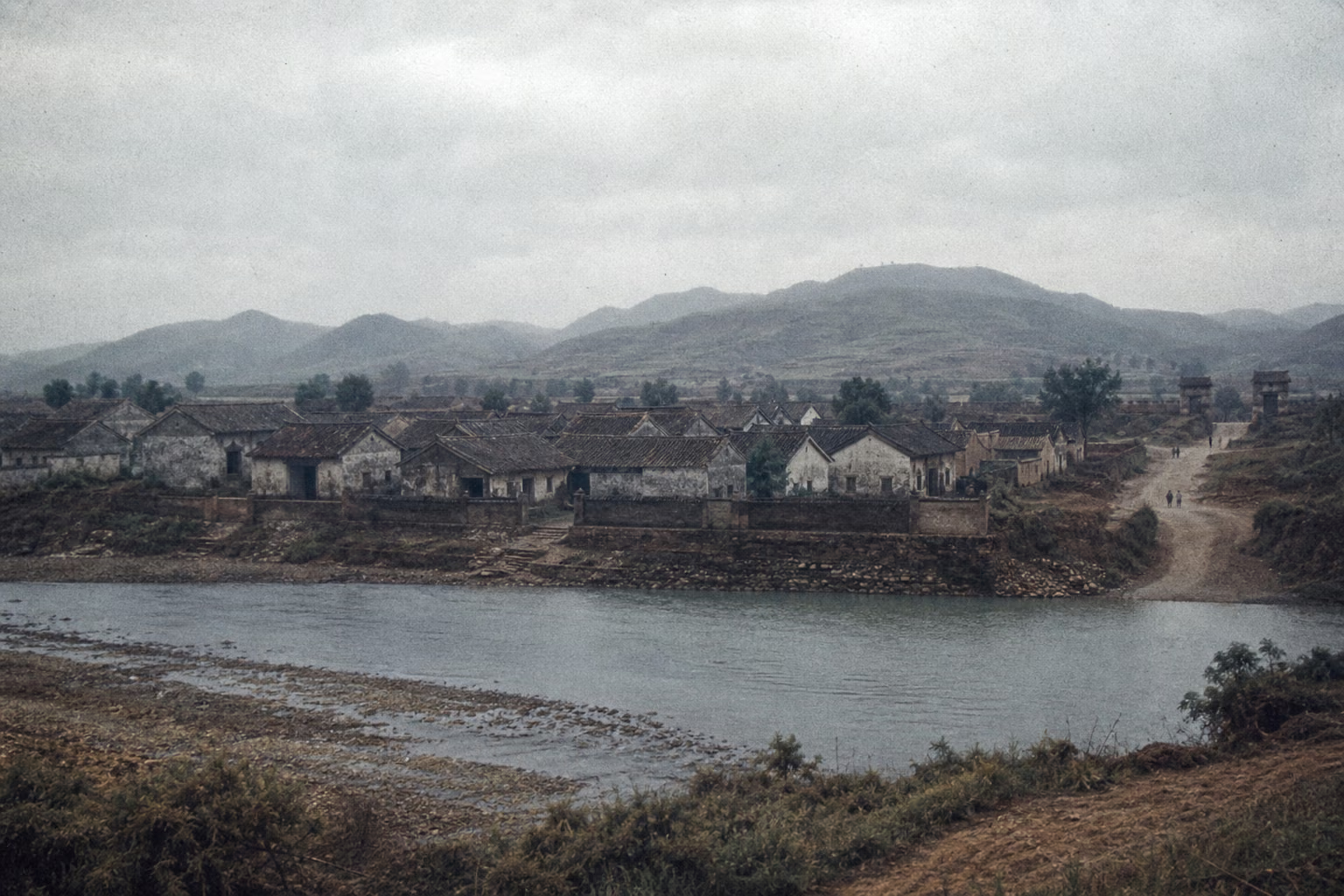
A year of encirclement: In January 1946 the ceasefire order took effect, and the Central Plains Military Region was ordered to wait in place and not move; Nationalist forces, meanwhile, kept nibbling and compressing it, pushing 50,000 men into a corner less than a hundred li across centered on Xuanhuadian, blocking roads with blockhouses and imposing economic blockade. Grain prices soared, and soldiers were half-starved (the specific means of blockade remain unclear). In May 1946, Zhou Enlai personally went to Xuanhuadian for negotiation and inspection (the date and the movements of the military three-person team remain unverified), warning that encircling and annihilating the Central Plains troops would mean full-scale civil war. The last effort for peace did not stop the June deployment.
Why It Was Fought
The smoke at Siping Street had settled in May, and Lin Biao had withdrawn across the Songhua River. On June 6, the second ceasefire order took effect, and Nationalist forces stopped south of the river--the gunfire beyond the Great Wall paused for the moment. But the fuse was not in the Northeast; it was in the Central Plains inside the Great Wall.
The line of sight shifts from the Songhua River to the Hubei-Henan-Anhui border area a thousand li away. As soon as the War of Resistance was won, three forces--the New Fourth Army's Fifth Division, the Eighth Route Army 359th Brigade Southbound Detachment, and troops of the Henan Military Region--met in the Tongbai Mountains and, in October 1945, formed the Central Plains Military Region. This base area was wedged beside the National Government's bedchamber after its return to Nanjing, only a few days' march from both Wuhan and Nanjing. After the ceasefire order took effect in January 1946, these 50,000 men were ordered to wait in place and not move; the Nationalist blockhouses and blockade lines, however, kept closing in. Within a year they were compressed into a corner less than a hundred li across centered on Xuanhuadian: economic blockade, soaring grain prices, soldiers half-starved. What the ceasefire order froze was movement, not encirclement.
In the Nationalist deployment, this base area was a "grave internal threat," the first nail to be pulled before a general offensive against all liberated areas: once it was removed, the gates of Wuhan would be cleared, and the 300,000 troops in the encirclement would be freed for other use. Liu Zhi's force of about 300,000 built blockhouses layer upon layer, setting the general offensive for June 26 and rapid annihilation on a deadline (the claim of "annihilation within forty-eight hours" remains unverified)--he calculated that 50,000 hungry and exhausted men blockaded for a year could not possibly fly out. The Communist side kept a different account: waiting in place meant waiting to die; what had to be preserved was not territory, but cadre core and unit designations. In May, Zhou Enlai accompanied the military mediation three-person team to Xuanhuadian, making the last effort for peace in a small town at the center of the encirclement. He warned on the spot: to encircle and annihilate the Central Plains troops was full-scale civil war. The warning did not stop the June deployment.
In late June, the Central Plains Military Region learned through reconnaissance that the general offensive was imminent. On June 23, the Central Committee of the Communist Party of China telegraphed the Central Plains Bureau: "Break out immediately; the faster the better; have no misgivings of any kind" (the original wording of the telegram remains unverified).
Translated into material terms, the two words "break out" meant a series of concrete abandonments: heavy weapons could not be carried and were either buried or destroyed; wounded and sick personnel unable to march were settled locally and entrusted to the population (the process of placement and their later fate remain unverified); each person carried only several days of dry rations, and beyond the pouch there was no rear area. After a year under encirclement, the troops had survived by austerity and by grain from the station area; at this moment, even that baseline was given up. Nor had there been only one possible direction: moving east toward Jiangsu-Anhui, west into western Henan and southern Shaanxi, or dispersing locally to persist--different routes had all been put on the table inside the Central Plains Bureau (details of the debate remain unverified). The final decision was for the main force to move west on southern and northern routes, while Pi's brigade made a feint eastward, and this was submitted to the center for approval. On the blocking side, the fact that 300,000 men had encircled the area for a year without attacking was due in part to the ceasefire order and the presence of mediation (this claim remains unverified); by June, scruples gave way to the timetable.
On the night of June 26, 50,000 men moved out by separate routes just before the general offensive began. Common histories record that night as the beginning of full-scale civil war; as to who acted first, histories on the two sides of the Taiwan Strait each have their own wording. From then on, no one mentioned the ceasefire order again.
Course of the Engagement
| Phase | Time | Key Points |
|---|---|---|
| Breakout deployment | 6.23 – 6.26 | After receiving the central telegram, the decision was set: the main force would move west on northern and southern routes, Pi Dingjun's brigade would feign being the main force to the east, and local troops would persist and evacuate locally; details of the breakout order and the division of tasks on each route remain unverified |
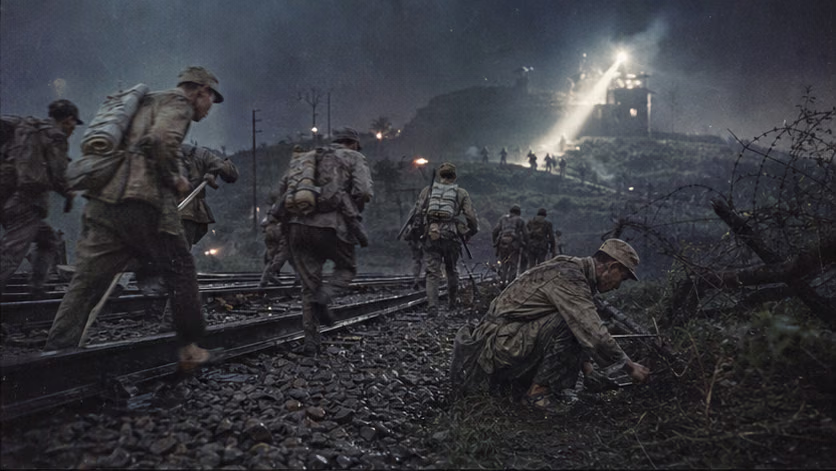
| Northern route (Li Xiannian, Wang Zhen) | From the night of 6.26 | More than 15,000 men crossed the Pinghan Railway westward (crossing around 6.29, unverified), fought through western Henan, the Dan River, and Jingziguan into southern Shaanxi, and created the Henan-Hubei-Shaanxi base area; the fighting at Nanhuatang, Baoyuling, and other places was among the fiercest (details of the actions remain unclear) |
| Wang Zhen's force returns north | July – late August | The 359th Brigade continued fighting north from southern Shaanxi, campaigning a thousand li back to Yan'an (reaching the Shaanxi-Gansu-Ningxia Border Region in late August; details of Mao Zedong's personal welcome remain unverified). Two years earlier it had gone south from Yan'an toward Guangdong, only to return north before victory in the War of Resistance had fully settled: the homeward line of the Nanniwan troops, more than 20,000 li there and back (the mileage basis remains unverified) |
| Southern route (Wang Shusheng) | From the night of 6.26 | After crossing the Pinghan line, the force entered the Wudang Mountains and created the Northwestern Hubei base area |
| Pi's brigade moves east | 6.26 – around 7.20 | The First Brigade of the First Column (Pi Dingjun), 7,000 men, feinted eastward, disguised itself as the main force to hold enemy troops, then turned independently after completing the covering mission, campaigned a thousand li through the Dabie Mountains, and around July 20 reached the Jiangsu-Anhui Liberated Area in full unit integrity--from this came the legend of "Pi's Brigade" (the itinerary and details of fighting remain unclear) |
| Containment and aftermath | July | 300,000 Nationalist troops were dragged for more than a month into pursuit, blocking, and "mopping-up"; Central Plains Bureau leaders including Zheng Weisan transferred in disguise (the course remains unverified); local armed forces and wounded and sick personnel were evacuated and settled |
Casualties and Losses
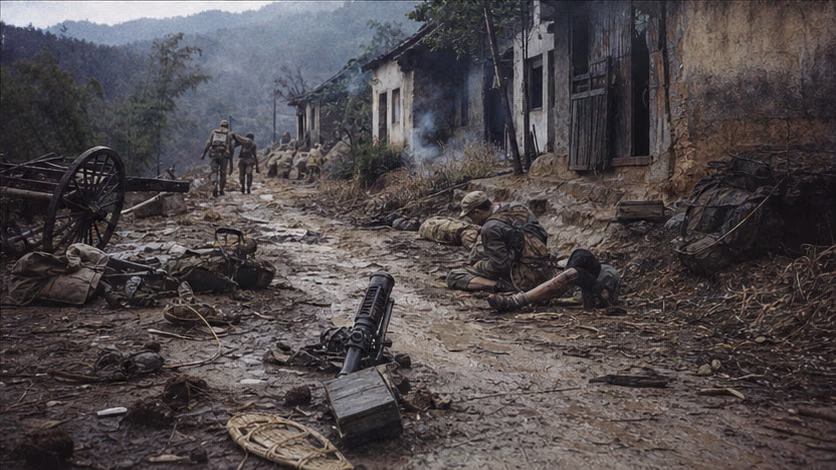
- Central Plains Military Region: losses before and after the breakout exceeded half the force--after 50,000 broke out, more than 20,000 remained (common statistical basis; figures vary by route: the 359th Brigade had more than 3,000 when it set out south, and fewer than 2,000 when it returned to Yan'an, unverified; Pi's brigade set out with 7,000 and reached Jiangsu-Anhui with more than 5,000, unverified).
- Blocking Nationalist forces: there are two sets of figures for casualties and numbers destroyed (CPC battle reports and Nationalist self-reports differ greatly; both remain unverified).
- ※ Civilians and prisoners: after the breakout, Nationalist forces entered the Central Plains Liberated Area for "mopping-up," and people in the old base areas suffered retaliatory devastation (scale unverified); along the breakout routes, troops raised grain locally, and the requisitions imposed on local people and the prices paid remain to be checked; the placement and fate of stragglers, wounded and sick personnel, and women soldiers, as well as the handling of captured personnel, are scattered in the record and all remain to be checked.
Aftermath
- June 26 became the commonly used chronological marker for the outbreak of full-scale civil war; afterward Nationalist forces launched general offensives against the liberated areas, and the last warmth at the negotiating table dissipated.
- The two new base areas in Henan-Hubei-Shaanxi and northwestern Hubei were established but were difficult to hold for long; in 1947 their main forces withdrew one after another (course unverified). Still, their existence tied Nationalist troops to the gateways of the great Northwest and the great Southwest.
- After entering Central China, Pi's brigade was incorporated into the order of battle of the East China Field Army (later lineage as the 181st Division, unverified); after the 359th Brigade returned to Yan'an, it rejoined the Northwest forces.
- The Breakout from the Central Plains entered CPC military history as a strategic transfer that "preserved the cadre core and contained heavy enemy forces"; Mao Zedong's evaluation that the Breakout from the Central Plains "played an extremely great strategic role" has circulated widely (original wording unverified).
Accounts of Those Present
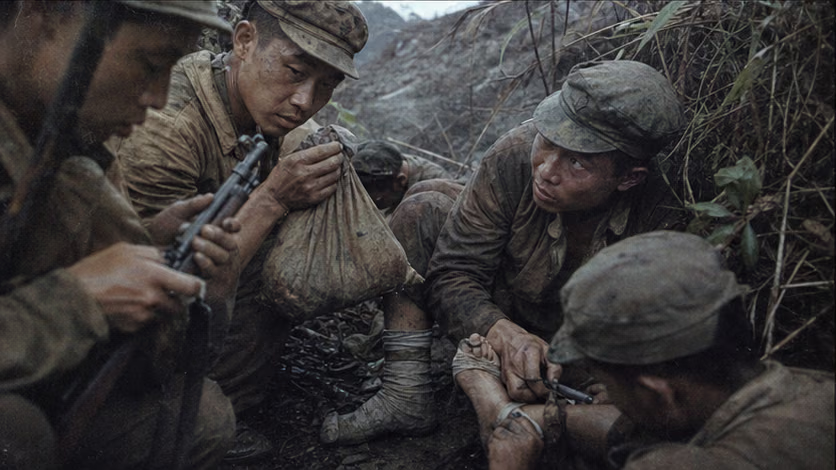
- Zhou Enlai's trip to Xuanhuadian: In May 1946 (the specific date and the accompanying American and Nationalist representatives remain unverified), Zhou Enlai accompanied the military mediation three-person team to Xuanhuadian, making the last effort for peace in a small town at the center of the encirclement. Zhou warned on the spot: to encircle and annihilate the Central Plains troops was full-scale civil war. One month later, the words came true.
- "Pi has merit; a major general is too little": At the 1955 awarding of ranks, Pi Dingjun was originally proposed as a major general; Mao Zedong wrote in approval, "Pi has merit; a major general is too little," and he was therefore awarded the rank of lieutenant general (the original approval note and exact wording remain unverified). Those six words were the echo, ten years later, of Pi's brigade's thousand-li breakout.
- Wang Zhen's homecoming: The 359th Brigade, the force that had opened wasteland at Nanniwan, went south toward Guangdong in 1944 and fought all the way back to Yan'an from Xuanhuadian in 1946. Two years and 20,000 li southward and northward, more than 3,000 at departure and fewer than 2,000 on return (the statistical bases vary): a single unit's homeward line traced the entire fate of the Central Plains Military Region in the opening phase of the civil war.
- The night of breakout: On the night of June 26, units on separate routes quietly left their positions in the rain (weather details remain unverified), while Pi's brigade's gongs and drums sounded ever louder toward the east--the feinting force used sound to buy time for the main force.
- People transferring in disguise: Central Plains Bureau secretary Zheng Weisan, Chen Shaomin, and others, including physically weak comrades and women comrades, crossed the blockade line in disguise and transferred away (course unverified). Beyond the roster of the breakout, there was another evacuation line that could not be seen.
The Ground
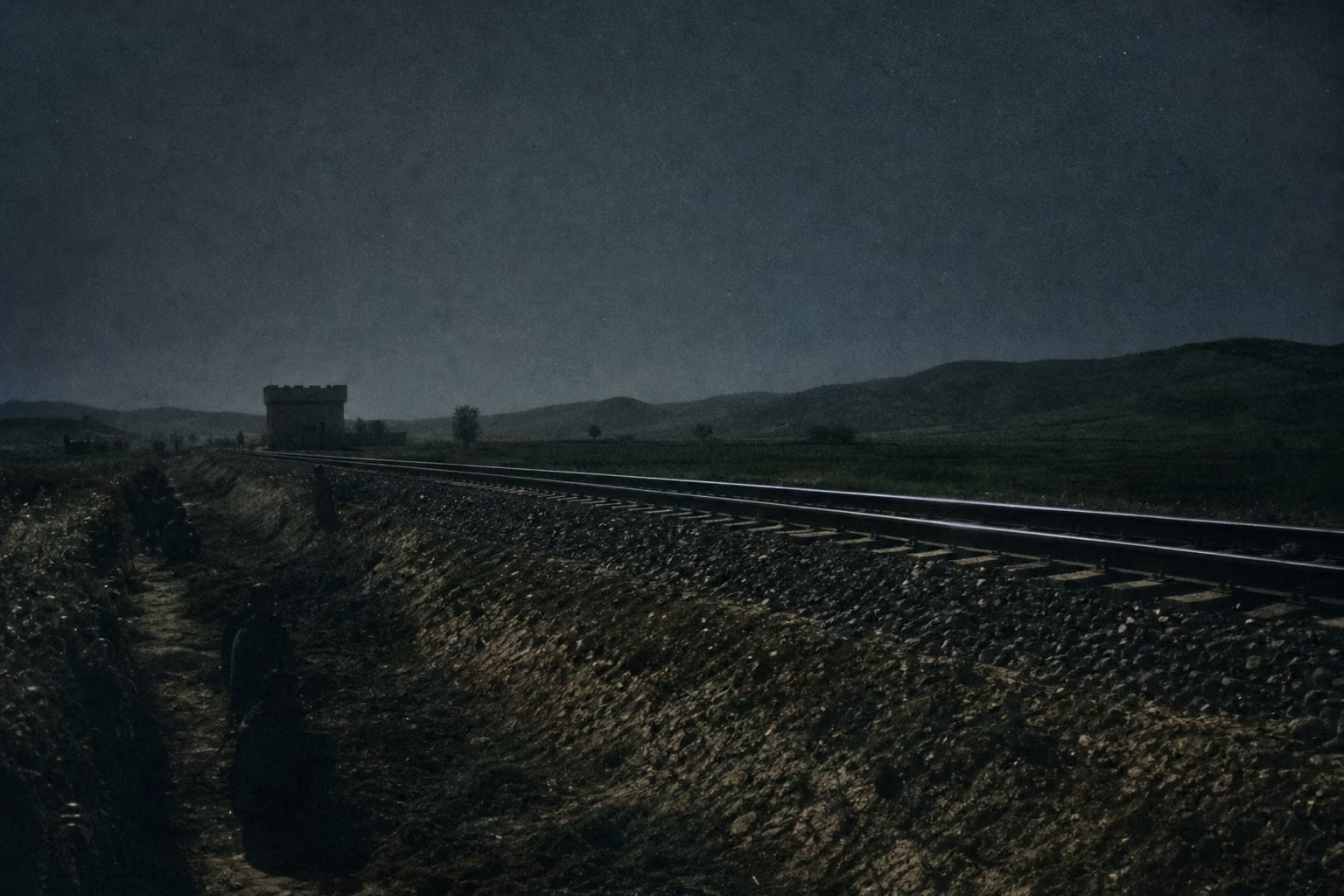
- Xuanhuadian: a small town on the Zhugan River along the Hubei-Henan border, the center after the encirclement tightened--a pocket position less than a hundred li across compressed the directions for breakout and the windows for crossing.
- Pinghan Railway: the life-and-death line of the breakout, the steel blockade belt that every westward-breaking unit had to cross; crossing windows were counted by the night.
- Four geographic lines: the Funiu Mountains in western Henan and the Qinling in southern Shaanxi (northern route); the Wudang Mountains (southern route); the Dabie Mountains to the central Anhui plain (Pi's brigade's eastern line); and southern Shaanxi to northern Shaanxi (Wang Zhen's northward-return line). In a single breakout, the troops traversed the mountains of half of China.
- Spatial grammar: breakout from interior lines--disguise, feinting east while striking west, night crossings, bloody fighting at passes, and light-equipped rapid advance: the reverse-side, encircled-force view of the textbook of mobile warfare.
How Each Side Records It
- CPC canon: the Breakout from the Central Plains was a great strategic transfer--it preserved the cadre core, tied down 300,000 Nationalist troops, and won time for the liberated areas to prepare for war; 6.26 is the marker of the outbreak of full-scale civil war and the chronological starting point for "the KMT launched full-scale civil war."
- Taiwan side: within the "pacification" narrative, it records the event as the "Central Plains encirclement and suppression" (designation unverified), saying that Li Xiannian's force was broken and the first victory in pacification achieved; as for "who acted first," Nationalist-side narratives either say that Communist forces broke out first, or avoid this engagement and narrate what followed separately (the specific wording in Taiwan-side military histories remains to be checked).
- Later generations and scholarship: two layers of competing accounts stand side by side. First, the placement of the "first shot": the common account treats the Nationalist attack on the Central Plains Liberated Area on 6.26 as the outbreak of full-scale civil war, while the Nationalist side has its own formulations; this is one origin point of the cross-strait disagreement over chronology. Second, the debate over success and failure: the strategic transfer that preserved the cadre core and tied down heavy forces, and the cost of losing the base area and more than half the troops, have long competed for weight in scholarly evaluation.
Disputes and Sensitivities
- "Who acted first": the first domino in cross-strait chronology. The "common 6.26 account" and "each side states its own case" coexist.
- The characterization of the breakout: between strategic transfer and rout, scholarly assessments form a spectrum; the figure of losses exceeding half is not embellished.
- Military-civilian relations during the year of encirclement: 50,000 troops raising grain for a year within a hundred-li area makes what was taken from and given to the resident population a sensitive record (details remain to be checked).
- Figures for losses across the various routes diverge widely, depending on the source.
Sources and Open Questions
Known main sources:
- *Biography of Li Xiannian*, and relevant volumes of the military history of the Central Plains Military Region
- The Central Committee of the Communist Party of China's telegram to the Central Plains Bureau on 1946.6.23 (the "break out immediately" telegram; original text remains to be checked)
- Pi Dingjun's diary and memoir materials on Pi's brigade's breakout (multiple types, versions to be checked)
- Taiwan-side official "pacification" military-history volumes (volumes to be checked)
Open questions: the statistical basis and composition of the Central Plains Military Region's strength (50,000/60,000); the organizational sequence of the Nationalist 300,000; the source of the phrase "annihilation within forty-eight hours"; the original wording of the 6.23 central telegram; the date of Zhou Enlai's trip to Xuanhuadian and who accompanied him; details of the key actions on each breakout route (Nanhuatang, Jingziguan, the Dan River, and others); the mileage and personnel bases for the 359th Brigade's southward and northward movement; Pi's brigade's itinerary and the date it reached Jiangsu-Anhui; statistical boundaries for losses in each unit; records of harm to people in old base areas during the Nationalist "mopping-up" period; records of grain raising and requisition along the breakout routes; placement of stragglers, wounded and sick personnel, and women soldiers; the original text of Mao's "major general is too little" approval note; the Taiwan-side military-history designation and original characterization; the process and fate of the wounded and sick personnel settled locally before the breakout; details of internal debates in the Central Plains Bureau over the direction of breakout; and why Nationalist forces encircled the area for a year without attacking (the claim that the ceasefire order and mediation constrained them).
All images on this site are AI-generated depictions. They are not historical photographs, not primary sources, and do not depict any real individual.