Engagement Archive · Battle of Jinzhong
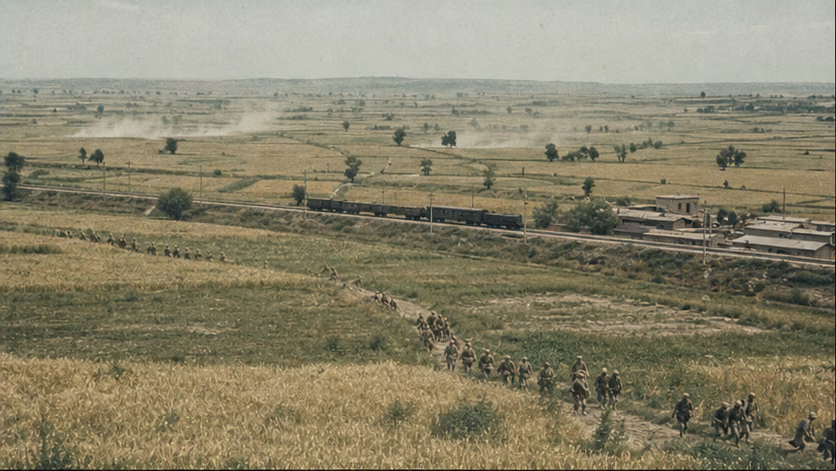
Barely a month after Linfen had fallen, Xu Xiangqian's 60,000 men moved north onto the Jinzhong Plain and, in forty days, consumed roughly 100,000 of Yan Xishan's troops--among them Japanese-nationality units retained as organized formations after Japan's surrender, whose front-line commander Motomiya Kaoru was killed--and from then on Yan's army withdrew into the isolated city of Taiyuan.
Engagement Data
| Item | Content |
|---|---|
| Time | 1948.6.11 – 7.21, about 40 days |
| Place | Jinzhong Basin, Shanxi (the area around Jiexiu, Pingyao, Qixian, Taigu, Yuci, and Xugou) |
| Part of | Chinese Civil War · Shanxi battlefield in the strategic offensive phase (for the larger situation, see *Chinese Civil War · Overview*) |
| Mobile side | First Corps of the North China Military Region (Xu Xiangqian as commander and political commissar), the Eighth and Thirteenth Columns, and elements of the Taiyue, Luliang, Beiyue, and Taihang Military Region forces, about 60,000 |
| Pursuing-and-blocking side | Jinzhong Field Group of the Taiyuan Pacification Headquarters (commander-in-chief Zhao Chengshou), total strength about 130,000, including the "personally trained division" and retained Japanese-nationality units (the Tenth Zongdui and others) |
| Result | About 100,000 enemy troops destroyed (statistical bases vary by account), 14 county seats liberated; Zhao Chengshou was captured and Motomiya Kaoru died; Yan's army contracted toward Taiyuan, and the Battle of Jinzhong became the prelude to the siege of Taiyuan (see *Battle of Taiyuan (1948–49)*) |
Belligerents
| Item | Mobile side | Pursuing-and-blocking side |
|---|---|---|
| Strength | About 60,000, just after the fighting at Linfen, with the troops exhausted and not yet rested or replenished | About 130,000 (regular troops plus security and militia forces; including several thousand Japanese-nationality officers and soldiers, with the personnel count pending verification) |
| Firepower | Artillery had been somewhat strengthened after the Assault on Linfen, but infantry weapons still predominated | Mainly Japanese equipment, with strong artillery firepower; the Japanese-nationality units retained their own artillery system and armored trains (details of the armored trains' participation unrecorded) |
| Supply | Supported by the Luliang and Taiyue base areas, drawing grain locally in the wheat-harvest season | Based on the Tongpu Railway and the Taiyuan Arsenal system, with ample ammunition |
| Situation | Fighting more with less; the only path to victory lay in division during mobile warfare | Strength was twice the enemy's, but the command system ran on two tracks (Yan's own system and retained Japanese forces coexisting), and the will to fight in the field had been forced out by Yan Xishan |
Terrain and Conditions
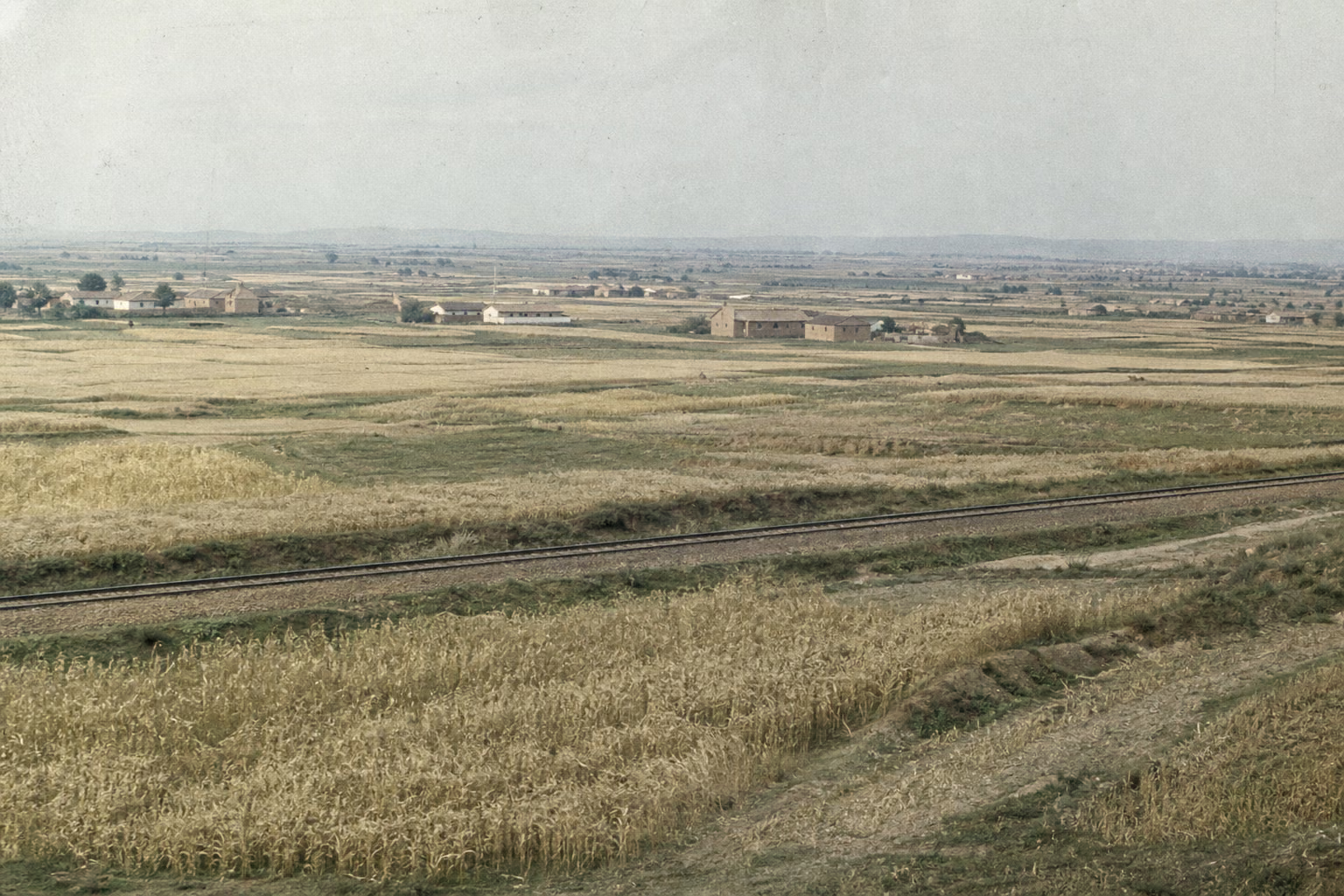
(For the larger situation in the summer of 1948--the Battle of Yudong in full swing and the KMT unable to look after all its fronts--see *Chinese Civil War · Overview*. This article covers only Shanxi.)
Jinzhong Basin: the grain region of the Fen River valley, where June was precisely the wheat harvest. Yan Xishan had ruled Shanxi for nearly forty years; Taiyuan had an arsenal, a railway, and a full military-political establishment of its own--but by the summer of 1948, what remained in Shanxi was only the Jinzhong Plain and the isolated city of Taiyuan. Jinzhong was his grain, and it was also his recruiting ground. To send troops in the wheat-harvest season was both to seize grain and to cut off grain (the propaganda war between Yan's army "seizing wheat" and the People's Liberation Army "protecting wheat," with original proclamations from both sides still to be checked).
Retained Japanese-nationality units: after Japan's surrender in 1945, Yan Xishan, in the name of "preventing the Communist army," retained some Japanese forces in Shanxi as organized formations--several thousand remaining Japanese officers and soldiers were incorporated into units such as the "Provisional Independent Tenth Zongdui," while former Japanese officers served as advisers and commanders at various levels (the scale of retention, the organization, and the course of the "Shanxi Remnants" movement are treated in both Japanese and Chinese research, but the details are unrecorded). This was a rare example of Japanese personnel taking part in the Chinese Civil War as organized formations after the war: Japanese officers who had been fighting Chinese troops three years earlier died three years later on the same battlefield, under the flag of the other side.
Why It Was Fought
On the night of May 17, the walls of Linfen were blown open from underneath. After seventy-two days' tuition had been paid, Xu Xiangqian's "secondary force," upgraded from local troops, had learned the craft of assaulting fortified positions. Southern Shanxi had been cleared, and there was no longer any barrier between the Shanxi-Hebei-Shandong-Henan and Jin-Sui base areas. The troops were exhausted and had not had time to rest and replenish, but he would not give Yan Xishan time to breathe--in less than a month, 60,000 men moved north into Jinzhong.
The Jinzhong Basin was Yan Xishan's last capital. This flatland in the Fen River valley was Shanxi's granary and also his source of soldiers; the Tongpu Railway ran through it, feeding the Taiyuan arsenal system with its lifeblood. Yan Xishan had ruled Shanxi for nearly forty years, but by the summer of 1948 he had only this plain and the city of Taiyuan left in his hands. June was the wheat harvest--whoever took that season's wheat would decide whether Taiyuan had food to eat that winter. Xu Xiangqian chose this moment to send troops both to seize grain and to cut off grain (the propaganda war between Yan's army "seizing wheat" and the People's Liberation Army "protecting wheat," with original proclamations from both sides still to be checked); meanwhile the Battle of Yudong was in full swing, the KMT could not look after all its fronts, and Shanxi could wait for no reinforcement, not even a single soldier.
What Xu Xiangqian truly wanted was not wheat, but Yan's main force: draw it out of Taiyuan during the wheat harvest and consume it in field warfare. Sixty thousand against 130,000 could not win by battering against positions; the only winning line was division in mobile warfare. Before Yan Xishan stood a choice blocked at both ends: if he did not send troops, the Jinzhong grain region would be lost in full, and Taiyuan would be trapped and starved to death; if he did send troops, he would place his main force exactly into the field battle the opponent wanted. He chose to send troops--dispatching the veteran Shanxi commander Zhao Chengshou to take unified command of the Jinzhong Field Group and move south for a decisive battle to protect the wheat. In its order of battle were the "personally trained division" he had built with great effort and the Japanese-nationality units retained as organized formations after Japan's surrender (the Tenth Zongdui and others, with the scale and organization of retention unrecorded)--Japanese officers who had been fighting Chinese troops three years earlier were now in Yan's army order of battle, returning to the same battlefield. This group had twice the opponent's strength, but its confidence was hollow: field warfare had been forced on it by Yan Xishan, and its command system ran in parallel tracks, Yan's own system alongside the retained Japanese forces. Later, when Zhao Chengshou was captured, he said, "I had not expected you to come so fast" (details of the exchange unverified)--that sentence is the footnote to the Jinzhong Field Group's misjudgment of the opponent's speed and position.
On June 11, Luliang troops crossed west over the Fen River in a feint, drawing Yan's army's gaze toward Fenxi; the main force moved covertly onto the Jinzhong Plain. Both sides wanted that year's wheat.
Course of the Engagement
| Phase | Time | Key Points |
|---|---|---|
| Demonstration and first destruction | 6.11 – 6.21 | Luliang troops crossed west over the Fen River in a feint, and the main force entered Jinzhong covertly; on 6.18–21 the first battle between Pingyao and Jiexiu divided and encircled Yan's elite "personally trained division" around Zhanglan Town (72nd Division? both the unit designation and place name remain unverified)--Yan Xishan's "model division" was the first to be written off |
| Drawing out and blocking | Late June – early July | Zhao Chengshou's group shifted north and south along the Tongpu line seeking battle. The People's Liberation Army deliberately opened road junctions to lure it deeper, then sealed its route back north to Taiyuan by means including the blocking action at Dongcun (Taiyue troops held Dongcun to cut the enemy's line of retreat; day-by-day details unrecorded) |
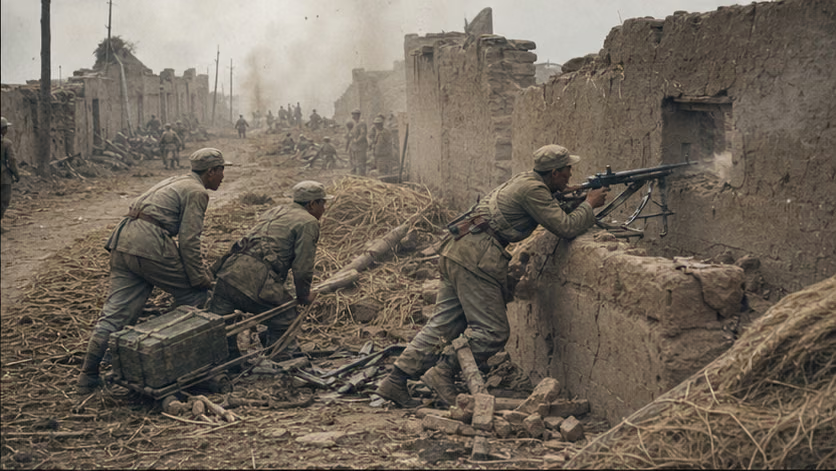
| Encirclement and destruction at Dachang Town | 7.10 – 7.16 | Zhao Chengshou's group was compressed into the village cluster around Dachang Town, Xiaochang Village, and Xifan Village north of Taigu; the Japanese-nationality Tenth Zongdui resisted stubbornly within its order of battle. On 7.16 the general assault annihilated the group--field-army commander-in-chief Zhao Chengshou was captured, and Japanese-nationality front-line commander Motomiya Kaoru died (accounts of being killed in action and of suicide after severe wounding coexist; rank and post details unrecorded) |
| Pursuit and close | 7.17 – 7.21 | The remaining enemy in Jinzhong fled toward Taiyuan, and the People's Liberation Army pursued on the strength of victory, taking multiple counties in succession and driving its spearhead to the outskirts of Taiyuan (the recovery sequence of Jinyuan, Xinxian, and other places remains unverified) |
Casualties and Losses
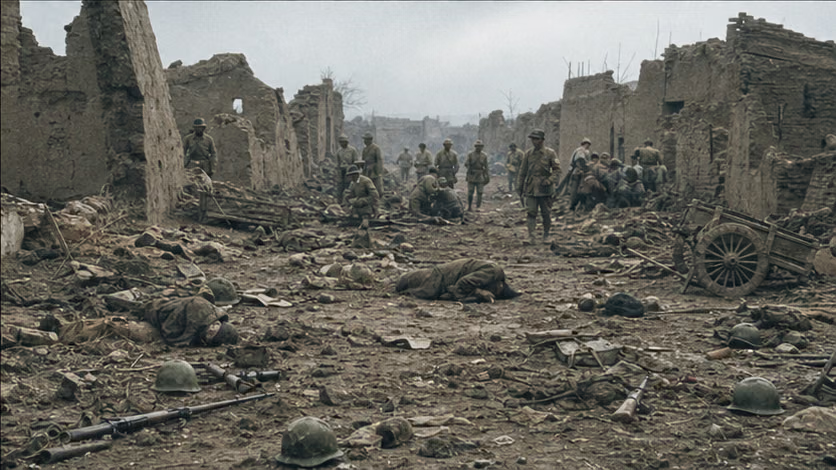
- Yan's army: about 100,000 destroyed in total (the common statistical basis; among them more than 70,000 regular troops and more than 20,000 militia and other forces, including prisoners, killed and wounded, and those who rose in revolt or came over--itemized statistical bases vary by account).
- People's Liberation Army: about 17,000 casualties (statistical bases vary by account).
- With 60,000 against 130,000, settled in forty days--a concluding lesson in mobile warfare winning with fewer against more: victory lay in not battering positions against a strong enemy, and in the continuous combination of drawing out, dividing, and blocking.
- Japanese-nationality units: the Tenth Zongdui and others suffered heavy casualties during the battle, with remnants fleeing back to Taiyuan (for their later end in the Battle of Taiyuan, see also *Battle of Taiyuan (1948–49)*).
Aftermath
- Shanxi was basically liberated except for Taiyuan, and Yan Xishan's thirty-eight years of rule were reduced to a single isolated city; the siege of Taiyuan began immediately (first besieging, then attacking, with the general assault not coming until 1949.4--for the political and economic blockade during the siege, see also *Battle of Taiyuan (1948–49)*).
- Motomiya Kaoru's death brought the problem of the "remaining Japanese" to the surface: after the war, Japanese officers had taken part in the Chinese Civil War as organized formations and ended as war dead, a subject left long unclear in postwar narratives on both the Chinese and Japanese sides (Japanese survivors' memoirs and repatriation histories, and Chinese archives, each contain records; details unrecorded).
- After rest and replenishment, Xu Xiangqian's corps was reorganized as the North China 18th Corps and became the main force in the later general assault on Taiyuan (the designation lineage remains unverified).
Accounts of Those Present
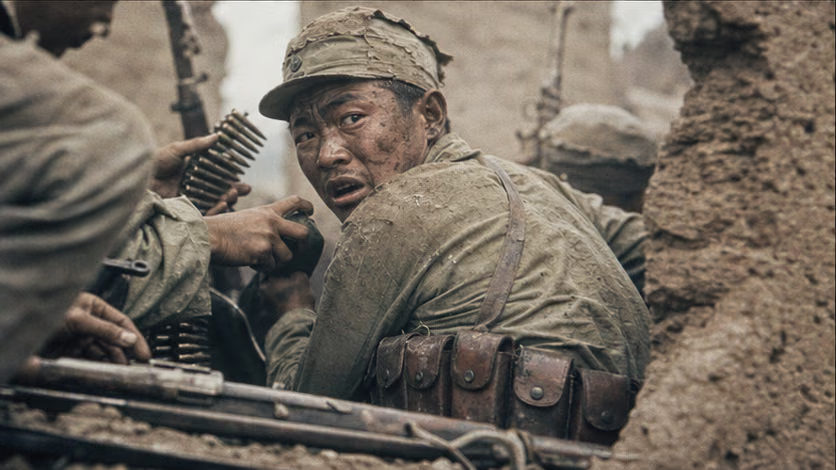
- Motomiya Kaoru: former commander of the Japanese forces' 14th Independent Mixed Brigade (rank and post unverified), retained in Shanxi after Japan's surrender and serving with Zhao Chengshou's field group as a front-line commander. When surrounded at Xiaochang Village, he failed to break out and died--a legend that before death he asked his subordinates to "apologize to the emperor" or words to that effect circulated in Japanese recollections (details unverified, belonging to the level of Japanese recollection). A Japanese general dying in the wheat fields of China's 1948 civil war: the fact itself carries all the historical weight, and needs no embellishment.
- Zhao Chengshou's capture: a veteran Shanxi commander and Yan Xishan's trusted subordinate. On being captured he acknowledged, "I had not expected you to come so fast" (details of the exchange unverified). After capture he received favorable treatment and later appeared to urge surrender (his postwar experience unverified).
- The blocking action at Dongcun: one regiment of Taiyue troops (unit designation unrecorded) stood hard at Dongcun against enemy forces several times its size trying to seize the road and flee north, with the position changing hands several times--only by stopping that mouth was the annihilation at Dachang Town possible. Annihilation in mobile warfare is always bought by some fixed point that does not move.
- The last battle of the Japanese soldiers: many ordinary Japanese soldiers in the Tenth Zongdui had either "volunteered to be retained" after surrender or had been left behind by circumstances beyond their control; the ashes of those killed were carried back by Japanese survivors only many years later (the course of repatriation remains unverified).
The Ground
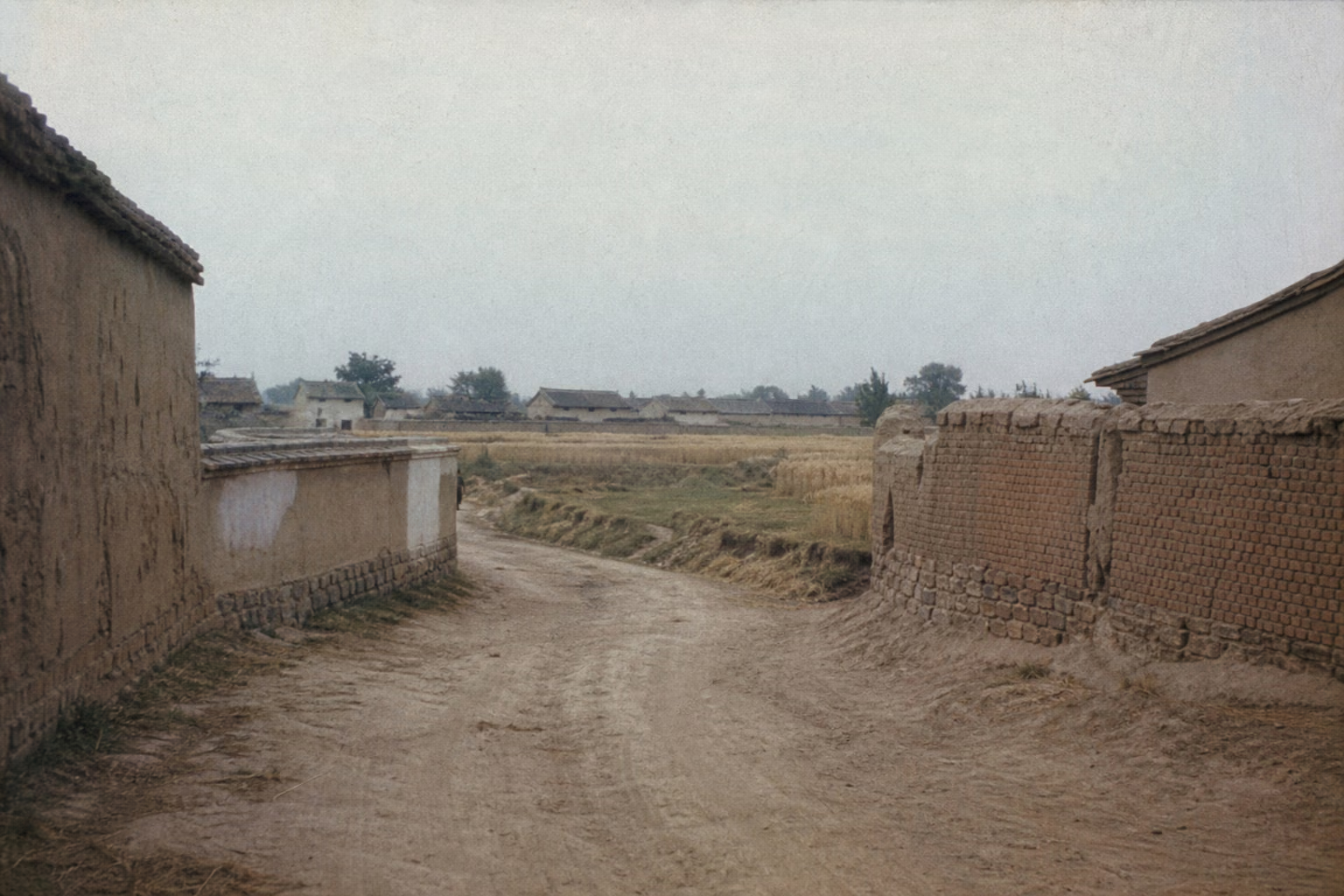
- Jinzhong Basin: flatland of the Fen River valley, with the Tongpu Railway running through it--the chessboard for large-formation maneuver, where villages and the railway were almost the only reference points.
- Zhanglan Town: the division point of the first battle, a small town at a transport node.
- Dongcun: the nail village of the blocking action--a gate on a single road.
- Dachang Town--Xiaochang Village--Xifan Village: the village cluster of the final encirclement and destruction, the last space of the compressed field group, on the scale of only a few square kilometers.
- The Taiyuan horizon: where the spearhead reached in the pursuit phase, as the outline of the isolated city entered view--the end point of this article is the starting point of the next.
How Each Side Records It
- Mainland: defined as a classic of mobile warfare winning with fewer against more, and as a representative achievement in Xu Xiangqian's military career; the participation and destruction of the retained Japanese-nationality units are clearly recorded in official military histories.
- Taiwan side: recorded in the Shanxi battlefield section of the pacification war history, with limited narration of Yan Xishan's decision and responsibility regarding the retained Japanese forces (Taiwan-side wording unverified).
- Japan: treated as research on the "Shanxi Remnants" incident--the specialized history of Japanese people stranded in the early postwar period and participating in the Chinese Civil War, with continuing investigations by Japanese scholars and survivor groups (specific bibliography still to be supplied); the matter long remained marginal in Japanese public knowledge.
Disputes and Sensitivities
- Retained Japanese-nationality units are the most sensitive line in this article: the decision chain for retention (the agreement between Yan Xishan and former Japanese officers), the scale of retention (several thousand, with accounts varying), the degree of voluntariness among Japanese-nationality officers and soldiers, and the organization and command relationship of the "Tenth Zongdui" all require mutual corroboration from Chinese and Japanese archives; two accounts of Motomiya Kaoru's death (killed in action / suicide) coexist.
- The figure of 100,000 enemy troops destroyed is the mainland official military-history basis, and the method by which militia forces and troops who rose in revolt or came over are counted remains unverified; Taiwan-side figures for Yan's losses remain to be checked.
- The unit designation of the "personally trained division" and the assessment of it as a "model division" come from attacking-side materials; Yan-side records remain unverified.
- Retained Japanese-nationality units: their designations, retention background, and Motomiya Kaoru's death are a layer of historical fact this article cannot avoid.
Sources and Open Questions
Known main sources:
- *Xu Xiangqian's Memoirs* (firsthand recollection of battle decision-making and command)
- The Academy of Military Science's *History of the Chinese People's Liberation Army* and histories of the North China field forces (official military-history statistical bases)
- Japanese research on the "Shanxi Remnants" (military-history research and survivor memoirs, with specific titles still to be supplied)
- Statements and recollections by Zhao Chengshou and other captured personnel (the *Selected Historical Materials* system, to be checked)
Open questions: the complete order of battle of both sides (including the "personally trained division" designation and the organization of the Tenth Zongdui); the decision chain, scale, and voluntariness of the retained Japanese-nationality units; Motomiya Kaoru's rank and post, and the original sources for the two accounts of his death; day-by-day details of the first destruction at Zhanglan Town and the blocking action at Dongcun; the timetable for the encirclement and destruction at Dachang Town; itemized statistical bases for casualties on both sides and Taiwan-side figures; Zhao Chengshou's postwar experience; the course by which the ashes of Japanese-nationality officers and soldiers were repatriated; the recovery sequence of the 14 Jinzhong county seats; the designation lineage by which Xu Xiangqian's corps was reorganized as the 18th Corps.
All images on this site are AI-generated depictions. They are not historical photographs, not primary sources, and do not depict any real individual.