Engagement Archive · Assault on Siping (1947)
The troops that had defended Siping for a month one year earlier came back to assault the same city: half a month of street fighting, more than 10,000 casualties, and finally a withdrawal before Nationalist reinforcements could close the encirclement. The same city was fought over four times; this time taught the Northeast Democratic United Army one thing: winning in the field did not mean knowing how to take a city. The assault lessons used one year later at Jinzhou and Tianjin were paid for at Siping.
Engagement Data
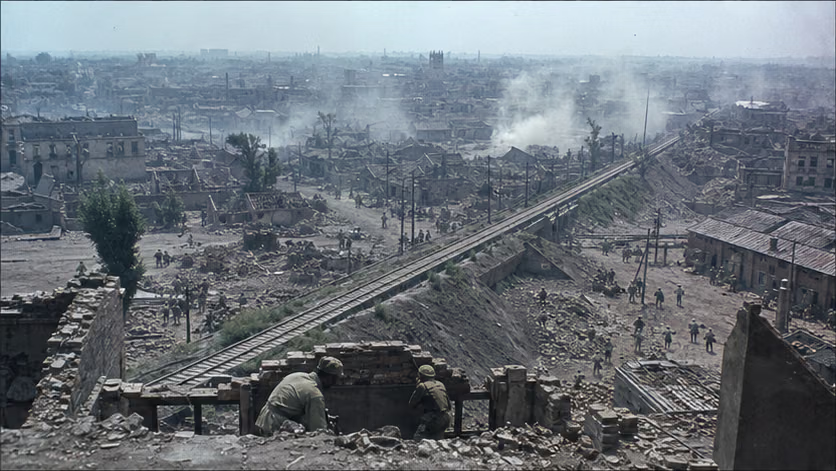
| Item | Content |
|---|---|
| Time | 1947.6.11 – 6.30 (final stage of the Summer Offensive; perimeter fighting from 6.11, street fighting inside the city 6.14–26, encirclement lifted on 6.30) |
| Place | Siping Street, Jilin (a hub on the Chinese Changchun Railway, the third of the four battles for Siping) |
| Part of | Chinese Civil War (for the broader picture, see *Chinese Civil War · Overview*) |
| Attacking side | Northeast Democratic United Army (Lin Biao, Luo Ronghuan), an assault corps of about 7 divisions (Li Tianyou commanded the assault), with the main force separately used to block reinforcements |
| Defending side | Chen Mingren's command in the Nationalist 71st Army, about 35,000 men (including security troops and gathered-in personnel; figures vary by account) |
| Result | After taking most of the urban area, the assault stalled east of the railway; with Zheng Dongguo and other reinforcements approaching, the attackers voluntarily lifted the encirclement on 6.30--the assault remained unfinished |
Belligerents
| Item | Democratic United Army | Defenders |
|---|---|---|
| Strength | Assault force at the 100,000 level, with reinforcement-blocking forces counted separately (figures vary by account) | 35,000 relying on urban fortifications |
| Assault methods | Artillery had begun to take shape but coordination was still unfamiliar; demolitions and field engineering were just beginning | Chen Mingren's method of defense: bunker groups, holes cut through alley walls, grain depots turned into fortifications--"every room was a pillbox" |
| Morale | The edge of successive victories in the Summer Offensive | A last-ditch defense--Chen Mingren's deployment to "live or die with the city" (details unrecorded) |
Terrain and Conditions
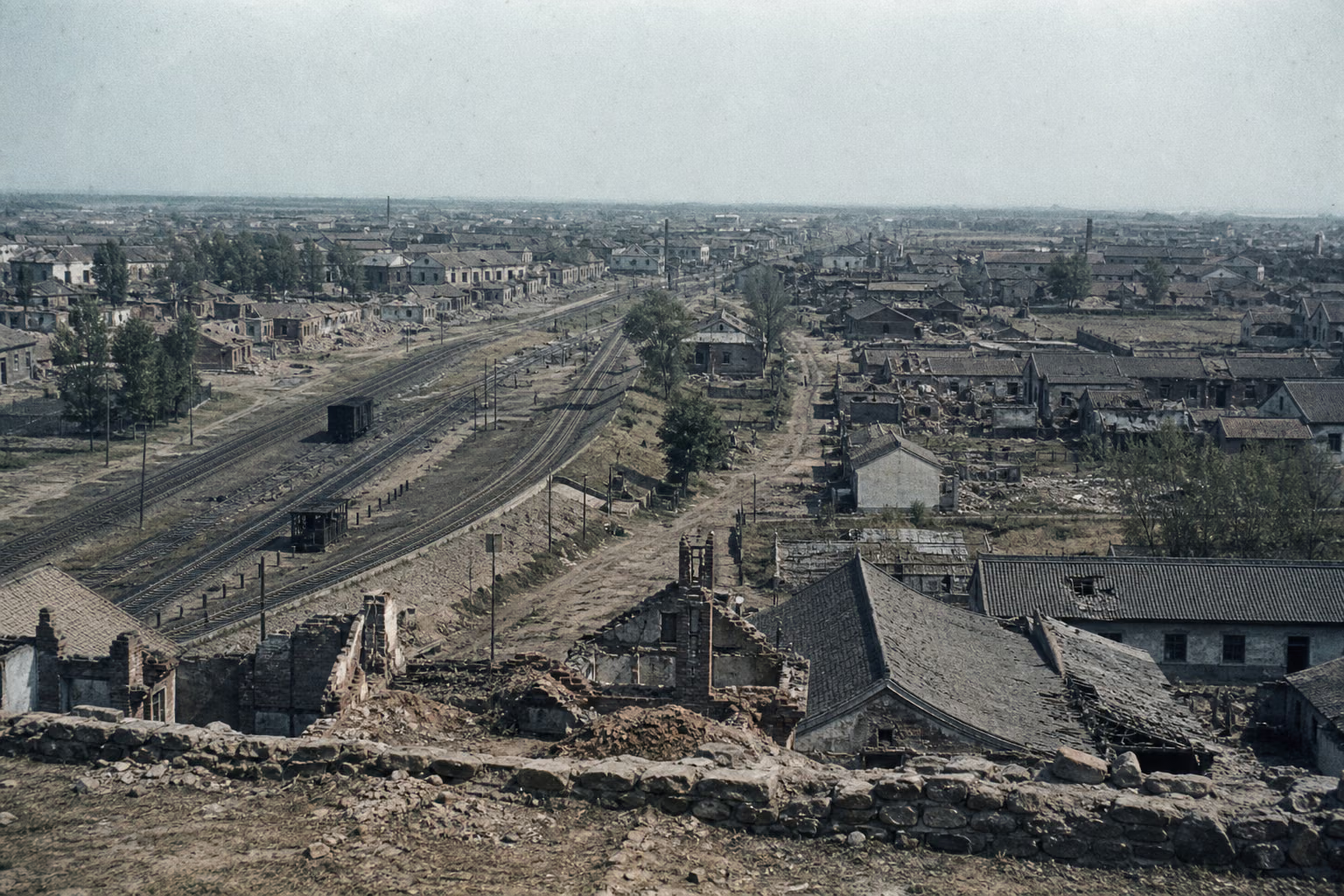
Siping: the crossing point of the Chinese Changchun Railway and the Siping-Taonan line, the key to the Northeast interior--a fated city that changed hands four times in four years of civil war (the first battle in 1946.3, the second battle and defense in 1946.4–5 as a cross-reference, this engagement as the third battle, and the fourth battle in 1948.3). Summer 1947: the Democratic United Army's Summer Offensive had taken key points one after another, while the Nationalist army contracted into major cities--Siping became a lone nail on a salient.
Why It Was Fought
The gunfire at Menglianggu had settled in mid-May, and the spearhead in Shandong had been broken; that same summer, at the other end of the front--the Northeast--it was the defenders of one year before who now moved. In May 1946, the Northeast Democratic United Army withdrew from Siping across the Songhua River, used the second ceasefire order to halt pursuit, and spent a full year building itself in North Manchuria; in the Summer Offensive of 1947, it took key points one after another, while the Nationalist army in the Northeast contracted into major cities. Attack and defense thereby changed places: Siping became a lone nail on a salient.
The weight of that nail had not changed from one year before: the Chinese Changchun Railway and the Siping-Taonan line met here, the key to the Northeast interior--pull out Siping, and South Manchuria and North Manchuria would be joined, while the Nationalist army's Chinese Changchun Railway would be cut across the waist. This was the climactic objective of the Summer Offensive. What had changed was the direction: in March 1946 the Democratic United Army took Siping in the first battle; from April to May, in the second battle, it defended Siping for a month. This time was the third battle--the same city, a third way of fighting. Li Tianyou, who commanded the assault, had been the main attack commander in the first battle for Siping; the troops that had withdrawn from here one year earlier also needed proof that they had "come back" (this psychological layer is marked as narrative observation, not historical source material).
The attacking side built its account on the edge of successive victories: seven divisions of the assault corps entered the city, while the main force was placed on the outer line to block reinforcements. But the confidence built through a year of field warfare became another matter when spread onto urban assault--artillery had begun to take shape, but coordination was unfamiliar, and demolitions and field engineering had only just begun. Defending the city was Chen Mingren's command in the 71st Army, about 35,000 men--the 71st Army had been in the order of battle that attacked Siping in 1946; this time it was inside the city, defending it. Chen Mingren turned the city into a fortification: bunker groups, holes cut through alley walls, grain depots and sandbagged streets, "every room was a pillbox," and he made his deployment to "live or die with the city" (details unrecorded). His calculation had only one line: every extra day held in the city brought the reinforcements from Shenyang one day closer.
On June 11, the perimeter battle opened; on the night of the 14th, the general assault began, and the southwestern breach was torn open--street fighting had begun.
This was the third battle for Siping.
Course of the Engagement
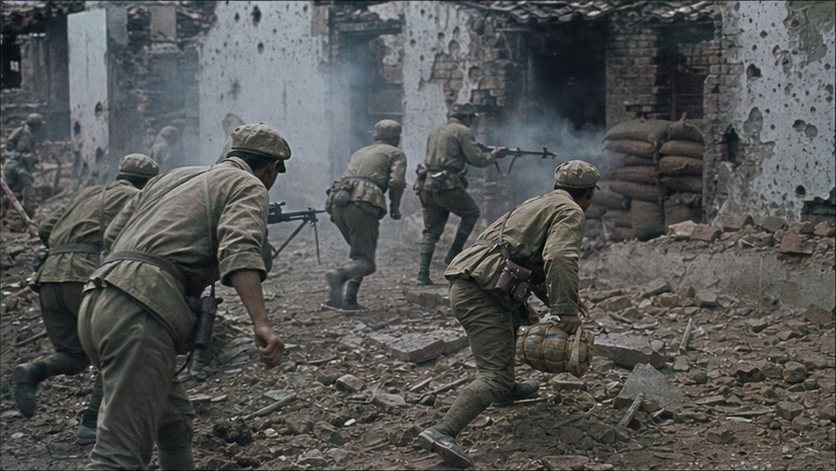
| Phase | Time | Key Points |
|---|---|---|
| Perimeter and breach | 6.11–14 | The perimeter was cleared; the general assault began on the evening of the 14th, and the southwestern breach was torn open |
| Street-fighting grind | 6.15–21 | Street by street, house by house: the defenders resisted step by step with bunker fire nets and counterattacks inside the alleys; the attackers lacked experience in assaulting fortified cities, and battalions and companies were consumed at street mouths (tactical review unverified); the urban area west of the railway was gradually taken |
| Stalled east of the railway | 6.21–26 | In the core area east of the railway (the defenders' final zone), the offensive stalled; Chen Mingren built works with soybean sacks ("soybean fortifications" details unverified) and resisted stubbornly in depth |
| Encirclement lifted | 6.27–30 | Nine divisions of Zheng Dongguo's corps approached from Shenyang to reinforce northward, and the reinforcement-blocking fight became strained; on 6.30 the assault corps voluntarily withdrew--Siping remained in Nationalist hands |
Casualties and Losses
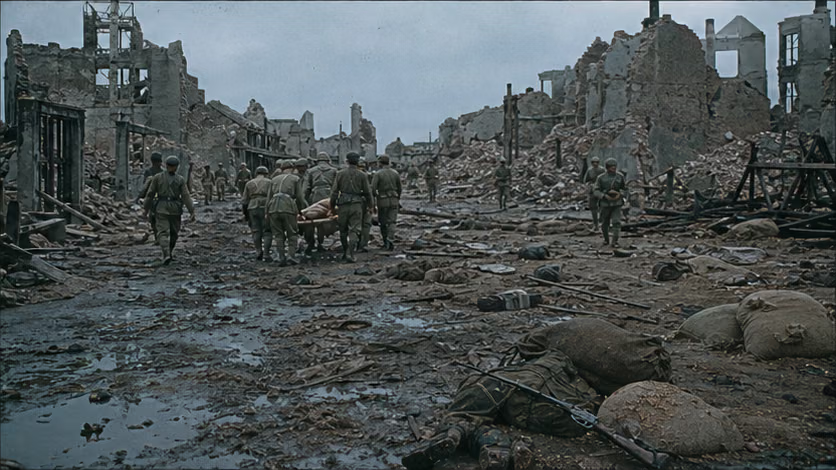
- Democratic United Army: more than 13,000 casualties (figures vary by account)--the costliest engagement of the Summer Offensive; cadre losses in the assault units were especially heavy.
- Defenders: more than 16,000 casualties (figures vary by account), and most of the urban area was destroyed.
- ※ Civilians: civilian deaths and injuries inside the city during half a month of street fighting, and the suffering of being trapped in the city (the statistical basis lacks "no statistics"); the accumulated destruction Siping suffered through four rounds of war--the total account one city paid for four battles.
Aftermath
- Chen Mingren received the Order of Blue Sky and White Sun for defending the city, but soon left office after being implicated in cases such as "using soybeans to aid the enemy" (he later joined the 1949 Changsha Uprising--the man who defended Siping most fiercely joined an uprising two years later, biographical arc unverified)--another specimen of the Nationalist army's system of reward and punishment.
- The Democratic United Army's review of assault operations produced tactical upgrades: "four groups and one team," demolitions opening the way, concentrated artillery--the assault manuals for Jinzhou and Tianjin in 1948 were summarized from Siping's blood (line of tactical development, linked to *Liaoshen Campaign · Overview* and *Pingjin Campaign · Overview*).
- 1948.3, the fourth battle for Siping: when the People's Liberation Army came again, the defending force had already weakened, and the city was taken in one stroke--the four battles reached their final ending in a single line.
Accounts of Those Present
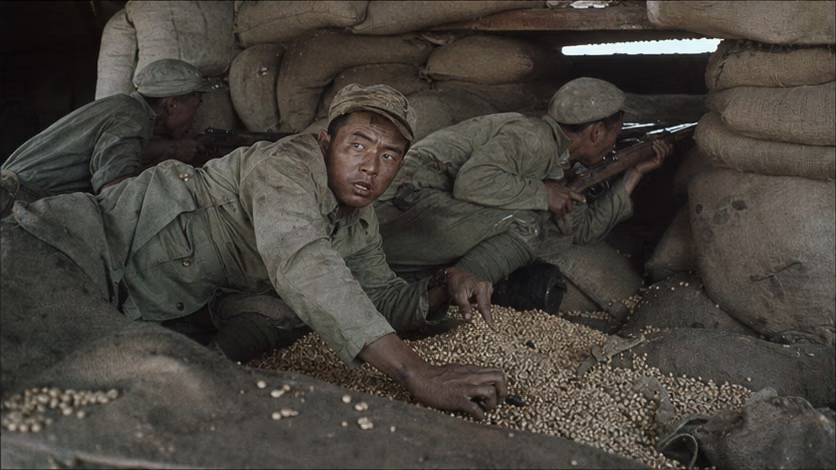
- Chen Mingren's sacks: soybean grain sacks were used to build street barricades, and under the rain of bullets the beans spilled into piles--soldiers fought while grabbing raw soybeans to eat (detail layer unverified); the postwar impeachment for "aiding the enemy" pointed precisely to these beans: the same pile of beans was a fortification in wartime and an article of guilt after the war.
- Li Tianyou's street mouth: the main attack commander from the first battle for Siping came back to assault the city (the personal closed loop of his two Siping battles)--learning two kinds of war in the same city.
- The unnamed demolition men: in the embryonic stage of assault tactics, demolition teams suffered extremely high casualty rates (figures vary by account)--every page of the "textbook" for Jinzhou and Tianjin carried Siping's name.
The Ground
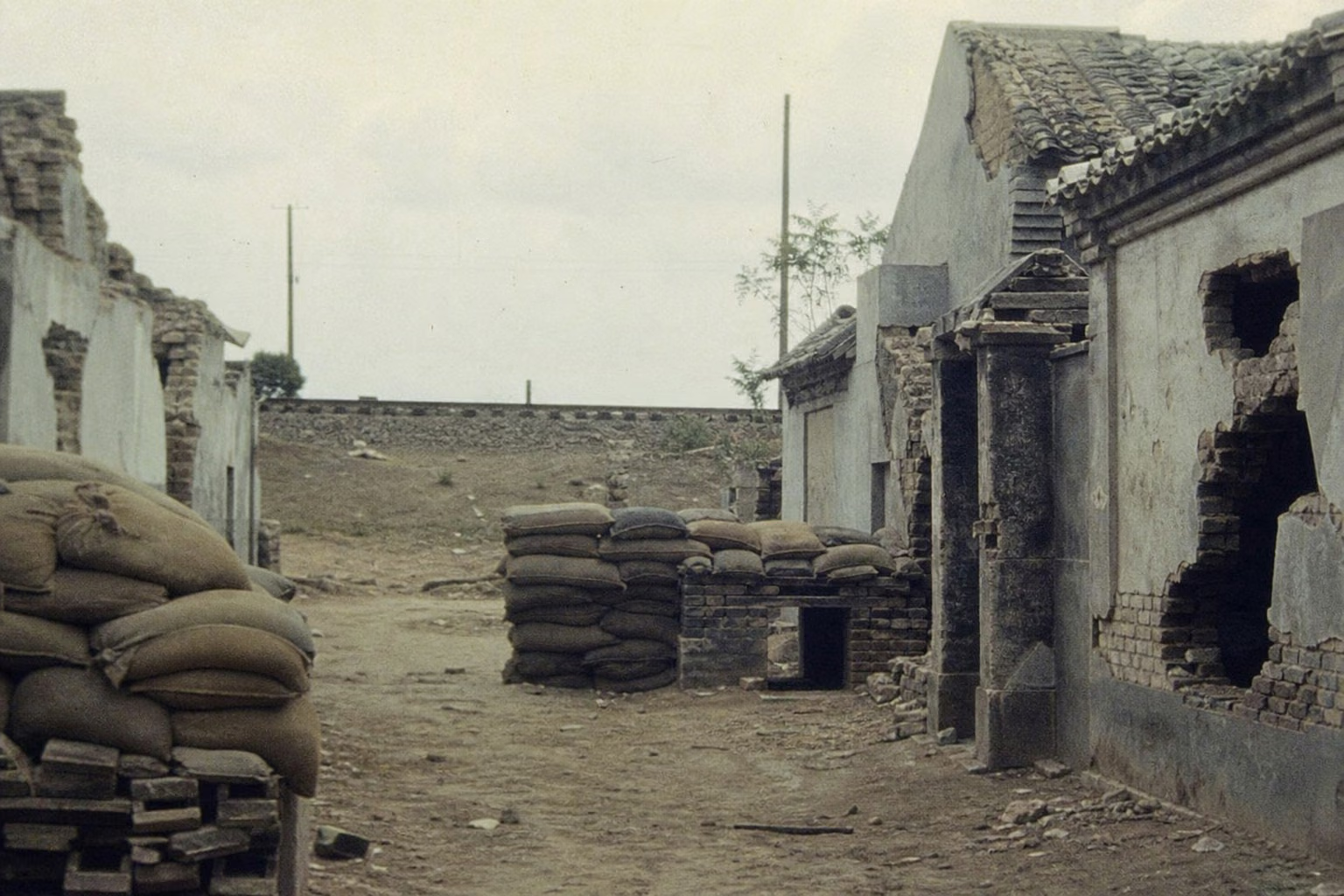
- The railway cut the city in two: the two-stage attack and defense of west of the railway and east of the railway; the railway embankment as a spatial example of the "last line of defense" inside the city.
- Bunkerized blocks: houses joined to houses, walls cut through with holes, courtyards turned into forts--the "honeycomb space" of urban assault (one of three types of street fighting, alongside fortified-block fighting at Tai'erzhuang and the stone city of Tengchong).
- Two fields of reinforcement-blocking: the time race between the grind inside the city and blocking reinforcements outside it reappeared (another case in this series' genealogy of "besiege a point and strike its reinforcements," in contrast with Sujiabu--this time as a counterexample: relief arrived faster than the city fell).
How Each Side Records It
- CPC canon: long subdued (an unfinished engagement), later entering military-history narrative as "assault tuition"--the narrative evolution of admitting a lost battle itself.
- Taiwan side: Chen Mingren's defense of Siping was treated for a time as one of the few bright battle cases in the "pacification" narrative--then became narratively awkward after his later uprising: a man once praised had gone over to the other side, a sample of the mismatch between narratives across the strait.
- Local Siping: the Siping Four Battles Memorial Hall gathers the four engagements under one frame--a city that founds its history on having "been fought over four times."
Disputes and Sensitivities
- Casualty figures differ widely between the two accounts; the decision on when to lift the encirclement (Lin Biao telegram line unverified).
- The cross-strait mismatch in evaluations of Chen Mingren and the line of his uprising--a marking of levels.
- This engagement is a sample of a defeat deliberately included in the series (alongside Nanma and Linqu)--lost battles also occupy a place on this line of war.
Sources and Open Questions
Sources: *History of the Northeast Liberation War*; *Historical Materials on the Four Battles of Siping*; biographies and case files related to Chen Mingren; Taiwan-side military-history sections on Siping.
Open questions: the statistical bases for both sides' troop strengths and casualties; details of the soybean fortifications; telegrams concerning the decision to lift the encirclement; Chen Mingren's case files and uprising line; literature on the tactical development of the "four groups and one team."
All images on this site are AI-generated depictions. They are not historical photographs, not primary sources, and do not depict any real individual.