Engagement Archive · Battle of Shuangduiji
The field army with the worst equipment used thousands of meters of trenches dug in one night to seal the best-equipped corps at Shuangduiji -- trenches against tanks. And the core of Huang Wei's Twelfth Corps, the 18th Army, was descended from the Eleventh Division that had been broken by the Red Army at Caotaigang fourteen years earlier -- the same force, two eras, two destructions.
Engagement Data
| Item | Content |
|---|---|
| Time | 1948.11.23 encirclement – 12.15 complete destruction, twenty-three days |
| Place | Around Shuangduiji southwest of Su County, Anhui (Huaibei Plain) |
| Part of | Chinese Civil War · second phase of the Huaihai Campaign |
| Encircling side | Central Plains Field Army, seven columns (Liu Bocheng, Deng Xiaoping); in the late phase, East China Field Army reinforcement groups joined the general assault |
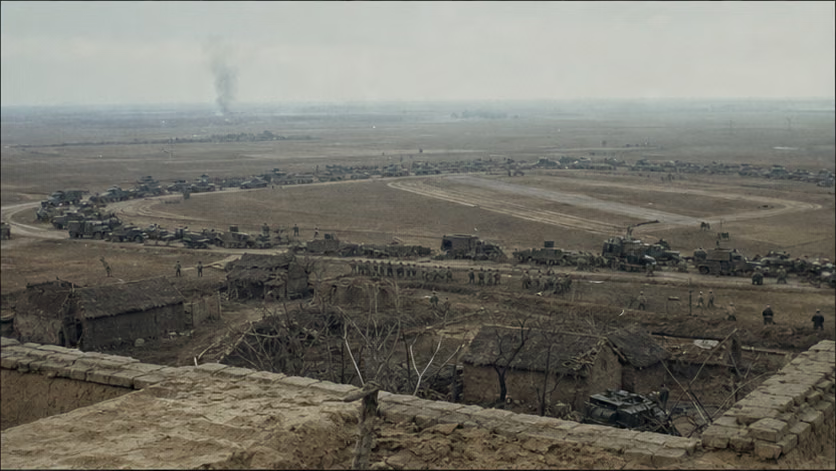
| Encircled side | Nationalist Twelfth Corps (commander Huang Wei, deputy commander Hu Lien), about 120,000 men, including the Tenth, Fourteenth, Eighteenth, and Eighty-Fifth Armies |
| Result | 12.15 corps destroyed: Huang Wei captured, Hu Lien broke out and escaped; Central Plains and East China Field Army casualties numbered more than 30,000 (statistical bases vary by account) |
Belligerents
| Item | Encircling side | Encircled side |
|---|---|---|
| Strength | Seven Central Plains Field Army columns, a little over 100,000 men, at an equipment disadvantage (heavy equipment lost after the advance into the Dabie Mountains -- one background stroke); in the late phase, several East China Field Army reinforcement columns plus artillery from the Special Arms Column | About 120,000 men, including the 18th Army -- the crack unit of Chen Cheng's "Tumu clique," elite troops fully equipped with American arms |
| Firepower | Inferior across the board in artillery and ammunition -- the field army with the worst equipment encircled the best-equipped corps | Tanks, heavy artillery, flamethrowers, and air-dropped supplies |
| Method | "Sapping close approach": trenches advanced thousands of meters in one night, were dug to within several dozen meters of the forward edge of the positions, and only then was the charge launched -- earthwork against firepower | Built a circular defense out of villages, trucks, and tanks, holding out as a "hard nut" while awaiting relief |
| Outside relief | Relief forces from both Xuzhou and Bengbu were blocked (see *Huaihai Campaign · Overview*) | Supply by air-drop field (records of confusion and insufficiency remain to be checked) |
Terrain and Conditions
(For the larger situation, see *Huaihai Campaign · Overview*; this section covers only Shuangduiji.)
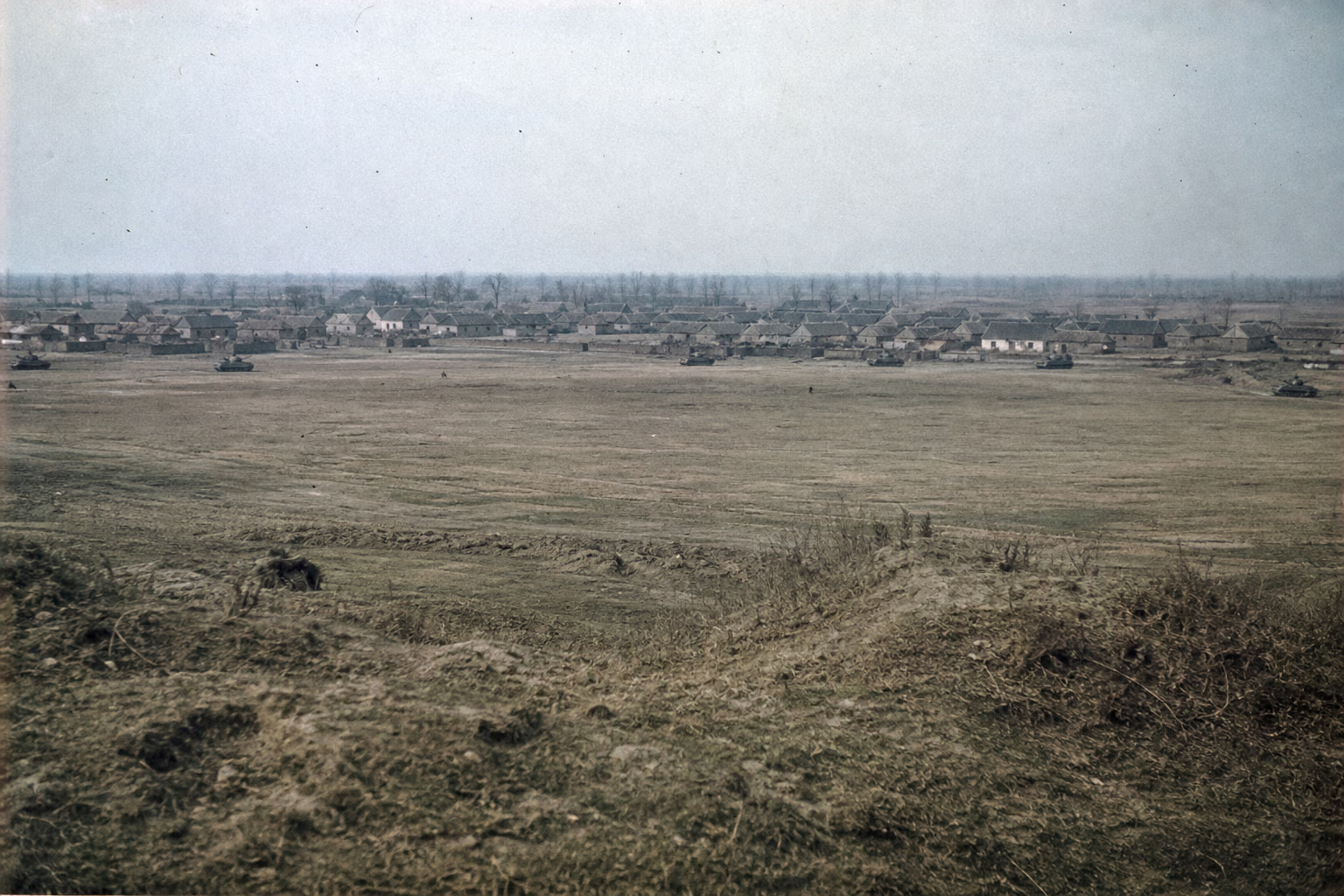
Shuangduiji was an ordinary village on the Huaibei Plain, with flat ground and a cold winter. After being encircled, the corps used villages, vehicles, and tanks to form a circular position several kilometers in depth, with an air-drop field opened in the center. During nearly a month of siege, grain and ammunition depended on air drops, houses were dismantled for firewood, and the wounded had no medicine -- battlefield killing and encirclement hunger were a double consumption (records of soldiers' starvation remain to be checked). Civilians in the surrounding villages fled before and after the fighting began; for those left inside the ring, the situation remains unclear (records remain to be checked).
Why It Was Fought
The gunfire at Nianzhuang had not yet stopped, and the second encirclement was already on the road. Huang Baitao was encircled at Nianzhuang, and Chiang Kai-shek ordered Huang Wei's Twelfth Corps from the Central China direction to move east to relieve Xuzhou -- about 120,000 men, including the Tumu clique's crack 18th Army, fully equipped with American arms, rushing a long distance from Central China as a lone salient all along the route. By the time Nianzhuang was taken and Huang Baitao was dead on November 22, this relief force was still moving east across the Huaibei Plain: the object of rescue no longer existed, but the mission had not changed -- the Central Plains Field Army had already taken Su County, severed the Xu-Beng line, and turned Xuzhou into an isolated piece cut off from the line; Huang Wei's corps was the last hope for reopening Xu-Beng from the southern line.
For the Central Plains Field Army, this was the second piece that had to be eaten in the chess game of "eat one, hold one, watch one," and also the most unequal mouthful on paper: after crossing the Dabie Mountains, the Central Plains Field Army had lost almost all heavy equipment, and its artillery and ammunition were inferior across the board, yet the force to be encircled was the best-equipped corps. Liu Bocheng and Deng Xiaoping wagered on two things -- Huang Wei had come from afar and had not yet found firm footing; the equipment gap would be filled with trenches on the Huaibei Plain.
From November 23 to 25, the Central Plains Field Army lured Huang Wei across the Hui River and encircled him from all sides at Shuangduiji. The troops that crossed the river never returned to the other bank.
Huang Wei originally still had one card in his hand: break out toward Guzhen and link up with the two corps of Li Yannian and Liu Ruming moving north from Bengbu. On November 27, a breakout by four divisions began, and the leading 110th Division got out of the encirclement -- then immediately announced a battlefield uprising. Division commander Liao Yunzhou was an underground CPC member who had lain hidden for many years (level marking of the identity line remains to be checked), and the leading role he had volunteered for had been for this purpose. The breakout plan collapsed on the spot. From then on Huang Wei shifted from attack to defense, using villages, trucks, and tanks to draw a circular position and wait for relief that would not come.
From that day on, the nature of the battle was fixed: not field battle, but encirclement to death.
Course of the Engagement
| Phase | Time | Key Points |
|---|---|---|
| Luring and encircling | 11.23–25 | The Central Plains Field Army lured Huang Wei across the Hui River, then encircled him from all sides and compressed him into an area of several kilometers around Shuangduiji |
| Breakout collapses | 11.27 | The corps organized four divisions for a breakout; Liao Yunzhou's 110th Division rose in a battlefield uprising while in the breakout sequence (level marking of the underground-party identity line remains to be checked) -- the breakout deployment disintegrated, and Huang Wei held fast from then on |
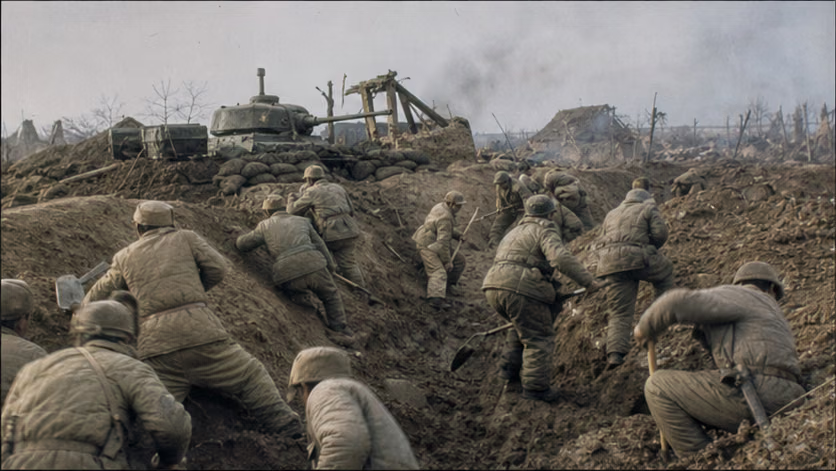
| Sapping close-approach siege | Late 11 – early 12 | Under equipment disadvantage, the Central Plains Field Army did not meet firepower head-on: the whole army dug trenches, trenches advanced thousands of meters in one night, and the trench network was dug to within several dozen meters of the defenders' forward edge; the advantage of tanks and artillery was dissolved by the trench net -- trenches against tanks |
| East China Field Army reinforcements and general assault | 12.6–15 | East China Field Army reinforcement groups brought artillery into the assault, with three groups attacking from east, west, and south; the ring was compressed village by village, with bloody fighting at places such as Dawangzhuang (details unrecorded) |
| Destruction | 12.15 | The positions were broken through along the whole line; Huang Wei attempted to break out by tank, but the tank broke down on the way (one account says it became mired), and he was surrounded and captured (details unverified); deputy commander Hu Lien broke out and escaped in another tank |
Casualties and Losses
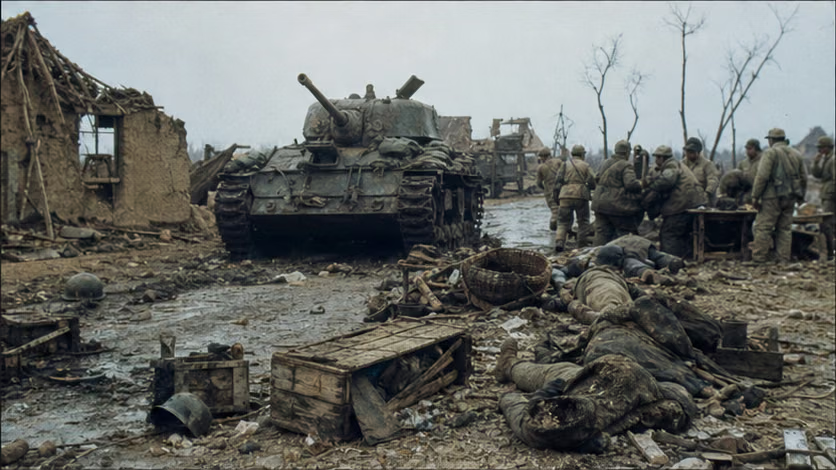
- Encircling side: Central Plains and East China Field Armies together suffered more than 30,000 casualties (statistical bases vary by account) -- the cost of encirclement and assault under equipment disadvantage was paid mainly in the final general-assault phase.
- Encircled side: the Twelfth Corps, 120,000 men, was destroyed (composition of killed, wounded, and captured remains to be checked); the 18th Army -- the foundation of the Tumu clique -- was struck from the rolls from this point on.
- Double structure of battlefield consumption: beyond killing before the positions, the nearly month-long encirclement brought food shortage, severe cold, and wounded men without medicine (records of air-drop-field confusion and soldiers' starvation remain to be checked).
Aftermath
- The second phase of Huaihai closed: Du Yuming's group (which had already abandoned Xuzhou and withdrawn west) was immediately encircled at Chenguanzhuang -- the campaign entered its final phase (see *Huaihai Campaign · Overview*).
- The closure of two eras: the predecessor of the 18th Army was the Reorganized Eleventh Division, which had been broken by the Red Army in the 1933 battle of Caotaigang during the Fourth Counter-"Encirclement" Campaign; the predecessor forces of the Central Plains Field Army had stood opposite it then. Fourteen years later, the same force (unit-designation lineage remains to be checked) was destroyed at Shuangduiji by an opponent of the same bloodline -- the same force, two eras, two destructions (see *Fourth Counter-"Encirclement" Campaign* for details).
- Huang Wei entered the war-criminal management center and was among the last group amnestied in 1975; his later-life research into a "perpetual-motion machine" is a famous stroke in the Gongdelin narrative (cross-article closing line).
- After Hu Lien escaped, he rebuilt the Twelfth Corps and later commanded again at Kinmen (Guningtou) -- a cross-article character line (for the noted commander of Shipai, see *Battle of Western Hubei*; for the later Kinmen story, see *Battle of Kinmen*).
Accounts of Those Present
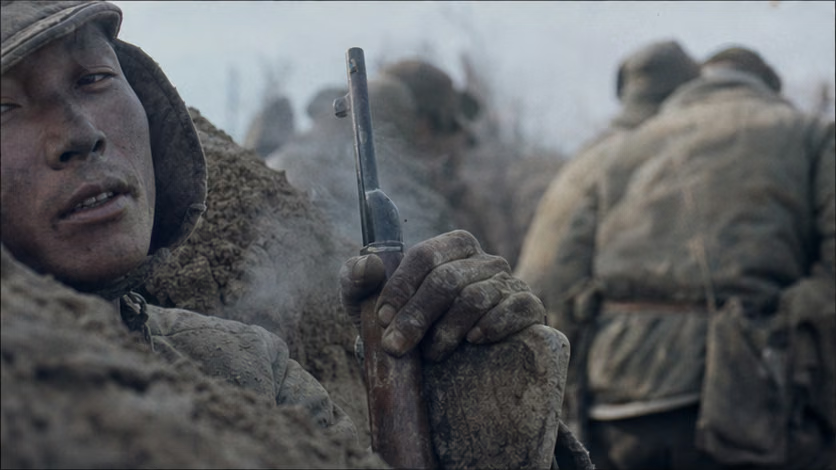
- Liao Yunzhou: commander of the 110th Division, an underground CPC member who had lain hidden for many years (level marking of the identity line and decision chain remains to be checked). On the day of the breakout he volunteered to lead the spearhead; once out of the encirclement he announced an uprising -- Huang Wei's breakout plan died before it had unfolded.
- Huang Wei's tank: during the breakout he rode a tank at night; the tank broke down (details unverified), and the corps commander got out and walked before being captured. The best-equipped corps was finally defeated by its own best equipment.
- Hu Lien: the noted commander from the Defense of Shipai (see *Battle of Western Hubei*), who at Shuangduiji several times took a small aircraft in and out of Nanjing to seek instructions (records remain to be checked); in the end he broke out by tank and escaped despite being hit by a stray bullet -- the reappearance and escape of the noted commander of Shipai; his war was not yet over.
- The Central Plains Field Army in the trenches: the force that came out of the Dabie Mountains with its heavy equipment lost took shovels as weapons from top to bottom -- the thousands of meters of trenches in one night were paid for by soldiers with frozen earth and bodily strength. Deng Xiaoping said that the Central Plains Field Army was "dragged thin" by this battle (level of the exact wording remains to be checked).
- The air-drop field: the air-drop field at the center of the encirclement, where grain and ammunition drifted down and both sides scrambled for them, and where records tell of starving defending soldiers snatching food (unverified here) -- the truest face of siege warfare.
The Ground
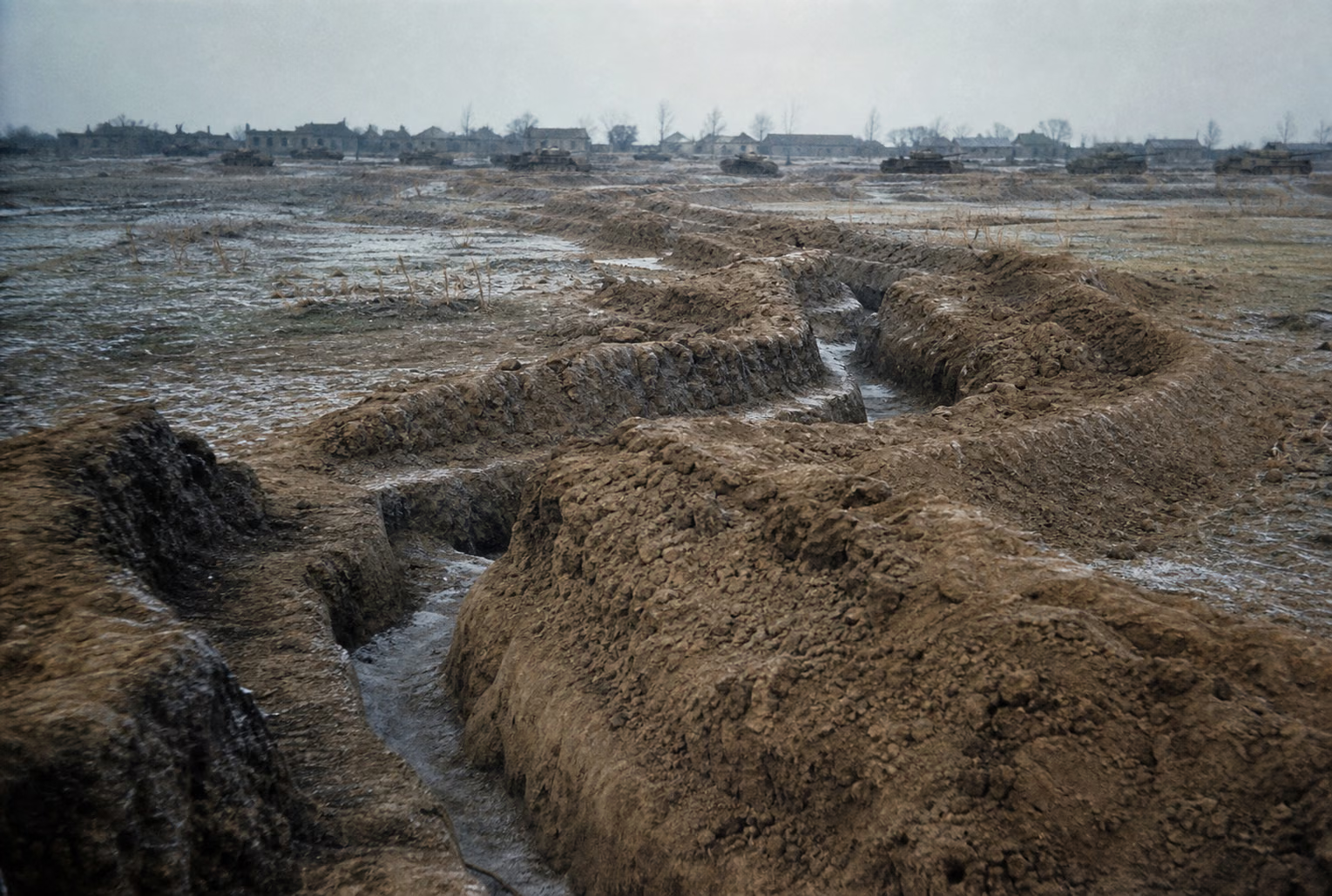
- The Huaibei Plain had no natural obstacles: the circular position was built from villages + vehicles + tanks; the defenders turned mobile equipment into fortresses -- while the encircling side used a trench network to "weave" the plain into an assault position.
- Trench-net system: trenches advancing thousands of meters in one night eventually reached within several dozen meters of the defenders' forward edge -- space itself was rewritten by earthwork, the most distinctive battlefield grammar of Shuangduiji.
- Air-drop field: the supply lifeline at the center of the encirclement, and also the place where confusion and scrambling occurred.
- Hui River: the spatial marker of the completed encirclement -- the troops lured across the river could never return to the other bank.
How Each Side Records It
- CPC canon: a representative case of the Central Plains Field Army's "when narrow roads meet, the brave win" (level of the Liu-Deng wording remains to be checked); sapping close-approach work was written into assault doctrine.
- Taiwan side: Huang Wei's derision as a "bookworm commanding troops" coexists with the reconstruction narrative after Hu Lien's escape; Liao Yunzhou's uprising is recorded in Taiwan-side narratives as a "defection," and Huang Wei still brooded over it in later years (records in his recollections remain to be checked).
- The two destructions of the 18th Army: Taiwan-side military histories record both the Caotaigang defeat of the Eleventh Division and the Shuangduiji defeat of the 18th Army -- the accounts of two eras are both acknowledged in military history (comparison remains to be checked).
Disputes and Sensitivities
- Details of Liao Yunzhou's uprising: the causality between the uprising and the breakout plan, and the definition and timing of a "battlefield uprising" (level marking remains to be checked).
- Details of Huang Wei's capture (tank breakdown account, mired account) -- both accounts coexist.
- The statistical basis for more than 30,000 casualties in the Central Plains and East China Field Armies (boundary between the two armies and statistical boundary) -- both accounts coexist.
- Source level for records of air-drop-field confusion and defending soldiers' starvation during the encirclement.
- The unit-designation lineage from the 18th Army to the Caotaigang Eleventh Division -- verify the lineage before closing the narrative loop.
Sources and Open Questions
Known main sources:
- *Huaihai Campaign* collected series; Central Plains Field Army war-history materials
- Recollections by captured Nationalist generals including Huang Wei and Yang Botao (commander of the 18th Army)
- Literature on Liao Yunzhou's uprising
- Taiwan-side *Military History of the War of Pacification*, Huaihai section; 18th Army / Eleventh Division military-history materials (for lineage checking)
Open questions: unit designations and strength of the Central Plains Field Army's seven columns; the statistical basis for more than 30,000 casualties and the boundary between the two field armies; the decision chain and timing details of Liao Yunzhou's uprising; the competing accounts of Huang Wei's tank breaking down / becoming mired; Hu Lien's breakout route and records of his wound; participant records of air-drop-field confusion and starvation; original combat reports for the speed of trench advance; unit-designation lineage between the 18th Army and the Caotaigang Eleventh Division; level of Deng Xiaoping's exact words about being "dragged thin"; details of the bloody fighting at Dawangzhuang.
All images on this site are AI-generated depictions. They are not historical photographs, not primary sources, and do not depict any real individual.