Engagement Archive · Battle of Lanzhou
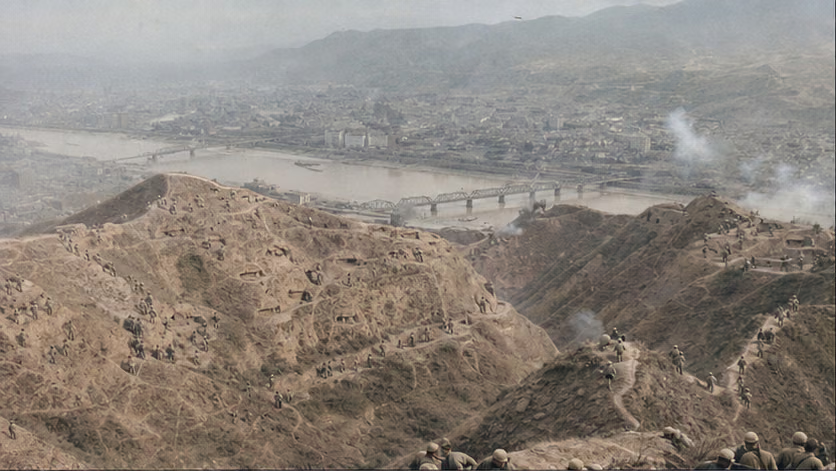
The Ma-family Army placed its last capital on Lanzhou's Southern Mountains: the First Field Army's first day's assault was checked, Peng Dehuai stopped to examine the terrain for three days, and when he attacked again, one day of bloody fighting took Shenjialing and seized the Yellow River Iron Bridge. The Northwest's toughest opponent was destroyed on the decisive ground of its own choosing. The old account from the Hexi Corridor twelve years earlier (the Western Route Army) turned a page here in another form--what remained was causality, not revenge.
Engagement Data
| Item | Content |
|---|---|
| Time | 1949.8.20 probing attack; 8.25–26 general assault and capture of the city |
| Place | Lanzhou, Gansu: the Southern Mountains defense line (Shenjialing, Gouwashan, Yingpanling, Majiashan, Doujiashan) and the Yellow River Iron Bridge |
| Part of | Chinese Civil War (for the overall war, see *Chinese Civil War · War Overview*) |
| Attacker | Main force of the First Field Army (Peng Dehuai), about 150,000 |
| Defender | Ma-family Army of the Qinghai Ma Bufang line, about 50,000 (Ma Jiyuan in front-line command), relying on groups of permanent works built during the War of Resistance |
| Result | Lanzhou taken on 8.26; 27,000 of the Ma-family Army's main force destroyed (figures vary by account); the Northwestern war situation was settled |
Belligerents
| Item | First Field Army | Ma-family Army |
|---|---|---|
| Strength | 150,000 against 50,000 | A hard local force with cavalry as its soul: fierce in bayonet countercharges (its fighting style is not demonized here) |
| Works | -- | Southern Mountains ring of permanent works: cut cliffs, hidden pillboxes, encircling trenches (details unrecorded)--this time the Ma-family Army did not run: a will for decisive battle |
| Psychology | Among the troops were surviving veterans of the Western Route Army (the old account was present--individual testimony line pending verification) | Mobilization to "defend the Northwest homeland" and the fear that defeat meant clan extinction (the logic of its mobilization) |
Terrain and Conditions
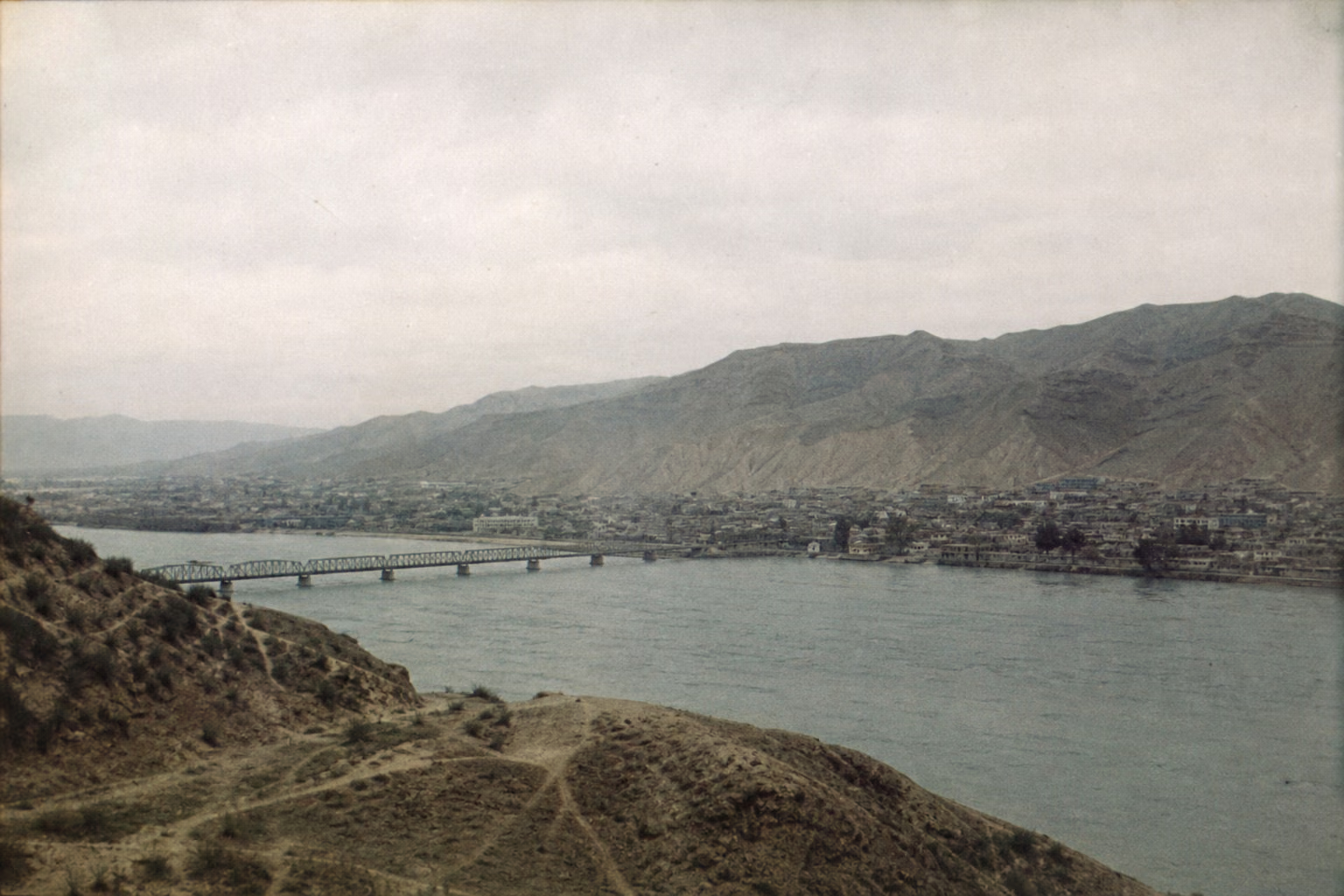
Lanzhou: the Yellow River runs through the city, and the Southern Mountains lock the city in--to hold the Southern Mountains was to hold the city, while the Yellow River Iron Bridge was both the only route of retreat and the only line of reinforcement. The Northwest in the summer of 1949: after the Fumei Campaign, Hu Zongnan's remnants withdrew into the Qinling Mountains, and the two Ma groups (Ma Bufang and Ma Hongkui) became the main enemies in the Northwest; Ma Bufang had newly become Northwestern Military and Political Chief--Lanzhou was his entrance examination, and also his final examination.
Why It Was Fought
In the summer when Shanghai had changed hands and the Beijing-Shanghai-Hangzhou region had been settled, the war moved to the other end of the mainland: the Northwest still had one last organized opponent. In July, after the Fumei battle, Hu Zongnan's remnants withdrew into the Qinling Mountains, and the Qinghai force of Ma Bufang and the Ningxia force of Ma Hongkui became the main enemies in the Northwest; Ma Bufang had newly become Northwestern Military and Political Chief--Lanzhou was his entrance examination, and also his final examination.
The First Field Army's sequence had originally been "pin the Ma forces and strike Hu, Hu first and Ma later"; at this point it was adjusted to "Ma first and Hu later" (the correspondence line between the Center and Peng Dehuai remains to be checked): first strike the strongest of the two Ma groups, the main Qinghai Ma force. To fight the Qinghai Ma force, there was no bypassing Lanzhou--the Yellow River ran through the city and the Southern Mountains locked it in; to hold the Southern Mountains was to hold the city. This was the facade of the Qinghai Ma regime, and also the key to the larger Northwestern situation.
Ma Bufang's choice ran against the usual pattern of "warlords avoiding battle to preserve themselves": he refused to defend the Hexi Corridor and placed his last capital, about 50,000 men, on Lanzhou's Southern Mountains--Shenjialing, Gouwashan, Yingpanling, Majiashan, and Doujiashan--relying on the groups of permanent works built during the War of Resistance, with only one Yellow River Iron Bridge left behind them. The mobilization order spoke of "defending the Northwest homeland"; beneath it lay the fear that defeat meant clan extinction. This hard local force, with cavalry as its soul and bayonet countercharges as a habitual method, did not run this time. One more item stood in his accounts: aid from the Ningxia Ma force, and Hu Zongnan coming out of the Qinling Mountains in support. What postwar reviews recorded instead was discord between the two Ma groups and no aid from the Ningxia Ma force (the internal-friction line pending verification).
Thus there appeared a situation rare in the late civil war: a decisive battle that both sides wanted. Peng Dehuai's 150,000 men faced 50,000 defenders; his aim was to destroy the Qinghai Ma main force below the city and prevent it from contracting back into the Hexi Corridor to drag out another long fight. Ma Bufang's aim was to use the Southern Mountains works to blunt the First Field Army's spearhead. On August 20, the First Field Army's routes reached the city and the probing attack began.
In the ranks of the First Field Army were survivors from the Hexi Corridor twelve years earlier--Western Route Army veterans had walked back to the old battlefield (individual testimony line pending verification). The archive records this layer of causality, and records only causality.
Course of the Engagement
| Phase | Time | Key Points |
|---|---|---|
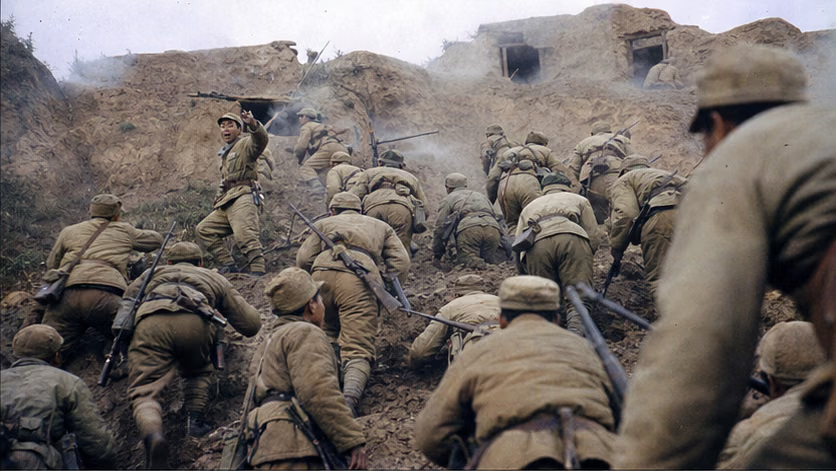
| Probing attack checked | 8.20–21 | On the first day, multi-route probing attacks against the Southern Mountains positions were all checked, with several thousand casualties (figures vary by account)--a rare day when the First Field Army ran into a wall; Peng Dehuai halted the attack for three days: examining terrain, adjusting the artillery, and revising the deployment (the field version of "do not fight an unprepared battle") |
| General assault | 8.25 | All-line assault: at Shenjialing, the "two mountains with one ditch between them" were fought over in blood for the whole day--the Fourth Army's Eleventh Division charged and retook positions repeatedly, with multiple regimental-level cadres killed (the roster including Wang Xueli, Li Xigui, and others remains to be checked), and only at dusk was it taken--the "key to Lanzhou" had opened; Yingpanling, Doujiashan, and other positions were broken in succession on the same day |
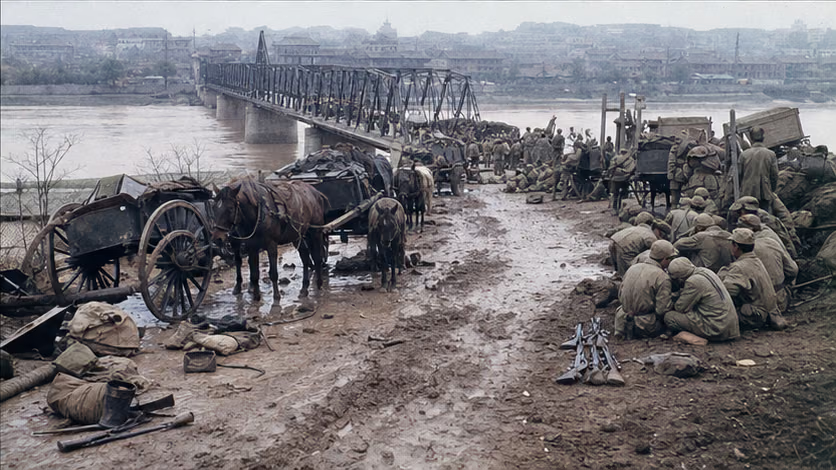
| Seizing the bridge | Night of 8.25–morning of 8.26 | The defenders abandoned the city and crossed north: people, horses, and vehicles jammed the Yellow River Iron Bridge; the First Field Army's vanguard seized the bridgehead first and cut them off--enemies who had not crossed were destroyed on the south bank (bridgehead chaos and people falling into the river ※ record unverified) |
| Taking the city | 8.26 | Entry into the city; Ma Jiyuan had earlier flown to Xining, and Ma Bufang and his son soon flew through Chongqing to Taiwan--the Ma-family military regime ended overnight |
Casualties and Losses
- First Field Army: more than 8,700 casualties (figures vary by account)--the highest for a single engagement in the Northwestern battlefield; Shenjialing alone accounted for more than half.
- Ma-family Army: 27,000 destroyed (13,000 killed and wounded, 14,000 captured, with figures varying by account); remnants scattered--on 9.5 Xining was taken, and the Qinghai Ma force collapsed.
- ※ Civilians: the suburban battle zone and bridgehead stampede affected civilians (figures vary by account); Lanzhou's urban area avoided street fighting because the defenders collapsed quickly--one stroke for "the city's luck."
Aftermath
- The Northwestern chain was settled: the Ningxia Ma force (Ningxia in September) and Xinjiang (on 9.25 Tao Zhiyue and Burhan Shahidi announced a peaceful uprising by telegram--one stroke for the "Xinjiang method") were resolved in succession--the Battle of Lanzhou settled the five Northwestern provinces.
- Ma Bufang went into exile (later serving as Taiwan's "ambassador" to Saudi Arabia and dying in the Middle East--a dispersed sample of a warlord's end, unverified).
- The historical closure of the Western Route Army's old account: after the First Field Army entered Qinghai, it searched for and resettled scattered Western Route Army personnel ("the people found back"--the resettlement line of Western Route Army survivors scattered in Hexi and Qinghai remains to be checked, and closes in mutual reference with the line of changing characterization in *Western Route Army's Battles in the Hexi Corridor*)--this causal line closes with "finding back," not with "revenge."
Accounts of Those Present
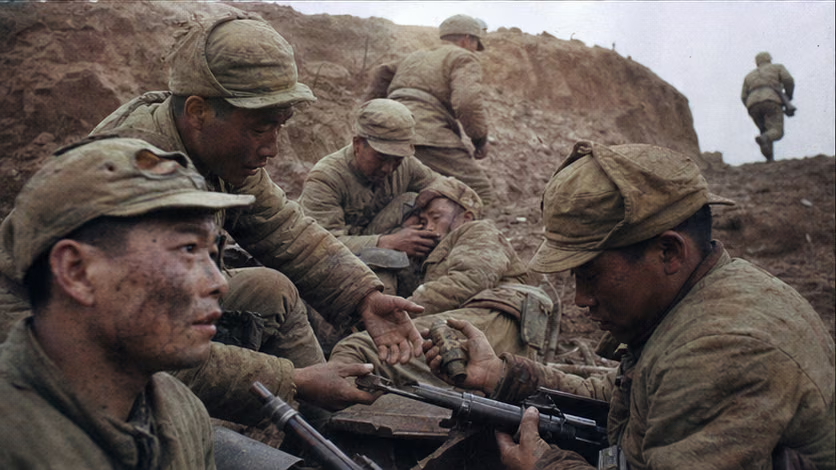
- The company rosters at Shenjialing: the roster of regimental and battalion commanders killed in batches within one day (unverified here)--the price list for the "key to Lanzhou."
- The night at the bridgehead: on the iron bridge, people, horses, and vehicles trampled one another, and many fell into the river ※--the endpoint of a routed army was again a bridge (of the same genealogy as the pontoon bridge on the Xiang River and Yijiang Gate--the "bridge" as a motif of collapse-space in this series, here for the third time).
- The return of the Western Route Army veterans: the Hexi survivors in the First Field Army's ranks walked back to the old battlefield (individual testimony unverified)--a twelve-year personal closure, briefly noted.
- Peng Dehuai's three days: the commander who stopped after being checked--the same military personality as his "daring to stop" in Korea two years later (see also the Third Phase Offensive): knowing when not to fight was the other half of his lifelong battle record.
The Ground
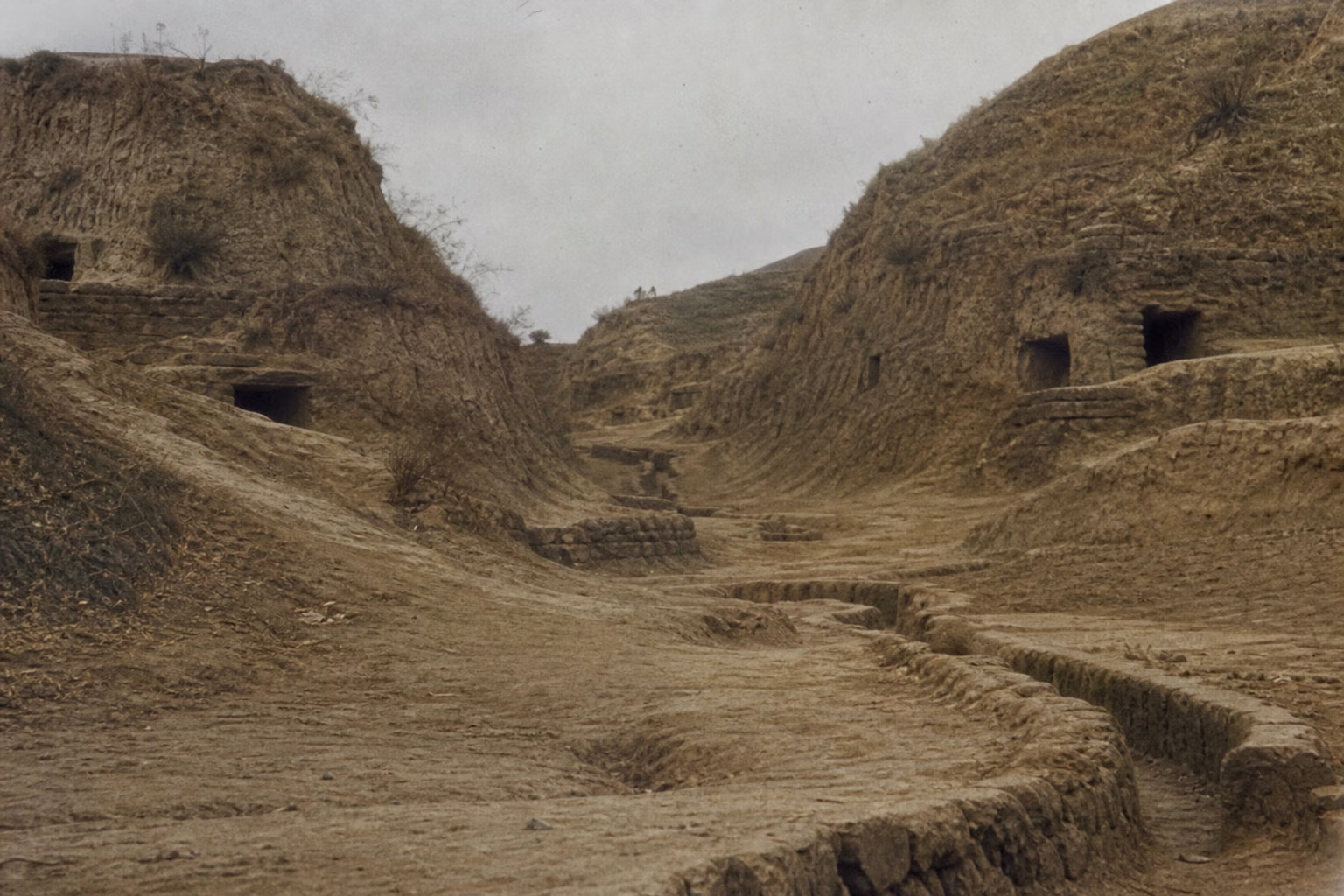
- Southern Mountains ring defense line: the "mountain-city key" structure in which five major position groups guarded one city; the funnel-shaped killing ground of Shenjialing, "two mountains with one ditch between them."
- Yellow River Iron Bridge: the spatial fate of the only route of retreat--as usual in city defense, the endpoint was a bridge (the Northwestern version of the motif-space).
- Groups of permanent works: assault on cut cliffs and hidden pillboxes (together with the Songshan tunnels and the Linfen city walls, this forms a supplementary "mountain fortress" type beyond the three main types of assault on fortified positions).
How Each Side Records It
- CPC canon: the decisive battle in the liberation of the Greater Northwest; the Shenjialing "key to Lanzhou" narrative.
- Ma-family Army and Taiwan side: reviews of the causes of defeat (lone-army decisive battle, no aid from the Ningxia Ma force--the internal-friction line of discord between the two Ma groups pending verification); the marginalization of Ma Bufang in Taiwan-side narratives.
- Northwest local and group memories: the complex legacy of Ma-family Army rule (the double-sided local memory of governance and oppression--involving ethnic relations); memorial facilities for the Battle of Lanzhou still exist (the Shenjialing battlefield-site line pending verification).
Disputes and Sensitivities
- The Ma-family Army narrative involves ferocity in battle and local ruling structures; Hui-Han relations should not be ethnicized or demonized.
- The endpoint of the Western Route Army causal line is finding people back, not the pleasure of revenge.
- Casualty figures; the unresolved case of the two Ma groups and the failure to aid one another.
Sources and Open Questions
Sources: *History of the First Field Army*; the Northwestern sections of *Selected Military Writings of Peng Dehuai*; Qinghai local histories and Ma-family Army studies (Yang Xiaoping's *The Rise and Fall of the Ma Bufang Family* and others, to be checked); memorial materials on the Battle of Lanzhou.
Open questions: statistical bases for the strengths and casualties of both sides; the roster of those killed at Shenjialing; bridgehead records; the resettlement line of Western Route Army survivors; literature on relations between the two Ma groups.
All images on this site are AI-generated depictions. They are not historical photographs, not primary sources, and do not depict any real individual.