Engagement Archive · Defense of Siping
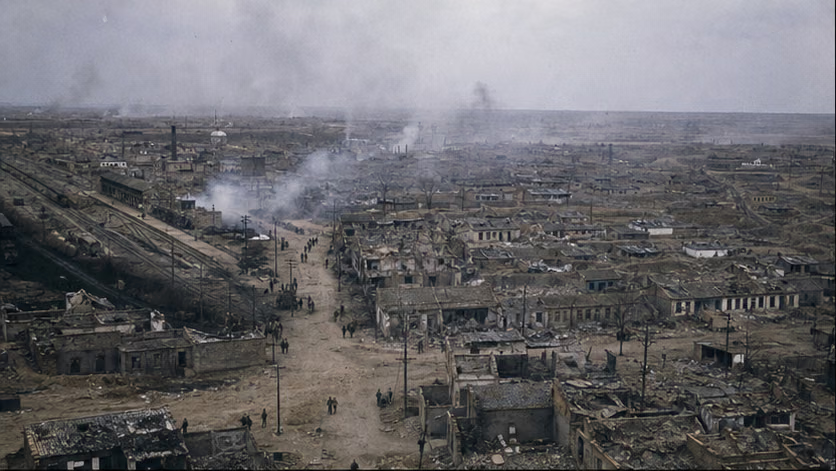
Eighty thousand men held a market town on the plain, standing for one month against 10 fully U.S.-equipped divisions--victorious divisions that had come out of the Burmese jungle and surviving divisions that had endured the forests of the Northeast met head-on in Siping Street; once Tazishan fell, Lin Biao withdrew north to the Songhua River overnight.
Engagement Data
| Item | Details |
|---|---|
| Time | 1946.4.18 – 5.18, one month in all |
| Place | Siping Street, Jilin (today's Siping City, Jilin Province), junction of the Chinese Changchun Railway and the Siping-Qiqihar Railway |
| Part of | Chinese Civil War · the struggle for the Northeast, the Northeast exception under the KMT-CPC ceasefire order (for the broader situation, see *Chinese Civil War · Overview*) |
| Defending side | Northeast Democratic United Army (commander-in-chief Lin Biao), about 80,000, including Shandong Eighth Route Army troops, the New Fourth Army Third Division, remnants of the Northeast Anti-Japanese United Army, and newly organized units |
| Attacking side | Nationalist Northeast Security Command Headquarters (Du Yuming): New First Army, New Sixth Army, 71st Army, and others, about 10 divisions, U.S.-equipped, with attached tank and air support |
| Result | On 5.18, Tazishan, the height east of the city, fell, and Lin Biao ordered a general retreat that night; Nationalist troops entered Siping on 5.19, went on to occupy Changchun and Jilin, and advanced to the south bank of the Songhua River |
Belligerents
| Item | Northeast Democratic United Army | Nationalist forces (Du Yuming's command) |
|---|---|---|
| Strength | About 80,000 (including front-line and second-line deployments; the statistical basis varies by account) | About 10 divisions (New First Army, New Sixth Army, 71st Army, and others, committed successively; exact order of battle remains to be checked) |
| Equipment | Mainly Japanese equipment, with too few light and heavy weapons; newly arrived in the Northeast, short of both winter clothing and ammunition | The New First and New Sixth Armies were fully trained, U.S.-equipped units from the northern Burma theater, with howitzers, tanks, and air support all available |
| Unit background | Veteran units from Shandong and Central China coming through the Pass + remnants of the Anti-Japanese United Army + newly absorbed armed forces in the Northeast: old and new mixed together, uneven in consolidation | The Chinese Army in India was a victorious force from the northern Burma expedition, its backbone trained at Ramgarh, with rich combat experience |
| Situation | Defense: use urban positional warfare to delay a stronger enemy and support the overall negotiations | Attack: press forward successively with overwhelming firepower, while also having to cover South Manchuria (operations toward Benxi were under way at the same time) |
Terrain and Conditions
(For the broader situation in the first half of 1946--Marshall's mediation, the ceasefire order, and the Northeast exception in which "the fighting stopped inside the Pass and continued beyond it"--see *Chinese Civil War · Overview*. This entry covers only Siping.)
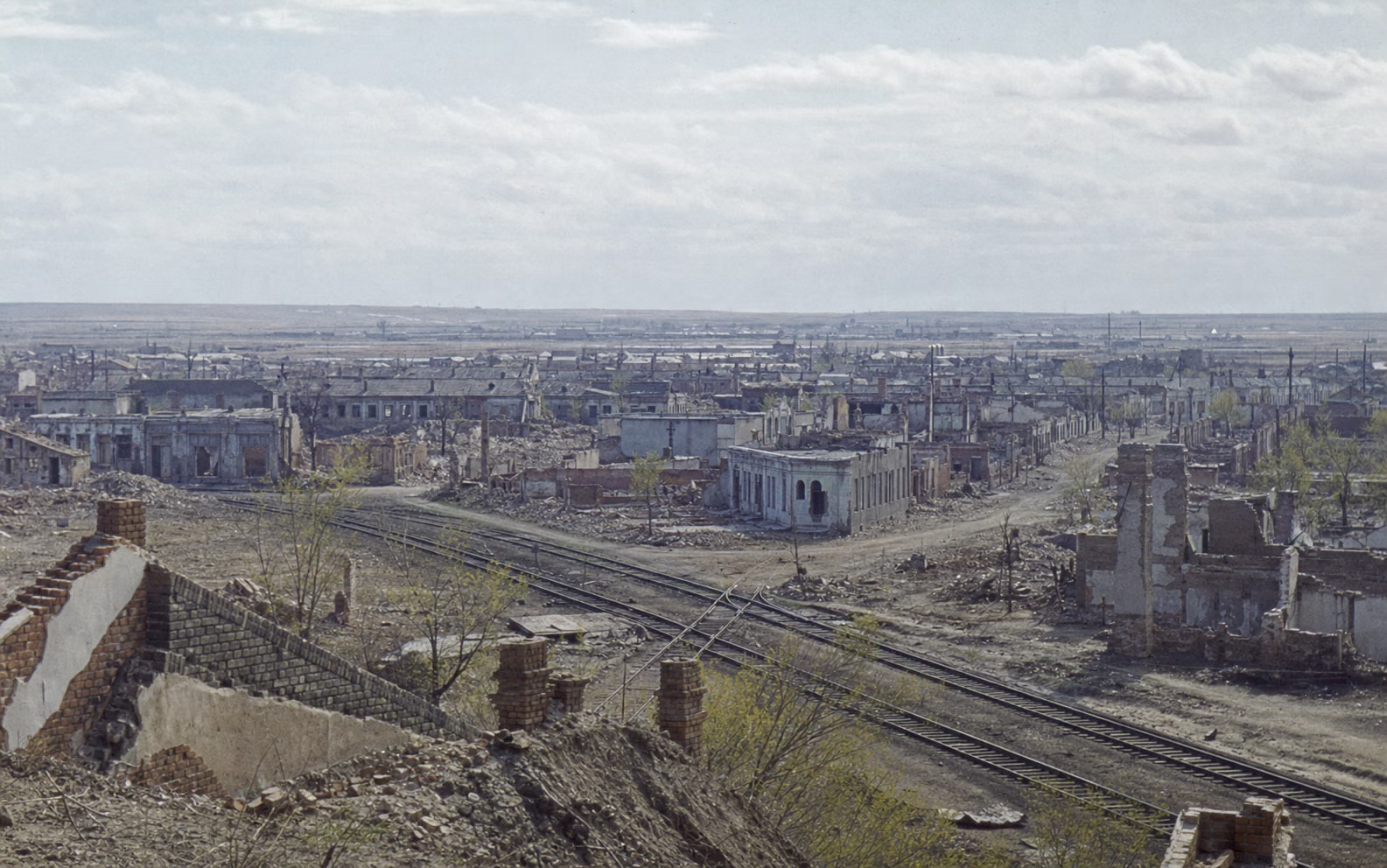
What kind of place Siping Street was: In the heart of the Songliao Plain, where the Chinese Changchun Railway (Harbin-Dalian) and the Siping-Qiqihar line crossed, it was the throat between South Manchuria and North Manchuria. Whoever held Siping held the waist of the Northeast.
How the city changed hands: Soviet troops began withdrawing from the Northeast in March 1946, leaving a vacuum behind. Siping was first occupied by former Manchukuo troops absorbed by the Nationalist army; in mid-March, the Democratic United Army captured Siping (3.17/18, several thousand enemy losses inflicted and Liu Handong, chairman of Liaobei Province, captured; details unrecorded). One month later Du Yuming's army pressed down on it, and attack and defense changed places.
Why It Was Fought
Handan blocked the Pinghan line, but it could not block the larger trend: when Nationalist troops could not enter the North China interior, they shifted to the Beiping-Tianjin line and sea transport, sending ship after ship beyond the Pass. The center of the contest moved from the railways inside the Pass to the Northeast. On January 10, 1946, the ceasefire order took effect, and the guns inside the Pass largely fell silent; the Northeast was not included. The Nationalist side insisted that in the Northeast it was "receiving sovereignty" from the Soviet army and was therefore outside the ceasefire's scope; Marshall's mediation could not cover the area beyond Shanhaiguan. Thus came that peculiar half-year pattern: fighting stopped inside the Pass and continued beyond it.
The timetable in the Northeast was in Soviet hands. In March 1946, Soviet troops began to withdraw, emptying one station after another, and the KMT and CPC armies rushed forward along the Chinese Changchun Railway. Siping Street stood in the middle of that route: the Chinese Changchun Railway and the Siping-Qiqihar line crossed there, the throat between South Manchuria and North Manchuria. Whoever held Siping held the waist of the Northeast. In mid-March, the Democratic United Army first captured Siping; one month later, Du Yuming's army arrived below the city, and attack and defense changed places.
Du Yuming held roughly 10 divisions, including the New First Army, New Sixth Army, and 71st Army: fully trained and U.S.-equipped, victorious divisions made in northern Burma. But the 10 divisions could not all be thrown in at once--fighting was taking place at the same time toward Benxi in South Manchuria, and railway capacity and rear-area support also had to be spread along the line. His calculation was clear: take Benxi first, then press north against Siping, seize Changchun and Jilin, and drive the Democratic United Army across the Songhua River. This judgment was not rash. The Nationalist army had artillery, tanks, and air support, while the other side had only just entered the Northeast and had not yet put down firm roots.
On the Yan'an side, the Central Committee of the Communist Party of China ordered the Northeast Bureau by telegram to hold Siping, to "turn Siping Street into Madrid" (original wording and source of the telegram remain to be checked), and to make the first decisive battle in the Northeast into a political battle: the longer the city was held, the heavier the bargaining weight at the negotiating table, and the more clearly it would show that the Northeast could not be swallowed whole in the name of receiving sovereignty. When this decision was made, the Central Committee could see Siping's position and the window of the ceasefire negotiations; what it could not fully see was the density of firepower that U.S.-equipped units could maintain against a plain-city defensive position, or the ability of newly absorbed units to endure heavy attrition (unverified).
The military account was tight from the start. The 80,000 defenders were a mixture of veteran units from Shandong and Central China, remnants of the Anti-Japanese United Army, and newly absorbed armed forces; they were mainly Japanese-equipped, and ammunition, winter clothing, and fortification materials were all scarce. Siping, moreover, was a market town on flat open ground, so the defenders could only build layers of suburban heights and trenches into depth. The Nationalist army was not without limits: Benxi and Siping pulled on two lines at once, heavy equipment could not leave the railway, and the deeper the attack went, the longer the supply line became. But those limits were far wider than the defenders' limits.
On the table there had been another road, and it too was proposed by one of their own. Before the battle, Huang Kecheng strongly argued for giving up the big cities, first building base areas on the two flanks, and not clashing head-on with U.S.-equipped units; years later he repeated to Mao Zedong face to face that holding Siping had been wrong. The Central Committee did not adopt this route because at the time Siping was not only a city, but also the hinge of negotiations in the Northeast and of the north-south passage. One month later the troops withdrew across the Songhua River, and "yield the main roads and occupy the two flanks" again became policy. The road not taken was taken in the end; it had simply paid one month's price first at Siping Street.
On April 18, the New First Army and the 71st Army pressed from Kaiyuan and Changtu toward the outskirts of Siping, and the attack on the perimeter began.
Course of the Engagement
| Phase | Time | Key Points |
|---|---|---|
| Army at the city gates | From 4.18 | The New First Army and 71st Army pressed from Kaiyuan and Changtu toward the outskirts of Siping and began the perimeter attack; the Democratic United Army resisted step by step from suburban positions |
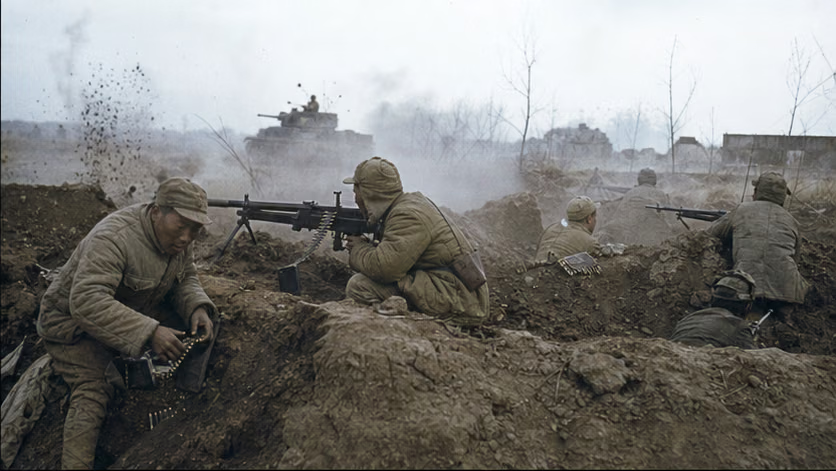
| Positional standoff | 4.18 – 5.14 | Suburban key points such as Sandaolinzi and Beishan changed hands repeatedly; the defenders held on from fortifications against U.S.-equipped artillery and tank assaults, while Nationalist artillery shelled the city and destroyed much of the urban area. The two sides faced each other in front-line trenches for nearly a month, with the Democratic United Army carrying out repeated night harassment and counterattacks (the sequence in which each key point changed hands remains to be checked) |
| Enemy reinforcements and general assault | 5.15 – 5.17 | After success toward Benxi, the New Sixth Army (Liao Yaoxiang) was shifted north to join the battle; Nationalist manpower and firepower now had comprehensive superiority, and the attack turned toward a broad envelopment, driving straight into Siping's flank and rear |
| Fall of Tazishan | 5.18 | After repeated fighting, Tazishan, the height east of the city, fell, exposing the flank of the entire line; Lin Biao judged that continuing to fight would risk encirclement and ordered a general retreat that night |
| Withdrawal north | Night of 5.18 onward | The defenders withdrew from the city overnight; Nationalist troops entered an empty Siping on the morning of 5.19, then occupied Changchun (5.23) and Jilin, advancing to the south bank of the Songhua River |
Casualties and Losses
- Northeast Democratic United Army: more than 8,000 casualties (the common statistical basis; another account gives more than 10,000, unverified). The heavier losses came during the retreat--large numbers of newly absorbed troops fled or defected, and the units were seriously depleted (scale and statistical basis remain to be checked).
- Nationalist forces: about 10,000 casualties (the statistical basis varies by account; Nationalist-side self-reported figures are listed separately, unverified).
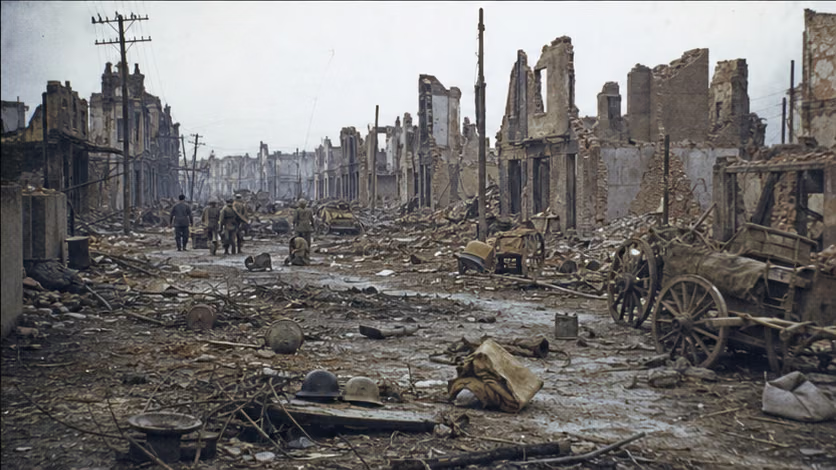
- ※ Civilians and prisoners: One month of artillery fire reduced Siping Street to ruins, and figures for civilian casualties and displacement remain to be checked; records of both sides raising grain locally and requisitioning civilian laborers remain to be checked. The handling of Democratic United Army personnel captured or left behind during the retreat, and the destination of Nationalist prisoners of war, both remain to be checked.
Aftermath
- Lin Biao withdrew north across the Songhua River to the Harbin line; the Central Committee of the Communist Party of China's policy of "yield the main roads and occupy the two flanks" was confirmed again--the cities to you, the countryside to me, and from then on the Northeast changed to a different way of fighting.
- On June 6, the second ceasefire order under Marshall's mediation took effect, and Nationalist troops stopped on the south bank of the Songhua River. The North Manchurian base areas won half a year of time to build.
- In summer 1947, the Northeast Democratic United Army counterattacked and fought Siping for the third time (the assault failed; Chen Mingren defended it); in March 1948, it fought Siping for the fourth time and finally took the city.
- The decision to hold Siping to the end received a long internal review within the CPC (see "Disputes and Sensitivities").
Accounts of Those Present
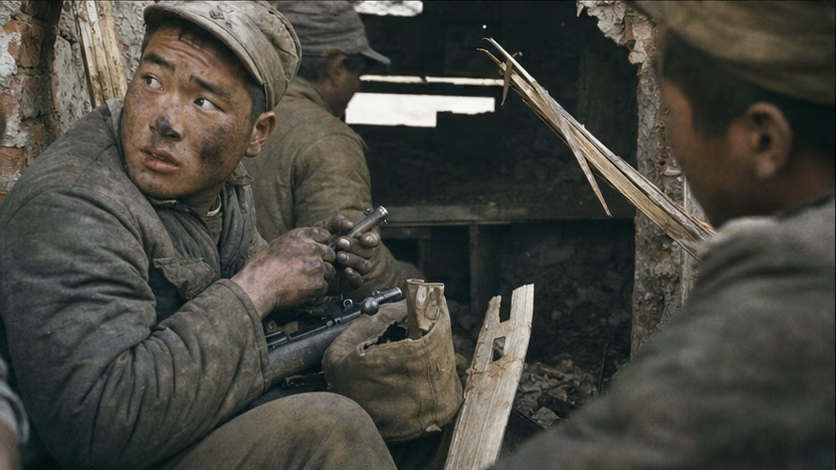
- Where the two armies came from: The attacking New First and New Sixth Armies were Chinese Army in India units fully trained with U.S. equipment in the India-Burma theater, victorious divisions from the northern Burma counteroffensive (see *North Burma Counteroffensive*). Among the defenders were veterans of the Anti-Japanese United Army who had survived fourteen years alone in the White Mountains and Black Waters (see *Northeast Volunteer Army and the Anti-Japanese United Army*), as well as sons of Shandong and Central China who had just come through the Pass. The Burmese jungle and the northeastern forests, two kinds of victory and survival, collided in the market streets of Siping.
- Huang Kecheng's telegram: Before the battle, Huang Kecheng strongly argued for giving up the big cities and first building base areas; after the battle, Mao Zedong told him, "Holding Siping was my decision." Huang Kecheng answered, "If it was your decision, then it was still wrong." (This dialogue comes from Huang Kecheng's own account; original wording remains to be checked--among CPC high-level reflections on the decision for this battle, none is more direct than this sentence.)
- The decision to withdraw: On the night Tazishan fell, Lin Biao ordered a general retreat without waiting for instructions (sequence of request for instructions remains to be checked). Holding was decided by the Central Committee; withdrawal was decided by the front itself. One hold and one withdrawal each occupied one form of "military necessity."
- Wang Jifang's defection: During the retreat, Wang Jifang, operations-section chief at Democratic United Army headquarters, defected to the enemy with documents, giving the Nationalist army knowledge of the retreat route and enabling a relentless pursuit (this story is widely circulated; details remain to be checked). In the disorderly retreat south of the Songhua River, this man is one layer of annotation.
- The last moment on Tazishan: The defenders on the height fought until the position changed hands (the unit designation of the troops defending Tazishan and the battle details are unrecorded).
The Ground
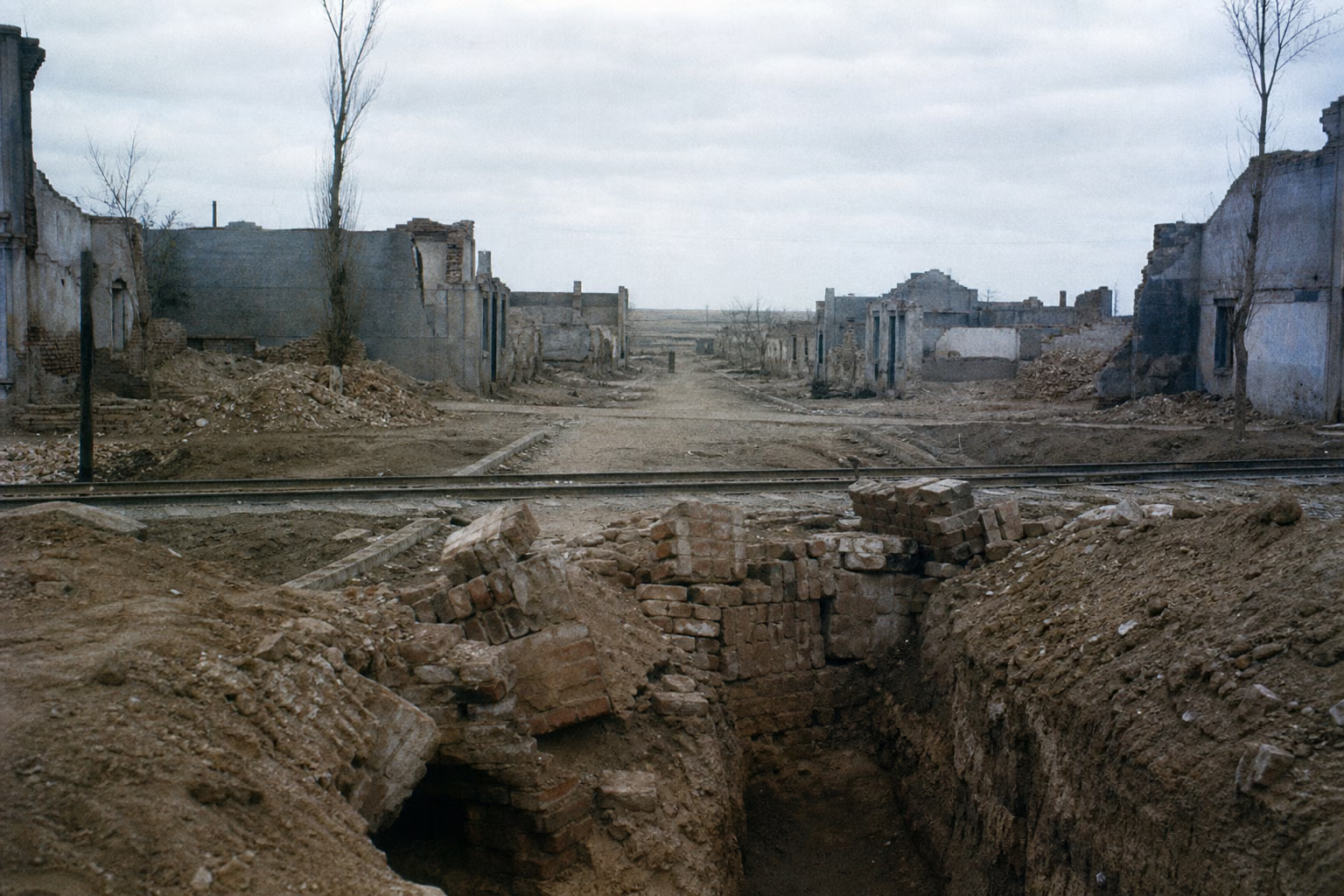
- The Songliao Plain was open and flat, with no natural obstacle to rely on; Siping Street itself was cut into eastern and western halves by the Chinese Changchun Railway, and the city proper was the battlefield.
- Sandaolinzi, Beishan, Tazishan: the few suburban heights around the city. Tazishan was the key to the whole city--once the height was lost, all of Siping lay under observation and fire.
- One month of standoff linked plain villages, trenches, and street barricades into a single line; the final retreat ran north along the railway corridor, and only after crossing the Songhua River could the troops be said to have left the battlefield.
- Spatial grammar: urban positional warfare on the plain--the defender relied on fortifications and night, the attacker on firepower and daylight.
How Each Side Records It
- CPC canon: the Defense of Siping delayed the Nationalist army's advance into the whole Northeast and won time for building the North Manchurian base areas; at the same time, it does not avoid the cost--the Party's internal review of the decision to "hold to the death" circulated together with Huang Kecheng's dialogue.
- Taiwan side: within the "pacification" narrative, it records the battle as the "great victory at Siping Street"; the U.S.-equipped crack troops under Du Yuming and Bai Chongxi (sent in May to inspect and supervise the front, details remain to be checked) broke the main Communist force. It was the high point of Nationalist military prestige in the Northeast, and one of the pages most often looked back on in narratives of "the subsequent reversal of the situation."
- Later generations and scholarship: three layers of debate stand side by side--the dispute over the political and military nature of the decision to hold (supporting mediation talks vs. consuming precious main forces); evaluation of the timing of the withdrawal ("decisive withdrawal" avoided encirclement); and the largest unresolved question, "to pursue or not to pursue" (see the next section).
Disputes and Sensitivities
- Reviewing the decision to hold to the death: Was using a weaker force to defend fortified positions and fight a positional war of attrition in line with the actual situation in the Northeast at the time? The dialogue between Huang Kecheng and Mao is one kind of evidence; the positive evaluation in military-history textbooks is another layer. The two evaluations coexist.
- The unresolved question of "to pursue or not to pursue": After the Nationalist army reached the Songhua River, it stopped. On Du Yuming's side there is the regretful statement that "with one more week we could have crossed the river and taken Harbin directly"; another account says Marshall pressured Chiang Kai-shek by threatening to halt aid, and the 6.6 ceasefire order bound the pursuit; a third says Nationalist manpower and logistics had already reached their limit, and the realities of river defense did not allow it. The Nationalist, Communist, Taiwan, and scholarly sides each hold their own view, and the dispute continues to this day (sources for each account remain to be checked).
- Who benefited from the ceasefire order: The Nationalist side lamented that "half a year of ceasefire let the Communist army grow"; the CPC side and scholarship also have the assessment that "the ceasefire order constrained the Nationalist army at the overall level." The two views coexist.
- The gap between the two sides' casualty statistical bases and the details of the Wang Jifang incident all remain to be checked against original archives.
Sources and Open Questions
Known main sources:
- *Huang Kecheng's Autobiographical Account* (first-hand material on review of the decision)
- *Selected Military Writings of Lin Biao* and compilations of telegrams exchanged by the Northeast Bureau and the Northeast Democratic United Army (Mao-Lin telegrams to be checked one by one)
- Du Yuming's "Personal Account of the Liaoshen Campaign" and other memoir articles in selected historical-materials collections (attacking-side perspective)
- Taiwan-side official "pacification" military-history volumes related to the Northeast (volumes to be checked)
Open questions: the original wording and source of the telegram "turn Siping Street into Madrid"; dates, full texts, and receipt sequence of telegrams between the Central Committee and the Northeast Bureau concerning holding Siping; Huang Kecheng's original telegram or memoir wording advocating giving up the big cities and first building base areas on the two flanks; the successive order of battle committed by both sides; materials showing each side's assessment, at the time of decision, of manpower and supply capacity on the Benxi and Siping lines; the sequence in which each key point changed hands; the unit designation defending Tazishan; the two casualty statistical bases and their boundaries; the scale of retreat losses and desertion; details of Wang Jifang's defection to the enemy; Bai Chongxi's movements in supervising the front; the source of the phrase "with one more week we could have crossed the river" (Du Yuming or Zheng Dongguo, unverified); the original wording of the Huang Kecheng dialogue; figures for Siping civilian casualties and displacement; records of both sides requisitioning grain and pulling civilian labor; and the Taiwan-side military histories' original characterization of this battle.
All images on this site are AI-generated depictions. They are not historical photographs, not primary sources, and do not depict any real individual.