Engagement Archive · Hainan Island Campaign
Half a year after Kinmen was lost, the Fourth Field Army crossed the thirty-nautical-mile Qiongzhou Strait in wooden sailing vessels and turned the situation around--by relying on two things Kinmen had lacked: 8,000 reception troops who had first slipped onto the island, and the Qiongya Column, which had fought guerrilla war there for twenty-three years. The whole island was liberated in early May; fifty days later, the Korean War began--the window history left for a sea crossing was only this wide.
Engagement Data
| Item | Content |
|---|---|
| Time | 1950.3.5 first covert crossings – 4.16 main-force crossing by assault – 5.1 whole island liberated |
| Place | Both shores of the Qiongzhou Strait; all of Hainan Island (Lingaojiao, Chengmai, Haikou, Yulin) |
| Part of | Chinese Civil War (for the overall war, see *Chinese Civil War · War Overview*) |
| Attacker | Fourth Field Army 15th Corps (Deng Hua): 40th Army and 43rd Army, about 100,000, plus Qiongya Column, 25,000 (Feng Baiju) |
| Defender | Xue Yue's 100,000-man "Boling Line": layered island-circumference defense (the name and reality of land-sea-air coordination remain to be checked) |
| Result | On 5.1 the whole island was liberated; about 70,000 defenders were annihilated or captured, and Xue Yue withdrew by sea to Taiwan with more than 25,000 men (composition basis remains to be checked) |
Belligerents
| Item | Attacker | Defender |
|---|---|---|
| Sea crossing | More than 2,100 wooden sailing vessels plus some motor-sail craft refitted as improvised "gunboats" (sails as the main force against warships--the battle-example details of sailing-vessel naval warfare are unrecorded) | 50 warships and more than 40 aircraft (figures vary by account) patrolled the strait |
| On the island | The Qiongya Column base area in the Wuzhi Mountains--reception grounds, guides, and intelligence were all in place: the card Kinmen did not have | A thousand-li defense line: defending everywhere meant being thin everywhere |
| Experience | The list of lessons from Kinmen was redeemed one by one: covert crossings to establish a landing base, boatman training, a dedicated tides-and-hydrography team, and echelon reception plans (a "sea-crossing school" prepared over five months) | Taiwan's wavering between drawing away ships and drawing away troops (the defend-or-withdraw dispute remains to be checked) |
Terrain and Conditions
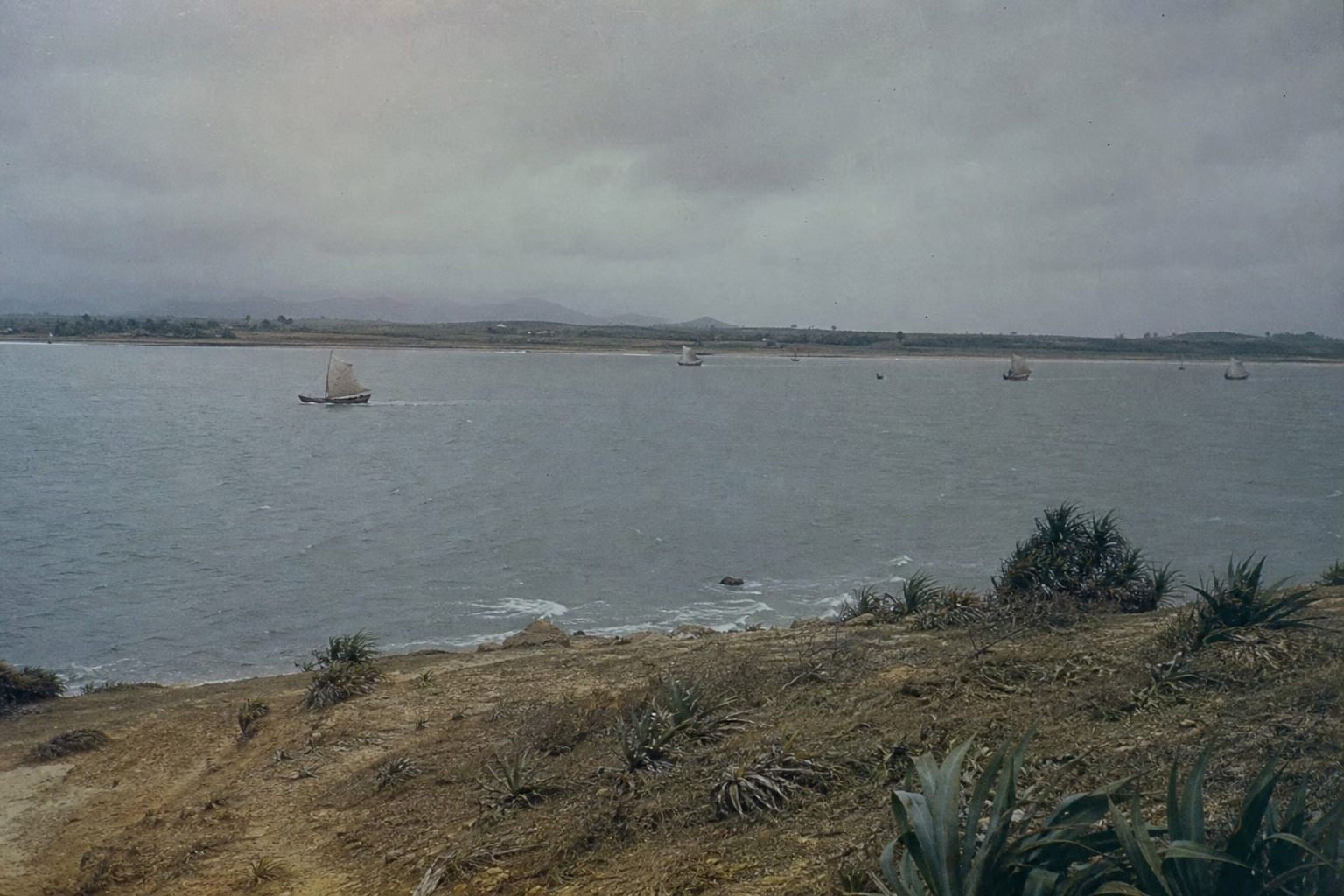
Qiongzhou Strait: 18-30 nautical miles wide, with complex monsoon and hydrographic conditions--the success or failure of the crossing first depended on the monsoon: the tail season of the northeast wind before Guyu was the last window for sailing vessels to cross southward (the meteorological decision line). Inland: since 1927 the Qiongya Column had kept "the red flag flying for twenty-three years" (the longest record of persistence in the whole series--the organizational history of island guerrilla warfare), controlling the Wuzhi Mountains base area and half the villages.
Why It Was Fought
Half a year after Kinmen was lost, the same problem was set before the Qiongzhou Strait--this time, the examination paper carried the comments from the previous attempt. At Guningtou, not one of the 9,000 men returned by boat; on October 29, Mao Zedong telegraphed the whole army to "ascertain the causes and take them as a warning" (notification telegram remains to be checked). The sea crossing changed from the closing move of "taking it in passing" into a subject that had to be learned from the beginning.
The reason for crossing had not changed: Hainan was the southern gateway. Unless Xue Yue's 100,000-man island-circumference "Boling Line" was removed, South China could not be closed out, and an operation across the Taiwan Strait could not even be discussed. What changed was the method. The list of lessons from Kinmen was redeemed here one by one: five months of preparation, boatman training, a dedicated tides-and-hydrography team, and echelon reception plans. The most important item was to send men onto the island first--from March 5 onward, four covert crossings in succession put about 8,000 men ashore, where they joined the Qiongya Column that had fought guerrilla war in the Wuzhi Mountains for twenty-three years. The card Kinmen did not have, Hainan had: there were one's own people inside the island.
Xue Yue's line looked complete: 50 warships and more than 40 aircraft (figures vary by account) patrolled the strait, and defenses ringed the island for a thousand li. But defending a thousand-li perimeter everywhere meant being thin everywhere; Taiwan was also drawing away ships and troops, and the dispute over whether to defend or withdraw remained unsettled (this point remains to be checked)--there was a gap between the name and the reality of the line.
What truly pressed on the timetable were two things that could not be seen. One was the monsoon: the tail season of the northeast wind before Guyu was the final window for sailing vessels to cross southward; miss it and one waited another year. The other was the international variable: Lin Biao and Deng Hua sent repeated telegrams urging that "earlier is better than later" (line of urging telegrams remains to be checked). The later calendar annotated that urgency: on May 1 the whole island was liberated; on June 25 the Korean War began, and the Seventh Fleet soon entered the Taiwan Strait--two months later, Hainan might have become a second Taiwan.
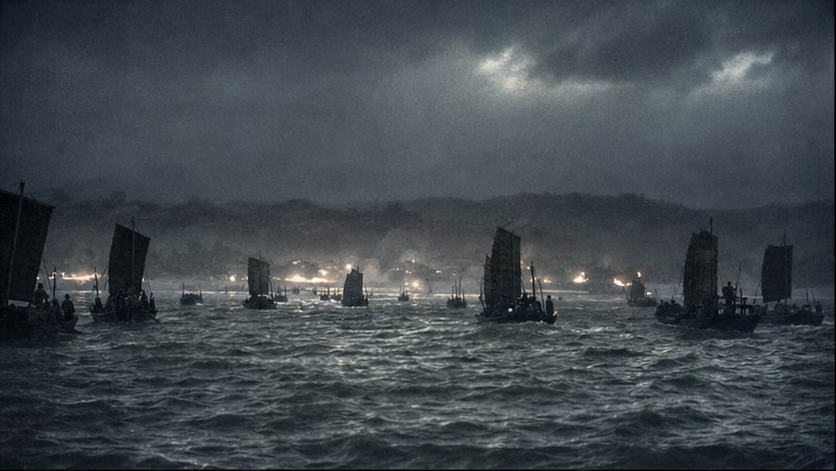
On the night of April 16, the 40th Army and 43rd Army crossed by assault in 350 sailing vessels. This time, there were lights on the beachhead.
Course of the Engagement
| Phase | Time | Key Points |
|---|---|---|
| Two batches of covert crossings | 3.5-3.31 | Four small-scale covert crossings in succession, totaling about 8,000 men (rising from one battalion to one reinforced regiment--details of each wave unrecorded), succeeded in landing and joining the Qiongya Column--pre-positioning a division inside the enemy-held island: the first lesson from Kinmen redeemed |
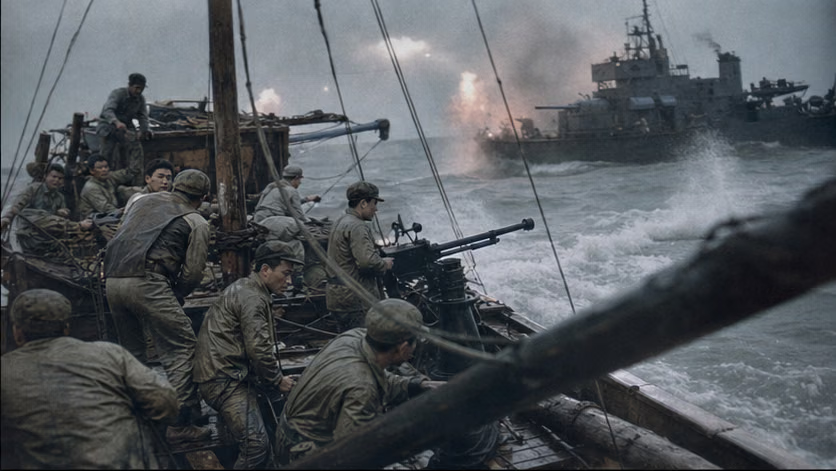
| Main-force crossing by assault | Night of 4.16 | Two armies crossed together: 40th Army toward Lingaojiao, 43rd Army toward Chengmai--a night-sailing formation of 350 sailing vessels; night battle in the strait: escorting improvised gunboats engaged Nationalist vessels (a battle example of sailing vessels surrounding and attacking warships--the claim that the flagship *Taikang* was damaged remains to be checked for evidentiary level) |
| Beach seizure and junction | 4.17 | The dawn landing succeeded; reception troops and the Qiongya Column worked from inside and outside to tear open the line--the "Boling Line" failed in a single night |
| Pursuit and annihilation | 4.17-30 | Decisive fighting at Meiting (4.19-22, in the Meiting area of Chengmai, encirclement and destruction of the defenders' main counterattacking force--the largest land battle of this campaign, details unrecorded); Haikou taken on 4.23; defenders withdrew south toward Yulin and Basuo to board ships |
| Closing phase | 4.30-5.1 | Pursuit reached Tianya Haijiao; on 5.1 the whole island was liberated--the calendar coincidence of "May Day" became the commemorative date |
Casualties and Losses
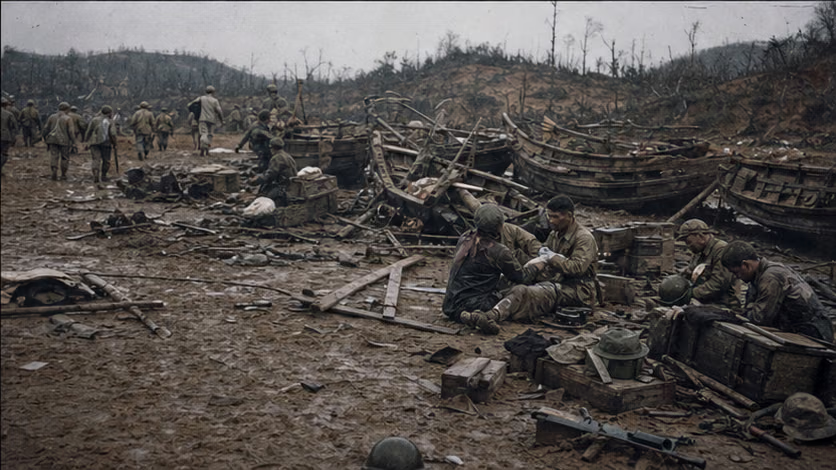
- Attacker: more than 4,500 casualties in the sea crossing and land fighting (figures vary by account); casualties among sea-crossing boatmen ※ (rosters remain to be checked).
- Defender: about 70,000 annihilated or captured, and more than 25,000 withdrawn to Taiwan (composition remains to be checked).
- ※ Civilians: the fighting was brief, and its spread inside the island was relatively light; the sacrifices and popular costs across the Qiongya Column's twenty-three years (the long-term ledger is cross-visible along this line).
Aftermath
- The southern gateway closed; the Korean War broke out fifty days later--Hainan became the lone case of "completion before the window closed" (a positive and negative paired lesson with Kinmen: the two campaigns must be read together to make a complete study of sea crossing).
- Xue Yue withdrew to Taiwan (the civil-war final chapter of the War of Resistance "god of war"--a same-person comparison between the three victories at Changsha and the loss of Hainan; see the Changsha campaign articles).
- The historical position of the Qiongya Column (the commendation of Feng Baiju's "twenty-three years of fighting alone on the island" and his later circumstances--one marking of the rise-and-fall line after 1957 remains to be checked: another "long tail of the persisters").
- The experience of crossing by wooden sailing vessels was immediately frozen--after the operation against Taiwan was postponed indefinitely, this set of "sailing-vessel sea-crossing studies" became out of print (one fragment in military history).
Accounts of Those Present
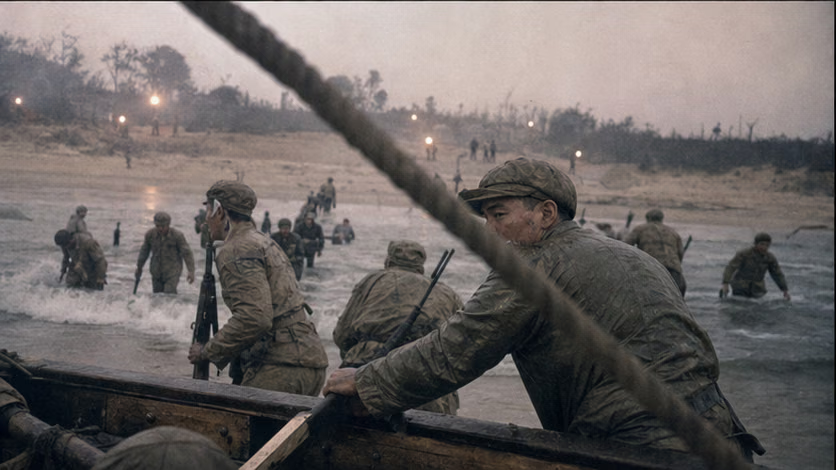
- Feng Baiju: the general who had not left Hainan for twenty-three years--the night he received the main force onto the island was a night for which he had waited half a life (his personal rise-and-fall line).
- The boat masters: fishermen and boatmen of the Qiongzhou Strait steered the night crossing--a comparison with the fate of the Kinmen boatmen (this time most came back--the same kind of people, two kinds of fate in two sea crossings).
- The lights at Lingaojiao: the contact fires lit on the beachhead by the reception troops (signal details unrecorded)--the light Kinmen lacked was lit on Hainan.
- Xue Yue's last battle: from Wanjialing to the Boling Line--the civil-war curtain call of a famous War of Resistance general (one long-tail note on his withdrawal to Taiwan and his living to 103).
The Ground
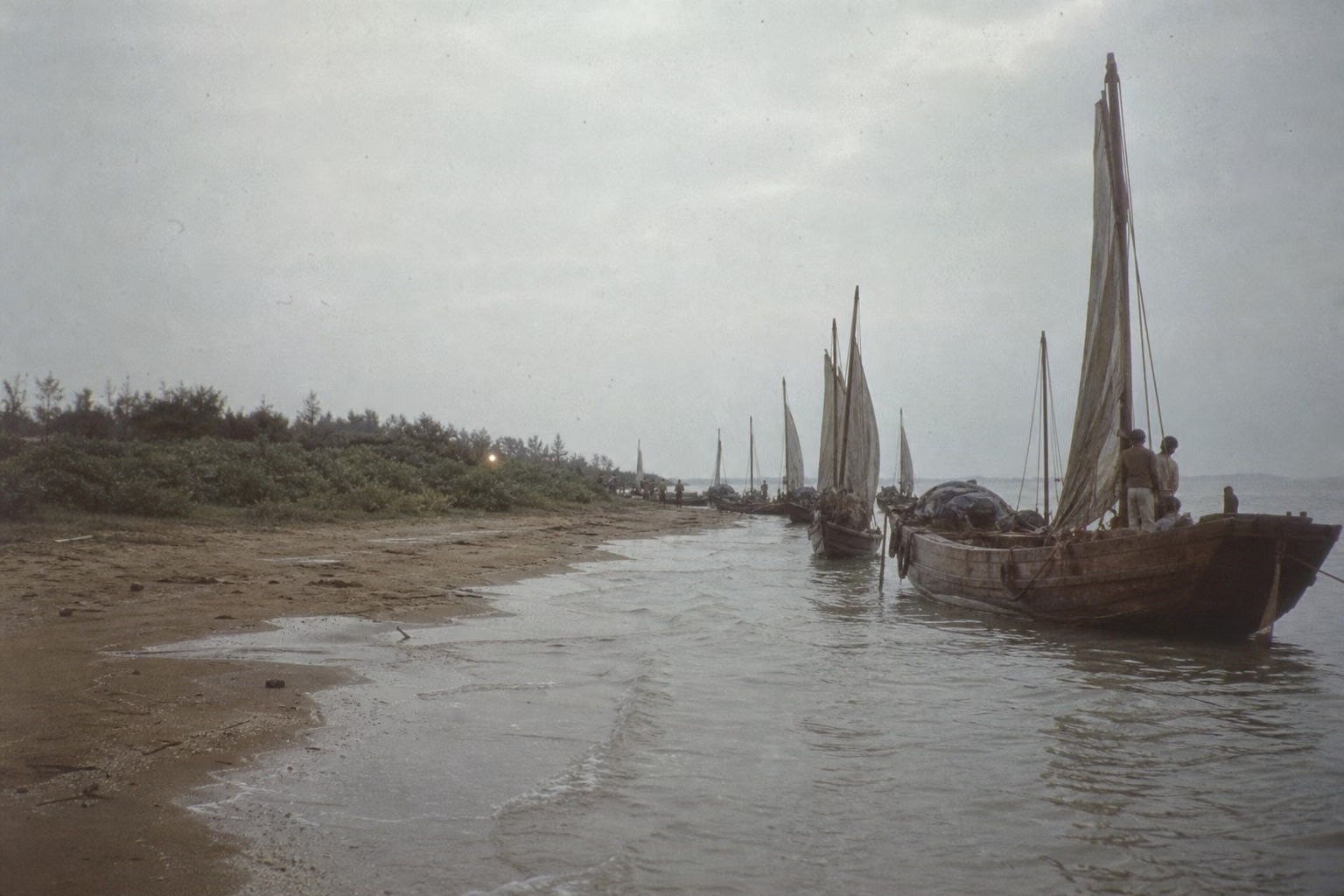
- A thirty-nautical-mile monsoon strait: the sea-crossing window mechanism of wind direction, tides, and moonlight (in contrast with Kinmen's ten kilometers--the wider sea was crossed after all: the variable lay in organization, not distance, this verdict).
- The three-part sea-crossing structure of covert crossing, reception, and crossing by assault: the spatial design of pre-positioned reception grounds (the positive textbook for sea-crossing operations in this series).
- A double-layered battlefield inside the island: beachhead front and Wuzhi Mountains base area as exterior and interior lines (the spatial revolution of "there are one's own people inside the island").
- Night-sailing formations of sailing vessels: the spatial swan song of sail-era tactics in 1950.
How Each Side Records It
- CPC canon: a successful model of sea-crossing operations; the Qiongya Column narrative of "the red flag never falling for twenty-three years."
- Taiwan side: review of the abandonment of Hainan (the defend-or-withdraw dispute and the strategic choice to "preserve Taiwan and abandon Qiong"--in that narrative Hainan was an "active redeployment," each side recording it in its own terms).
- Hainan local memory: liberation commemoration and the local genealogy of Qiongya Column memory (line of Lingaojiao commemorative facilities remains to be checked).
Disputes and Sensitivities
- The two cross-strait accounts of the defender's "active withdrawal" versus "being routed"--placed side by side.
- The marking level for Feng Baiju's later rise-and-fall line.
- The evidentiary level of the battle example in which sailing vessels damaged warships; casualty bases.
Sources and Open Questions
Sources: the Hainan section of *War History of the Fourth Field Army*; relevant telegrams and documents of Deng Hua; materials on Feng Baiju and the Qiongya Column; Taiwan-side review literature on the defense of Hainan.
Open questions: number and wave details of sea-crossing vessels; details of the decisive fighting at Meiting; casualty composition on both sides; the *Taikang* battle example; Feng Baiju line; details of Xue Yue's withdrawal to Taiwan.
All images on this site are AI-generated depictions. They are not historical photographs, not primary sources, and do not depict any real individual.