Engagement Archive · Battle of Xinbao'an
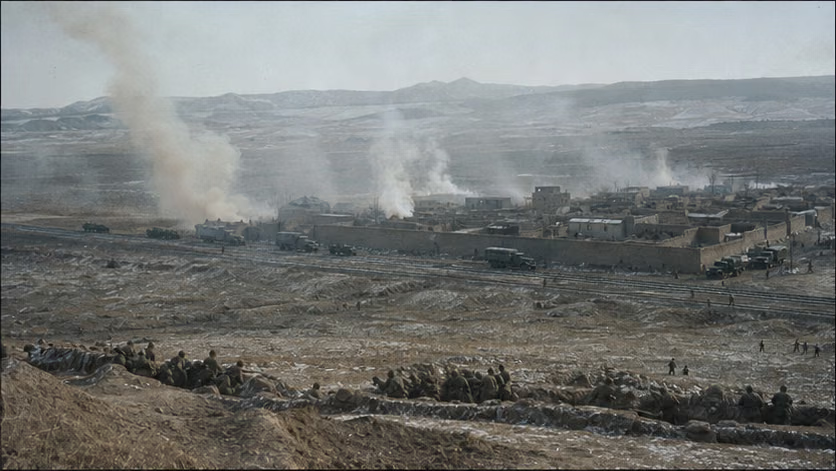
More than 10,000 men of Fu Zuoyi's founding elite, the 35th Army, were intercepted on their way back to relieve Beiping and pinned inside a town no larger than a tack; those surrounding them endured 14 days without attacking. It took only 1 day to destroy them, but the 14 days of "not attacking" before that day were the live hinge of the entire Pingjin situation.
Engagement Data
| Item | Details |
|---|---|
| Time | 1948.12.5 encirclement and interception – 12.22 fall of the town, 17 days in all (including 1 day of general assault) |
| Place | Xinbao'an, Chahar Province (today northwest of Huailai County, Hebei, on the Xuanhua–Huailai section of the Beiping–Suiyuan Railway) |
| War / campaign | Chinese Civil War · western front of the Pingjin Campaign (for the larger situation, see *Pingjin Campaign · Overview*) |
| Defending side | Nationalist 35th Army (army commander Guo Jingyun), comprising the 101st and 267th Divisions, more than 10,000 men |
| Attacking side | Mainly the Second Corps of the North China Military Region (Yang Dezhi, Luo Ruiqing, Geng Biao); the advance corps of the Northeast Field Army (Cheng Zihua) intercepted and blocked relief forces |
| Result | The town was taken in 1 day on 12.22; the 35th Army was annihilated; Guo Jingyun took his own life |
Belligerents
| Item | Defending side | Attacking side |
|---|---|---|
| Strength | More than 10,000 men (2 divisions plus army headquarters troops; basis of composition unverified) | 3 columns of the Yang-Luo-Geng corps encircled and assaulted the town; part of the Northeast Field Army advance force intercepted and blocked relief forces; several times the defenders' strength (specific order of battle unverified) |
| Mobility | A motorized army moving west to relieve Zhangjiakou in more than 400 trucks (vehicle count unverified) -- the Fu system's only real capital; once inside the town, the convoy became a burden | Rapid forced marches on foot to seize the interception line, outrunning motor vehicles by footwork |
| Firepower | Elite Fu-system equipment, with army organic artillery complete | After the Northeast Field Army entered the Pass, its artillery already held an advantage over defenders along the Beiping–Suiyuan Railway (attached-unit details unrecorded) |
| Air | Beiping sent aircraft to airdrop supplies (sorties and effect unverified) | — |
| External aid | The 104th Army (An Chunshan), moving west from Huailai, was blocked -- the defenders' last hope | The division of forces between blocking relief and encircling the town succeeded at the same time |
Terrain and Conditions
(For the larger situation at the end of 1948 -- Liaoshen already decided, the Northeast Field Army entering the Pass, and the Fu group being held in North China -- see *Pingjin Campaign · Overview*. Here the focus is only the western section of the Beiping–Suiyuan Railway and this small town.)
The Beiping–Suiyuan Railway was Fu Zuoyi's lifeline. West of Zhangjiakou lay his old Suiyuan base; eastward it led to Beiping. This line was both Fu's supply route and his "road home." The 35th Army was the hardest piece on that road: Fu Zuoyi's founding force, one he could not bear to be without wherever he went.
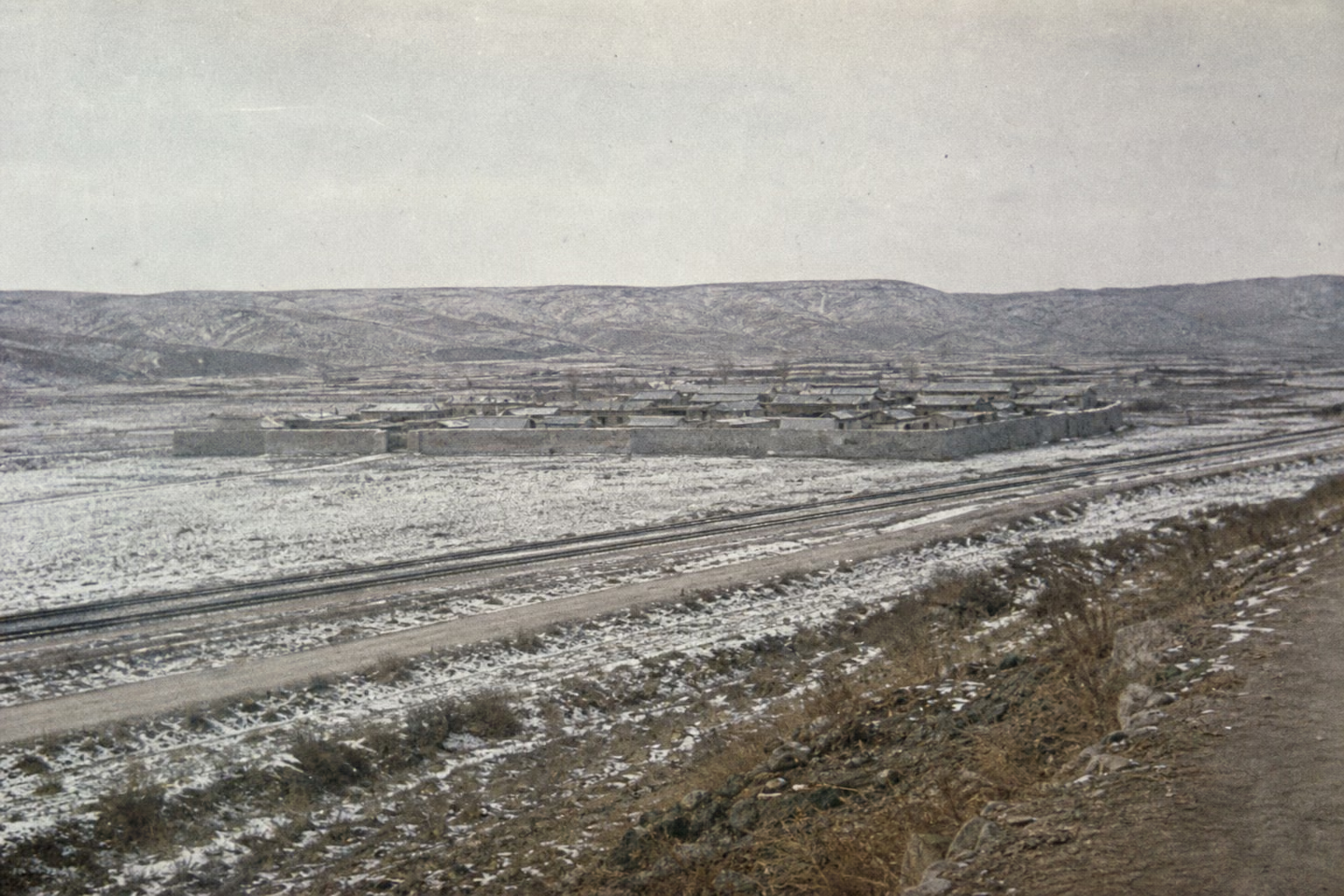
The town: Xinbao'an was a small station town on the Beiping–Suiyuan railway and highway, with low walls and an area under 1 square kilometer (unverified), and several thousand residents (unverified). In the basin below the dam country in December, temperatures hovered around -20°C (temperature records unverified) -- besiegers and besieged were inside the same winter.
Why It Was Fought
On the day after the Huaihai encirclement closed at Chenguanzhuang, the first knot in North China also tightened. Two decisive campaigns were separated by 1,000 li, but they were tightening the same board. After Liaoshen ended, the Northeast Field Army's 800,000 troops entered the Pass early and covertly, without waiting to rest and refit. Fu Zuoyi's 520,000 men were strung out in a line along 500 li of the Beiping–Suiyuan and Beiping–Tianjin railways, wavering among 3 choices: hold, negotiate, or withdraw. To withdraw west meant the old base in Suiyuan; to withdraw south meant the Yangtze defense Chiang Kai-shek wanted; to remain meant becoming an isolated force. The Central Military Commission's general policy had only 1 sentence: hold the Fu group in North China and settle it in place. These 520,000 men could not be allowed to board ships southward and reinforce the Yangtze defense, nor could they be allowed to shrink back into Suiyuan.
On the western front, the method was to seize the western wing first. The Third Corps of North China besieged Zhangjiakou, but what it was really baiting was the 35th Army: Fu Zuoyi could not give up Zhangjiakou, his road home, and still less could he give up this founding force. Once Zhangjiakou came under pressure, the 35th Army indeed set out west by truck in full strength.
On December 5, the Northeast Field Army advance corps took Miyun (details unrecorded), and its spearhead pointed toward Beiping's northern suburbs. Fu Zuoyi was startled and urgently ordered the 35th Army to turn back east to relieve Beiping. This back-and-forth movement delivered the Fu system's hardest piece into the pocket: on the return route, this motorized army traveling by truck was intercepted at the small station town of Xinbao'an on the Beiping–Suiyuan Railway by North China troops who had forced-marched on foot and outrun the vehicles with their own legs. On the night the army entered the town to bivouac, staff officers reportedly proposed continuing east through the night, while army commander Guo Jingyun decided to leave at daybreak (record unverified). The difference of 1 night was enough: the Yang-Luo-Geng main force arrived and the encirclement closed.
"To surround the 35th Army is to seize Fu Zuoyi" -- this sentence from the Central Military Commission pointed to the key to the entire method of the battle. This force was Fu Zuoyi's lifeblood. Pin it down, and Fu could no longer leave; only then could he be brought to the table. As for surrounding it without attacking for 14 days, that was already a calculation made for Beiping.
Course of the Engagement
| Phase | Time | Key points |
|---|---|---|
| Baiting | 11.29–12.4 | The Third Corps of North China besieged Zhangjiakou; Fu sent the 35th Army west by truck to relieve it |
| Turning back | Around 12.5 | The Northeast Field Army advance corps took Miyun, and Fu urgently ordered the 35th Army to return east to Beiping; the Central Military Commission repeatedly sent telegrams sternly ordering interception and blocking (the telegram exchanges over Yang-Luo-Geng's forced march north and the commission's severe warnings about the risk of letting the force "run away" remain unverified) |
| Closing the encirclement | 12.5–8 | The 35th Army was intercepted on its eastward return and entered Xinbao'an to bivouac; the Yang-Luo-Geng main force arrived and completed the encirclement (the exact closing date and the sequence in which each column reached position remain unverified) |
| Surrounding without attacking | 12.8–21 | The Central Military Commission strictly ordered 14 days of "surrounding without attacking" -- several attempted attacks were stopped (telegram chain unverified); the 104th Army tried twice to relieve from the west, but was blocked between Huailai and Xinbao'an, at the closest point within earshot of the guns yet unable to join forces (distance and course of events unverified) |
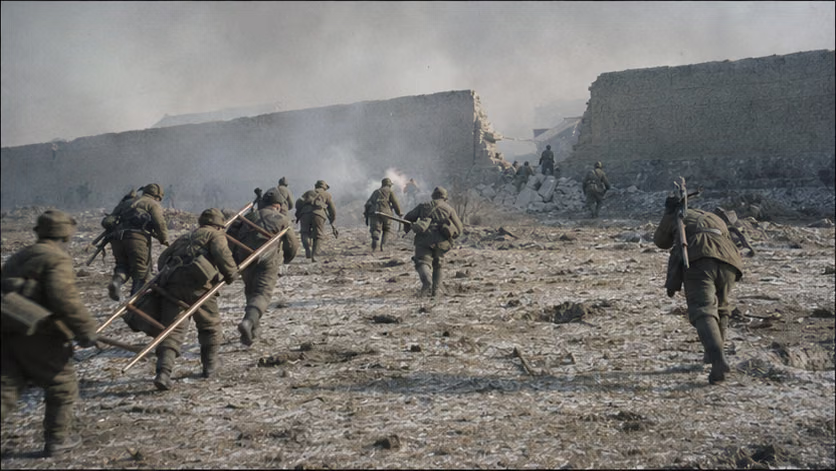
| General assault | 12.22 | After artillery fire at dawn, the general assault began and the town was taken that day; Guo Jingyun took his own life at headquarters, and more than 10,000 defenders were destroyed |
Casualties and Losses
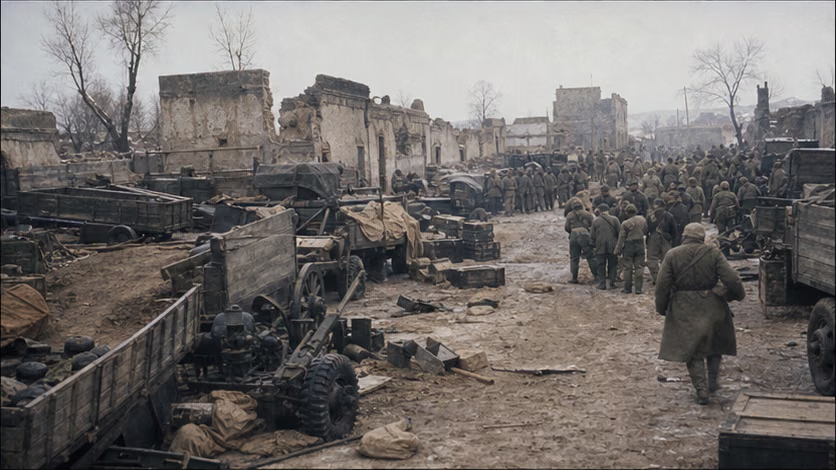
- Defending side: the 35th Army was annihilated, with killed, wounded, and captured totaling about 16,000 (figures vary by account); army commander Guo Jingyun took his own life, and many senior officers were captured (list unverified).
- Attacking side: several thousand casualties (counting basis and statistical boundary unverified) -- within the 17 days, most were paid on the 1 day of general assault.
- ※ Civilians: several thousand residents and more than 10,000 defenders were trapped together in the town for 17 days, with food and fuel exhausted and civilian houses requisitioned and dismantled (specific records unverified); street fighting on the day the town fell was brief but dense, and civilian casualties have no separate count -- the residents' account for this small town is the thinnest part of the surviving record.
- Equipment: most trucks and artillery were captured intact (figure disputed) -- the Fu system's most valuable household assets changed hands as they stood.
Aftermath
- On 12.23–24, the Zhangjiakou defenders attempted to break out, were annihilated, and the city was taken (see *Pingjin Campaign · Overview*): by this point the Fu system's main force had been spent, the Beiping–Suiyuan Railway was cut, and Fu Zuoyi no longer had the capital to withdraw west to Suiyuan.
- The destruction of the 35th Army directly broke Fu Zuoyi's will to fight. Once his founding force was gone, the structure of bargaining chips at the negotiating table changed with it (for the military background of the Beiping negotiations, cross-reference the Beiping section of the overview).
- "Surrounding without attacking" became a model of patience in the Pingjin method. At the same time, in Huaihai, Du Yuming's group at Chenguanzhuang was also being "surrounded without attacking," and the 2 great campaigns worked in linkage (see *Huaihai Campaign · Overview*). Compared with the Xiang River: there the breakout force traded lives for time; here the encircling force traded time for the whole situation. The side that waited won.
- The 104th Army was pursued and annihilated while withdrawing from the direction of Huailai (course of events unverified); one account says army commander An Chunshan escaped in disguise (unverified here).
Accounts of Those Present
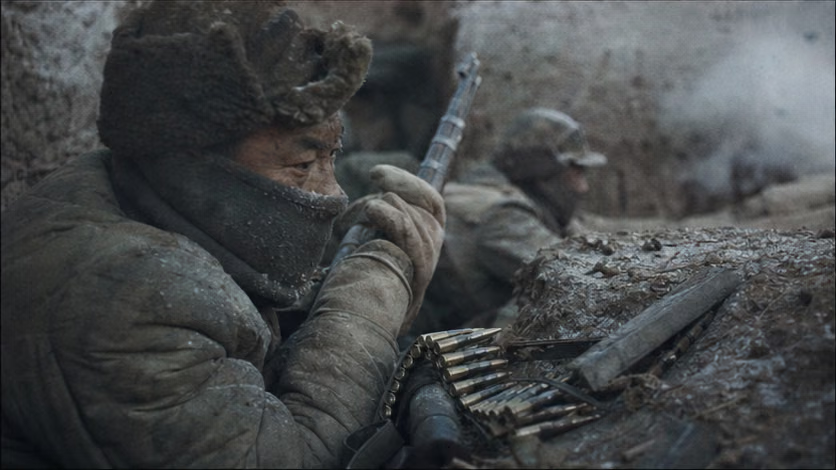
- One night of bivouac: on the night of 12.7, the 35th Army reached Xinbao'an; staff officers proposed moving east through the night, but Guo Jingyun decided to bivouac (record unverified) -- 1 night in a small town decided the fate of an army.
- The knot over the radio: 104th Army commander An Chunshan came under orders to make contact; the 2 armies coordinated a breakout over the radio, but Guo and An would not yield to each other, and the quarrel ended badly (source and details unverified) -- the knot inside the Nationalist forces showed itself at the edge of the siege.
- Farewell: before the town fell, Guo Jingyun exchanged farewell communications with Fu Zuoyi (existence and original text unverified), then took his own life at headquarters. Taiwan-side accounts record this as "dying for a righteous cause."
- Waiting: attacking troops dug works and stood by in subzero cold for 14 days, requesting battle several times only to be stopped by Central Military Commission telegrams (telegram chain unverified) -- "not attacking was for the larger board"; patience itself was combat.
- ※ People inside the town: more than 10,000 soldiers and several thousand residents were crowded for 17 days inside a town of under 1 square kilometer. The days of surrounding without attacking were, for those inside, an ordeal, not a rest (specific records of civilian conditions unverified).
The Ground
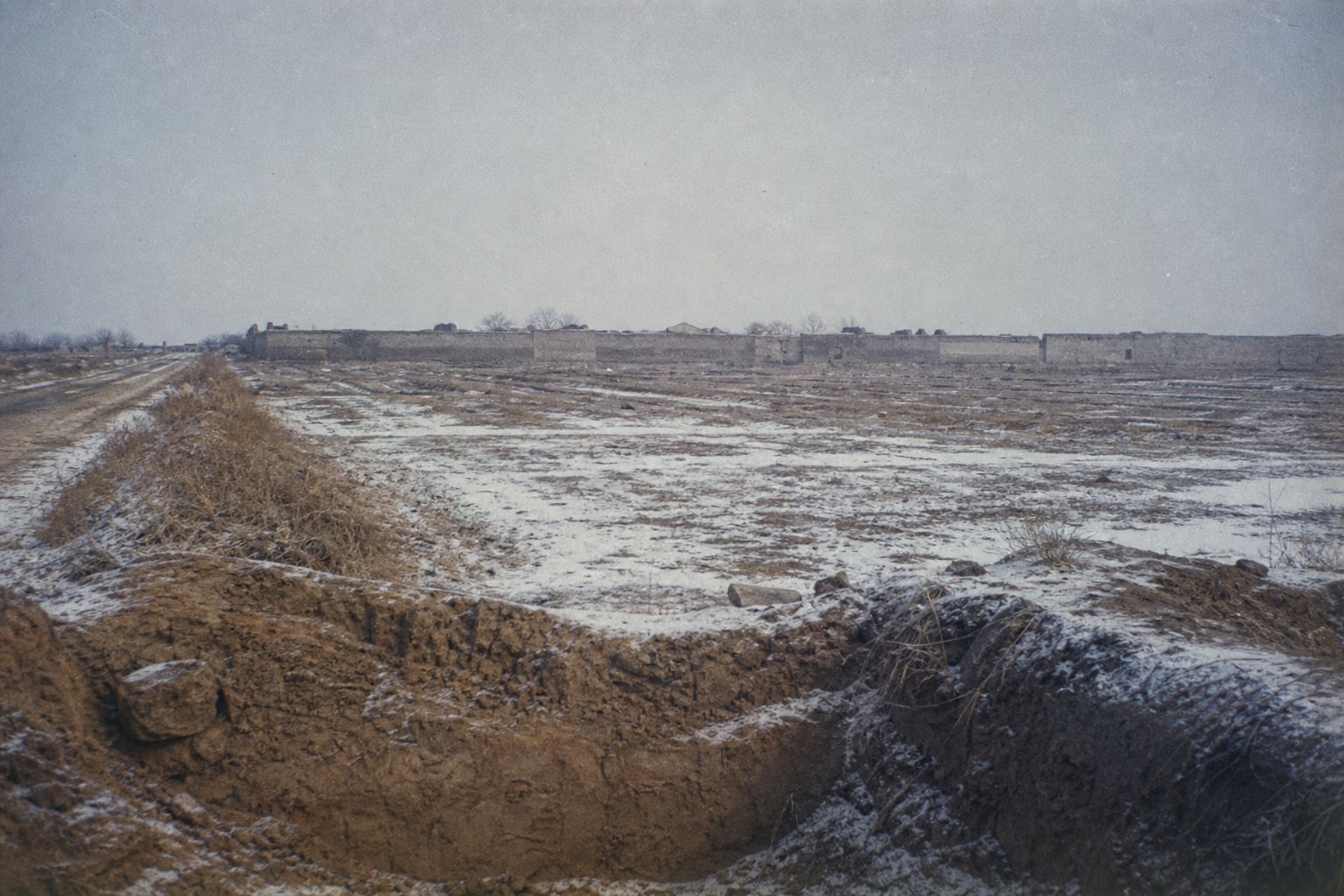
- A town "the size of a tack": low walls and under 1 square kilometer of ground, yet it pinned a motorized army in place for 17 days.
- Open ground around the town: favorable for the encircling side's fire blockade and offering no cover for a breakout. The 35th Army's truck columns could neither deploy inside the town nor break out from it.
- Sense of distance: the 104th Army fought to within several li, close enough to hear the guns, yet could not join forces (unverified here) -- the spatial "one step away" gives this battle its heaviest battlefield contrast.
- The Beiping–Suiyuan Railway itself was the spatial protagonist: Zhangjiakou--Xinbao'an--Huailai--Beiping, Fu Zuoyi's lifeline, was pinned at a single point, and the whole line was paralyzed.
How Each Side Records It
- CCP canon: a key battle in "seizing the western wing" of the Pingjin Campaign, a model of strategic patience in "surrounding without attacking," and the representative battle of the Yang-Luo-Geng corps.
- Taiwan side: *War History of the Campaign to Suppress the Rebellion* records the loss of the 35th Army as one of the turning points in the North China military situation, and places Guo Jingyun into a martyr narrative as having "died for a righteous cause" (specific wording unverified).
- Fu-system memory: the destruction of the founding force was a blow to Fu Zuoyi and formed part of the psychological background to his move toward negotiation. Both sides' memoirs are sparing about this layer of the account (source unverified).
Disputes and Sensitivities
- Guo Jingyun's death: the gap between the fact of suicide and the Taiwan-side characterization of "dying for a righteous cause"; the authenticity of the farewell telegram remains unverified.
- The interception responsibility and stern Central Military Commission telegrams behind "almost letting the 35th Army run away" -- this bears on the evaluation of the Yang-Luo-Geng corps; the original telegram text remains unverified and must be quoted cautiously.
- Whether the Guo-An discord was amplified by the victor's narrative (to be finalized only after reading both sides' materials against each other).
- Casualty figures vary in their basis, and sources must be marked when cited. ※ Records of civilian conditions inside the town are weak; if they enter the narrative, they require separate verification and must not be filled in by conjecture.
Sources and Open Questions
Known major sources:
- Memoirs of Yang Dezhi and Geng Biao (attacking-side commanders)
- *Pingjin Campaign* (series volume)
- Relevant chapters in Nie Rongzhen's memoirs
- Taiwan-side *War History of the Campaign to Suppress the Rebellion*, Pingjin section
- Memoirs and biographical materials related to Fu Zuoyi
Open questions: the exact date when the encirclement closed and the sequence in which each column reached position; the original telegram chain for "surrounding without attacking" and repeated halts to proposed attacks; the timing linkage between the taking of Miyun and the 35th Army's eastward return; the 35th Army's force composition and number of trucks; the distance, course, and eventual destruction of the 104th Army's westward relief attempt; the account that An Chunshan escaped; whether Guo Jingyun's farewell telegram existed, and its original text if it did; the source for the record of the Guo-An radio quarrel; casualty figures on both sides; the duration of the general assault; equipment capture figures; records of civilian conditions inside the town.
All images on this site are AI-generated depictions. They are not historical photographs, not primary sources, and do not depict any real individual.