Engagement Archive · Battle of Menglianggu
The foremost of the Nationalist Army's five elite main forces, the Reorganized 74th Division, advanced rashly into the Yimeng Mountains, and Su Yu, from the front of the battle line, set out to "take a senior general's head from amid a million troops": in five days, the division's 32,000 men, together with division commander Zhang Lingfu, were annihilated at Menglianggu. The spearhead of the focused offensive was snapped off on the spot; the "iron army of resistance against Japan" from Shanggao eight years earlier died on a hilltop in civil war.
Engagement Data
| Item | Content |
|---|---|
| Time | 1947.5.13 – 16 (outer maneuvering began on 5.11) |
| Place | Menglianggu, Mengyin, Shandong (Yimeng Mountains), and the outer areas around Duozhuang and Tanbu |
| Part of | Chinese Civil War (for the larger picture, see *Chinese Civil War · Overview*) |
| Attacker | East China Field Army (Chen Yi, Su Yu), about 270,000 men in nine columns: five columns encircled the gu, four columns blocked reinforcements |
| Defender | Nationalist Army Reorganized 74th Division (division commander Zhang Lingfu), 32,000 men, plus the neighboring Reorganized 25th and 83rd Divisions on left and right and reinforcements from ten reorganized divisions on the outer line |
| Result | On the afternoon of 5.16 the Reorganized 74th Division was annihilated; Zhang Lingfu was killed (two accounts of his death are given in the disputes section); the Nationalist Army's focused offensive in Shandong was abruptly checked |
Belligerents
| Item | East China Field Army | Reorganized 74th Division |
|---|---|---|
| Strength | Locally five-to-one around the gu, while using 40 percent of its strength to block reinforcements from ten divisions | A fully American-equipped elite formation--the bloodline of the 74th Army in the War of Resistance (Shanggao, Changde, Xuefeng Mountains--the same unit's two fates in two wars; see the related entries) |
| Terrain | The old Yimeng base area: civilian laborers, stretchers, and intelligence all flowed toward the East China Field Army | Heavy equipment on a stone mountain: mountain guns could not get up, and water sources lay below--American equipment became a liability on a bare granite hill |
| Situation | "Taking a senior general's head from amid a million troops" (Su Yu's statement of resolve remains unverified)--digging the enemy spearhead out from the front of a heavily massed enemy group | Advanced rashly, protruding by one day's march, and a wedge was driven into the gap between neighboring armies |
Terrain and Conditions
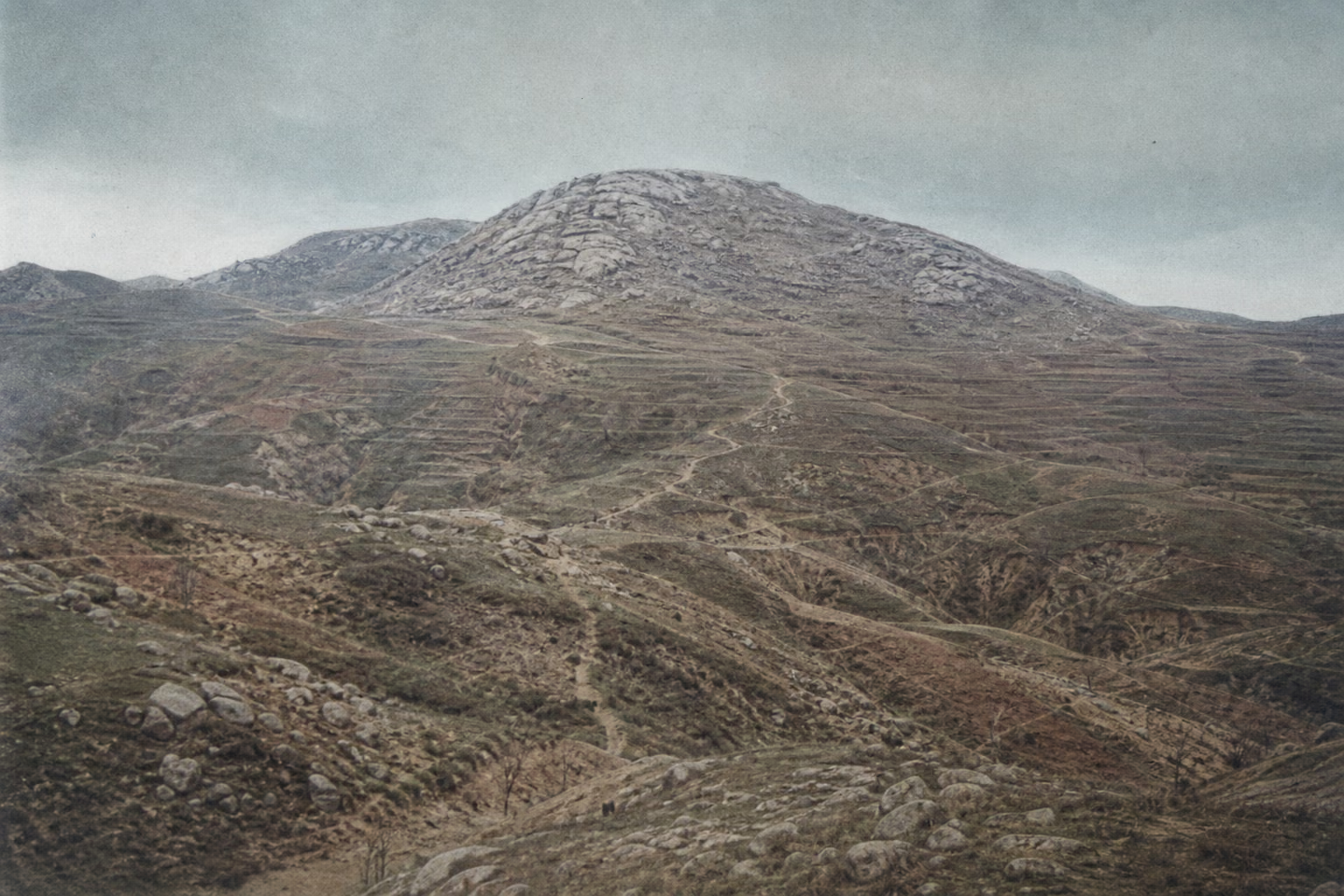
In spring 1947 the Nationalist Army's "focused offensive" in Shandong massed 24 reorganized divisions and 450,000 men in a dense forward push, while the East China Field Army "played the dragon lantern," twisting east and west for more than a month without finding a battle opportunity. The Yimeng Mountains were an old base area--on every hilltop there were guides, and in every ravine there were stretcher bearers: the rural society after land reform was the East China Field Army's second military map (the figure for civilian front support remains disputed).
Why It Was Fought
In the loess gullies of northern Shaanxi, 26,000 men were dragging Hu Zongnan's 250,000 in circles; at the other end of the focused offensive, the pressure fell on Shandong. In spring 1947, taking the lesson from Laiwu, where separate advances had been destroyed, the Nationalist Army shifted to a dense forward push by 24 reorganized divisions, about 450,000 men--the divisions drew close together and advanced abreast and slowly, leaving no gaps to be divided. The East China Field Army's nine columns twisted east and west in the Yimeng Mountains for more than a month, "playing the dragon lantern," and still could not find an opportunity to strike: one side was urgently seeking an annihilation battle, the other steadily pressing forward, and the mountains of central Shandong became a field of opposed calculations.
In May, the battle opportunity was offered by the other side. Tang Enbo's corps group, eager for credit, ordered the Reorganized 74th Division to serve as the spearhead and drive straight at Tanbu. This was the fully American-equipped elite unit, the bloodline of the 74th Army in the War of Resistance--Shanggao, Changde, and the Xuefeng Mountains were all in its battle history; division commander Zhang Lingfu, relying on its strength, pushed out beyond the neighboring Reorganized 25th Division and Reorganized 83rd Division on left and right by one day's march, exposing gaps at the junctions. The thing most taboo in a dense forward push was for someone to stick out; the elite unit did exactly that, and at the very front.
Su Yu's answer went against convention. For a year, the East China Field Army's pattern had been "strike the weak enemy first," but this time he resolved to tear out the heart: using five columns to wedge into the enemy line from the front, cut the Reorganized 74th Division off from its neighbors on left and right, and at the same time use four columns to block reinforcements from ten reorganized divisions on the outer line--"taking a senior general's head from amid a million troops" (Su Yu's statement of resolve remains unverified), a blow aimed precisely at "you did not think I would dare." Half the basis for daring lay in the mountains: Yimeng was an old base area, with guides on every hilltop and stretcher bearers in every ravine, and the rural society after land reform was the East China Field Army's second military map. Another account belongs to a different level: Zhang Lingfu "turned the enemy's plan to his own use, held Menglianggu, made himself the bait, and let the center bloom"--the true motive behind his decision is left with two accounts in parallel (the active ascent account / the forced ascent account, unverified).
On the night of May 13, the attack began: columns on both wings wedged into the junctions from the front, while the Sixth Column made a flying strike on Duozhuang, cutting the Reorganized 74th Division's retreat route.
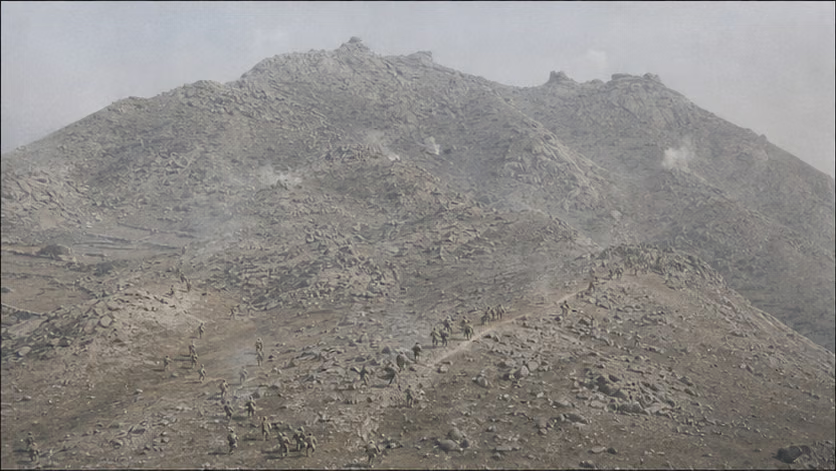
Menglianggu was a bare granite mountain. No soil, no woods, no water.
Course of the Engagement
| Phase | Time | Key Points |
|---|---|---|
| Insertion and severance | Night of 5.13 | The First and Eighth Columns wedged in from the two wings, while the Sixth Column made a flying strike on Duozhuang to cut the retreat route (the Sixth Column's concealed forced-march line from southern Shandong remains unverified)--the junction between the Reorganized 74th Division and the Reorganized 25th Division and Reorganized 83rd Division was torn open |
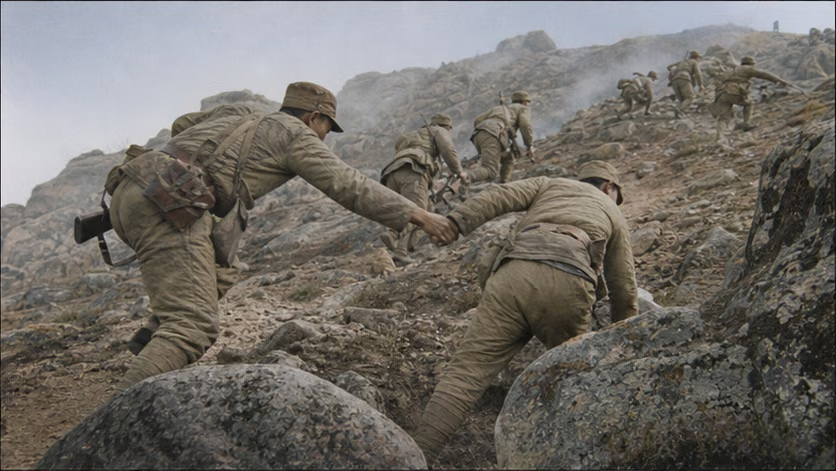
| Encirclement and ascent | 5.14–15 | The Reorganized 74th Division contracted to the Menglianggu and Hill 600 line to hold out while awaiting relief; five East China Field Army columns attacked uphill from all sides, while the bloody blocking action against reinforcements opened at the same time on the outer line |
| Bloody fighting on the gu summit | 5.15–16 | The bare granite hill had no fortifications to dig and no water (the May drought--thirst again became a weapon, echoing Yenangyaung); airdrops missed their mark; peak after peak was taken by close combat |
| Annihilation | Afternoon of 5.16 | The gu summit fell, and Zhang Lingfu and division headquarters were destroyed; Su Yu ordered the battlefield counted again--the troops found and then destroyed more than 7,000 men hidden in the valleys (details of the "7,000 men" count remain unverified)--the word "annihilation" was counted out |
| Crisis | At the same time | Reinforcements from ten divisions came within only a few kilometers of the gu at the nearest point (Huang Baitao's Reorganized 25th Division attacked desperately in the direction of Tianma Mountain--his effort to "make amends through merit" and the foreshadowing of Nianzhuang two years later are discussed in *Huaihai Campaign · Overview*); after the battle, the East China Field Army withdrew at once--"pulling a tooth from the tiger's mouth and getting out whole" |
Casualties and Losses
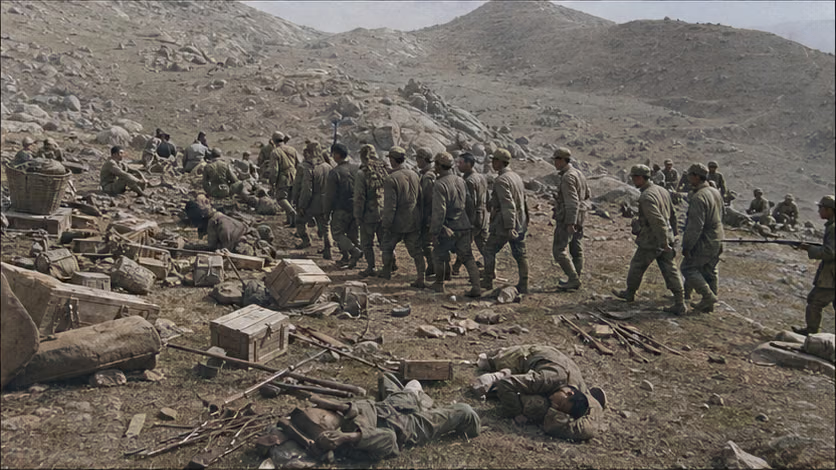
- Reorganized 74th Division: 32,000 men destroyed in full (13,000 killed and wounded, 19,000 captured; statistical bases vary by account); Zhang Lingfu, deputy division commander Cai Renjie, and others were killed.
- East China Field Army: more than 12,000 casualties (statistical bases vary by account)--the cost of assaulting a fortified position to destroy one enemy division.
- ※ Civilian laborers and mountain-area population: casualties in front support and effects on the war zone (the Yimeng "Red Sisters-in-law" narrative and the actual accounting of civilian manpower should be written side by side; statistical bases vary by account).
- The fate of prisoners: "liberated fighters" were absorbed into the East China Field Army's columns (74th Division veterans later appeared in the East China Field Army order of battle--the same group of soldiers fought again in another direction, the manpower logic of civil war).
Aftermath
- The spear of the Shandong focused offensive was broken--but the Nationalist Army soon adjusted by drawing its units even more closely together, and after the East China Field Army divided its forces in July, it suffered repeated setbacks (the defeats at Nanma and Linqu noted in one stroke--Menglianggu was not the beginning of an unbroken winning streak, but an interlude in hard fighting, handled against mythmaking).
- Zhang Lingfu's death shook Nanjing (Chiang's diary entry calling it "the most painful matter" remains unverified); the Reorganized 74th Division designation was rebuilt and then destroyed again at Huaihai (a cross-entry line).
- Menglianggu entered the canon: the film *Red Sun* (1963) and the Yimeng narrative; on the Taiwan side, it entered the pain of "bandit-suppression military history"--the two sides' commemoration and review are set in parallel.
Accounts of Those Present
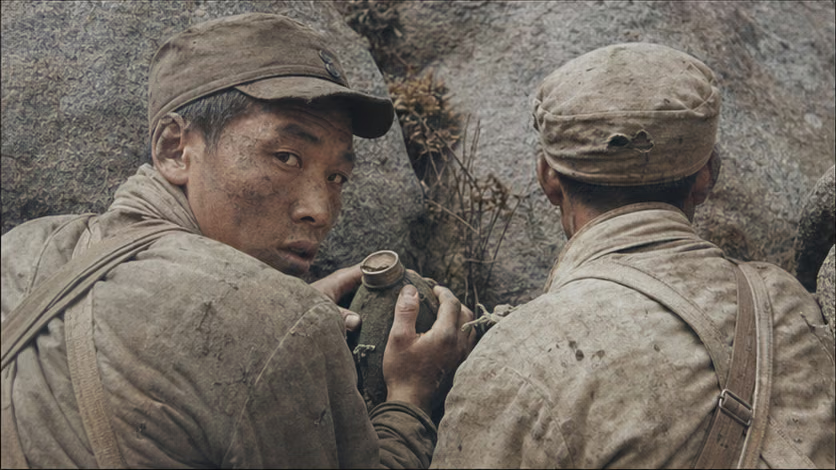
- Zhang Lingfu's death: Two accounts stand in parallel, one saying he was shot dead (killed in a charge), the other that he died in collective suicide (suicide in a cave)--each side of the strait took the death it needed: early mainland propaganda adopted the shot-dead account, while the Taiwan side adopted "dying to fulfill righteousness"; recent textual criticism tends toward the shot-dead account (the evidentiary layers remain unverified)--one man's cause of death became a narrative battlefield.
- The Sixth Column's one night: The Sixth Column, hidden in southern Shandong, force-marched more than 100 li in one night and appeared at Duozhuang--the unit that "shut the gate" almost scattered itself along the way (march attrition remains unverified)--victory and defeat often lie underfoot.
- Huang Baitao at Tianma Mountain: The reinforcement force that fought most fiercely was precisely Huang Baitao, born of miscellaneous-line troops and eager to prove himself--in this battle he "made amends through merit," and two years later died at Nianzhuang (see *Huaihai Campaign · Overview*): a typical sample of civil-war character arcs.
- Water on the gu summit: The defenders moistened their throats with horse urine, and airdropped water barrels smashed on the rocks (the level of these details remains unverified)--an American-equipped division died on a stone mountain without water.
- Counting again: Amid the sounds of celebration, Su Yu noticed that the enemy losses inflicted did not match the unit establishment and ordered another search--7,000 men were found in the valleys. "Insistence on exactness" as a concrete military virtue, and also the cost behind the word "annihilation."
The Ground
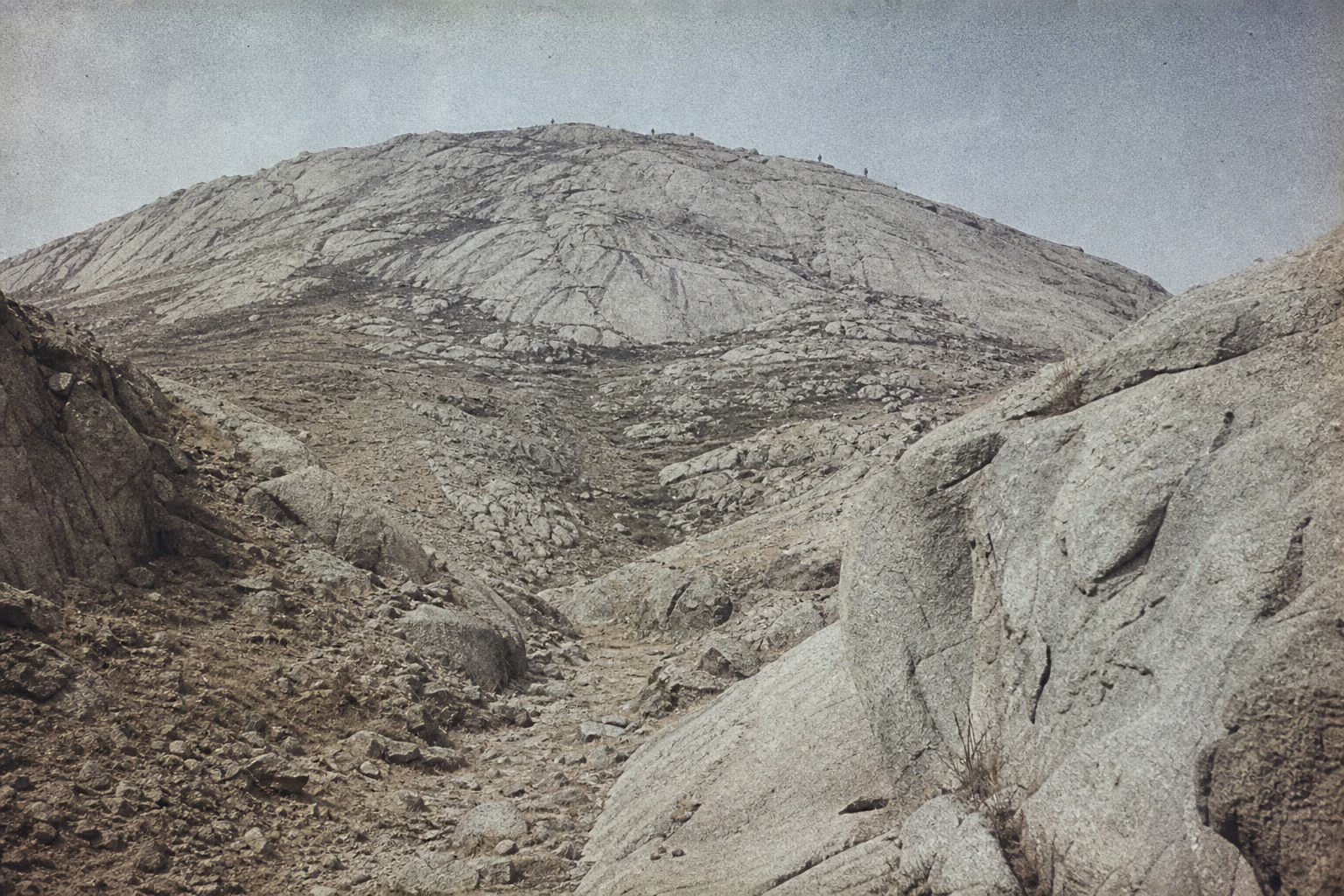
- Menglianggu itself: a granite bun-shaped hill, with no soil to dig, no water to take, and no woods for cover--a negative teaching space for "holding in desperate ground" (in contrast with the fortified mountain at Songshan: both were stone mountains, but the presence or absence of fortifications made all the difference).
- Wedge and gate: the torn-open line at the junction plus the retreat-lock point at Duozhuang--the surgical space of "cutting a piece out of the enemy formation."
- Double battlefield: the simultaneity of the inner encirclement around the gu and the outer blocking line--the guns of reinforcements five kilometers away could be heard, while the gu summit was breached within hours--a three-dimensional chessboard in a race against time (structurally comparable with the Xiang River's "time exchange").
- Yimeng civilian-labor network: stretcher routes, grain routes, and intelligence points forming an invisible second map.
How Each Side Records It
- CPC canon: a peak label for Su Yu's military art; "taking a senior general's head from amid a million troops" entered idiomatic circulation; the central battle of the Yimeng front-support narrative.
- Taiwan side: the destruction of the Reorganized 74th Division was the greatest pain in the history of "pacification"; Zhang Lingfu entered the National Revolutionary Martyrs' Shrine, and his last letters (the telegram "dedicating his life to the Party-state" and the letter to his wife--the authenticity of the texts and distinctions among versions remain unverified) became memorial texts--the same battle: one side's military textbook is the other side's martyrs' shrine.
- Scholarship: the decision chain (who moved first, whether the ascent was active or forced), textual criticism on the cause of death, and reflection on Nanma-Linqu--returning both myth and pain-history to military history.
Disputes and Sensitivities
- The two accounts of Zhang Lingfu's death and the versions of his last letters stand at different evidentiary levels.
- The truth or falsehood of the "letting the center bloom" account--it affects the evaluation of both sides' command, unverified.
- Statistical bases for casualties and prisoners; the phenomenon of "liberated fighters."
- After Menglianggu there were still the setbacks at Nanma and Linqu; beyond the victory narrative, subsequent defeats remained.
Sources and Open Questions
Sources: *History of the East China Field Army*; the Menglianggu chapter in *Su Yu's War Memoirs*; the Taiwan-side *Pacification Military History*, central Shandong section; research and textual-criticism literature on Zhang Lingfu (articles on the several accounts of his death); Yimeng front-support archives.
Open questions: the statistical bases for both sides' troop strengths, casualties, and prisoners; details of the Sixth Column's march; the count of 7,000 men; the evidentiary groups for Zhang Lingfu's cause of death and the versions of his last letters; the course of Huang Baitao's action at Tianma Mountain; casualties at Nanma and Linqu; figures for civilian front support.
All images on this site are AI-generated depictions. They are not historical photographs, not primary sources, and do not depict any real individual.