Engagement Archive · Battle of Tashan
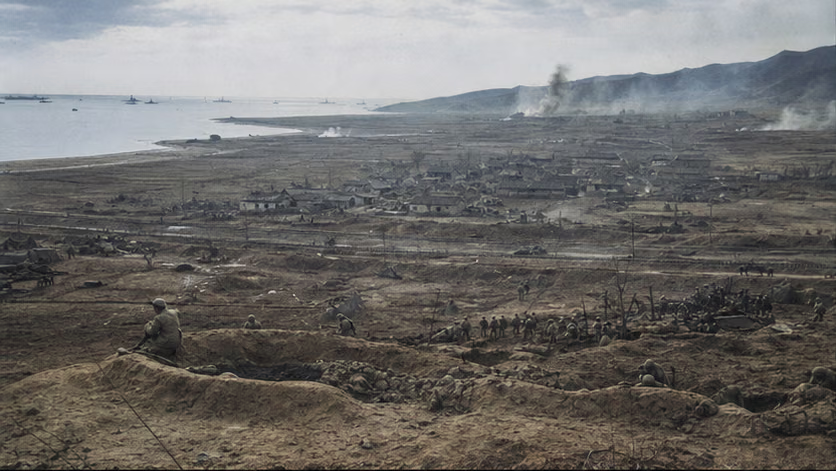
Tashan had no mountain, only an 8-kilometer stretch of flat ground -- here, eight divisions of the Northeast Field Army held off 11 divisions for six days and nights, without yielding an inch of the position; without Tashan, there would have been no Jinzhou.
Engagement Data
| Item | Details |
|---|---|
| Time | 1948.10.10 – 10.15, six days and nights |
| Place | Tashanbao--Baitaishan line, Jinxi, Liaoning (Liaoxi Corridor, about 30 kilometers from Jinzhou) |
| Belongs to | Chinese Civil War · Liaoshen Campaign (blocking relief on the Jinzhou assault axis) |
| Blocking side | Eight divisions including the Northeast Field Army's Fourth Column (commander Wu Kehua) (elements of the Eleventh Column and others were deployed in the second line; bases vary by account) |
| Attacking side | Hou Jingru's "Eastward Advance Corps," 11 divisions (advancing east from Huludao and Jinxi, including the Independent 95th Division and others) |
| Result | Nationalist troops launched successive fierce assaults for six days and nights; positions repeatedly changed hands but the defensive line was not broken; on 10.15 Jinzhou was taken, and the Eastward Advance Corps withdrew to Jinxi and Huludao -- the blocking of relief was a complete success |
Belligerents
| Item | Blocking side | Attacking side |
|---|---|---|
| Strength | Eight divisions on the 8-kilometer Tashan--Baitaishan front | 11 divisions, committed wave by wave |
| Firepower | Column artillery plus prepared fieldworks, deployed in depth by echelon | Divisional artillery plus heavy artillery; naval gunfire support from the cruiser Chongqing and other warships offshore (warships shelling land positions -- rare naval-land coordination in the civil war, record unverified), with air-force support as well |
| Terrain | Tashan had no mountain: the place-name had a "mountain," but the ground was gentle and offered no natural obstacle; the defense relied on earth-and-timber works and men | Superior in both strength and firepower, but the narrow front left no room to deploy |
| Will | "I do not want casualty figures; I only want Tashan" -- a telephone statement attributed to Lin Biao / Cheng Zihua (widely circulated, source level unverified) | The Independent 95th Division, the "Zhao Zilong Division," was known for wave attacks in the style of death squads (its tactics and losses remain unverified) |
Terrain and Conditions
(For the larger situation, see *Liaoshen Campaign · Overview*; this article covers only the Tashan line.)
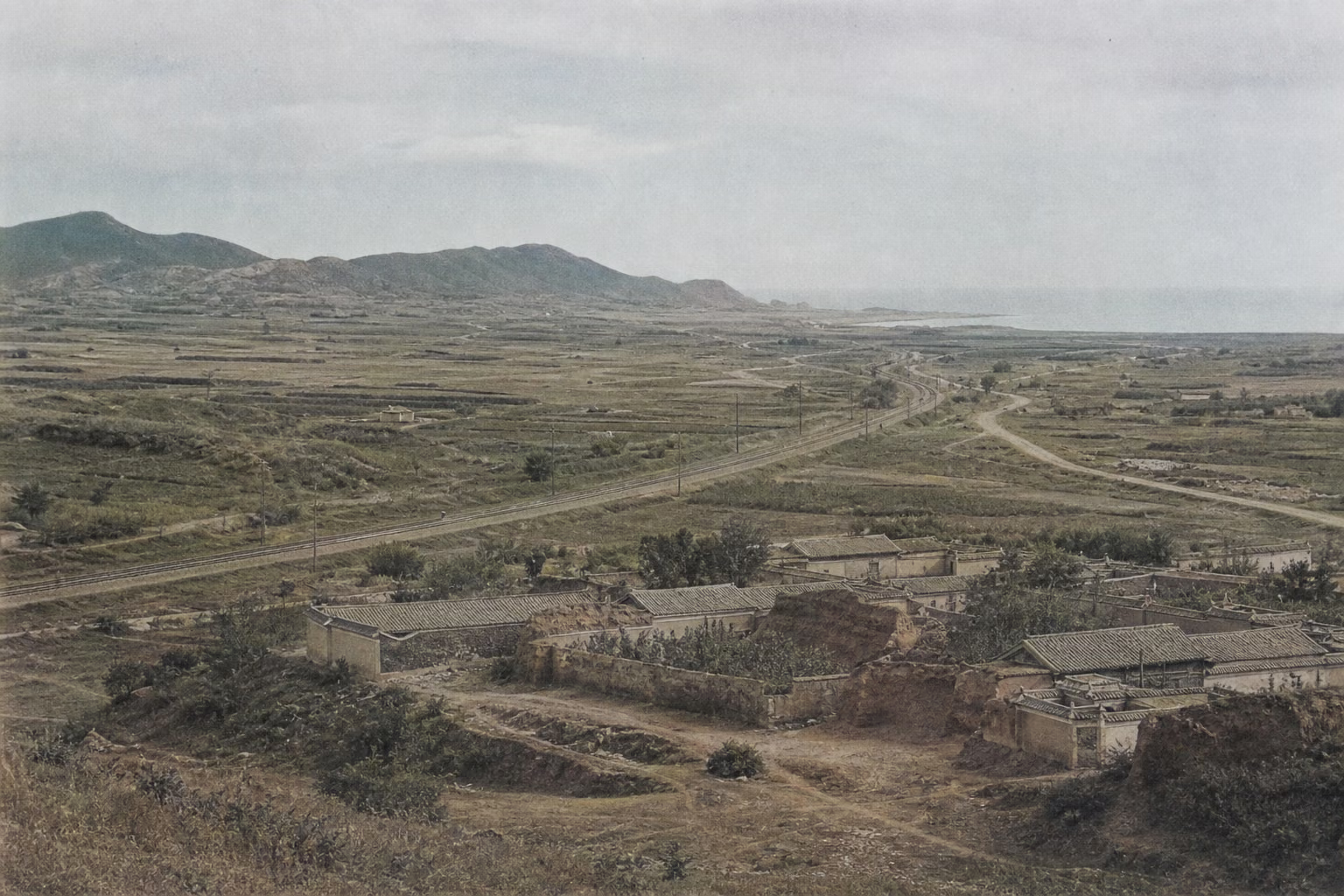
Tashanbao was the unavoidable route from Jinxi and Huludao to Jinzhou: mountains lay to the north (Baitaishan), the sea to the south (Liaodong Bay), and between them ran a corridor only a few kilometers wide, through which both railway and highway passed. Tashan's name contained "mountain," but on the ground it was only a stretch of gentle slope -- the defenders had no natural obstacle to hold and could only rush fieldworks into place among village forts and riverbanks. At Huludao, Nationalist naval and air power was concentrated, and naval guns could cover the positions directly. This 8-kilometer front was the lifeline of the entire Jinzhou assault plan.
Why It Was Fought
Tashan was not an independent battle. It was the other half of the assault on Jinzhou. When the Northeast Field Army's main force went south to encircle Jinzhou, the move itself was a wager that relief forces could not get in -- and the wager rested on two passes. The one to the east was called Tashan.
With Jinzhou encircled, Chiang Kai-shek strictly ordered relief from east and west to advance toward each other: in the west, Liao Yaoxiang's corps would move out of Shenyang into Liaoxi; in the east, Hou Jingru's "Eastward Advance Corps" would land from Huludao and drive straight at Jinzhou. The eastern road was the nearest blade: Jinzhou was only a few dozen kilometers away in a straight line, a day's march, but between them there was only one road to take -- Tashanbao. To the north was Baitaishan, to the south Liaodong Bay; between mountain and sea, a corridor only a few kilometers wide carried both railway and highway, and could not be bypassed. Yet Tashan had a mountain in its name while the actual ground was only a gentle slope, with no natural obstacle to rely on -- to defend it meant relying only on earth-and-timber works and men.
Both sides' calculations lay in plain sight. The Eastward Advance Corps had 11 divisions, divisional artillery plus heavy artillery, naval gunfire support from the Chongqing and other warships at sea (warships shelling land positions, record unverified), and air-force support overhead -- it held superiority in both strength and firepower. If it broke through these 8 kilometers, the Northeast Field Army main force attacking Jinzhou would be struck from front and rear, and the entire plan would collapse. But this blade had a hidden flaw: the front was too narrow to deploy, and 11 divisions could only be fed in one wave after another. Taiwan-side postwar reviews fell more heavily on disunity of command -- Hou Jingru arrived late, and units fought on their own (Taiwan-side review bases vary by account). On the Northeast Field Army side, eight divisions including the Fourth Column were placed on the 8-kilometer Tashan--Baitaishan front to hold it to the death, while elements including the Eleventh Column secured the flanks (deployment basis unverified). The mission had only one sentence: win six days for the Jinzhou assault. The phrase later circulated everywhere -- "I do not want casualty figures; I only want Tashan" (source level unverified) -- was the whole arithmetic: however much Jinzhou was worth, Tashan had to bear.
Around October 8, the Fourth Column entered the positions and worked through the night to repair and build fieldworks; on October 10, the Eastward Advance Corps began its attack. The six days and nights are counted from that day.
Course of the Engagement
| Phase | Time | Key Points |
|---|---|---|
| Rushing fieldworks into place | Around 10.8 | Troops entered the positions and worked through the night to repair and build them; fire points were laid out around village forts, riverbanks, and graveyards (details of fieldwork construction unverified) |
| First day's contact | 10.10 | After probing attacks, Nationalist troops shifted into fierce assaults, and positions began to change hands repeatedly |
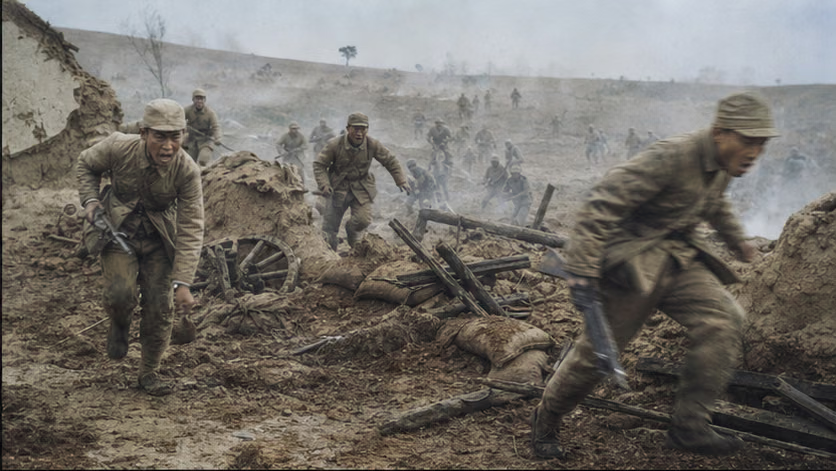
| Peak of the seesaw | 10.11–13 | Wave attacks and counterattacks continued day and night; the Independent 95th Division, the "Zhao Zilong Division," assaulted in dense formations at regiment and battalion scale, with front ranks of broadsword-armed death squads (its specific formations and casualties remain unverified); the Chongqing and other naval guns, together with the air force, bombarded repeatedly, destroying fieldworks by day and forcing their reconstruction by night |
| Most dangerous day | 10.13 | Breakthroughs occurred at village-entrance positions on several routes; the defenders used reserves in close counterattacks and retook them section by section (details of that day's fighting unrecorded) |
| Closing phase | 10.14–15 | The Nationalist offensive was already exhausted while relief troops continued to be redeployed; on 10.15 Jinzhou was taken, and the Eastward Advance Corps lost its objective and withdrew to Jinxi and Huludao |
Casualties and Losses
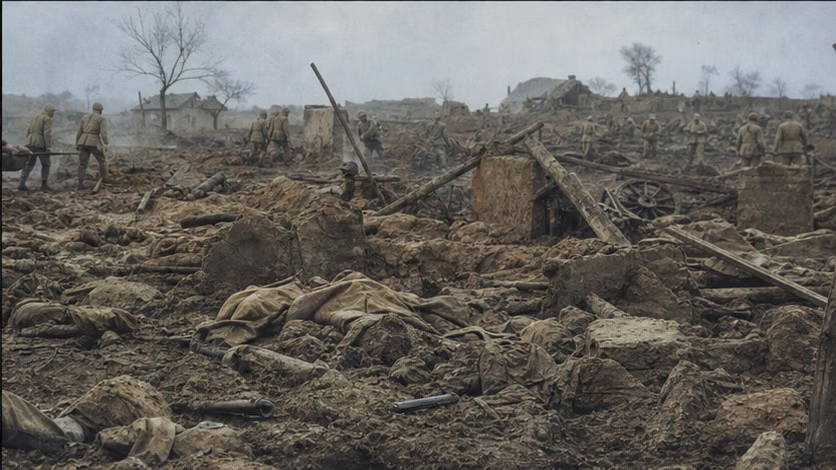
- Blocking side: more than 3,000 casualties in the Fourth Column (bases vary by account); front-line companies were repeatedly almost wiped out as entire companies, with replacements added while the fighting continued.
- Attacking side: more than 6,000 casualties (bases vary by account); the Independent 95th Division was badly damaged (postwar reorganization record unverified).
- When the two sets of figures are placed side by side, it must be stated: one side counts the casualties of holding the positions, the other the casualties of an assault that failed to break them; the statistical boundaries for each remain unverified.
Aftermath
- On the day Tashan held, Jinzhou was taken -- the whole meaning of the blocking action was fulfilled on 10.15.
- In the later lineage of the Fourth Column's unit designations, honor units such as the "Tashan Heroes Regiment" have continued to the present (roster unverified); "Tashan" became the highest model in the People's Liberation Army narrative of blocking actions.
- The remnants of the Independent 95th Division were later transferred out of the Northeast (destination unverified); Hou Jingru's later path (including accounts of his long-term contacts with the CPC, level marking unverified) belongs to another article.
Accounts of Those Present
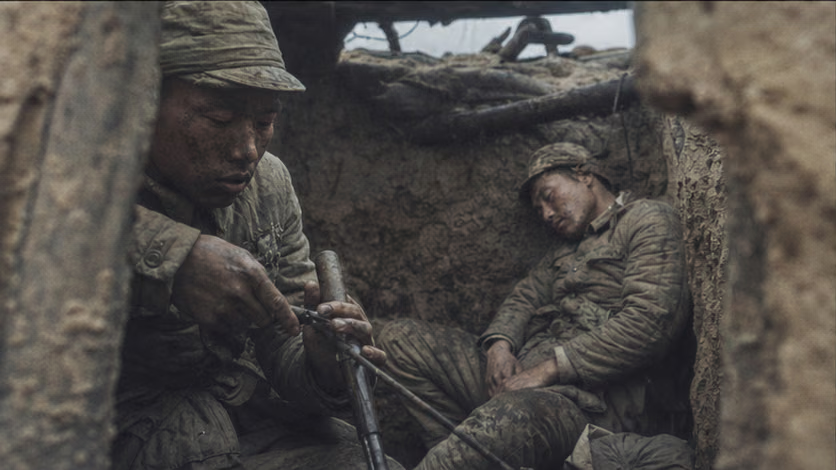
- "I only want Tashan": Lin Biao (one account says Cheng Zihua relayed it) said by telephone to the Fourth Column: "I do not want casualty figures; I only want Tashan." -- widely circulated; the level of the original telegram or speech record remains unverified. Whatever its source, veterans of the Fourth Column remembered this sentence for the rest of their lives.
- "Zhao Zilong Division": the Independent 95th Division claimed that in battle it had never lost even one machine gun (level of its self-narrative in battle history unverified). At Tashan it met force with force through dense wave attacks; after the battle people said, "the Zhao Zilong Division broke its spear at Tashan." The courage of the two armies collided on the same slope.
- Day and night on the position: by day, naval guns and aircraft flattened the fieldworks; by night, defenders crawled out and rebuilt them. Bodies could not be carried down in time and were stacked beside the works (participant memoir records, details unverified).
- Chongqing: the Nationalist Army's largest cruiser used its main guns to bombard land infantry positions -- the sight of a massive thing at sea firing on an unnamed slope was one of the rare images of this battle. Less than half a year later, the warship rose in revolt and went over to the People's Liberation Army (cross-article line, see another article).
The Ground
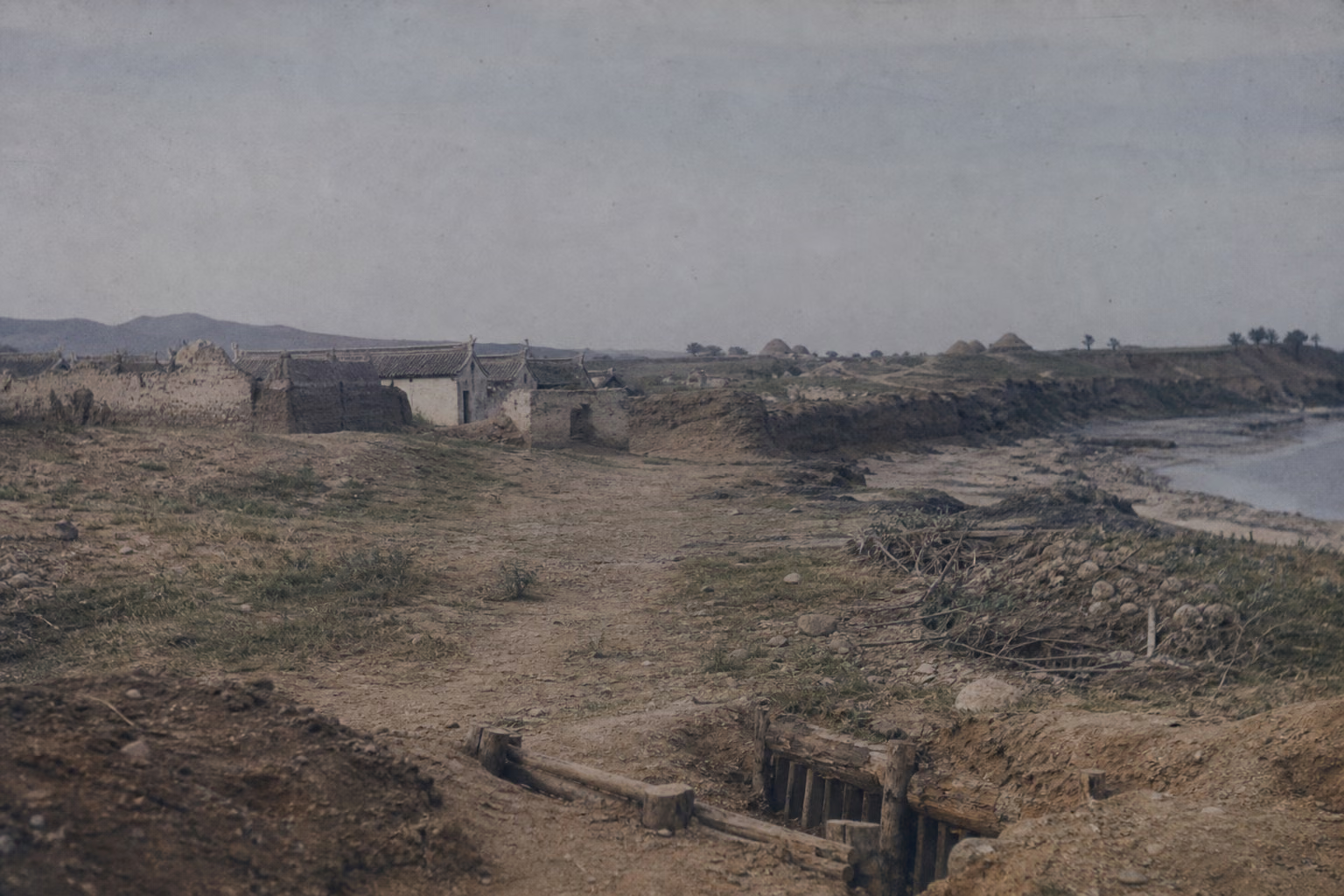
- Tashan had no mountain -- the dislocation between name and fact was itself a stroke: a fieldwork defense on a gentle slope, holding earthworks and depth rather than terrain.
- An 8-kilometer front: Baitaishan to the north, the sea to the south, the corridor narrow -- the attacking side's 11 divisions could not deploy and could only be committed in waves; this was the spatial reason why the side superior in strength instead fed troops in piecemeal.
- Naval-gun range covered the whole position: the sea was the attacking side's second artillery position, a rare vertical dimension of firepower in a blocking action.
- Village entrances, riverbanks, and graveyards: positions on the scale of a hundred meters repeatedly changed hands; their scale was structurally analogous to the hills of Hengyang (attack and defense reversed -- in that battle China defended, in this battle China attacked, mirror images seen against each other).
How Each Side Records It
- CPC canon: the highest model of a blocking action. "Battle of Tashan," together with the Heishan blocking action and the Xudong blocking action, is called one of the three great blocking actions; almost everyone can recite the sentence "I only want Tashan."
- Taiwan side: the defeat of the Eastward Advance Corps is attributed to disunity of command (Hou Jingru's late arrival, Que Hanqian's and other units' fighting on their own -- Taiwan-side review bases vary by account) and weak sea-air coordination; there is also much mourning for the courage of the Independent 95th Division.
- Structurally analogous to the Xiang River blocking action: both were blocking actions that "exchanged time" for the overall situation -- the attacking and defending camps had changed places, but the structure had not (see *Battle of the Xiang River* for details).
Disputes and Sensitivities
- The original source and wording of "I only want Tashan" exist at different evidentiary levels.
- Descriptions of the Independent 95th Division's charge formations ("dense human waves") vary in degree across sources -- keep the uncertainty.
- The actual firing records and effects of the cruiser Chongqing's naval guns -- records from both sides remain to be compared and verified.
- The statistical boundaries for casualties on both sides.
Sources and Open Questions
Known main sources:
- Recollections by participants from the Fourth Column and by Wu Kehua, Mo Wenhua, and others
- The Tashan section of *History of the Northeast Liberation War*
- Taiwan-side *Military History of the War of Pacification*, Northeast section; related battle histories of the Independent 95th Division (to be collected)
- Naval history materials on the cruiser Chongqing (comparative sources for the naval-gun support section)
Open questions: the source level of "I only want Tashan"; the specific designations and deployment of the blocking side's eight divisions; the formations and casualty details of the Independent 95th Division's wave attacks; the Chongqing's firing records; the bases for more than 3,000 casualties in the Fourth Column and more than 6,000 Nationalist casualties; details of the most dangerous day, 10.13; the level of accounts about Hou Jingru's relationship with the CPC.
All images on this site are AI-generated depictions. They are not historical photographs, not primary sources, and do not depict any real individual.