Engagement Archive · Battle of Chenguanzhuang
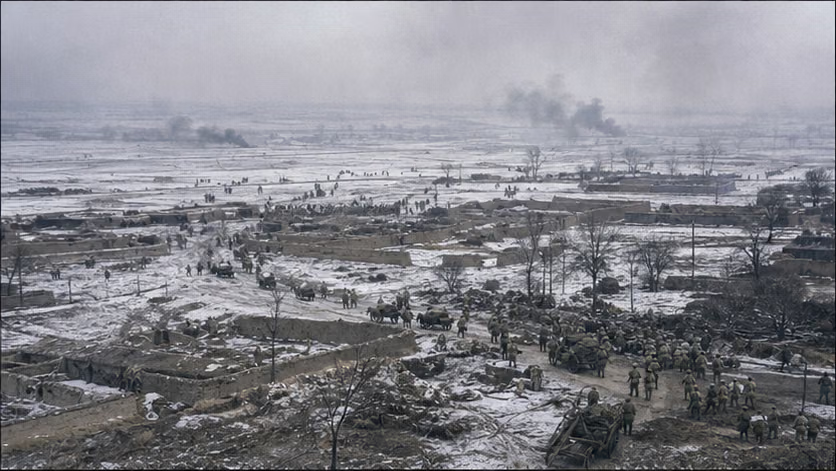
Three hundred thousand Nationalist troops abandoned Xuzhou and withdrew west; within five days they were encircled in a stretch of open plain villages northeast of Yongcheng, held there for twenty days without attack, and then finished in four days -- Du Yuming was captured, Qiu Qingquan was killed, and Sun Yuanliang and Li Mi escaped alone in succession. This was not a typical offensive-defensive battle: its main body was an open-air encirclement ground for 300,000 people, where fighting, hunger, and psychological warfare together broke this army apart. It was also the last shot of Huaihai.
Engagement Data
| Item | Content |
|---|---|
| Time | 1948.12.4 – 1949.1.10, 38 days in all (including the encirclement period) |
| Place | Plain villages around Chenguanzhuang and Qinglongji, northeast of Yongcheng, Henan |
| Part of | Chinese Civil War · third phase of the Huaihai Campaign (for the larger situation, see *Huaihai Campaign · Campaign Overview*) |
| Encircling side | Main force of the East China Field Army (commanded by Su Yu), sealing and encircling with overwhelming troop superiority (specific column deployments and troop figures vary by account) |
| Encircled side | Du Yuming group of Xuzhou "Bandit Suppression Headquarters" Forward Command: Qiu Qingquan's Second Corps, Li Mi's 13th Corps, Sun Yuanliang's 16th Corps, about 300,000 |
| Result | Encircled on 12.4; Sun Yuanliang's corps broke out and immediately collapsed (12.6); after twenty days of encircling without attacking, the general assault began on 1.6, and on 1.10 the group was completely destroyed: Du Yuming was captured, Qiu Qingquan was killed, and Li Mi escaped in disguise |
Belligerents
| Item | Encircling side | Encircled side |
|---|---|---|
| Strength | An encircling blockade ring formed by the main force of East China Field Army, many times the enemy's strength (figures for forces committed in the encirclement's third phase vary by account) | About 300,000 leaving Xuzhou; after Sun's corps collapsed, about 250,000 remained inside the ring (figures vary by account) |
| Equipment | Captured materiel from the first two phases was in hand, and artillery firepower already held the advantage | Included the Fifth Army, one of the five major forces and the backbone of Qiu's corps; much heavy equipment was lost when Xuzhou was abandoned, and carts and heavy guns were left on the road during the maneuver (details unrecorded) |
| Supply | The rear-area front-support system reached the front line, and during the encirclement officers and men had enough food and winter clothing -- "sending food" itself was a weapon | Depended entirely on air drops: there was no rear area inside the ring; rain, snow, and low cloud sharply reduced air drops, and whatever landed belonged to whoever got it |
| Command | Su Yu made front-line decisions; the rhythm of encircling and attacking was entirely in the encircling side's hands | Telegrams went back and forth between Du Yuming and Nanjing, and Chiang Kai-shek's handwritten order redirected the army (unverified) -- the command chain was already disordered before the encirclement |
Terrain and Conditions
(For the larger situation at the end of 1948 -- the three great campaigns in sequence, the collapse of the gold yuan, and the Nanjing regime tottering -- see *Huaihai Campaign · Campaign Overview*. This section deals only with this piece of ground around Yongcheng.)
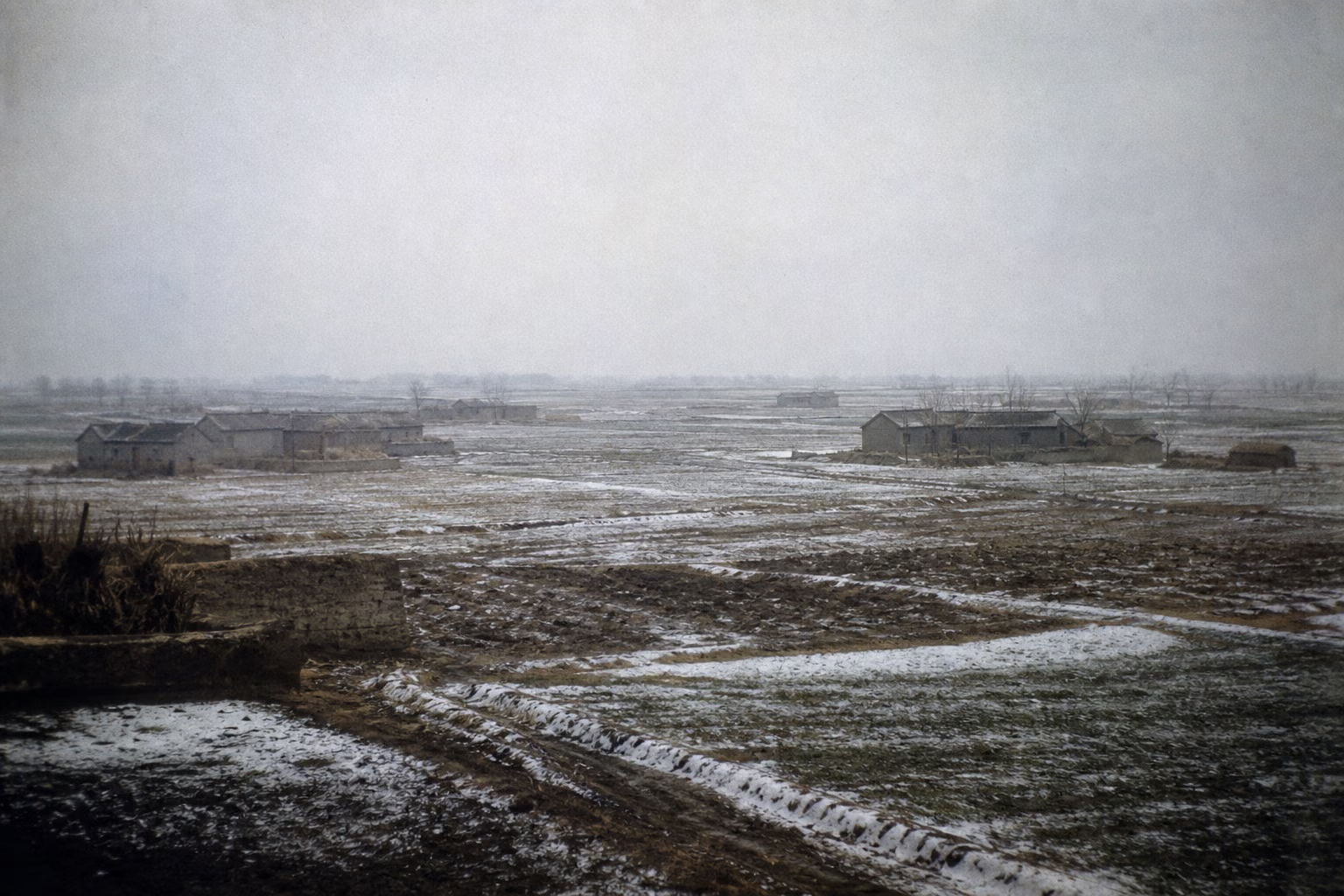
Winter on the eastern Henan plain. The Chenguanzhuang area was a cluster of dry-field villages northeast of Yongcheng: flat ground, scattered villages, and no defensible heights -- open country with nothing to block an army that wanted to run, and a prison without walls for the side that was encircled. From mid-December, rain and snow continued, temperatures plunged, and the plain offered no cover or shelter. Villages were limited; more than 200,000 people, together with mules and horses, were squeezed into an area centered on Chenguanzhuang and no more than a dozen li across (the basis for this range is unverified). Once the houses were full, most people dug trenches in the open fields and lay in the snow.
An army that could no longer move. Inside the encirclement there were not only soldiers: agency personnel withdrawing west with the army, family members, and students and civilians swept along during the evacuation from Xuzhou (numbers and composition unverified)※. They belonged to neither side's troop-strength figures, but they starved inside the ring all the same.
Why It Was Fought
In the same month that Huang Wei was being sealed to death at Shuangduiji, Xuzhou became a spent piece. After Huang Baitao was eaten at Nianzhuang and Su County cut the Xu-Beng line, this Bandit Suppression Headquarters station had lost its supply and become an isolated point; Huang Wei, meanwhile, was trapped at Shuangduiji and unable to move -- north of the Yangtze, the only force Nanjing could still move was the three corps in Du Yuming's hands. On November 30, Du Yuming led the three corps of Qiu Qingquan, Li Mi, and Sun Yuanliang, about 300,000 men, out of Xuzhou and westward, planning to withdraw through Yongcheng and Guoyang to the south of the Huai River. This move had only one purpose: preserve the last heavy army group -- Nanjing's last capital in hand.
Du Yuming's plan was not to fight: do not become entangled, do not turn back; the 300,000 troops, together with agencies, family members, and students and civilians swept out of Xuzhou, would drive straight for the Huai River along the dry roads of eastern Henan. The East China Field Army's task was exactly the reverse -- catch up with them and keep this group from crossing the Huai River alive. On the early-winter eastern Henan plain there was nothing to shield retreat or pursuit; both were exposed, and the contest was only foot speed and resolve.
On the fourth day after leaving Xuzhou, December 3, an aircraft air-dropped Chiang Kai-shek's handwritten order into the marching column: halt the westward withdrawal, turn southeast, advance by attack toward Suixikou, and relieve Huang Wei at Shuangduiji. Later accounts often say this order destroyed the final window of mobility for 300,000 men; the phrase "death-warrant order" comes from this point (the original text of the order and its chain of transmission are unverified). The military common sense lay on the table: relieving Huang Wei was a strategic reason; stopping meant waiting to die. Du Yuming himself later wrote that he knew at the time what this turn meant (memoir accounts vary by account). The order came from the supreme command, and the front line carried it out knowing it could not be done -- the three layers of remote control from Bandit Suppression Headquarters, the Ministry of National Defense, and Chiang Kai-shek had strangled this army's command chain before it was ever encircled.
Du Yuming obeyed and turned. The next day, December 4, the East China Field Army's pursuing forces closed from multiple routes, and 300,000 people were pinned into the plain villages around Chenguanzhuang and Qinglongji northeast of Yongcheng -- no heights, no city, no rear area, with only air drops left overhead.
In fact, this position had already had two forks: if the decision had been made several days earlier, the Xuzhou group need not have reached this place; if it had not turned on December 3, it was not certain that 300,000 men could not have reached the Huai River. Neither fork was missed at Chenguanzhuang.
Course of the Engagement
| Phase | Time | Key Points |
|---|---|---|
| Pursuit and encirclement | 11.30–12.4 | Du's group abandoned Xuzhou and withdrew west, while the East China Field Army pursued and intercepted from multiple routes; on 12.4 it was encircled in the Chenguanzhuang-Qinglongji area northeast of Yongcheng |
| Sun's corps breakout | 12.6 | Sun Yuanliang's 16th Corps broke out alone and collapsed in a single night; most of it was destroyed during the breakout, while Sun Yuanliang escaped alone in disguise (his "escape alone" was already not the first in the Nanjing and Huaihai engagements; character line, unverified) |
| Encircling without attacking | 12.16–1.5 | After Shuangduiji was settled on 12.15, the East China Field Army shifted into battlefield rest and reorganization, encircling Chenguanzhuang without attacking for twenty days -- at the campaign level, this coordinated with Pingjin: stabilize Fu Zuoyi and keep Chiang Kai-shek from ordering the Pingjin defenders to withdraw south because Huaihai had ended too quickly (see also the overview for the decision chain linking the two campaigns); meanwhile, a political offensive unfolded |
| Political offensive | 12.16–1.5 | Front-line broadcasts, shouted appeals, surrender-persuasion letters, and food sent forward to encourage eating; on 12.17 Mao Zedong drafted *Letter Urging Du Yuming and Others to Surrender* for broadcast (text and broadcast channel unverified); scattered defections by officers and men inside the ring gradually became a tide, and in the late encirclement daily defections averaged in the thousands (figures vary by account) |
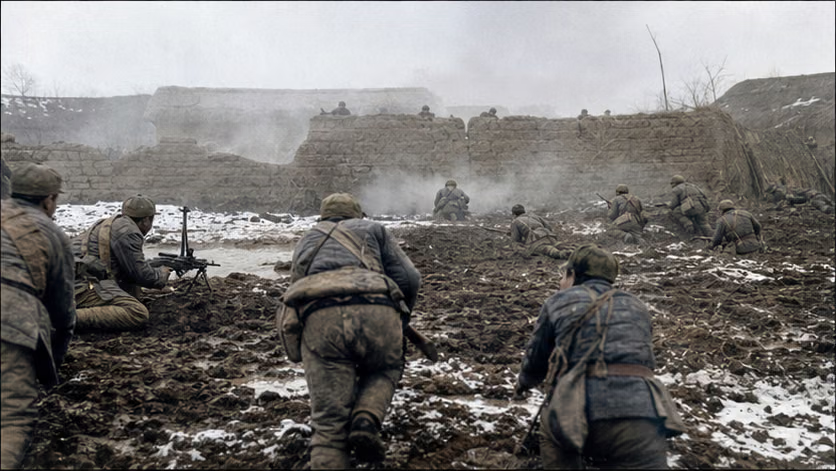
| General assault | 1.6–1.10 | On 1.6 the East China Field Army launched the general assault, splitting and compressing the pocket; on 1.9 the command system of Du Yuming's group disintegrated, and the remnants broke out separately; on 1.10 the fighting ended: Du Yuming was captured at Zhanglaozhuang (details of how his disguise was recognized unverified), Qiu Qingquan was killed (two accounts of his death are placed side by side; see "Disputes and Sensitivities"), and Li Mi escaped in disguise |
Casualties and Losses
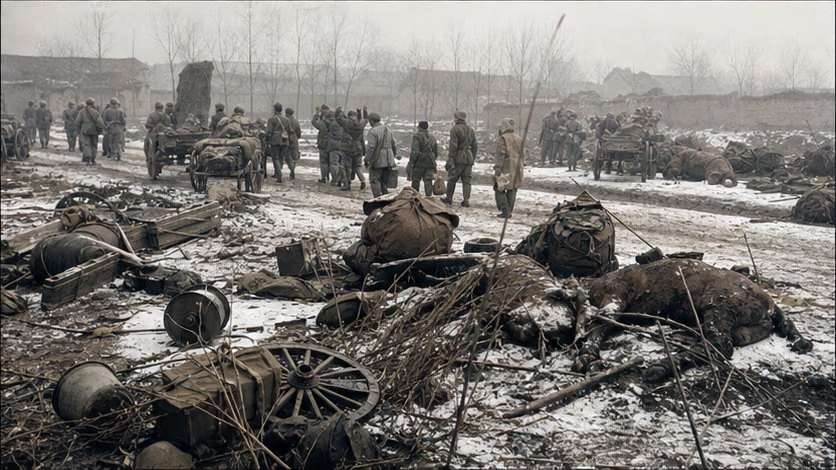
- Encircled side: Du Yuming's group of about 300,000 was dealt with in full -- Sun's corps had first collapsed in a breakout of about 40,000, and the more than 250,000 inside the ring were destroyed; the respective composition of killed and wounded, prisoners, and defectors remains unverified. The Fifth Army, one of the five major forces, was destroyed here.
- Encircling side: East China Field Army casualties in the third phase were about 17,000 (figures vary by account) -- far lower than in the first two phases; the twenty days of encircling without attacking were themselves casualties saved.
- ※ Freezing and hunger inside the ring: in the late encirclement, rain, snow, bitter cold, and inadequate air drops led to killing mules and horses, digging up wheat seed, tearing doors and window frames from civilian houses for firewood, and armed fighting over food at the air-drop field -- there is no reliable statistical basis for daily late-stage attrition from freezing and hunger (unverified here). The sufferers were individual soldiers and civilians swept into the ring, not objects for satisfaction.
- ※ Villages in the battle zone: villages around Chenguanzhuang were damaged during the encirclement and general assault (records of villagers returning after the war unverified).
Aftermath
- The Huaihai Campaign ended here (1949.1.10). North of the Yangtze, the Nationalist Army's main forces were exhausted, and crossing the river was only a matter of time; Chiang Kai-shek announced his resignation on 1.21 -- eleven days lay between the last gunfire at Chenguanzhuang and his stepping down.
- Du Yuming entered the Gongdelin War Criminals Management Center, was among the first group amnestied in 1959, and in later life wrote memoirs of the Huaihai Campaign -- the defeated commander who appears most often in this series has his character line closed here (see also the overview).
- After Li Mi escaped, he moved south through several stages; the line of his remnants later extended into the Yunnan-Burma borderlands, becoming the beginning of the "Golden Triangle" narrative (one note, handled in another article).
- After Sun Yuanliang escaped, he went to Taiwan and lived to 103; his son was the actor Qin Han (one note in the character line, unverified).
- Large numbers among the hundreds of thousands of captured officers and men were incorporated into the People's Liberation Army -- "liberated soldiers" became an important source of manpower for the East China Field Army after this engagement (proportions unverified).
Accounts of Those Present
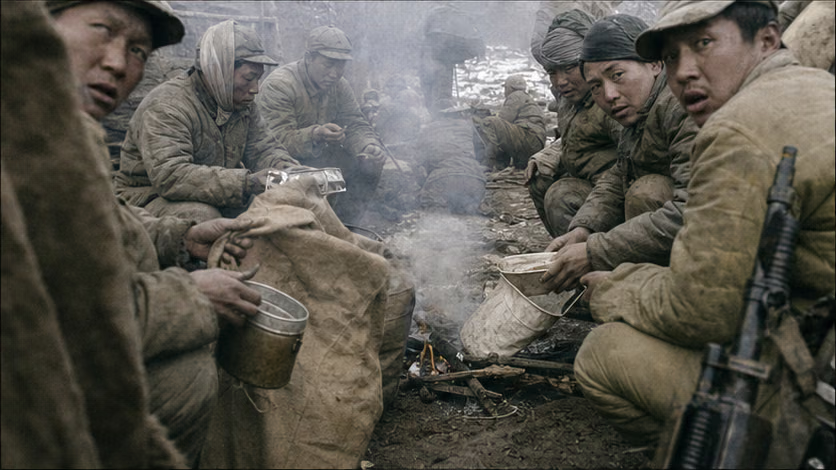
- Du Yuming's capture: On the morning of 1.10, he broke out in disguise; when questioned at Zhanglaozhuang, he claimed to be a quartermaster director, but his identity was quickly recognized (details such as the alias "Gao Wenming" are widely circulated; the original source is unverified). Between a prisoner and the commander of 300,000 men, there was only a fall of snow.
- Qiu Qingquan's death: After the command system collapsed on the night of 1.9, he died around Zhangmiaotang southwest of Chenguanzhuang (location unverified). Two accounts are placed side by side: suicide, or being hit by a bullet in the chaos. He was a noted Whampoa general and a veteran of Kunlun Pass, known during the War of Resistance as "Mad Qiu"; records that his mental state deteriorated in the final stage of the encirclement are scattered through memoir materials (level unverified).
- Li Mi's escape: He disguised himself and mixed into columns of prisoners/refugees, then fled south via the Longhai line and the Qingdao route (route details unverified) -- one later stroke toward the Yunnan-Burma Golden Triangle.
- Sun Yuanliang's third time: Before this, he had escaped alone twice, at Nanjing and in Huaihai; Chenguanzhuang became another instance -- the nickname "Flying General" was confirmed from this point (details of each escape unrecorded).
- Air-drop field: Between the airfield and antiaircraft positions inside the ring, air-dropped supplies became a scramble as soon as they hit the ground, and memoirs on both sides record units firing at one another over food (unverified here). Details such as officers mixing sand into rice to prevent it being seized are scattered in memoirs (level unverified).
- "Sending food": The encircling side sent hot food to the front and urged the other side to eat -- this was not rhetoric, but practical psychological warfare during the encirclement; for people who had been hungry for twenty days, food worked better than bullets.
- Two kinds of winter: Outside the ring, East China Field Army officers and men had rear-area cotton clothing and hot food; inside the ring, more than 200,000 people lay in snow and went hungry -- on the same plain, separated by trenches only a few hundred meters apart. Desperation lay on only one side, and that is the coldest stroke in this encirclement.
The Ground
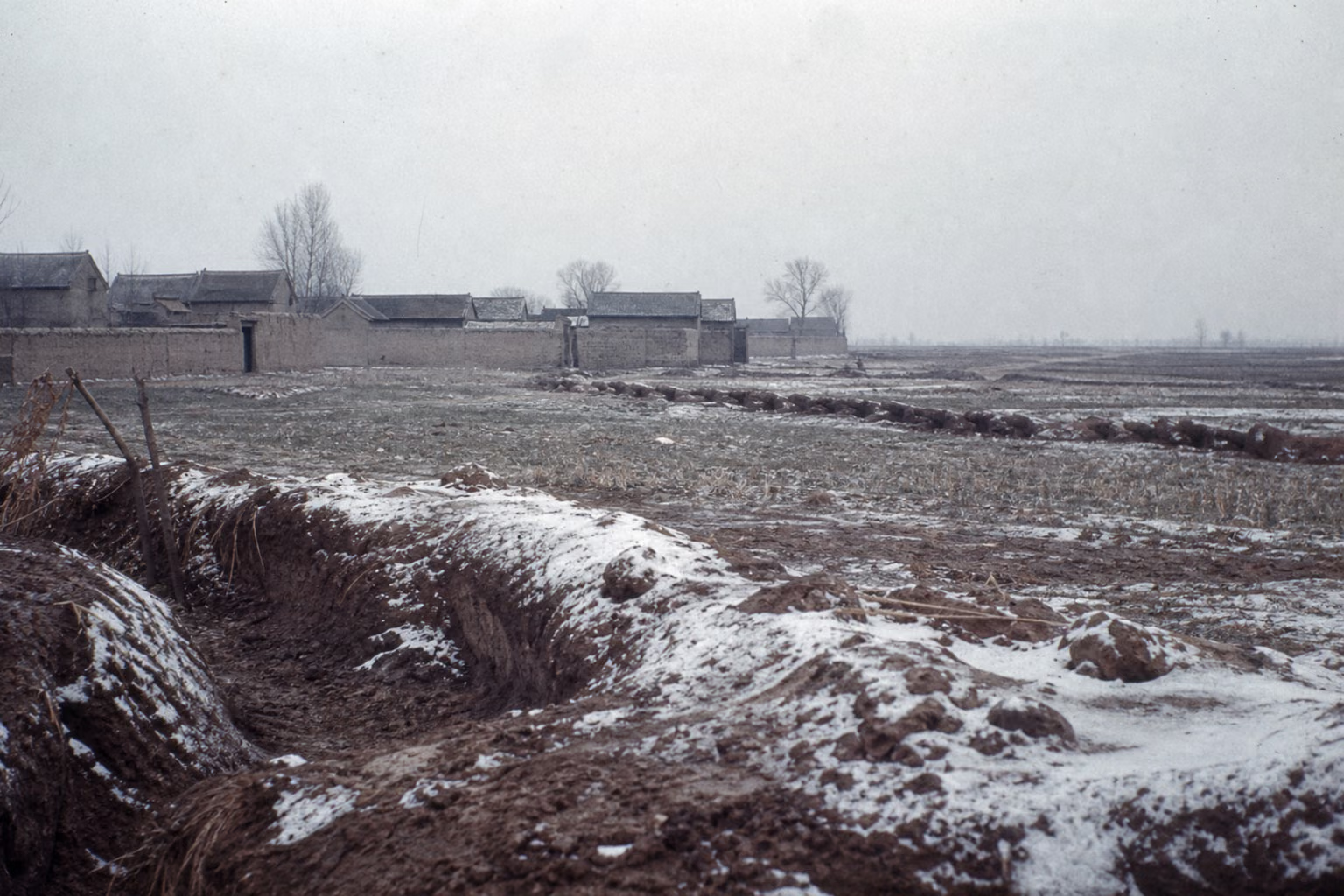
- A plain with no defensible terrain: no mountains, no city, and villages as the entirety of the works -- defense depended on village walls and field trenches; on the map each village and hamlet was a node, at a scale of hundreds of meters.
- The spatial grammar of the encirclement ring: two circles, inner and outer -- the outer ring was the East China Field Army's network of blockade trenches, and the inner ring was the encircled side's village positions; the few hundred meters of no-man's-land between them was a shared space for shouted appeals, defections, sniping, and sending food.
- Air-drop field: the only passage between the ring and the outside world; supply and scramble both concentrated here -- a "market" exposed to fire.
- Breakout and interception: the corridor of Sun's corps breakout on the night of 12.6, and the skirmish lines of remnants pushing west on 1.9–10 -- on the plain there was no concealment for a breakout, only a snowy night.
- Weather as space: when rain, snow, and low cloud suppressed air drops, they cut the last pipe into this space.
How Each Side Records It
- CPC canon: Huaihai's closing battle, a model of disintegrating the enemy through "encircling without attacking + political offensive"; Mao Zedong's *Letter Urging Du Yuming and Others to Surrender* entered his collected writings; Du Yuming's Gongdelin-amnesty line entered the united-front narrative.
- Taiwan side: the most painful final chapter of the "Xu-Beng Campaign." In Taiwan-side narrative, Du Yuming's group became the strongest evidence that remote control by the supreme command brought defeat -- review of the air-dropped handwritten order continued for decades; Qiu Qingquan's death entered the loyal-martyr narrative (details such as posthumous honors and enshrinement unrecorded); evaluations of Sun Yuanliang's and Li Mi's "escape alone" coexist between praise and criticism on the Taiwan side (unverified here).
- Du Yuming's own double identity: defeated commander, amnestied war criminal, and writer of historical materials -- his memoirs are both historical source and self-defense, and quotations require level marking.
Disputes and Sensitivities
- Responsibility for the air-dropped handwritten order: Was the order to turn on 12.3 "death-warranting," or "the only reasonable strategic choice at the time"? Later reviews place both judgments side by side.
- Two accounts of Qiu Qingquan's death: The suicide account and the account of being hit by a bullet in the chaos coexist, each supported by memoir materials (evidence set unverified).
- The political ledger of "encircling without attacking": There is no reliable statistic for attrition from freezing and hunger inside the ring over those twenty days -- as a method of war, who bears the cost of encirclement is an unavoidable question in civil-war narrative ※. The sufferers were individual soldiers and civilians, not objects for satisfaction.
- Psychological offensive and the "good treatment of prisoners" narrative: Figures for the wave of defections vary by basis; details such as "sending food" are used in narratives on both sides of the Taiwan Strait.
- Civil-war perspective: inside and outside the ring were all Chinese. Hungry soldiers, defeated troops breaking out, and broadcasters urging surrender are none of them objects for satisfaction.
Sources and Open Questions
Known main sources:
- Du Yuming, *The Huaihai Campaign from Beginning to End* (historical-materials series -- memoir of the defeated commander, with self-defense elements requiring level marking)
- Su Yu's war memoirs and East China Field Army field-diary materials (encircling-side account)
- Taiwan-side *War History of the Pacification Campaign*, Xu-Beng section, and the *Review of the Xu-Beng Campaign* document corpus
- Mao Zedong, *Letter Urging Du Yuming and Others to Surrender* (*Selected Works of Mao Tse-tung*, vol. IV)
Open questions:
- Original text and transmission chain of the air-dropped handwritten order on 12.3; earliest source of the phrase "death-warrant order"
- East China Field Army forces committed in the third phase and column deployment; composition bases for Du's group of 300,000 and the 250,000 inside the ring
- Boundaries for itemized statistics of casualties, prisoners, and defections on both sides in the third phase; source for daily defections "in the thousands"
- Details of Sun Yuanliang's repeated escapes alone (character line across the Nanjing and Huaihai engagements)
- Exact place of Du Yuming's capture and alias details (source for "Gao Wenming")
- Qiu Qingquan's place of death and evidence set for the two accounts of his death; level of records on his mental state in the late encirclement
- Details of Li Mi's southward escape route
- Any verifiable basis for daily late-stage attrition from freezing and hunger; numbers and composition of civilians swept into the ring
- Broadcast channel and text check for *Letter Urging Du Yuming and Others to Surrender*
- Damage to villages in the Chenguanzhuang battle zone and records of villagers returning after the war
All images on this site are AI-generated depictions. They are not historical photographs, not primary sources, and do not depict any real individual.