Engagement Archive · Battle of Shanghai (1949)
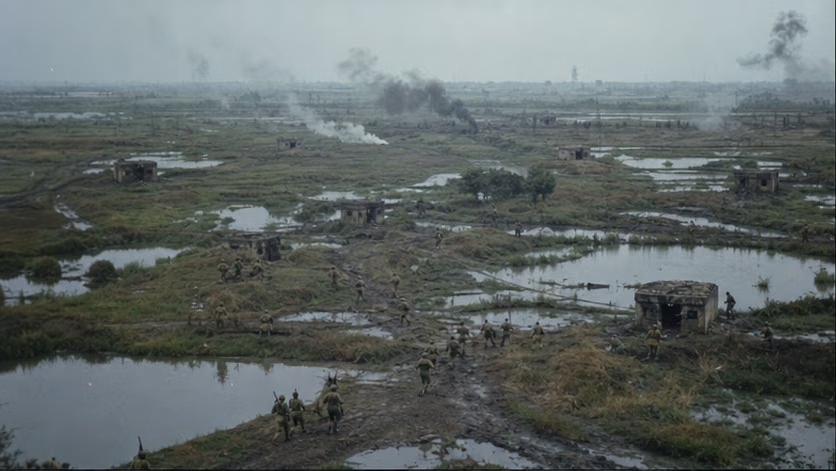
On the outskirts, soldiers were made to spend their lives biting through blockhouses; inside the city, heavy artillery was forbidden--the costliest order of the sixteen-day battle was "catching rats in a china shop." To receive the foremost metropolis of the Far East intact, the People's Liberation Army shed many times more blood before the concrete bunker belts at Yuepu; at dawn on May 27, residents opened their doors and saw the roads filled with soldiers sleeping outside rather than entering private homes.
Engagement Data
| Item | Content |
|---|---|
| Time | 1949.5.12 – 5.27, sixteen days |
| Place | Shanghai: the Wusong-Yuepu-Liuhang perimeter (the main bloody battlefield) and the urban sector along Suzhou Creek |
| Part of | Chinese Civil War (for the larger picture, see *Chinese Civil War · Overview*) |
| Attacker | Third Field Army, Ninth and Tenth Corps, about 400,000 men (planned by Su Yu and Zhang Zhen; the actual city assault was under Chen Yi's overall command) |
| Defender | Tang Enbo's group, about 200,000 men, with more than a hundred warships (statistical bases vary by account) |
| Result | On 5.27 the whole city was liberated; roughly half of Tang's main force was shipped from Wusong to Taiwan ("defending Shanghai was for the evacuation"--the true mission of the defending force), while more than 150,000 of the remainder were annihilated or captured (statistical bases vary by account) |
Belligerents
| Item | PLA | Nationalist Army |
|---|---|---|
| Strength | 400,000, but with one hand tied behind its back: heavy artillery was prohibited in the urban area, and demolitions were restricted (Chen Yi's "catching rats in a china shop" metaphor--source unverified) | 200,000 relying on more than 4,000 permanent blockhouses (the exact number of U.S.-style concrete bunkers is unrecorded) + naval guns |
| Mission | It wanted both the city and an intact city: the military objective served the objective of takeover | It wanted both to defend and to evacuate: the military objective served the objective of withdrawal--neither army was engaged in "pure fighting" |
| Takeover preparation | Danyang training: discipline for entering the city and several thousand takeover cadres (the detailed "Rules for Entering the City" are unrecorded) | Evacuation schedules: the embarkation timetables for gold, machinery, and troops |
Terrain and Conditions
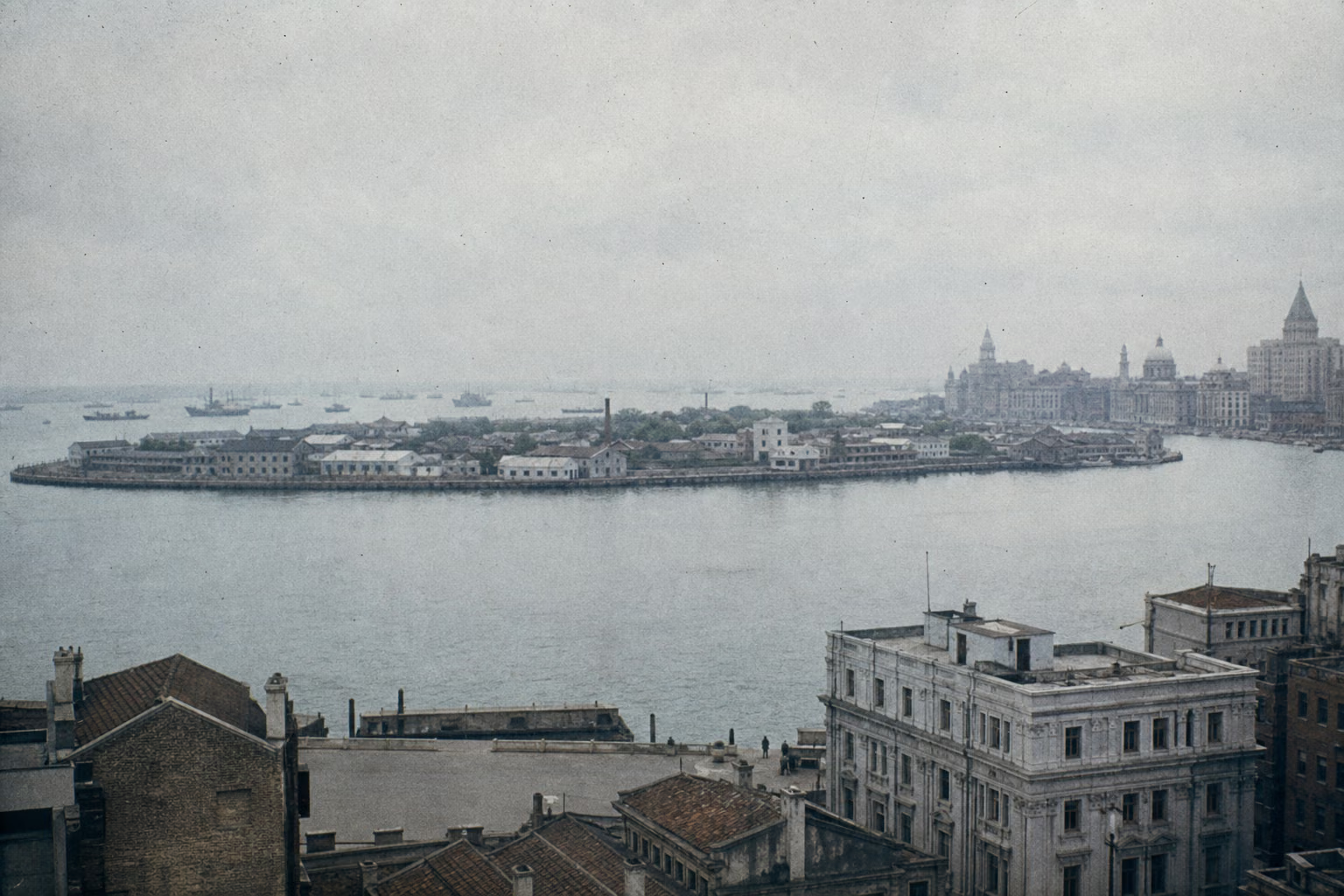
Shanghai in May 1949: a Far Eastern financial center of six million people, a city of memories from Sihang Warehouse and the treaty-port era (the city of the "watched death fight" twelve years earlier had now reversed attacker and defender--a spatial intertext with *Defense of Sihang Warehouse*); Chiang Kai-shek personally stationed himself on Fuxing Island to supervise the evacuation (the evacuation line for gold, silver, and foreign exchange--figures for the Central Bank's gold and silver moved to Taiwan vary by account ※, "Shanghai's family silver was moved to Taipei"); the street economy: the final collapse of the Gold Yuan, panic buying, and silver-dollar dealers--the city maintained itself in the gap between two regimes.
Why It Was Fought
After the Yangtze Crossing, the larger situation around Nanjing, Shanghai, and Hangzhou collapsed in three days: on April 23 Nanjing changed hands, and the five armies and 80,000 men withdrawing south were then encircled and annihilated in the Langxi-Guangde mountain area. Tang Enbo's group of roughly 200,000 men fell back to Shanghai--the foremost metropolis of the Far East, with a population of six million, became the last stop of the Jing-Hu-Hang Campaign.
The reasons both sides wanted this city were not wholly military. For the CPC, Shanghai was the first great examination of "entering the city": it had not only to take the city, but to receive it intact--the power plants had to keep turning, the waterworks had to keep flowing, and markets had to be able to open. For this reason, the assault troops first stopped at Danyang for training in city-entry discipline and for the assignment of several thousand takeover cadres; the operational orders included a ban on heavy artillery in the urban area and restrictions on demolitions--Chen Yi compared it to "catching rats in a china shop" (source unverified), the costliest military order of the whole battle. For the Nationalist government, defending Shanghai was for the evacuation: Chiang Kai-shek personally stationed himself on Fuxing Island in the Huangpu River to supervise the movement of gold, silver, machinery, and troops to Taiwan according to embarkation schedules. One more day held meant one more ship loaded. On one side, military action served takeover; on the other, military action served withdrawal--for both sides, the value of time did not lie in the battle line itself.
This determined the shape of the battle: the attacker had 400,000 men and ample heavy artillery, yet tied one hand behind its own back; the defender knew the city could not be held, yet still had to stand hard on both wings of Wusong behind more than 4,000 U.S.-style concrete blockhouses (exact number unrecorded)--because those positions protected the embarkation route and could not be lost even one day early.
On May 12, the Tenth Corps lunged toward Yuepu and Liuhang on the Wusong perimeter, and the battle began. From the first day, it was a double race: the speed of closing the door against the speed of loading the ships--and the city itself had to remain intact inside that race.
Course of the Engagement
| Phase | Time | Key Points |
|---|---|---|
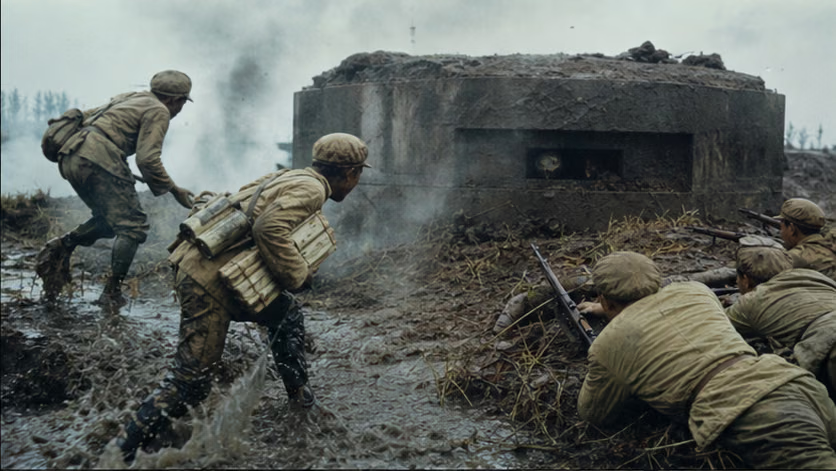
| Bloody fighting at Yuepu | 5.12–23 | The Tenth Corps attacked the Yuepu and Liuhang bunker belts on the Wusong perimeter: concrete bunkers on a water-network plain, infantry assaults with demolitions under the no-heavy-artillery order--the 29th Army and other units suffered grievous casualties (several thousand casualties at Yuepu alone, with statistical bases varying by account)--the costliest ten days of the whole battle |
| Parallel advance in Pudong | 5.14–23 | The Ninth Corps took Chuansha and Gaoqiao, pressing toward the southern bank of the Wusongkou--the jaws closing on the evacuation corridor |
| Race of evacuation | Throughout | The Nationalist Army fought while loading ships: the general withdrawal began on 5.24, and convoys at Wusongkou weighed anchor day and night (the number of evacuation sailings and personnel remains unverified) |
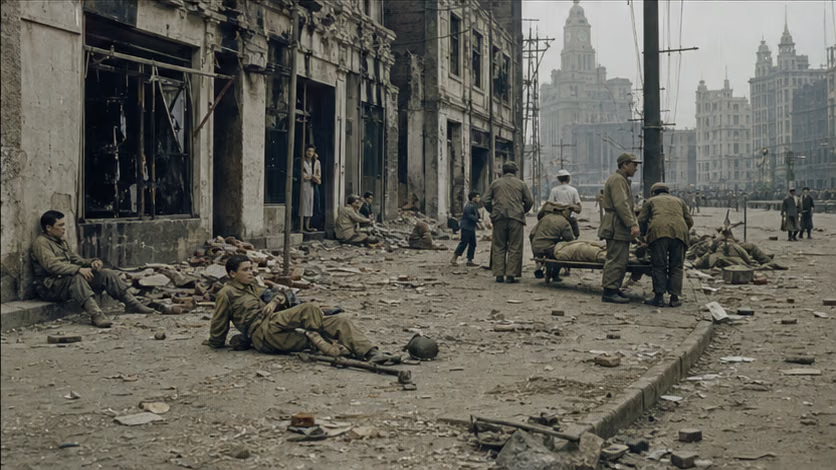
| Urban advance | 5.24–26 | After the defenders contracted, the attackers entered the urban area: high points such as Broadway Mansions on the north bank of Suzhou Creek sealed the bridges with fire--Suzhou Creek again became a front line (the river of 1937 was this time fought from south to north, an intertext); political persuasion by Nie Fengzhi's forces and the surrender of units such as the defenders' 51st Army (Liu Changyi's key act of opening the way--the cross-strait and internal distinction over whether to classify him as an "uprising" or "surrender" remains unverified) |
| Whole city changes hands | 5.27 | Remaining enemy forces were cleared; soldiers slept on the roads in the rainy night and did not enter private homes--eyewitness reports by foreign media (records in *Ta Kung Pao* and by Western journalists remain unverified) became the first international calling card of the new regime |
Casualties and Losses
- PLA: more than 31,000 casualties (statistical bases vary by account)--most of them spent against the Yuepu bunker belts: the price of an "intact city" was paid by the attacking soldiers, this structure.
- Nationalist Army: more than 150,000 annihilated or captured, about 50,000 evacuated to Taiwan (the composition basis remains unverified).
- ※ Civilians and the city: even with restraint in the urban fighting, civilians were still affected (figures for civilian casualties along Suzhou Creek and in the fight for the Yangshupu Power Plant vary by account); Shanghai's power plants and waterworks did not stop--the technical success of "intact takeover"; the two-way ledger of the gold-and-silver evacuation ※ and memories of seizure during takeover.
- Postwar Campaign to Suppress Counterrevolutionaries and the remaking of old Shanghai belong outside this time span.
Aftermath
- The foremost city of the Far East changed hands intact--the largest test of the new regime's economic takeover was passed (one line through Chen Yi's first term as mayor); the image of "sleeping on the roads" became a core symbol in the founding narrative (with layered marking of its image history and authenticity--the photographs are real, and the organizational character was real as well: discipline was both spontaneous and organized, the two sides coexisted).
- The troops and gold Tang Enbo carried away became part of the foundation of Taiwan's defense (Shanghai's endpoint was Taipei's starting point--the material link between narratives across the strait).
- The last convoys outside Wusongkou and the city left behind--the division between "those who left" and "the city that remained" became the starting point of countless family histories afterward (one line opening the diaspora narrative, to be connected with *Battle of Kinmen (Guningtou, incl. Dengbu Island)* and the stance sentence of *Taiwan Strait Crises · Overview*).
Accounts of Those Present
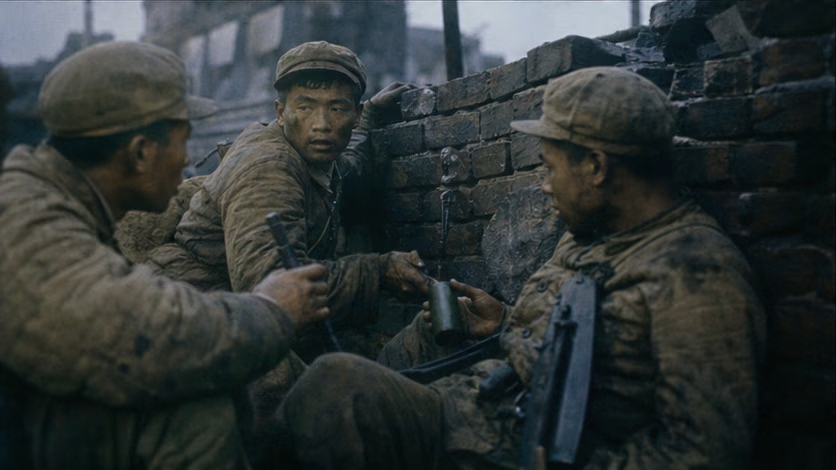
- The demolition men of Yuepu: infantry who exchanged satchel charges and flesh for blockhouses under the no-artillery order (details of 29th Army battle examples unrecorded)--the names of "those who died in greater numbers for the city's intactness" cannot be counted, but their existence must be stated.
- Liu Changyi's afternoon: a defending army commander laid down his weapons at the front and opened the way into the urban area--the classification of his act as "uprising" or "surrender" pulled back and forth for decades afterward (his treatment and rehabilitation line remain unverified)--the history of how one action was named.
- The morning of sleeping on the roads: the first sight when residents opened their doors (multiple oral accounts and foreign-media records)--regime change was compressed into a single visual instant; the doubts and wait-and-see attitude of Shanghai residents (oral-history layer) are recorded alongside it.
- Chiang Kai-shek on Fuxing Island: supervising the evacuation of the regime's remaining assets from a small island in the Huangpu River, looking back at Shanghai for the last time (his diary remains unverified)--a farewell ceremony from the defeated side's perspective.
- The workers of the Yangshupu Power Plant: plant-protection teams maneuvered with the defenders and kept the generators safe (details of the plant-protection movement unrecorded)--one front line on which the city saved itself.
The Ground
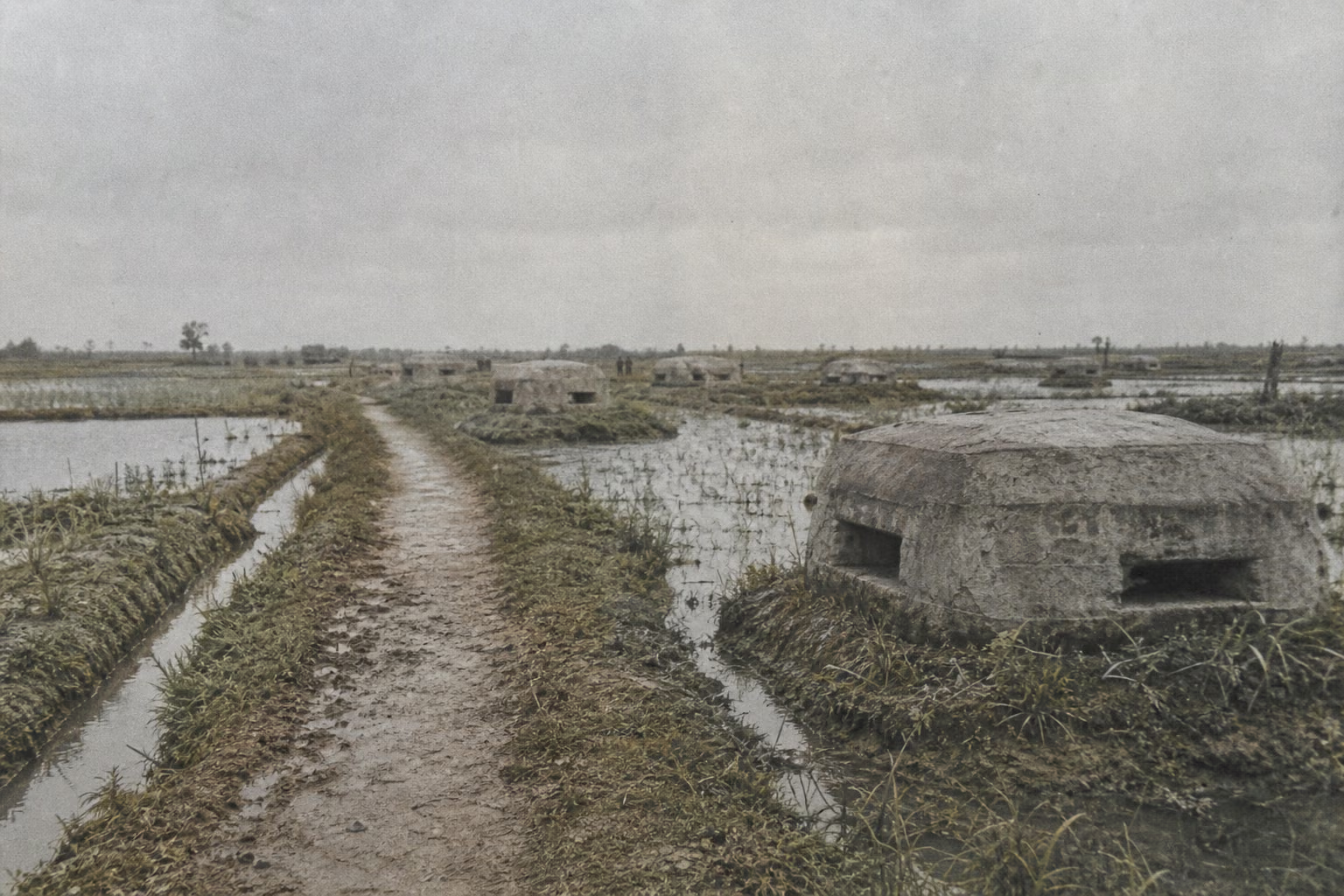
- Yuepu bunker belts: a concrete point array on a water-network plain--a rule-shaped battlefield of "assaulting fortifications without artillery" (a spatial sample in which external constraints changed tactics, unique in the whole series).
- Suzhou Creek (second time): the same river, different situations in 1937 and 1949--bridges, buildings (the firing point at Broadway Mansions), and riverbanks repeated and inverted the attack and defense: the two intertexts of one river form the best spatial closure in this series.
- Wusongkou: the spatial window of the evacuation corridor--the race between "speed of closing the door" and "speed of loading the ships."
- Firing points in urban high-rise buildings: the Park Hotel and Broadway Mansions--modern urban vertical space entered the civil war.
- Roadside bivouac: the politics of non-combat space--"not crossing the threshold" as a spatial declaration.
How Each Side Records It
- CPC canon: the peak of the founding narrative of "liberating Shanghai intact" and city-entry discipline; the image line of *Battle for Shanghai*.
- Taiwan side: the "strategic transfer" narrative of a successful evacuation (two evaluations of Tang Enbo's merits and faults--the contradictory judgment between the stigma of defending Shanghai and the merit of transporting resources to Taiwan); the gold transported to Taiwan is narrated on the Taiwan side as "preserving the lifeline of the nation."
- Shanghai residents' memory: layers of watching, acceptance, and nostalgia (urban oral-history line); reporting materials by Westerners present in the city (one line from the perspective of the last "Far Eastern adventurers' paradise").
Disputes and Sensitivities
- The debate over Yuepu casualties and the military cost of the "no-heavy-artillery order"--the order's humanitarian gains and the soldiers' cost coexisted.
- The figure set for gold transported to Taiwan (estimates by different parties diverge sharply) ※.
- The classification of Liu Changyi; the organizational and spontaneous sides of "sleeping on the roads."
- Troops evacuated to Taiwan and the narratives of scattered families belong to the long tail after the battle.
Sources and Open Questions
Sources: source collection on *Battle of Shanghai*; memoirs by Su Yu and Zhang Zhen; Tang Enbo evacuation files (Taiwan side); Shanghai local gazetteers and oral-history projects; collected reports by Western journalists present in the city.
Open questions: strength, casualties, and evacuation figures for both sides; number of blockhouses; details of Yuepu battle examples; figure set for gold and silver transported to Taiwan; the Liu Changyi case; evidentiary checking of the sleeping-on-the-roads images; details of plant protection.
All images on this site are AI-generated depictions. They are not historical photographs, not primary sources, and do not depict any real individual.