Engagement Archive · Battle of Kinmen (Guningtou, incl. Dengbu Island)
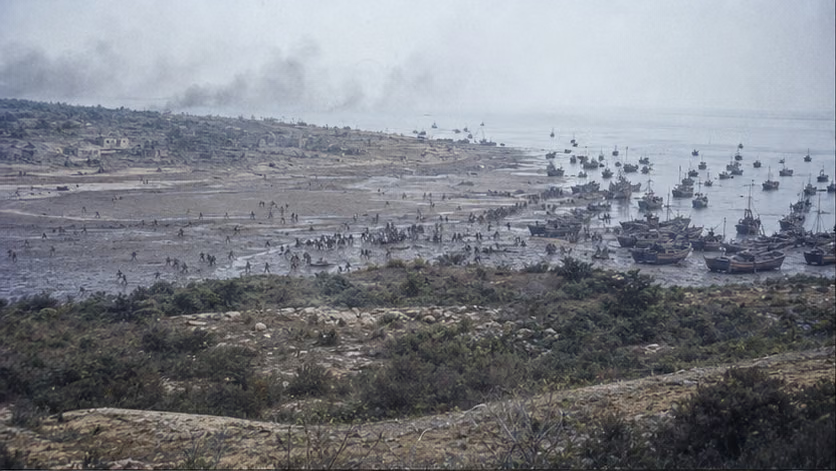
Xiamen had just fallen when 9,000 men crossed by wooden boat to Kinmen at night. The tide went out, the boats grounded on the beach and were burned to nothing, and the troops ashore fought for 3 days without a single boat of reinforcement before being annihilated: the most complete defeat of the Chinese Civil War. 8 months later the Korean War broke out, the Seventh Fleet entered the Taiwan Strait, and the window for an amphibious crossing closed permanently. Half of the Taiwan Strait's present shape was fixed on the beaches of Guningtou.
Engagement Data
| Item | Details |
|---|---|
| Time | Night of 1949.10.24 – 10.27 (Kinmen); 11.3–5 (Dengbu Island) |
| Place | The Guningtou–Longkou–Huwei line on Kinmen Island, Fujian; Dengbu Island, Zhoushan, Zhejiang |
| Belongs to | Chinese Civil War (for the overall context, see "Chinese Civil War · Overview") |
| Attacker | First echelon of units including the Third Field Army's Tenth Corps, 28th Army: 3 regiments, about 9,086 men (troop figure basis unverified) -- the original 2-echelon plan was constrained by insufficient boats única |
| Defender | Nationalist forces on Kinmen: Li Liangrong's 22nd Corps plus reinforcements from Hu Lian's Twelfth Corps (the main force was in place by the next day; total over 40,000, though figures vary by account); part of the Third Tank Regiment (M5A1 "Bear of Kinmen") |
| Result | The troops ashore were gone within 3 days: about 3,900 killed, about 5,200 captured (the two sides give different figures) -- the only major defeat in which a PLA formation was annihilated as an organized force |
Belligerents
| Item | Attacker | Defender |
|---|---|---|
| Sea crossing | About 300 wooden sailing boats, enough for only 1 echelon; many boatmen were newly conscripted and unfamiliar with Kinmen waters | Naval vessels patrolled offshore; obstacles were emplaced on the beaches |
| Intelligence | A triple misjudgment: the size of the defending force (unaware that Hu Lian's corps was arriving), the tides (the great tidal range on a spring-tide night), and boat transport (no plan for a follow-on echelon) | Hu Lian's corps arrived by sea just in time -- the decisive move was the timing gap |
| Psychology | The complacency of a force used to victory (the atmosphere of "Kinmen can be taken in a day or two" -- pre-battle records of complacency unverified) | A defeated army with its back to the water ("no further retreat" as a fight for survival) |
Terrain and Conditions
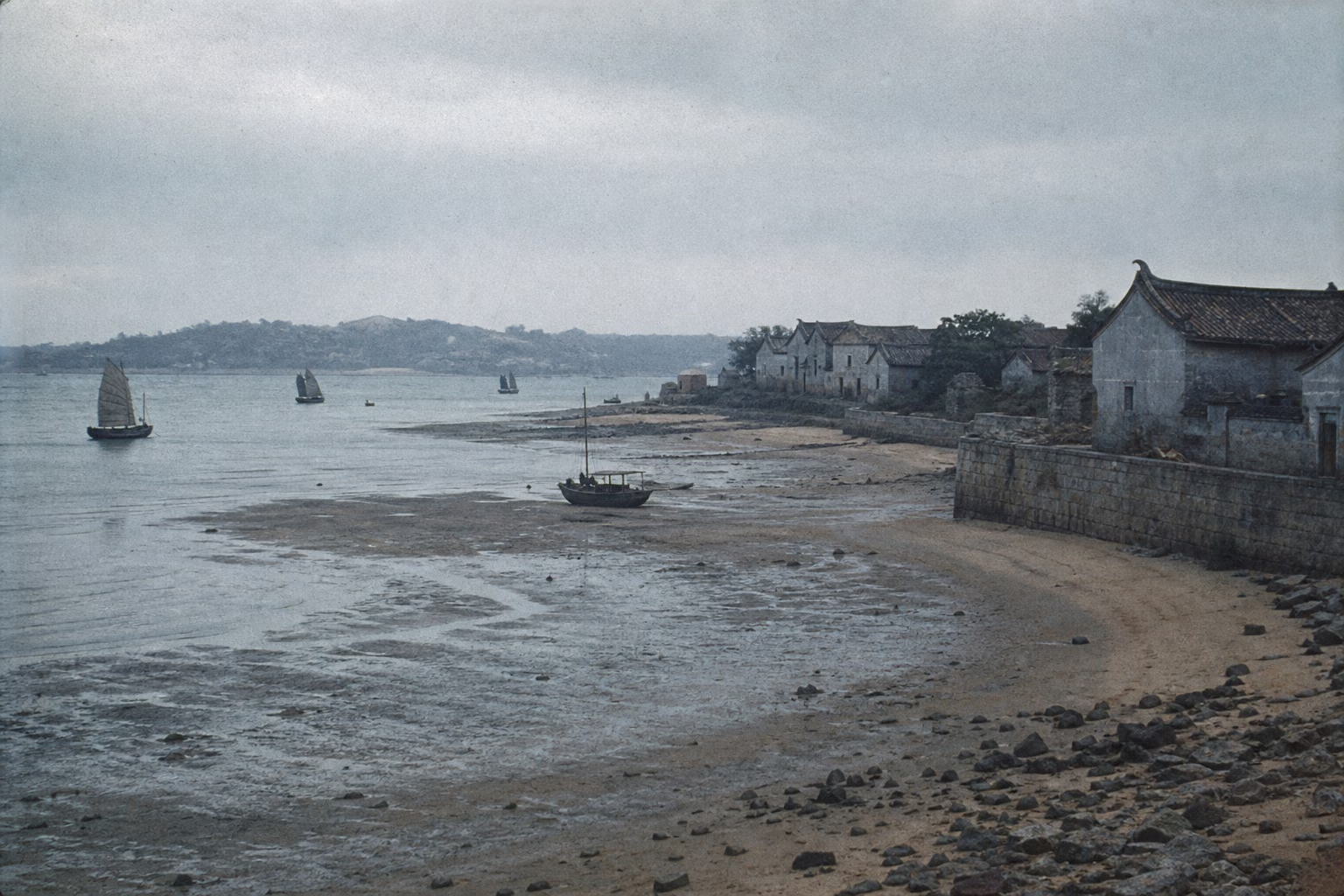
October 1949: Xiamen fell on 10.17, and the Tenth Corps' advance was at its height. Kinmen lay alone 10 kilometers east of Xiamen -- the illusion of "taking it in passing". Strait hydrography: the Kinmen waters had a large tidal range and fast night currents. Boats: civilian craft and boatmen were requisitioned in haste (boatmen's casualty and capture line ※ unverified -- the account of civilian labor was present in defeat as well). Defender: the beach directly in front of Guningtou happened to be a preset zone for the defenders' exercises (the contingency line of the tank's breakdown position -- the level at which "luck" should be marked remains unverified).
Why It Was Fought
Lanzhou decided the Northwest in the same autumn, while the mainland war was closing along the southeastern coast. The Tenth Corps entered Fujian; Zhangzhou and Xiamen fell one after the other; on October 17 Xiamen changed hands, and the army's momentum was high. On the map, Kinmen hung alone 10 kilometers east of Xiamen and looked like an endgame stone to be taken in passing. The attack on Kinmen thus became an inertial arrangement for the closing battle.
What was Kinmen worth? It controlled Xiamen's outlet to the sea; unless Kinmen was taken, Xiamen could not be a complete port. It was also the front-line position closest to the mainland in the Nationalist retreat sequence. The island was held by Li Liangrong's 22nd Corps, the remnant of a defeated army -- but an unseen variable was already at sea: Hu Lian's Twelfth Corps was being transported to Kinmen in batches. The attacker did not know this timing gap existed.
The deeper mistake was to treat the strait as if it were a great river. The experience of crossing the Yangtze was carried unchanged onto the sea: but the Yangtze had no tides, and the strait did; boats along a riverbank could be requisitioned on the spot, while the wooden sailing boats assembled for the Kinmen direction numbered only around 300, enough for a single echelon. Under the pressure of consecutive victories, the atmosphere of "Kinmen can be taken in a day or two" spread (pre-battle records of complacency unverified); higher command pressed the schedule, lower levels lacked boats, and the two ledgers were never reconciled (the decision-chain review remains unverified). Later reviews arranged the intelligence failures into 3 points: not knowing Hu Lian's corps was arriving, not calculating the rise and fall of a spring-tide night, and having no plan for a follow-on echelon.
The opposing calculation was exactly the reverse: a defeated army had its back to the water, with nowhere further to retreat. If Kinmen were lost, the gate to the Taiwan Strait would stand open, and the defenders fought this battle as a matter of survival.
On the night of October 24, the first echelon, 3 regiments and about 9,000 men (troop figure basis unverified), set out in about 300 wooden sailing boats, aiming directly at the beaches along the Guningtou line. Many boatmen were newly conscripted and unfamiliar with Kinmen waters. When the boats went out, there were no boats waiting for the second echelon -- those 300 were all there were.
Course of the Engagement
| Phase | Time | Key Points |
|---|---|---|
| Night crossing and landing | Night of 10.24–morning of 10.25 | 3 regiments set out at night in 300 boats and seized the beaches along the Guningtou line; the ebb tide stranded the boats -- the next morning, defending aircraft and naval vessels set them alight and nearly burned them all: the route of return and the route of reinforcement disappeared at the same time |
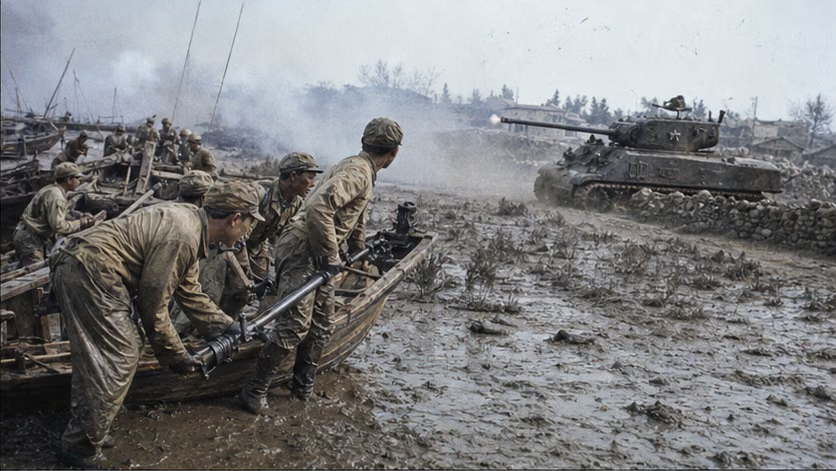
| Bitter fighting on the first day | 10.25 | The troops ashore penetrated inland and fought the 22nd Corps with advances and reverses on both sides; Hu Lian's Twelfth Corps, including the 18th Army, arrived by sea and entered the fight -- the balance turned that day; tank units counterattacked (the "Bear of Kinmen" line remains unverified) |
| No follow-on support | 10.25–26 | The far shore managed only several hundred men in a single boat as reinforcement (only 4 companies of the second echelon crossed the sea -- the history of such inadequate reinforcement remains unverified); the troops ashore were compressed into the villages of Guningtou |
| Annihilation | 10.26–27 | The villages were fought house by house until ammunition was exhausted; by the morning of the 27th the battle was over -- 3 regiments had disappeared as formations; the desperate telegrams from the 28th Army's forward command and the pain of having no boats on the opposite shore (telegram line unverified) |
| Dengbu Island | 11.3–5 | In the Zhoushan direction, Dengbu Island was attacked again: after the landing, defenders received reinforcements, and after 2 nights of bitter fighting the attacking force withdrew on its own initiative (casualty figures vary by account) -- a second consecutive setback in amphibious operations, but with the contrast that Dengbu's force withdrew successfully while Kinmen's was annihilated |
Casualties and Losses
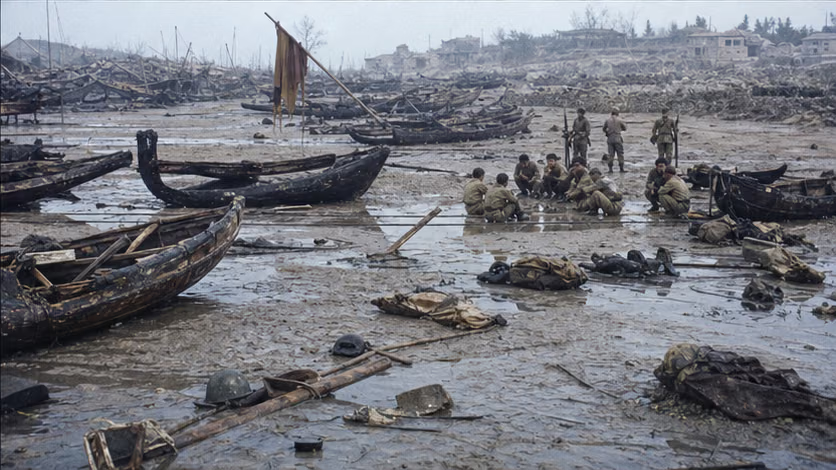
- Attacker: of 9,086 men, none returned -- about 3,900 killed and about 5,200 captured (including several hundred boatmen ※ -- the later lives of the captured: about 900 repatriated, others retained in Taiwan and reorganized into units, some executed or disappeared -- the composition of the figures is given differently by the two sides and remains unverified; the scrutiny faced by those who returned and the review line of the 1980s -- a domestic long tail structurally parallel to the return of Korean War prisoners of war, brief account unverified).
- Defender: over 3,000 casualties (Taiwan-side figures vary by account).
- ※ Boatmen: requisitioned boatmen were burned or captured with the boats -- a civilian account (name lists unverified).
Aftermath
- The review telegrams by Su Yu and the Central Military Commission ("investigate the causes and take warning" -- Mao Zedong's 10.29 telegram circulated the case to the whole army: the handling of sending a defeat to the whole army for study remains unverified); the Third Field Army's preparations for attacking Taiwan were upgraded across the board (shipbuilding, training, hydrography -- the attack-on-Taiwan timetable line for the first half of 1950 remains unverified).
- The window closed: on 1950.6.25 the Korean War broke out; on 6.27 the Seventh Fleet entered the Taiwan Strait -- the attack on Taiwan was postponed indefinitely: a causal chain from the 3 days at Guningtou to 70 years of the Taiwan Strait (the defeat at Kinmen allowed Taiwan to hold on to "existence"; the Korean War allowed it to hold on to "time" -- the two links locked together).
- Taiwan side: the "Guningtou Victory" became a turning-point spiritual asset (the first complete victory after a year of retreat -- the Hu Lian "General Boyu" narrative, the Guningtou Battle Museum, and the commemorative system); Kinmen thereafter became a Cold War outpost (the 1958 artillery battle line is noted here as outside this series' time frame).
- PLA amphibious operational studies began with this case -- the success on Hainan was its corrective case (see Hainan Island Campaign, "the Kinmen lessons cashed out").
Accounts of Those Present
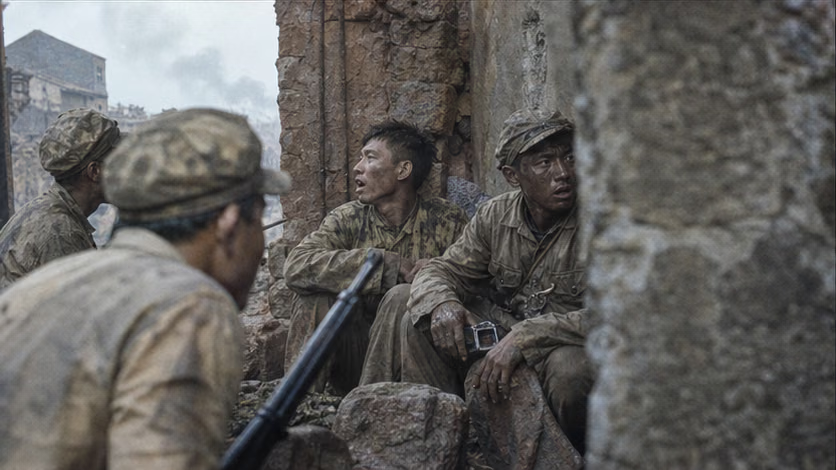
- The morning of burning boats: soldiers ashore looked back toward the beach -- 300 boats were burning: the moment when "no way back" changed from metaphor into fact (survivor and prisoner oral-history layer unverified).
- Hu Lian's timetable: the general who had broken out from Shuangduiji happened to settle the account at Kinmen through the timing gap of reinforcement (the closure of a cross-article character arc -- this series' only complete example of a "defeated general turning the tables").
- The boatmen's names: requisitioned fishermen and boatmen were destroyed with the army -- they are not in either side's martyr lists (※ name lists unverified) -- the heaviest entry in the account of civilian labor.
- The forked paths of 9,000 captured men: those retained in Taiwan, those repatriated, those who disappeared -- 3 kinds of lives produced by 1 battle; the line of rehabilitation decades later for those who returned (the third case of a "survivors' long tail," set beside the Western Route Army and Korean War prisoners of war).
- Xiao Feng on the far shore: the officer in charge of the 28th Army's forward command watched the sea without boats (his diary and review line unverified) -- a commander could see the battlefield yet could not send in a single soldier: an extreme example of helplessness.
The Ground
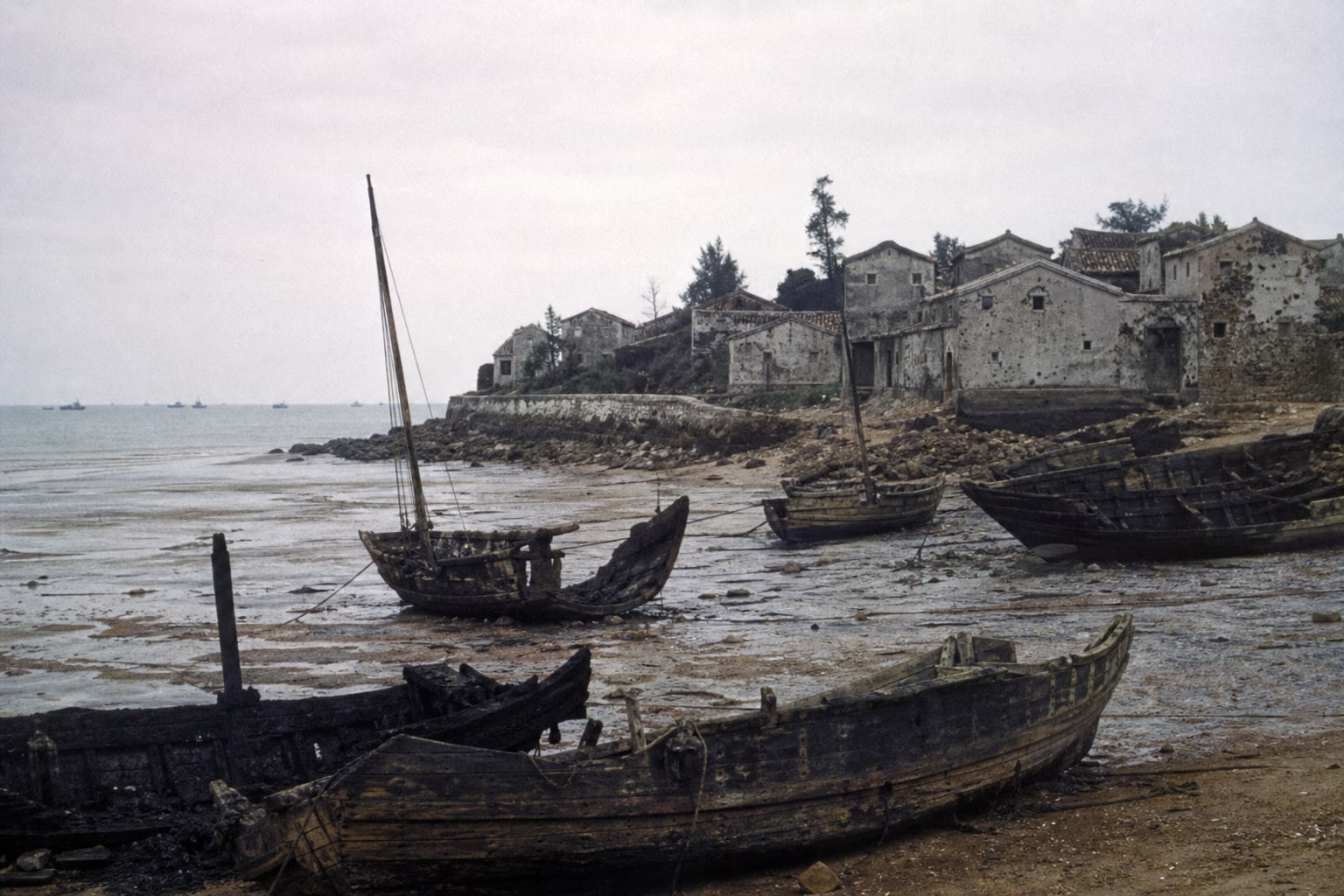
- 10 kilometers of strait: the 3 gates of the crossing -- tidal window, night navigation, beach seizure (each gate was a mechanism variable -- this series' only complete sample space of "failed amphibious crossing").
- The line of burning boats on the beach: the visible destruction of the route back -- "a visible dead end."
- Guningtou villages: the final house-to-house fighting (the bullet-scarred wall of the Beishan old residence survives today -- battlefield-site line).
- The sea in 2 directions: the same strait, a natural barrier for the attacker and a moat for the defender -- the positionality of space.
How Each Side Records It
- CPC/PLA: a lesson case circulated to the whole army -- a defeat openly recorded in official accounts (one of the cases most frankly acknowledged in military history, alongside the assault on Siping); the public narrative long remained low-key, while research has gradually opened in recent years.
- Taiwan side: the commemorative system of the "Guningtou Victory" (battle museum, anniversaries, "Kinmen spirit") -- the survival feeling in its narrative is real: a psychological defensive line propped up by a single victory.
- Local Kinmen: a double-layered local history of battlefield memory and Cold War outpost status (civil-defense tunnels; the later "shell on odd days, not on even days" line is marked as outside the time frame).
Disputes and Sensitivities
- The weight assigned to the causes of defeat (intelligence / tides / boats / complacency / command hierarchy) -- review histories set several explanations side by side.
- The two sides' figures for captured men and their later fates; the circumstances of those who returned ※.
- The narrative of "luck" (the tank breaking down, Hu Lian arriving just then) and the level at which it belongs -- contingency and necessity are both recorded.
- The overview-position sentence on the continuing Taiwan Strait causal chain.
Sources and Open Questions
Sources: the Kinmen section of History of the Third Field Army and the Central Military Commission circular telegram; Xiao Feng, Recalling the Kinmen Landing Battle; Taiwan-side military histories of the Kinmen Defensive Battle and materials from the Guningtou Battle Museum; oral histories from both sides (surviving prisoners and veteran defenders).
Open questions: the grouped figures for both sides' strength, casualties, and prisoners; boat and boatman counts; details of reinforcements; the original text of the circular telegram; the composition of the captured men's later fates; the tank and Hu Lian timeline.
All images on this site are AI-generated depictions. They are not historical photographs, not primary sources, and do not depict any real individual.