Engagement Archive · Battle of Shanchengbao
The first battle after the three main Red Army forces joined, and, in the common telling, the last battle of the ten-year civil war: units from the Red Army's three front armies laid an ambush at Shanchengbao in Huanxian, Gansu, and within two days destroyed more than one brigade of Hu Zongnan's pursuing force.
Engagement Data
| Item | Content |
|---|---|
| Time | 1936.11.21 – 11.22 |
| Place | The Shanchengbao area of Huanxian, Gansu (around present-day Huanxian, Qingyang, Gansu) |
| Belongs to | Late Agrarian Revolutionary War (ten-year civil war); first joint operation after the three main forces joined (1936.10) |
| Ambushing side | Elements of the Red First, Second, and Fourth Front Armies, with Peng Dehuai as front-line commander-in-chief (full participating order of battle unverified) |
| Ambushed side | Part of Hu Zongnan's First Army, 78th Division (division commander Ding Delong), of the Nationalist Army: the common statistical basis gives the 232nd Brigade (brigade commander Liao Ang) plus two regiments (unit numbers and organization unverified) |
| Result | By 11.22 the annihilation battle was complete, destroying more than one enemy brigade (enemy losses inflicted vary by statistical basis) |
Belligerents
| Item | Ambushing side | Ambushed side |
|---|---|---|
| Strength | Forces drawn from the three front armies for a joint operation, with a clear local advantage (specific participating troop figures vary by statistical basis) | About more than one brigade, several thousand men, entered the ambush zone |
| Equipment | Mainly rifles and machine guns, with very little artillery | The First Army, a core Central Army force, with complete equipment |
| Situation | Retreating while luring the enemy on, preparing the battlefield in advance, concentrating forces | Advancing rashly in separate columns, isolated and deep in enemy ground, cut off from neighboring columns |
| Method | Attack launched at dusk, night fighting and close combat | Firepower advantage difficult to deploy at night |
Terrain and Conditions
(For the wider situation in 1936 -- the joining of forces after the Long March, the Northeastern Army's "Communist suppression" campaign in the northwest, and the crisis in North China -- see *Agrarian Revolutionary War · War Overview*; here only eastern Gansu is covered.)
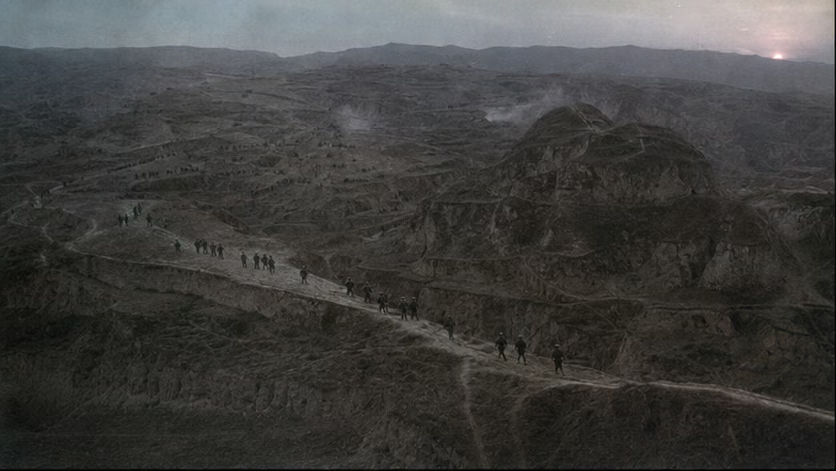
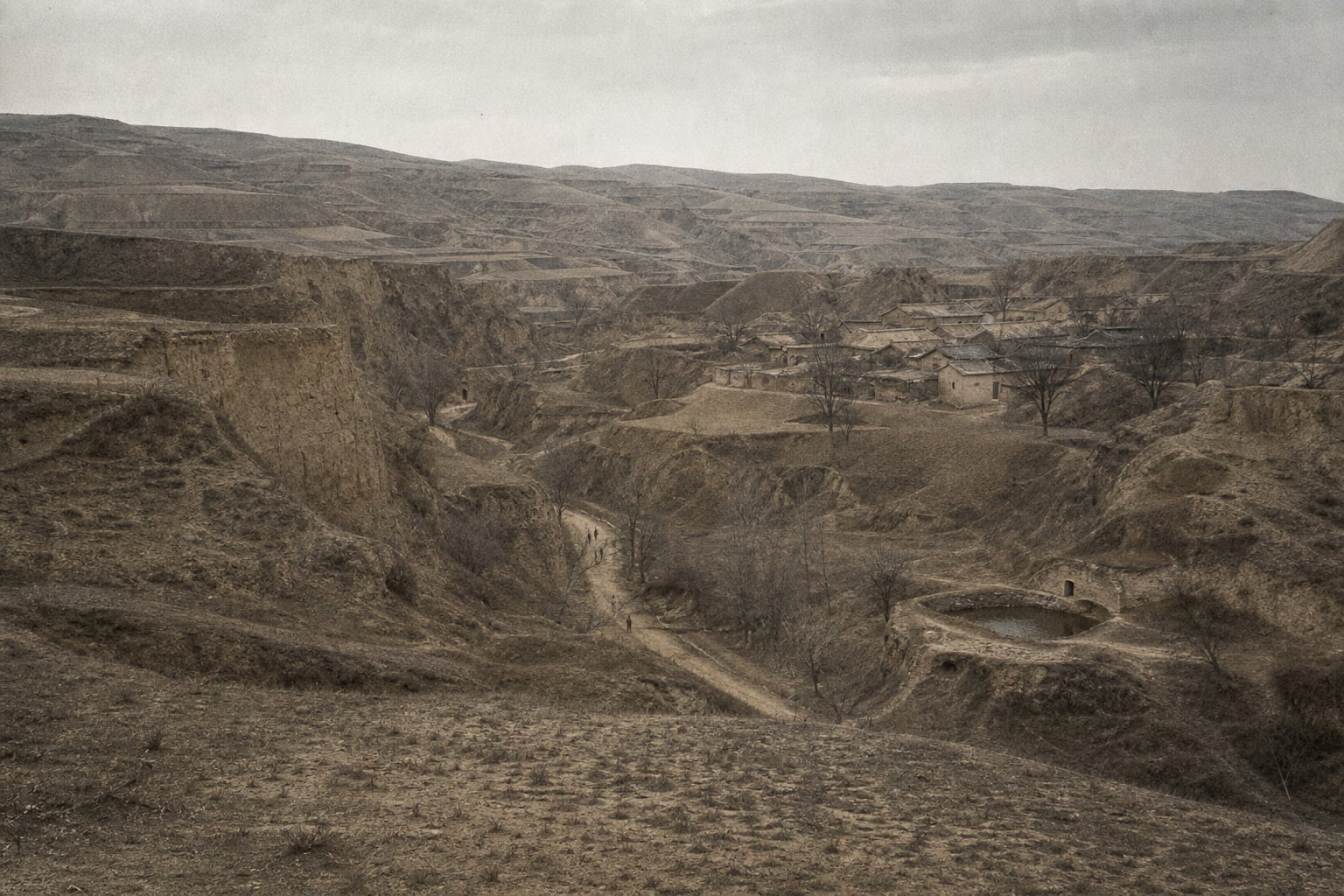
Huanxian, Gansu, lay in the broken-yuan and ravine country of the Loess Plateau, on the western edge of the Shaanxi-Gansu Soviet Area. After the joining of forces, the Red Army main force gathered around Haiyuan and Yuwangbao to rest and refit (assembly sites and sequence unverified), but the base area was small and poor, and both grain and manpower were problems. Whether they could stand firm in Shaanxi-Gansu depended on whether they could block the Central Army's follow-up pressure. It was early winter, cold and short of water; the cistern water and spring water around Shanchengbao were unavoidable elements in winter marching and fighting (the role of water sources in this engagement unverified).
Why It Was Fought
The Yellow River had split the Red Army in two. In late October 1936, the Western Route Army crossed west of the river, and the Nationalist Army immediately severed the connection between the two banks (see *Western Route Army's Battles in the Hexi Corridor*). East of the river, the main forces of the three front armies that had just joined were gathered around Haiyuan and Yuwangbao to rest and refit (assembly sites and sequence unverified). Chiang Kai-shek gave them no time to rest: he assembled heavy forces to advance against Shaanxi-Gansu, with Hu Zongnan's First Army as the spearhead, pursuing and pressing in separate routes. In mid-November, the Central Revolutionary Military Commission ordered the main forces of the three front armies east of the river to come under the unified orders of front-line commander-in-chief Peng Dehuai and political commissar Ren Bishi (original text and document number of the order unverified). The decision had reached this level: no longer simply withdraw, but choose ground and turn back for one battle.
The Red Army had nowhere left to retreat. The Shaanxi-Gansu base area was small and poor; grain and manpower were both problems, and whether it could hold depended on whether it could block the Central Army's follow-up. The three main forces had only just come together; if they were pressed apart, ten years of accumulated strength would be lost after the joining. Nor could they hold in a head-on fight: the opponent was the core First Army of the Central Army, well equipped, while the Red Army had very little artillery. What remained was still the method they knew best: yield ground and pull the enemy apart. From mid-November, the main force withdrew eastward step by step from the Yuwangbao-Tianshuibao line, retreating while luring the enemy on. The forces that had joined were still exhausted, and winter clothing, grain, and ammunition were all tight (shortfall details unverified). The poor mountains of Shaanxi-Gansu could not sustain a large army for long. This battle had not only to be won, but won quickly.
Hu Zongnan misread this withdrawal. He judged that after the Long March the Red Army was already collapsing and unable to hold, and his units advanced rashly in separate columns. That judgment came before the intelligence: it was not that there were no reports from the various routes, but that the prior assumption of "collapse" read the reports for him (correspondence on the basis for his judgment unverified). Several thousand men from part of the 78th Division occupied Shanchengbao alone, opening a distance from friendly units on both flanks. Why the two flanks failed to close in promptly -- distance, ravines, or orders -- is not clearly recorded (unverified). In the broken-yuan country of eastern Gansu in early winter, yuan ridges, ridgelines, mounds, and gullies cut across one another; large forces could move only along the valley roads. The country was cold and short of water, and cisterns and springs were unavoidable strongpoints (role of water sources unverified). Once an isolated force entered such ground, its formation and supply were already inside someone else's calculation.
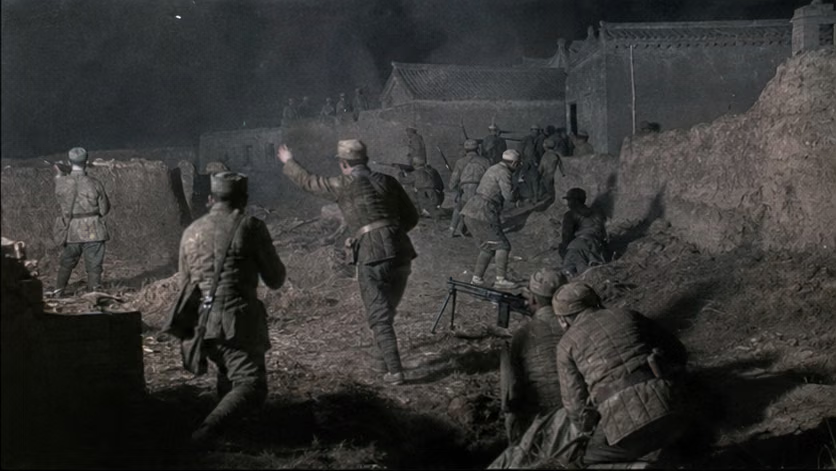
The front-line headquarters judged that this protruding enemy could be destroyed. What deliberation took place internally over whether to continue withdrawing or close the net in place is not preserved in the surviving records; only the result remains, with no record of dissent found (decision process unverified). Peng Dehuai issued unified orders and concentrated elements of the Red First, Second, and Fourth Front Armies to set an ambush and annihilate the enemy in the Shanchengbao area (decision process and original text of the deployment order unverified). In the ten years when each front army had its own chain of command, this was the first time the three armies obeyed one person's orders on a single battlefield. The opening time was set at dusk: pull the battle into the night, and use close combat to cancel out the opponent's firepower advantage. At dusk on November 21, a multi-directional encirclement began to close.
Course of the Engagement
| Phase | Time | Main Points |
|---|---|---|
| Luring the enemy | Early to mid-November | The Red Army withdrew eastward step by step from the Yuwangbao-Tianshuibao line (withdrawal route unverified), luring Hu Zongnan's units into separating and advancing rashly |
| Encirclement | Dusk, 11.21 | The Red Army suddenly encircled the enemy, part of the 78th Division, from multiple directions in the Shanchengbao area and cut off its retreat (mission assignments among the units unverified) |
| Annihilation | Night of 11.21 – 11.22 | Night fighting and close combat compressed and divided the enemy; on the 22nd the fighting ended, more than one enemy brigade was destroyed, and remnants broke out westward and fled |
Casualties and Losses
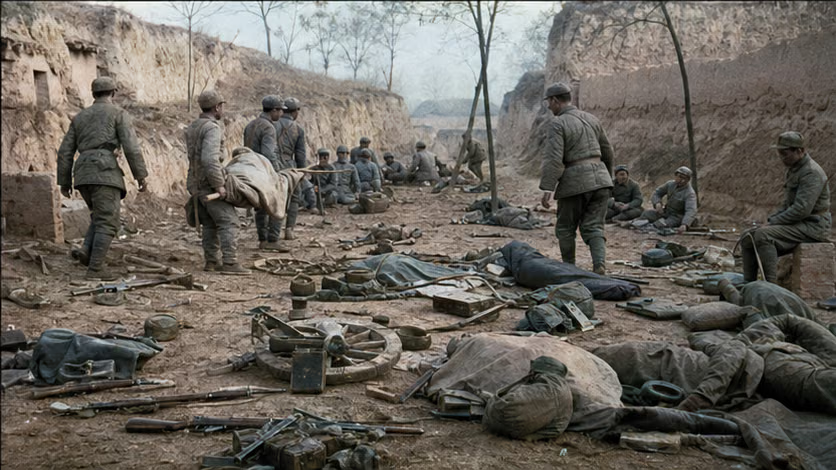
- Ambushed side: more than one brigade was destroyed; totals for killed, wounded, and captured vary by statistical basis, with a common figure around three thousand (sources for each basis to be checked side by side).
- Ambushing side: casualties were comparatively small (specific figure disputed).
Aftermath
- Hu Zongnan's forces were forced to withdraw and refit; pressure on the Shaanxi-Gansu Soviet Area was temporarily relieved, and the base area after the joining of forces found its footing.
- One month later (1936.12.12), the Xi'an Incident broke out, and the civil war in fact entered its final stage. Shanchengbao therefore became, in common usage, the "last battle of the ten-year civil war."
- Boundary of the claim: In the same period, fighting by the Red Western Route Army in the Hexi Corridor had already begun in November and continued until March 1937 (see *Western Route Army's Battles in the Hexi Corridor*). If counted strictly by the sequence of civil-war operations, Shanchengbao was not the final battle; the actual boundary of the common framing is "the Red Army's last large-scale operation against the main Central Army forces" (wording of this boundary varies by account).
- This was also the first coordinated action after the three front armies joined: the Long March ended by "coming together to win a battle."
Accounts of Those Present
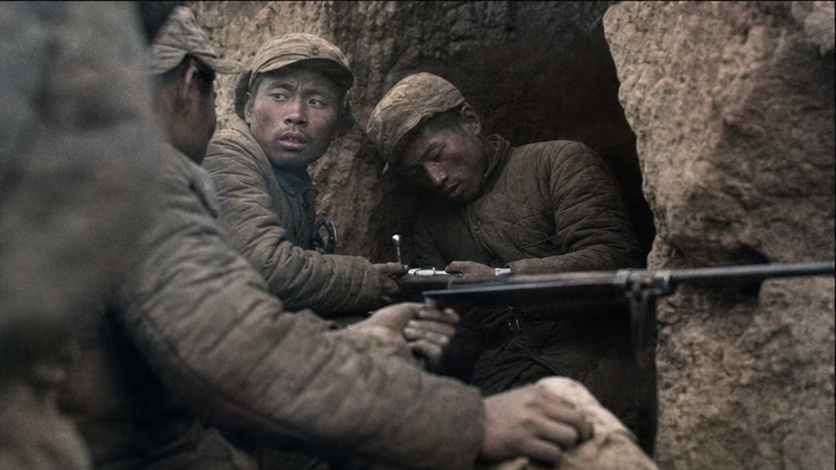
- Peng Dehuai: After the joining of forces, he served as front-line commander-in-chief and political commissar, commanding the participating units of the three front armies in a unified manner. Previously, the front armies had each had their own command structure; this was the first time they obeyed his orders alone on one battlefield (details of the command sequence unrecorded).
- Opening at dusk: Choosing to begin at dusk and settle the fight at night was experience bought by the Red Army with lives: avoid the Central Army's firepower advantage and pull the battle into the night fighting and close combat at which it was skilled.
- Ding Delong and Liao Ang: Ding Delong, commander of the 78th Division, and Liao Ang, commander of the encircled 232nd Brigade, broke out westward with the remnants and fled (breakout course and loss details unrecorded).
The Ground
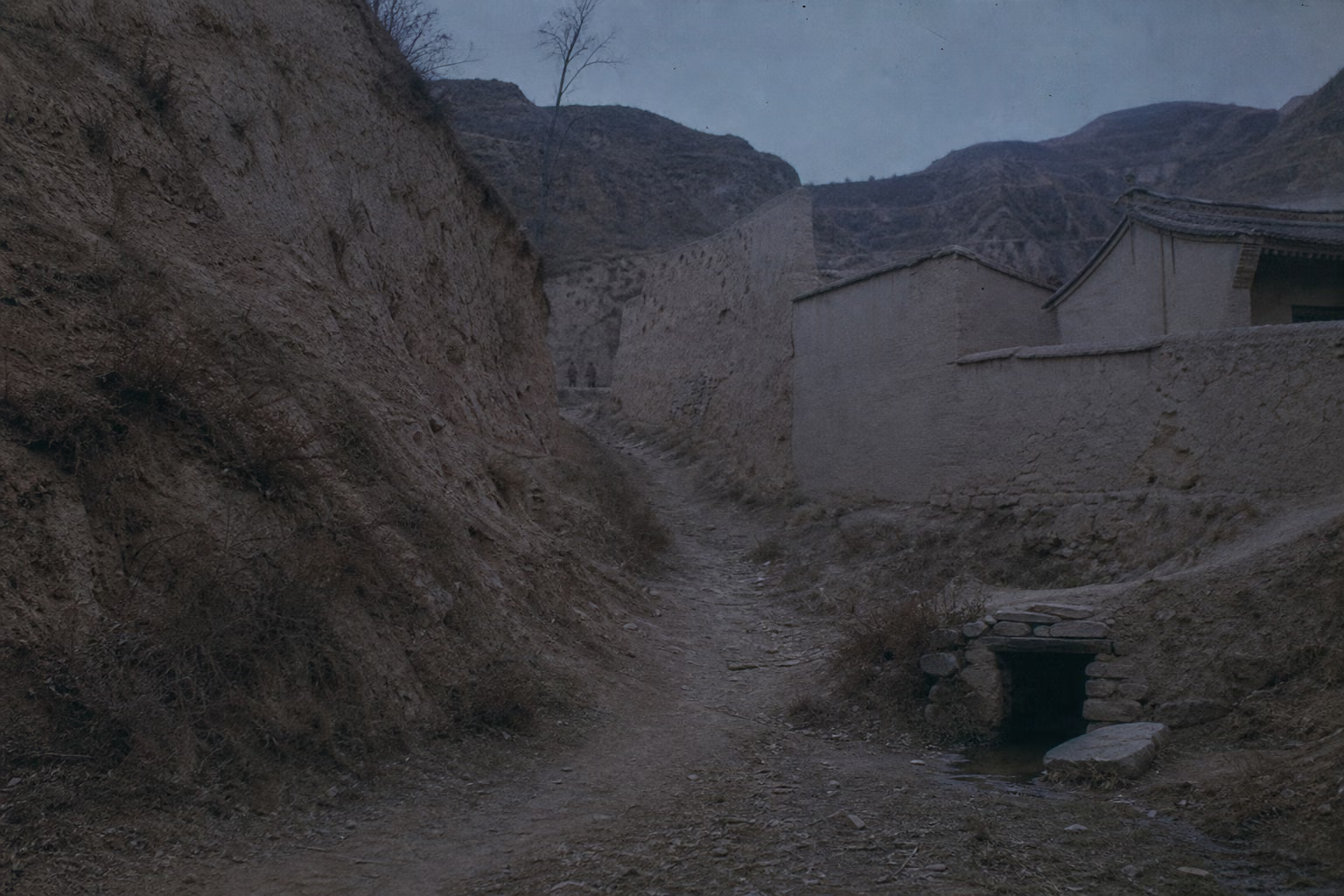
- Broken-yuan and ravine country of the Loess Plateau: yuan, ridgelines, mounds, and gullies cut across one another, and large-force maneuver could only follow the valley roads, making the terrain naturally suited to concealed approach and sudden encirclement.
- High, cold, and short of water: cisterns and springs were the only winter water sources; controlling water meant controlling the field (specific records of the struggle over water sources in this engagement unverified).
- Scale: the encirclement and annihilation battlefield had a radius of more than ten li, and the fighting was settled through nighttime close combat in villages and ravines. Daylight was the opponent's time of firepower; night was their own.
How Each Side Records It
- Red Army canon: the "last battle" of the Long March and the first coordinated victory after the joining of forces, written into military history and textbooks.
- The other side: Nationalist-side war histories treat the defeat at Huanxian briefly or avoid it, often attributing it to underestimating the enemy, advancing rashly, and isolated penetration (original wording to be checked).
- Later reconsideration: the actual effect of this battle on the military situation before the Xi'an Incident, and the overlap in sequence between the "last battle" framing and the Western Route Army's operations, are two points that recent narratives need to mark with boundaries.
Disputes and Sensitivities
- Boundary of the "last battle": How to count the simultaneous operations of the Western Route Army (see "Aftermath"); when citing the common formulation, the statistical basis should be stated.
- The unit numbers of the destroyed force (the specific organization of one brigade plus two regiments) and the figures for enemy losses differ by statistical basis and source.
Sources and Open Questions
Known main sources:
- *Peng Dehuai's Memoirs* (the front-line commander-in-chief's own recollections)
- Military-history works such as *History of the First Front Army of the Chinese Workers' and Peasants' Red Army*
- Nationalist-side military-history archives (to be checked)
Open questions: complete order of battle of the participating units; unit numbers and organization of the destroyed force (source for the account of the 232nd Brigade plus two regiments); sources for each statistical basis of enemy losses inflicted; Red Army casualty figures; specific records on Shanchengbao water sources and battlefield geography; the withdrawal route by which the Red Army moved eastward to lure the enemy; original text of the front-line headquarters' encirclement-and-annihilation order; changes in Hu Zongnan's deployments after the battle; Liao Ang's breakout course; original text and document number of the Central Revolutionary Military Commission order placing the front-line headquarters in unified command; shortfall details in winter clothing, grain, and ammunition after the joining of forces; correspondence on the basis for Hu Zongnan's judgment of the Red Army's eastward withdrawal; reasons the neighboring units on both flanks failed to close in promptly; records of internal Red Army deliberations over the timing of closing the net and the choice of battlefield.
All images on this site are AI-generated depictions. They are not historical photographs, not primary sources, and do not depict any real individual.