Engagement Archive · Battle of Sujiabu
The Fourth Front Army of the Red Army in the Hubei-Henan-Anhui base area brought encirclement-and-relief warfare to its peak: it surrounded Sujiabu for forty-eight days, devoured three waves of relief troops one after another, and in the end closed the account on more than thirty thousand defenders and relief troops together; the commander was Xu Xiangqian, thirty years old.
Engagement Data
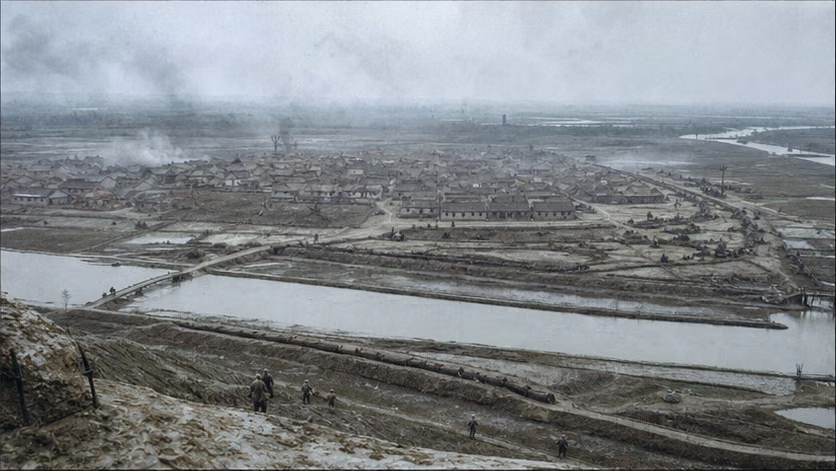
| Item | Content |
|---|---|
| Time | 1932.3.22 – 5.8, forty-eight days |
| Place | Sujiabu, Lu'an, western Anhui, and the line through Qingshandian and Hanbaidu, on both banks of the Pi River |
| Affiliation | Agrarian Revolutionary War (for the larger situation, see *Agrarian Revolutionary War · Overview*) |
| Belligerents | Fourth Front Army of the Red Army (commander-in-chief Xu Xiangqian, over twenty thousand) / KMT forces garrisoning western Anhui and the Henan-Hubei-Anhui "Communist suppression" army (defenders and relief troops together over thirty thousand, bases vary by account) |
| Result | Complete destruction of more than thirty thousand defending and relief troops; about thirty thousand captured, including commander-in-chief Li Shiding (bases vary by account) -- the first time in Red Army battle history that an enemy force of this scale was destroyed as an organized body |
Belligerents
| Item | Fourth Front Army of the Red Army | KMT Forces |
|---|---|---|
| Strength | Over twenty thousand, concentrated for use | Several thousand holding the strongpoints; three waves of relief troops totaling tens of thousands, committed one after another |
| Method | Encircle the point and strike the relief: surround without assaulting, and wait specifically for the relief troops | Hold the strongpoints and wait for relief; relief troops advanced lightly |
| Civilian support | The western Anhui Soviet area supported the front; encirclement works were built jointly by soldiers and civilians | Outside troops, with poor intelligence |
Terrain and Conditions
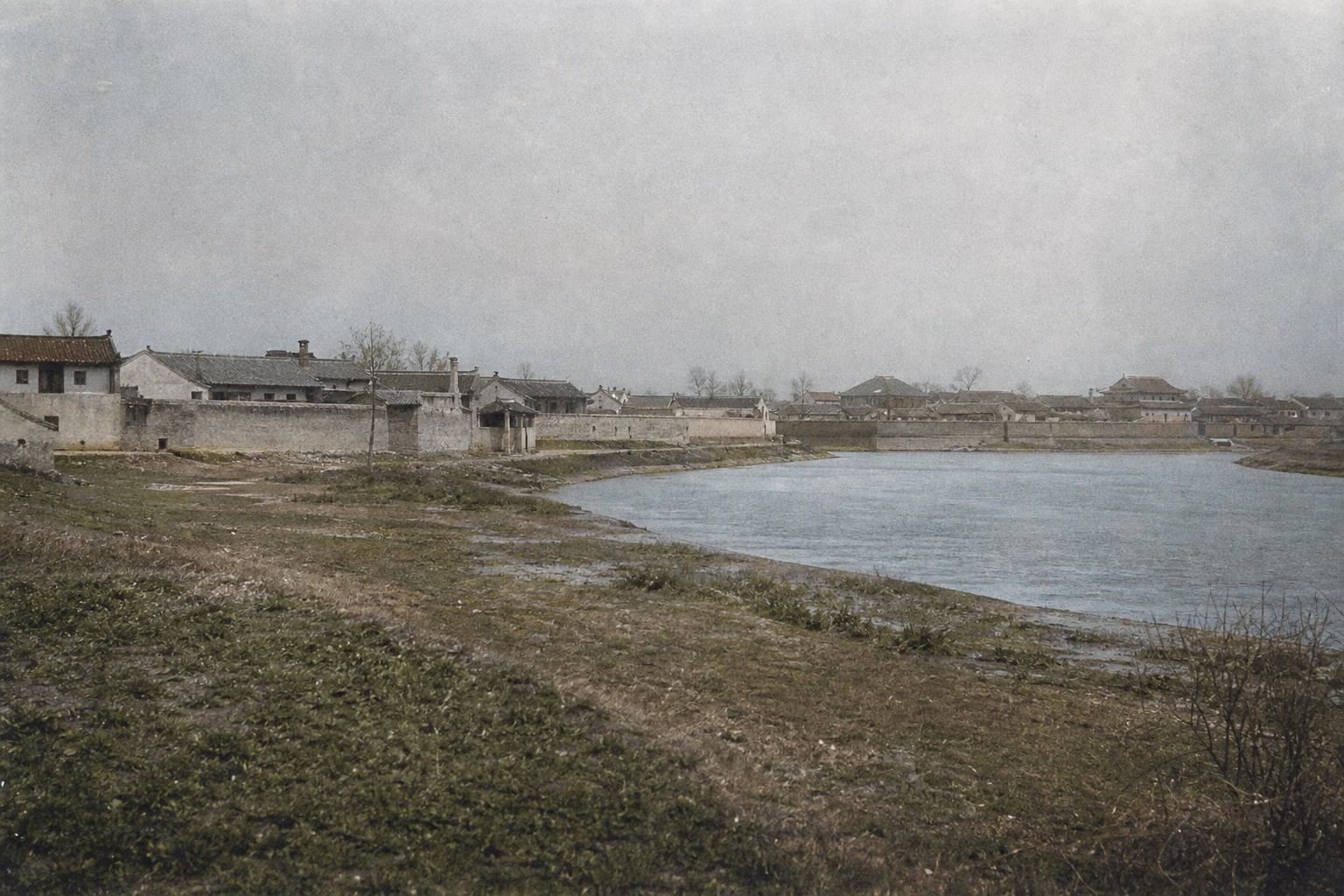
On the flat land along the Pi River in western Anhui, fortified villages and market towns were distributed along the river; Sujiabu was an important commercial town south of Lu'an. The Hubei-Henan-Anhui Soviet area was then at its height (the Fourth Front Army of the Red Army had been established in 1931.11), and the red areas along the northern foot of the Dabie Mountains formed a continuous belt -- this battle was fought at the Soviet area's own doorstep, and civilian support was fully available to the Red Army.
Why It Was Fought
The three counter-"encirclement" campaigns in southern Jiangxi had brought three victories in three fights, and in November 1931 the Chinese Soviet Republic was founded at Ruijin (see *First Three Counter-"Encirclement" Campaigns*); in the same month, a thousand li away at the northern foot of the Dabie Mountains, another base area also reached its own high point -- the red areas of the Hubei-Henan-Anhui Soviet area joined into one, the Fourth Front Army of the Red Army was established, and its commander-in-chief, Xu Xiangqian, was thirty. Nanjing never had only one Soviet area to deal with, and the Dabie Mountains stood between Wuhan and Nanjing, closer to the vital points.
At the opening of spring 1932, the situation gave the Fourth Front Army of the Red Army an active window: after the Mukden Incident, the dispute over "resisting foreign aggression or pacifying the interior first" had become public, and Chiang Kai-shek's general "encirclement" campaign against Hubei-Henan-Anhui was still delayed -- the three-hundred-thousand-man army would not arrive until that summer. Before the great army assembled, the Fourth Front Army's policy was to strike first: remove the White Army strongpoints on the edge of the Soviet area and smash the opponent's "encirclement" deployment while it was still being assembled.
Sujiabu was chosen because it protruded in isolation. This Pi River commercial town south of Lu'an formed a line with Qingshandian and Hanbaidu, wedged against the edge of the Soviet area, with several thousand defenders and, behind them, garrison forces in the directions of Lu'an and Hefei. The Fourth Front Army of the Red Army had over twenty thousand men, but its calculation was not the strongpoint itself: surround it, do not attack -- once Sujiabu was surrounded, Lu'an and Hefei would have to send relief, and those relief troops, halfway along the road and in ambush grounds prepared in advance, were the true target of the battle. The encircled point was the bait; striking the relief was the battle. And because this battle was fought at the Soviet area's own doorstep, the encirclement works were built jointly by soldiers and civilians, and civilian support was fully available to the Red Army; opposite them were outside troops with poor intelligence.
This decision was made by Front Army headquarters on the strength of the victory in the Shangcheng-Huang'an Campaign: Xu Xiangqian strongly advocated taking advantage of the victory to move east into western Anhui, and the operational direction was decided by headquarters (the time and place of the decision meeting are unverified). The best thing in the Red Army's hands was intelligence -- the battle was at the Soviet area's own doorstep, and the masses knew clearly how many defenders there were and how many days it would take relief troops from Lu'an and Hefei to arrive; what they lacked was a judgment of Nanjing's timetable: when Chiang Kai-shek's three-hundred-thousand-man army would come west could only be gambled on; if the gamble was won, the Soviet area would remain continuous, and if it was lost, the result would be the westward withdrawal half a year later (this inference is unverified). Material boundaries likewise determined the method. The Red Army lacked guns and ammunition, much of its ammunition came from captures in the Shangcheng-Huang'an battle (unverified), and it could not afford to batter hard fortified villages by assault; surrounding without attacking and waiting for the defenders' grain and ammunition to run out was a method grown from the ammunition ledger. The forty-eight days of encircling trenches relied on Red Guards and the masses taking turns on guard, freeing the main force to wait specifically for relief troops. On the defenders' side, grain and ammunition were cut off by the siege, and urgent documents went west again and again (documents unverified); relief troops came over a long distance from Hefei, outside troops on unfamiliar ground, with baggage lagging behind. No record of internal disagreement within the Red Army over the direction of this campaign has been found (the Hubei-Henan-Anhui Central Sub-Bureau's intervention in military affairs is unverified); on the KMT side, whether there was any dispute between the defenders' urgent calls for relief and the rear's delay in sending relief also has no surviving record (unverified).
The KMT forces' calculation had only six words: hold the points and wait for relief; relief troops advanced lightly. Postwar reviews attributed the defeat to "relief troops advancing lightly" (review text unverified) -- this lesson later had a more colloquial name: feeding in forces piecemeal.
On the night of 3.22, the Fourth Front Army of the Red Army completed, in one night, the encirclement of Sujiabu, Qingshandian, and Hanbaidu; the trench works joined into a ring. Then it waited for the relief troops to come.
Course of the Engagement
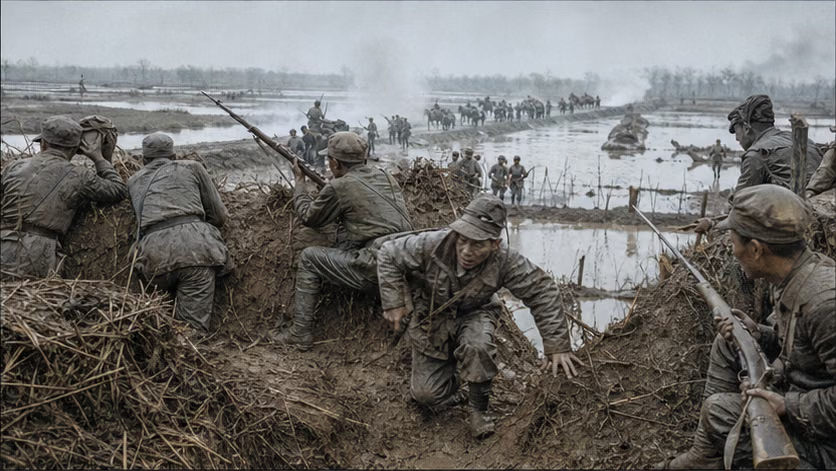
| Phase | Time | Main Points |
|---|---|---|
| Encirclement | From 3.22 | Encirclement of the three points, Sujiabu, Qingshandian, and Hanbaidu, completed in one night; trench works formed a ring |
| First wave of relief troops | Late March | Relief troops from the direction of Lu'an were ambushed halfway and routed back |
| Second wave of relief troops | Mid-April | A second relief attempt was again defeated; the defenders inside the encirclement attempted several breakouts and failed each time, while grain and ammunition gradually ran out |
| Decisive battle against the general relief force | 5.2–8 | Li Shiding led about twenty thousand men in fifteen regiments from Hefei to relieve the siege; the Red Army main force was pre-positioned along the Douba River line, routed them in one day, and concentrated the destruction on the Pi River flats (course of the fighting unverified); on 5.8 the Sujiabu defenders, out of grain, came out and surrendered |
Casualties and Losses
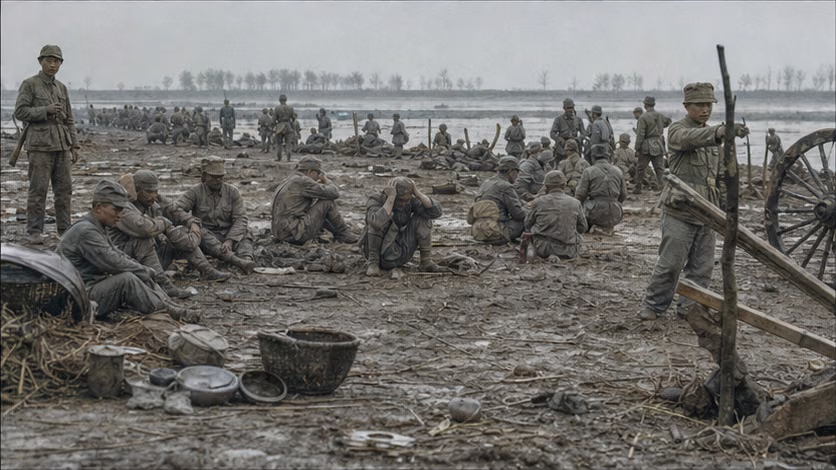
- KMT forces: more than thirty thousand destroyed or captured (accounts speak of thirty thousand prisoners and more than fifteen thousand rifles captured, bases vary by account); commander-in-chief Li Shiding was captured.
- Red Army: several thousand casualties (bases vary by account).
- ※ Civilians: forty-eight days of siege left the town without grain and affected residents (record unverified); the overextension of fortified-village civilian support for the front in the war zone should be recorded as well.
Aftermath
- The Hubei-Henan-Anhui Soviet area reached its extreme height -- and precisely because it was at such a height, Chiang Kai-shek personally supervised the launch of the great "encirclement" campaign against Hubei-Henan-Anhui in the summer of 1932 with three hundred thousand troops; several months later, the main force of the Fourth Front Army of the Red Army was forced to withdraw west (in 1932.10 it crossed the Pinghan railway into Sichuan, opened the Sichuan-Shaanxi Soviet area, and connects to *Sichuan-Shaanxi Counter-Encirclement*). The peak and the departure were only one season apart.
- The concurrent purge in Hubei-Henan-Anhui (Baiqueyuan and others ※, with clues to wrongful cases in which its own commanders such as Zeng Zhongsheng and Kuang Jixun were killed) ran alongside military victory -- the structure of external victory and internal injury appeared again; see also the overview.
- From this point, encircling the point and striking the relief became a signature method of the Red Army, and later of the People's Liberation Army -- this battle was the textbook prototype.
Accounts of Those Present
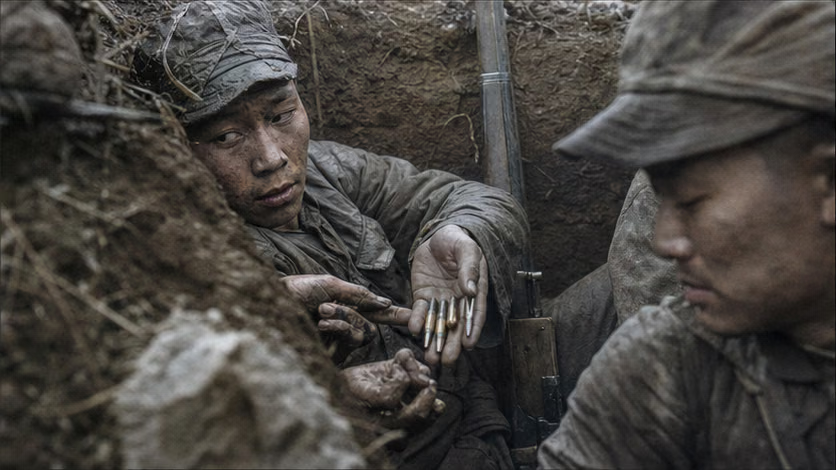
- Xu Xiangqian: a graduate of the first Whampoa class commanded twenty thousand peasant soldiers and completely destroyed thirty thousand regular troops, at age thirty -- he later became the quietest of the republic's marshals, and his starting point was on the banks of the Pi River.
- Li Shiding: the commander-in-chief of the relief troops saw his whole force destroyed and was captured -- the KMT forces' lesson in "feeding in forces piecemeal" entered the books under his name.
- Forty-eight days in the trenches: encircle the point without attacking, with soldiers on both sides facing each other across trenches for a month and a half -- the temporal texture of siege warfare is different from the bloodiness of frontal assault.
- One day on the Pi River flats: twenty thousand relief troops collapsed in a single day -- the explosiveness of "striking the relief" and the length of "encircling the point" were the two rhythms of the same battle.
The Ground
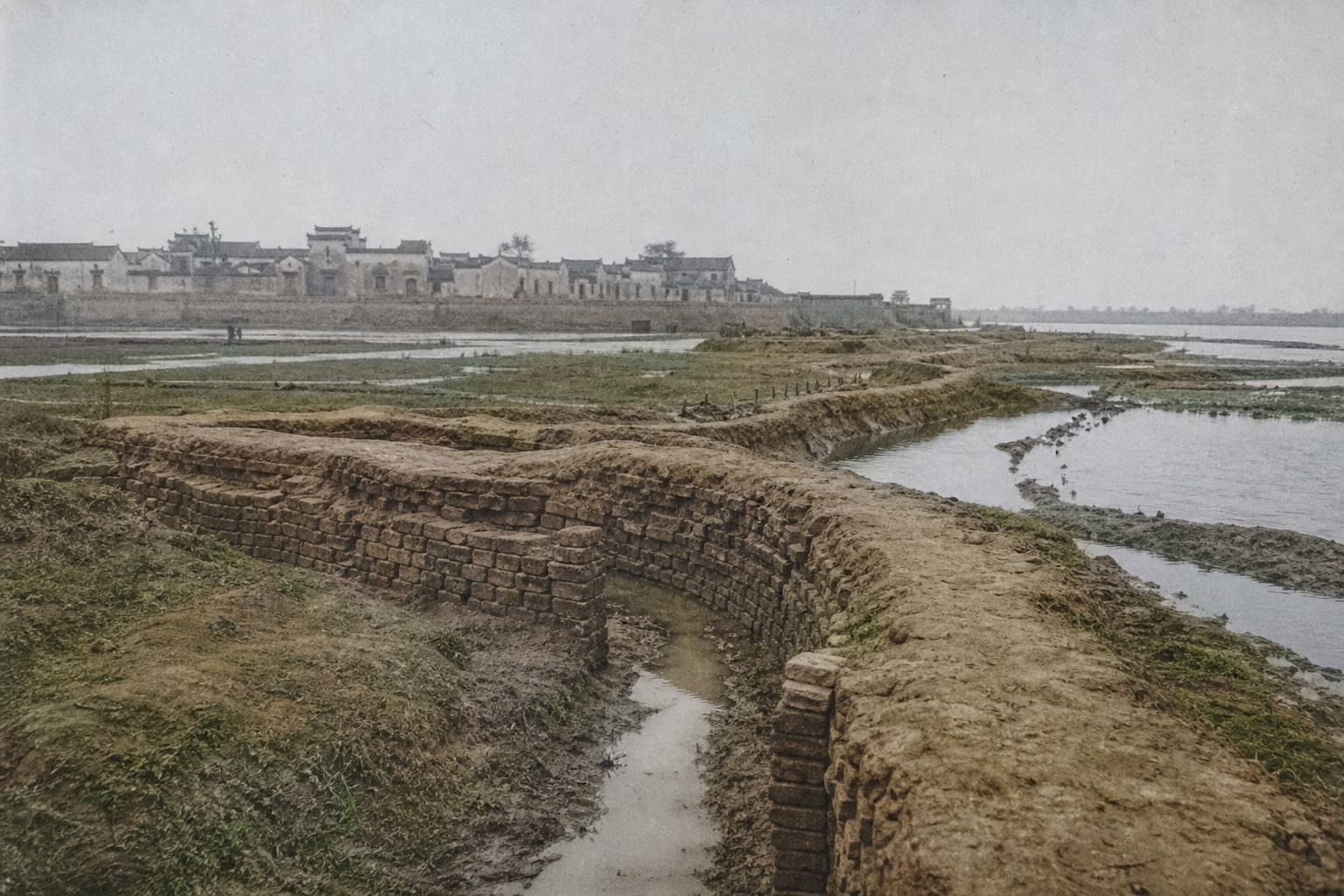
- The spatial triangle of encircling the point and striking the relief: encirclement ring (static) -- relief corridor (movement) -- prepared ambush ground (point of eruption), all three spaces contained in one battle.
- The Pi River and Douba River: river corridors constrained the relief troops' route -- "the enemy can only come from here" was the geographical premise that made this method possible.
- Siege works around fortified villages and market towns: a blockade ring combining trenches, breastworks, and water networks.
How Each Side Records It
- Communist canonical narrative: the leading classic in the battle history of the Fourth Front Army of the Red Army, and the work that made Xu Xiangqian's military career famous; in common narratives centered on the Central Soviet Area, its fame is lower than its actual weight -- the memory discount of the "second Soviet area" is pointed out specifically here.
- KMT side: recorded as a setback in western Anhui "Communist suppression," attributed to relief troops advancing lightly (review text unverified).
- Local memory: a core battle in the red narrative of the Lu'an Soviet area, with commemorative facilities still present today (names unverified).
Disputes and Sensitivities
- The basis for the figure of thirty thousand prisoners (and its relation to the total number of enemy troops destroyed) is unverified; numbers of weapons seized differ from book to book.
- The temporal juxtaposition with the concurrent purge in Hubei-Henan-Anhui -- not to be omitted because this battle was brilliant ※.
- The causality of "the peak was the turning point" (the victory stimulated Chiang's resolve for a general "encirclement" campaign) belongs to the interpretive layer; mark the level.
Sources and Open Questions
Sources: *Battle History of the Fourth Front Army of the Chinese Workers' and Peasants' Red Army*; Xu Xiangqian, *Historical Recollections*; KMT-side western Anhui "Communist suppression" files (figure disputed); Lu'an local Party-history materials.
Open questions: various bases for defender and relief-troop strength and results; Li Shiding's order of battle; the course of the decisive battle at the Douba River; Red Army casualties; comparison of the timeline of wrongful purge cases with this battle; names of commemorative facilities; the time and place of the Front Army headquarters meeting that decided on this campaign; records on the Red Army's ammunition sources (captures at Shangcheng-Huang'an); materials on the Red Army's judgment of Nanjing's "encirclement" timetable; defenders' urgent documents; internal reasons for the delay in sending relief from Hefei; the Hubei-Henan-Anhui Central Sub-Bureau's intervention in campaign decision-making.
All images on this site are AI-generated depictions. They are not historical photographs, not primary sources, and do not depict any real individual.