Engagement Archive · Battles of Baozuo and Lazikou
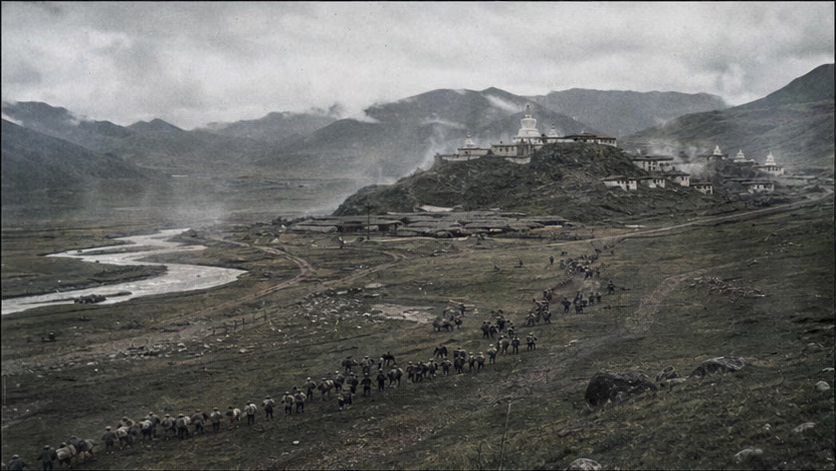
The Red Army came out of the grasslands with half its men already broken by hunger, then fought two engagements: at Baozuo it destroyed one of Hu Zongnan's divisions, and at Lazikou it climbed the cliffs by night and broke through the pass, opening the door north into southern Gansu and onward toward northern Shaanxi.
Engagement Data
| Item | Details |
|---|---|
| Time | Baozuo: 1935.8.29–31; Lazikou: 1935.9.16–17 |
| Place | Baozuo (north of Songpan, Sichuan, around present-day Qiuji Temple in Ruo'ergai County); Lazikou (Diebu, Gansu, a pass in the Min Mountains) |
| Belongs to | Agrarian Revolutionary War · Long March (the joint northward phase after the First and Fourth Front Armies linked up) |
| Maneuvering side | Baozuo: mainly the Red Fourth Front Army's Red 30th Corps and Red Fourth Corps (under commander-in-chief Xu Xiangqian); Lazikou: the Red Fourth Regiment of the Red First Corps, Red First Front Army |
| Defending/blocking side | Baozuo: the Kuomintang army's Hu Zongnan Department, 49th Division (Wu Chengren's unit); Lazikou: Lu Dachang's newly organized 14th Division (a Gansu local army; detailed unit numbering unrecorded) |
| Result | At Baozuo, most of the 49th Division was destroyed and the northward route was opened; at Lazikou, the pass was taken and the Red Army entered southern Gansu--but between the two engagements, the First and Fourth Front Armies had already split (see below) |
Belligerents
| Item | Maneuvering side | Blocking side |
|---|---|---|
| Strength | Baozuo: the Red 30th Corps and Red Fourth Corps, roughly two corps (after crossing the grasslands, manpower had already been depleted; the specific figure is disputed); Lazikou: one regiment, the Red Fourth Regiment | Baozuo: the 49th Division, roughly one division (the 12,000-man count varies by accounting basis); Lazikou: defenders at the pass numbered roughly one battalion to one regiment (figures vary by accounting basis) |
| Condition | Just across the grasslands, extremely exhausted, malnourished, and short of ammunition | Fresh and waiting; Baozuo's defenders had fieldworks, and Lazikou's defenders held a natural barrier |
| Firepower | Mainly rifles and machine guns, with limited mortar ammunition | Hu Zongnan's troops were a Central Army main-line formation with comparatively complete equipment; Lazikou's defenders had blockhouse positions |
Terrain and Conditions
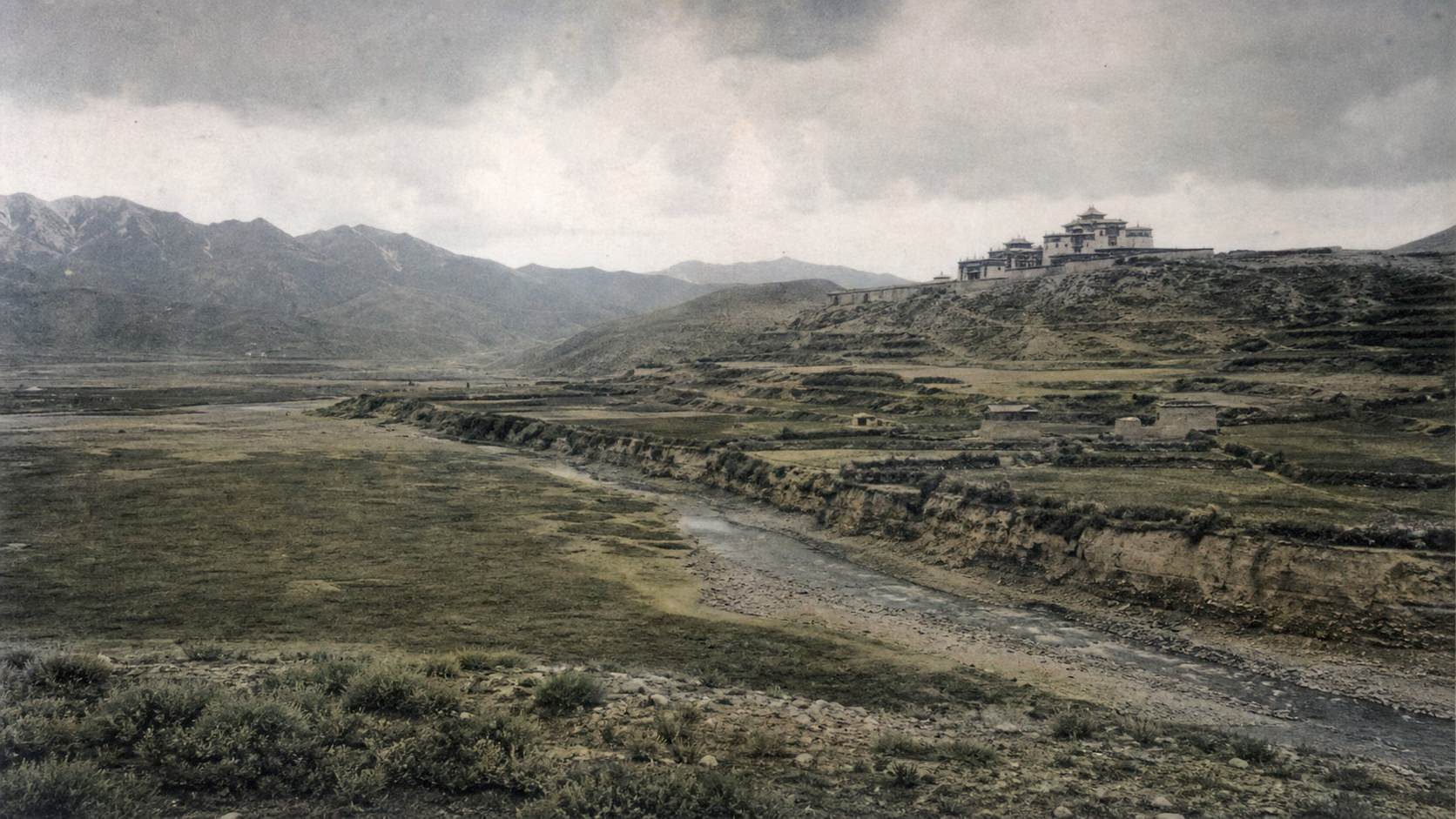
(For the larger situation--the strategic split after the First and Fourth Front Armies linked up, and the march across the grasslands--see *Agrarian Revolutionary War · Overview*. This section covers only the Sichuan-Gansu border.)
Sichuan-Gansu border: North of the Songpan grasslands and south of the Min Mountains lay a sparsely populated farming-pastoral transition zone at the Han-Tibetan frontier. Monasteries and tribes were the actual forms of local power (the detailed local role of Qiuji Temple and other monasteries is unrecorded). There were only a few routes out of the grasslands: north through Baozuo into southern Gansu, or east along the main Songpan road. The main road was held by Hu Zongnan's heavy forces; the smaller road was where these two engagements were fought.
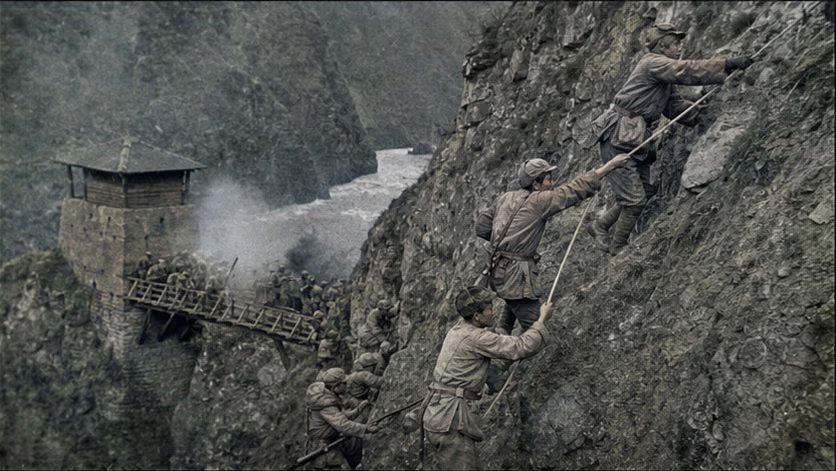
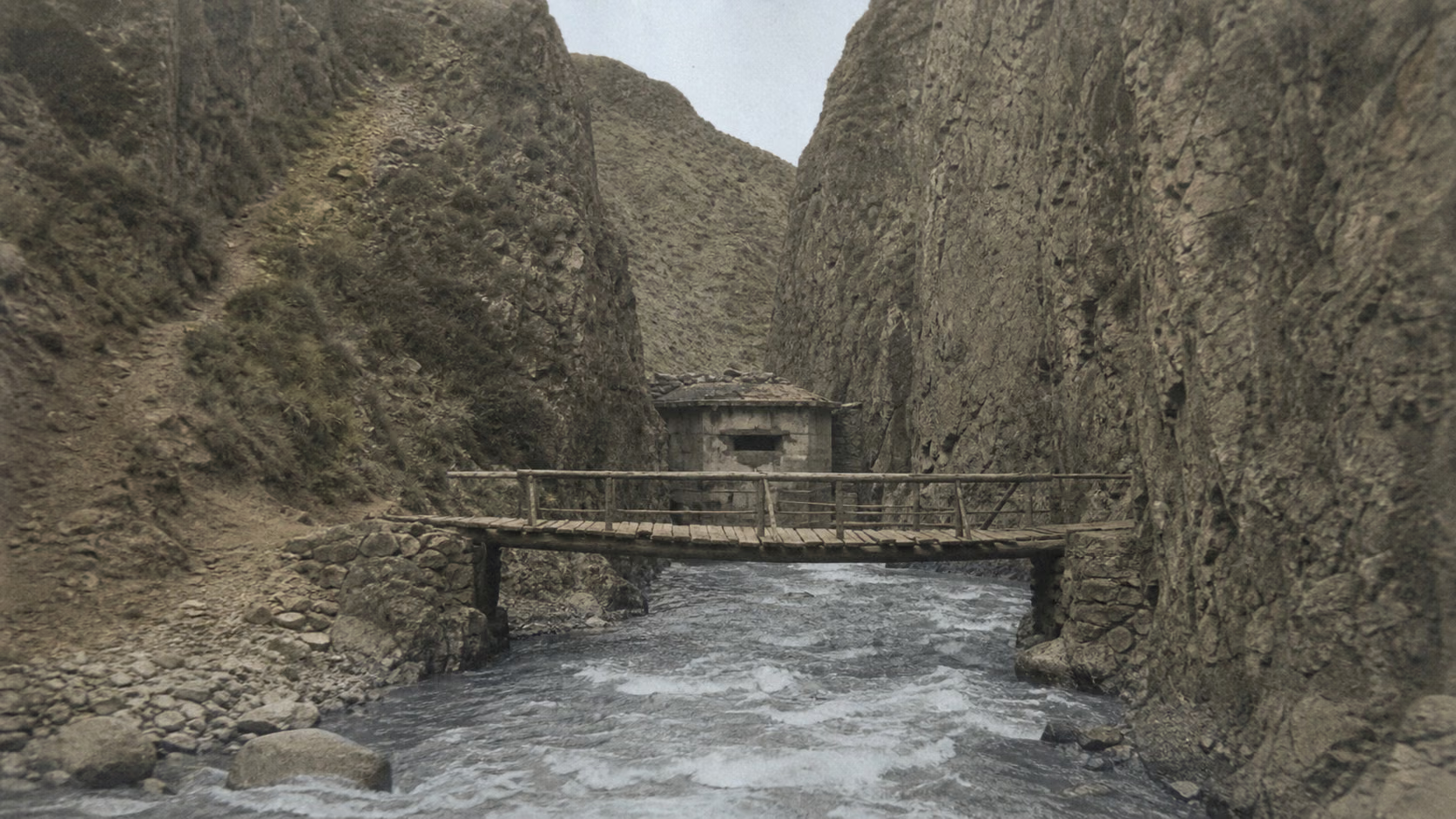
Lazikou: A pass in a branch range of the Min Mountains, with cliffs on both sides, the Lazi River in the middle, a wooden bridge over the river, and blockhouses behind the bridge--a physical version of "one man holds the pass." Once through Lazikou, the route entered the Han agricultural zone of Longnan in Gansu, where there were people and grain again.
Why It Was Fought
After the crossing of Luding Bridge and the climb over Jiajin Mountain, in June 1935 the Central Red Army linked up with the Red Fourth Front Army at Maogong (see *Jinsha River and Dadu River*). The linkup did not settle the direction of march: northward or southward. Zhang Guotao argued for going south--to the north lay an uninhabited dead end; to the south, back into Sichuan and Xikang, were dense population, grain, and recruits (the wording of his position remains unverified). At the conference table this dissenting line was rejected: in late June, the Lianghekou Conference decided on a northward move; in August, the Mao'ergai Conference split the force into left and right routes, with the Right Route Army to leave the grasslands toward Baozuo and the Party Center to move with it (for the full sequence, see *Agrarian Revolutionary War · Overview*; only a brief note here). But the dissent did not disappear. It planted the split that came one month later. In August, the troops crossed the Songpan grasslands. The original plan had been to attack Songpan and take the main road, but Hu Zongnan's main-line troops had moved into Songpan first, making that road unusable and forcing a change of route; before departure, there was almost no reliable intelligence on the condition of the grassland routes, water and forage, or grain (reconnaissance materials unverified). Over a march of six or seven days, non-combat losses from starvation, sinking into marshes, exposure, and illness are estimated in the tens of thousands (sources and accounting bases vary)--by the time the column emerged from the grasslands, half its men had already been broken by hunger.
Once out of the grasslands, the map left only two options: east along the main Songpan road, where Hu Zongnan's heavy forces blocked the way; or north through Baozuo into southern Gansu--a smaller road, but one where troops were already waiting. Hu Zongnan's 49th Division, roughly a division in strength (figures vary by accounting basis), had occupied Upper and Lower Baozuo in advance and waited behind fieldworks. Yet this blocking force had itself just arrived: the Red Army's march through the grasslands had surprised the blockers, and the 49th Division had rushed to seize Baozuo before it was fully established there (the timing of the division's occupation of Baozuo remains unverified). The Red Army could not stop. The farming-pastoral transition zone at the edge of the grasslands was wide, thinly populated, and unable to feed a large army; if the route was not opened at once, the troops would have to retreat hungry back into the grasslands. On paper, this was not a battle the Red Army should have won: one side had just come out of the grasslands with almost no ammunition and empty grain bags, and the food, fodder, rifles, and ammunition captured at Baozuo became its first resupply after leaving the grasslands (capture details unverified); the other side was a main-line Central Army formation with comparatively complete equipment. Baozuo was the opening battle for the northward route, and it was fought by the Red Fourth Front Army: Xu Xiangqian commanded the Red 30th Corps and the Red Fourth Corps. On August 29, the attack began.
Less than ten days after Baozuo, the force using this route had changed. In early September, Zhang Guotao ordered the Right Route Army to go south. The Center led the Red First and Third Corps north alone by night, and the Ejie Conference reorganized them into the Shaanxi-Gansu Detachment (September; see the overview)--from this point on, the same "northward march" was being made only by the First Front Army. The last natural barrier ahead was Lazikou: a Min Mountains pass, with a strip of the Lazi River between cliffs on both sides, a wooden bridge over the river, and blockhouses behind the bridge. The defenders belonged to Lu Dachang's Gansu local forces (detailed unit numbering unrecorded). Beyond the pass lay the agricultural zone of Longnan, with people and grain; failing to get through meant being trapped in the poor mountains of the Han-Tibetan frontier. This engagement had no second option: behind lay the grasslands the troops had just left, on both sides were the Min Mountains, and there is no record of an alternative line within the detachment. On September 16, the Red Fourth Regiment began its attack on the bridge.
Between the two engagements lay a split: the first was led by the Fourth Front Army, the second by the First Front Army. On the road south, others were marching too.
Course of the Engagement
| Phase | Time | Key points |
|---|---|---|
| Crossing the grasslands | Mid-to-late 1935.8 | The Mao'ergai-Banyou line crossed the Songpan grasslands in a march of six or seven days (the number of days varied by column, unverified); non-combat losses were severe; see the "Casualties and Losses" section ※ |
| Battle of Baozuo | 1935.8.29–31 | The Red 30th Corps and the Red Fourth Corps (commanded by Xu Xiangqian, with Chen Changhao as political commissar; detailed division of command unrecorded) attacked Hu Zongnan's 49th Division at Upper and Lower Baozuo; the assault on the Qiuji Temple strongpoint was checked and casualties were heavy (details unrecorded), while the main force destroyed the enemy in a fight against reinforcements in the Baozuo river valley--most of the 49th Division was destroyed, and division commander Wu Chengren escaped wounded (outcome unverified) |
| Split | Around 1935.9.9–10 | Zhang Guotao ordered the Right Route Army to go south, while the Center led the Red First and Third Corps north alone by night (for the dispute over the "grassland secret telegram," see the overview and the "Disputes and Sensitivities" section); the Ejie Conference (9.12) reorganized the Red First and Third Corps into the Shaanxi-Gansu Detachment |
| Lazikou | 1935.9.16–17 | The Red Fourth Regiment (Wang Kaixiang, Yang Chengwu) made frontal uphill attacks against the wooden bridge and blockhouses, but repeated assaults failed; at night, one element climbed the cliff on the eastern side and outflanked the position, throwing grenades from above. The defenders wavered from the flank and rear, and the frontal assault party seized the bridge and broke through the pass. For details on the cliff-climbing guide and participants in the assault, see the "Accounts of Those Present" section (level unverified) |
| After the pass | Late 1935.9 | At Hadapu the force reorganized and rested, and learned from local newspapers of the Red Army and soviet area in northern Shaanxi (newspaper names and details unrecorded); the Bangluozhen Conference set the direction toward northern Shaanxi (for the conference, see *Agrarian Revolutionary War · Overview*) |
Casualties and Losses
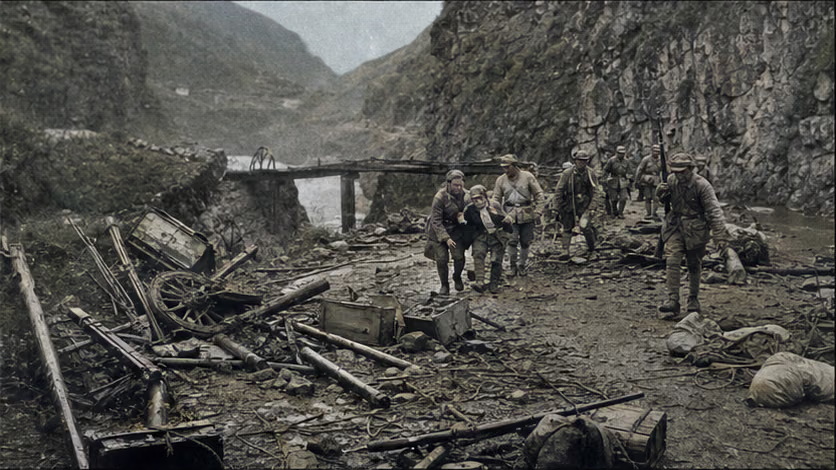
- Baozuo: no authoritative statistics for Red Army casualties have been found (the "several thousand" claim varies by accounting basis); losses were concentrated in the assault on Qiuji Temple. Most of Hu Zongnan's 49th Division was destroyed ("over 5,000 annihilated" is a common figure, unverified).
- Lazikou: Red Army casualties ranged from several dozen to more than one hundred (figures vary, unverified); the defenders scattered.
- ※ Grassland attrition (the largest account): Non-combat losses in the Songpan grasslands--starvation, sinking into marshes, exposure, illness--were never systematically counted by any side for the Red Army's three-route columns; "no statistics" should be stated plainly. Memoirs by participants commonly record "more than ten thousand lost" as an estimate (sources and accounting bases vary). The death density while crossing the grasslands was higher than in any combat segment of the Long March. This was the prior cost of the two engagements, and it should not be avoided.
- ※ Civilian cost: The Tibetan areas along the Sichuan-Gansu border were already sparsely populated, and provisioning a large army passing through suddenly increased the burden on local tribes and monasteries; Red Army grain-collection discipline coexisted with forced taking (local Tibetan sources and oral histories unverified). There is also a separate account to keep for earlier exploitation of Tibetan areas by Sichuan armies and local powers (details unrecorded). Record both.
Aftermath
- The Central Red Army (the Shaanxi-Gansu Detachment) entered southern Gansu, crossed the Liupan Mountains, and in October reached Wuqi Town in northern Shaanxi, where it linked up with the Red 15th Corps--then came Zhiluozhen (see *Battle of Zhiluozhen*).
- After going south, the Red Fourth Front Army fought hard along the Sichuan-Xikang border (Baizhangguan and other engagements are covered in separate entries or in the overview; the level of detail remains unverified), and went north again in 1936.
- Hu Zongnan was blamed for the failed blockade (punishment details unrecorded); once Lazikou fell, the focus of northwest "Communist-suppression" shifted to the Northeastern Army--the opponent at Zhiluozhen had changed.
Accounts of Those Present
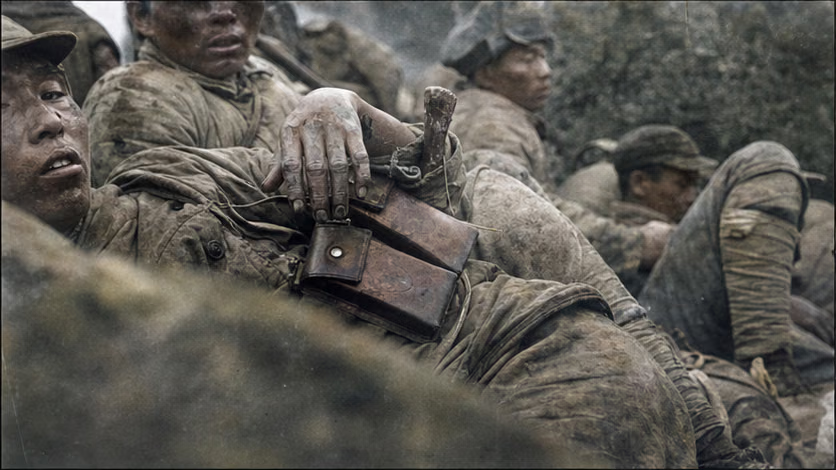
- "Yun-Gui-Chuan": A Miao soldier who climbed the cliff at Lazikou. His real name is unknown; his nickname, "Yun-Gui-Chuan," meant that he had enlisted in Guizhou and passed through Yunnan and Sichuan (accounts differ on the origin of the nickname, unverified). It is said that he used leggings and hooked bamboo poles to climb to the cliff top and lower ropes, allowing the outflanking troops to climb up by rope (level of detail: participant memoirs widely circulate this account, but the specific technical details are unrecorded).
- Red Fourth Regiment: From Luding Bridge to Lazikou, the same regiment opened the final two dangerous passes of the Long March.
- The monastery at Qiuji Temple: One of the strongpoints assaulted by the troops in the Baozuo campaign was a monastery--a particular kind of target on a Tibetan-area battlefield. Accounts differ on what happened to the monks and on the postwar handling of the monastery (sensitive, unverified).
- People in the grasslands: The image that appears most often in participants' memoirs is "once they sat down, they never stood up again"--exhausted soldiers leaned back to rest for a moment, and became corpses where they sat (multiple memoir sources unverified).
- The newspapers at Hadapu: One old newspaper--or a stack of them--changed the endpoint of the march: Liu Zhidan had a soviet area in northern Shaanxi. A turn in history landed on a local newspaper (newspaper name unverified).
The Ground
- Grasslands: marshes without roads, where the "road" was made by those walking ahead; a deviation of a few steps meant a mud pit--a form of terrain that could "swallow people."
- Baozuo river valley: a river-valley terrace at the edge of the grasslands, with Qiuji Temple occupying high ground--the first piece of hard ground after leaving the grasslands, and whoever held it opened the door.
- Lazikou: a pass only a few dozen meters long, with hundred-meter cliffs on both sides, a wooden bridge over the river, and blockhouses at the bridgehead. The attack route was only as wide as the bridge, and the defensive depth was only a single line; the vertical element of the cliff-climbing outflank was the only variable that could break the pass.
- Min Mountains-Longnan transition: a few dozen li beyond Lazikou, the route entered an agricultural zone. The "realm without people" of the snow mountains and grasslands ended here--spatial transition was survival transition.
How Each Side Records It
- Communist canonical account (Long March narrative): the Battle of Baozuo was the opening battle of the northward route, but in the commonly circulated Long March narrative it is often passed over quickly--because the main force that fought it was the Red Fourth Front Army, and the Fourth Front Army soon followed Zhang Guotao south. The narrative-balance problem between the First and Fourth Front Armies: Baozuo's results and the sacrifices of the Fourth Front Army's commanders and soldiers long occupied a marginal place in the canonical narrative; recent Party-history and military-history publications have partly corrected this (level: recent scholarly and official formulations, unverified).
- Kuomintang-side "pursuit and suppression" narrative: Hu Zongnan's unit histories record the defeat at Baozuo briefly (specific wording unverified); Lu Dachang's unit was held accountable by the northwest "Suppression Headquarters" for losing Lazikou (details unrecorded).
- Later and scholarly reassessment:
- Whether the "grassland secret telegram" existed, and what it said--the alleged telegram by which Zhang Guotao ordered the Right Route Army south and spoke of "resolving it by force"--is one of the most famous documentary unresolved cases in Long March history (level: documentary-authentication dispute, with both sides holding their positions; see the overview for details).
- Details of the cliff climb at Lazikou (the number of climbers, the technical actions of "Yun-Gui-Chuan") differ across memoir accounts (level: insufficient corroboration among participant memoirs, unverified).
Disputes and Sensitivities
- Narrative balance between the First and Fourth Front Armies: the main force in the Battle of Baozuo belonged to the Fourth Front Army; the Fourth Front Army's battle cannot be placed under the general name of the "Central Red Army."
- Grassland secret telegram: this belongs at the level of an unresolved case; the larger question of how to assess Zhang Guotao belongs in the overview.
- Tibetan-area issues: monastery strongpoints, grain collection in Tibetan areas, and ethnic relations--all are sensitive in the context of contemporary ethnic policy, and the source materials differ.
- The unnamed hero "Yun-Gui-Chuan": the absence of an identifiable real name is itself information--write "name unknown" as a matter of fact.
Sources and Open Questions
Known main sources:
- Xu Xiangqian, *A Review of History* (memoir of the commander-in-chief of the Red Fourth Front Army)
- Yang Chengwu, *Remembering the Long March* (Lazikou participant)
- Historical materials from Hu Zongnan's forces (Taiwan-side archives unverified)
- Local gazetteers and Party-history materials from Ruo'ergai and Diebu (figure disputed)
Open questions: the strength and casualty accounting for both sides at Baozuo; Wu Chengren's outcome; the details of the assault on Qiuji Temple and the handling of the monastery; sources for estimates of grassland attrition; Lazikou defenders' unit numbering and strength; the evidentiary level for the details of "Yun-Gui-Chuan"'s cliff climb and the origin of his nickname; the name of the Hadapu newspaper; the current state of documentary authentication for the Ejie Conference and the "grassland secret telegram"; local sources on grain collection and ethnic relations in Tibetan areas; the specific ways in which the Battle of Baozuo was marginalized in the canonical narrative and the wording of recent corrections; the original texts of the Lianghekou and Mao'ergai Conference resolutions on going north; the wording and reasoning of Zhang Guotao's argument for going south; decision materials for abandoning the Songpan battle plan and changing route through the grasslands; reconnaissance on route conditions and grain availability before the grassland march; the timing and fieldwork status of the 49th Division's occupation of Baozuo; details of the food, fodder, rifles, and ammunition captured in the Baozuo campaign.
All images on this site are AI-generated depictions. They are not historical photographs, not primary sources, and do not depict any real individual.