Engagement Archive · Guangzhou Uprising (1927)
The third uprising at the end of 1927 established a three-day soviet in Guangzhou -- the "Guangzhou Commune" died after three days, its leader Zhang Tailei was killed in street fighting, and the ensuing mass search-and-killing identified people by red neckties and left several thousand dead; the cost of the road of urban insurrection had, by this point, been written to the end.
Engagement Data
| Item | Content |
|---|---|
| Time | Uprising in the small hours of 1927.12.11; Zhang Tailei killed on 12.12; failed on 12.13 |
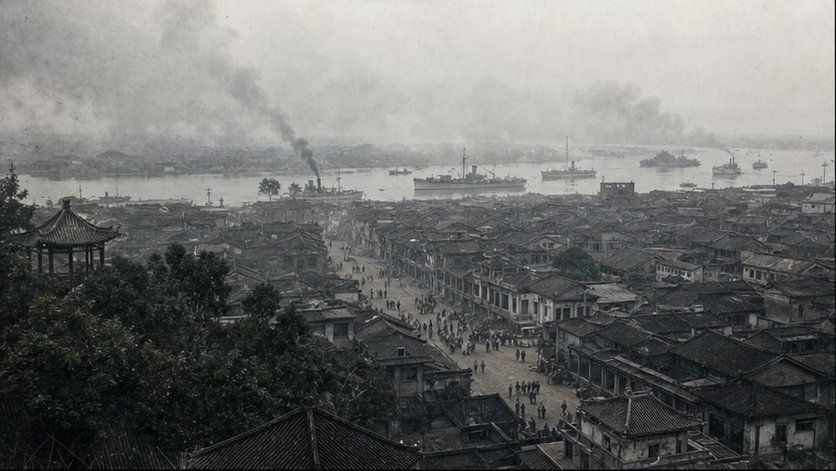
| Place | Urban Guangzhou (the Guanyinshan, Public Security Bureau, and Changdi line) and nearby suburbs |
| Affiliation | Agrarian Revolutionary War (for the larger situation, see *Agrarian Revolutionary War · Overview*) |
| Uprising side | CPC Guangdong Provincial Committee (Zhang Tailei, Ye Ting, Ye Jianying, Yun Daiying, Nie Rongzhen, and others): the Fourth Army Training Regiment, part of the Guards Regiment, and Workers' Red Guards, several thousand in all (figures vary by account) |
| Suppression side | Main force of Zhang Fakui's Fourth Army (Li Fulin, Xue Yue, and other units returning) plus naval gunfire on the Pearl River and support by foreign warships (role of foreign ships unverified) |
| Result | Defeated after three days; the Guangzhou Soviet Government ("Guangzhou Commune") existed for roughly two days |
Belligerents
| Item | Uprising Side | Suppression Side |
|---|---|---|
| Strength | Over a thousand in the Training Regiment as the core, with several thousand Red Guards (most armed only with spears and locally made guns) | More than twenty thousand troops returning from various units (figures vary by account), with naval gunfire in support |
| Timing | Took advantage of the gap when Zhang Fakui's main force had been shifted westward amid conflict with the Guangxi Clique | The main force returned and closed the encirclement within two days |
| Last card | No aid to wait for -- the uprising was launched early after the plan leaked (leak details unrecorded) | All Guangdong and Guangxi sides were aligned on "Communist suppression" |
Terrain and Conditions
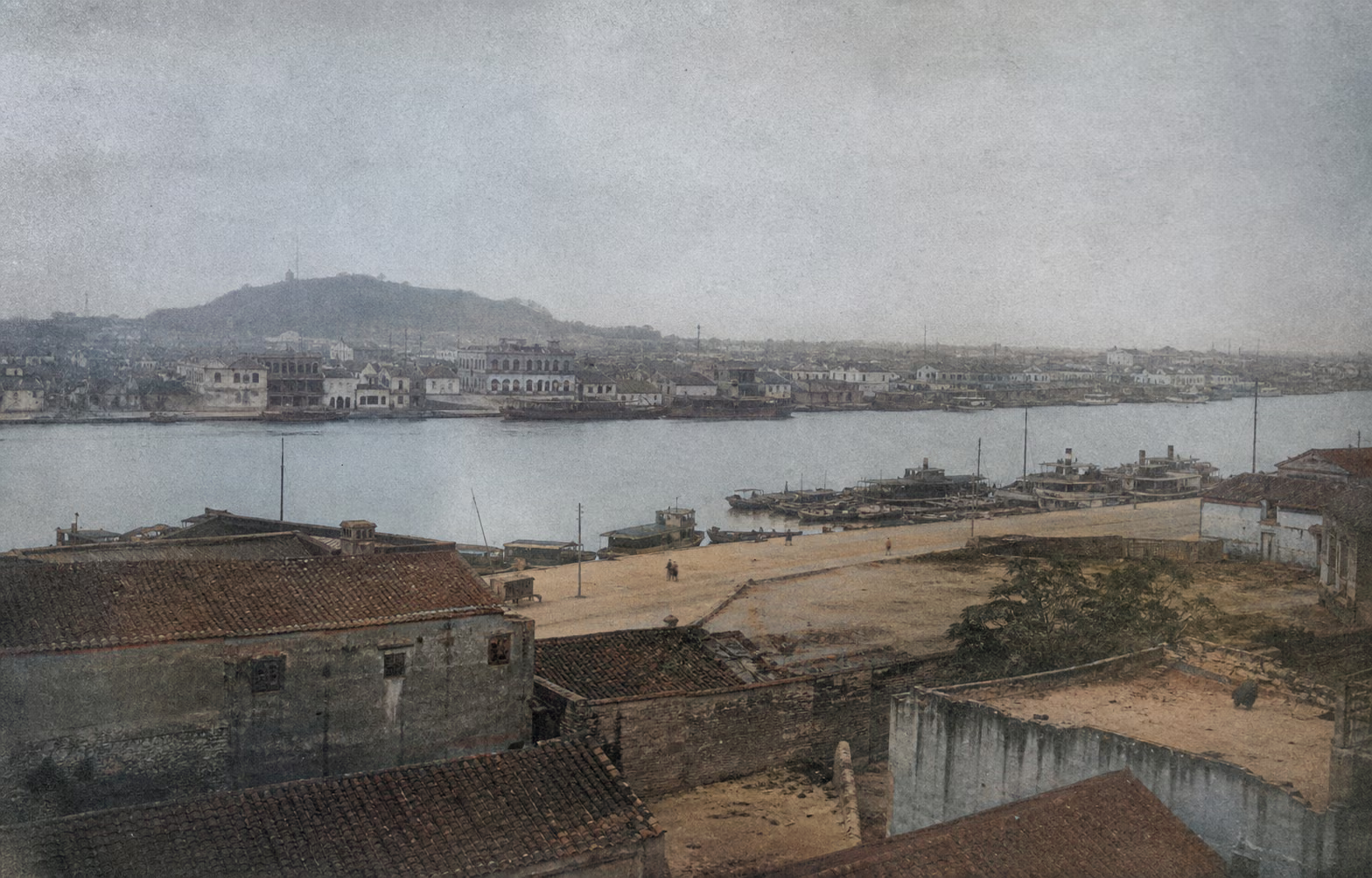
The birthplace of the Great Revolution turned back into a killing ground: Guangzhou was the old capital of the National Revolution, with deep roots in the workers' movement (the Canton–Hong Kong Strike); after April 15 (1927.4.15 Guangzhou party purge ※), the organization went underground. In November, Zhang Fakui and the Guangxi Clique contested Guangdong, leaving the city's defenses empty -- the CPC Guangdong Provincial Committee made its plan on this basis, while knowing that the odds of success were extremely slight (decision dispute unverified).
Why It Was Fought
The five thousand of the Autumn Harvest force had been defeated in September and gone up to Jinggangshan in October (see *Autumn Harvest Uprising*); almost simultaneously, the main force of the Nanchang Uprising collapsed in Chaoshan. By the winter of 1927, the balance sheet of the first two uprisings was already clear: one force had gone into the mountains; the other had only remnants left. But in the eyes of the center under Qu Qiubai, this account had to be reversed by a larger action -- the "Left" putschist line was in season, and the center still placed its hopes on a central-city insurrection to retrieve the overall situation (the account that Comintern representative Neumann strongly advocated it in Guangzhou is unverified). The Guangzhou Uprising was the last throw of the urban-center line, and also a conscious imitation of the "Guangzhou Commune" in the genealogy of the Paris Commune.
Why Guangzhou: it was the birthplace of the Great Revolution and the old capital of the National Revolution; the workers' organizations left by the Canton–Hong Kong Strike had deep roots, and after the April 15 party purge they had gone underground, but the base remained. Why this moment: in November, Zhang Fakui and the Guangxi Clique contested Guangdong, the main force was shifted westward, and Guangzhou's defenses were empty -- the CPC Guangdong Provincial Committee made its plan on this basis, while knowing that the odds of success were extremely slight (decision dispute unverified).
"Knowing that the odds of success were extremely slight" is not hindsight. In November, the provisional Central Political Bureau held an enlarged meeting in Shanghai, set the policy of general urban insurrection, and the Guangzhou insurrection plan was then approved, with the provincial committee meeting several times to settle the plan (meetings and the originally scheduled date of action unverified). The material account had been closed from the start: the only armed body was the Training Regiment, with over a thousand men; the several thousand Red Guards mostly carried spears. The ammunition and grain on the day of action were only what the troops carried with them: each round fired was one round less, and the city could not produce a second day's supply. This was a battle that had to be won before the enemy main force returned to the city, or else it was lost. Another road -- remain underground, wait for the Zhang-Guangxi contest to produce a result, wait for rural uprisings to gather force -- had no place in the central resolutions of the time; concerns over timing within the command layer are scattered through later recollections (Ye Ting reached Guangzhou only on the eve of the uprising, and his estimate of its prospects is unverified), but they did not form a written veto. After the plan leaked, even the option of "waiting a little" disappeared.
The uprising side wanted a city and a regime: seize the Public Security Bureau, take Guanyinshan, proclaim a soviet, and prove through an urban victory that this road could still be walked. Yet in the last-card column stood "no aid to wait for." Its core was the Fourth Army Training Regiment, over a thousand men, whose designation sat inside Zhang Fakui's own Fourth Army order of battle; alongside it were several thousand Workers' Red Guards, most of them with only spears and locally made guns. The suppression side made only one miscalculation, but it was large enough: when Zhang Fakui shifted his main force west to deal with the Guangxi Clique, he did not take the city behind him seriously -- he did not know that the main force of the uprising was sleeping in his own barracks. But this miscalculation could not buy time: Guangdong and Guangxi fought each other, but on "Communist suppression" they stood together, and the main force could return within two days.
In early December, the uprising plan leaked and the action was forced to begin early (leak details unrecorded). At 3:30 in the small hours of December 11, the Training Regiment moved in several columns. From the moment the action began, the time left to this city was only the two days before the main force returned.
Course of the Engagement
| Phase | Time | Main Points |
|---|---|---|
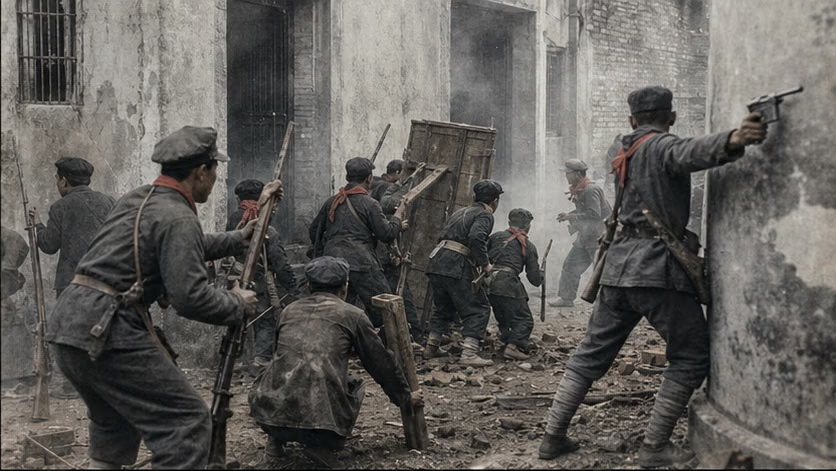
| Uprising before dawn | 12.11 3:30 | The Training Regiment served as the main force, attacking along several routes to seize the Public Security Bureau, police stations, and the high ground at Guanyinshan; Workers' Red Guards cooperated; the Guangzhou Soviet Government was proclaimed (Su Zhaozheng as chairman, not yet in office, with Zhang Tailei acting -- list unverified) |
| Holding the city for one day | 12.11 | Most of the urban area was taken, but the south bank of the Pearl River and the outer perimeter were not captured; proclamations on dividing land and factories were posted (text catalogued but unverified) |
| Zhang Tailei's death | 12.12 | Zhang Tailei was ambushed and killed by gunfire while riding to the front, aged twenty-nine -- the first Politburo member of the CPC to die in the struggle; the command center was lost at once |
| Encirclement and failure | 12.12–13 | Zhang Fakui's units returned, naval guns shelled the city, and the line was compressed street by street; on the 13th, Guanyinshan and the Public Security Bureau fell one after another, and the remnants broke out along several routes (one part reorganized into Hailufeng, one part went to Hong Kong) |
| ※ Mass search-and-killing | From 12.13 for several days | Those wearing red neckties, women with bobbed hair, and those with gun calluses on their hands were killed on sight (the identification methods are recorded in multiple recollections, unverified); one account gives more than 5,700 dead (bases sharply diverge); corpses floated for days on the Pearl River; five people including the Soviet vice-consul in Guangzhou were executed by firing squad (number and course unverified) -- an international diplomatic incident |
Casualties and Losses
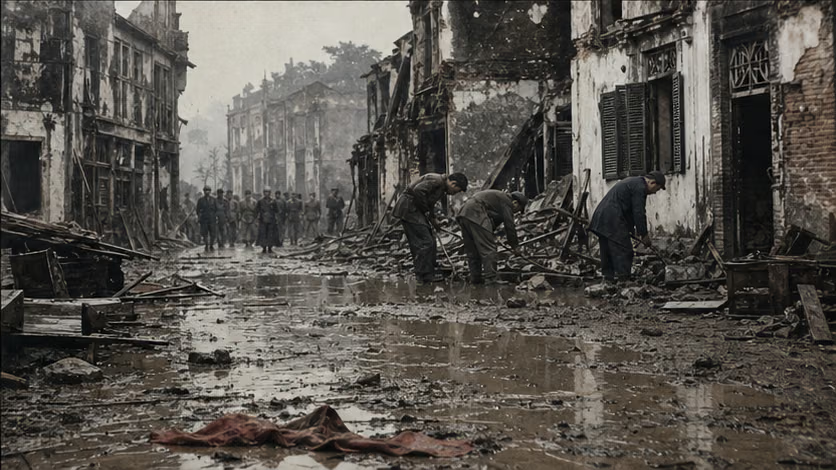
- Uprising side: those killed in battle and those killed afterward totaled several thousand ("5,700" is the common figure, unverified); the Training Regiment was almost wiped out.
- Suppression side: several hundred casualties (figures vary by account).
- ※ Civilians: the standards for identification in the search-and-killing (neckties, short hair, gun calluses) meant that large numbers of non-uprising participants died by implication -- the indiscriminate nature of White Terror.
- China-Soviet relations: after consular personnel were killed, the National Government broke diplomatic relations with the Soviet Union (1927.12.14 order severing relations with the Soviet Union, unverified).
Aftermath
- The three great uprisings closed here: three trials of urban insurrection, three failures; afterward, the center of gravity of the Chinese Revolution in fact shifted toward the countryside (the completion of the line change still took several years; see also the overview).
- One remnant force entered Hailufeng and joined Peng Pai's troops, while another was later, after many turns, incorporated into the Fourth Red Army sequence (whereabouts unverified) -- the bloodline of the defeated army, as usual, continued.
- The "Guangzhou Commune" entered the commemorative genealogy of the international communist movement (named together with the Paris Commune); the Guangzhou Uprising Martyrs Cemetery still stands, along with commemorative systems such as the Four Martyrs of Honghuagang (specific names unverified).
- Zhang Fakui's forces won, but the Guangdong situation was soon settled by the Guangxi Clique and Nanjing -- those who claimed merit for "Communist suppression" did not obtain Guangdong (political details unrecorded).
Accounts of Those Present
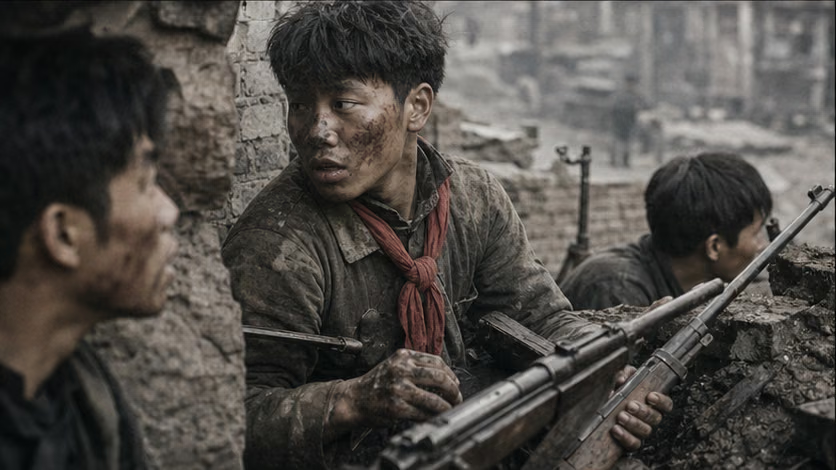
- Zhang Tailei: a twenty-nine-year-old alternate member of the Politburo, from the halls of the Comintern to street fighting in Guangzhou, killed on the second day of the uprising -- he had fixed the Chinese term for "soviet," and died in the first Chinese city to establish a soviet (account of the translation unverified).
- Red necktie ※: the uprising participants tied red cloth around their necks for identification -- three days later, this strip of red cloth became the death mark in the search-and-killing. The same token, two fates: this is the sharpest object narrative in this article.
- Training Regiment: mostly young military men of the Whampoa line -- among the three great uprisings, this was the single force with the strongest organized combat power, and also the one that died in the neatest formation.
- Women Red Guards: records of women with bobbed hair being killed on sight ※ -- in Guangzhou in 1927, hairstyle was position, and position was life or death.
The Ground
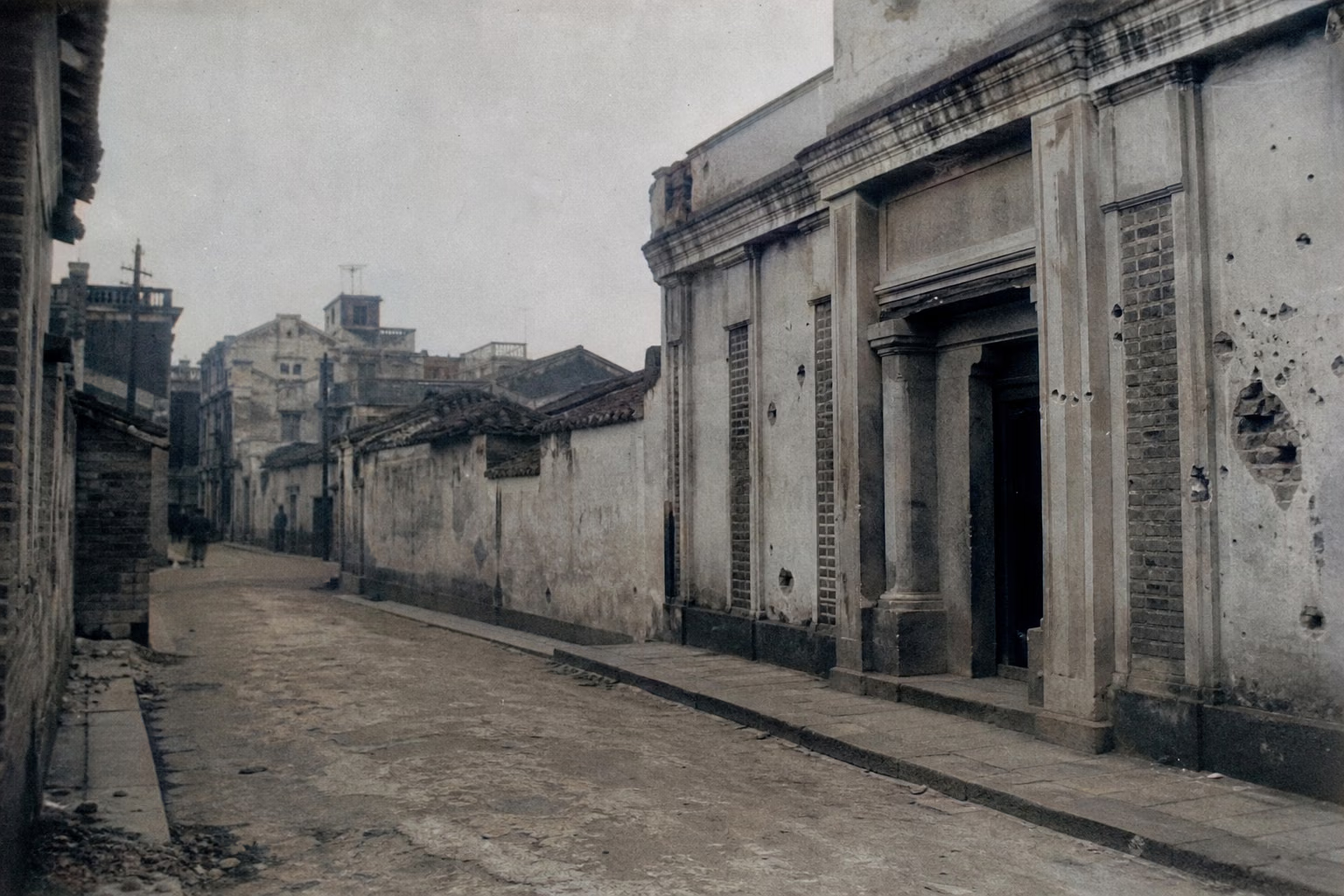
- The target network of an urban uprising: the Public Security Bureau (power), Guanyinshan (height), Changdi (the riverbank fire line) -- a spatial grammar isomorphic with the Shanghai uprising, with the opposite outcome.
- Pearl River: the double identity of a naval-gun fire axis and an escape route by water.
- The time-space of three days: the "commune time" of an uprising city -- proclamations, flags, the street form of a new regime, and then its erasure street by street.
How Each Side Records It
- Communist canonical narrative: the closing battle of the three great uprisings, the "Guangzhou Commune" entering an international genealogy; martyr narratives around Zhang Tailei, Zhou Wenyong and Chen Tiejun ("the wedding on the execution ground," which took place in February of the following year; cross-reference unverified), and others concentrate here.
- KMT and Guangdong-side narratives: recorded as a "Communist riot" and "pacification of disorder"; in their documents, the search-and-killing appears as "rural pacification" (their documents and statistical bases unverified).
- Comintern and Soviet Union: even at the time there were internal reviews concerning the timing of the uprising and Neumann's role (documents unverified) -- "whose decision it was" is also a standing case in the history of the international communist movement.
Disputes and Sensitivities
- Responsibility for the uprising decision and for the Comintern representative -- multiple accounts stand side by side.
- The figures for the dead differ sharply (from several thousand to over ten thousand), and records of identification-based search-and-killing exist at different evidentiary levels.
- The killing of Soviet consular personnel and the severing of relations with the Soviet Union -- the diplomatic dimension must also be stated.
- The two assessments, "striking a stone with an egg" and "glorious though defeated," stand side by side; choice and cost coexist.
Sources and Open Questions
Sources: the collected volume *Materials on the Guangzhou Uprising*; recollections by Nie Rongzhen, Ye Jianying, and others; relevant volumes of Comintern archives (figure disputed); inscriptions at the Guangzhou Uprising Martyrs Cemetery.
Open questions: the uprising sequence and numbers; the list of the Soviet government; details of the course of Zhang Tailei's death; the different figures for the dead; the course of the consular incident; the timing of the order severing relations with the Soviet Union; documents on Neumann's role; the whereabouts of the remnants; the text of the provisional Central Political Bureau enlarged meeting's resolution approving the Guangzhou insurrection; the provincial committee planning meetings and the originally scheduled date of the uprising; Ye Ting's estimate of the uprising's prospects; the detailed composition of Red Guard weapons.
All images on this site are AI-generated depictions. They are not historical photographs, not primary sources, and do not depict any real individual.