Engagement Archive · Battle of the Xiang River
Eighty-six thousand people carried printing presses and file chests for a month, only to be stopped on the banks of the Xiang River by an army of 300,000. For seven days and seven nights, the Central Column crossed the river, and the force fell from 86,000 to just over 30,000; the 34th Division, covering the rear, was destroyed, and its commander Chen Shuxiang, gravely wounded and captured, tore out his own intestines. Every turning point of the Long March was dredged up from this river.
Engagement Data
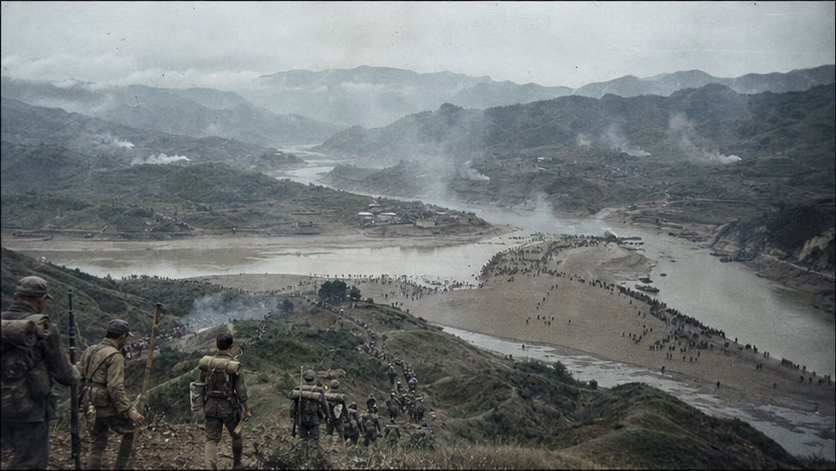
| Item | Content |
|---|---|
| Time | 1934.11.25 – 12.1 (seven days of river-crossing operations; the three preceding blockade lines in October–November formed the prelude) |
| Place | Northeastern Guangxi: the Jieshou–Quanzhou–Xing'an reach of the Xiang River; the three major blocking fields of Xinwei, Jiaoshanpu, and Guanghuapu |
| Belongs to | Agrarian Revolutionary War (for the larger situation, see *Agrarian Revolutionary War · Overview*) |
| Belligerents | Central Red Army (First Front Army and the Central Column, using the departure figure of 86,000) / The Nationalist Army's Fourth Blockade Line: He Jian's Xiang Army "pursuit-and-suppression force," Bai Chongxi's Guangxi Army forces, Zhou Hunyuan's Central Army column, and others, totaling about 300,000 (figures vary by account) |
| Result | The central organs and main forces crossed the Xiang River; the army was sharply reduced from 86,000 to just over 30,000; the Eighth Red Army Corps was destroyed and its designation abolished, and the Thirty-Fourth Red Division was wiped out |
Belligerents
| Item | Red Army | Nationalist Army |
|---|---|---|
| Strength | 86,000, including large numbers of new recruits and office columns turned into bearer columns | About 300,000, advancing separately to encircle, with aerial reconnaissance and bombing |
| Marching formation | "Corridor-style": two army corps in front, two on the flanks and rear, and between them a Central Column baggage train stretching for a hundred li -- printing presses, minting machines, and file chests all on shoulders (the "jars and pots") | Moved along the Hunan–Guangxi highway and the Xiang River line, waiting in prepared positions |
| Decisions | Bo Gu and Li De pressed straight west along the established route, missing the chance to change course (the proposal for an early crossing is unverified) | Chiang Kai-shek laid out the overall deployment, but the Xiang, Guangxi, and Central Army forces each had their own calculations (see below) |
Terrain and Conditions
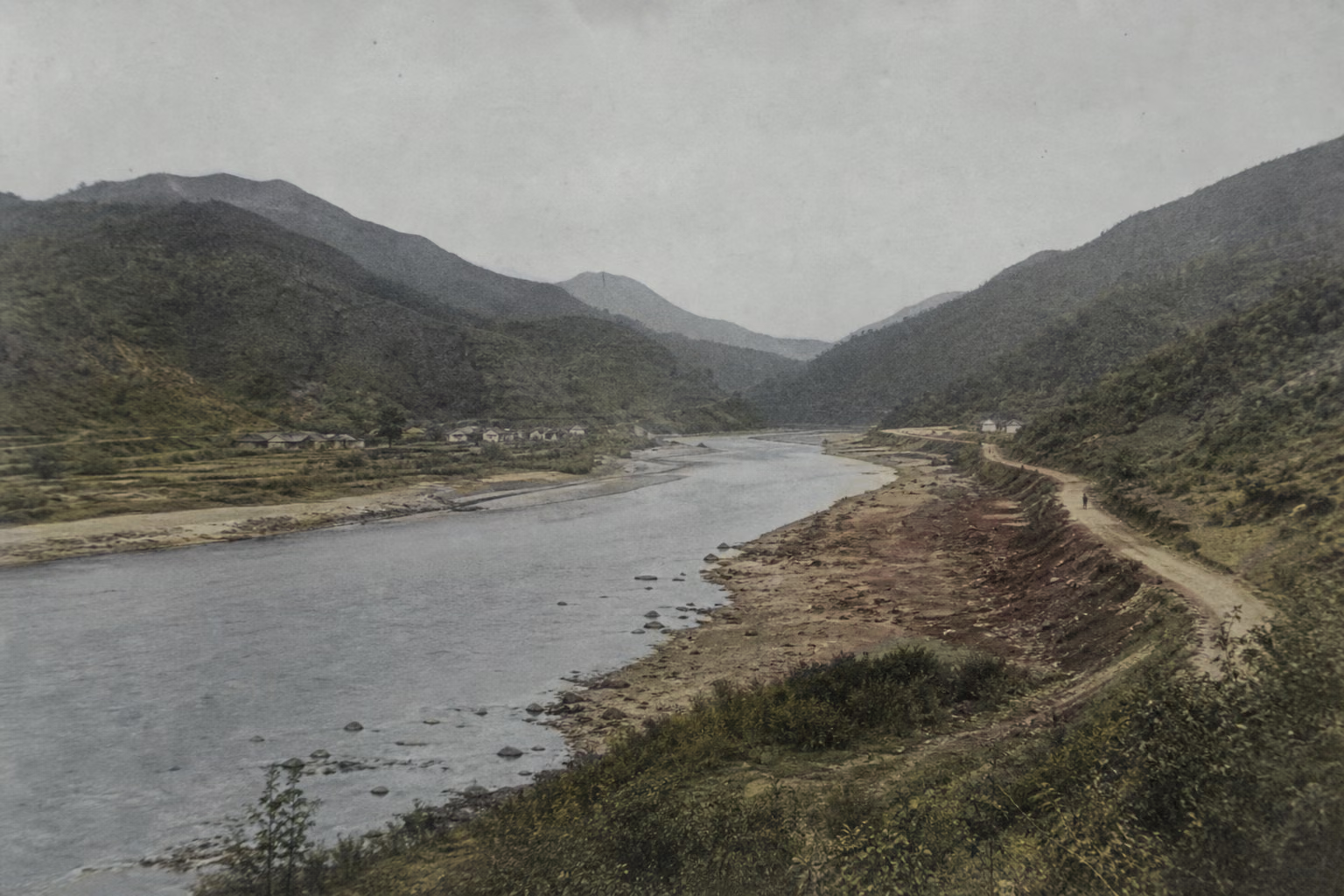
The Hunan–Guangxi corridor: the Yuechengling and Dupangling ranges enclose the Xiang River valley, and the Hunan–Guangxi highway runs along the river. A large force moving west could not avoid this corridor. The political terrain was more complex than the natural terrain: the Guangxi clique's calculation -- Bai Chongxi feared the Red Army entering Guangxi, but he feared still more that the Central Army would use "pursuit and suppression" to enter Guangxi. He therefore at one point withdrew southward, leaving a sixty-li gap in the river defenses from Quanzhou to Xing'an (around 11.22, the send-off policy of "do not block the head, do not cut the waist, only strike the tail"; its telegrams and memoirs remain unverified). He Jian's Xiang Army, meanwhile, pressed south under Chiang's orders. The gate in the blockade line opened a crack and then closed again. Because the Red Army's baggage slowed its march, it failed to beat that closing gap; this is the most painful "if" of the engagement.
Why It Was Fought
The Fifth Counter-"Encirclement" Campaign had been fought for a year, and the front line had moved in only one direction; after Guangchang, the bill came due (see *Fifth Counter-"Encirclement" Campaign*). In mid-October 1934, the central organs and the main force, 86,000 people in all, withdrew from the Soviet area and moved west. The form in which they set out determined everything that followed: two army corps in front, two on the flanks and rear, and between them a Central Column stretching for a hundred li -- printing presses, minting machines, and crates of documents all carried on shoulders. An army moving house with all its belongings could not move quickly.
The decision to break out had already been made after Guangchang: the central leadership decided to abandon the Soviet area and shift westward, reported the matter to the Communist International and received a reply of consent (the correspondence remains unverified), and then spent several months preparing in secret. The Seventh Red Army Corps was sent north, the Sixth Red Army Corps west, as advance movements; recruits were levied, grain was gathered, and everything that could be carried was carried. The men in charge of this baggage and this route were the Three-Man Group made up of Bo Gu, Li De, and Zhou Enlai. The material boundary had been drawn on the day they left the Soviet area: there was no source for replenishing ammunition, so each battle meant fewer rounds; among the 86,000, offices, logistics units, and bearers made up a large share, and heavy equipment held daily progress to no more than several tens of li (records of marching speed are unverified). The opposing side, meanwhile, waited along the highway line, and had aircraft overhead. Objections had existed, but they could not enter the door of decision-making: front-line commanders had long complained about this house-moving style of march (Peng Dehuai's exact wording in his own account is unverified), and Mao Zedong was not then inside the military decision-making circle. During the days when the Guangxi Army left a sixty-li gap, accounts differ over whether anyone strongly urged abandoning the baggage and rushing through the gap for an early crossing (figure disputed).
The first three blockade lines (Jiangxi–Guangdong, Hunan–Guangdong, and southern Hunan) were passed with surprising ease, mostly through Chen Jitang's tacit "borrowed road" arrangement and the defending troops' avoidance of battle (the documents on the secret agreement with the Guangdong Army remain unverified). Smooth passage concealed slowness. By mid-to-late November, Chiang Kai-shek had identified the Red Army's intention to move west and set the Xiang River as the Fourth Blockade Line, arranging a general pursuit-and-annihilation net: He Jian's Xiang Army "pursuit-and-suppression force" pressed south from the north, Zhou Hunyuan's Central Army column pursued from behind, and Bai Chongxi's Guangxi Army forces held the river, totaling about 300,000 (figures vary by account).
The politics of this net were more complex than its geography. Bai Chongxi feared the Red Army entering Guangxi, but feared still more that the Central Army would enter Guangxi under the name of "pursuit and suppression." Around November 22, the Guangxi Army withdrew south, leaving a sixty-li gap in the river defenses from Quanzhou to Xing'an: "do not block the head, do not cut the waist, only strike the tail," sending the guests out of the province (its telegrams and memoirs remain unverified). The gate opened a crack. But the Red Army command still held to its original direction of joining the Second and Sixth Red Army Corps, and Bo Gu and Li De pressed straight west along the established route. The baggage was not abandoned, the route was not changed, and the proposal for an early crossing and change of direction was not adopted (figure disputed). By the time the hundred-li-long column inched to the riverbank, the Xiang Army had already moved south under Chiang's orders toward Quanzhou, and the crack had closed again.
What the Red Army needed was simply to cross the river: the Hunan–Guangxi corridor was the necessary road west toward western Hunan, with the Yuechengling and Dupangling ranges enclosing the Xiang River valley; it could not be bypassed. What Chiang wanted was to destroy this withdrawn army on the spot inside the corridor. On November 25, the leading First and Third Red Army Corps seized the ferry crossings along the Jieshou-to-Pingshandu line, while the Military Commission Column was still more than a hundred li from the river. Into the pocket of 300,000 men, 80,000 people walked in a single long file.
Course of the Engagement
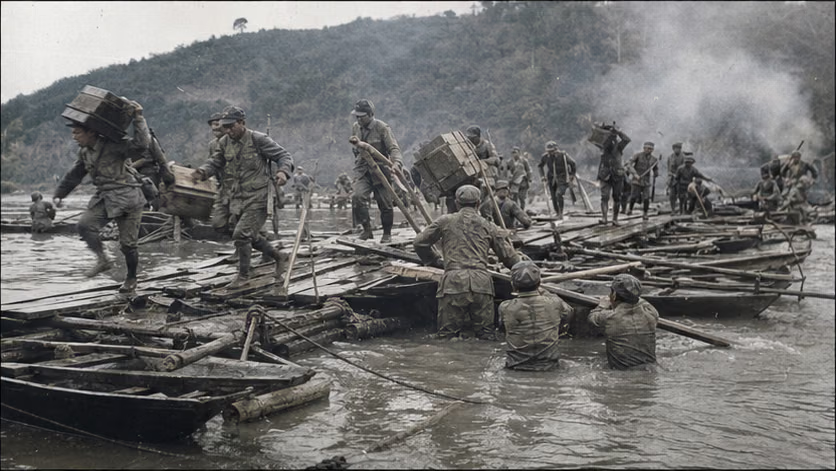
| Phase | Time | Key Points |
|---|---|---|
| Seizing the ferries | 11.25–27 | The leading First and Third Red Army Corps seized the ferry crossings along the Jieshou-to-Pingshandu line and built pontoon bridges; the Military Commission Column was still more than a hundred li from the river |
| Blocking action at Xinwei | 11.28–30 | Two regiments of the Fifth Division of the Third Red Army Corps (division commander Li Tianyou) blocked the Guangxi Army's northward movement at Xinwei: for three days and nights, casualties below the division chief of staff exceeded half the force (regimental and battalion cadres were almost entirely spent; the roster is unverified), and positions were lost and sealed again |
| Blocking action at Jiaoshanpu | 11.29–12.1 | The First and Second Divisions of the First Red Army Corps blocked the Xiang Army at Jiaoshanpu south of Quanzhou: the corps' heaviest blocking action in casualties (the command positions of Nie Rongzhen and Lin Biao were nearly broken through; details unrecorded), fighting while withdrawing to protect the northern wing of the ferries |
| Blocking action at Guanghuapu | 11.29–12.1 | The Fourth Division of the Third Red Army Corps held against the Guangxi Army at Guanghuapu south of Jieshou: regimental commander Shen Shuqing was killed in action, and his successor Du Zhongmei was killed the same day (figure disputed) -- the last barrier before the ferries |
| The Central Column crosses | 11.30–12.1 | The Military Commission's two columns and the main forces crossed in succession; enemy aircraft bombed the pontoon bridges, and engineers repeatedly rushed repairs (details unrecorded) |
| The rear guard destroyed | After 12.1 | The 34th Division of the Fifth Red Army Corps (division commander Chen Shuxiang) and part of the Third Red Army Corps were cut off on the east bank: the 34th Division fought while retreating into the mountains of southern Hunan, ran out of ammunition and food, and was destroyed; Chen Shuxiang was gravely wounded and captured, tore out his intestines on a stretcher, and died at twenty-nine -- his head was hung in Changsha (the place where the head was displayed is unverified)※. After crossing the river, the Eighth Red Army Corps had only a little over a thousand men left, and its designation was abolished |
Casualties and Losses
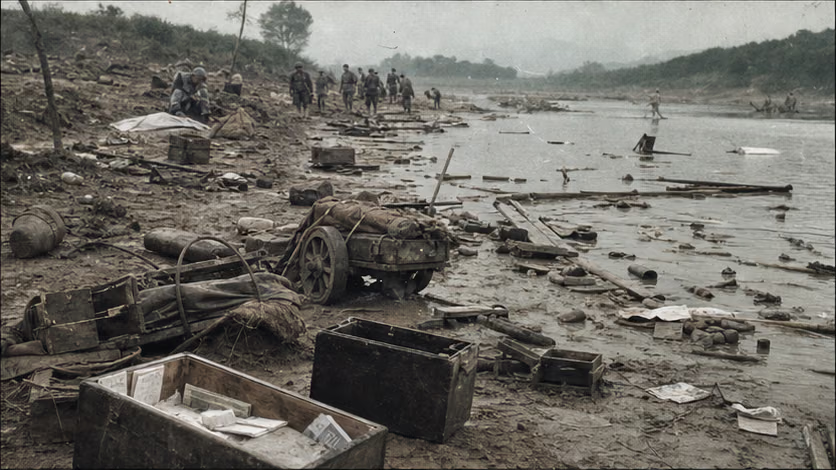
- Red Army: 86,000 set out; after the Xiang River, just over 30,000 remained -- a loss of more than 50,000. The debate over composition requires distinguishing how many were battle casualties, stragglers, deserters, and prisoners, but the sources cannot divide them precisely (scholars estimate battle casualties at around 20,000, with straggling and dispersal also counted in the tens of thousands; multiple figures coexist) -- within the number 50,000 there were both bloody battles and the systemic disintegration in march of this army carrying its household goods.
- Nationalist Army: casualty figures are lacking (separate Xiang Army and Guangxi Army reports remain unverified).
- ※ Civilians: in the war zone, civilians were conscripted as porters and guides, and the Guangxi Army cleared the countryside; after the battle, bodies floating in the Xiang River drifted downstream, and along the banks there was a saying, "for three years do not drink Xiang River water; for ten years do not eat Xiang River fish" (at the level of folk saying, very widely transmitted); villagers along the banks buried Red Army bodies in accounts preserved in oral history (oral-history level; collection and editing unverified).
Aftermath
- The general reckoning over the route began here: from the proposal to turn toward Guizhou at the 12.12 Tongdao Meeting, to the change of direction at the 12.18 Liping Meeting, to the reorganization of military command at the 1935.1 Zunyi Meeting -- the 50,000 people lost at the Xiang River are the footnote to every resolution of the Zunyi Meeting.
- The "jars and pots" were buried on the spot -- baggage-ism sank into the Hunan–Guangxi corridor together with the printing presses; the Red Army's later lightness and mobility, the "walking" of Crossing of the Chishui River, were precisely the opposite lesson drawn from the Xiang River.
- Several hundred survivors of the Thirty-Fourth Red Division fought as guerrillas in southern Hunan until they too were destroyed (Han Wei and a very few others survived; their late-life recollections and the knot of "returning to the unit" remain unverified) -- a unit whose organization disappeared lived for another span outside the archive.
- Chiang Kai-shek's "pursuit and annihilation" remained unfinished, and he shifted to "spreading a net" along the Hunan–Guizhou border -- the Red Army entered Guizhou, and the war moved into the mobile phase of Crossing of the Chishui River.
Accounts of Those Present
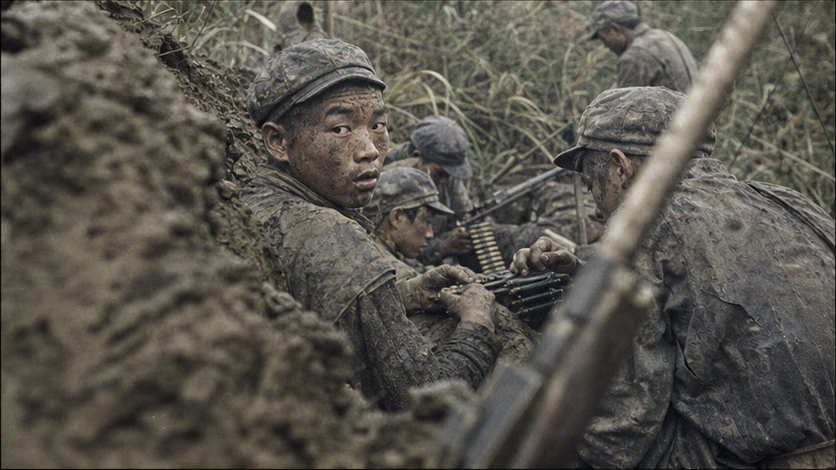
- Chen Shuxiang: a twenty-nine-year-old division commander, cutting open his bowels to prove his resolve -- "to shed the last drop of blood for the Soviet" had been his earlier slogan, and in the end he fulfilled it in the most literal way. His head was hung in the city of his birth (the Changsha Xiaowumen account is unverified) -- a person's head and his hometown form one of the heaviest images in this series, and its details need no elaboration.
- The bearers' Long March: the bearer columns of the Central Column -- lithographic presses, X-ray machines, crates of documents, and silver dollars crossed the blockade lines on shoulders (the baggage list is unverified); many bearers were hired laborers from the Soviet area, and after the Xiang River their lives and deaths left no file ※.
- The eighteen-year-old regimental commanders: battalion and regimental cadres killed in batches on the Xinwei and Guanghuapu positions -- the age structure of the Red Army's mid-level commanders (average-age figures vary by account), and the roster of the "child division commanders" is itself an epitaph.
- Pontoon bridges: built at night, bombed in the morning, built again after bombing -- engineers soaked in icy water for seven days (firsthand recollections remain unverified); the fate of 80,000 people came down, concretely, to a few door planks.
- Bai Chongxi on the far bank: the "Little Zhuge" who made way and then struck back -- his calculation saved Guangxi's territory, and also indirectly decided the volume of blood at the Xiang River; late-life Guangxi clique recollections include both deep evasions and blunt admissions (comparison of recollections unverified).
The Ground
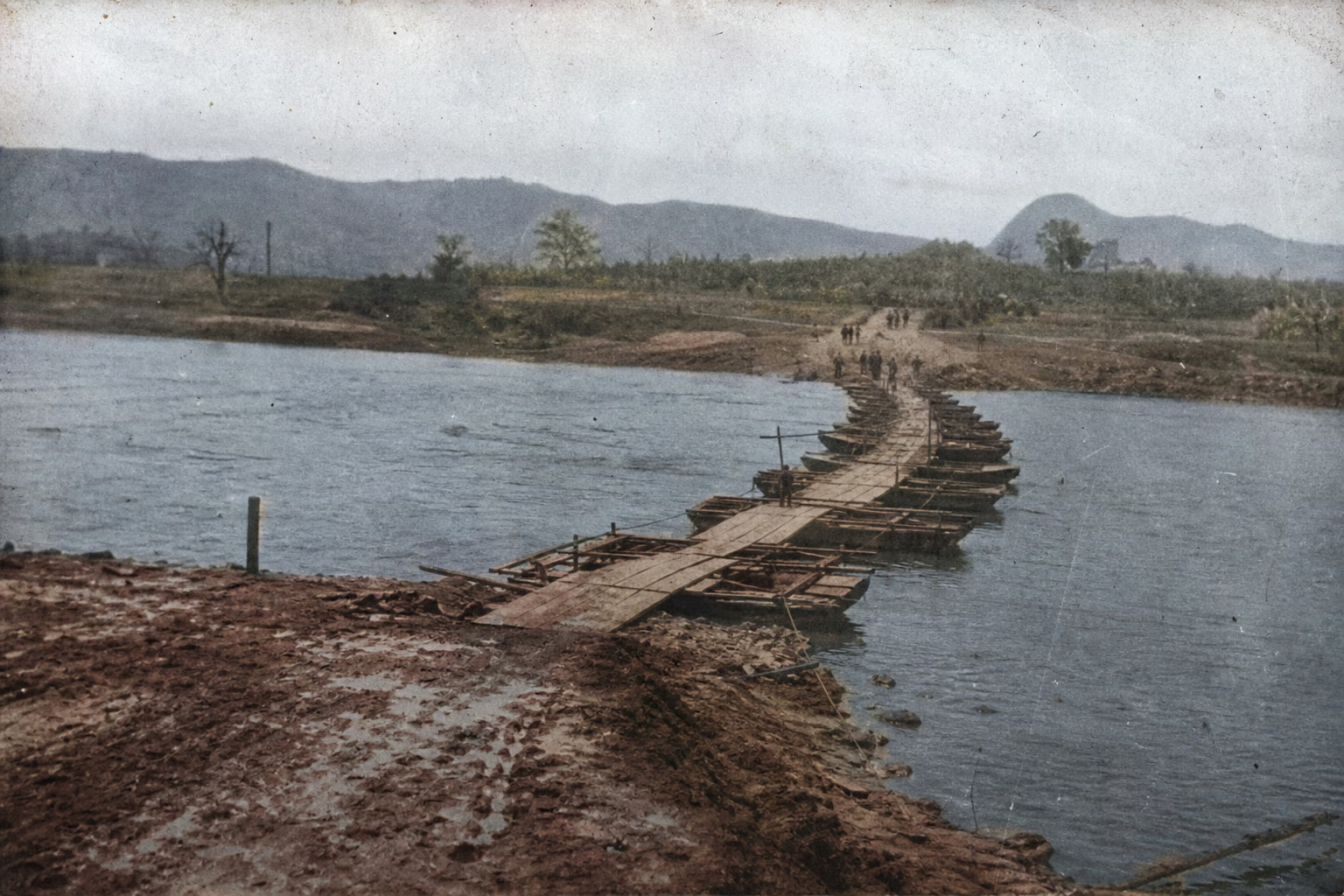
- Corridor and pocket: the geographic corridor of Yuechengling--Xiang River--Dupangling, with enemies coming from three sides and the river on the fourth -- the spatial fatalism of a "necessary road."
- The triangle of the three major blocking fields: Xinwei (south), Guanghuapu (center), and Jiaoshanpu (north) held up the ferry fan -- every additional hour that each blocking position held meant another group crossing at the riverbank: the structure of "exchanging space for time" is the core mechanism for making any narrative product out of this engagement.
- Ferries and pontoon bridges: the door-plank pontoon bridge at Jieshou ferry -- all hope pressed onto the most fragile span of several dozen meters.
- The mountains of southern Hunan: the 34th Division's final desperate turn -- the east bank growing farther and farther from the rest of the army, and the spatial isolation of a lone force.
How Each Side Records It
- Communist canon: the darkest moment in the Long March narrative and the eve of its turning point; "bloody battle at the Xiang River" entered history and film; in 2009, Chen Shuxiang was included in the roster of "100 Heroic Models Who Made Outstanding Contributions to the Founding of New China" (the roster's name is unverified).
- Nationalist side: recorded as the "Xiang River pursuit-and-blocking engagement," with battle reports from the Xiang and Guangxi forces shifting credit and blame among one another (comparison of battle reports unverified); the Guangxi clique recollections of "sending the guests off" and "striking the tail" form the most subtle layer.
- Later generations and localities: in recent years Xing'an and Quanzhou have built a Xiang River Battle memorial system (the Red Army Long March Xiang River Battle Memorial Park and others, expanded around 2019, unverified); "do not forget the Xiang River" has entered official commemorative language; scholarly textual work on the composition of losses (the distinction between battle casualties and dispersal) continues.
Disputes and Sensitivities
- The composition of the 50,000 lost: the debate between battle casualties and straggling or dispersal -- beyond the generalized phrase "50,000 sacrificed," there are differences in counting battle casualties and those who straggled or dispersed.
- How to characterize the Guangxi Army's "making way," and Bai Chongxi's responsibility -- local-history and official-history accounts differ sharply.
- The chance for an early crossing (whether there was a three-day gap that could have been seized for crossing) and the responsibility of the command -- the source layer and the inference layer must be kept separate.
- Chen Shuxiang's details -- the fact itself is already heavy enough; reject spectacle-making.
Sources and Open Questions
Sources: *Red Army Long March: Documents* (PLA Press series volume); *A Military History of the First Front Army of the Chinese Workers' and Peasants' Red Army*; firsthand recollections by Nie Rongzhen, Yang Dezhi, and others; paired reading of recollections by Guangxi clique figures Li Zongren and Bai Chongxi; local Party-history and memorial-park materials from Xing'an and Quanzhou.
Open questions: the different accounts of the composition of losses; the orders of battle and cadre-casualty rosters of the three major blocking actions; the telegrams on the Guangxi Army's making way; documents on the borrowed-road agreement with the Guangdong Army; details of Chen Shuxiang's death and the display of his head; details of pontoon-bridge construction; the name of the "heroic models" roster; the memorial park's institutional history; correspondence with the Communist International requesting the breakout and transfer; Long March marching speeds and baggage lists; Peng Dehuai's original wording when criticizing the house-moving style of transfer; specific records of the Three-Man Group's decision-making mechanism.
All images on this site are AI-generated depictions. They are not historical photographs, not primary sources, and do not depict any real individual.