Engagement Archive · Battle of Zhiluozhen
The Red Army that had reached northern Shaanxi after the Long March joined forces with the Fifteenth Red Army Corps, which had arrived earlier, and annihilated a division of the Northeastern Army at Zhiluozhen. Mao Zedong called this battle a "foundation-laying ceremony": it secured a place to stand, and it also opened the later pattern of both fighting and negotiating with the Northeastern Army.
Engagement Data
| Item | Details |
|---|---|
| Date | 1935.11.20 – 11.24 |
| Place | Zhiluozhen, Fuxian County, Shaanxi (then Fuxian written 鄜县; present-day 富县) |
| Belongs to | Agrarian Revolutionary War · final stage of the Long March / northwestern "Communist suppression" and counter-"encirclement" |
| Maneuvering side (ambushing side) | The joined force formed after the First Front Army of the Red Army (its designation restored after the Shaanxi-Gansu Detachment reached northern Shaanxi) met the Fifteenth Red Army Corps (the forces of Xu Haidong and Liu Zhidan, consolidated from the Twenty-Fifth, Twenty-Sixth, and Twenty-Seventh Red Armies; details of the consolidation unrecorded), commanded by Mao Zedong, Peng Dehuai, Zhou Enlai, and others (details of the command division unrecorded) |
| Ambushed side | Northeastern Army 57th Corps (Zhang Xueliang's force), 109th Division (division commander Niu Yuanfeng), plus part of the 106th Division |
| Result | The 109th Division was annihilated; division commander Niu Yuanfeng was killed in action (accounts that he died by suicide also exist; unverified). In the pursuit, another part of the 106th Division was destroyed. The Red Army won its first major victory after reaching northern Shaanxi |
Belligerents
| Item | Ambushing side | Ambushed side |
|---|---|---|
| Strength | About 10,000 in the First Front Army of the Red Army and about 7,000 in the Fifteenth Red Army Corps (combined figures on arrival in northern Shaanxi vary by account) | More than 6,000 in the 109th Division; reinforcements from the outer 106th and 111th Divisions, among others (total troop figures vary by account) |
| Firepower | Mainly rifles and machine guns, with ammunition in short supply; the Fifteenth Red Army Corps was somewhat better equipped | The Northeastern Army was well equipped, with heavy machine guns, mortars, and direct-fire guns |
| Condition | Newly arrived in northern Shaanxi after a long march, but fighting on local ground and supported by the Soviet area | Isolated deep advance, overconfident and rash; war-weariness existed among Northeastern Army officers and soldiers (the psychological background of "fight our way back to the Northeast," characterization unverified) |
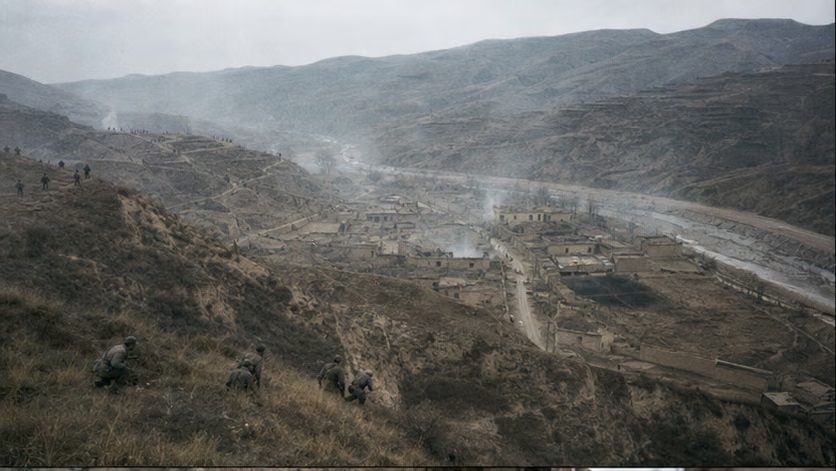
| Terrain | A preselected battlefield, with the northern and southern hills striking from both sides | The town lay in a valley corridor, closed at both ends: a pocket-shaped position |
Terrain and Conditions
(For the larger situation, including the North China Incident, the eve of the December 9th Movement, and the creation of the northwestern "suppression headquarters," see Agrarian Revolutionary War · Overview. This section covers only northern Shaanxi.)
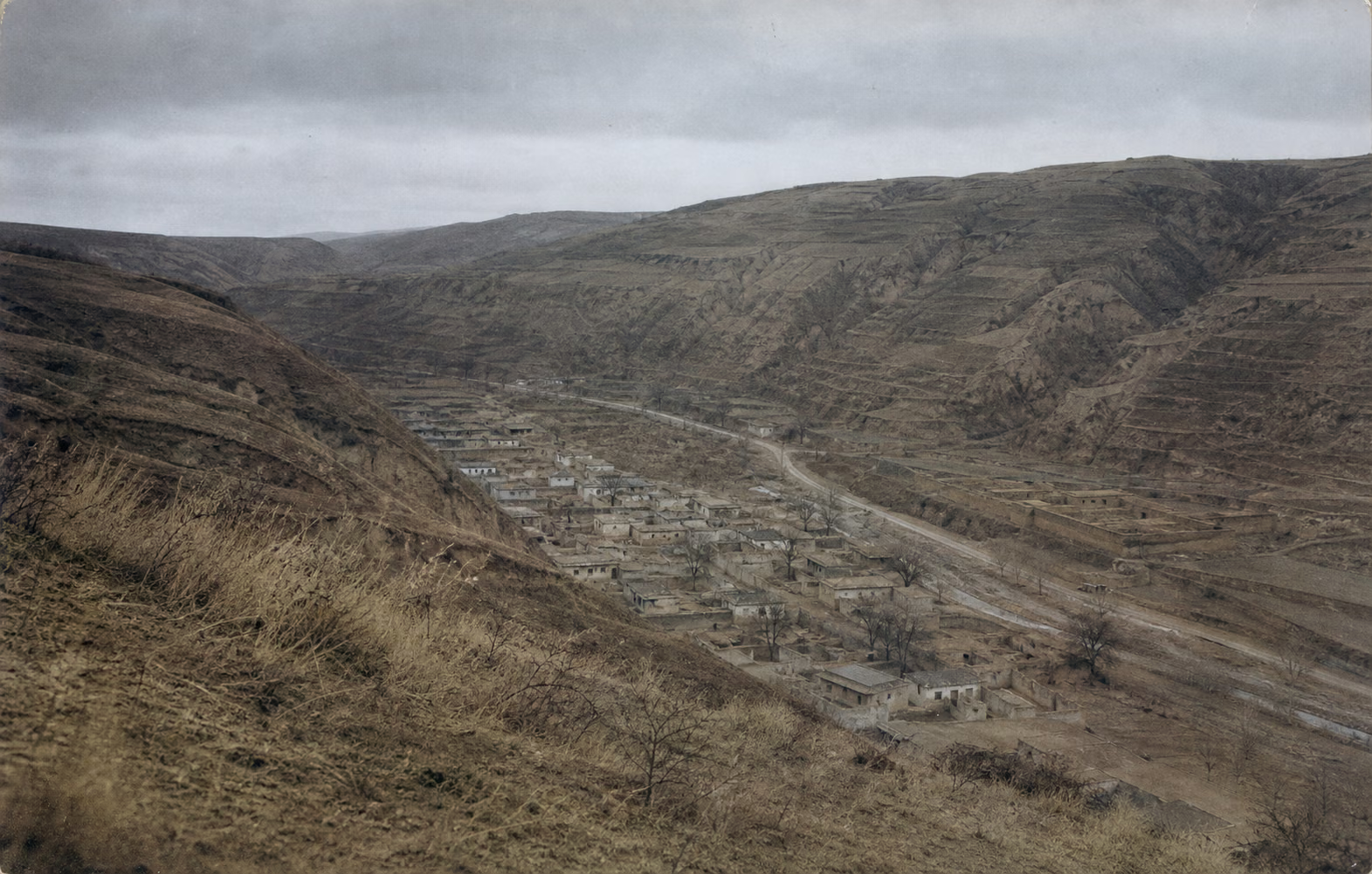
Northern Shaanxi: A gully country on the Loess Plateau, poor in land and hard in local character. The northwestern Soviet area founded by Liu Zhidan, Xie Zichang, and others was then the only relatively intact base area left in the country. But the Soviet area had just gone through an internal purge: in September and October 1935, the purge in the northwestern Soviet area expanded, and Liu Zhidan and a group of other cadres were imprisoned. After the Central Red Army arrived, it halted the purge and released Liu Zhidan (for the course of events, see the purge section in Agrarian Revolutionary War · Overview; details unrecorded). The battle at Zhiluozhen was fought just as the Soviet area had barely stabilized internally and the Northeastern Army was pressing in from outside.
Zhiluozhen: A small town on the Hulu River valley corridor. East of the town stood an old fortified village (details of the stockaded hunting-ground terrain unrecorded). A single valley was held between the northern and southern hills: a natural ambush ground. Most residents of the town had already been evacuated before the battle or cooperated with the Red Army (local gazetteer records unverified).
Why It Was Fought
After Lazikou had been opened, the force learned from local newspapers at Hadapu that Liu Zhidan had a Soviet area in northern Shaanxi (newspaper title unverified; see Battles of Baozuo and Lazikou). The Bangluozhen meeting fixed northern Shaanxi as the endpoint; after crossing Liupan Mountain, in October 1935 the Shaanxi-Gansu Detachment reached Wuqi, where it met the Fifteenth Red Army Corps consolidated from the Twenty-Fifth, Twenty-Sixth, and Twenty-Seventh Red Armies.
The place of arrival was not a ready-made home. This relatively intact base area, the only one left in the country, had just gone through an expanded purge, and Liu Zhidan and a group of other cadres were still imprisoned. After the Central Red Army arrived, it halted the purge and released them (for the course of events, see the overview). The Soviet area had barely stabilized internally when external pressure arrived: in September that year, Xi'an had already established the Northwestern "Bandit Suppression" General Headquarters, with Zhang Xueliang serving as deputy commander and acting general commander, and the Northeastern Army entered Shaanxi to "suppress the Communists" (details of organization and personnel unrecorded). After Lazikou, the opponent changed from Hu Zongnan to the Northeastern Army.
The "suppression headquarters" judged that the Red Army had just arrived after a long march, had not yet secured a footing, and was exhausted enough to be attacked; it should therefore be pressed before it could catch its breath. The 57th Corps advanced east along the Hulu River, well equipped with heavy machine guns, mortars, and direct-fire guns. But it had advanced alone and deep, overconfident and rash; this army also carried another burden: four years of war-weariness and homesickness after the Mukden Incident (the psychological background of "fight our way back to the Northeast," characterization unverified).
The Red Army calculated the opposite way: it had to win a battle to establish authority and knock down the Northeastern Army's offensive momentum before it could truly stand. This was both a military battle and a battle for a foothold. The two newly joined forces numbered around 17,000 together (figures vary by account), were fighting on local ground, and had the Soviet area behind them; the battlefield had also been chosen in advance: Zhiluozhen, a small town on the Hulu River valley corridor, with one valley held between the northern and southern hills, a natural pocket. The First Red Army Corps concealed itself in the hills north of the town, while the Fifteenth Red Army Corps concealed itself in the hills south of the town and waited.
When the decision was made to fight this battle, Mao Zedong and Peng Dehuai personally went to inspect the terrain around Zhiluozhen (all memoir accounts record this trip; the specific date is unverified). The intelligence in Red hands was concrete: the Northeastern Army was war-weary and homesick, the 57th Corps had advanced alone and deep while its flanks lagged, and the 109th Division was overconfident and rash. The outcome later confirmed all of this. What remained unclear was the other side of the calculation: how many more rounds of attack Zhang Xueliang's deployment in northern Shaanxi could sustain, and how large a battle the Soviet area's grain and ammunition could support, no one could calculate with certainty (unverified).
What could be calculated was the material account. After the Long March, the Central Red Army had exhausted its ammunition and funds; the Fifteenth Red Army Corps was somewhat better equipped because of captures in the battles of Laoshan and Yulinqiao, but it too could not endure positional attrition. Only one kind of battle was possible: a preselected battlefield, a quick decision, annihilation of one part of the enemy, and captured supplies to replenish itself. Destroying an entire division meant establishing authority, and it also meant settling the supply account (this judgment is inferred from the supply conditions and tactics of the two Red forces, with no direct record; unverified). The Northeastern Army was well equipped, but it had come from far away to fight, and its supply line was lengthening; its firepower advantage could not withstand losing divisions one by one.
No record has been seen of disagreement within the Red Army over this battle. On the Northeastern Army side, war-weariness was evident; whether any officers raised objections before the isolated deep advance cannot be judged from the surviving record (unverified).
On November 20, the 109th Division plunged into Zhiluozhen, and its divisional headquarters entered the town.
Course of the Engagement
| Phase | Time | Key points |
|---|---|---|
| Ambush set | Mid-November 1935 | The Red Army reconnoitered and selected Zhiluozhen as the prearranged battlefield; the First Red Army Corps concealed itself in the hills north of the town, and the Fifteenth Red Army Corps concealed itself in the hills south of the town, waiting |
| Entering the trap | 1935.11.20 | The 109th Division occupied Zhiluozhen, with its divisional headquarters inside the town |
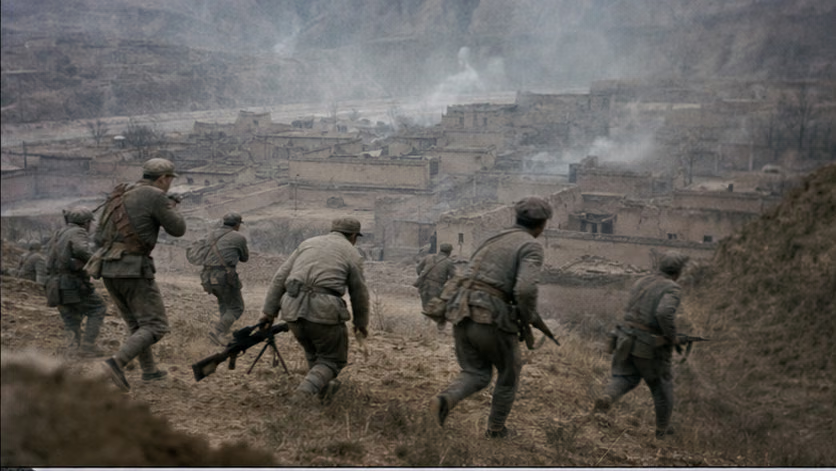
| General assault | Dawn, 1935.11.21 | Attacks began simultaneously from the northern and southern hills; the Red Army broke into the town for street fighting; most of the 109th Division was destroyed |
| Blocking reinforcements and pursuit | 1935.11.21–23 | Reinforcements from the outer 106th and 111th Divisions were repulsed; the Red Army pursued west and destroyed another part of the 106th Division in the Zhangjiawan area (place name and details unrecorded) |
| Endgame | 1935.11.23–24 | Niu Yuanfeng led the remnants in holding out in the old fortified village east of the town; the fortified village fell, and Niu Yuanfeng was killed in action (Red Army battle histories say he was shot dead; accounts of suicide appear in Northeastern Army memoirs, with multiple versions coexisting); the battle ended on 11.24 |
Casualties and Losses
- Red Army: no authoritative casualty count has been found (the figure of "several hundred" varies by statistical basis).
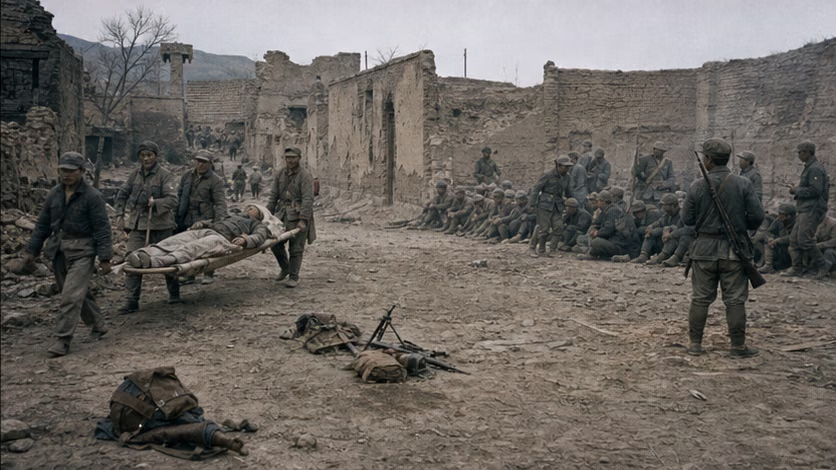
- Northeastern Army: the entire 109th Division, more than 6,000 men, was annihilated, including several thousand captured ("more than five thousand captured" is the common figure; unverified); the 106th Division lost one part.
- ※ Civilian cost: Houses in Zhiluozhen were badly damaged in the street fighting (local gazetteer records unverified); the pre-battle evacuation of townspeople and their support for the front (stretchers, guiding routes) were the concrete content of the battle's "support from the Soviet area"; there are also records of what the Northeastern Army took from the locality during its garrison period (figure disputed). Record both.
- One additional note: the handling of Northeastern Army prisoners was a key follow-up action after this battle. The Red Army treated prisoners well, propagated the lines "Chinese do not fight Chinese" and "fight our way back to the Northeast," and released prisoners back to their camps in succession after political education (policy details and release scale unrecorded). This handling directly connects to what follows (see "Aftermath").
Aftermath
- Mao Zedong said this battle "held a foundation-laying ceremony for the task of placing the national headquarters of the revolution in the Northwest" (wording appears in the report "The Battle of Zhiluozhen and the Present Situation and Tasks"; original wording unverified).
- A division of the Northeastern Army was destroyed, and Zhang Xueliang was shaken. This coincided with Nanjing's coldness toward replenishing the Northeastern Army (claims of canceling designations and suspending pensions exist; details unrecorded), deepening the Northeastern Army's war-weariness and alienation.
- The united-front effort toward the Northeastern Army unfolded from here: released prisoners carried messages back, front-line appeals were made, and secret contacts followed. In April 1936, Zhou Enlai and Zhang Xueliang met at Fushi (Yan'an), a line leading all the way to the Xi'an Incident in December 1936. The shift between fighting and talking, in this essay: Zhiluozhen was the peak of "fighting" and also the starting point of "talking."
- Inside the northern Shaanxi Soviet area: the rectification after the purge was halted and the arrangements for appointing Liu Zhidan and others (see the overview) stabilized the Soviet area.
Accounts of Those Present
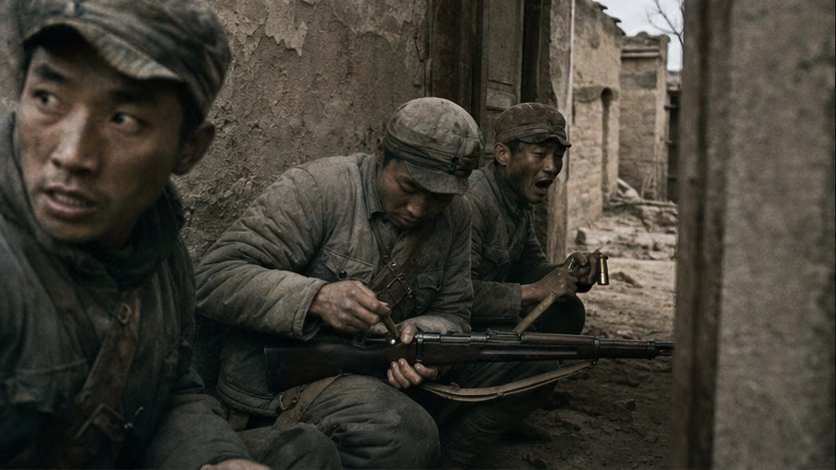
- The death of Niu Yuanfeng: He died after the fortified village fell; accounts that he was shot dead and accounts that he died by suicide coexist. To this day, there is no version of his manner of death accepted by all sides (figure disputed).
- Northeastern Army soldiers: After capture, many Northeastern Army soldiers heard the propaganda about "fighting back to the old home" and wept (recollections of participants, source unverified). Four years after the Mukden Incident, homesickness was this army's greatest weak point.
- Xu Haidong's "loan": At the beginning of the meeting of forces, the Central Red Army had exhausted its funds. Mao Zedong wrote to the Fifteenth Red Army Corps to borrow 2,500 yuan, and Xu Haidong took 5,000 yuan out of the only 7,000 yuan he had and sent it over (the amounts differ across recollections; unverified). It was one concrete measure of the bond formed by the meeting of forces.
- Liu Zhidan: He returned to work immediately after being released; in April 1936, during the Eastern Expedition, he was killed at Sanjiaozhen. Zhiluozhen was one of the last battles in which he took part while alive (combat role unverified).
- Zhou Enlai went up the mountain: During the general assault, Zhou Enlai and others were with the command post on the hills north of the town; remaining enemies in the fortified village had not yet been cleared, and guards tried to dissuade him from observing from the forward line (details of the recollection unrecorded).
The Ground
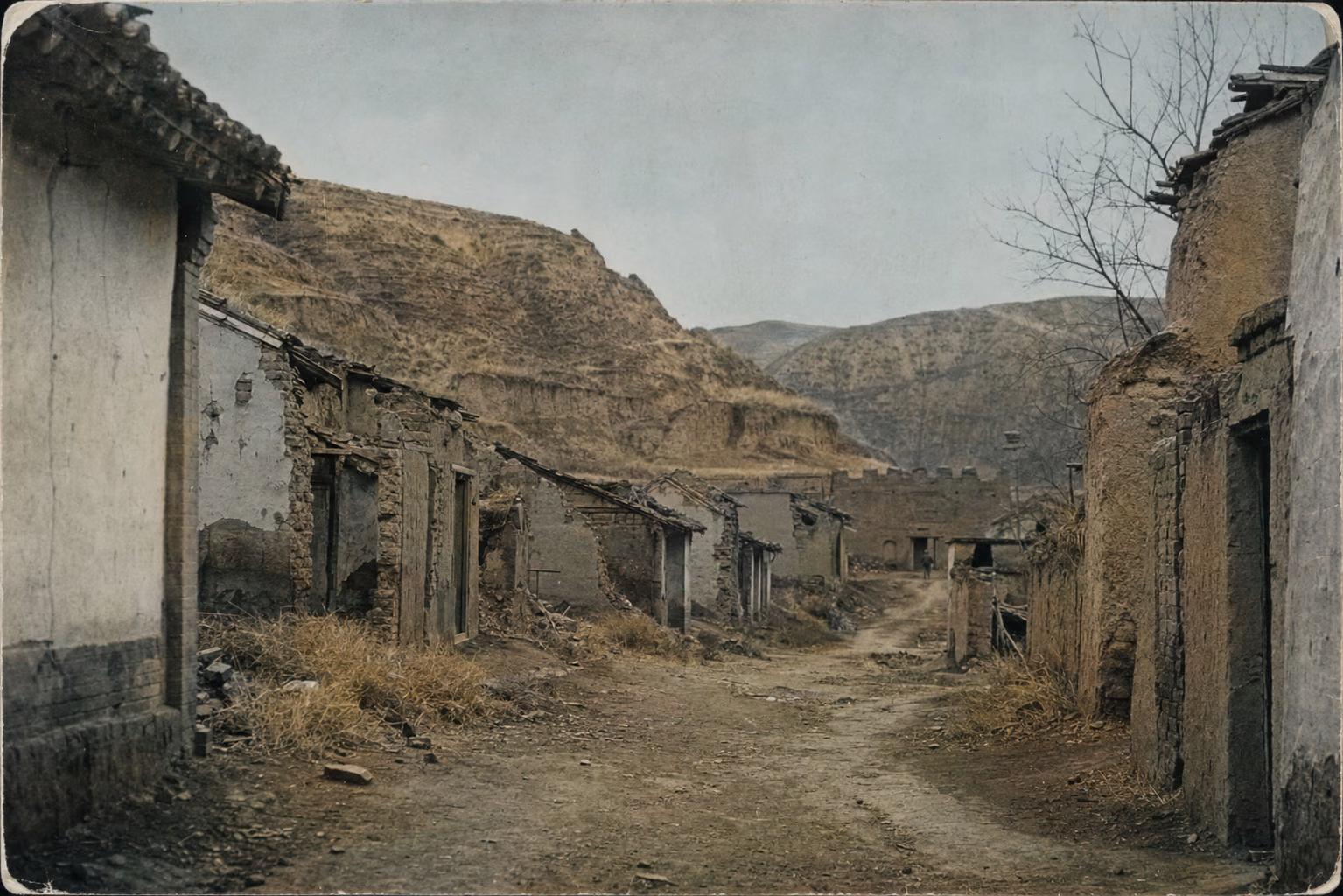
- Hulu River valley corridor: an east-west valley corridor, with northern and southern hills facing each other. The wider parts of the corridor were roughly one li across, and the narrower parts several hundred meters; once troops entered the corridor, they entered the pocket.
- Zhiluozhen: the town itself was a space for street fighting, while the old fortified village east of the town was the final strongpoint: a two-layer defensive shell of "town plus fortified village."
- Northern and southern hills: the depth of the ambush positions lay up on the hills; once the attack began, it descended from above, and height difference became firepower advantage.
- Winter scene on the Loess Plateau: by November, northern Shaanxi was already cold, with grasses and trees yellowed and with particular conditions for concealment and visibility (seasonal details unrecorded).
How Each Side Records It
- Communist canonical account (Long March narrative): the "foundation-laying ceremony." The Long March's place of arrival and point of departure were thereby established; the battle is also treated as an example of combining military blows with political winning-over.
- Kuomintang-side "pursuit and suppression" narrative: Northeastern Army battle histories record the destruction of the 109th Division only briefly (specific wording unverified); in Zhang Xueliang's late-life oral history, the defeat at Zhiluozhen and Nanjing's cold handling of it are repeatedly mentioned as one starting point of his change in thinking (oral-history source unverified).
- Later and scholarly reconsiderations:
- The two explanations for Niu Yuanfeng's death (shot dead / suicide) remain unresolved (level: divergent recollections, unverified).
- On the causal chain from this battle to the Xi'an Incident (Zhiluozhen -> united front -> military remonstrance), scholarship differs between interpretations of it as a "key link" and as "one factor among many" (level: dispute over interpretive framework, not a factual contradiction; unverified).
- The textual transmission and wording differences of the "foundation-laying ceremony" report (level: document-version problem, unverified).
Disputes and Sensitivities
- The relation between fighting and talking: the annihilation battle and the united front were two instruments of the same policy. If the public account tells only one side, the narrative loses balance. This essay sets the two side by side.
- The image of the Northeastern Army: a defeated army and an "army that wanted to go home" coexist. The larger questions around judgments of Zhang Xueliang (non-resistance, military remonstrance) belong in the overview and in the essays related to the Xi'an Incident; see those pieces.
- Background of the purge: Zhiluozhen was won just after the Soviet area had experienced internal self-injury. The victory narrative and the pain of reflecting on the purge overlap in time; this essay does not avoid that.
- This battle is the most natural closing point of the "end of the Long March," but its way of closing was "fight hard first, then make friends."
Sources and Open Questions
Known main sources:
- Documents and telegrams related to the Battle of Zhiluozhen collected in Collected Military Writings of Mao Zedong (original texts unverified)
- Relevant memoirs by Peng Dehuai and Xu Haidong (volumes unverified)
- Zhang Xueliang oral history (Columbia University holdings / Tang Degang edited edition, unverified)
- Relevant local-gazetteer volumes for Fuxian County (鄜县 / 富县) (figure disputed)
Open questions: the various troop-strength figures for both sides; sources for the two accounts of Niu Yuanfeng's death; the scale of prisoner releases and the details of the united-front effort; original documents on Nanjing's handling of the Northeastern Army (canceling designations, suspending pensions); the original text and versions of the "foundation-laying ceremony" report; differing figures for Xu Haidong's loan; Liu Zhidan's combat role; local-gazetteer records of house damage in Zhiluozhen and support for the front; details of the Zhangjiawan pursuit; sources for the relevant passages in Zhang Xueliang's oral history; the specific date when Mao Zedong and Peng Dehuai inspected the terrain around Zhiluozhen before the battle; details of the Fifteenth Red Army Corps's captures in the battles of Laoshan and Yulinqiao; materials assessing Zhang Xueliang's deployment in northern Shaanxi and the Soviet area's support capacity before the battle; records on whether anyone inside the Northeastern Army objected to the 109th Division's isolated deep advance.
All images on this site are AI-generated depictions. They are not historical photographs, not primary sources, and do not depict any real individual.