Engagement Archive · Jinsha River and Dadu River
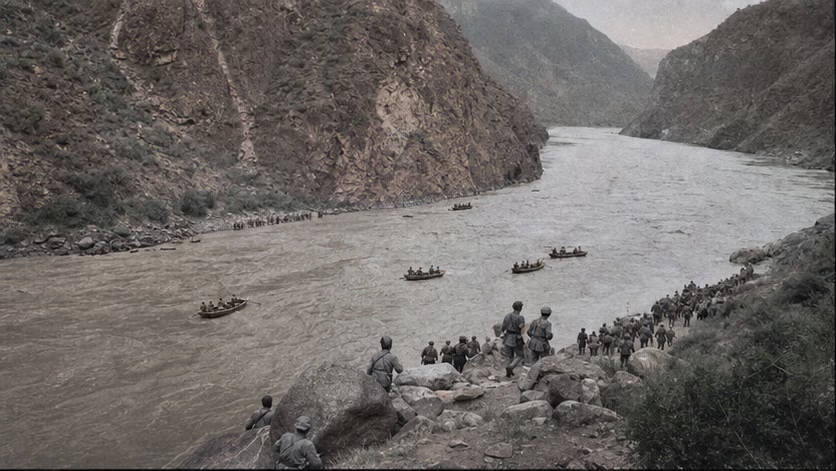
Thirty thousand Red Army personnel crossed the Jinsha River on a handful of wooden boats; then seventeen men in a single boat seized the Anshunchang crossing on the Dadu River, and twenty-two men climbed the iron chains to take Luding Bridge. From the geographical dead end of a "second Shi Dakai," they forced open a road to survival.
Engagement Data
| Item | Content |
|---|---|
| Time | 1935.5.3 – 5.29 (Jinsha River 5.3–9; Anshunchang 5.24–25; Luding Bridge 5.29) |
| Place | Jiaopingdu on the Jinsha River (Sichuan-Yunnan border, between present-day Luquan, Yunnan, and Huili, Sichuan); Anshunchang and Luding Bridge on the Dadu River (Sichuan, from present-day Shimian, Ya'an, to Luding, Garze) |
| Affiliation | Agrarian Revolutionary War · Long March (Central Red Army / First Front Army phase) |
| Mobile side | Central Red Army (First Front Army), with roughly over 20,000 troops at this stage (figures vary by counting basis) |
| Pursuing and blocking side | Nationalist central forces (Xue Yue's forces, among others), Sichuan troops under Liu Wenhui, and Yunnan troops under Long Yun |
| Result | The Red Army main force completely crossed the Dadu River, entered western Sichuan, and joined the Fourth Front Army at Maogong in June (for details of the linkup, see Agrarian Revolutionary War · Overview) |
Belligerents
| Item | Mobile side | Pursuing and blocking side |
|---|---|---|
| Strength | Roughly over 20,000 (the often-cited "30,000" crossing of the Jinsha River includes non-combat personnel; unverified) | Sichuan riverbank garrisons were thin (the Anshunchang garrison was roughly battalion-sized; accounts vary by counting basis); later pursuing forces numbered in the tens of thousands |
| Firepower | Rifles, machine guns, and a small number of mortars; the bridge assault detachment carried pistols and hand grenades | The garrison's equipment was ordinary; the Sichuan troops were not direct-line forces, and both ammunition and training were inferior |
| Crossing equipment | Jinsha River sector: seven wooden boats (another account says six; figure disputed); Anshunchang: only one wooden boat obtained | Boats at the Dadu River crossings had mostly been confiscated or destroyed in advance; the planks of Luding Bridge had been removed |
| Supply | No rear area; procuring grain on the edge of the snow-mountain plateau was extremely difficult | Supported by local authority, but the Dadu River corridor was already poor in land |
Terrain and Conditions
(For the broader situation -- the Long March as a whole and the prospect of linking the First and Fourth Front Armies -- see Agrarian Revolutionary War · Overview. This section covers only the Sichuan-Yunnan border and the Dadu River corridor.)
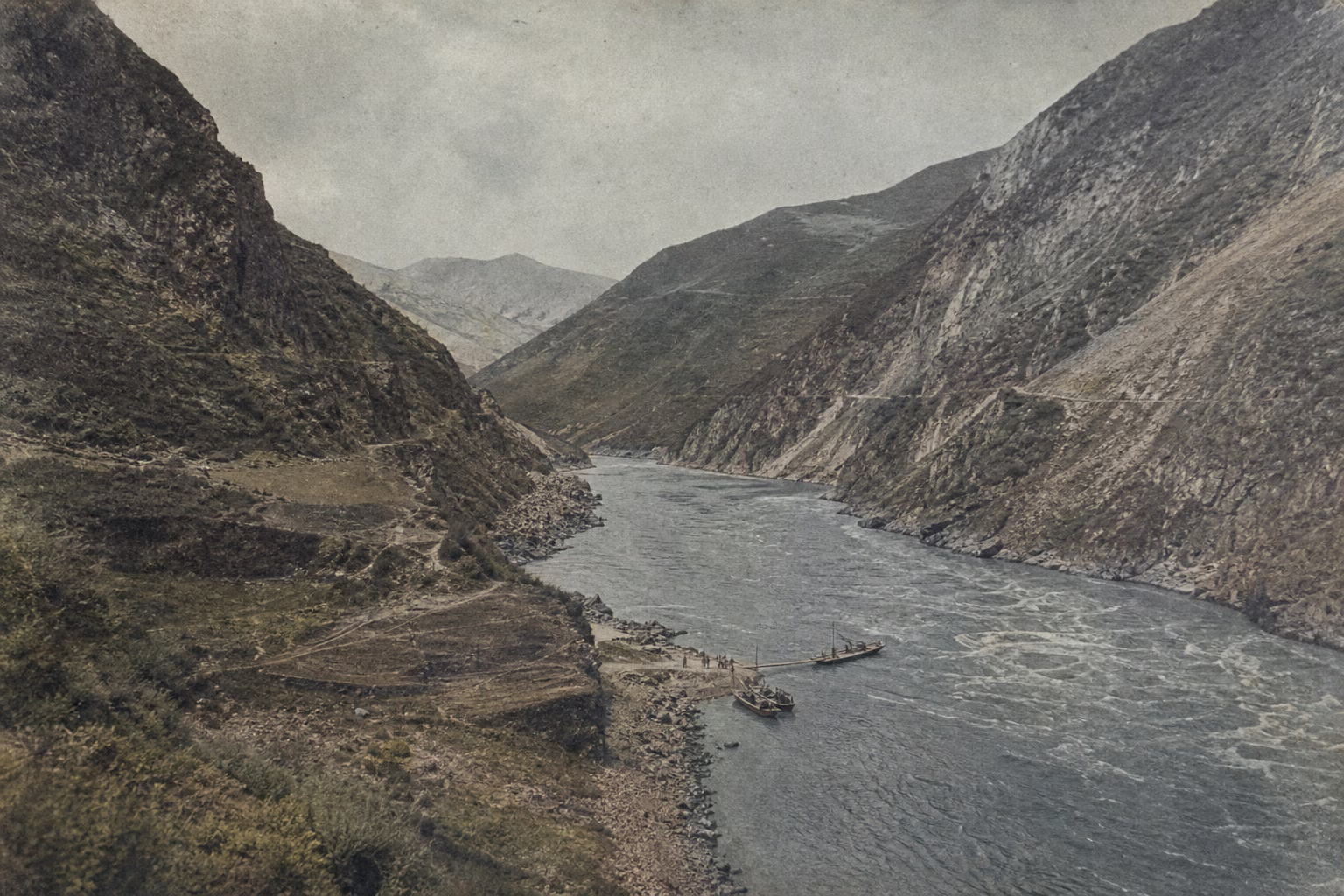
Jinsha River sector: A dry, hot river valley on the Sichuan-Yunnan border, with swift water and ferryboats as the only passage. The Yunnan Army was alert to a Red Army entry into Yunnan, but Long Yun's foremost concern was that the central forces would use the pursuit as a pretext to enter Yunnan. The Yunnan Army's mentality of "seeing the guests out" (this characterization is unverified) left the Red Army a time window for the river crossing.
Dadu River sector: High mountains and gorges in western Sichuan, with fast currents and many shoals; since antiquity, boats had found the river hard to navigate. In 1863, Shi Dakai, the Wing King of the Taiping Heavenly Kingdom, was blocked at this very Anshunchang crossing and his entire army was destroyed. When the Red Army reached the same crossing in May 1935, it was the same month of the year as Shi Dakai's defeat, with the same seasonal water level. The riverbanks included Yi-inhabited areas and mixed Han-Yi settlements, where ethnic estrangement was deep; tensions among the Yi people, the authorities, and Han residents had long existed (details of local social history unrecorded).
Why It Was Fought
The last move in the Crossing of the Chishui River fell on Guiyang: the Red Army crossed the Wu River southward and pressed directly toward the city, where Chiang Kai-shek was supervising operations, forcing him to urgently order Yunnan troops eastward in support. "So long as the Yunnan troops could be drawn out, that would be victory" is attributed to Mao Zedong (source unverified; see Crossing of the Chishui River). Once the Yunnan Army moved, the gate to Yunnan lay open, and the Red Army advanced westward through the gap. To break out of the ring of hundreds of thousands of pursuing and blocking troops, there was only one road: cross the Jinsha River northward, then cross the Dadu River, and move into western Sichuan to join the Fourth Front Army.
Chiang Kai-shek was no longer in a hurry. His judgment was to let geography fight this battle for him: the two natural barriers of the Jinsha and Dadu rivers, together with the Sichuan troops sealing the banks, would be enough to trap the Red Army in the place where Shi Dakai had been destroyed. Boats at the crossings had been confiscated or destroyed in advance, and the planks of Luding Bridge had been removed. In May 1863, Shi Dakai, the Wing King of the Taiping Heavenly Kingdom, lost his entire army at the Anshunchang crossing; in May 1935, the Red Army would arrive at the same crossing, in the same month of the same season, with the same water level. Chiang's telegrams to the front carried the idea of making Zhu and Mao into a "second Shi Dakai" (original telegram unverified).
There were also openings in the blockade opposite them. Long Yun of the Yunnan Army was chiefly worried that the central forces would enter Yunnan under cover of pursuit; this mentality of "seeing the guests out" (characterization unverified) left the Red Army a time window to cross the Jinsha River. Along the Dadu River, Liu Wenhui's Sichuan troops were not direct-line forces, with inferior ammunition and training and thin garrisons. There was another layer that did not appear on military maps: the Dadu River corridor was a Yi-inhabited and mixed Han-Yi region, where years of oppression by officials and Han merchants had produced deep ethnic estrangement. Whether a large army could pass through Yi territory depended not on terrain, but on people.
The decision to cross took concrete form at the ferry sites. The original plan had the First Corps move toward the Longjie crossing, the Third Corps toward the Hongmen crossing, and the Cadre Regiment toward Jiaopingdu, with three routes crossing at once. The first two locations could not be used because the water was swift and the bridges were broken, so the Central Revolutionary Military Commission changed the order and directed the entire army to cross at Jiaopingdu alone, with Liu Bocheng as crossing commander (documents and telegrams on the change of crossing site unverified). The boats were the life of the whole army: several wooden boats and more than thirty boatmen worked day and night without rest (boatman counts vary by basis), seven days and seven nights, each day calculated by the few hours needed for a round trip. Grain was counted just as tightly: the Huili area was poor, grain procurement was limited, and when passing through Yi territory the army also strictly ordered that households not be entered and requisitions not be made. Dry rations were carried on each person, and the forced marches that followed were arranged according to marching capacity. On the pursuing and blocking side, Xue Yue took the main roads and waited for baggage, leaving him behind on the south bank of the Jinsha River. Liu Wenhui was defending his own territory, and river defense and the central forces' command arrangements constrained each other (documents and telegrams from both sides unverified). Only one dissent is recorded: Lin Biao's letter, criticized at the Huili meeting, calling for a change in front-line command was the only public dissent against the command level on the Long March (original letter unverified). No dissent over the crossing route itself is recorded. Chiang Kai-shek's judgment rested on the premise that "the Red Army had no boats." Orders to destroy and confiscate boats had already been issued, and he personally went to Kunming to supervise operations in May (dates vary by account). The one thing he did not calculate was that a few boats would be missed at Jiaopingdu.
This section, then, was not a campaign battle but a chain of races against time: pursuing forces behind, natural barriers ahead, and more than 20,000 Red Army personnel (accounts vary by counting basis) had to cross before the encirclement closed. On May 3, the Cadre Regiment vanguard seized Jiaopingdu. The life of the whole army was staked on seven wooden boats at the crossing (another account says six; figure disputed).
Course of the Engagement
| Phase | Time | Key points |
|---|---|---|
| Skillful crossing of the Jinsha River | 1935.5.3–9 | The Cadre Regiment seized the Jiaopingdu crossing and obtained seven wooden boats (another account says six). With local boatmen ferrying them across, the whole army crossed in seven days and seven nights (boat numbers and duration vary by account). The crossing itself was taken "without firing a shot," while covering actions on the periphery (defenses in the Luquan direction and others; details unrecorded) also took place. When Yunnan troops reached the riverbank, the Red Army had already fully crossed. The saying that they "picked up only straw sandals" is widely circulated (source unverified). |
| Rest and reorganization at Huili | 1935.5.12 | The Huili meeting criticized Lin Biao's earlier letter calling for a change in military command and consolidated the command system (for the meeting, see Agrarian Revolutionary War · Overview; here it is noted only briefly). |
| Passage through Yi territory | Around 1935.5.22 | Advance commander Liu Bocheng and Xiaoyedan, chief of the Guji (Guoji) clan branch of the Yi people, swore a blood alliance at Yihai, allowing the Red Army to pass smoothly through Yi territory -- a landmark event in its ethnic policy. |
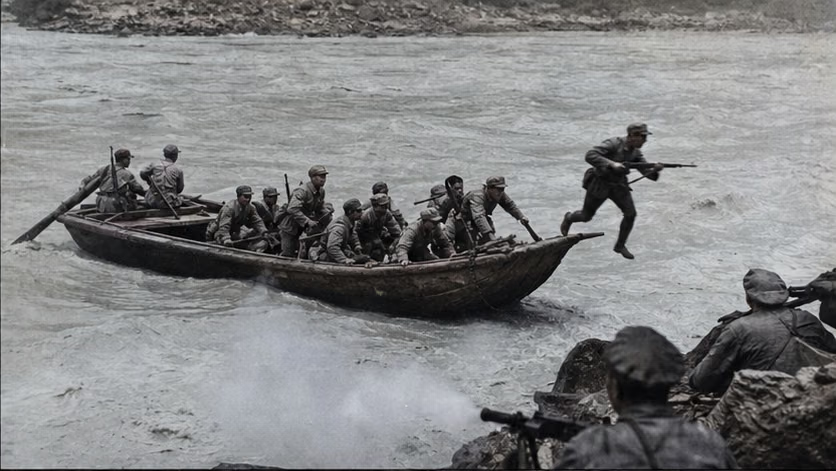
| Forced crossing at Anshunchang | 1935.5.24–25 | The First Red Regiment vanguard seized Anshunchang and obtained only one wooden boat. On 5.25, the Seventeen Warriors successfully made the forced crossing in a single boat (seventeen men in one boat; roster noted, complete list unverified) and controlled the crossing. But with so few boats and such fast water, tens of thousands of troops could not be ferried across by one boat in only a few days. Another route had to be taken: Luding Bridge. |
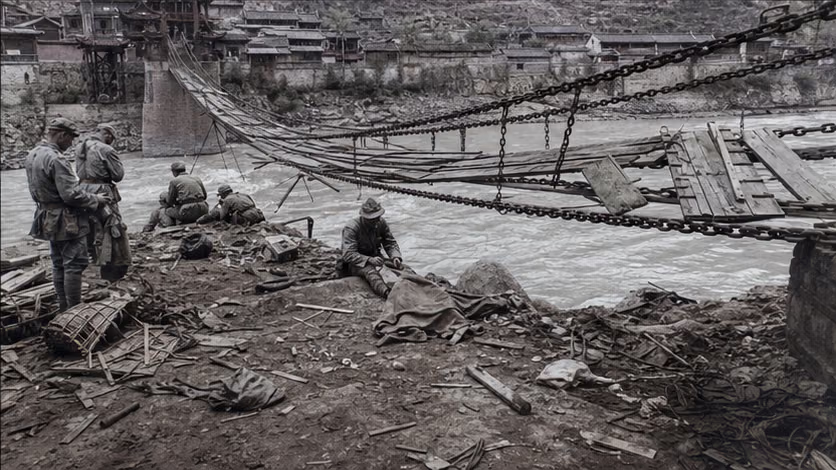
| Seizing Luding Bridge | 1935.5.28–29 | The Fourth Red Regiment made a forced march day and night along the west bank of the Dadu River for 240 li (the basis of "120 kilometers in one day and night" varies by account), reaching the west bank of Luding Bridge on the morning of 5.29. The defending troops (Sichuan troops under Liu Wenhui) had removed the bridge planks, leaving only the iron chains. The Twenty-Two Warriors climbed the iron chains to assault the bridge, while follow-on troops laid planks and advanced, taking the bridge (there are textual-critical disagreements over the scale and details of the fighting; see "How Each Side Records It"). |
Casualties and Losses
- Jinsha River sector: the crossing itself caused almost no combat casualties. "Without firing a shot" refers to the crossing itself; there were casualties in peripheral fighting across the whole operation (specific figures disputed).
- Anshunchang: the Seventeen Warriors' forced crossing had casualties (memoir accounts vary; unverified). Suppressive fire by machine-gun covering teams, including shooter Li Decai (details of name and deeds unrecorded), was the precondition for the ferry's success.
- Luding Bridge: canonical accounts record four assault-team casualties (another account says three; figure disputed). One line of textual criticism offers different estimates of the density of the defending troops' fire and the scale of the fighting (see "How Each Side Records It").
- ※ Cost to civilian life: The crossing of the Jinsha River by thirty thousand people depended entirely on boatmen along the river ferrying day and night; written records differ on the boatmen's payment and the boundary of requisition (oral histories unverified). Before the Red Army passed through Yi territory, it strictly ordered respect for Yi customs and prohibited entering households; meanwhile, historical oppression of Yi people by officials and Han merchants was the root of ethnic estrangement in the area. The other side of the Red Army's "smooth passage" was the long-standing double burden borne by local people (local gazetteers and Yi-area social survey materials unverified).
- Non-combat attrition continued in this phase: along the line from the Jinsha River to Huili, there were still many stragglers, sick, and wounded (no systematic statistics; marked simply as "no statistics").
Aftermath
- After crossing the Dadu River, the Red Army climbed Jiajin Mountain (the first snow mountain; the snow-mountain stage is to be narrated separately or incorporated into the overview, with the level of detail unverified), and in June 1935 joined the Fourth Front Army at Maogong.
- Chiang Kai-shek's encirclement judgment of a "second Shi Dakai" failed; Liu Wenhui's Sichuan troops were blamed for failing to defend their own territory effectively (disciplinary details unrecorded).
- Luding Bridge and Anshunchang thereafter became the two most famous place names in the Long March narrative; Luding Bridge has been preserved to the present as a revolutionary memorial site.
Accounts of Those Present
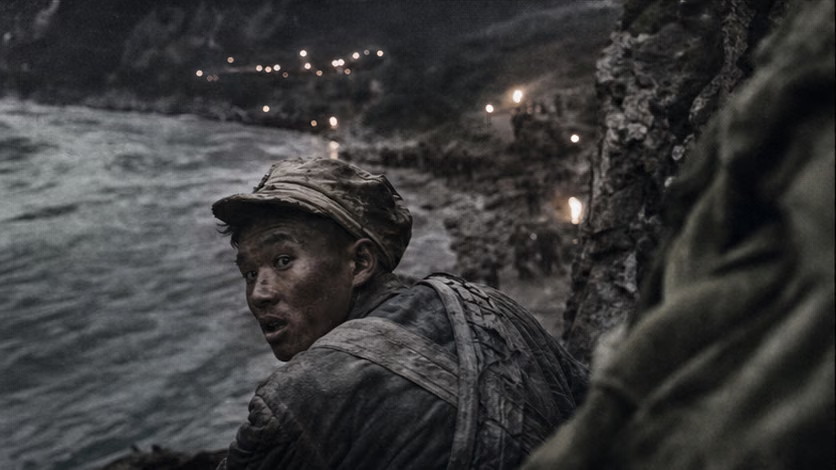
- Xiaoyedan: After the Yihai alliance, Xiaoyedan's force escorted later Red Army units through the area. After the Red Army left, local Yi clan branches suffered reprisals, and Xiaoyedan was killed in 1942 (accounts of the outcome differ; unverified). The Red Army flag he left behind was preserved by his family into the 1950s (surviving artifact; collection information unverified).
- Seventeen Warriors: Seventeen men in one boat; when the boat reached the far bank, the first to jump ashore was Xiong Shanglin, commander of Second Company (roster noted; complete list and posts unverified).
- Twenty-Two Warriors: The assault team was composed mainly of Second Company, Fourth Red Regiment. Only part of the list of its twenty-two members survives today (current state of textual criticism: the complete list has not been confirmed; unverified). The assault team was formed by volunteers (memoir basis; unverified).
- The forced marchers: The Fourth Red Regiment received orders on the morning of the 28th and seized the bridge on the morning of the 29th, marching 240 li of mountain road day and night. Along the way, it raced in parallel with Sichuan troops on the opposite bank; at night, when the opposite bank raised torches, the Red Army also raised torches and pretended to be "friendly troops" (this detail comes from participants' recollections and is widely circulated; unverified).
- Shi Dakai's shadow: Red Army political work along the road kept repeating, "we are not Shi Dakai" -- the shadow of history was used directly for mobilization.
The Ground
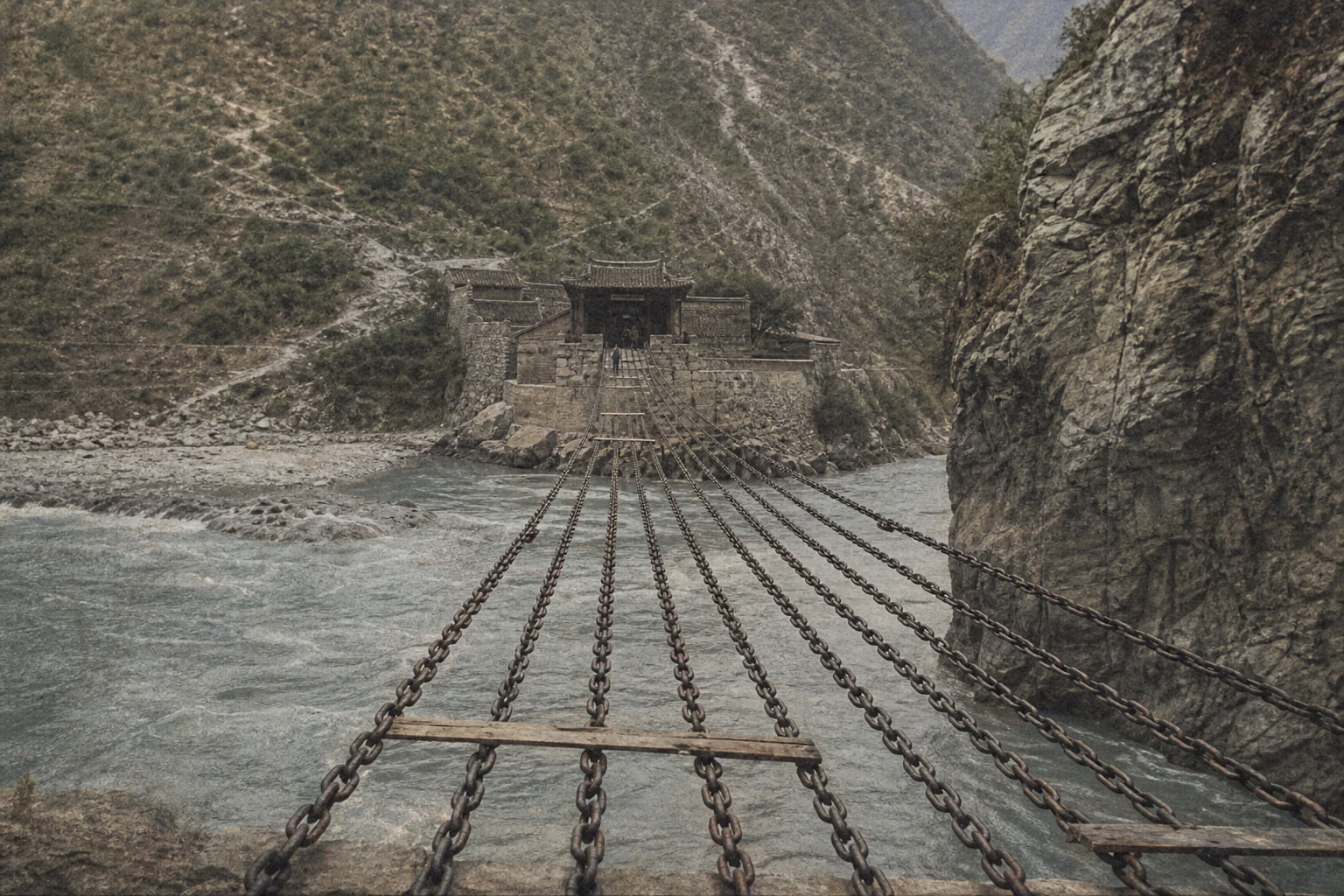
- Jiaopingdu: a narrow crossing in a dry, hot river valley, with steep cliffs on both banks and boats completely exposed on the river. The crossing was the bottleneck, and seven wooden boats held up the lifeline.
- Anshunchang: a small town on the east bank of the Dadu River, where the river is wide and swift. Shi Dakai was trapped here for forty-seven days that year (the number of days varies by account) -- the physical form of a geographical dead end.
- Dadu River corridor: from Anshunchang to Luding is about 160 kilometers, with one river pinched between cliff walls on both banks. Troops could move only in column along riverside paths -- a single line, with no depth.
- Luding Bridge: an iron-chain bridge from the Kangxi reign, with thirteen iron chains (nine bottom chains and four hand chains; structural details unrecorded) spanning a river surface of one hundred meters. After the bridge planks were removed, only suspended iron chains remained, with rapids below -- an extreme form of vertical exposure and suspension.
- Yi mountain roads: high mountains and dense forests, with clan branches everywhere. Passage rights depended not on terrain but on people -- a kind of "social terrain."
How Each Side Records It
- Communist canonical account (Long March narrative): the skillful crossing of the Jinsha River is the complete finishing move of "luring the tiger away from the mountain"; the Yihai alliance is a classic example of the policy of ethnic equality; the Seventeen Warriors at Anshunchang and the Twenty-Two Warriors at Luding Bridge are peak scenes of Long March heroism.
- Nationalist "pursuit and suppression" narrative: it acknowledges the failure of encirclement and blocking, usually attributing it to the Sichuan troops' weak defense and local armies' self-preservation mentality (war-history phrasing unverified). Liu Wenhui later defended his bridge-guarding troops after the battle (relevant passages in his memoir unverified).
- Later and scholarly reconsiderations (textual-critical levels):
- Scale of the Luding Bridge fighting: The canonical narrative has the Twenty-Two Warriors storming across the chains under intense fire. One line of textual criticism (including some historians and online textual-critical essays) argues that the defenders were a rear-guard battalion of a regimental-level unit with weak firepower disposition; another account claims that the defenders had been ordered to allow passage in order to preserve the bridge. The intensity of the bridge seizure may have been amplified by the narrative (level: disputed; both sides have evidence and positions; unverified).
- List of the Twenty-Two Warriors: The surviving list is incomplete, and the number and names have not been fully established in scholarly terms (level: current state of textual criticism; unverified).
- Forced-march distance: "240 li day and night" is based on participant recollections, and there is discussion over measured verification of the distance and time (level: technical textual criticism; unverified).
- Jinsha River "without firing a shot": This refers to the crossing itself; there were peripheral covering actions in the Luquan direction and elsewhere. The two formulations coexist (level: a matter of defining the basis, not a factual contradiction).
Disputes and Sensitivities
- The gap between textual criticism of Luding Bridge and the canonical account: That the bridge seizure "happened" is not disputed; the dispute concerns scale and detail. Following the canonical account completely invites criticism from textual critics; following the textual criticism completely invites emotional backlash.
- The aftermath of the Yihai alliance: Xiaoyedan's fate and the later reprisals suffered in Yi territory were long mentioned only sparingly in the canonical narrative. This is also the real depth beneath the narrative of ethnic unity.
- The Shi Dakai narrative: No reliable public version has been found of the original telegram in which Chiang's side supposedly referred to a "second Shi Dakai" (figure disputed); the source still awaits tracing.
Sources and Open Questions
Known main sources:
- Yang Chengwu, Recalling the Long March (political commissar of the Fourth Red Regiment and participant in the bridge seizure)
- Recollections related to Liu Bocheng and other members of the advance detachment (specific volumes unverified)
- Liu Wenhui's memoirs (Sichuan defender's perspective)
- Local Party-history materials such as The Red Army's Long March in Sichuan (figure disputed)
Open questions: the number of Jinsha River boats and the duration of the crossing; details of peripheral fighting at Luquan; the source of "picked up only straw sandals"; the complete list of the Seventeen Warriors; the deeds of machine-gun shooter Li Decai; the current textual-critical state of the Twenty-Two Warriors list; verification of the forced-march distance; textual criticism of the Sichuan unit designation and firepower disposition at the bridge; the original telegram text for "second Shi Dakai"; varying accounts of Xiaoyedan's fate; collection information for the Yihai alliance flag; details of Liu Wenhui's postwar punishment; oral histories of boatmen's requisition and payment along the route; documents and telegrams on the change of crossing site (from Longjie and Hongmen to Jiaopingdu); the basis for the boatman count; the original text of Lin Biao's letter; documents and telegrams between Liu Wenhui's river defense and the central forces' command arrangements; the dates of Chiang Kai-shek's movements in Kunming.
All images on this site are AI-generated depictions. They are not historical photographs, not primary sources, and do not depict any real individual.