Engagement Archive · Fourth Counter-"Encirclement" Campaign (1933)
Mao Zedong had already been removed from military command; Zhou Enlai and Zhu De, against telegrams from the rear ordering "separate operations," fought two ambushes in heavy fog and wiped out three of Chen Cheng's main divisions -- the Red Army's last major victory before the "Left"-deviation line took full control, won by disobeying orders at the front.
Engagement Data
| Item | Content |
|---|---|
| Time | 1933.2 – March (Huangpi 2.27–28; Caotaigang 3.20–21) |
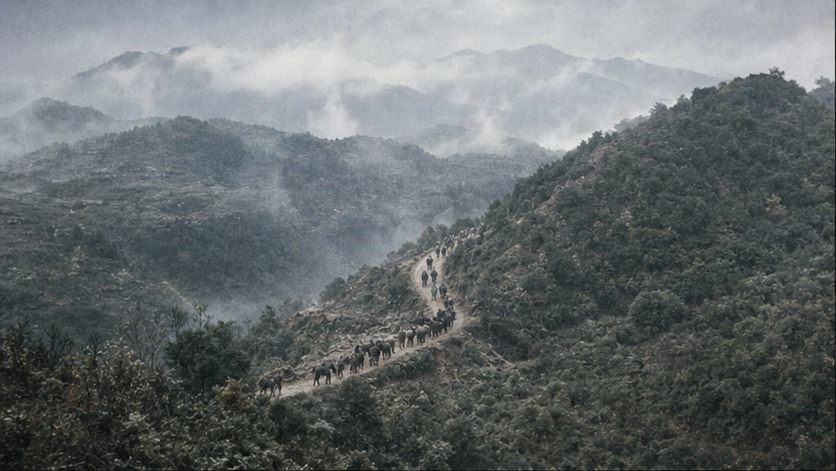
| Place | Eastern Jiangxi: Nanfeng, Huangpi, Caotaigang (the Dengxianqiao–Dongpi line) |
| Affiliation | Agrarian Revolutionary War (for the larger situation, see *Agrarian Revolutionary War · Overview*) |
| Belligerents | First Front Army of the Red Army (Zhou Enlai, Zhu De, about seventy thousand) / mainly Chen Cheng's Central Route Army of the KMT forces, with twelve divisions (total strength over three hundred thousand; accounting bases vary by account) |
| Result | Most of the Fifty-second and Fifty-ninth Divisions and most of the Eleventh Division were wiped out, with more than ten thousand prisoners taken -- the Red Army's first large-formation ambush to annihilate the enemy |
Belligerents
| Item | Red Army | KMT Forces |
|---|---|---|
| Strength | About seventy thousand, concentrating the main force | Three columns of the Central Route Army advancing separately and striking together |
| Command | Conflict between the front line (Zhou and Zhu) and the rear (Provisional Central leadership): the rear ordered assaults on fortified points and division of forces, while the front insisted on luring the enemy into ambush | Chen Cheng was eager to find the main force and force a decisive battle, exposing gaps between the columns |
| Weather | Both engagements used heavy fog for encirclement | Units lost contact in the fog, and the vanguard was enveloped |
Terrain and Conditions
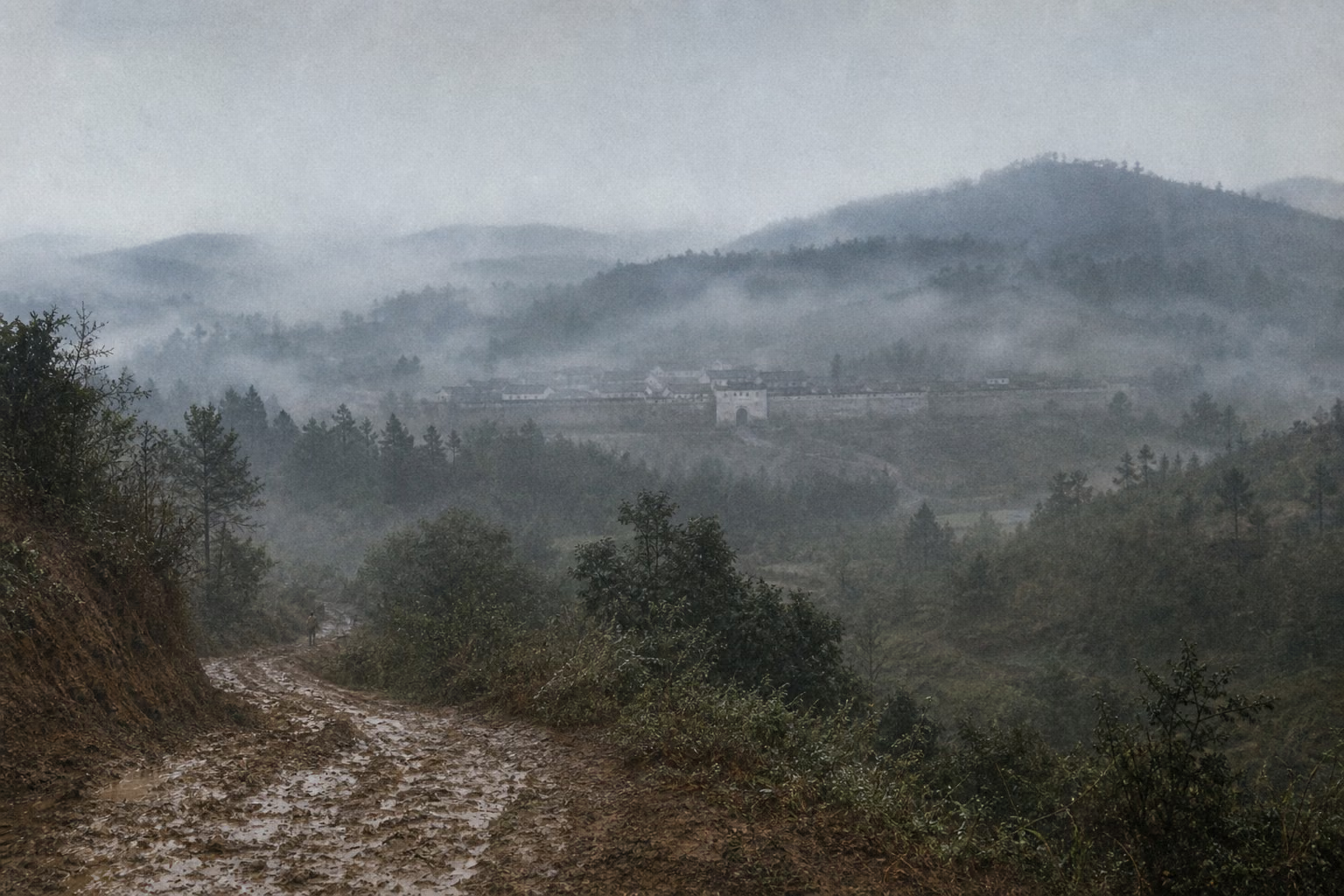
After the Ningdu Conference (1932.10), Mao Zedong left his post in military command; the Provisional Central leadership moved into the Soviet area, and the "offensive line" held sway. Eastern Jiangxi was a country of hills and dense woods, with frequent rain and fog in February and March -- natural ground for ambush warfare. At this time Chiang Kai-shek, distracted northward by the Rehe and Great Wall situation (Japanese forces had entered the passes; cross-reference the Fourteen-Year War of Resistance articles), pressed Chen Cheng for a quick decision.
Why It Was Fought
In the same February when Tian Songyao's three-route encirclement in the Daba Mountains opened fire, the main battlefield in Jiangxi also reopened (see *Sichuan–Shaanxi Counter-Encirclement*). Chiang Kai-shek's fourth "encirclement and suppression" campaign in fact began with its first half: in 1932, the Hubei–Henan–Anhui and western Hunan–Hubei Soviet areas fell one after another, and the Fourth Front Army of the Red Army was driven into northern Sichuan -- in the second half, it was the Central Soviet Area's turn.
The Central Soviet Area itself had also changed. The third "encirclement and suppression" campaign had petered out after the Mukden Incident, and for more than a year there had been no major battle; in that time the Provisional Central leadership moved into the Soviet area, the "offensive line" held sway, and at the Ningdu Conference in October 1932 Mao Zedong left his post in military command -- the command system that had won the first three counter-"encirclement" campaigns had been half dismantled. Front-line military affairs fell to Zhou Enlai and Zhu De.
Chiang's calculation was to use Chen Cheng's twelve direct-line divisions as the central route, have three columns advance separately and strike together, seek a decisive battle with the Red Army's main force, and drive straight into the heart of the Soviet area. The timetable, however, was not his to control: Japanese forces had already entered the passes, Rehe and the Great Wall were under pressure (see the Fourteen-Year War of Resistance articles for details), and Chiang, distracted northward, pressed Chen Cheng for a quick decision -- haste was the base color of the KMT forces in this battle.
The Red Army, about seventy thousand strong, first fought according to telegrammed orders from the rear: it stormed the fortified city of Nanfeng (from 2.12), was checked, and suffered several thousand casualties (accounting bases vary by account) -- the direct cost of the "Left"-deviation assault-on-fortifications line had been paid first. Zhou Enlai and Zhu De changed the hard assault into a feint at once, lifted the siege and moved south, luring the enemy to pursue, pulling the battle back from the fortified assault the rear wanted to the method they knew: large-formation ambush. The rear wanted divided forces and "separate operations"; the front insisted on concentrating the main force to lure the enemy into ambush -- what the telegrams argued back and forth over was two military lines (telegrams listed for future verification, unverified). The rear's reasoning worked on paper: take the fortified city before the enemy had assembled, and carry the war into the white areas; the front's accounting was on the battlefield: Nanfeng was strongly held, enemy reinforcements were already near, and if the hard assault continued, the main force would be exhausted beneath the fortified city. Telegrams went back and forth several times, and in the end the battlefield voted for the front: Nanfeng was abandoned, and fog rose over Huangpi. The battle was fought against telegrammed orders. On Chen Cheng's side, existing records have not shown whether there were objections to the excessive gaps when the three columns advanced separately (unverified).
Material limits were hard on both sides. The Red Army had about seventy thousand men, nearly twice the number in the first three campaigns, but guns and ammunition still depended on captures; after half a month of assaulting Nanfeng, most ammunition had been spent -- "fortified assaults were unaffordable; ambushes could be won" was a conclusion forced out by the inventory. Civilian strength in the Soviet area had already been stretched to the edge by three encirclement campaigns and internal purges, and grain collection and Red Army recruitment grew tighter year after year (degree of burden unverified). KMT forces were far better equipped, but roads ran only as far as Fuzhou; beyond that, everything depended on porters, mules, and horses. Once the three columns were pulled apart, the vanguard and the logistics chain lost contact.
Chen Cheng was eager to complete the encirclement, and the gaps between columns were exposed. By late February, the Red Army main force had already moved south in secret and set its ambushes. In eastern Jiangxi, February and March brought plenty of rain, and fog.
Course of the Engagement
| Stage | Time | Main Points |
|---|---|---|
| Setback at Nanfeng | 2.12–22 | Ordered to assault a fortified point but unable to take it, suffering several thousand casualties (accounting bases vary by account); shifted to a feint, while the main force secretly moved south to set ambushes |
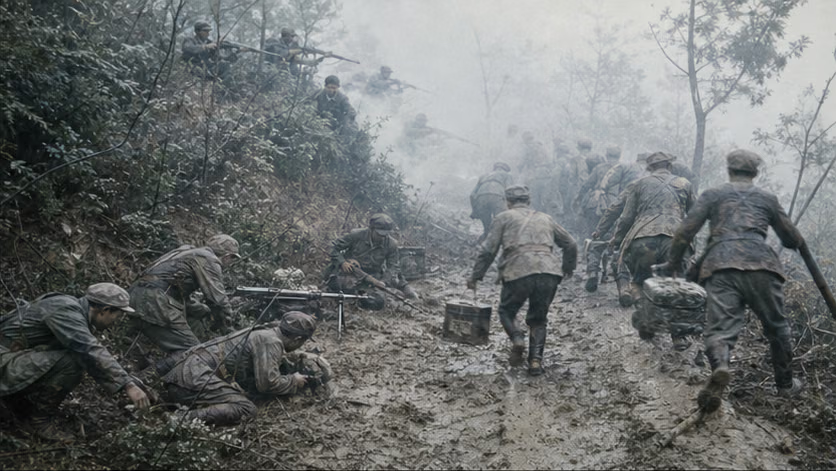
| Huangpi ambush | 2.27–28 | Heavy fog. The Fifty-second and Fifty-ninth Divisions entered the ambush zone along the mountain road at Moluozhang; over two days most of both divisions were annihilated: Li Ming, commander of the 52nd Division, was badly wounded, captured, and died; Chen Shiji, commander of the 59th Division, was captured |
| Enemy changes formation | Mid-March | Chen Cheng changed from "advancing separately and striking together" to "breakthrough through the center," stretching the front and rear columns apart |
| Second ambush at Caotaigang | 3.20–21 | The rear column was split off, and most of the Eleventh Division was encircled and annihilated at Caotaigang and Dongpi -- the Eleventh Division was the ace unit on which Chen Cheng had built his rise, and was almost crippled |
Casualties and Losses
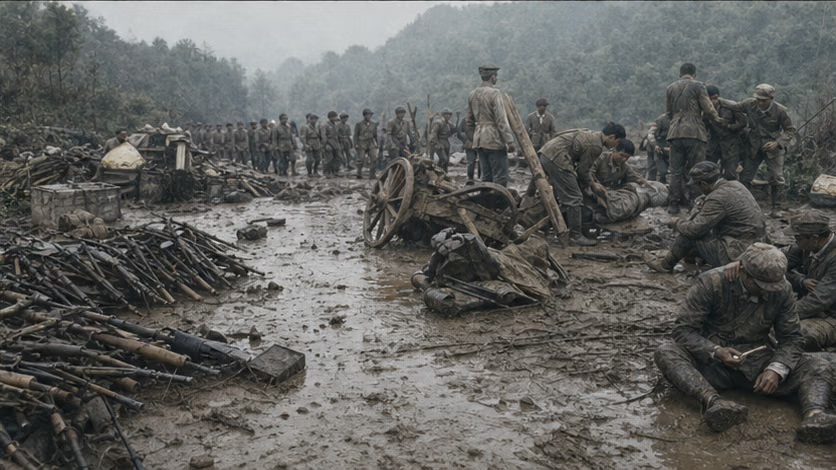
- KMT forces: most of three divisions were annihilated, with more than ten thousand prisoners and more than ten thousand rifles captured (accounting bases vary by account); Chen Cheng's self-criticism called it "exceptionally miserable" (wording of his telegram unverified).
- Red Army: the Nanfeng assault and the two ambushes together caused several thousand casualties (accounting bases vary by account).
- ※ War zone: the impact of the siege of Nanfeng and the tug-of-war on towns and countryside (record unverified).
Aftermath
- Chiang Kai-shek called this defeat "the only hidden pain of my life" (wording of the correspondence unverified), and turned to planning the unprecedentedly large fifth "encirclement and suppression" campaign -- fortress doctrine took shape from this point: this major victory directly taught the opponent to change methods.
- The fact that disobedience at the front had won did not bring the military line back around -- the "Left"-deviation central leadership instead took full control of military affairs afterward (with Otto Braun's arrival), and the fifth counter-"encirclement" campaign opened with all-front defense (continues in *Fifth Counter-"Encirclement" Campaign*). Winning the battle and losing the line is the structural judgment of this article.
- Zhou Enlai and Zhu De's improvised handling later became a case for summarizing the advantages and drawbacks of the "front committee system" (interpretive level, noted).
Accounts of Those Present
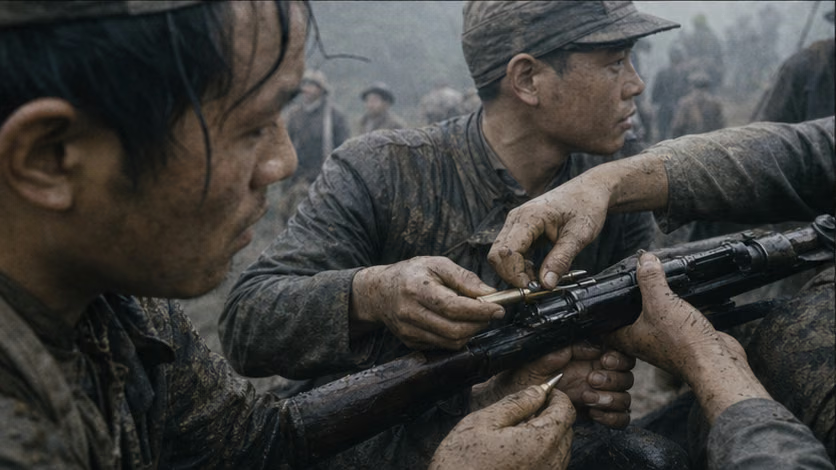
- Fog: both Huangpi and Caotaigang were made possible by heavy fog -- Longgang in the first three counter-"encirclement" campaigns was also fog. The fog of southern Jiangxi is almost a participant in Red Army military history.
- Li Ming and Chen Shiji: one division commander dead, one captured -- from here began the organized loss of Chiang's direct-line division commanders.
- Eleventh Division: Chen Cheng's lifeline unit was crippled -- eighteen years later, its successor, the 18th Army, was destroyed at the Battle of Shuangduiji on the Huaihai battlefield (see *Chinese Civil War · Overview* for details); the two destructions of one unit stood on opposite sides of the entire national war.
- Telegrams of disobedience: the telegrams in which the front and rear argued back and forth (listed for future verification, unverified) -- the victory was fought out in the gaps between telegrams.
The Ground
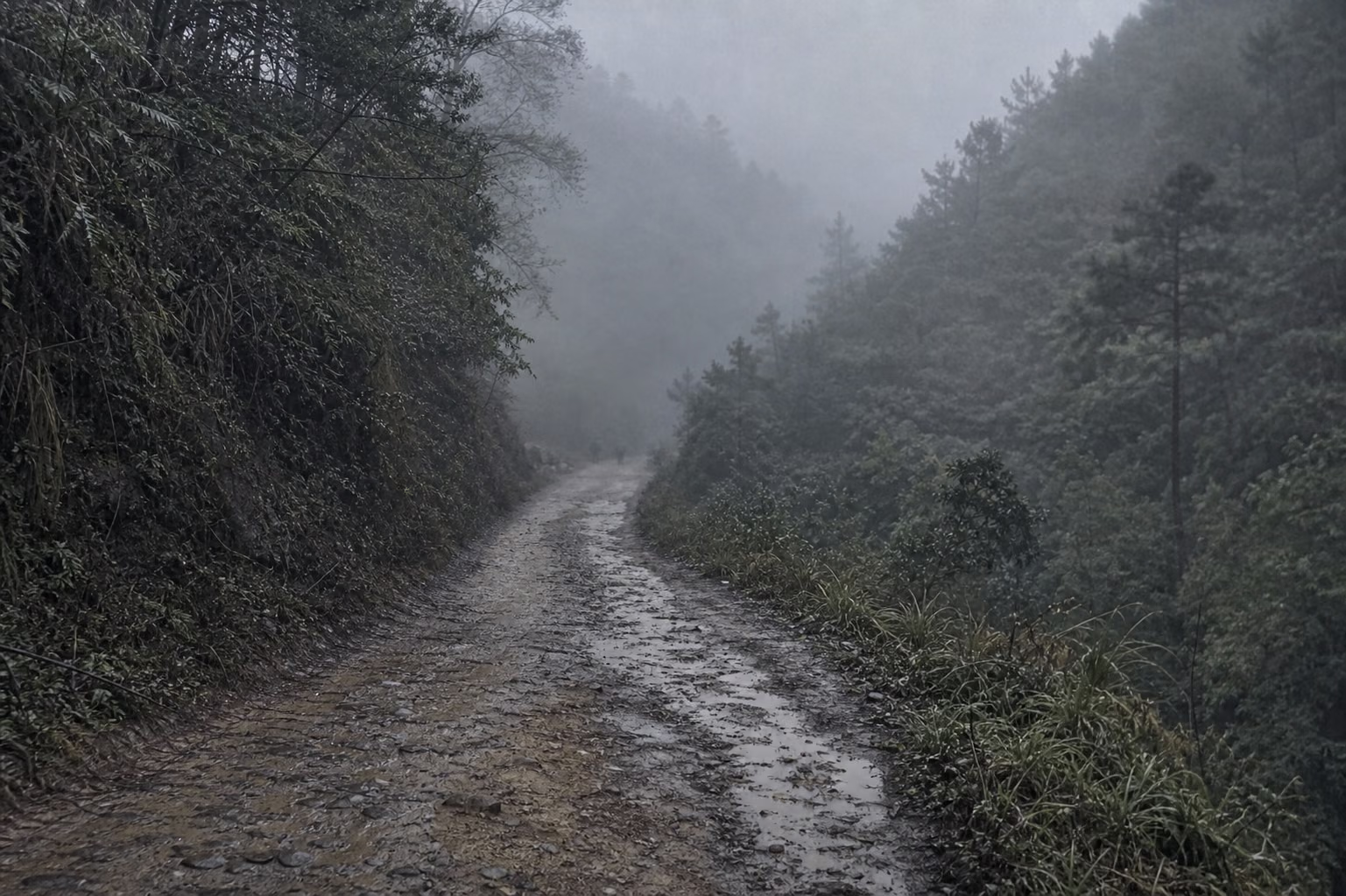
- Moluozhang mountain road: a marching column on a defile road was struck from high ground on both sides in the fog -- the spatial prototype of an "invisible ambush."
- Point of severance: the victory at Caotaigang lay in striking into the time gap between the enemy's front and rear columns -- the essence of large-formation ambush is a double cut in space and time.
- Fortified city of Nanfeng: the negative teaching ground of blood lost in assault, forming a paired sample of "right and wrong methods" with the ambush ground.
How Each Side Records It
- Communist canonical narrative: a classic large-formation ambush enters military history; because the victors were the Zhou-Zhu system on the eve of being marginalized, narrative ownership is subtle -- the canon long emphasized the collective, while later scholarship reconstructed the decision chain.
- KMT side: Chen Cheng's circle avoided speaking of it, and self-criticism blamed terrain and fog; Chiang's phrase about "hidden pain" circulated.
- Scholarship: this engagement is studied by linking it with the Ningdu Conference and Otto Braun's arrival into a causal chain of "line and battlefield."
Disputes and Sensitivities
- Details of front-line disobedience and attribution of credit -- keep the source-record layer separate from the retrospective layer.
- Accounting bases for enemy troops annihilated and prisoners, and the casualty figures at Nanfeng.
- "Winning the battle and losing the line" is this article's judgment phrase; it is a structural summary and can always be corrected by more detailed sources -- openness noted.
Sources and Open Questions
Sources: *A History of the First Front Army of the Chinese Workers' and Peasants' Red Army*; related telegrams in *Selected Military Writings of Zhou Enlai*; Chen Cheng's memoirs and "bandit-suppression" war histories (volume numbers unverified); related research by Huang Daoxuan.
Open questions: the various accounting bases for troop strengths and combat results on both sides; casualties in the Nanfeng assault; telegrams between the front and rear; whether there were objections within Chen Cheng's columns to the excessive gaps; the degree of burden from grain collection and Red Army recruitment in the Soviet area; original texts of Chen Cheng's and Chiang Kai-shek's self-criticism correspondence and telegrams; the course of Li Ming's death.
All images on this site are AI-generated depictions. They are not historical photographs, not primary sources, and do not depict any real individual.