Engagement Archive · First Battle of Dinghai
13 Qing soldiers were killed, and the county seat fell within 1 day; in the following 6 months, 448 men of the occupying force died of disease. A battle decided by artillery in 9 minutes was given, over half a year, an ironic footnote rewritten by epidemic disease.
Engagement Data
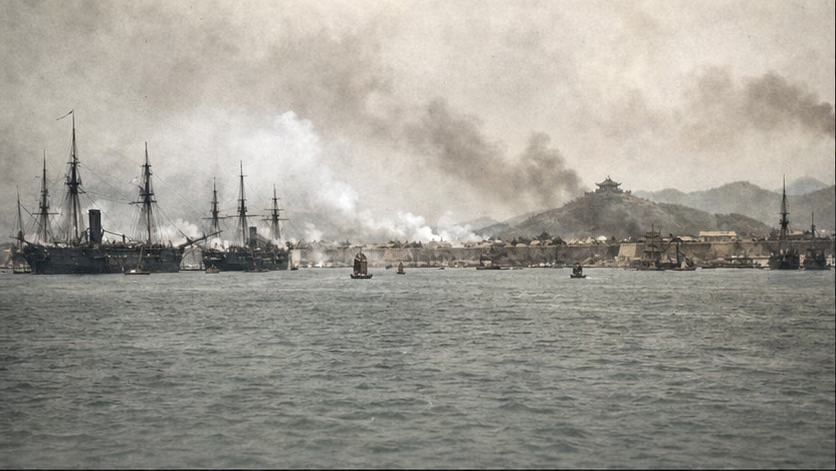
| Item | Details |
|---|---|
| Time | 1840.7.4 the fleet reached port and demanded surrender; 7.5 fighting began; 7.6 morning the city fell |
| Place | Dinghai, Zhejiang (Zhoushan Island), the county seat and Daotou Harbor |
| Defender | Dinghai naval garrison and county seat (Regional Commander Zhang Chaofa; Magistrate Yao Huaixiang), about 2,000 troops (figure disputed) |
| Attacker | Main British expeditionary force (fleet commander Bremer; army commander Burrell), more than 10 warships and several thousand landing troops |
| Result | The city fell; the British obtained a "pledge" for the move north to the Baihe River, and the gateway to eastern Zhejiang lay open |
Belligerents
| Item | Defender | Attacker |
|---|---|---|
| At sea | More than 20 war junks, over half in disrepair (figure disputed) | More than 10 ships of the line and frigates, with broadside guns numbering in the hundreds |
| Shore defense | Earthen gun positions along the Daotou line; the guns could not traverse | Naval guns brought close for direct fire |
| Personnel | Garrison naval forces after nearly 200 years of peace, with no living generation of battlefield experience | Regular expeditionary army + Indian troops |
Terrain and Conditions
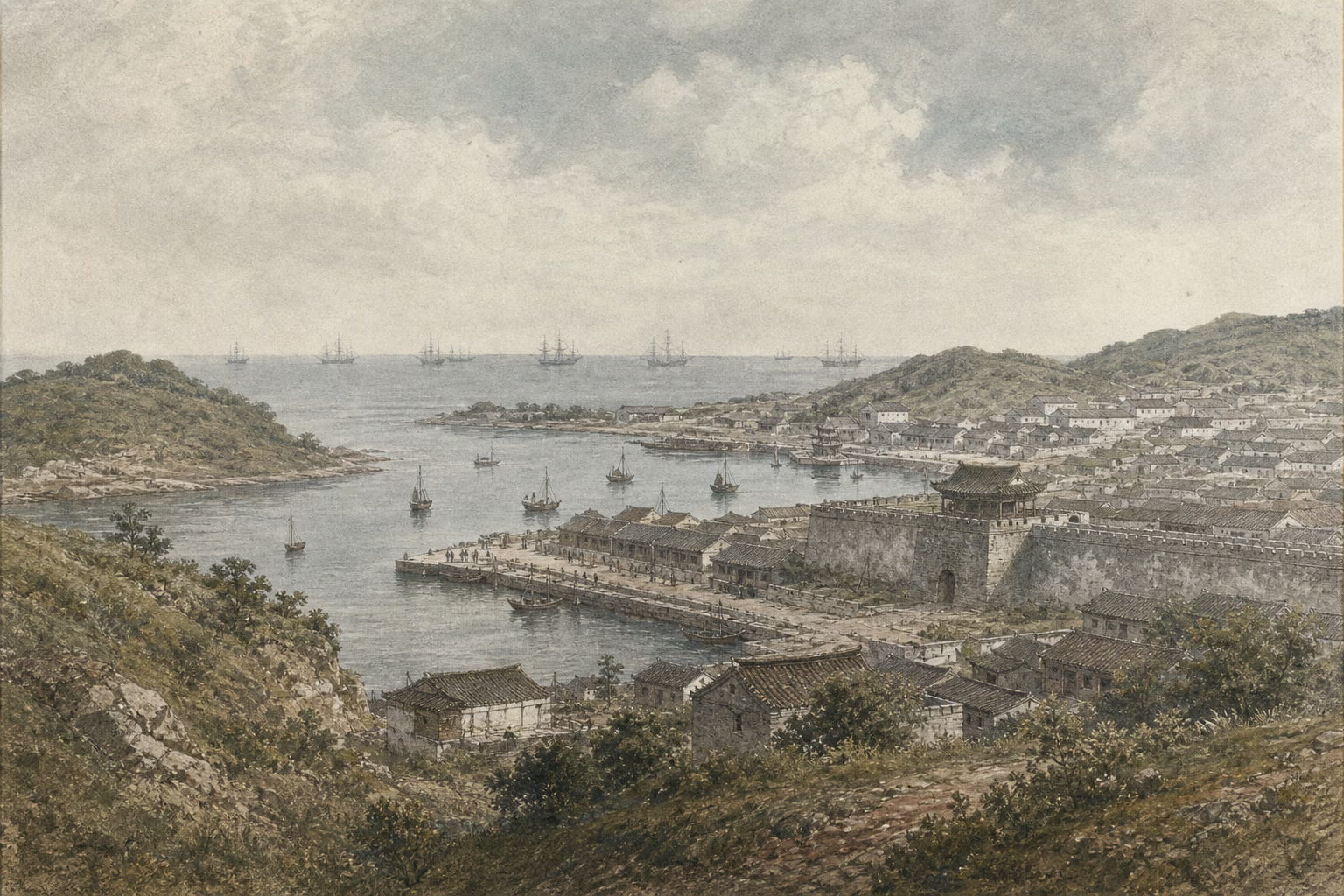
Zhoushan was a fishing, salt, and commercial port at the midpoint of the northern and southern sea routes; the British had already named it 50 years earlier, when Zhoushan appeared on the request list of the Macartney Embassy in 1793. Dinghai had been at peace so long that its city defenses were virtually nominal; as for the navy's decay, paper ship counts and real combat power were 2 separate ledgers.
Why It Was Fought
The gunfire at Kowloon and Chuanbi produced 2 decisions on paper. In Beijing, Daoguang, relying on memorials reporting "7 battles, 7 victories," ordered British trade severed and British ships expelled. In London, the cabinet had already settled on an expedition the previous October, and in February appointed Elliot to lead troops eastward. In April 1840, an opposition motion of censure in Parliament was defeated by 271 votes to 262; by a margin of 9 votes, the funding went through. In June, the expeditionary force reached China: about 4,000 army troops and more than 40 vessels. It did not attack Canton, but left ships to blockade the Pearl River estuary while the main force sailed north.
The British method was a 3-move game: blockade the Pearl River estuary, seize Zhoushan as a pledge, and sail north to the Baihe River to deliver a letter under pressure. For London, no number of victories in Guangdong could secure a treaty; the dispatch had to be placed before Beijing, and something first had to be held on the negotiating table. The choice of Zhoushan was not improvised. This fishing, salt, and commercial port at the midpoint of the northern and southern sea routes had been named 50 years earlier, appearing on the request list of the Macartney Embassy in 1793. For a fleet arriving from afar, an isolated island with deep harbors was easy to take, easy to hold, and useful for bargaining.
London was not without opposition. In the April vote, the opposition motion of censure lost by only 9 votes; in the debate, some denounced the war outright as one fought to protect the drug trade, among them Gladstone, who would later serve 4 times as prime minister (original speech unverified). The motion failed, the funding passed: dissent remained in the record, and the fleet sailed all the same. When London made its decision, it held merchants' petitions, old embassy notes, and a map marked with Zhoushan; what it lacked was a field measurement of the opposing shore defenses. That blank would be filled only in the 9 minutes of July 5 (this judgment is inferred from the disparity of the outcome, unverified).
On this side of the sea, none of this was known. Zhejiang had been at peace for nearly 200 years. Dinghai's city defenses were virtually nominal, and the navy's paper ship counts and real combat power were 2 separate ledgers. Victory reports sent up from Guangdong also led Beijing to believe the British were no more than a maritime nuisance. The 2 sides were not calculating the same account at all: the British calculated in pledges; Dinghai was not the objective, but a bargaining counter on the negotiating table. The defenders had no way to know this. They knew only that the city could not be lost; loss of territory meant prosecution.
Beijing was not entirely without rumors that British ships were coming north; earlier edicts had already ordered the coastal provinces to keep strict watch (month and wording of the edict unverified). Lin Zexu in Guangdong had also made optimistic judgments about the British army's ability to fight on land, which were passed upward through layers of memorials (source disputed, unverified). But when the edict reached Zhejiang, the institution meant to carry it out was a patrol-post navy after nearly 200 years of peace: ships in disrepair, guns unable to traverse, soldiers scattered among the various patrol posts. Reinforcements had to cross the sea; the order for neighboring provinces to dispatch troops was still on the road, and the city had already fallen. The only differing judgment left from inside the defense was Yao Huaixiang's sentence after returning from the enemy ship: "not something we can contend with." It rejected the hope of "being able to win," but it could not reject "defense" itself. Under accountability for lost territory, there was no third road between defending and not defending. No record has been found of a proposal to abandon the city or seek surrender.
On July 4, the fleet anchored outside Daotou, Dinghai. Bremer sent a letter, giving until the next day for the city to be handed over. Whether it could be defended was one thing; whether it would be defended was another. The deadline was 1 day.
Course of the Engagement
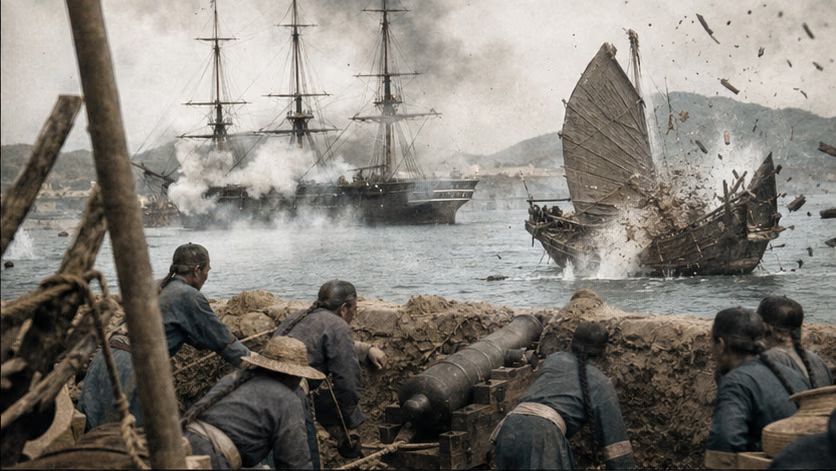
| Phase | Course |
|---|---|
| 7.4 | The fleet anchored outside Daotou, and Bremer sent a letter giving until the next day for the city to be handed over; Yao Huaixiang boarded HMS Wellesley for negotiations, saw for himself the scale of the gun decks, and returned saying, "The ships are strong and the guns are effective; not something we can contend with," yet still resolved to defend (details source unverified) |
| 7.5 | In the afternoon the British ships fired together, suppressing the shore guns and war junks in 1 round; British accounts record the main artillery action as about 9 minutes (source unverified). Zhang Chaofa's ship was hit; he fell into the water and was badly wounded (later died). By evening, British troops landed and occupied high ground outside the city |
| 7.6 | In the morning the city was breached; Yao Huaixiang drowned himself in Fangong Pond; Dinghai fell |
Casualties and Losses
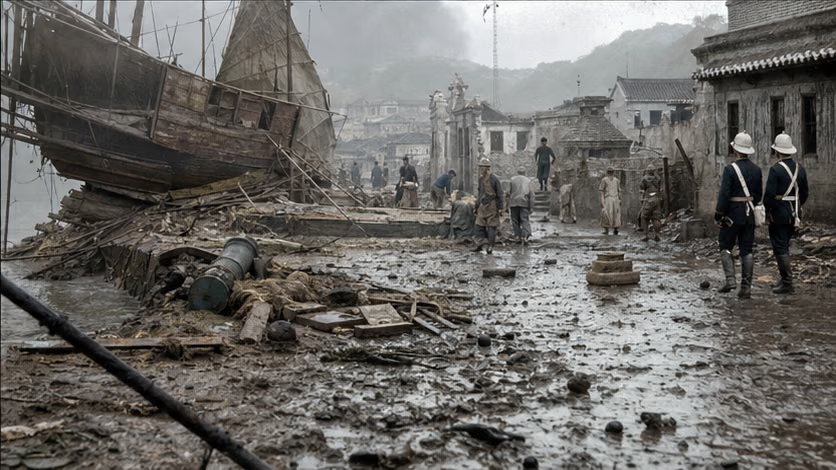
- Defender: Qing archives counted 13 killed in action (as cited from the archives by Mao Haijian, unverified); the remaining troops scattered. The smallness of the number and the speed of the city's fall annotate each other: this was not a bloody battle, but systemic collapse.
- Attacker: 0 killed in battle.
- The following 6 months: epidemic disease swept through the occupying force; 448 died of illness, nearly half the force. What artillery had not done, malaria and dysentery did. Residents in the city suffered plunder, disease, and displacement; there are no statistics.
Aftermath
- The memorial reporting Dinghai's fall shook Beijing, and the Qishan line favoring "pacification" gained ground; Daoguang dismissed Lin Zexu.
- The British left troops to occupy Dinghai while the main force sailed north to the Baihe River to deliver its letter; in 1841.2, because of Qishan's negotiations, Dinghai was briefly returned. 7 months later hostilities resumed, and the British captured Dinghai a second time (see Second Battle of Dinghai).
- After Zhang Chaofa's death, he was posthumously judged as having "failed to defend"; Yao Huaixiang was enshrined in the Zhaozhong Shrine.
Accounts of Those Present
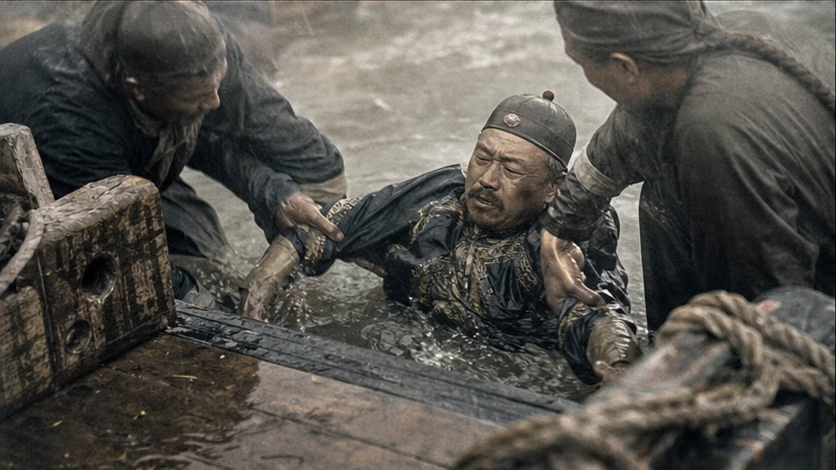
- Yao Huaixiang: A native of Houguan, Fujian (Lin Zexu's fellow townsman), he had been aboard the enemy ship and seen its gun decks firsthand. He was the person in the city who most clearly knew it "could not be held" -- and still chose to remain. Martyrdom in the knowledge that the thing cannot be done, and bravery without understanding the depths, are 2 different things.
- Zhang Chaofa: The naval regional commander badly wounded on the 1st day of fighting, and still made to bear posthumous accountability for "lost territory"; he was among the 1st people to face the generational gap directly, and among the 1st to be processed by the old logic of responsibility.
- 448 British dead from disease: The conquerors were defeated by mosquitoes and insects and buried on Zhoushan (present condition of the cemetery unverified). Their memory of Dinghai was not victory, but a graveyard.
The Ground
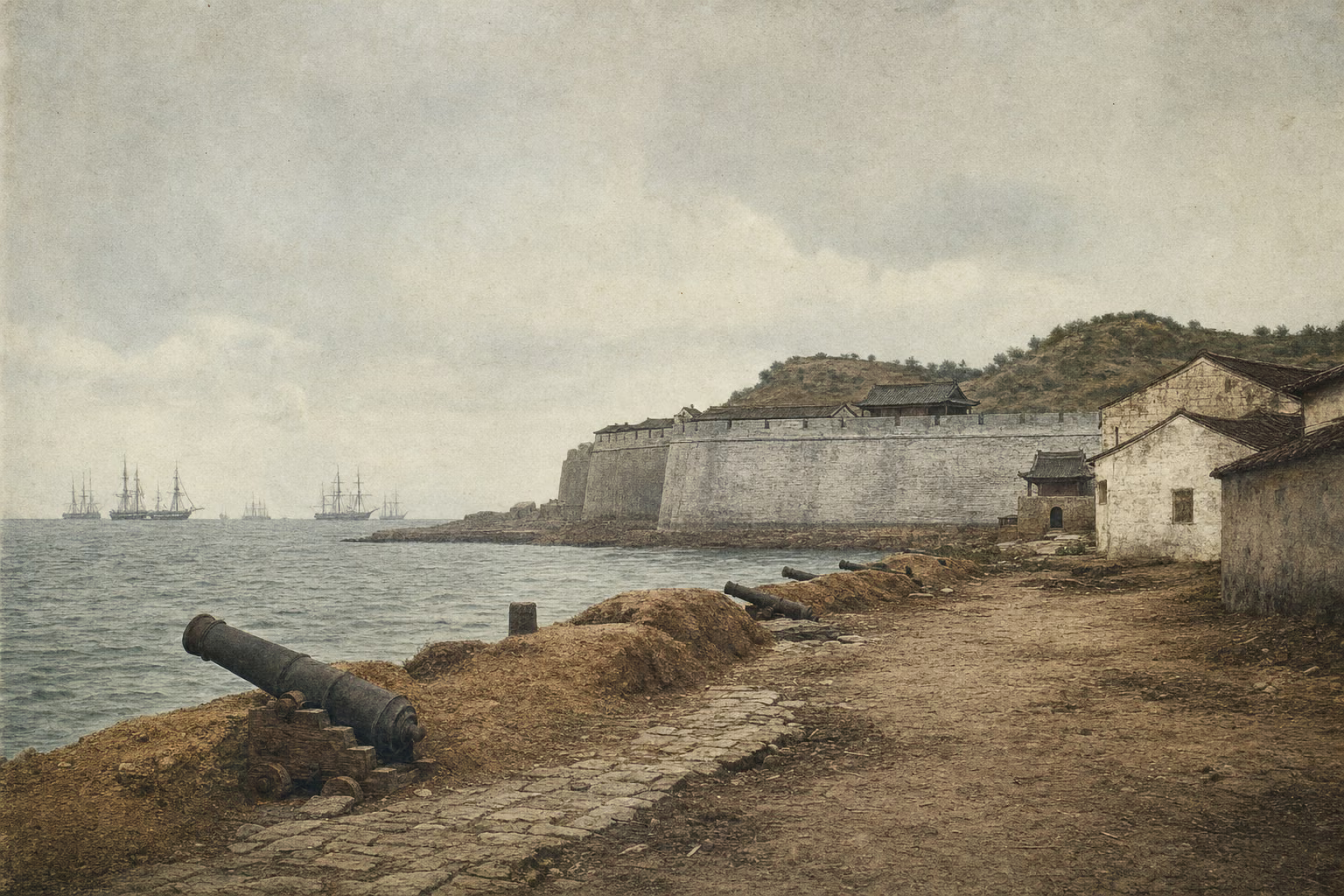
The 3 layers of depth in a port county seat: Daotou wharf, city wall, high ground outside the city. Under direct naval gunfire, the shore defense had almost no way to answer. "9 minutes" as a unit of time was itself the key to the spatial design.
How Each Side Records It
- Chinese side: Yao Huaixiang's martyrdom was enshrined, while Zhang Chaofa's reputation was mixed; later narratives emphasize "martyrdom."
- British side: Military memoirs (Bernard and others) record in detail not the battle, but the suffering from disease during the occupation. The Dinghai they remembered was an illness.
Disputes and Sensitivities
- "The city fell after only 13 killed in action": the root of the collapse was institutional -- scattered patrol posts, no field organization, and ad hoc assembled outside troops -- not individual cowardice.
- Epidemic disease is not material for a "heavenly retribution" gratification tale.
Sources and Open Questions
Sources: Mao Haijian, The Collapse of the Celestial Empire; W. D. Bernard, Narrative of the Voyages and Services of the Nemesis; Dinghai Tingzhi / local literature; British army medical reports (source for disease data).
Open questions: page references for defender strength and the source of "13 killed in action"; original text recording "9 minutes"; details of Yao Huaixiang boarding the enemy ship; the composition of the 448 British disease deaths and the present condition of the cemetery; month and wording of the prewar coastal-defense edict; source for Lin Zexu's judgment of the British army's ability to fight on land; original speeches by Gladstone and others in the British parliamentary debate; materials supporting the inference that London lacked field measurements of the opposing shore defenses; the order for neighboring provinces to dispatch troops to Zhejiang and the sequence of its arrival.
All images on this site are AI-generated depictions. They are not historical photographs, not primary sources, and do not depict any real individual.