Engagement Archive · Second Battle of Dinghai
The same city, fought over again 14 months later: last time, 13 men were killed and the city fell in 1 day; this time, 3 commanders-in-chief fought to the death for 6 days and fell on the same day. Through 2 falls, Dinghai measured the distance between a "prepared extremity" and an "unprepared collapse" -- with the same ending.
Engagement Data
| Item | Details |
|---|---|
| Time | 1841.9.26 British ships arrived; 10.1 general assault, city fell |
| Place | Dinghai, Zhejiang (Zhoushan Island), along the Zhushanmen-Xiaofengling-earthen-wall line |
| Defender | Dinghai garrison commander-in-chief Ge Yunfei, Shouchun garrison commander-in-chief Wang Xipeng, Chuzhou garrison commander-in-chief Zheng Guohong; roughly 5,600 troops (figure disputed) |
| Attacker | British fleet and landing force (Parker, Gough) |
| Result | 10.1 the 3 commanders-in-chief were killed in action on the same day; Dinghai fell again |
Belligerents
| Item | Defender | Attacker |
|---|---|---|
| Troops | Guest troops from 3 garrisons defending jointly, about 5,600 | Several thousand landing troops, supported throughout by naval guns |
| Firearms | Matchlock muskets and old cannon; dampened by days of overcast rain (record unverified) | Flintlock/percussion firearms, naval guns, field artillery |
| Works | Earthen wall, Zhushanmen gun positions; the Xiaofengling line was weak | -- |
Terrain and Conditions
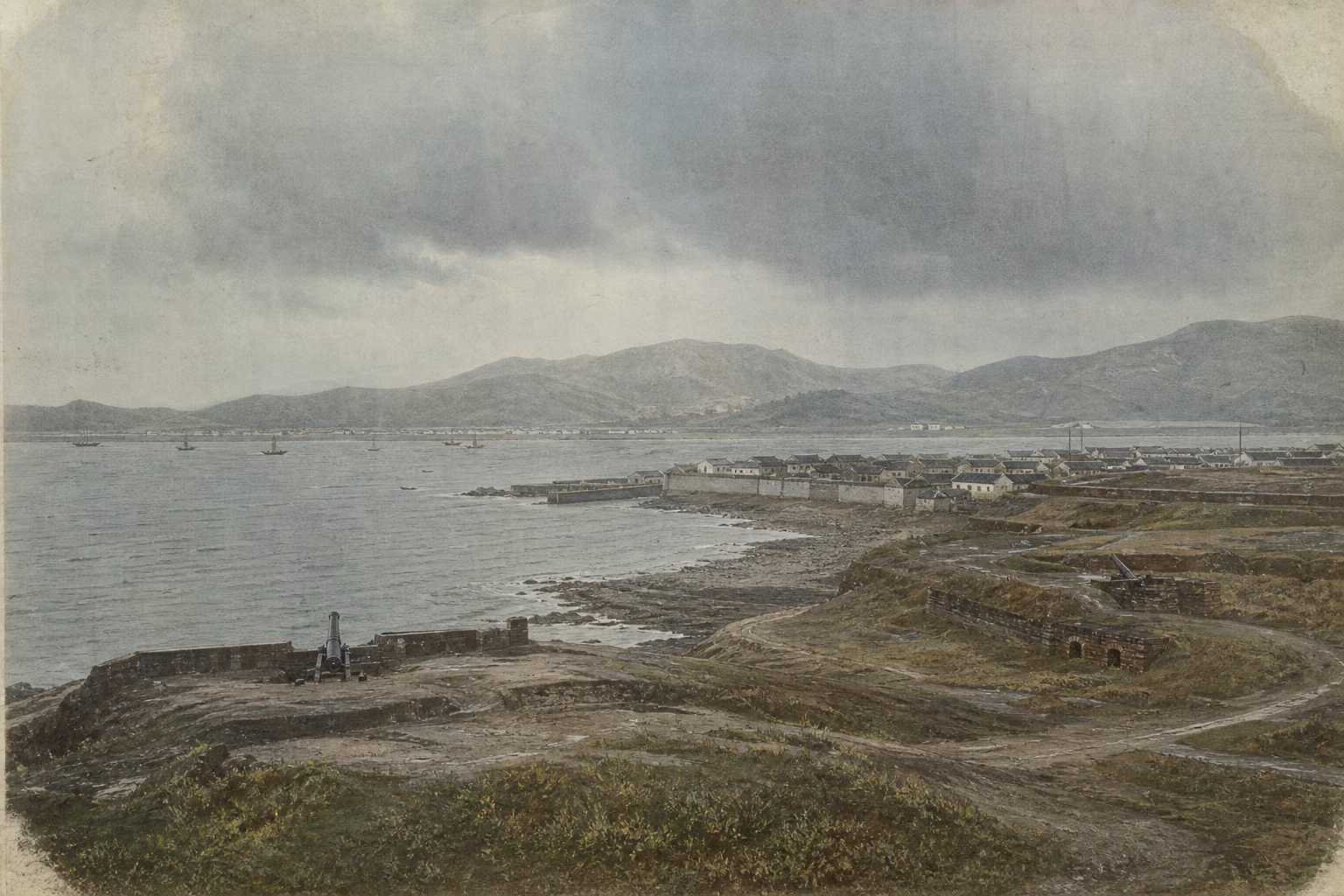
In 1841.2, after Qishan's negotiations, the British had returned Dinghai, and Yuqian was ordered to rebuild its defenses: 3 commanders-in-chief, more than 5,000 troops, and gun positions along an earthen wall. This was already among the strongest defenses the Qing army had ever assembled at a single point. But supplies depended on transport from the mainland, reinforcements could hardly cross the sea in time, and the defenders knew how this city had been lost the previous time.
Why It Was Fought
After the stone-walled defenses at Xiamen changed hands in 1 day, Yan Botao was dismissed from office. The British left a small detachment to garrison Gulangyu, while the main fleet continued north toward Zhejiang. Pottinger's 2nd stop on the northern advance was still Dinghai -- the 2nd time in 14 months.
This city had passed through a full cycle in between: it fell in 1 day on July 1 of the previous year; the British occupied it for half a year and lost 448 men to disease; in February of this year, Qishan's negotiations briefly returned it. The official ordered to rebuild the defenses was the most forceful pro-war imperial commissioner, Yuqian: Ge Yunfei of the Dinghai garrison, Wang Xipeng of the Shouchun garrison, and Zheng Guohong of the Chuzhou garrison, with more than 5,000 guest troops from the 3 garrisons jointly defending 1 island, building earthen walls and setting gun positions along the coast. This was already among the strongest defenses the Qing army had ever assembled at a single point. Among the defenders were remnants of the troops that had broken the previous time (record unverified); they knew how the city had been lost before.
Neither side's reason for wanting the island had changed. For the British, Zhoushan remained the best pledge and anchorage: isolated and defensible, with a deep harbor for ships, and carrying the greatest weight at the negotiating table. On the previous northern advance, it was what had brought Qishan south. For the Qing side, Dinghai was ground once lost and regained, tied to the court's face, and politically impossible to lose a 2nd time. Only the stakes had changed: what Pottinger wanted was no longer one pledge for pressure, but one link in a chain of broken cities; what Yuqian staked was no longer the troops of a single garrison, but 3 commanders-in-chief. The island's weakness was unchanged: supplies depended on transport from the mainland, reinforcements could hardly cross the sea in time, and once real fighting began, the more than 5,000 men on the island were all there were.
Whether Dinghai should be defended had already been fought over once inside the court. When Dinghai first fell the previous year, imperial commissioner Yilibu stationed his troops at Zhenhai, refused to cross the sea for a hard assault, and wanted to leave the city on the negotiating table. The Daoguang Emperor rebuked him for timidity, dismissed him from office, and ordered him arrested for investigation (edict text and date unverified). The dissent had not disappeared; only the person who voiced it had first been removed. When Yuqian's turn came to make the layout, he placed Dinghai forward: the island's city defenses and batteries were planned by him personally (details of the defense memorial unverified), while Zhejiang's provincial forces had to divide their defense among the approaches at Zhenhai, Dinghai, and Zhapu; guest troops were brought from far away in Shouchun, Anhui and Hunan, and grain, pay, and munitions all depended on transport. Ge Yunfei had once requested additional gun positions on Xiaofengling and more troops for joint defense, but the plan was dropped for lack of funds and men (record unverified) -- later, the British came up precisely from Xiaofengling. The British boundary was of another kind: after taking Xiamen and turning north, their force was still thin, and every stop had to be settled quickly. Half of Pottinger's severity was forced out by his own timetable (this judgment unverified).
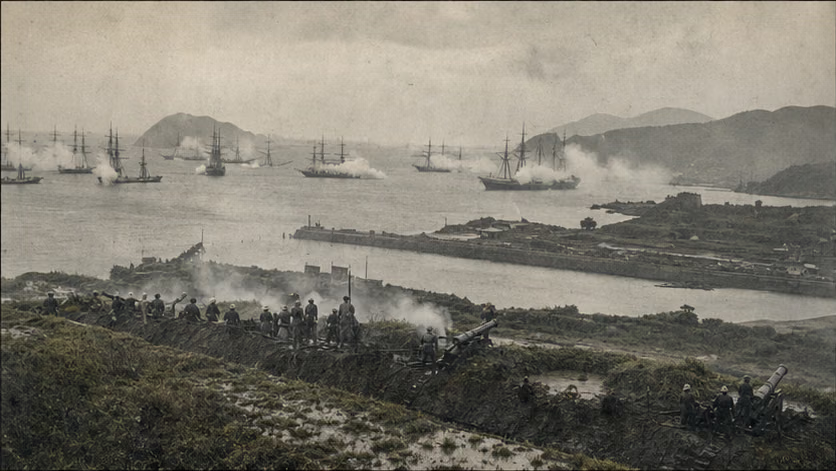
On September 26, the British fleet arrived again off Dinghai. The previous time, after a written deadline, the city had fallen in 1 day; this time, there were earthen walls at the beachhead and 3 more commanders-in-chief on the walls.
Course of the Engagement
| Phase | Course |
|---|---|
| 9.26-30 | British ships bombarded and probed for landings over several days, while the defenders returned fire from the earthen wall; the sides held for 5 days -- the longest organized Qing resistance since the war began |
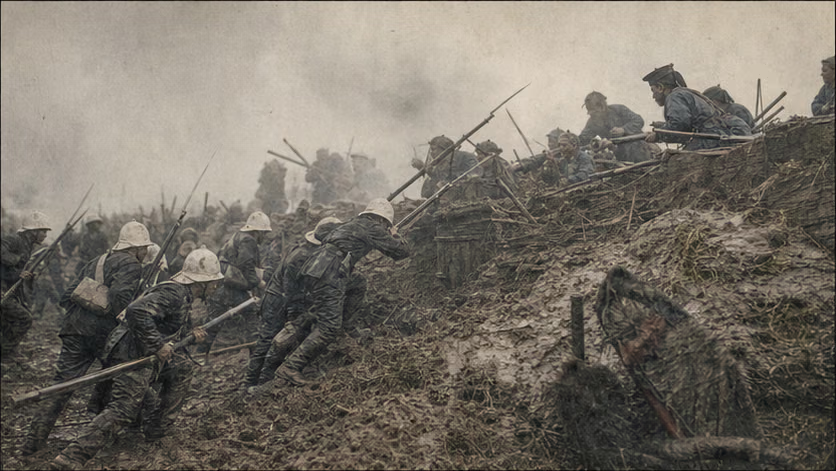
| Morning, 10.1 | The main British attack landed at Xiaofengling, where the defenses were weakest; Wang Xipeng met them and was killed. Zheng Guohong was then killed in the Zhushanmen direction |
| Afternoon, 10.1 | The British rolled up the earthen wall from the flank. Ge Yunfei supervised the fighting with a sword in hand, suffered dozens of wounds, and died below the cliff at Zhushanmen; the city fell |
Casualties and Losses
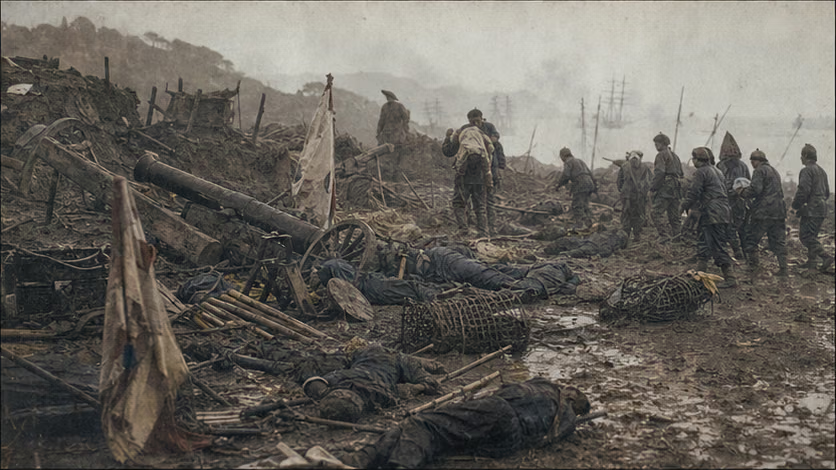
- Defender: the 3 commanders-in-chief were killed in action on the same day; several hundred to more than 1,000 soldiers were killed (figures vary by account).
- Attacker: 2 killed, 27 wounded (British figures, unverified).
- 6 days and 1 day: in 14 months, the duration of resistance multiplied by 6, but the casualty ratio did not fundamentally change. Individual courage could not make up for the gap in the system; that is the hardest sentence in this piece.
Aftermath
- Dinghai was lost again; Zhenhai fell 10 days later (Yuqian died for the country; see Battle of Zhenhai (1841)).
- The 3 commanders-in-chief received posthumous honors, burial, and a shrine ("Sanzhong Shrine"), entering both state ritual and local memory.
- The British then held Zhoushan until 1846 (returned after indemnities and the exchange of treaties, unverified).
Accounts of Those Present
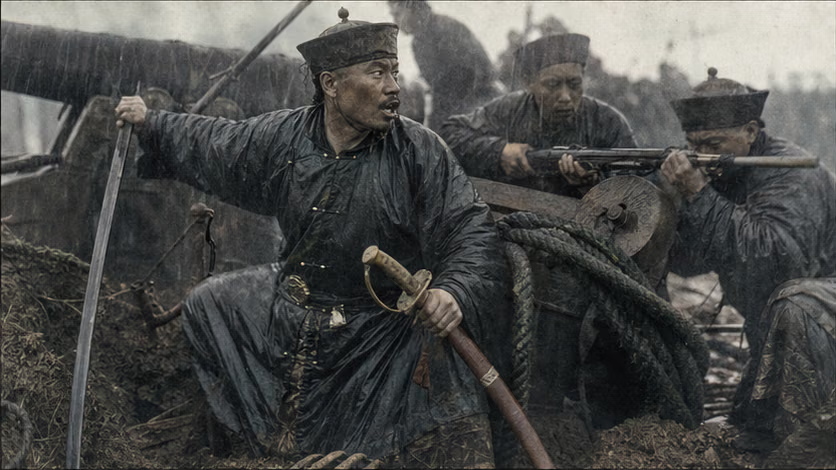
- The 3 commanders-in-chief: Ge Yunfei (the incumbent at Dinghai, from Shanyin), Wang Xipeng (from Ninghe, Shuntian), and Zheng Guohong (from Fenghuang, Hunan, from a military family of the Miao frontier) -- 3 guest forces, 3 native places, killed on the same island on the same day.
- Ge Yunfei's sword: he supervised the fighting with a sword in hand and died below the cliff after suffering dozens of wounds; popular tradition says he remained standing rigidly after death (legend, marked as folk narrative).
- Rain: days of overcast rain dampened the matchlock powder (record unverified). The rain that had helped the village braves at Sanyuanli helped the other side at Dinghai; weather never chooses sides. What chooses sides is the equipment gap.
- Soldiers returning to the battlefield: among the defenders were remnants of the troops that had broken at Dinghai the previous time (record unverified). The same city fought over twice is the psychological material unique to this engagement.
The Ground
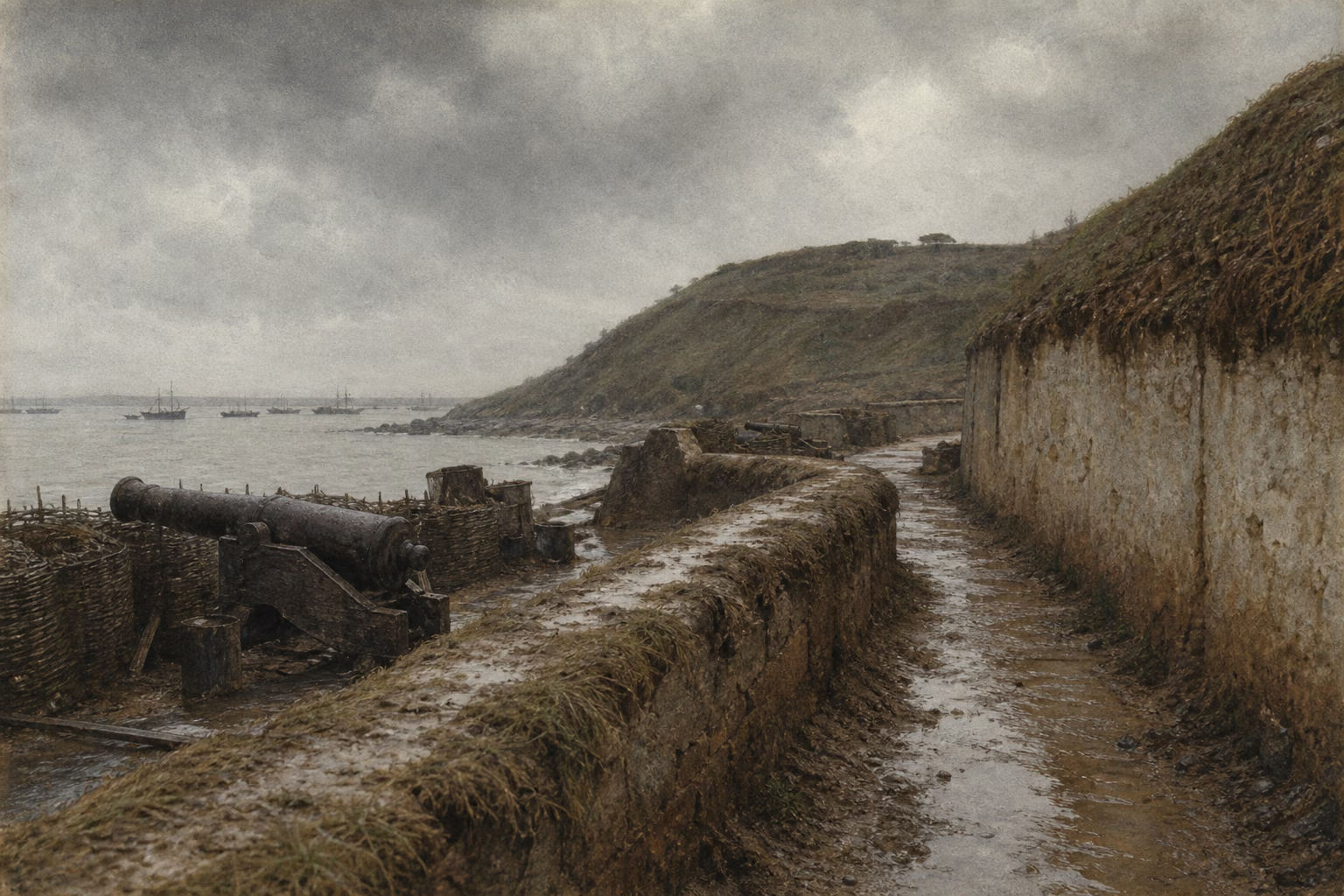
A complete specimen of island defense: the earthen wall to the front, the Zhushanmen waterway, and the Xiaofengling flank. The British chose the weakest point, landed there, and broke the whole position. The 6 days of attack and defense created room for a rhythm of "worsening by the day": ammunition, rain, and morale diminished day by day.
How Each Side Records It
- Chinese side: the shared death of the 3 commanders-in-chief is one of the tragic peaks in the narrative of the First Opium War, with shrine rites, posthumous titles, and local gazetteers adding layer after layer.
- British side: recorded as a landing operation with "considerable resistance" (source of this assessment unverified), while casualties remained in single digits. Their intensity and ours were measured on scales 2 orders of magnitude apart.
Disputes and Sensitivities
- The contrast between "6 days" and "1 day" does not mean "the 2nd time almost won": the casualty ratio shows that the ending was never in doubt. Tragic resolve is not the same as being close to victory.
- The layer of legend (remaining standing rigidly after death, and the like) and the layer of historical fact are not the same kind of material.
Sources and Open Questions
Sources: Mao Haijian, *The Qing Empire and the Opium War*; *Dinghai Tingzhi*; *Zhejiang Tongzhi*; inscriptions from Sanzhong Shrine; British dispatches (reports by Parker and Gough).
Open questions: composition of the defending force; casualty figures on both sides; records of overcast rain and dampened powder; original wording of the British assessment of "fiercest resistance"; sequence from the occupation of Zhoushan to its return; Yuqian's memorial on Dinghai defenses; records of Ge Yunfei's request to build gun positions on Xiaofengling and add troops for joint defense; original wording and date of the edict dismissing and arresting Yilibu; Pottinger's timetable for the northern advance and constraints on his forces.
All images on this site are AI-generated depictions. They are not historical photographs, not primary sources, and do not depict any real individual.