Engagement Archive · Battle of Wusong
The sixty-seven-year-old Provincial Military Commander of Jiangnan stood at the West Battery and fought through two and a half hours of ship-to-shore artillery exchange -- the most substantial naval-shore gun battle of the entire war; then the governor-general's honor guard collapsed first behind him. The gate of Shanghai was opened from within.
Engagement Data
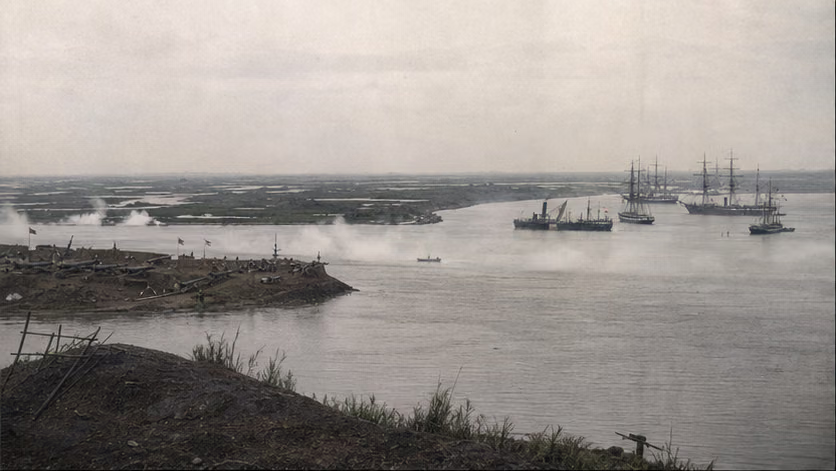
| Item | Details |
|---|---|
| Time | 1842.6.16; 6.19 Shanghai was lost without a fight |
| Place | Wusong at the mouth of the Yangtze River (today's Baoshan, Shanghai), West Battery at Yangjiazui--East Battery--Xiaoshabei |
| Defender | Provincial Military Commander of Jiangnan Chen Huacheng (defending the West Battery), Governor-General of Liangjiang Niu Jian (stationed at Baoshan), Regional Commander of Xuzhou Command Wang Zhiyuan (defending Xiaoshabei), and others; about four thousand troops |
| Attacker | British fleet (Parker) closed in for an artillery exchange; landing troops came ashore |
| Result | The West Battery fell, and Chen Huacheng died in battle; Wusong, Baoshan, and Shanghai were lost in succession |
Belligerents
| Item | Defender | Attacker |
|---|---|---|
| Artillery | More than 250 shore guns at Wusongkou (number unverified), with preset ranging | Ships of the line closed in, with several hundred broadside guns |
| Artillery exchange | Multiple hits on British ships; British ships damaged (acknowledged by the British side, unverified) | Absolute advantage in density of fire and rate of fire |
| Depth | The two wings and rear consisted of improvised detached troops, which collapsed at first contact | Landing troops came ashore and rolled up the position |
Terrain and Conditions
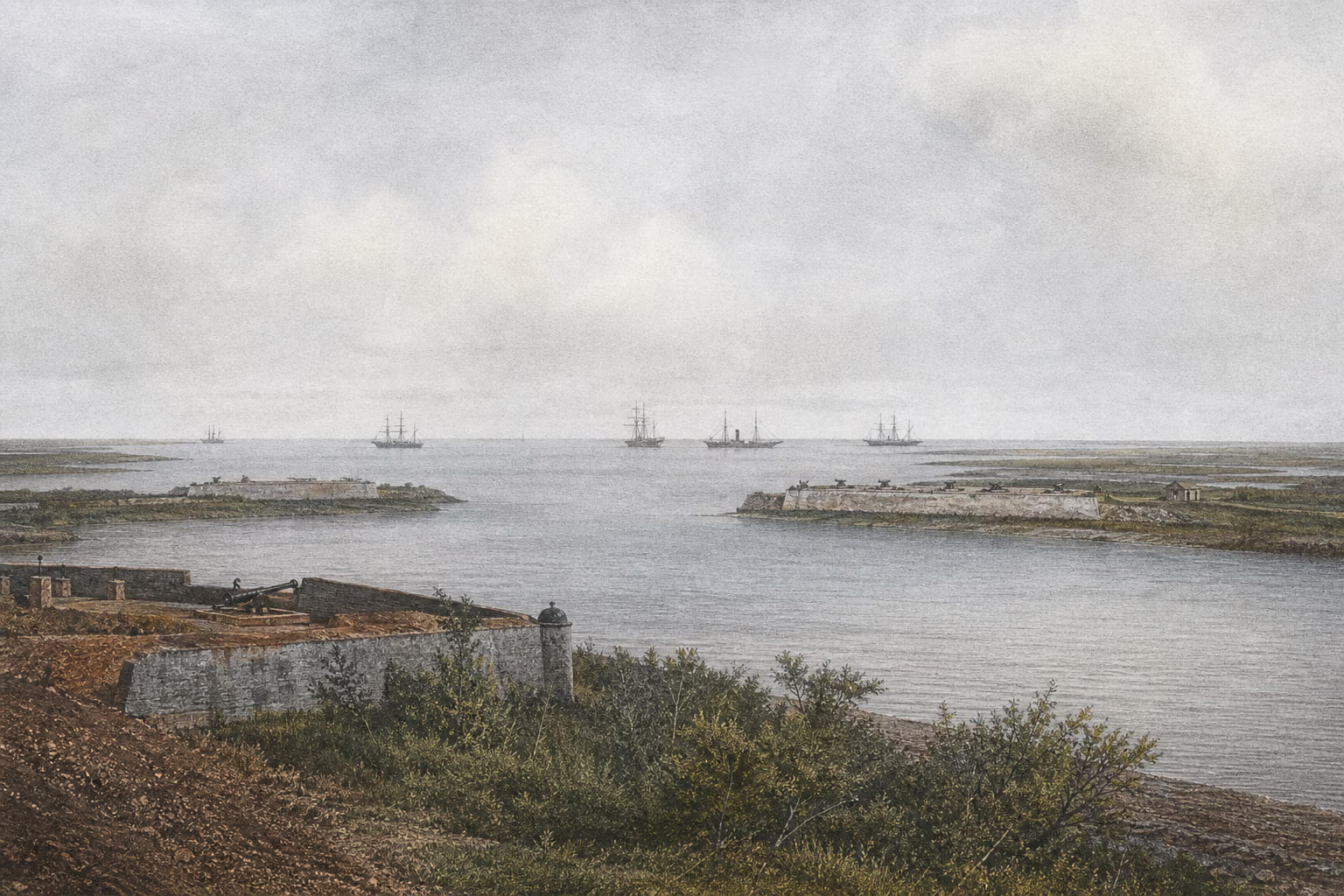
Wusongkou was the lock of the Yangtze River and the Huangpu River: if Wusong was broken, Shanghai would be lost; if the Yangtze was entered, the grain transport route would be cut. Chen Huacheng -- a native of Tong'an, Fujian, and a veteran naval officer with fifty years in the ranks -- was known for sharing hardship with his soldiers (details such as shared porridge and artillery drill unverified). After preparing at Wusong for two years, he commanded one of the few Qing units that had truly trained with artillery.
Why It Was Fought
Zhapu fell in a single day, but the stand by nearly three hundred banner troops before Tianzun Temple forced the British army to pay its heaviest casualties in any single action since the war began. This did not change the direction of advance: the fleet continued north according to the established plan of the 1842 offensive -- after Zhapu, enter the Yangtze, choke off the grain transport route, and put troops before Nanjing. In mid-June, British ships anchored outside the Yangtze mouth.
Wusongkou was the lock of the Yangtze River and the Huangpu River: if Wusong was broken, Shanghai would be lost; if the Yangtze was entered, the grain transport route would be cut -- it was the first, and only, hard gate at the Yangtze mouth. Guarding that gate was the rare exception among Qing forces in this war: Provincial Military Commander of Jiangnan Chen Huacheng, a native of Tong'an, Fujian, a veteran naval officer with fifty years in the ranks, known for sharing hardship with his soldiers, and with two years of preparation at Wusong behind him. There were more than 250 shore guns (number unverified), preset fields of fire, and under his command one of the few Qing units that had truly trained with artillery. But behind the front line there was no second line: Xiaoshabei was separately held by Regional Commander of Xuzhou Command Wang Zhiyuan, while Governor-General of Liangjiang Niu Jian stayed in the rear at Baoshan; together they had about four thousand men -- the wings and depth were filled with improvised detached troops, and the only solid part was the stretch at the West Battery.
Both sides understood their own accounts clearly. What the British forces wanted was not Wusong itself, but the channel behind it: once they passed this gate, Shanghai and the Yangtze lay open. The Qing side could stake everything only on the front: the serviceable guns and trained troops were all in the first line; behind that line were plains and water networks, with no second position. Chen Huacheng understood the weight of this gate, and also understood his own place -- before the battle he had told his subordinates: "For a military official to die on the frontier is a fortune." (wording unverified) This was not a wish for death; it was the recognition that death was the only ending he could still choose for himself.
The court's tone was at this moment turning in midair. After the failed March counteroffensive in eastern Zhejiang, the two characters "loose rein" reentered court communications -- Qiying and Ilibu went south one after the other (month and day of the edicts unverified). But secret edicts traveled by secret routes, while the front line still received the old orders to defend and block; when Wusong's guns opened fire, two sets of instructions, peace and war, crossed one another along the courier roads, and the man guarding the gate could see only the old set. The British decision had been made earlier: sending reinforcements east, going up the Yangtze to take Nanjing directly, and cutting off the grain transport route were the arrangement London had set in the previous year (text of the instructions unverified). Before the move upriver, small boats had first sounded and surveyed the channel (details unrecorded) -- they knew more about this river's waterways than the defenders thought.
Two years of preparation had piled everything serviceable into the first line: shore guns, drilled troops, preset fields of fire. The depth consisted of detached troops transferred from different provinces; by the time a troop-transfer order reached a province, months had passed, and by the time the men arrived at the defense, they were already worn down. On the books, there was no longer money or time to build a second position (this judgment is inferred from the actual deployment, unverified). Existing records show no discussion of withdrawing from Wusong to protect the interior (no dissenting record found); the only disagreement left to later readers concerns Niu Jian's motive in bringing his honor guard to the field -- whether it was to compete for credit or to supervise the battle, both explanations already circulated at the time (unverified).
On the morning of June 16, British ships formed line and closed in. The provincial military commander was at the gun positions of the West Battery; the governor-general's honor guard was at Baoshan.
Course of the Engagement
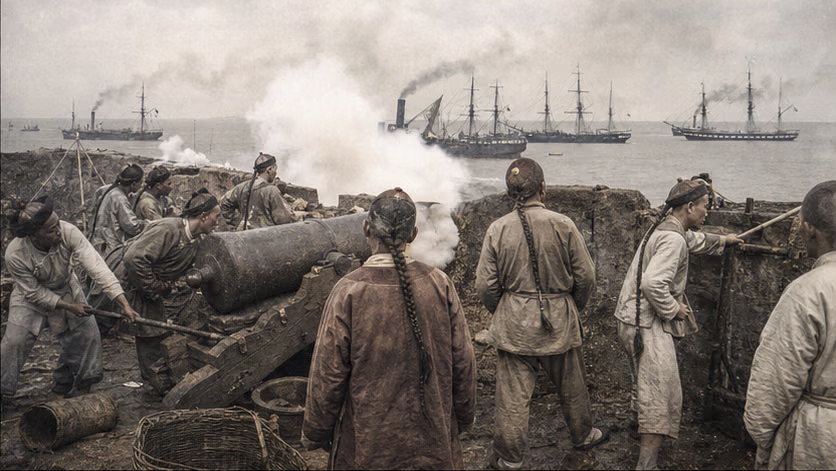
| Stage | Course |
|---|---|
| Morning | British ships formed line and closed in, exchanging fire with the West Battery for about two and a half hours -- the fiercest naval-shore gun battle of the whole war; Qing gun positions scored multiple hits on British ships |
| Before noon | Hearing the gunfire, Niu Jian thought there was a chance of victory and set out from Baoshan with the governor-general's honor guard to supervise the battle; British ships sighted the honor guard and concentrated fire on it. Niu Jian abandoned the ceremonial umbrella and fled, and the soldiers and braves accompanying him scattered in panic |
| At the same time | Wang Zhiyuan's force at Xiaoshabei withdrew first, leaving the two wings open; British landing troops came ashore and moved against the flank and rear of the West Battery |
| Afternoon | Subordinate officers urged Chen Huacheng to withdraw; he refused. He and several dozen personal guards died among the gun positions. The East Battery then fell, and Baoshan was lost. On 6.19, British forces entered Shanghai without resistance |
Casualties and Losses
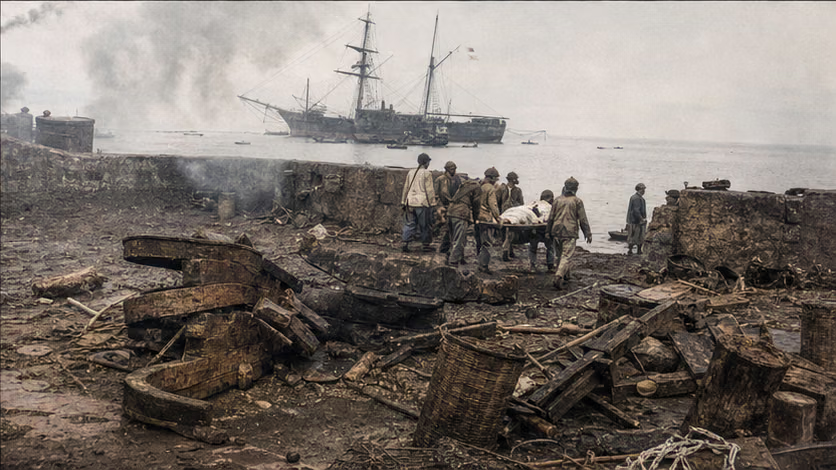
- Defender: nearly one hundred officers and soldiers at the West Battery killed (the figure of "eighty-eight men" is disputed); Chen Huacheng became the second provincial military commander killed in action since the war began.
- Attacker: two killed and twenty-five wounded (British figures, unverified), with ships hit in multiple places.
- The last battle before Shanghai was opened as a treaty port ended without a battle.
Aftermath
- The gate to the Yangtze opened, and the British fleet went upriver -- the next stop was Zhenjiang, the final point Nanjing.
- Chen Huacheng's body was prepared for burial by local villagers; Shanghai county city established the Chen Gong Shrine (survives today in Jiading? location unverified), and popular worship of him did not fade.
- Niu Jian fled to Nanjing, and soon became one of the senior officials involved in negotiating the Treaty of Nanjing -- only six weeks lay between the scene of collapse and the negotiating table.
Accounts of Those Present
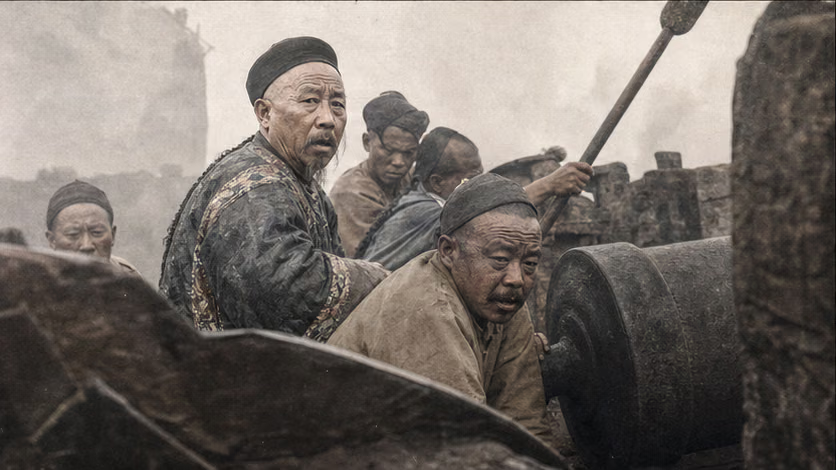
- Chen Huacheng's two years: before the battle, he had drilled artillery at Wusong for two years -- the substantial exchange of fire lasting two and a half hours was bought by those two years. The Qing army's "best performance" in the entire war still amounted only to delaying collapse by one morning: this was the measure of the technological gap.
- "For a military official to die on the frontier is a fortune": what he said to his subordinates before the battle (wording unverified) -- not a wish for death, but the recognition that death was the only ending he could still choose for himself.
- Niu Jian's honor guard: the governor-general's great ceremonial umbrella advanced in formation during the artillery battle -- the visibility of the old ritual order, under modern ballistics, was the same as a target marker. One umbrella crushed a line of defense.
- The several dozen personal guards at the gun positions: the provincial military commander did not leave, and they did not leave either. The histories remembered the commander; this article should leave one line for those several dozen men.
The Ground
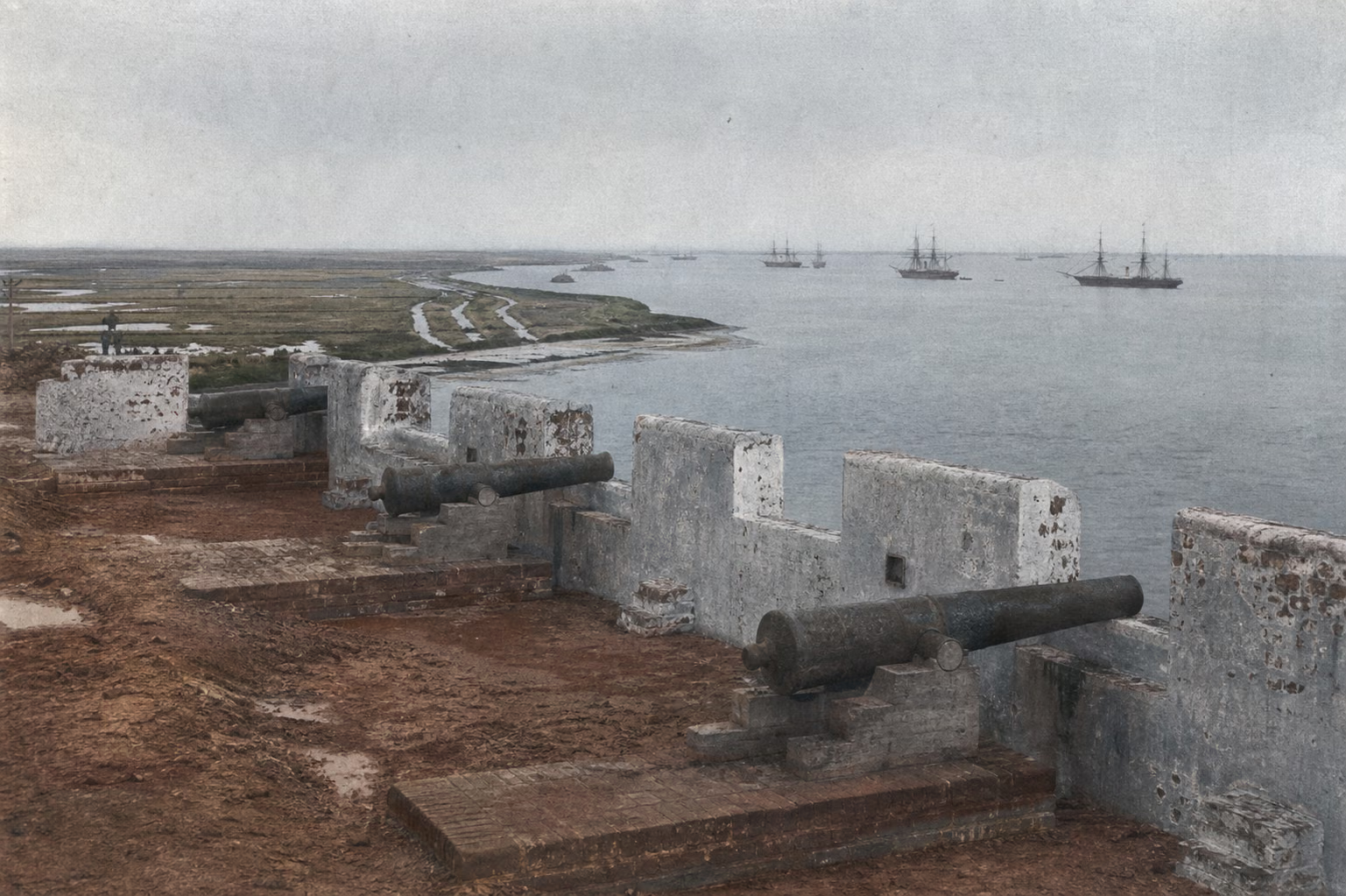
An exchange of fire across the open water of the Yangtze mouth: preset fields of fire for shore guns vs. maneuvering warships; the West Battery and East Battery forming horns across the river; behind them lay plains and water networks, with no second position -- the spatial despair of "the first line is the whole."
How Each Side Records It
- Chinese side: Chen Huacheng entered the state's ritual canon and Shanghai's urban memory (the Chen Gong Shrine, road names); Niu Jian entered another list.
- British side: acknowledged the intensity of the artillery battle in this engagement as the highest of the entire war (wording unverified), then immediately turned the pen toward Shanghai's commercial value -- what they remembered was the preface to the next chapter.
Disputes and Sensitivities
- Niu Jian's honor guard going to the field: the boundary between historical record and literary elaboration must be checked clearly (Mao Haijian has examined it; details unverified).
- The contrast in which "the best performance was still a crushing defeat": honor the person, but do not mythologize the battle.
Sources and Open Questions
Sources: Mao Haijian, The Collapse of the Celestial Empire; Draft History of Qing, "Biography of Chen Huacheng"; Shanghai local gazetteers and inscriptions from the Chen Gong Shrine; British battle reports (Parker's report).
Open questions: number of shore guns; source of the "eighty-eight men" killed; Chen Huacheng's quotation and details of his military discipline; original wording of the record on Niu Jian's honor guard; British ship hits and casualty numbers; present site of the Chen Gong Shrine; month, day, and wording of the edicts sending Qiying and Ilibu south; records of British surveys of the Yangtze channel; funding for Wusong's two years of preparation; deployment materials on which the inference of "no funding for a second position" rests; sources for the two explanations of Niu Jian's motive in bringing his honor guard to the field.
All images on this site are AI-generated depictions. They are not historical photographs, not primary sources, and do not depict any real individual.