Engagement Archive · Battle of Zhenjiang
The battle in which the British assembled their largest force and suffered their heaviest losses of the entire war: 1,600 Banner soldiers and 400 Qingzhou troops fought a full day of street fighting at the crossroads of the Grand Canal and the Yangtze. The defending commander died with the city, and before the battle he had also massacred civilians inside it.
Engagement Data
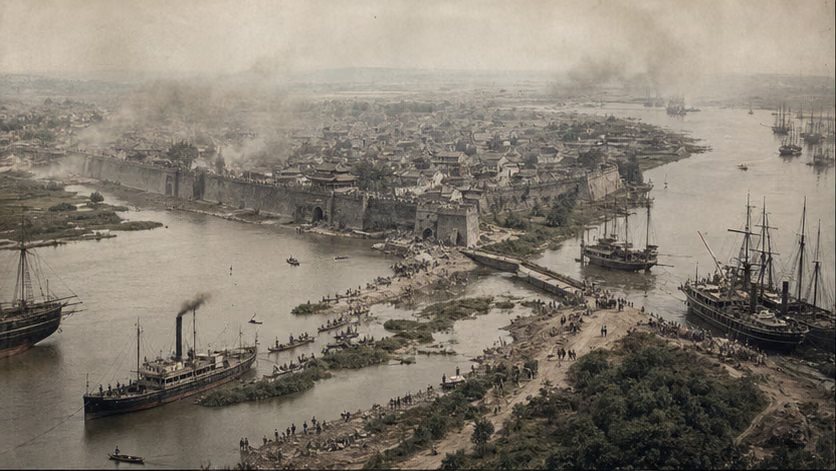
| Item | Details |
|---|---|
| Time | 1842.7.21 |
| Place | Zhenjiang, Jiangsu (Jingkou): where the Yangtze and the Grand Canal meet, the throat of the grain-transport system |
| Defender | Hailing, Deputy Lieutenant-General of Jingkou; about 1,600 garrison Banner soldiers and 400 Qingzhou Banner soldiers transferred in from outside; several thousand Green Standard troops outside the city (under assistant councillor Qishen and commander-in-chief Liu Yunxiao) retreated without serious fighting |
| Attacker | The largest British concentration of the war: more than 70 vessels and nearly 7,000 landing troops (Gough) |
| Result | The city fell; Hailing and his household killed themselves; the grain-transport route was held by the throat, and three weeks later a treaty was signed below Nanjing's walls |
Belligerents
| Item | Defender | Attacker |
|---|---|---|
| Troops | 2,000 Banner soldiers inside the city against nearly 7,000 landing troops outside it | Four brigades plus artillery, with engineers assigned for demolition |
| Firearms | Matchlock muskets, heavy wall guns, Pishan cannon | Percussion firearms, field artillery, explosive charges |
| Outside support | The Green Standard troops outside the city broke first; an isolated city | Fleet firepower and supply throughout |
Terrain and Conditions
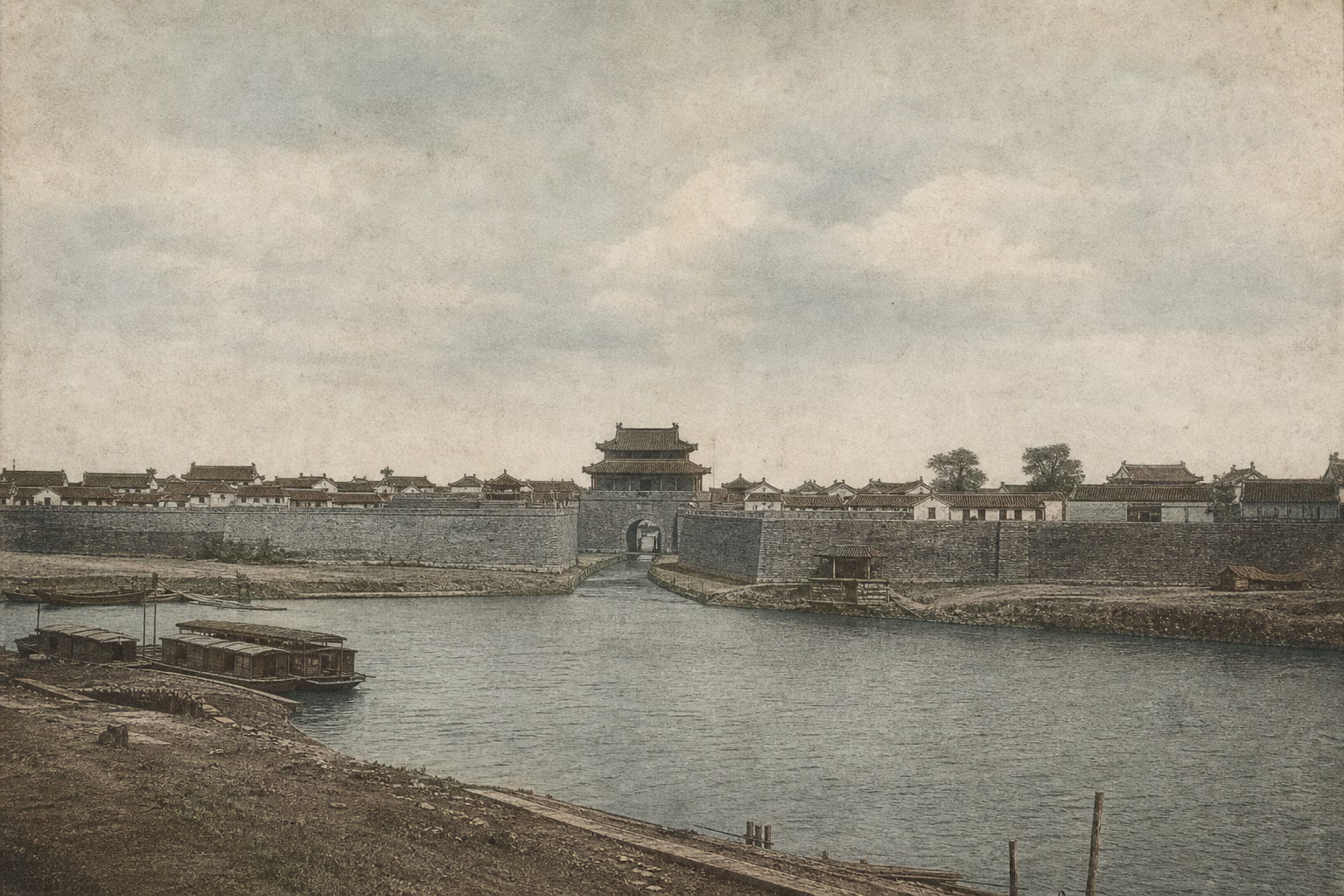
Zhenjiang was a pressure point in the empire's bloodstream: tribute grain moved north from the canal through this point, and to hold Zhenjiang by the throat was to hold Beijing's grain route by the throat. The British chose it in order to connect military action directly to the Qing court's fiscal nerve. The city was a Banner garrison city, where Banner soldiers lived with their families for generations; before the battle, the population was already unsettled because of searches for "traitors to the Han" (see the Disputes section).
Why It Was Fought
The western battery at Wusong fell on June 16, and Chen Huacheng died at his gun position; three days later, Shanghai was lost without a fight. Once the gateway to the Yangtze had opened, the British fleet advanced upriver. This route concentrated the largest force seen since the war began: more than 70 vessels, nearly 7,000 landing troops, and four brigades with attached artillery and engineers. In mid-July, the vanguard reached the waters off Zhenjiang.
There was no suspense in the choice of target. Zhenjiang was Jingkou, the crossing of the Yangtze and the Grand Canal, the throat of the grain-transport system: tribute grain moved north through the canal at this point, and to hold Zhenjiang by the throat was to hold Beijing's grain route by the throat. To strike here was to connect military action directly to the Qing court's fiscal nerve -- to cut the grain transport, threaten Nanjing, and force a treaty under the walls, the second move in the three-move offensive of 1842. For the British, there was no need to fight all the way to Beijing's walls: once this water junction was seized, the court would sit down at the negotiating table on its own.
The resolve behind this Yangtze campaign had been layered on over the course of a year by London and the new plenipotentiary: army reinforcements arrived in China from India in late spring, and the timetable in Pottinger's hands allowed only one season -- ascend the Yangtze, cut the grain transport, and secure the treaty below Nanjing's walls. British ships had sounded and charted the river; Zhenjiang's position was already on the maps. The defending side had no equal resolve: Beijing gave Zhenjiang no plan, and the battle fell on the shoulders of the Deputy Lieutenant-General of Jingkou alone. Hailing actually had no shortage of information -- Wusong had fallen, enemy ships were moving up the river, and he had several weeks to prepare. What he lacked was trust in the people inside the city. Niu Jian had fled from Wusong, passed through Zhenjiang, and then gone on to Nanjing without leaving reinforcements behind (records of Niu Jian's transit and dispositions remain unverified).
The city's defense was an enlarged version of Zhapu, and so was its predicament. Hailing, Deputy Lieutenant-General of Jingkou, had about 1,600 garrison Banner soldiers and another 400 Qingzhou Banner soldiers transferred in from Shandong; outside the city, several thousand Green Standard troops were commanded by assistant councillor Qishen and commander-in-chief Liu Yunxiao. A Banner garrison city meant Banner soldiers living with their families for generations; their homes were inside the city, and there was no retreat. But the atmosphere inside the city was worse than at Zhapu: amid rumors of a great army approaching, Hailing closed the city and searched for "traitors to the Han," massacring civilians (contemporary records give sharply different statistical bases and several conflicting accounts), leaving the population terrified. Before the fighting began, defenders and those being defended already feared one another.
The defenders' boundary had been fixed by the establishment: the Banner garrison quota was a little over 1,000 men; living with families for generations, they were registered households in peacetime and defenders in wartime, with no troops to replenish them. The several thousand Green Standard troops outside the city were assembled reinforcements and left at the first blow. The British boundary lay in the river: nearly 7,000 men had entered inland waters, with heat and disease accompanying them, and all supplies tied to a single fleet. This was the farthest they pushed the front in the whole war. No other visible course appeared on the table: no proposal to abandon the city has been found in the records; the families of the Banner garrison were all inside the city, and there was nowhere to abandon them to.
One side of the peace talks was in fact already moving: Niu Jian, who had fled from Wusong, had retreated to Nanjing, and a few weeks later he would sit at the negotiating table; Qiying and Ilibu, sent out from Beijing, were already in Jiangnan discussing pacification. But Pottinger did not stop the ships. Negotiations could exist, but only after the grain transport had been cut. On the morning of July 21, the British landed in three columns.
Course of the Engagement
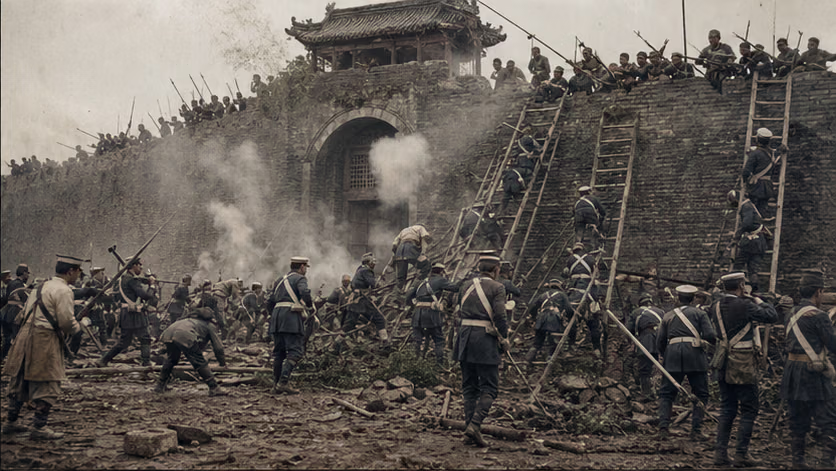
| Stage | Course |
|---|---|
| Morning | British troops landed in three columns: one force made a feint and swept away the Green Standard troops outside the city (Qishen and Liu Yunxiao's commands withdrew), while two columns made the main attack on the walls |
| Before noon | In the direction of the West Gate, engineers blasted the gate; in the direction of the North Gate, troops climbed the wall on scaling ladders, and Qingzhou soldiers counterattacked with cold steel on the wall top, with the position changing hands repeatedly (British accounts record the resistance here as the fiercest, source unverified) |
| Inside the city | Street fighting lasted the entire day, street by street and house by house; the Banner soldiers' homes were inside the city, and there was no retreat |
| Dusk | The city fell; Hailing and his household burned themselves to death in martyrdom (accounts of the method differ, unverified); many members of the Banner-garrison families killed themselves ※ |
Casualties and Losses
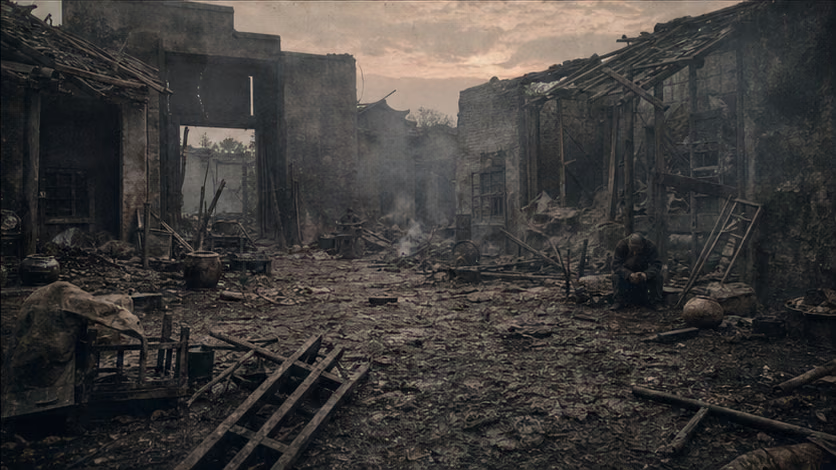
- Defender: more than half of the Banner soldiers were killed or wounded (figures vary widely by statistical basis); family members died in groups ※; civilians inside the city suffered beyond count from the fighting and the looting that followed.
- Attacker: 39 killed and 130 wounded (common figure, with minor differences in detail, unverified) -- the heaviest single engagement of the entire war, exceeding a substantial part of the combined losses in earlier actions.
- Engels later wrote in *The New Expedition of the English in China* (paraphrase): if the invaders had met the same resistance everywhere, they would never have reached Nanjing.
Aftermath
- The grain transport was cut, and the capital was shaken; in early August, British ships reached Xiaguan below Nanjing, and on 8.29 the Treaty of Nanjing was signed (see overview).
- Hailing received the posthumous title Zhaojie and was enshrined; at the same time, the accusations by gentry and civilians inside the city against his prewar conduct also entered contemporary notebooks. The two memories have circulated side by side down to the present.
- The Qingzhou soldiers' fight to the death was remembered by the people of Zhenjiang (the claim that a shrine was established remains unverified); Qishen and Liu Yunxiao were subjected to official proceedings.
Accounts of Those Present
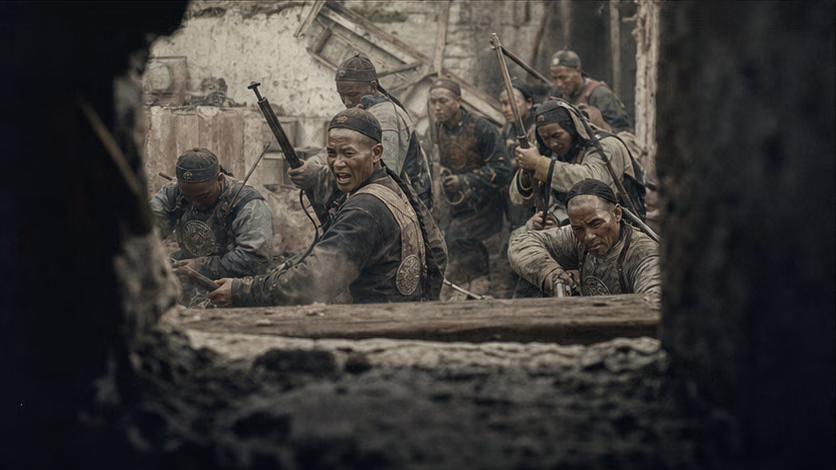
- Qingzhou soldiers: The 400 Banner soldiers transferred from Shandong formed the hardest section of close combat on the wall -- guest troops fought to the death in a strange land, while the local Green Standard troops left first. That inversion is worth remembering.
- The two faces of Hailing: The Deputy Lieutenant-General who died with the city and the same man who, before the battle, closed the city to search for "traitors to the Han" and massacred civilians (contemporary records give sharply different statistical bases and several conflicting accounts). Refusing to crop away either face is the reason this article exists.
- **Yang Qi, *Record of Escaping the Besieged City***: A siege memoir by a literatus inside the city -- a first-hand text from a civilian point of view, and a rich mine for narrative sampling.
- Records from British officers inside the city: After the breach, one account recorded Zhenjiang as a "dead, silent city" (wording unverified) -- the victors were startled by the silence they had made. This stroke comes from the other side.
The Ground
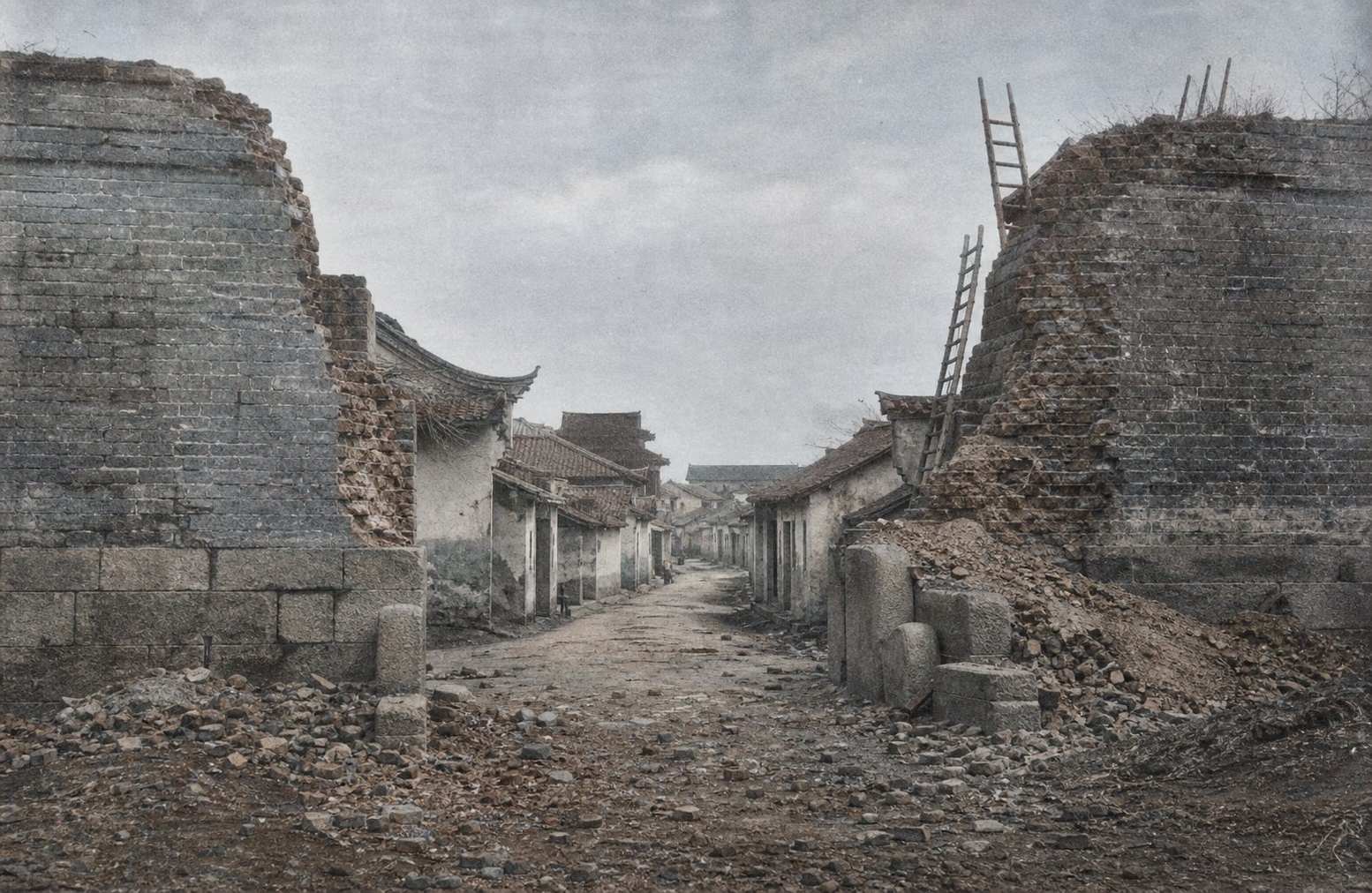
A city at the canal--Yangtze water crossing: water gates, city walls, the inner Banner city, the grid of streets and lanes; two points of breakthrough, the blast opening and the scaling-ladder sector; the depth of street fighting in which "home is behind you" -- every street was a route home for some defender. The geography of grain transport was itself the strategic narrative: one city held an empire by the throat.
How Each Side Records It
- Chinese side: Hailing's death entered the sacrificial canon; literati notebooks preserved the charge that he massacred civilians; Engels's evaluation later became a textbook quotation. Three layers of memory are present at the same time, an unusual case.
- British side: military histories acknowledge that this battle brought the fiercest resistance and the heaviest losses of the entire war; campaign memoirs devote far more space to the Zhenjiang chapter than to other engagements.
Disputes and Sensitivities
- Assessment of Hailing: The martyr for the state and the massacre perpetrator were the same person. The two bodies of evidence coexist, and no conclusion has been settled down to the present.
- Family suicides and civilian deaths inside the city ※: related records should be followed through facts and numbers as clues (figure disputed), refusing spectacle.
- Panic over "traitors to the Han": a sample of social mutual devouring in the late stage of the war, involving ethnic relations; the wording must be exact.
Sources and Open Questions
Sources: Mao Haijian, *The Collapse of the Celestial Empire*; Yang Qi, *Record of Escaping the Besieged City*; *Draft History of Qing*, "Biography of Hailing"; British battle reports and campaign memoirs (Gough's report, Ouchterlony); Engels, *The New Expedition of the English in China*.
Open questions: the composition and casualties of the defending force; the manner of Hailing's death and the various statistical bases for the number of people killed in the searches; minor differences in British casualty figures; the claim that a shrine was established for the Qingzhou soldiers; original wording of "dead, silent city"; editions of *Record of Escaping the Besieged City*; records of Niu Jian's dispositions after fleeing Wusong and passing through Zhenjiang; records of British soundings and reconnaissance along the river that mapped Zhenjiang's position.
All images on this site are AI-generated depictions. They are not historical photographs, not primary sources, and do not depict any real individual.