Engagement Archive · Counteroffensive in Eastern Zhejiang
The Qing army's only strategic counteroffensive of the entire war: the date of departure was chosen by divination as the "auspicious time of the four Yin," and the plan for storming the cities leaked out in banquet-table conversation -- Tibetan native troops brought from Greater Jinchuan charged into Ningbo's West Gate and died beneath the guns already sighted on Cross Street.
Engagement Data
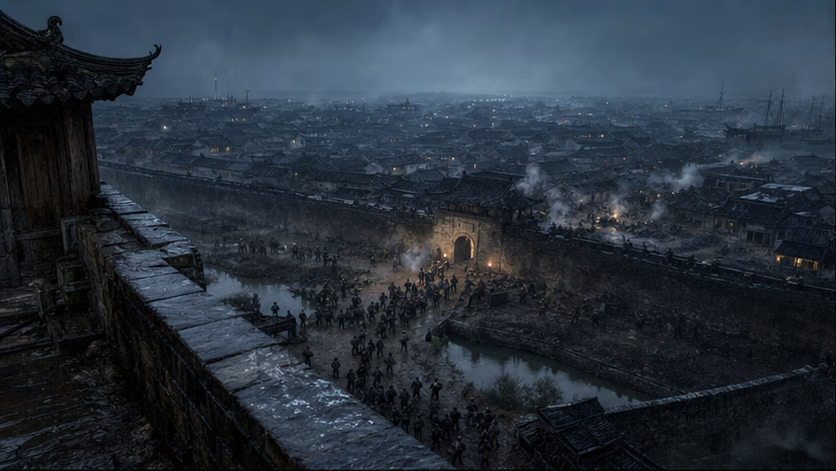
| Item | Details |
|---|---|
| Time | 1842.3.10 three-pronged counteroffensive; 3.15 British counterattack at Cixi, Battle of Dabaoshan |
| Place | Ningbo, Zhenhai, and (Dinghai, not launched), Zhejiang; Dabaoshan, Cixi |
| Counterattacking side | Yijing, General Who Pacifies by Awe, with troops and braves drawn from several provinces, claimed at more than 10,000 (actual figure disputed), including Jinchuan Tibetan native troops from Sichuan |
| Defending side | British garrisons at Ningbo and Zhenhai (Gough) |
| Result | All three columns failed; British counterattacked at Cixi, Zhu Gui's command fought a bloody rearguard action; Yijing fled to Hangzhou, and Zhejiang affairs turned toward "pacification" |
Belligerents
| Item | Counterattacking side | Defending side |
|---|---|---|
| Troops | Guest troops drawn from nine provinces, called elite but in fact cobbled together; half a year spent waiting for them to assemble | Several hundred to more than 1,000 British troops garrisoning the cities, with prepared works |
| Methods | Night attack to seize the gates + street fighting, with no siege artillery | Street barricades, firing loopholes in buildings, gun positions blocking street mouths |
| Intelligence | The plan leaked early (both agents inside the city and loose talk were involved, unverified) | Waiting at ease for an exhausted enemy |
Terrain and Conditions
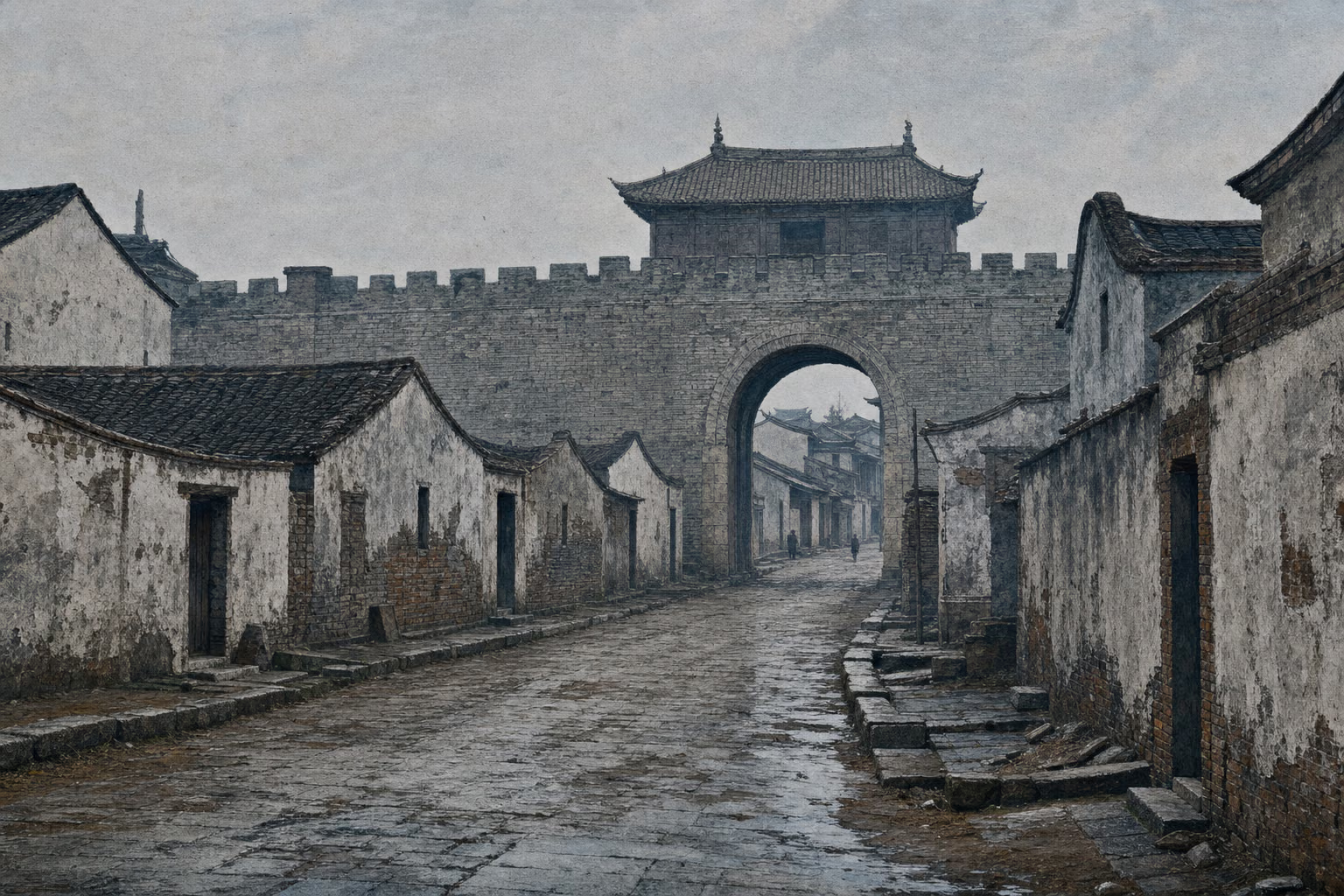
Daoguang strictly ordered the recovery of the three cities in eastern Zhejiang. Yijing, as an imperial clansman, was invested as "General Who Pacifies by Awe"; on the journey south from the capital he feasted and listened to singing, then stayed in Hangzhou for half a year waiting for troops. At the Guandi Temple by West Lake he drew a lot bearing the omen of the "tiger-headed man," and chose the renyin year, renyin month, wuyin day, jiayin hour -- the "auspicious time of the four Yin" -- for the army's departure (Mao Haijian gives a detailed examination). When military affairs were decided by a lot cylinder, the political situation needs no further elaboration here. That single fact is the whole situation.
Why It Was Fought
Zhenhai fell in half a day; Yuqian threw himself into the water, and Yu Buyun fled to Ningbo. Three days later, Ningbo was lost without a fight. Counting from Dinghai, the three cities of eastern Zhejiang had fallen one after another within seventeen days, and an imperial commissioner had died for the state. Once this report reached Beijing, the court had no room left to retreat. Daoguang strictly ordered the recovery of the three cities in eastern Zhejiang and sent the imperial clansman Yijing south with the seal of "General Who Pacifies by Awe." By this point, the counteroffensive was no longer a military judgment but a political necessity: with three cities lost in succession and an imperial commissioner dead, the court needed an act of "pacifying by awe."
Daoguang issued more than one stern edict. From the day of Yijing's appointment onward, imperial orders pressing him to advance arrived in the south one after another; for each additional month Yijing remained in Hangzhou, the tone of the memorial traffic grew more severe (the dates and wording of the successive edicts pressing for battle remain unverified). The emperor counted the days from a thousand li away, while the front waited for troops on the edge of West Lake. The tempo of the counteroffensive was set half by military conditions and half by reprimand.
Yijing's journey south took half a year. He feasted and listened to singing along the way, then stayed in Hangzhou while guest troops drawn from nine provinces arrived in succession. The force was claimed at more than 10,000, and even the Tibetan native troops of Greater Jinchuan in Sichuan were among those conscripted -- soldiers incorporated into garrison training after an old conquest under Qianlong, now drawn out to plug a breach in a new war. But that same half year was given to the other side as well: the British garrisons in Ningbo and Zhenhai numbered from several hundred to more than 1,000, their works were prepared, and they waited at ease for an exhausted enemy. The date of attack and the deployment also appeared repeatedly in loose talk at Hangzhou banquets, and the British in Ningbo received advance word (record unverified).
The bill for half a year of waiting fell on Zhejiang alone: more than 10,000 guest troops stationed inside the province meant grain, pay, corvee labor, and military transport on a vast scale, while eastern Zhejiang had only just suffered war devastation and Ningbo and Zhenhai were already in enemy hands (the figures for Zhejiang's military supply costs remain unverified). The troops had been assembled from nine provinces; commanders did not know their men, and the men were not acclimated. For units from Sichuan and Shaanxi, the march to Zhejiang alone took months.
The counteroffensive plan called for three night attacks launched at the same time: seize Ningbo, attack Zhenhai, and cross the sea to recover Dinghai. There was no siege artillery. The wager was on darkness, inside cooperation, and numbers. Many commanders at the front knew it could not be done (records of the commanders' remonstrances remain unverified), but the counteroffensive had to happen -- impossible or not, it still had to be attempted.
There were not, on the surface, no other possible methods. Someone in the army advocated sustained harassment, using pressure and exhaustion instead of direct assault (the person who proposed it and the details of the deliberation remain unverified). But the stern edict stood above them, and "pacifying by awe" was a political necessity: one day, there had to be a victory report announcing the recovery of the three cities. The commanders' remonstrances ended there: recorded, but not discussed.
The departure date was not produced by staff planning. Yijing drew a lot at the Guandi Temple by West Lake and received the omen of the "tiger-headed man." This was not one man's superstition, but the regression of an entire decision-making system under an insoluble predicament: the question that military analysis could not answer was handed to the lot cylinder. The chosen time: renyin year, renyin month, wuyin day, jiayin hour. The auspicious time of the four Yin, the night of March 10, 1842.
Course of the Engagement
| Phase | Course |
|---|---|
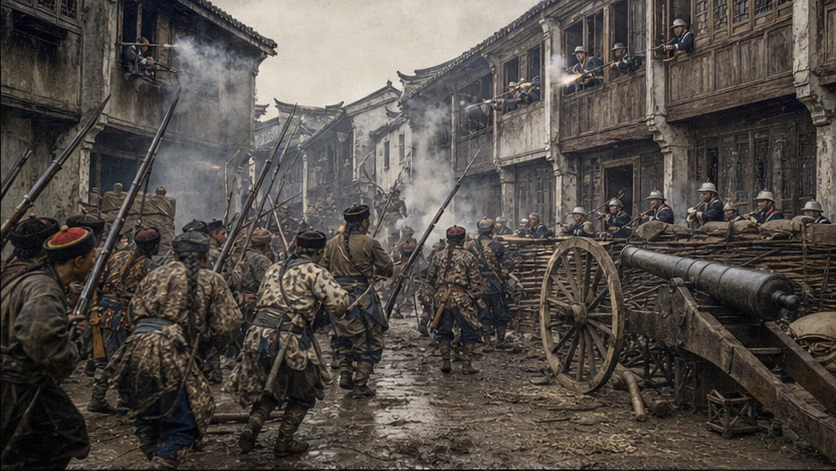
| 3.10 night, Ningbo | The vanguard (including the Jinchuan Tibetan troops led by Amurang) seized the West Gate and entered the city, advancing straight to the Drum Tower and Cross Street. British pre-sited gun positions shelled the streets, while volleys fired downward from upper floors; the attacking troops jammed in the lanes, withdrew amid piled casualties, and Amurang was killed in action (details unverified) |
| 3.10 night, Zhenhai | The attacks toward Zhaobaoshan and the county seat failed, and the troops broke as soon as day came |
| Dinghai route | A sea crossing was required; the waterborne braves had not assembled, and the column did not launch |
| 3.15 Cixi | British troops came out of the city and counterattacked the Qing camp; Zhu Gui, assistant brigade general of the Jinhua command, led several hundred men in a rearguard action, holding Dabaoshan in hard fighting through the day. Zhu Gui and his son were killed in action, and more than 200 soldiers died (figure disputed); Yijing fled to Hangzhou by way of Changxi Ridge |
Casualties and Losses
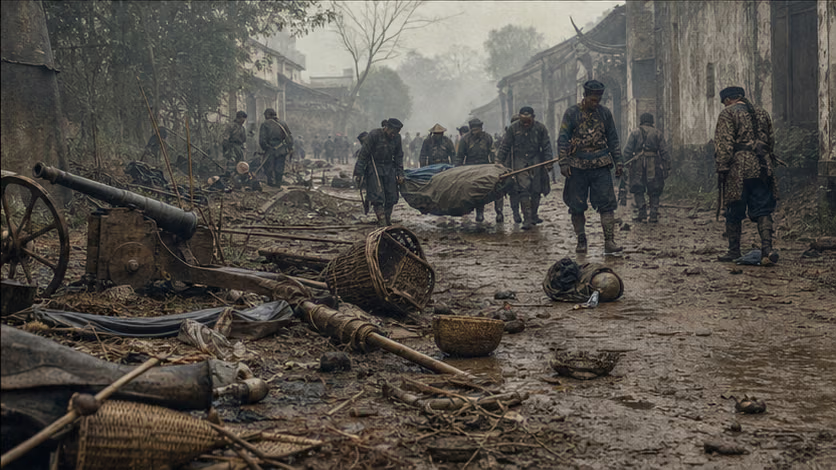
- Counterattacking side: more than 1,000 casualties (figures vary by account); after this engagement, the Qing court mounted no further offensive against the British.
- Defending side: several dozen casualties (figures vary by account).
- Strategic cost: the main forces in eastern Zhejiang lost their nerve; four months later, the British advanced up the Yangtze, and along the route no enemy remained willing to meet them in field battle.
Aftermath
- Yijing's memorial presented the disastrous defeat as "burning ships and killing the enemy" (the original memorial remains unverified); it was soon exposed, and he was dismissed and sent into penal exile -- but restored to office two years later.
- Daoguang turned toward a "pacification settlement," and Qiying and Ilibu came onto the stage. The negotiating team for the Treaty of Nanjing was directly produced by this defeat.
- Cixi built the Zhu Gui Shrine (still extant), where Zhu Gui, his son, and the fallen officers and soldiers, including Tibetan native troops, are enshrined.
Accounts of Those Present
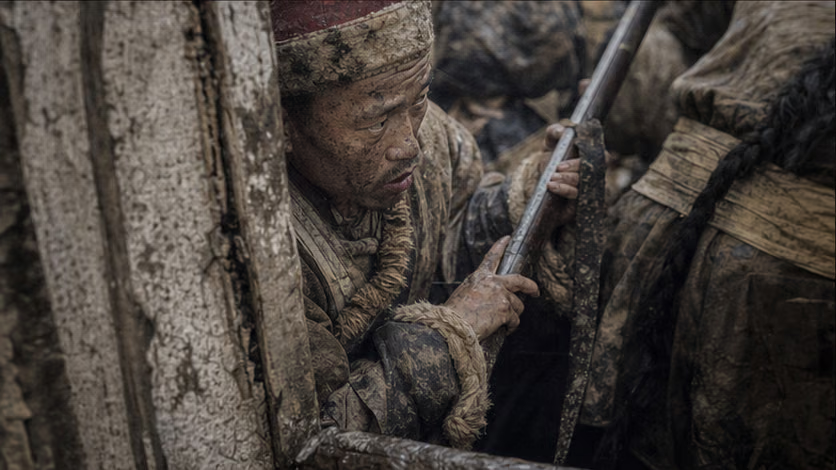
- Amurang and his men: Drawn from the land of blockhouses along the Dadu River to the shore of the East China Sea, they died beneath the guns on Ningbo's Cross Street. They were descendants of Tibetan soldiers incorporated into garrison training after Qianlong's two Jinchuan campaigns -- the empire bled an old conquest to plug a breach in a new war. The farthest-ranging reinforcement on the "road from whence they came."
- The lot cylinder: That lot at the Guandi Temple by West Lake determined the hour at which 10,000 men would march. It was not Yijing's personal superstition, but the regression of an entire decision-making system under an insoluble predicament.
- Zhu Gui: The only commander in the counteroffensive remembered today is the one who covered the retreat -- in a defeat, the only possible heroic position is the rearguard.
- The banquet: Over half a year in Hangzhou, the date of attack and the deployment repeatedly appeared in banquet-table conversation, and the British in Ningbo received advance word (record unverified). The death of secrecy lay not in spies, but in the slackness of the system.
The Ground
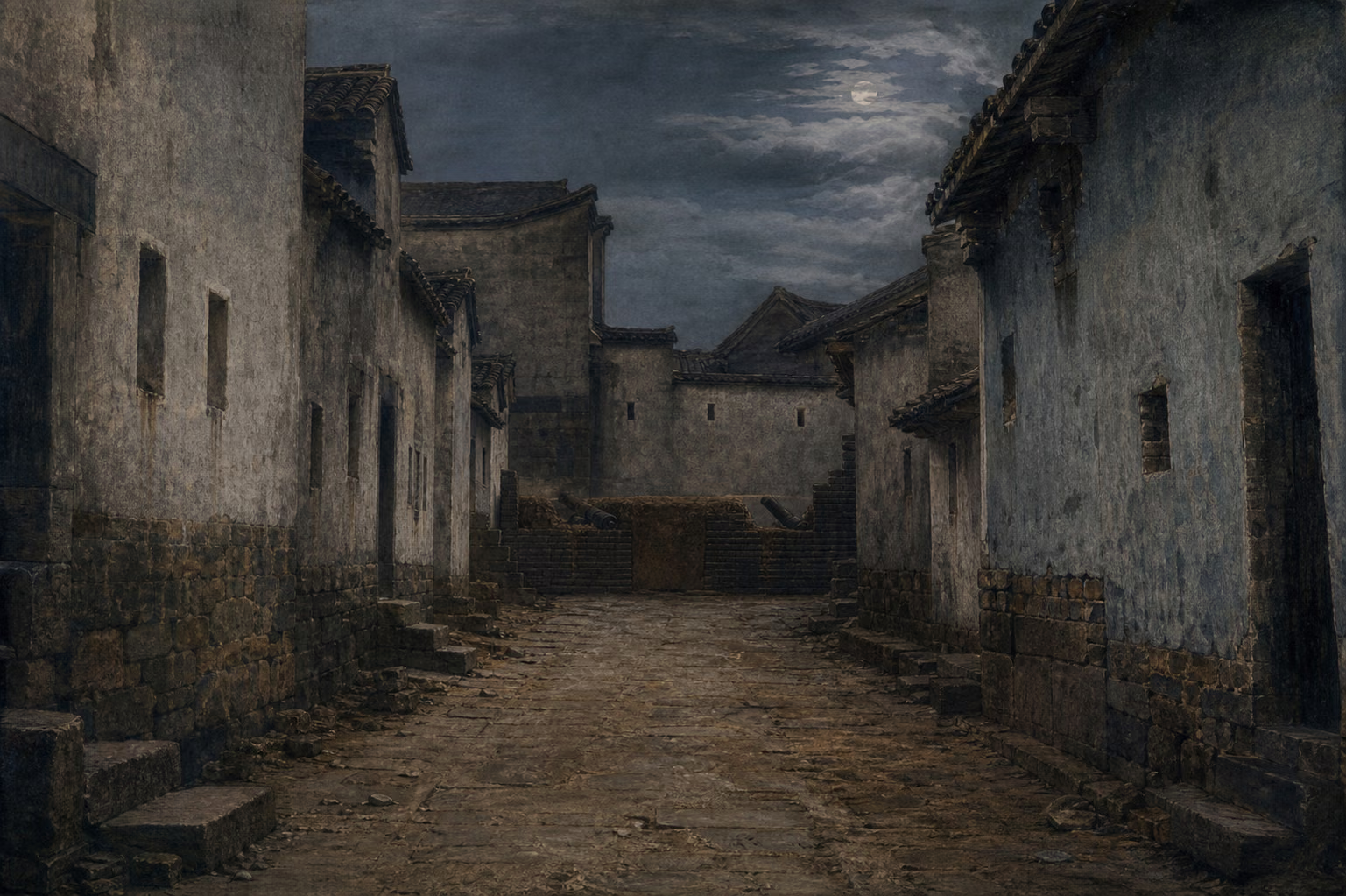
A complete counterexample to the pattern of night gate seizure followed by deep street fighting: the gates were taken but the city was not, and the streets became funnels of fire. The pre-sited gun positions at the Cross Street intersection were the "strangling point" of urban defense. Dabaoshan, by contrast, was a hill-country rearguard action: a spatial exchange in which one mountain was traded for an army.
How Each Side Records It
- Chinese side: official histories avoided the defeat and covered it with ornamental wording; local memory preserved the Zhu Gui Shrine. The deeds of the Tibetan troops have only been recovered in recent years (current state of research unverified).
- British side: recorded it as a "Chinese-style attack" easily repulsed, in a tone close to exotic curiosity -- they did not see the despair behind the lot cylinder.
Disputes and Sensitivities
- The "auspicious time of the four Yin" is not an anecdote for exotic amusement. It belongs to the larger failure of the system.
- The narrative of the Tibetan troops has a multiethnic dimension of shared national crisis, and the casualties were also a real cost.
Sources and Open Questions
Sources: Mao Haijian, The Collapse of the Heavenly Dynasty (detailed examination of the four-Yin date); Draft History of Qing, biographies of Yijing and Zhu Gui; inscriptions at the Zhu Gui Shrine in Cixi; British dispatches and military memoirs.
Open questions: the actual strength and casualties of the counteroffensive; the organization of Amurang's command and the details of their deaths; records of the plan's leakage; Yijing's original memorial; the casualties of Zhu Gui's rearguard; the dates and wording of the successive edicts pressing for battle; the figures for Zhejiang's military supply costs for the counteroffensive; the proposer and circumstances of the plan to rely on prolonged harassment and pressure instead of direct assault.
All images on this site are AI-generated depictions. They are not historical photographs, not primary sources, and do not depict any real individual.