Engagement Archive · Battle of Canton (1841, incl. Battle of Wuyong)
A night attack staged for the emperor's eyes bought six days in which enemy guns looked down over the whole city, and a ransom of six million silver dollars -- after which the commander wrote the defeat into a great victory, the emperor believed him, and coastal defenses were cut back on that basis.
Engagement Data
| Item | Details |
|---|---|
| Time | 1841.2.27 (Wuyong)–5.27 (Treaty of Canton); decisive fighting 5.21–26 |
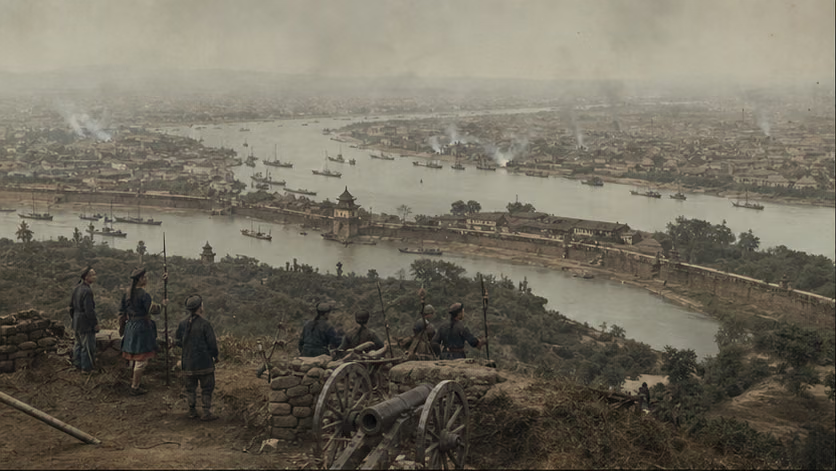
| Place | Canton's inner waterways and the high ground north of the city |
| Defender | Yishan, General for Quelling Rebels; Yang Fang, assistant grand minister; more than ten thousand reinforcements assembled from other provinces (claimed as seventeen thousand; actual figure unverified) |
| Attacker | British forces (army commander Hugh Gough; plenipotentiary Charles Elliot), more than two thousand army troops + an inner-river fleet |
| Result | All northern batteries were lost; Treaty of Canton: six million silver dollars paid to ransom the city, Qing troops withdrew sixty li from the city |
Belligerents
| Item | Defender | Attacker |
|---|---|---|
| Troops | A patchwork of outside troops from seven provinces, not under a single command, with slack discipline | More than two thousand regular army troops under unified command |
| On water | Fire-attack boats and remnants of the naval war junks | Steamers towed vessels into the inner river and swept the riverside batteries with fire |
| Ground | Had a city, but did not hold the northern high ground | Landed and turned the defenses, taking the commanding ground along the Yuexiu line directly |
Terrain and Conditions
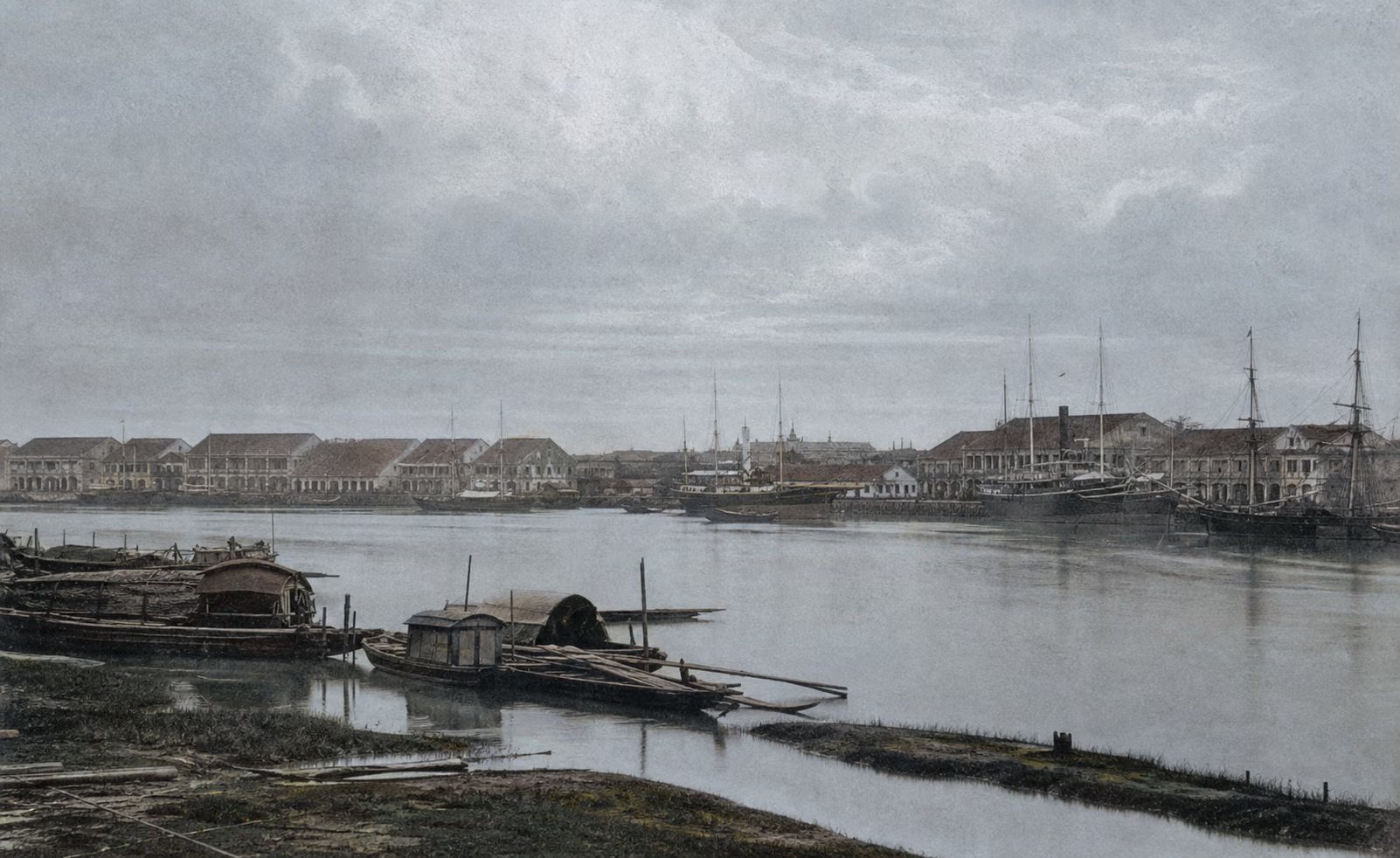
Canton in wartime: the Thirteen Factories trade had stopped, waterborne irregulars, scattered irregulars, and outside troops from seven provinces lived alongside one another, and military discipline had deteriorated to the point that a popular saying held that "the harassment by the defending soldiers is worse than that by the barbarians" (source unverified). Yang Fang arrived first; seeing that the gun positions could not match the enemy, he went so far as to collect women's chamber pots as implements of "apotropaic magic" against artillery fire (Liang Tingnan's Yifen Wenji records the "chamber-pot formation"; authenticity unverified) -- the rumor itself is evidence of how contemporaries sensed the absurdity of the official response.
Why It Was Fought
The Humen fortress complex was dismantled as a whole in late February: Guan Tianpei died at his gun position, the Guangdong navy was destroyed, the iron chain across the river was removed, and the inner waterways to Canton no longer had a single gate that could be closed. On February 27, British ships sailed upriver and broke Wuyong; in March they moved into Bai'etan and occupied the factories. Yet just as troops were at the city gates, Elliot unilaterally announced a truce and the restoration of trade -- merchant ships and warships lay in the same river, and while the war was halfway through, business continued. What he had wanted was never the city itself, but the money the city was willing to pay.
Beijing would not accept that situation. When news arrived in the first lunar month that the Shajiao and Dajiao batteries had fallen, Daoguang issued an edict declaring war and appointed the imperial clansman Yishan as General for Quelling Rebels, drawing more than ten thousand troops from seven provinces into Guangdong under a strict order to "advance and suppress" (the original dates of the declaration-of-war and appointment edicts are unverified). Yishan reached Guangdong in the fourth lunar month and took over a force that was a patchwork of outside troops, mutually uncoordinated and slack in discipline; he was caught between two boards -- above him Daoguang's stern order to advance and suppress, below him suspicion that "all Cantonese are traitors." He could hardly be said to trust the city beneath his feet. Yang Fang, who had arrived earlier, had already seen clearly that the gun positions could not match the enemy, but the words "cannot match" could not be written into a memorial.
Both sides knew exactly what Canton was worth. For Elliot, this was the Celestial Empire's only treaty port, and the Thirteen Factories' silver lay inside the city -- use fighting to force payment; inflict pain and payment would follow. For Yishan, this was the place where, after a declaration of war, he had to produce the results of "suppression." What the emperor wanted was not the preservation of Canton, but "suppression."
The material account also pressed on the same side. The grain rations, pay, rewards, cooking gear, tents, and ammunition for the seven-province outside troops all had to be supplied by the single city of Canton; the provincial treasury and the Guangdong Maritime Customs were spending huge sums day after day (military expense details unverified). Troops lived inside the city, mixed with the marketplace, and caused disorder before battle had even begun. The British side was small -- more than two thousand army troops plus an inner-river fleet -- but the iron steamer Nemesis towed gunboats upriver, and the riverside batteries fell silent one by one before mobile firepower.
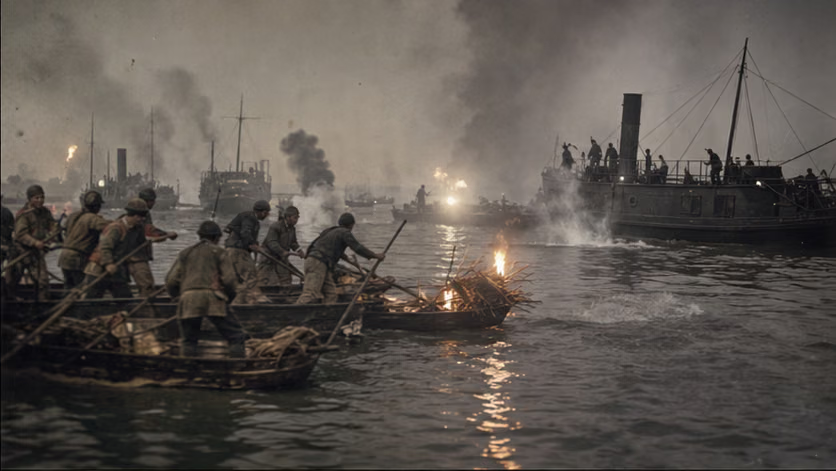
That spring at Bai'etan, another road was in fact lying on the table: do not fight, trade, and let each side earn its money. The people at the front had already taken that road first -- in March, Yang Fang and Yiliang jointly memorialized requesting that British merchants be allowed to trade as before; the vermilion rescript sternly rebuked them, and they were dismissed while retained in office (the original memorial and rescript text are unverified). Lin Zexu, then exiled in Canton, also submitted proposals on fighting and defense, but they were not adopted (details unverified). Canton proposed the road; Beijing shut the gate. Elliot's side also had something he did not know: his entire method was staked on the Convention of Chuanbi, while London had already rejected that draft agreement in April and decided to replace him. The order dismissing him was still drifting at sea and would not catch up with him until summer (the sequence by which he learned this is unverified). On the night of May 21, Yishan sent out fire-attack boats in a night attack on British vessels at Bai'etan -- less a military operation than a posture staged for Beijing. The next morning, British forces began their counterattack.
Course of the Engagement
| Stage | Course |
|---|---|
| 2.27 Wuyong | British ships sailed upriver and broke the Wuyong batteries; Xiangfu, brigade general of Hunan's Zhen'gan command leading Xiang troops sent to reinforce Guangdong, fought hard and died; several hundred defenders were killed (figure disputed) |
| March | British forces moved into Bai'etan, broke the Liede and other batteries, and occupied the factories; Elliot soon unilaterally announced a truce and restored trade -- the surreal phase of doing business while fighting |
| 5.21 night | Yishan's fire boats made a night attack on British vessels at Bai'etan; the burning was limited, and British forces counterattacked the next day |
| 5.22–25 | By water, British forces swept the inner-river batteries; by land, they landed at Zengbu and turned the defenses north of the city, taking the Sifang batteries and other northern batteries in succession, their gun muzzles looking down over the whole city; the outside troops inside the city fell into chaos, and plundering broke out everywhere |
| 5.26–27 | White flags were raised on the city walls; Treaty of Canton: six million silver dollars to ransom the city, troops from other provinces to withdraw sixty li, British forces to withdraw outside the mouth of Humen |
Casualties and Losses
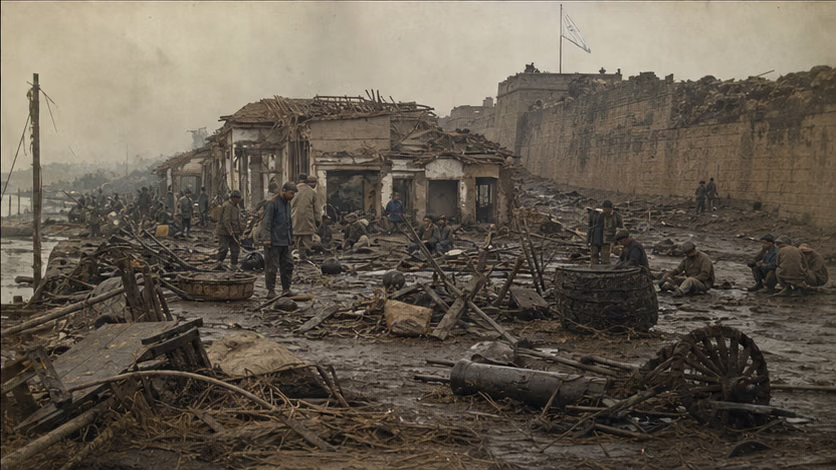
- Defender: more than one thousand casualties (figure disputed); civilians suffered both from artillery fire and from routed troops.
- Attacker: nine killed, sixty-eight wounded (British accounting, unverified).
- The greatest cost was political: see the next section.
Aftermath
Yishan's memorial wrote the six-million ransom for the city as "merchant debts" and the defeat and retreat as "Elliot, exhausted and desperate, begging for pacification" -- Daoguang believed it, thought the matter settled, and ordered coastal provinces to cut back their defensive troops. Five months later, when Pottinger sailed north, what he ran into was precisely the southeastern coast just stripped of defenses. False reporting was no longer merely a moral problem; it became a strategic variable -- that is the true place of this engagement in the war as a whole.
Accounts of Those Present
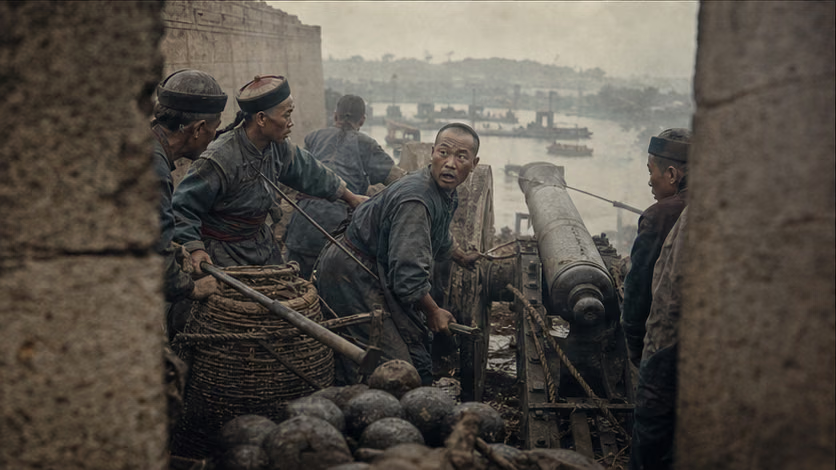
- Yishan's memorial: how an official document wrote a disastrous defeat into a great victory (original memorial unverified; can be quoted) -- a specimen of cancer in the Celestial Empire's information system.
- Yang Fang: a famous general of the generation that pacified the revolt of Jahangir Khoja, who in a new war could only turn to filthy implements of apotropaic magic. The individual is not the joke; he is the epitaph for an entire old system of military knowledge.
- Xiangfu: the brigade general of Xiang troops who came a thousand li to reinforce Guangdong and died at Canton's gateway -- a miniature of the fate of outside troops from other provinces: transferred in, broken up, killed in action, and remembered by no one.
- Spring at Bai'etan: truce notices were posted, and merchant ships and warships lay in the same river -- war and trade did not interfere with each other. That image is sharper than any argument.
The Ground
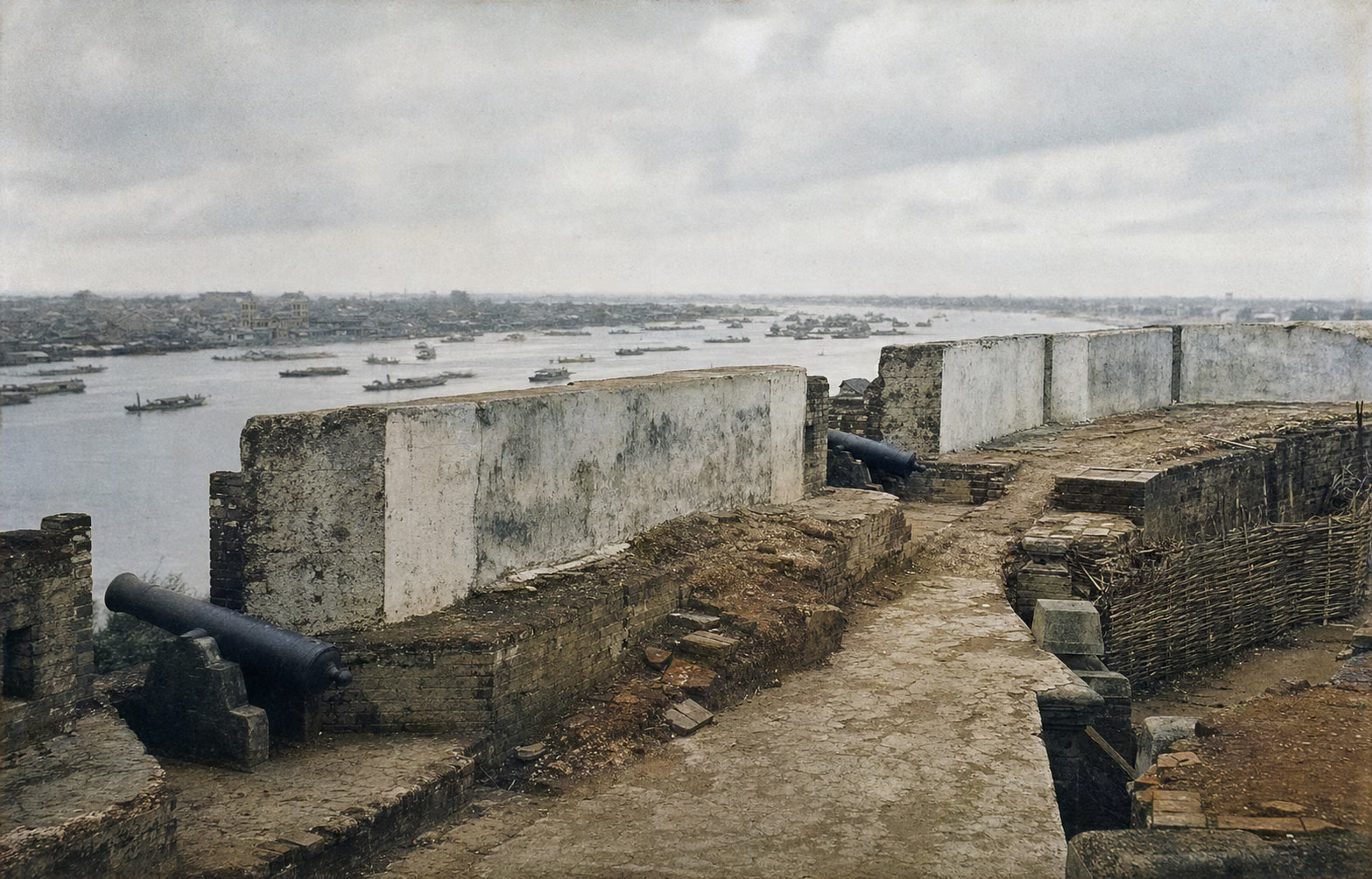
A lesson in the terrain of urban attack and defense: the Yuexiu high ground north of the city decided the survival of the whole city (the firing radius of the Sifang batteries covered the urban area), while the defenders' center of gravity lay along the inner-river battery line; a waterborne segment of waterway network + battery chain + night attack by fire-attack boats, and a land segment of landing and turning movement.
How Each Side Records It
- Chinese side: the official narrative was already false reporting in the same year; popular memory instead bypassed the regular army and focused on Sanyuanli three days later (the contrast between official defeat and people's bravery was formed from here).
- British side: "Canton expedition," recorded in technical terms, with the emphasis on the six million silver dollars received.
Disputes and Sensitivities
- The nature of the ransom for the city (ransom / extortion / precursor to war indemnity).
- Outside troops bringing disaster to Guangdong: one's own army harming one's own people -- a rehearsal of the "route-seeking" problem inside the line of resisting foreign aggression.
- The authenticity of the chamber-pot formation: cite it only as a note by a contemporary, not as a statement of historical fact.
Sources and Open Questions
Sources: Mao Haijian, The Collapse of the Celestial Empire; Liang Tingnan, Yifen Wenji; Guangdong Junwu Ji and other local literature; Ouchterlony, The Chinese War.
Open questions: actual defender strength; Wuyong casualties and Xiangfu's official title and rank; details of the March fighting at the factories; original text of Yishan's memorial; British casualty accounting; detailed terms of the Treaty of Canton; original dates and wording of the edicts declaring war and appointing Yishan as General for Quelling Rebels; original text of Yang Fang and Yiliang's memorial requesting trade and the vermilion rescript; correspondence in which Lin Zexu submitted proposals on fighting and defense while exiled in Guangdong; details of Guangdong military expenditure and sources for raising the six million silver dollars used to ransom the city; the sequence by which Elliot learned of his dismissal.
All images on this site are AI-generated depictions. They are not historical photographs, not primary sources, and do not depict any real individual.