Engagement Archive · Battle of Humen (incl. Battles of Dajiao and Shajiao)
The three-layered gateway at the throat of the Pearl River was dismantled as a system in two general assaults, and the provincial naval commander of Guangdong died at his own gun position: the coastal defense that Lin Zexu and Guan Tianpei had labored over for two years proved a harsh conclusion -- the system concept was right, and every component was wrong.
Engagement Data
| Item | Details |
|---|---|
| Time | Dajiao and Shajiao 1841.1.7; main fighting at Humen 1841.2.23–26 |
| Place | Humen fortress complex at the Pearl River mouth: the outer layer of Shajiao and Dajiao; the middle layer of the Hengdang--Weiyuan--Jingyuan--Zhenyuan batteries; the inner layer of Dahushan |
| Defender | Guan Tianpei, provincial naval commander of Guangdong; Chen Liansheng, assistant regional commander at Sanjiangkou; in each of the two actions, defenders numbered from several hundred to more than one thousand (figure disputed) |
| Attacker | British land and naval forces (fleet commander Gordon Bremer), with warships + steamers + landing parties, more than one thousand to more than two thousand men (figure disputed) |
| Result | The fortress complex was fully taken, the iron chain across the river was removed, the main naval force was destroyed, and the inner waterways to Canton lay open |
Belligerents
| Item | Defender | Attacker |
|---|---|---|
| Works | Open-air batteries without overhead cover, designed specifically to defend the frontal river channel; gun positions could not traverse | -- |
| Artillery | Old cast guns mixed with a small number of purchased Western guns; chain shot, timber rafts, and an iron chain to block the river | Warships firing at close range + landing-party field guns + rockets |
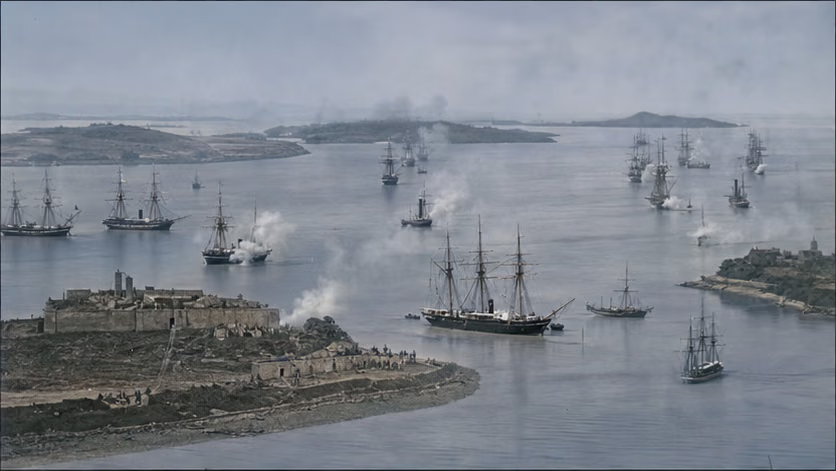
| Mobility | The batteries were isolated from one another, with no field reserve | Nemesis entered shallow water and moved around to the flank and rear; landing parties attacked the backs of the batteries |
| Reinforcement | Qishan sent only several hundred men (see disputes below) | The fleet retained free maneuver throughout |
Terrain and Conditions
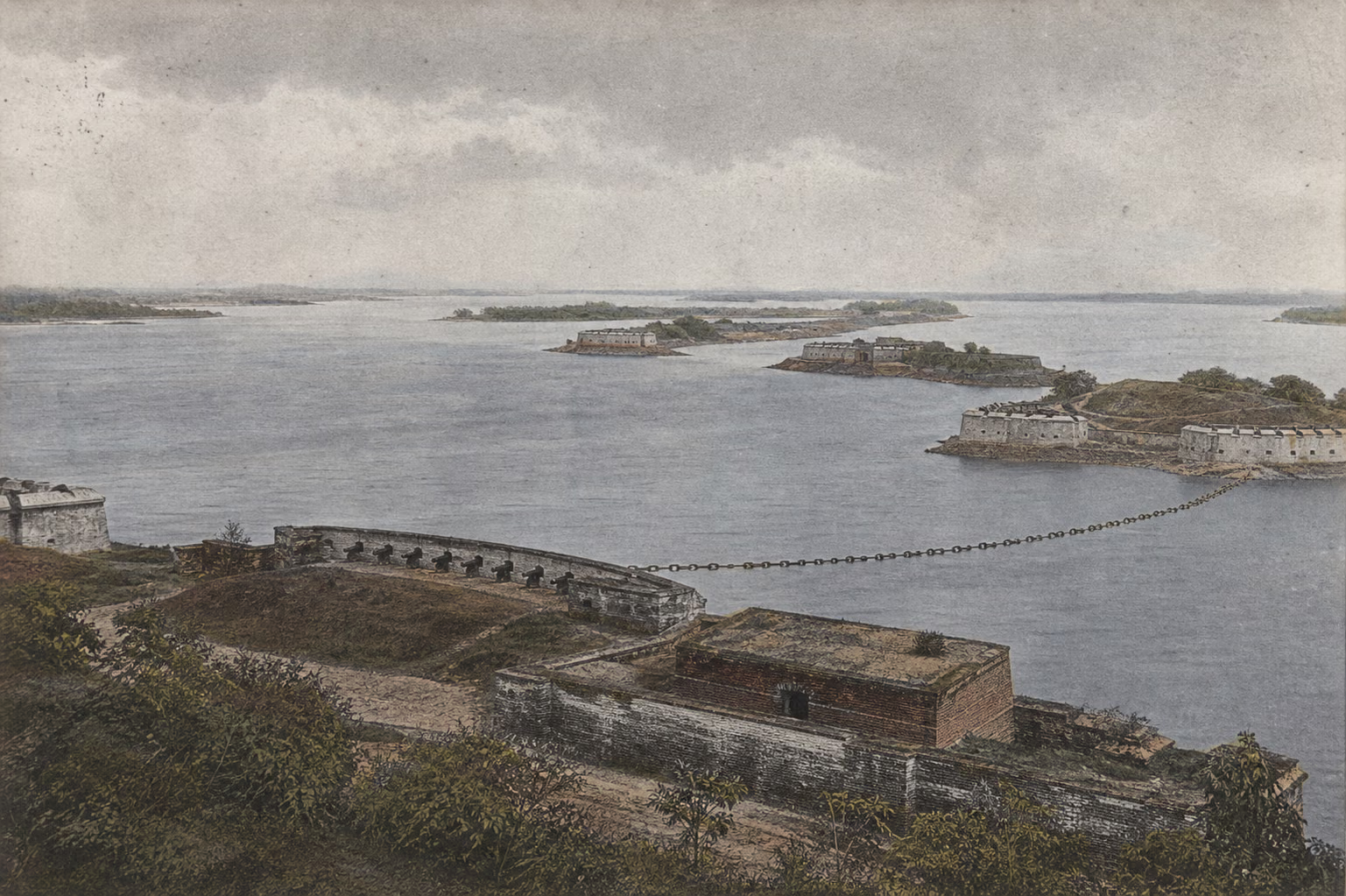
Humen was the product of Lin Zexu and Guan Tianpei's military reorganization and defense preparation since 1839: newly cast heavy guns, additional Western guns, three layered gateways, and an iron chain across the river -- the most carefully built coastal defense position in China at the time. After Qishan took over, he disbanded the waterborne irregulars Lin had recruited and half-suspended war preparations (the claim of "self-dismantling the defenses" coexists with later historical revision; see the disputes section). Three months in which negotiation and war preparation undermined each other.
Why It Was Fought
News that Dinghai had fallen in a single day pushed Beijing to the negotiating table. British troops remained to hold Zhoushan while the main force moved north; in August, a letter was delivered at the mouth of the Baihe. Daoguang dismissed Lin Zexu and sent Qishan south to Canton for "pacification" -- to use the old methods of the Celestial Empire to coax distant foreigners back out -- and the British fleet accordingly returned south. For the next three months, the Pearl River mouth became the most contorted place in the entire war: negotiation on one side, preparation on the other, each undermining the other. Qishan disbanded the waterborne irregulars Lin Zexu had recruited and left preparations half-suspended (historians dispute its actual effect; see the disputes section).
Agreement was impossible because the two sides' bottom lines did not overlap at all. Charles Elliot demanded cession of territory, indemnity, and the opening of ports, every item beyond Qishan's authority: cession and indemnity were not his to grant, and he dared not accept them. Daoguang, meanwhile, strictly forbade any sign of weakness; between suppression and appeasement he left Qishan not an inch of ground to stand on. Elliot would wait no longer and chose to fight in order to force negotiation. On January 7, British forces advanced by land and water, taking the Shajiao and Dajiao batteries in a single day; the outer gateway was lost first. Qishan was forced back to the negotiating table, and Elliot unilaterally announced the Convention of Chuanbi: the cession of Hong Kong and an indemnity of six million.
The convention did not revive negotiation; it killed it. Daoguang, enraged by the convention, ordered Qishan arrested and his property confiscated, and declared war on Britain. In London, the British government also considered Elliot's demands too low and replaced him several months later. The two negotiators were abandoned by their own countries at the same time: each court decided that its own man had conceded too much, and peace was dead.
Once the declaration-of-war edict was issued, the court sent Yishan, General for Quelling Rebels, to command more than ten thousand troops from Hunan, Sichuan, and other provinces to reinforce Guangdong. The decree traveled faster than the soldiers. As Yishan moved south, by the time he reached Canton, Humen had already been broken for more than a month (the sequence by which troops from each province were transferred to Guangdong is unverified). What Qishan lacked had never been a defense checklist -- the entire stock of resources Lin Zexu left behind was in his hands. What he lacked was an edict that allowed him to survive both sides.
The defenders' account book had already reached the bottom: the provincial treasury and contributions had been largely consumed by two years of military reorganization; Green Standard troops were dispersed among guard posts, and only several hundred to more than one thousand could be drawn up onto the batteries; naval war junks could not leave the river. Before the battle, Guan Tianpei requested reinforcements and received no more than several hundred men (see the disputes section). The British limits lay on the other side: their strength was insufficient for a prolonged occupation inland, and their supply depended entirely on the sea. What they wanted was not the batteries themselves, but the negotiations behind them.
The only dissent visible on the table came in Qishan's own memorials: he repeatedly stated that Qing ships and guns were no match, and urged appeasement to buy time. The cost of those memorials was arrest and confiscation of his property; afterward, no one dared write the full reality plainly. No record of a proposal to abandon Humen has been seen.
Then came Humen. This was the product of Lin Zexu and Guan Tianpei's two years of military reorganization and defense preparation: three layered gateways, newly cast heavy guns, and the iron chain across the river. It was the most carefully built coastal defense position in China at the time, and the last lock before the inner waterways to Canton. Once negotiation was dead, Elliot's next step could only be to sail the fleet beneath the walls of Canton, and Humen stood in the way. On February 23, British forces advanced toward the Hengdang line.
Course of the Engagement
| Stage | Course |
|---|---|
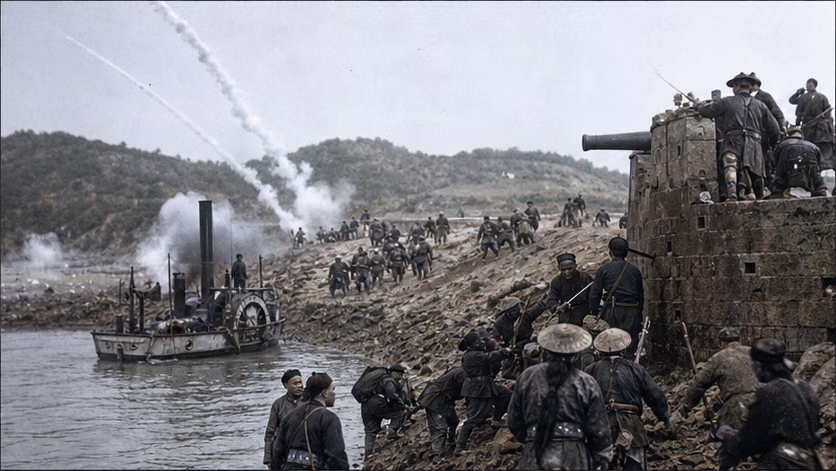
| 1.7 Dajiao and Shajiao | In the morning, naval guns suppressed the front while steamers carried marines around behind the hills; Nemesis entered shallow water and used rockets to burn more than ten naval craft; Chen Liansheng and his son fought to the death at Shajiao, Dajiao fell the same day, and defender casualties were about seven hundred (Mao Haijian cites archival records; unverified) |
| 1.20–26 | Elliot unilaterally announced the convention; British forces occupied Hong Kong Island (flag raised on 1.26); the court and London turned against the arrangement at the same time |
| 2.23–25 | British forces advanced toward the Hengdang line, occupied lower Hengdang Island and emplaced guns there, then bombarded upper Hengdang overnight |
| 2.26 | General assault: the Hengdang, Yong'an, Weiyuan, Jingyuan, Zhenyuan, and Gonggu batteries fell one after another within several hours; Guan Tianpei defended the Jingyuan battery, suffered dozens of wounds, and died at his gun position; guerrilla commander Mai Tingzhang died with him; the iron chain across the river was removed by steamers |
| 2.27 | British ships moved upriver and broke the Wuyong defense line (see Battle of Canton (1841)) |
Casualties and Losses
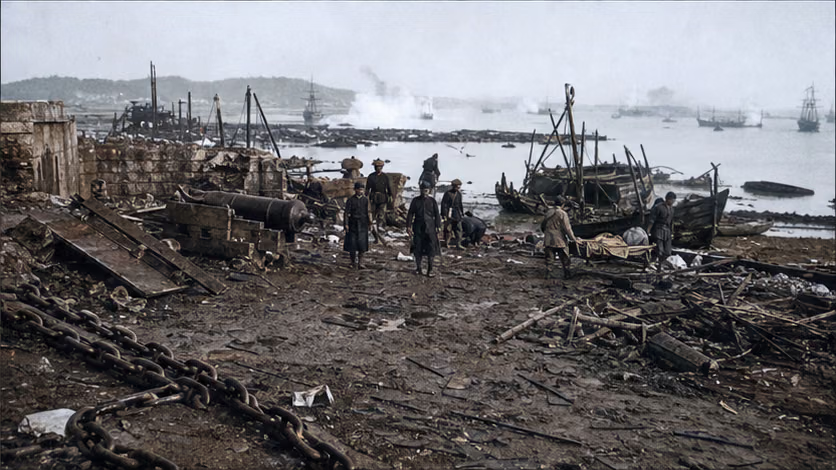
- Defender: more than one thousand killed across the two actions (statistical bases vary by account); commissioned officers from the provincial naval commander and assistant regional commander downward died in batches -- the regular Guangdong navy was effectively destroyed.
- Attacker: on 1.7, thirty-eight wounded and none killed; on 2.26, casualties in the single digits (figures vary by account).
- The casualty ratio was close to one hundred to one. This was not a difference in courage or cowardice, but the sum of works design, artillery mobility, and the reaction speed of the system.
Aftermath
- The inner waterways to Canton lay open, leading three months later to a treaty under the city walls (Battle of Canton (1841)).
- Qishan was arrested and his property confiscated; Elliot was removed from office. Guan Tianpei received the posthumous title Zhongjie, and Lin Zexu mourned him with "For six years he had made the defenses firm as metal and boiling moats; who was it that suddenly broke the Great Wall?" (couplet text unverified).
- Humen was rebuilt twice and destroyed twice again over the next century (the Sino-French War and the War of Resistance); the fate of the fortress itself is a long line.
Accounts of Those Present
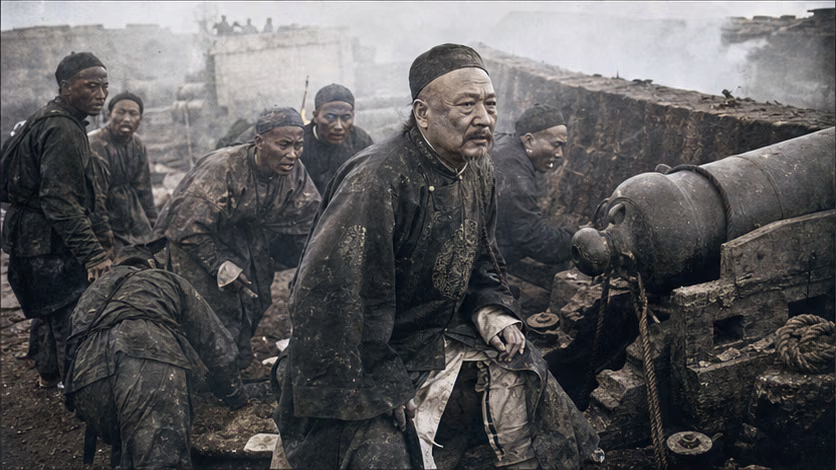
- Guan Tianpei's farewell: Before the fighting began, he sent home several sets of old clothing and several fallen teeth to bid farewell to his family (Draft History of Qing, biography of Guan Tianpei; wording unverified) -- the sixty-two-year-old provincial naval commander already knew he would die on the battery. After his death, the family servant Sun Changqing braved artillery fire to find and collect his body.
- The loyal horse: Chen Liansheng's mount was seized by British forces and taken to Hong Kong. It refused the feed it was given, neighed toward the north, and died on hunger strike. The Daoguang court erected a stele for the horse; the "Loyal Horse Stele" still stands at Humen -- one horse completed the narrative for an army that could not all die in loyalty.
- British salute: British records include an act of mourning for the defending commander's courage (specific form unverified) -- the enemy's respect throws into relief the core structure of the whole war: "loyal and brave individuals x a disabled system."
The Ground
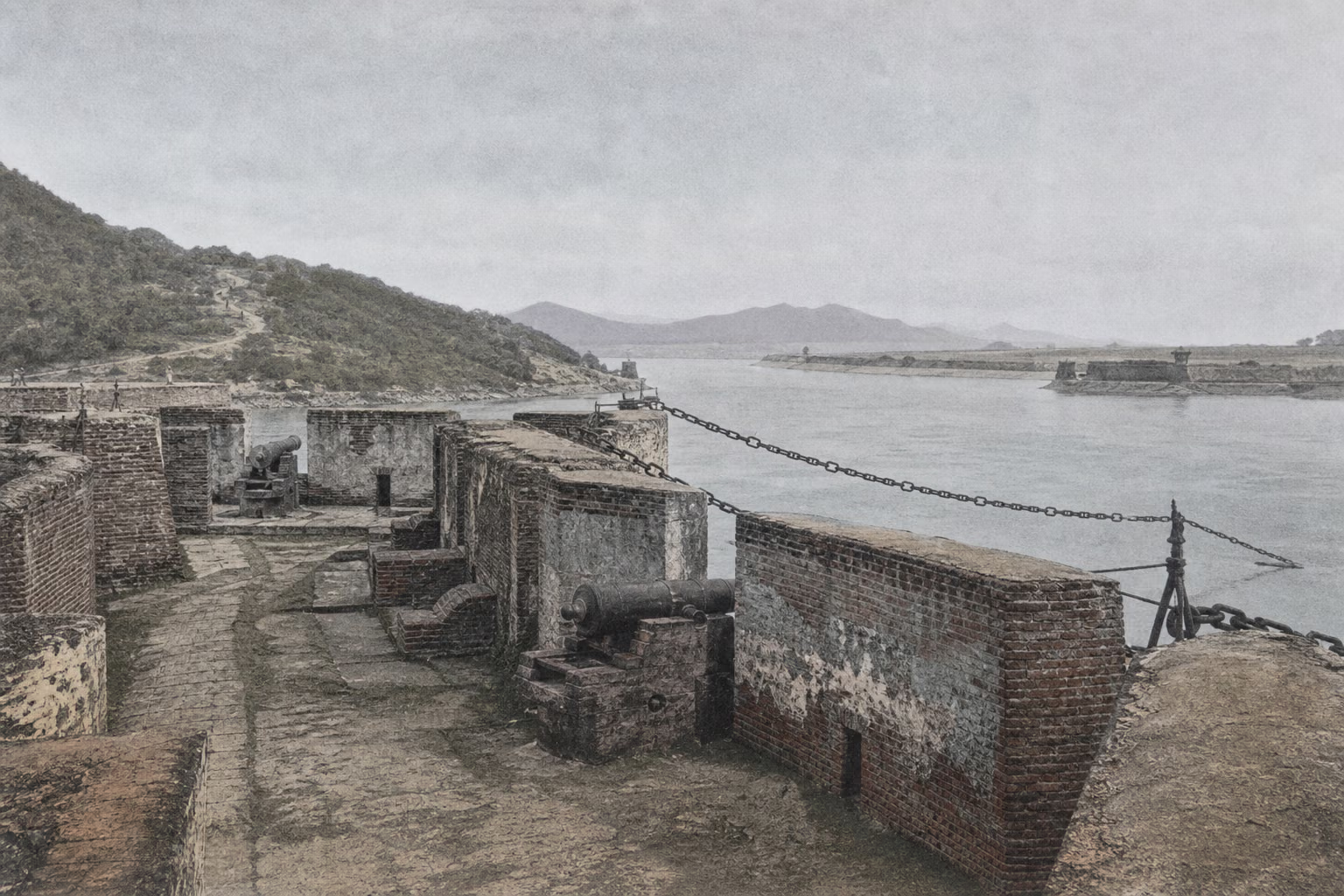
A textbook counterexample in fortress attack and defense: open-air batteries designed to defend only the front were cracked by the fleet from the flank, rear, and backs of the hills; the iron chain across the river was removed on the spot by steamships; the three layered gateways were a sound idea, defeated by the works and artillery components of every link. The river surface was several kilometers wide, and the Hengdang island chain sat in the center -- a spatial grammar of large-scale water + point-like fortresses.
How Each Side Records It
- Chinese side: Guan Tianpei became the first modern symbol of a military officer dying for the country, and Humen became a dual landmark of "national humiliation + heroic martyrdom" (today's Opium War Museum).
- British side: military histories emphasize Nemesis's shallow-water maneuver and the engineers' removal of the chain -- a technological narrative that barely records the opponent.
Disputes and Sensitivities
- Qishan's responsibility: the textbook narrative of "treason and failure to reinforce" vs. historical revision (there was no prospect of victory with or without reinforcement; how great was the actual effect of disbanding the waterborne irregulars?). The two layers coexist.
- Guan Tianpei's death was "knowing it could not be done and doing it anyway," not "almost winning."
Sources and Open Questions
Sources: Mao Haijian, The Collapse of the Celestial Empire; Draft History of Qing, "Biography of Guan Tianpei"; Guan Tianpei's self-compiled Chouhai Chuji (the original text of his coastal defense plan); field materials from the Humen battery sites and the Opium War Museum; Bernard, Narrative of the Voyages and Services of the Nemesis.
Open questions: casualty and strength figures for both sides in the two actions; the original wording of Guan Tianpei's farewell and Lin Zexu's mourning couplet; current condition of the Loyal Horse Stele; British records of mourning; the specific scale of Qishan's defense reductions; the sequence of Yishan, General for Quelling Rebels, moving south and troops from each province being transferred to Guangdong; Qishan's memorials stating that Qing ships and guns were no match, and the original vermilion rescripts; Elliot's internal discussions on tightening and loosening fighting and negotiation between the Battle of Shajiao and the Battle of Humen (no record seen; check British archives).
All images on this site are AI-generated depictions. They are not historical photographs, not primary sources, and do not depict any real individual.