Engagement Archive · Battle of Zhenhai (1841)
The imperial commissioner drowned himself for the state, while the provincial military commander fled without fighting -- in the same city, on the same day, the war set the two extremes of official integrity side by side; two years later, the one who fled became the only senior commander executed in the entire war, while the imperial kinsmen who falsely reported the military situation remained unharmed.
Engagement Data
| Item | Details |
|---|---|
| Time | 1841.10.10 |
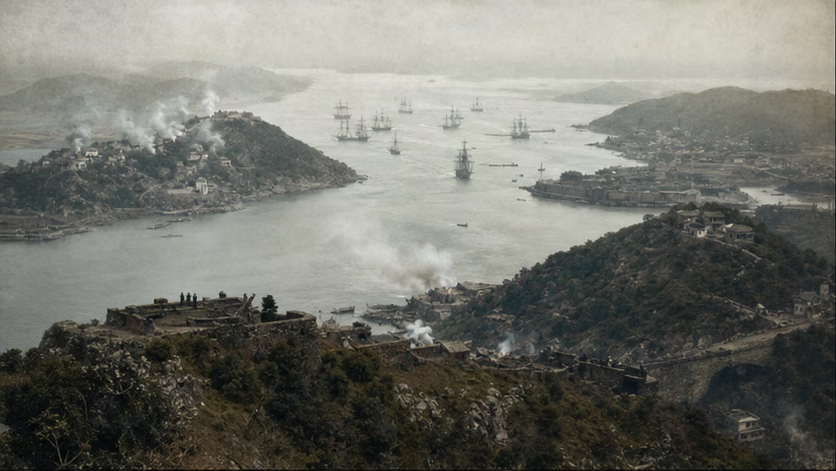
| Place | Zhenhai, Zhejiang: the Yongjiang mouth, Zhaobao Hill--Jinji Hill--the county city |
| Defender | Imperial Commissioner and Governor-General of Liangjiang Yuqian (stationed in the city to supervise the defense); Provincial Military Commander Yu Buyun defended Zhaobao Hill; Regional Commander Xie Chao'en defended Jinji Hill; four to five thousand troops (figure disputed) |
| Attacker | British fleet and landing troops (Parker, Gough) |
| Result | The city fell in half a day; Yuqian killed himself, Xie Chao'en died in battle, and Yu Buyun fled to Ningbo -- three days later Ningbo was lost without a fight |
Belligerents
| Item | Defender | Attacker |
|---|---|---|
| Terrain advantage | Zhaobao Hill and Jinji Hill faced each other across the river, forming the lock at the Yongjiang mouth | Naval guns suppressed both hills; landing parties attacked separately |
| Troops | Zhejiang provincial troops and braves assembled from scattered sources; the two hill defenses were not under unified command | Practiced coordination between land and naval forces |
| Will | A commander in chief resolved to die, and a senior commander thinking of flight, coexisting in the same city | -- |
Terrain and Conditions
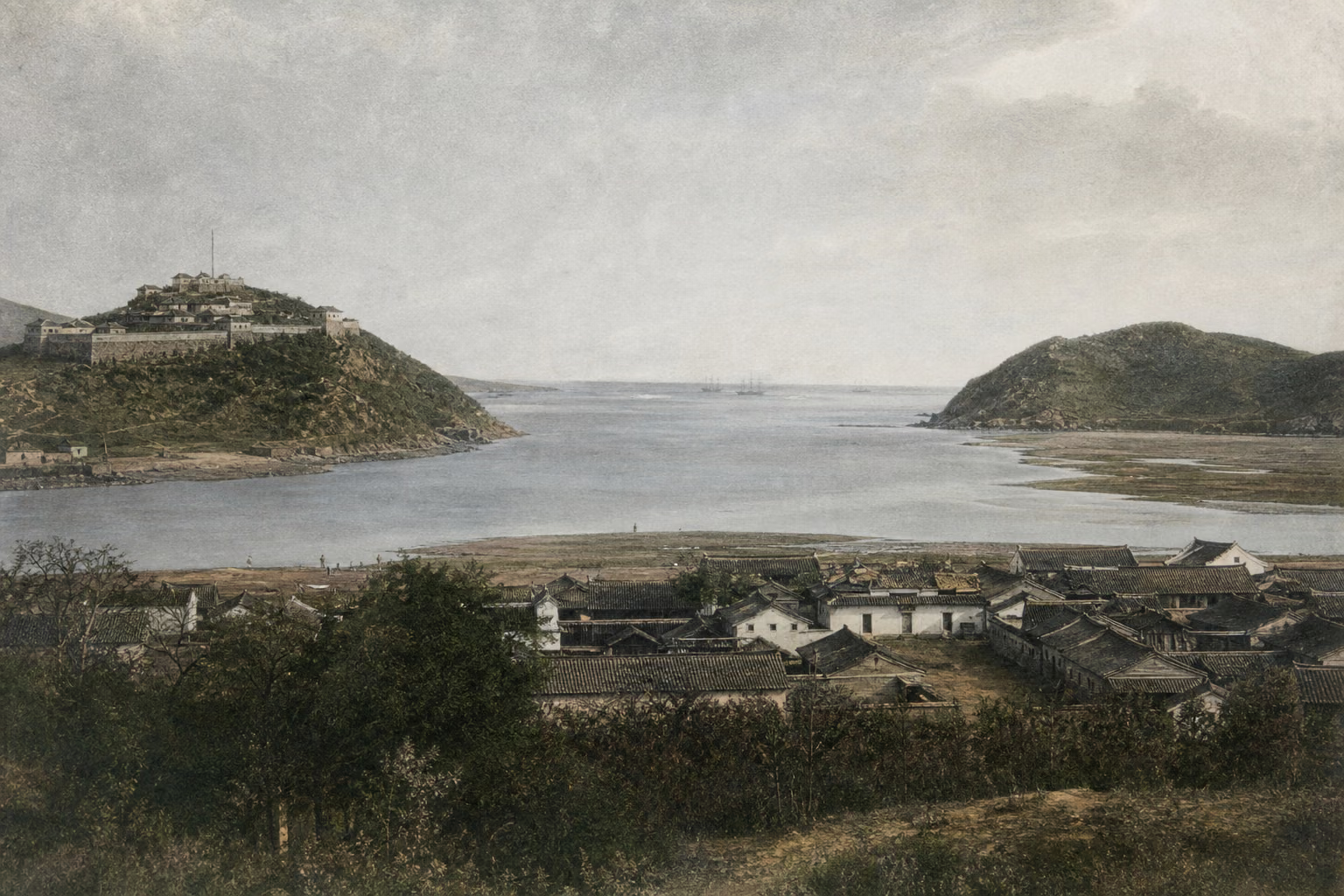
Zhenhai was the gateway to Ningbo and a key point on the grain-and-sea route of eastern Zhejiang. Yuqian -- a Mongol of the Bordered Yellow Banner, from the Borjigit clan -- was at this moment the provincial official most firmly committed to war in the whole empire. After Dinghai was lost again, he moved to Zhenhai; before the battle he sacrificed at the river and swore the troops, vowing that if the city fell, he would fall with it (source of the oath unverified). His conflict with Yu Buyun had already become public before the fighting began: one man was preparing to die, the other to leave.
Why It Was Fought
On October 1, Dinghai fell again, and three regional commanders died in battle on the same day; Zhenhai, facing it across the sea, became the next target. The British operation in Zhejiang followed an established script -- a three-city chain: once Dinghai had been taken, Zhenhai would be seized to cut the foundation of eastern Zhejiang, and Ningbo would then be occupied. Zhenhai was the gateway to Ningbo and a key point on the grain-and-sea route of eastern Zhejiang; Zhaobao Hill and Jinji Hill faced each other across the Yongjiang, forming the last substantial lock of eastern Zhejiang's coastal defense. Once the lock opened, the Yongjiang led straight to the foot of Ningbo's walls.
That script came from instructions at a higher level. In August, the new plenipotentiary Pottinger arrived in China with instructions to expand the war and strike places that could force a treaty (text and date of the instructions unverified); taking Xiamen, retaking Dinghai, taking Zhenhai, and occupying Ningbo were several steps on the same line. The fleet had old charts and guides; what it lacked was real-time deployment information on each city's defenders. The speed of successive victories made up for that gap: the defenders had no time to reorganize, and reconnaissance could be reduced accordingly.
The man guarding the lock was precisely the one who had sent the three regional commanders to Dinghai. Imperial Commissioner and Governor-General of Liangjiang Yuqian moved to Zhenhai to supervise the defense -- a Mongol of the Bordered Yellow Banner, and at this moment the provincial official most firmly committed to war in the whole empire. Dinghai fought bitterly for six days while he coordinated support from the opposite shore; when news of the city's fall arrived, he had already given the public answer to whether to fight or defend to the death: before the battle he sacrificed at the river and swore the troops, vowing that if the city fell, he would fall with it (source of the oath unverified). But this city did not obey a single kind of resolve. Provincial Military Commander Yu Buyun, who held Zhaobao Hill, had already made his conflict with Yuqian public before the fighting began: one man was preparing to die, the other to leave. Several thousand Zhejiang troops and braves were divided among the two hills and the county city, without a unified chain of command; commander in chief and senior commander each held a different ending in mind.
Yuqian made his deployment under heavier constraints: Zhejiang had been placed on defense three times within a year, and grain and pay transport were exhausted; the fighting at Dinghai had cost several thousand men below the three regional commanders (figure disputed), leaving Zhenhai with only several thousand assembled troops and braves to divide among the two hills and the county city. The harder problem lay in personnel. Yu Buyun had his own view on fighting or defending (specific content unverified); Yuqian had once impeached him in a memorial (draft memorial and vermilion rescript unverified). The court's reply was still on the road when the British ships had already arrived. A commander in chief could not move the subordinate he had impeached; this fracture did not open only on October 10. The court's line for Zhejiang had consistently contained only the word "suppression"; whether peace talks were raised again in the capital at this moment is not recorded (unverified). Once Yuqian had publicly declared that if the city fell he would fall with it, the city's remaining decision space was execution.
For the British forces, this battle required almost no new calculation: once Dinghai had fallen, they could cross in pursuit of victory and repeat the method of using naval guns to suppress the two hills while landing parties advanced separately. In the early morning of October 10, British ships anchored outside the Yongjiang mouth and opened fire separately on Zhaobao Hill and Jinji Hill.
Course of the Engagement
| Stage | Course |
|---|---|
| Morning | British ships bombarded Zhaobao Hill and Jinji Hill separately; landing parties came ashore in two columns |
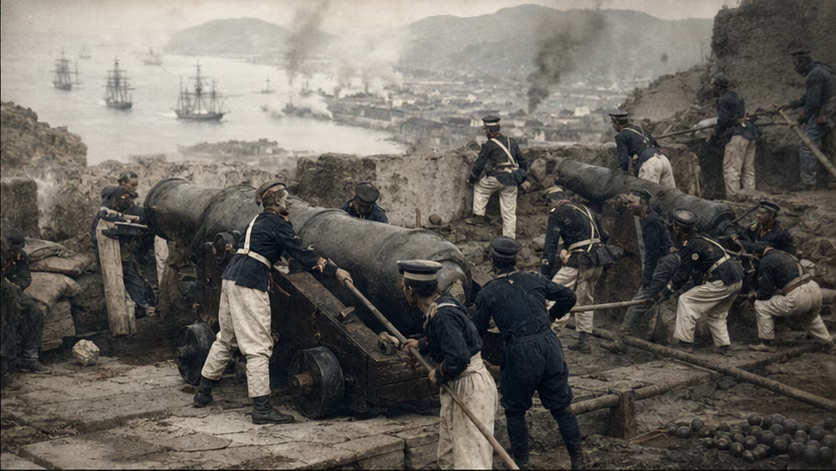
| Before noon | Zhaobao Hill: Yu Buyun retreated without fighting, and Weiyuan City fell; British forces turned the Qing shore guns on the hill around and bombarded the county city and the flank and rear of Jinji Hill from above |
| At the same time | Jinji Hill: Xie Chao'en's troops fought a bloody action, and Xie Chao'en was killed by artillery fire (fell into the sea; body not recovered; unverified); the hill fell |
| Afternoon | The county city could not be held; Yuqian threw himself into the Pan Pool of the Confucian school and killed himself (after being rescued, he died on the way inland; details unverified); Zhenhai fell. On 10.13, Ningbo was lost without a fight |
Casualties and Losses
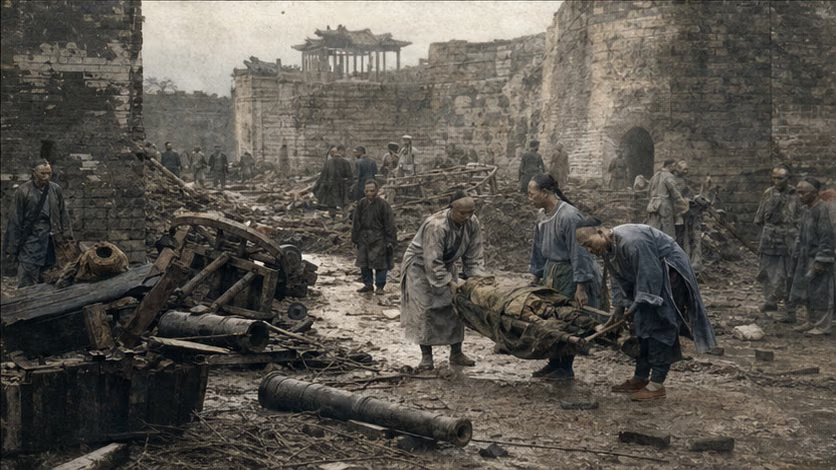
- Defender: several hundred killed (statistical bases vary by account); an imperial commissioner died for the state -- the highest-ranking Qing official to die since the war began.
- Attacker: three killed and more than ten wounded (British figures, unverified).
Aftermath
- The three cities of eastern Zhejiang were lost in succession within seventeen days, and Daoguang turned to sending Yijing to mount a "display of might" counteroffensive (see Counteroffensive in Eastern Zhejiang).
- Yu Buyun was arrested and interrogated; in 1843 he was executed in public -- the only senior commander in the entire war executed for breach of military discipline. The comparison group: Yishan, who falsely reported a great victory, and Yijing, who chose an auspicious day before sending troops, were merely dismissed and exiled, and later all returned to office. The blade of accountability fell on the fugitive, but could not cut into those who falsified reality or into the imperial clan -- a failed example of the system's self-repair.
- Yuqian received the posthumous title Jingjie and was enshrined in the Zhaozhong Shrine.
Accounts of Those Present
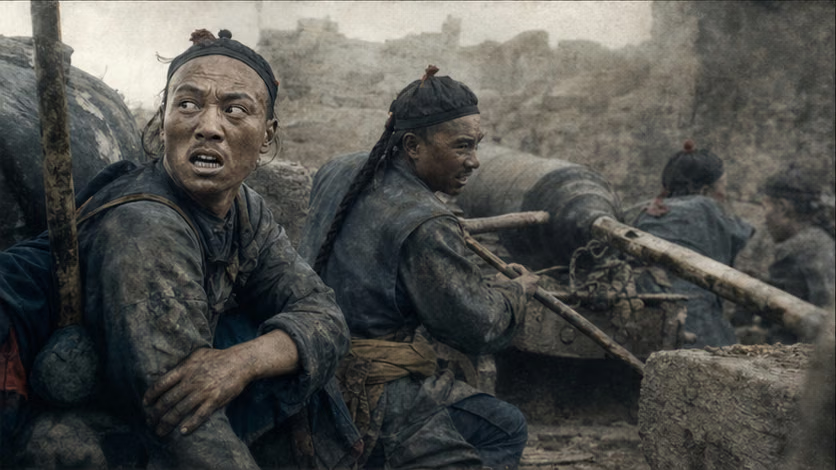
- Yuqian's oath: before the battle, he sacrificed at the river and told the gods and his subordinates alike that if the city fell, he would fall with it -- he was the only imperial commissioner in the entire war who fulfilled his oath. A Mongol noble died at a southeastern sea mouth for a dynasty that had incorporated his people into its ruling group.
- The Pan Pool: he chose to die in the Pan Pool of the Confucian school -- the pond of the civil-examination world became the place of death for the state, and the choice of space itself reads like an inscription.
- Yu Buyun's road: from Zhaobao Hill to Ningbo and then to the execution ground, he walked it over two years. To the end he argued that he had "moved camp," not fled (confession unverified).
- The guns turned around: after Zhaobao Hill was lost, the Qing guns on the hill were turned around that same day to bombard Zhenhai county city -- one's own guns firing on one's own city, an image that would recur in every later fortress battle.
The Ground
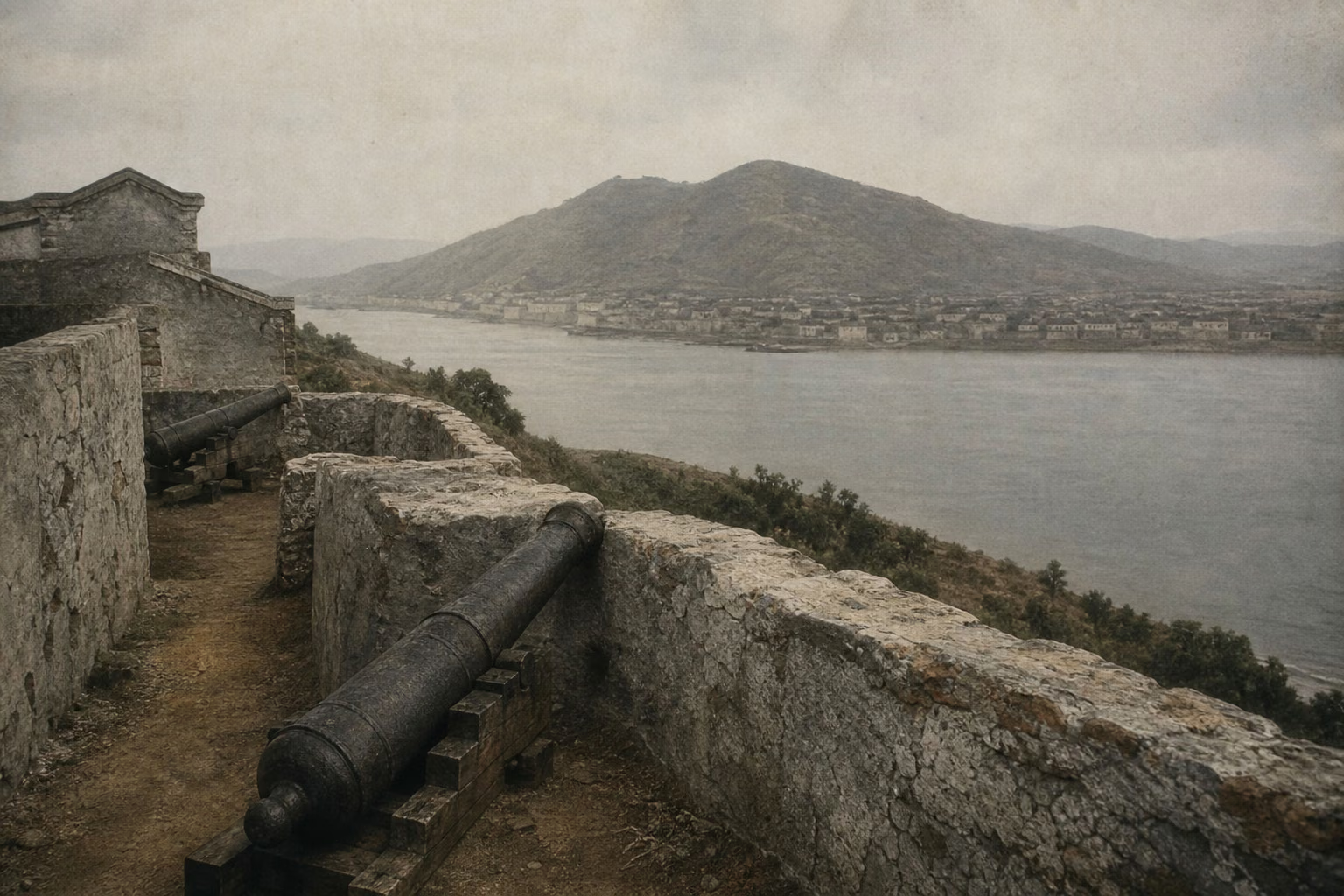
A textbook terrain of two hills pinching the Yongjiang mouth: whoever lost one hill immediately exposed the other hill and the county city to plunging fire. Weiyuan City on Zhaobao Hill (surviving today) held absolute weight as the commanding height -- the spatial logic of "one point breaks, the whole position breaks."
How Each Side Records It
- Chinese side: Yuqian's death and Yu Buyun's flight form the two poles of a moral narrative; Zhaobao Hill in Zhenhai is today a coastal-defense heritage park.
- British side: technical records, centered on amphibious advance by separate routes and the seizure and reuse of guns; descriptions of Yuqian's death include notes of respect (source unverified).
Disputes and Sensitivities
- The Yu Buyun case: beneath the moral satisfaction of executing a general who fled lies the institutional problem of accountability losing focus -- killing him did not prevent false reporters from rising.
- Whether Yuqian's pre-battle suppression of Yu Buyun aggravated the fracture in command (sources give two accounts; unverified).
Sources and Open Questions
Sources: Mao Haijian, The Collapse of the Celestial Empire; Draft History of Qing, "Biography of Yuqian"; Zhenhai Xianzhi; the site of Weiyuan City on Zhaobao Hill; British battle reports.
Open questions: defender strength and casualties; Yuqian's oath and the details of his death; records of Xie Chao'en's martyrdom; Yu Buyun's confession and case file; British casualties and source of the "respect" descriptions; text of Pottinger's instructions and date of arrival in China; Yuqian's memorial impeaching Yu Buyun and the court's reply; losses among the Dinghai defenders; the specific content of Yu Buyun's views on fighting or defending; British pre-battle reconnaissance and guide records; whether there was any discussion of peace talks in the capital at this moment.
All images on this site are AI-generated depictions. They are not historical photographs, not primary sources, and do not depict any real individual.