Engagement Archive · Battles of Kowloon and Chuanbi (incl. Battle of Guanyong)
Three strings of small-scale clashes in the nine months before the war broke out: no more than several dozen casualties, yet the divergence between battle reports and reality, and the dispute over "from which day the war should be counted," both begin here.
Engagement Data
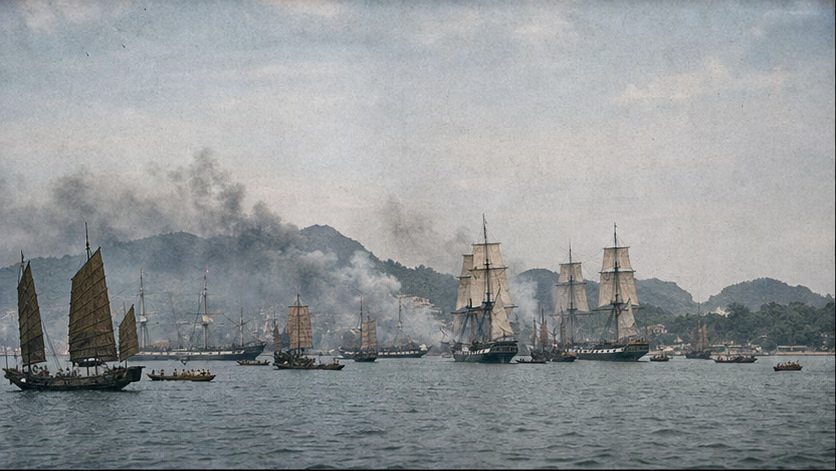
| Item | Details |
|---|---|
| Time | Kowloon 1839.9.4; Chuanbi 1839.11.3; Guanyong 1839.11.4–13 (six engagements) |
| Place | Waters off Kowloon Bay / Chuanbi Channel (outside the mouth of Humen) / Guanyong Hill, Tsim Sha Tsui |
| Belligerents | Guangdong naval forces (Lai Enjue, assistant regional commander of the Dapeng battalion; Guan Tianpei, provincial naval commander) -- British vessels in China (Charles Elliot; Captain Smith of HMS Volage) |
| Nature | Naval encounter and artillery duel + shore batteries suppressing an anchorage |
| Result | The British vessels withdrew after each clash; the battlefield situation remained undecided, but the war machine was already moving at both ends |
Belligerents
| Item | Guangdong naval forces | British side |
|---|---|---|
| Strength | Several war junks to twenty-nine war junks, varying by clash | 2–5 small armed vessels; at Chuanbi, the two ships HMS Volage (28 guns) and HMS Hyacinth (18 guns) |
| Equipment | Two-masted war junks, from several small-caliber guns to ten; shore-based split-mountain guns | Sailing frigate broadside guns, shipborne marines |
| Gap | The war junks were a full order of magnitude below the frigates in tonnage and firepower; only at Guanyong did the Chinese side hold the advantage of ground by controlling the sea from shore | -- |
Terrain and Conditions
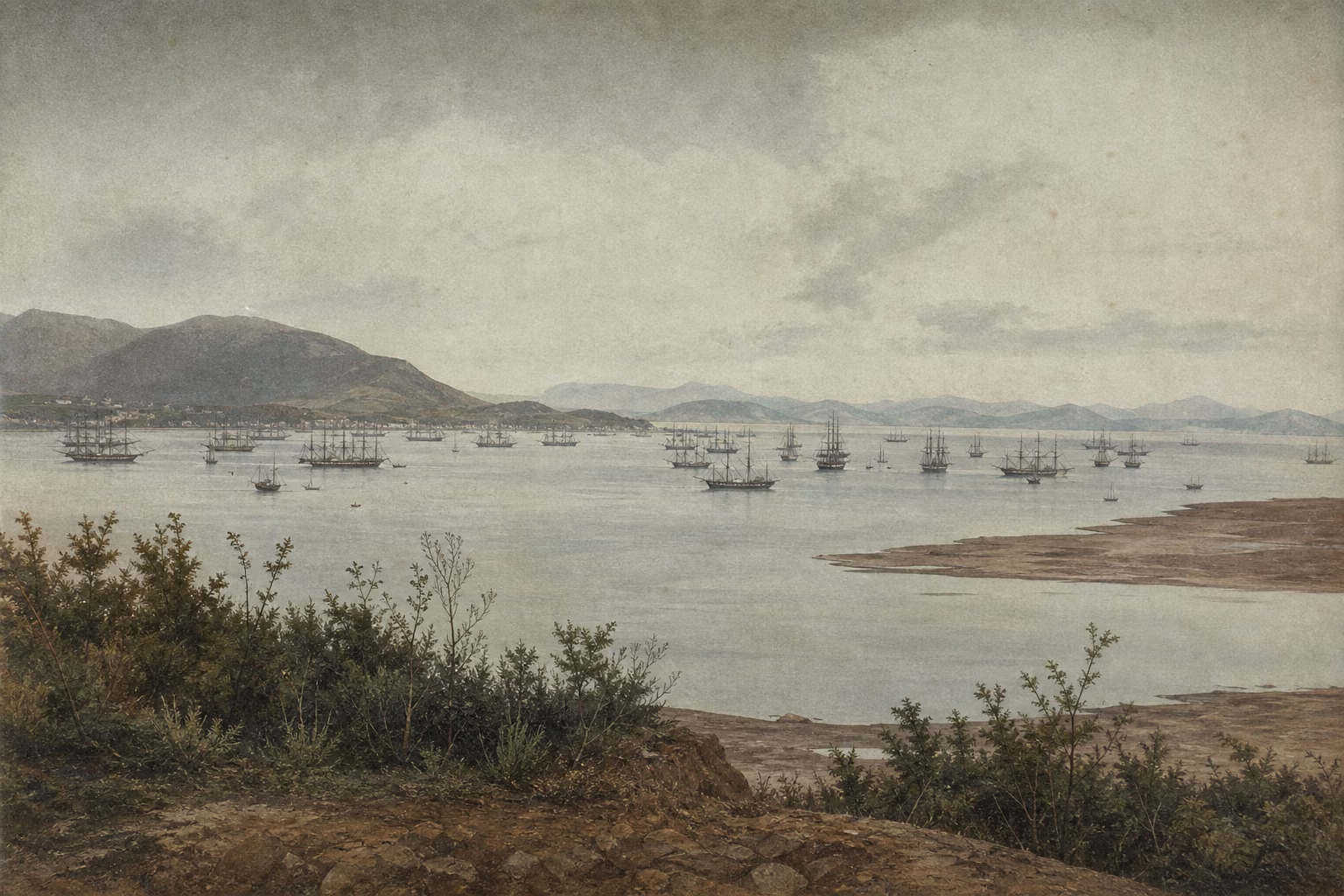
The Pearl River estuary after the destruction of opium at Humen: the British merchant community had first been expelled from Canton, then expelled from Macao because of the Lin Weixi case; dozens of merchant ships, together with families aboard, lay stranded off Tsim Sha Tsui. Lin Zexu cut off their fresh water and food and withdrew their comprador intermediaries. On the water floated a caravan with nowhere to land, while both sides waited for the other to blink first.
Why It Was Fought
The Daoguang court's ledger was where the trouble first appeared: silver flowed outward, silver became dear and copper cash cheap, and after repeated calculations the court located the root of the calamity in opium. In the spring of 1839, Imperial Commissioner Lin Zexu reached Canton, confiscated more than 20,000 chests of opium, and in June destroyed them publicly on the beach at Humen. The destruction of opium did not settle the dispute; it only forced it out to sea. Charles Elliot first led the merchant community out of Canton. On July 7, Lin Weixi, a villager from Tsim Sha Tsui, was beaten to death by British sailors. Elliot refused to hand over the killers, set up his own court, and disposed of the case with a light sentence; the dispute over extraterritoriality had already rehearsed itself before war began. Lin Zexu used this as grounds to expel the British once more from Macao. Dozens of merchant ships, with families aboard, thus lay stranded off Tsim Sha Tsui, with fresh water and food cut off and compradores withdrawn: a caravan with nowhere to land, anchored outside the gate of the Celestial Empire's only legal trading port.
At the core of the deadlock was a sheet of paper. Lin Zexu required incoming merchant ships to give a bond: "Never carry opium; if discovered, the person responsible shall be executed at once." The Chinese side saw this as judicial sovereignty taken for granted; Elliot saw it as surrendering British lives to the power of life and death of Qing courts, and absolutely unacceptable. He forbade British ships to sign bonds, which was to lock the door shut on behalf of all the merchants. Both sides staked their calculations on the other side failing first: Lin Zexu cut off water and food, waiting for the merchant fleet to submit; Elliot endured the blockade, waiting for word from London. Once news of the destruction of opium at Humen reached Britain, merchant lobbying was already in motion. No one thought he was launching a war; everyone was waiting for the other side to blink first.
Both sides had thin means in hand. Lin Zexu had added some capital for this still-unseen war: he bought the foreign ship "Cambridge" and refitted it as a warship, and also bought foreign cannon and cast new guns (details of the ship purchase and refit unverified). But the Guangdong navy's family property was anti-smuggling craft; its registered soldiers and pay followed peacetime precedents, and the keels of its war junks had not been laid for fleet artillery combat. Elliot's side was thinner still: the only usable warships were HMS Volage and HMS Hyacinth; the marines were assembled from sailors aboard ship; he did not even have authorization to begin a war. Every shot he fired would have to wait for London to recognize it after the fact.
The fire first caught at Kowloon. On September 4, Elliot led vessels to Kowloon to buy food, failed to obtain it within the time limit, and opened fire in the afternoon. By November, the crack had shifted to the Chuanbi Channel: the Thomas Coutts bypassed Elliot and signed a bond on its own to enter port; Elliot led HMS Volage and HMS Hyacinth to stop other merchant ships from following suit. On November 3, they encountered Guan Tianpei's patrolling war junks, and HMS Volage opened fire first. The British ships withdrew to Tsim Sha Tsui; Qing forces then set up guns on Guanyong Hill to suppress their anchorage. Six fights over ten days drove the British ships out of gun range.
Beijing's resolve was made across a relay route of six thousand li. The reports from Chuanbi and Guanyong were written up as "seven battles, seven victories" and sent upward. Daoguang's vermilion rescript came back, roughly meaning that recklessness at the front was not to be feared as much as timidity at the front (original wording of the rescript unverified). In mid-December, an edict ordered British trade permanently stopped. The information in his hands when he issued the edict was precisely these victory reports, and those reports did not mention the technological gap in naval guns. Nor was the scene below the table without other voices: among British merchants, the Thomas Coutts' act of bypassing Elliot and signing a bond to enter port was business objecting to face. On the Qing side, no recorded objection by Guangdong civil or military officials to the bond policy has been seen. Several months later, when the House of Commons voted on war against China, the opposing side fell short by only nine votes, and Gladstone denounced it as a war for opium (vote count and original speech unverified); this could not stop the fleet that had already sailed.
On the table there had in fact always been a live path: sign the bond, open the holds, trade as usual. The Thomas Coutts had made it through. But Elliot would not let a single bond become a precedent, and Lin Zexu would not yield on the four words "shall be executed at once." The road had always been there; afterward, no one walked it again.
Course of the Engagement
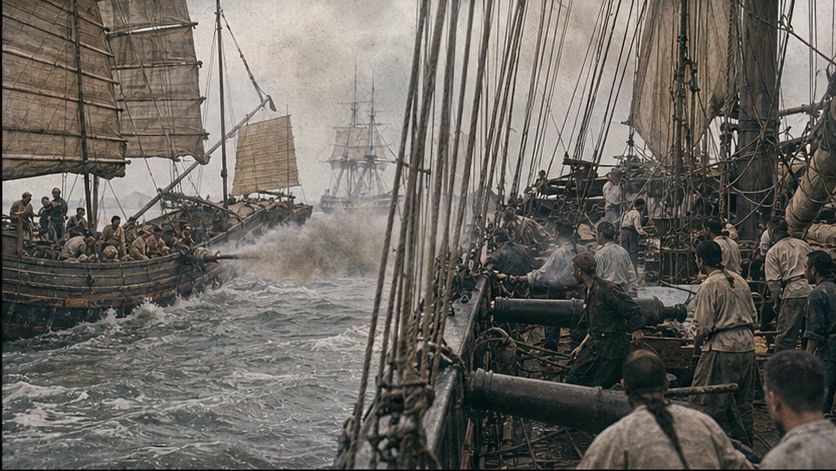
| Field | Course |
|---|---|
| Kowloon 9.4 | The two sides exchanged fire for several hours; Lai Enjue's war junks and shore batteries returned fire, and the British ships withdrew at dusk |
| Chuanbi 11.3 | Two British warships against twenty-nine war junks; Guan Tianpei personally rode forward in a war junk to supervise the fighting (details unverified); after several naval vessels were damaged, the Chinese squadron withdrew, and the British ships also withdrew |
| Guanyong 11.4–13 | Qing forces occupied the hill and fired down on the anchorage; after six engagements the British ships shifted anchorage and left gun range |
Casualties and Losses
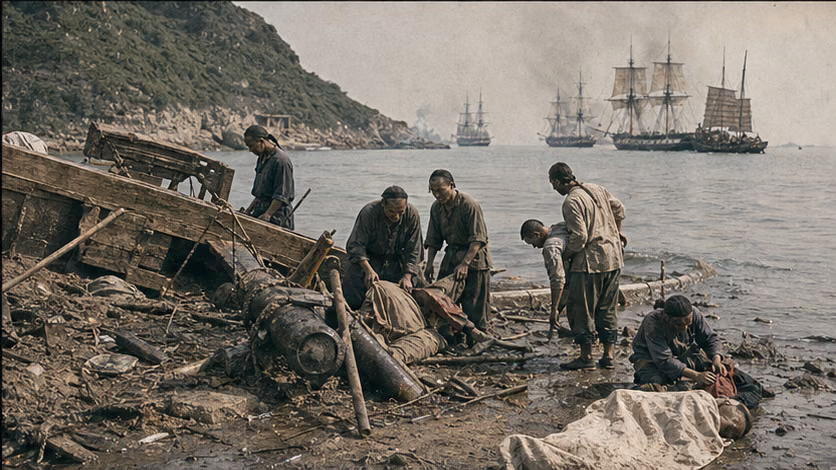
Casualties in each clash on both sides ranged from single digits to several dozen (figures vary by account). The real product was on paper: Chinese memorials combined the fighting into "seven battles, seven victories," and Daoguang, on that basis, issued an edict permanently cutting off British trade and expelling British ships -- war policy was built on victory reports. From this point on, the divergence between battle reports and reality became an undertone running through the entire war.
Aftermath
In December the Qing court cut off British trade; the British cabinet, meanwhile, had already settled on an expedition in October, and in 1840.2 appointed George Elliot to command troops eastward. Each side shut its own door.
Accounts of Those Present
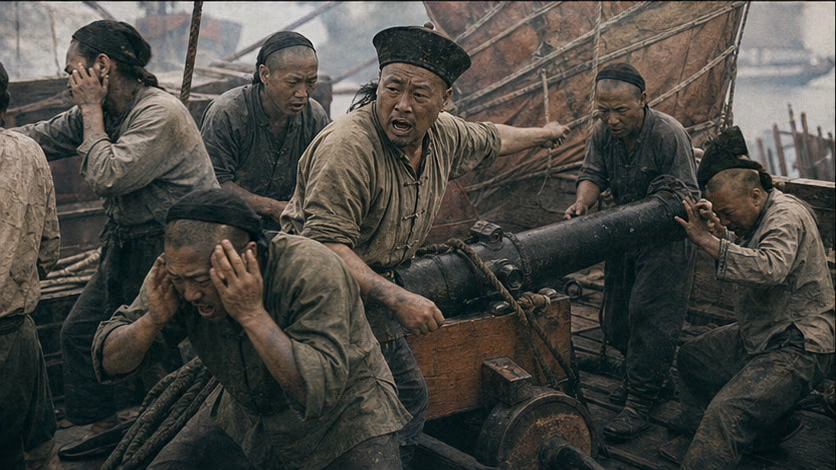
- Lin Weixi: The first dead person in this war was not a soldier, but a villager from Tsim Sha Tsui, killed in a brawl rather than by artillery fire.
- Lai Enjue: Descended from a military household of the Dapeng garrison city, he made his name in the fighting at Kowloon; the "General's Residence" still stands in Dapeng, Shenzhen.
- Charles Elliot: Privately disgusted by the opium trade (shown by letters, source unverified), yet step by step he became the executor of the war: the inner contradiction on the side that opened fire.
- A sheet of paper: The four-word bond "the person shall be executed at once" was, to the Chinese side, judicial sovereignty taken for granted, and to the British side, an absolutely unacceptable surrender of life and death. Before the first shot of the war, there had already been a battle of documents.
The Ground
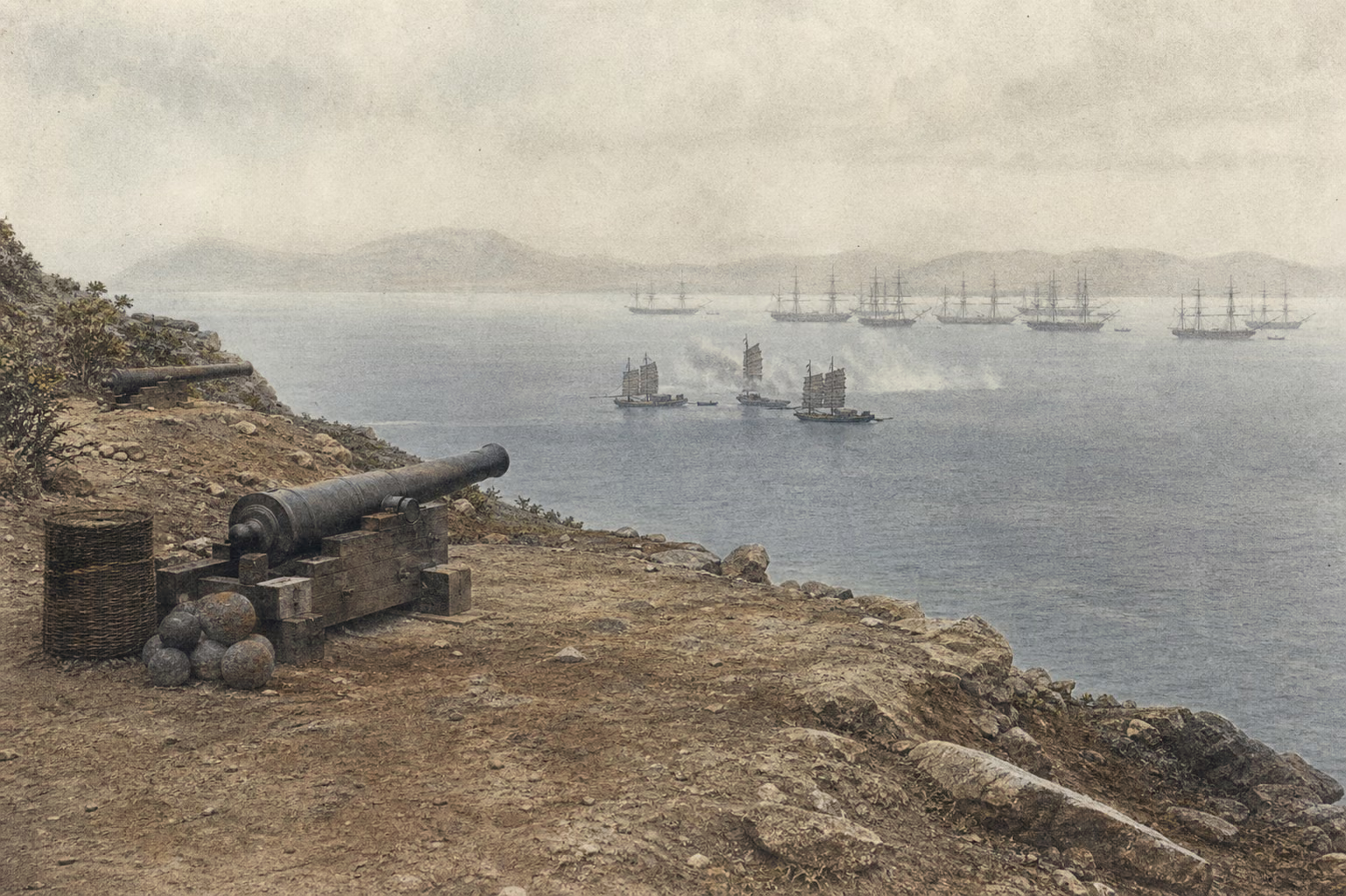
Nearshore artillery warfare in the age of sail: broadsides exchanged between war junks and frigates, smoke obscuring the field, boarding out of the question. Guanyong was the only reversal of terrain advantage in the whole set: shore guns pressed down from above on the anchorage, and the British ships could only shift anchorage and concede.
How Each Side Records It
- Chinese side: "seven battles, seven victories" entered the memorial record and later became "victory in the first battle."
- British side: treated almost as no part of the war at all; for them, the war is counted from the expeditionary force's arrival in China in 1840.6. The opening dates on the two sides differ by nine months; that in itself is the best historical source on perspective.
Disputes and Sensitivities
- Inflated battle results and the dispute over the definition of the "first battle."
- Charles Elliot's image has a dual character: executor of aggression / moderate within the system.
Sources and Open Questions
Sources: Chouban Yiwu Shimo, Daoguang Reign; Mao Haijian, The Collapse of the Celestial Empire; British Admiralty archives (ADM series); Charles Elliot's collected letters.
Open questions: casualty figures for both sides in each clash; source for the details of Guan Tianpei supervising the fighting; original wording of Elliot's anti-opium statements; day-by-day sequence of the six Guanyong fights; original text of the memorial reporting "seven battles, seven victories"; the original wording and memorial location of Daoguang's vermilion rescript "do not worry about recklessness, but admonish timidity"; details of the purchase and refit of the "Cambridge"; date and original text of the edict stopping British trade; House of Commons vote count and original wording of Gladstone's speech.
All images on this site are AI-generated depictions. They are not historical photographs, not primary sources, and do not depict any real individual.