Engagement Archive · Sanyuanli Resistance Against the British
Three days after official troops ransomed Canton, villagers from more than one hundred villages used hoes, rakes, and long spears to surround a small British detachment in rain-soaked paddy fields -- the casualty figures differ by dozens of times, and the scale of commemoration differs by a thousandfold, but the records on both sides are sincere.
Engagement Data
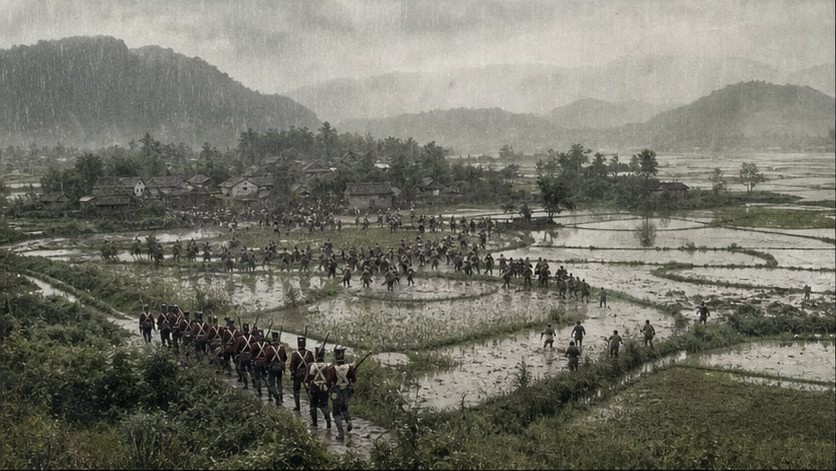
| Item | Details |
|---|---|
| Time | 1841.5.29 provocation; 5.30 encirclement fighting at Niulanggang; 5.31 encirclement of the Sifang Battery |
| Place | Sanyuanli north of Canton -- the hills and paddy fields of Niulanggang -- the Sifang Battery |
| Belligerents | Several thousand to more than ten thousand militia braves from Sanyuanli and more than one hundred neighboring villages (Wei Shaoguang and others; degree-holder He Yucheng urged the villages to join) -- British troops stationed at the Sifang Battery and detachments sent out from it (army commander Gough) |
| Nature | Encirclement attack and relief involving armed villagers |
| Result | British troops broke out and returned to the battery; the next day, ten thousand people surrounded the battery, and Canton prefect Yu Baochun, acting under orders, persuaded them to disperse |
Belligerents
| Item | Village braves | British troops |
|---|---|---|
| Strength | On 5.30, about several thousand; on 5.31, reportedly tens of thousands | The surrounded troops were several hundred men, including the 37th Madras Native Infantry |
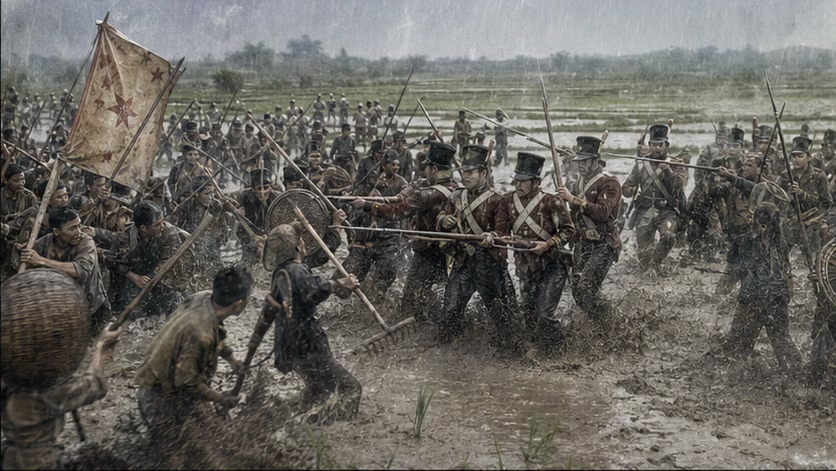
| Weapons | Hoes, rakes, long spears, rattan shields, and a small number of fowling pieces | Flintlocks (misfiring in the rain); reinforcements carrying percussion guns (unaffected by rain) |
| Organization | Mutual defense through village compacts and community schools, with the Three Stars flag as the signal | Regular army formation |
Terrain and Conditions
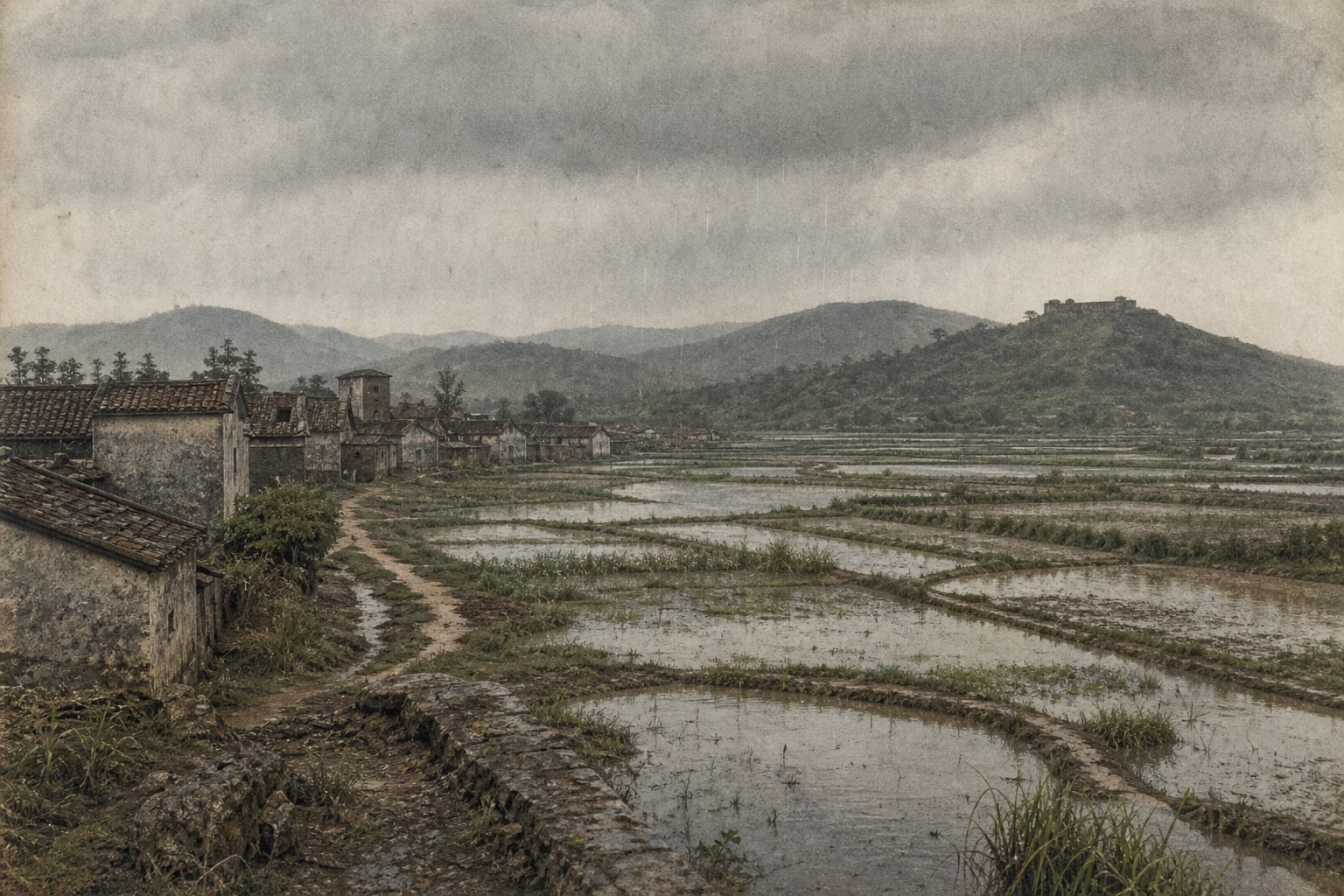
The ink on the Treaty of Canton was barely dry: Qing troops inside the city were withdrawing, and British troops were stationed at the northern batteries to wait for payment. For days, routed soldiers had first harmed the villages, and British detachments had then gone out in all directions to loot, open coffins, and harass women (specific cases unverified) -- the authorities had already stopped the war, but popular anger had no channel through which to stop.
Why It Was Fought
In the days when white flags were raised over Canton, a different order took shape north of the city: the Treaty of Canton stipulated that guest troops from other provinces withdraw sixty li beyond the city, while British troops occupied the Sifang Battery to await payment. The official war had stopped, but no one took over the accounts of the countryside -- in the preceding days, routed soldiers had first harmed the villages, and then British detachments waiting for payment had gone out in all directions to loot and disturb them; stories of opened coffins and harassment of women circulated from village to village. The treaty held two armies in check, but not these things; the authorities had just used six million silver dollars to buy back peace inside the city, and the peace of the countryside was not on the price list.
On May 29, a British detachment entered Sanyuanli to loot and harass the village. The common account says the incident began when the wife of the vegetable farmer Wei Shaoguang was molested, and Wei Shaoguang and others killed several men on the spot -- this version comes from local oral tradition and can only be marked as the traditional account. What can be confirmed is what followed: knowing that retaliation would certainly come, the villagers beat gongs to gather people, swore an oath at the ancient Sanyuan temple, and took the Three Stars flag from the temple as their signal: "when the flag advances, the people advance; when the flag retreats, the people retreat"; degree-holder He Yucheng sent urgent letters to the surrounding villages, and militia from more than one hundred villages laid ambushes through the night.
Neither side fought this action within the pattern of regular attack and defense. What the village braves wanted was not a battlefield result, but to drive this army out of their own fields: their organization depended on village compacts and community schools, their weapons were hoes, rakes, long spears, and a small number of fowling pieces, and their only tactic was to lure the enemy into hills and paddy fields, using numbers and terrain to offset firearms. The British, for their part, did not regard the countryside as a battlefield at all -- in their account book, the treaty had been signed, the Canton affair was over, and small detachments going out was routine for an occupying army. They did not count on this: no villagers had signed the treaty.
The calculations on both sides also have to be counted inside Canton. Half a month earlier, Yishan, General for Quelling Rebels, had hastily taken the field and collapsed in a single battle, yielding the Treaty of Canton and the six-million-dollar ransom for the city (sequence of the sortie and the agreement unverified); at this moment, the silver was still being shipped in batches. What British commander Gough had to do was preserve the treaty, get the money, and withdraw intact -- therefore on the 30th, only two companies carrying percussion guns were sent to relieve the surrounded detachment; on the 31st, when the battery was surrounded, Elliot produced a notice rather than a general assault: if the siege was not lifted, the treaty would be broken and the city attacked. That notice was aimed not at the tens of thousands of village braves, but at Yishan -- in the city sat his army, his career, and the indemnity already paid out. Yu Baochun went out under orders; the people he persuaded were the village braves, but what he preserved was the treaty.
The village braves' boundary belonged to another account book: no grain pay, no ammunition, and beyond hoes, rakes, and long spears, only the human ties of village compacts and community schools; people gathered quickly, and they also dispersed quickly -- at the end of May, work in the fields could not wait (unverified). During the encirclement of the battery, whether anyone on the village-brave side advocated a single vigorous assault on it, and who first advocated dispersal, remain vague in the surviving records (no clear record of disagreement seen; internal views among the villages unverified); the only certain point is the result -- the gentry were persuaded, and people gradually dispersed.
For the villagers, the other path should have been to report the matter to the authorities. But the official troops themselves were withdrawing sixty li, and the silver for ransoming the city was still being shipped -- the authorities had already stopped the war, but popular anger had no channel through which to stop. After several men had been killed, even that path was cut off.
Course of the Engagement
| Stage | Course |
|---|---|
| 5.30 | Village braves advanced to lure British troops out of the battery in pursuit, fighting while retreating and drawing them into the hills and paddy fields at Niulanggang; in the afternoon, a sudden rainstorm arrived, soaking the powder of the flintlocks and causing them to misfire; several thousand village braves encircled them, and muddy close combat lasted all day, while the British formed up and fought while retreating; one element (a company of the 37th Regiment) became trapped in the paddy fields and was cut off; the British sent two additional companies carrying percussion guns to relieve them through the rain, and by evening they withdrew back to the battery |
| 5.31 | Tens of thousands from more than one hundred surrounding villages surrounded the Sifang Battery; Elliot issued a notice: if the siege was not lifted, he would attack the city and break the treaty; Yishan urgently sent Canton prefect Yu Baochun to intervene, persuading the gentry, and the village braves gradually dispersed |
Casualties and Losses
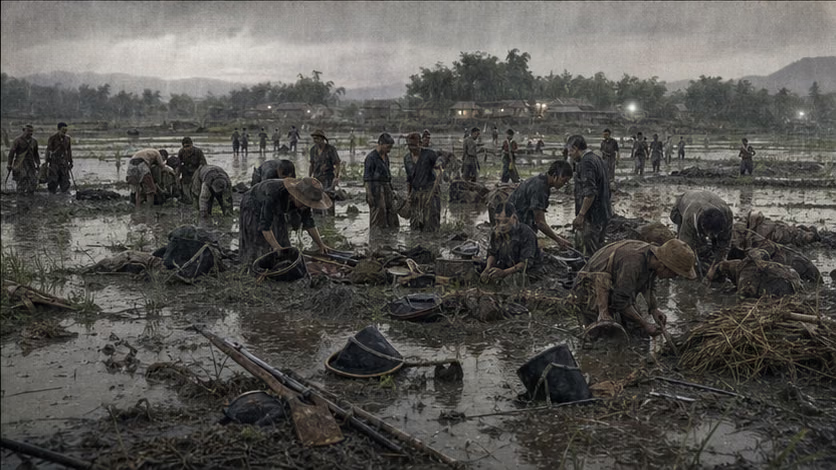
- British accounts: 5–7 killed, and more than twenty to more than forty wounded (accounts differ).
- Older Chinese accounts: "more than two hundred enemy killed," with still higher figures in stele and oral traditions.
- Village-brave casualties were more than twenty (accounts differ).
- The two sets of figures differ by dozens of times -- the battle with the largest gap in statistical basis in the annual table, and that gap is itself historical evidence: one side recorded military losses, while the other recorded a spiritual event.
Aftermath
- The authorities quickly incorporated it into a "the people's hearts can be used" narrative; the Notice to the British Barbarians from the Righteous People of All Guangdong, Who Serve the Country with Utmost Loyalty circulated: "without using official troops, without using state funds, relying on our own strength" -- the first written manifesto of popular political consciousness (original text unverified; excerpt possible).
- British circles, meanwhile, used it to argue that a "punitive expedition" had to be undertaken.
- From the 1950s onward, it entered textbooks and was fixed as "the beginning of the spontaneous anti-aggression struggle of the Chinese people in modern times"; the ancient Sanyuan temple was turned into a memorial hall, and a memorial stele was erected (year unverified).
Accounts of Those Present
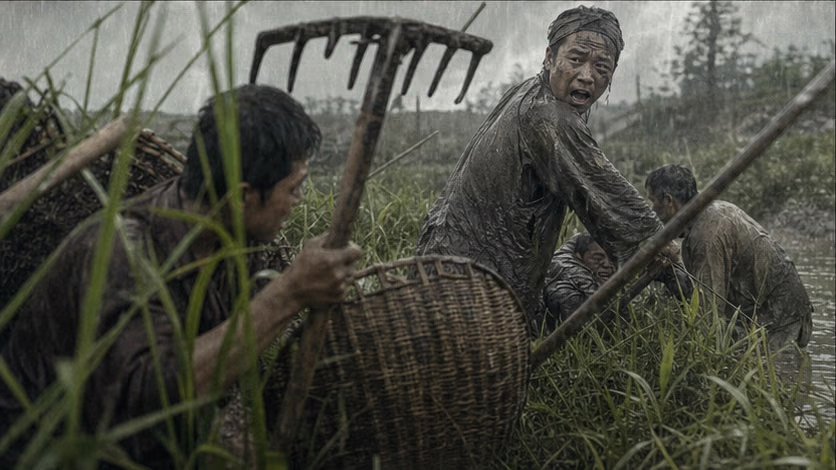
- Wei Shaoguang: a vegetable farmer; the incident began with defending his wife -- the starting point was not doctrine, but the simplest refusal to retreat.
- That rain: the rainstorm made flintlocks misfire, temporarily leveling the technological gap for two hours -- the only moment of "close-combat equality" in the entire war. When the rain stopped, the gap returned.
- The death of Major Beecher: Chinese traditional accounts say he was "killed by village braves"; British accounts say he died of heatstroke and exhaustion. One corpse, two modes of death -- a microscopic specimen of two national narratives.
- Yu Baochun: the prefect ordered to persuade the crowd to disperse, and from then on he bore the curse-name "traitor" (later life unverified) -- a technical bureaucrat caught among officials, people, and foreigners, with no side grateful to him.
- Three Stars flag: a temple flag became a command system -- "when the flag advances, the people advance; when the flag retreats, the people retreat," the primitive form of popular organizational power.
The Ground
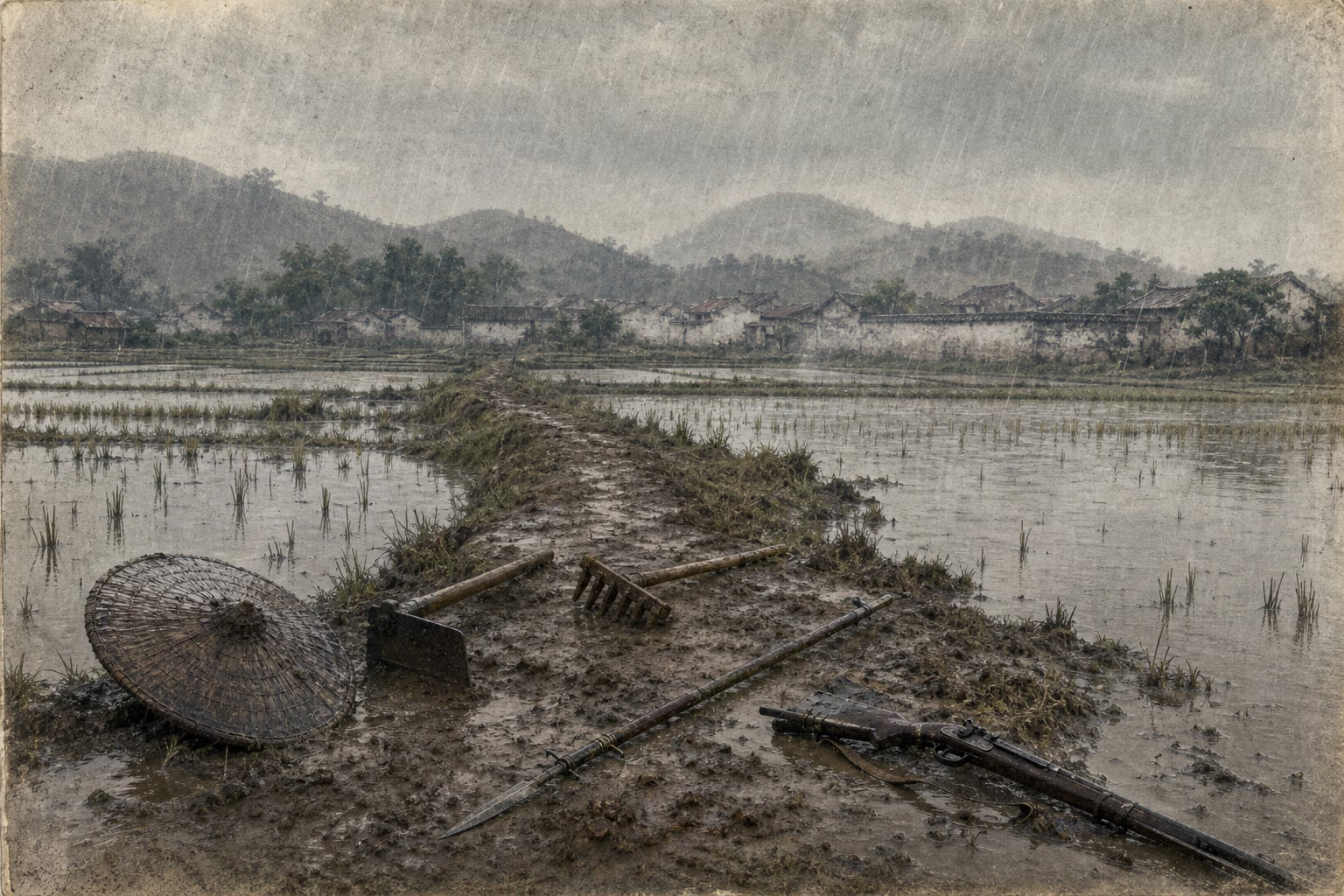
Niulanggang: hills + paddy fields + village network, with broken sightlines and muddy movement -- the only terrain favorable to a mass of cold-weapon fighters against a small detachment with firearms. The rainstorm was a spatial event: visibility, firearms reliability, and mud all changed at the same time. The next day, the Sifang Battery was surrounded by a human mass, and the vertical relation between attack and defense was reversed.
How Each Side Records It
- Chinese side: from village-compact transmission and stele inscriptions to textbook canon and memorial hall -- a foundational battle case for a "people's view of history," with an enormous volume of memory.
- British side: an awkward encounter battle in a rainstorm, casualties in the single digits, passed over in military history with a single stroke.
- The scale differs by a thousandfold, but both sides' records are sincere in their own terms -- what differs is not honesty, but the place this action occupies in each side's story.
Disputes and Sensitivities
- Basis for battlefield results: there is a gap between the older figures retained by textbooks and historiographical verification.
- Degree of "spontaneity": purely spontaneous peasant action, or organization through gentry and village compacts? (He Yucheng's role is already half the answer.)
- The revisionist dispute over Yu Baochun's evaluation.
- This battle case is often appropriated in contemporary nationalist narratives.
Sources and Open Questions
Sources: Historical Materials on the Sanyuanli People's Struggle Against the British (compiled edition, Zhonghua Book Company); Liang Tingnan, Yifen Wenji; Bingham, Narrative of the Expedition to China; Mao Haijian, The Collapse of the Celestial Empire.
Open questions: original wording of the two accounts of Beecher's cause of death; sources for the casualty figures on both sides; year the memorial stele was erected; original text of the Notice to the British Barbarians; biographies of Wei Shaoguang and He Yucheng; sequence of Yishan's sortie and the signing of the Treaty of Canton; source composition of the six-million-dollar city ransom; original wording of Elliot's notice threatening to "break the treaty and attack the city"; unit designation and decision process for Gough's relief force; relationship between the process of village braves dispersing and the farming season at the end of May.
All images on this site are AI-generated depictions. They are not historical photographs, not primary sources, and do not depict any real individual.