Engagement Archive · Battle of Xiamen
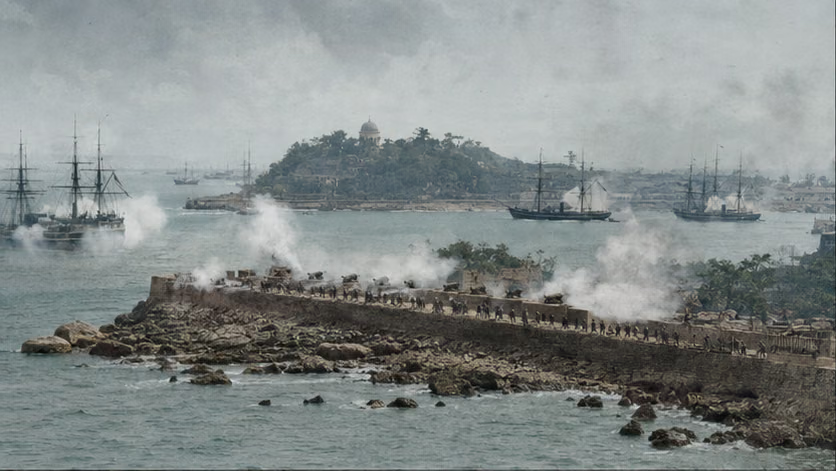
The granite "stone wall" that had cost more than one million taels of silver really did hold against naval gunfire from the front -- and then British troops landed from the flank and rear, and within hours everything reverted to type. Pottinger's first action on the northward route repeated the pattern of "invincible from the front, collapsing from the flank and rear" once again.
Engagement Data
| Item | Details |
|---|---|
| Time | 1841.8.26 fighting began; 8.27 Xiamen city fell |
| Place | Xiamen Island and Gulangyu, Fujian, along the Shibi battery line |
| Defender | Yan Botao, governor-general of Min-Zhe (personally present to supervise the defense); Jiang Jiyun, regional commander of the Kinmen garrison, and others; more than 5,000 troops (figure disputed) |
| Attacker | British plenipotentiary Pottinger; naval commander Parker; army commander Gough; more than 30 vessels and more than 2,500 army troops (figure disputed) |
| Result | Shibi, Gulangyu, and the other batteries fell; Xiamen was lost; British forces left troops on Gulangyu while the main force continued north |
Belligerents
| Item | Defender | Attacker |
|---|---|---|
| Works | Shibi battery: a long granite-built embankment, mounting 100 guns; more than 400 guns across the island (number unverified) | -- |
| Firepower | Shore guns with fixed fields of fire, unable to traverse | Mobile concentration of naval gunfire + landing-party field combat |
| Deployment | Heavy forces placed at the frontal sea entrance; flank and rear beaches left empty | Naval guns suppressed the front; marines landed on the flank and rear |
Terrain and Conditions
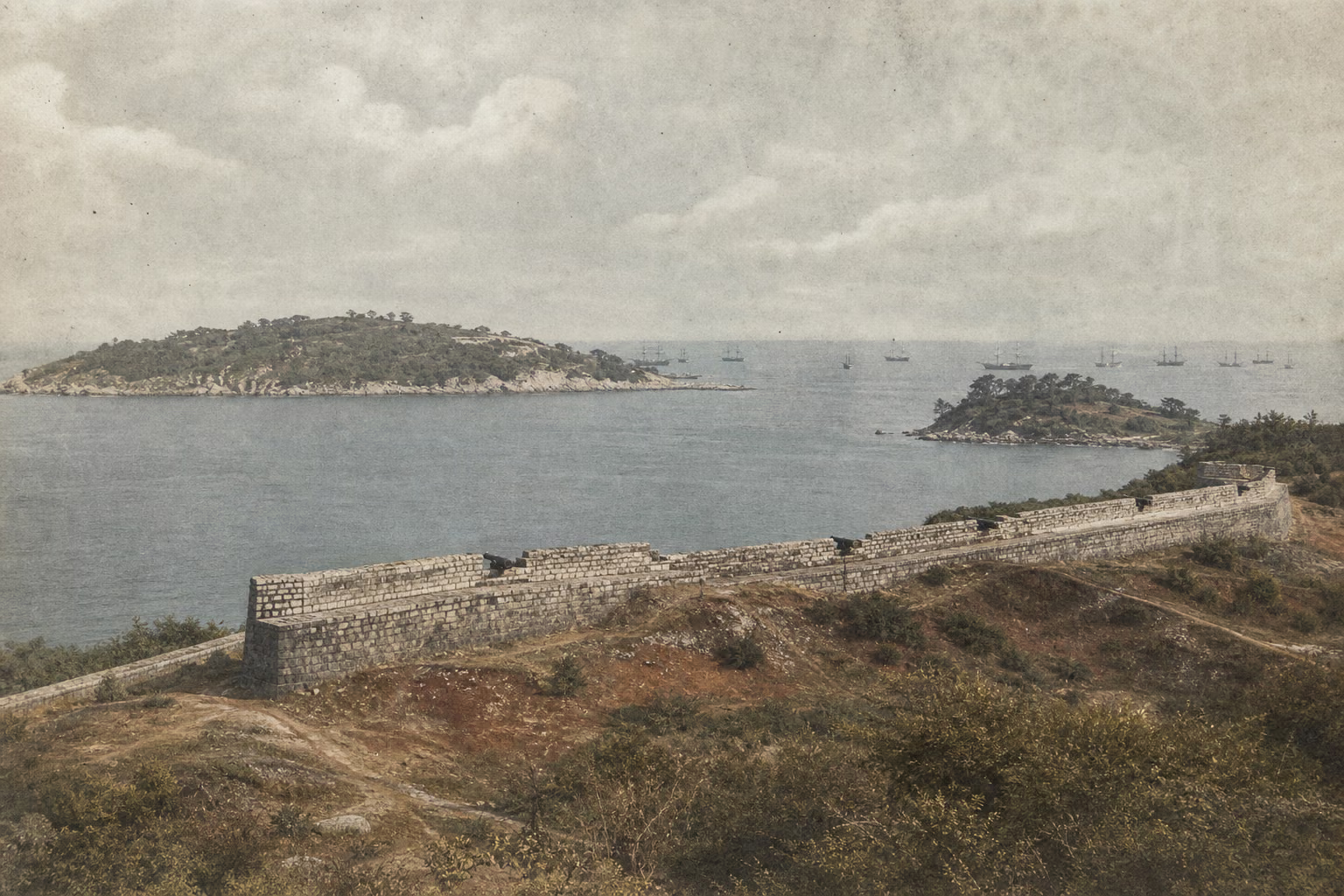
Xiamen was the gateway of southern Fujian and a trading port for Taiwan and Southeast Asia. Yan Botao was, after Lin Zexu and Yuqian, one of the highest-ranking officials most firmly committed to war. After taking office, he spent half a year building defenses with the resources of the whole province, at a cost of more than one million taels of silver (figure disputed) -- Shibi was the single most expensive Qing work of the entire war.
Why It Was Fought
The fighting at Canton ended with ransom for the city; the ten-thousand-person encirclement at Sanyuanli ended with persuasion to disperse; British forces withdrew, as agreed, to outside the Humen mouth -- and in this ambiguous fashion the war in Guangdong came to a close. But neither court thought the matter was over. In Beijing, Yishan wrote the six-million ransom for Canton as "merchant arrears" and the defeated retreat as "begging for pacification." Daoguang believed him, thought the foreign affair had been settled, and ordered the coastal provinces to reduce their defense troops. In London, the account came out exactly the other way: Elliot had taken Canton and received only six million, a price too low, so he was replaced; the Sanyuanli encirclement, meanwhile, was cited inside the British army as grounds for a "punitive expedition." In August, Pottinger arrived in China as the new plenipotentiary, bringing instructions to "raise the demand" and a reinforced fleet -- his method was no longer to bargain in Guangdong, but to break one coastal city after another and strike Beijing directly toward the negotiating table.
The first stop on the northward route was Xiamen: gateway of southern Fujian, trading port for Taiwan and Southeast Asia, and the new plenipotentiary's first test. Yet this stop ran into the place in the whole empire least willing to relax its defenses -- Yan Botao, governor-general of Min-Zhe, was, after Lin Zexu and Yuqian, one of the highest-ranking officials most firmly committed to war. After taking office, he spent half a year building defenses with the resources of the whole province, at a cost of more than one million taels of silver (figure disputed), raising a granite stone wall at the sea entrance with 100 guns mounted on it: the single most expensive Qing work of the entire war. In his memorial, he assured Daoguang that Xiamen could be defended -- not as a false report, but because he truly believed it.
Pottinger's resolve came from London: before he took up the plenipotentiary post, his instructions had already specified expanding the war and raising the demands (full text of the instructions unverified); he arrived in China in August and attacked Xiamen by the end of the month, giving Beijing no time to digest news of defeat. His intelligence came from the soundings and surveys of the Min-Zhe coast made during the first northward voyage the previous year; routes, depths, and battery positions were all on the charts. On the defender's side, the midyear edict reducing defense troops had come down from Beijing, while Xiamen's preparations had already cost more than one million taels of silver; they could not stop, and they did not stop (Yan Botao's memorial responding to the troop-reduction order is unverified). The prevailing view in Yan Botao's hands was that "the foreigners are strong in ships and guns, weak in land warfare." On that basis he staked the wealth of a province and his heavy forces entirely on the frontal sea entrance -- what he lacked was not money or resolve, but knowledge of landing operations. The British had their own limits: the northward advance had to be made before the monsoon and cold waves, and they did not have enough troops to garrison the cities they took, so Xiamen could only be held by a small detachment on Gulangyu -- they could take it, but not occupy it in force. As for proposals to abandon the city and avoid battle, no contemporary record has been seen.
Thus two judgments collided head-on: Beijing thought the war was already over and was reducing troops; Xiamen believed the war could be won and had just mounted its guns. On the afternoon of August 26, British ships entered Xiamen harbor and opened fire separately on Shibi and Gulangyu.
Course of the Engagement
| Stage | Course |
|---|---|
| 8.26 afternoon | British ships fought an artillery action against Shibi and Gulangyu separately; the granite front of Shibi was bombarded by naval guns for several hours without breaking -- British records also acknowledged that the work was solid (source unverified) |
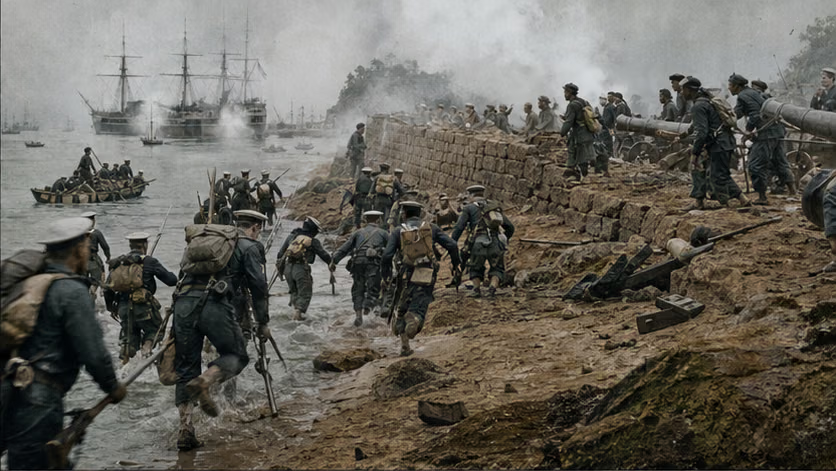
| Same day | Marines landed on the beaches to the flank and rear of Shibi and struck the back of the battery; attacked from behind, the defenders immediately collapsed, while Jiang Jiyun fought hard and died (details of his martyrdom unverified); Gulangyu fell at the same time |
| 8.27 | British forces entered Xiamen city; Yan Botao withdrew to Tong'an |
Casualties and Losses
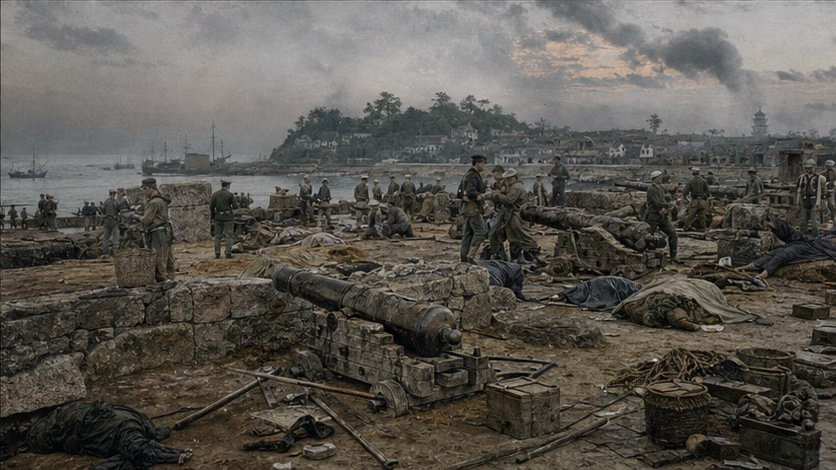
- Defender: several hundred casualties (statistical bases vary by account), and Regional Commander Jiang Jiyun was killed in action; a defense line costing more than one million taels changed hands in 1 day.
- Attacker: 1 to 2 killed and more than 10 wounded (figure disputed).
Aftermath
- Yan Botao was dismissed from office. By this point a clear personnel line had formed: Lin Zexu exiled to the frontier, Deng Tingzhen exiled to the frontier, Yan Botao dismissed, Yuqian killed in battle (2 months later) -- those who advocated war were either dead or demoted, while Yishan and Yijing, who filed false reports, remained unharmed. The accountability system punished failure, not distortion.
- British forces left a small detachment to occupy Gulangyu (until the indemnity was fully paid in 1845, unverified), while the main force went north to Zhejiang.
Accounts of Those Present
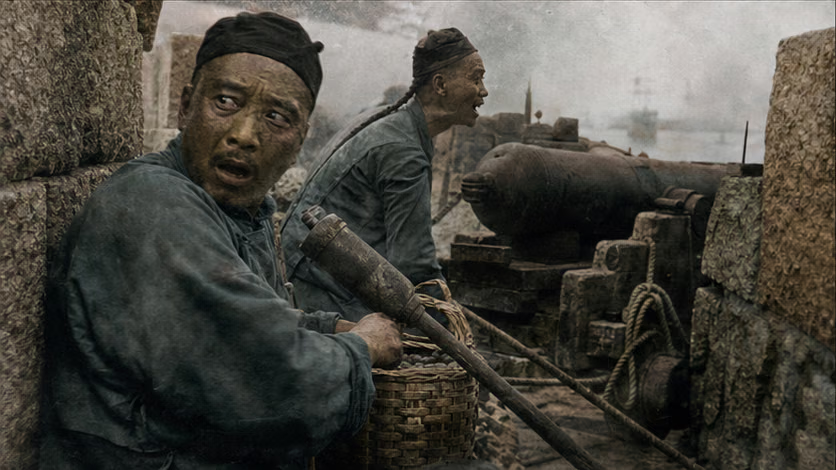
- The builders of Shibi: half a year, one million taels, granite -- they answered the "materials" question correctly and lost on the questions of "field of fire" and "flank and rear." Care and failure can both be true.
- Jiang Jiyun: the regional commander of the Kinmen garrison died on the beaches of Xiamen -- a note from an age when Taiwan Strait defense was one integrated system.
- Yan Botao's memorial: before the battle, he assured Daoguang that Xiamen could be defended (original memorial unverified) -- not as a false report, but because he truly believed it. To believe truly and still lose is heavier than lying.
The Ground
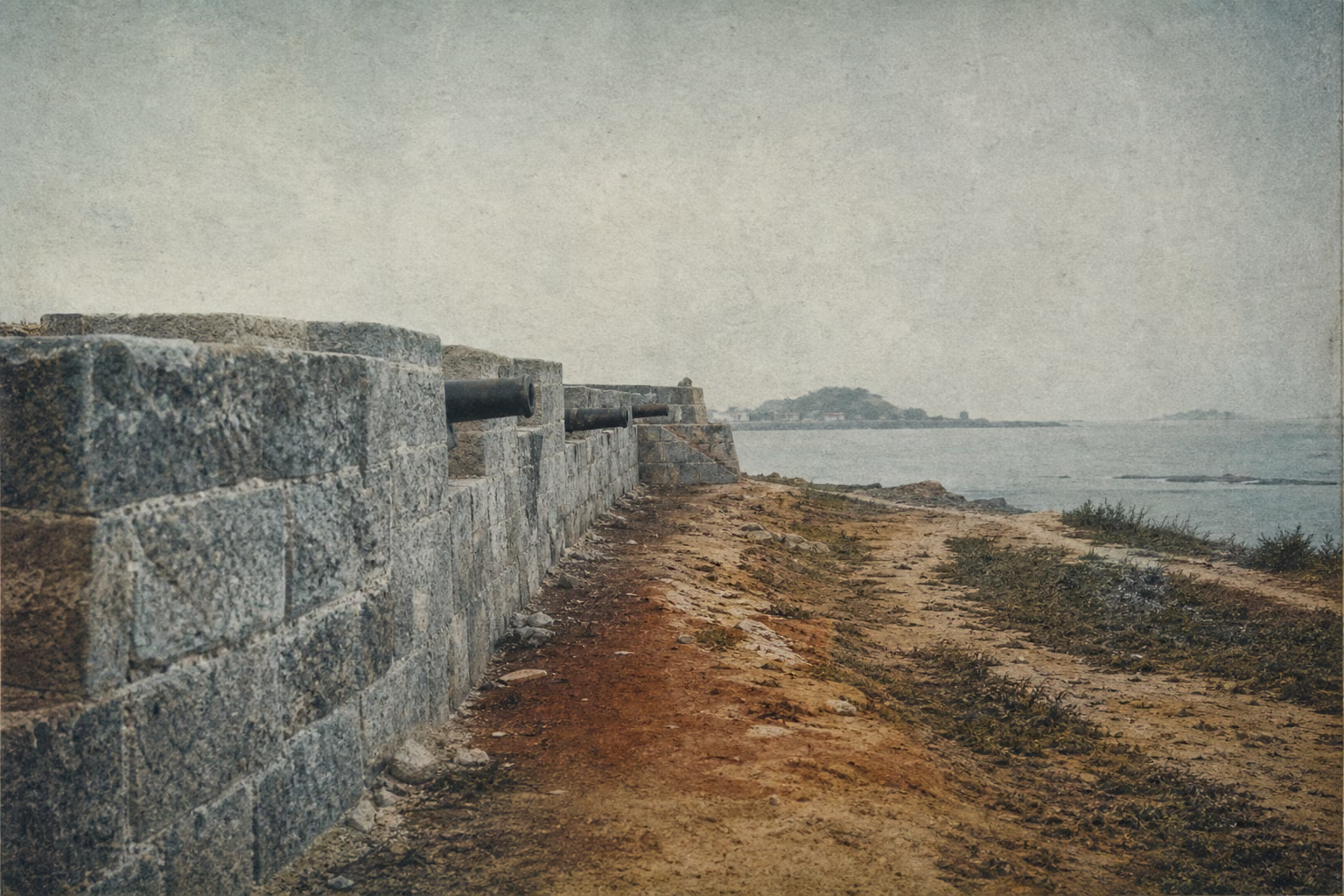
The mismatch between the frontal sea entrance (the Shibi long embankment facing the sea) and the flank and rear beaches; the mutually supporting angle between Gulangyu and Xiamen Island; granite works as a rare material that "could withstand direct fire" -- a spatial lesson in which the front could not be stormed, but the whole position broke as soon as the flank and rear were entered.
How Each Side Records It
- Chinese side: local gazetteers and temple cults record Jiang Jiyun; in macro-narratives, Xiamen is often passed over in a single stroke -- because its defeat was "not tragic enough," it lost its voice.
- British side: battle reports emphasized the solidity of the Shibi works and the textbook effect of landing maneuver.
Disputes and Sensitivities
- Yan Botao's position: a high-ranking war advocate who spent one million taels on defense and lost in 1 day -- how to present a "failure with care" without letting it collapse into mockery.
- The memory break caused by the long occupation of Gulangyu (later narratives of the international settlement covered over 1841).
Sources and Open Questions
Sources: Mao Haijian, The Collapse of the Celestial Empire; Xiamen Zhi; British campaign memoirs (Bingham, Ouchterlony).
Open questions: defender strength and casualties; scale and cost in silver of the Shibi works; details of Jiang Jiyun's martyrdom; British casualties; beginning and end of the occupation of Gulangyu; full text of Pottinger's instructions on taking up the plenipotentiary post; Yan Botao's original memorial assuring that Xiamen could be defended; Yan Botao's memorial responding to the edict reducing troops.
All images on this site are AI-generated depictions. They are not historical photographs, not primary sources, and do not depict any real individual.