Engagement Archive · Outbreak of War: Pungdo and Seonghwan
This war had three opening dates: July 23 for Koreans, July 25 at sea, and August 1 on paper; at sea, Japanese warships opened hostilities without a declaration, on land Seonghwan was a rearguard action, and after the fighting one memorial that turned defeat into great victory directly determined the commander of the next major battle.
Engagement Data
| Item | Details |
|---|---|
| Time | 1894.7.23 Japanese forces occupied Gyeongbokgung in Hanseong; 7.25 Battle of Pungdo; 7.28–29 Battle of Seonghwan; 8.1 China and Japan declared war on the same day |
| Place | Korea: Hanseong (present-day Seoul) -> waters off Pungdo (outside the mouth of Asan Bay) -> Seonghwan Station (northwest of present-day Cheonan, South Korea) |
| Belongs to | First Sino-Japanese War · Korean phase (for the broader situation and overall sequence, see First Sino-Japanese War · Overview) |
| Qing side | At sea: Beiyang Navy ships Jiyuan, Guangyi, and others (Jiyuan commanded by Fang Boqian); on land: the Asan garrison (Ye Zhichao, Provincial Commander-in-chief of Zhili; Nie Shicheng, regional commander of Taiyuan) |
| Japanese side | At sea: Combined Fleet First Flying Squadron Yoshino, Naniwa, and Akitsushima (commander Tsuboi Kozo); on land: Ninth Mixed Brigade (brigade commander Oshima Yoshimasa); Hanseong direction: Japanese forces in Korea under Minister to Korea Otori Keisuke |
| Result | At sea: Guangyi destroyed, Caojiang captured, Kowshing sunk, Jiyuan fled back; on land: Qing forces abandoned Asan and withdrew north toward Pyongyang; the Korean palace changed hands, and the king was held under duress |
Belligerents
This article covers one naval and one land engagement, so it uses two sets of figures.
Waters off Pungdo (two fleets set side by side):
| Item | Beiyang Navy formation | Japanese Combined Fleet First Flying Squadron |
|---|---|---|
| Ships | Cruiser Jiyuan and gunboat Guangyi (returning early from Asan); transport Kowshing (British merchant vessel, chartered for troop transport), transport Caojiang (arrived later, carrying pay silver and arms) | Protected cruisers Yoshino, Naniwa, and Akitsushima |
| Tonnage and speed | Jiyuan about 2,300 tons, 15 knots; Guangyi about 1,000-ton class | Yoshino about 4,200 tons, 23 knots, then described as the fastest cruiser in the world; Naniwa and Akitsushima each roughly 3,700 tons and 19 knots |
| Firepower | Jiyuan had twin 210mm main guns, mainly older recoil-slide guns | New quick-firing guns held the advantage, with a rate of fire several times that of the Qing ships (multiple disputed) |
| Posture | Forces divided for escort duty and repeated troop transport, then intercepted | Ordered to seek an opening for hostilities in the waters off Korea's west coast, with forces concentrated |
Seonghwan (land encounter):
| Item | Qing forces | Japanese forces |
|---|---|---|
| Strength | Nie Shicheng's force of about 2,000 held the Seonghwan line (the Asan garrison totaled about 3,000–3,800, with accounts varying by basis of counting) | Oshima's mixed brigade committed an attacking force of more than about 4,000 (accounts vary by basis of counting) |
| Equipment | Rifles, older field guns, with mines laid | Mixed infantry, cavalry, artillery, and engineers, with field guns accompanying the troops |
| Posture | Stationed at Asan for half a month, caught between making peace and standing on the defensive, with outside support cut off | Advanced south from Hanseong on the night of 7.25, actively seeking battle |
Terrain and Conditions
(For the larger situation in 1894--Meiji military expansion, Qing court factional struggle, and the powers watching from the sidelines--see First Sino-Japanese War · Overview.)
Korea: internal disorder had just been settled when war arrived. In the spring of that year the Donghak Peasant Uprising swept through Jeolla Province, and the Korean government asked the Qing court to send troops to help suppress it. Japan sent troops at the same time under the 1885 Convention of Tientsin; by June the uprising had reached a settlement with the Korean government (the Jeonju settlement), yet the Chinese and Japanese armies both stayed. Qing forces were posted at Asan on the southern coast, while Japanese forces held the capital Hanseong and the port of Incheon--one guest army outside, one master inside the house. Their positions had already written how the later fighting would begin.
Hanseong: July 23. Before dawn that day, one Japanese regiment raided the royal palace, Gyeongbokgung, dispersed the guards, took control of King Gojong, and brought the Daewongun, Yi Ha-eung, forward to preside over the government. The Korean court was thereafter kept under Japanese guard; reformist officials were placed on the stage of "reform," and at the end of July, in the name of the Korean government, Japanese forces were further "entrusted" with expelling the Qing army at Asan (details of the entrustment document unverified). For Koreans, this day was the opening of the war: the fighting had not yet begun, but the country had already been lost.
The Asan-Seonghwan line: Asan lay on the coast, roughly more than a hundred kilometers south of Hanseong. Seonghwan Station stood on the official road from Asan to Hanseong and was the necessary passage for any return north. The Qing forces there were isolated: their sea route back had already been severed by the battle at Pungdo, while on land the follow-on troops in the direction of Pyongyang were separated from them by the war zone.
Why It Was Fought
The previous war against a foreign state was the Sino-French War, which ended in 1885 with the new Sino-French treaty. In the same year at Tianjin, Li Hongzhang and Ito Hirobumi made another agreement: if Korea had trouble, the two countries would notify each other when sending troops. For the next ten years, each side did its own homework. On the Qing side, the Beiyang Navy was formed in 1888 and no ships were added afterward (the exact scope of "no ships or guns added" remains unverified). On the Japanese side, more than twenty years of expansion took the Beiyang Navy as the imagined enemy; ships were added year by year, and Yoshino, entering service in 1893, was then described as the fastest cruiser in the world. Ten years passed: one side stayed where it was; the other caught up.
Korea was a place neither side could avoid. For the Qing court, it was the last major remnant of the tributary order; for Japan, the "Continental Policy" used it as a springboard; on the great powers' board, it was Northeast Asia's last unsettled place, while Russia's Siberian Railway, pointing toward the Far East, had already begun construction in 1891. In spring 1894, the Donghak Peasant Uprising swept through Jeolla Province, the Korean government asked Qing forces to help suppress it, and Japan invoked the old Tianjin agreement to send troops at the same time. In June came the Jeonju settlement; the disorder was pacified, but the two guest armies did not leave. Qing forces were posted at Asan, Japanese forces held Hanseong and Incheon. A face-saving step for joint withdrawal had been put on the table, but Japan would not take it and instead kept reinforcing under the name of "reforming Korea's internal administration."
That year, the Qing court's great affair was Empress Dowager Cixi's sixtieth-birthday celebrations, which overrode war preparation. In Tokyo, the hanbatsu cabinet was facing off against the popular-rights parties and needed an external war to divert contradictions (this account of motive remains unverified). Guangxu favored war; Li Hongzhang relied on Beiyang and avoided battle to preserve the ships, placing his hopes on British and Russian mediation. His instructions to the front were "do not open hostilities first"; under that instruction, troop transports reinforcing Asan sailed south one after another. The Japanese chain of orders ran the other way: the Combined Fleet was ordered to control the waters off Korea's west coast and seek an opening for hostilities. Naniwa's captain, Togo Heihachiro, later recalled that before departure everyone in the fleet knew they were going to fight (original memoir text unverified). One side waited for mediation; the other was under orders to seek a pretext.
Japanese side: the Combined Fleet left Sasebo on July 23, and Ito Sukeyuki was ordered to open hostilities off Korea's west coast (instruction unverified). Qing side: Li Hongzhang moved troops to reinforce Asan while ordering the front to "hold quietly and do not move." The reinforcement ships used chartered British merchant vessels flying the British flag, judging that Japan would not dare act (unverified); the escort consisted only of the small ships Jiyuan and Guangyi, while the Beiyang main force remained at Weihai. The calculation of preserving the ships had weighed down the operation from the first day of reinforcement.
Some at the front saw the danger: Asan hung isolated with the sea at its back, and Ye Zhichao telegraphed several times asking for reinforcements or withdrawal to Pyongyang. The answer he received was the third word: wait for mediation (wording unverified). Whether the generals at Asan raised objections is not recorded (no record of objections found); nor is any seen on the Tokyo side. The mediation on which Li Hongzhang had wagered produced an ambiguous Russian reply (unverified). The sedan chair never came.
Before dawn on July 23, Japanese forces broke into Gyeongbokgung, held Gojong under duress, brought the Daewongun forward to preside over the government, and then, in the name of the Korean government, "entrusted" Japanese forces with expelling the Qing army at Asan (details of the entrustment document unverified). The pretext was complete. What remained was only the several thousand Qing troops at Asan and the reinforcements still at sea. On the morning of July 25, in the Pungdo Channel outside the mouth of Asan Bay, the necessary passage for the troop-transport route, Jiyuan and Guangyi ran head-on into Yoshino, Naniwa, and Akitsushima. The side that opened fire first was the one that had not yet declared war.
Course of the Engagement
Three Opening Dates
- 7.23 (Korea's opening date): Japanese forces raided and occupied Gyeongbokgung, held Gojong under duress, and installed a Daewongun puppet government.
- 7.25 (the opening date at sea): war began without declaration in the waters off Pungdo; on the same day Japanese forces in Hanseong advanced south toward Asan.
- 8.1 (the opening date on paper): China and Japan issued declarations of war on the same day. In other words, after a week of fighting, "war" began.
Battle of Pungdo (morning of 7.25)
Ship by ship:
- Jiyuan: Returning from Asan with Guangyi, she encountered three Japanese ships intercepting her in the morning. Japanese records state that the Japanese ships opened fire first, and Qing records say the same ("who fired first" has another Japanese account; see the disputes section). Jiyuan was hit in many places; Commander Fang Boqian hung a white flag and then a Japanese flag as he fled west (flag details from Japanese records; Qing records avoid the matter, unverified). The Japanese ship Yoshino gave chase, then abandoned the pursuit after her bow was hit--this shot later became the material for Fang Boqian's battle report about a "stern gun repelling the enemy."
- Guangyi: Fought hard and was badly damaged, ran aground on the beach, and after the remaining crew came ashore they set her on fire and destroyed her; the survivors made their way back to China by a circuitous route (course of events unverified).
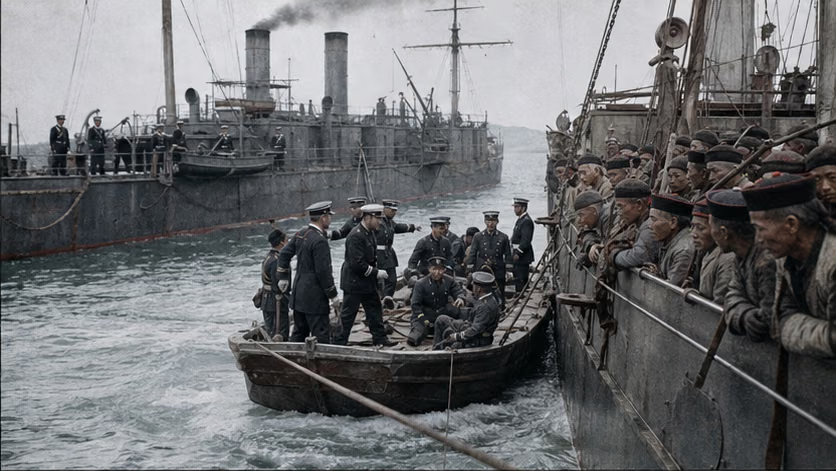
- Kowshing: A British merchant vessel chartered by the Qing court to carry about 1,100 Qing soldiers to reinforce Asan (personnel figures vary by account; figure disputed), she arrived in the battle area in the morning and was stopped by Naniwa. The Japanese side sent personnel aboard and ordered her to follow; the Qing troops on board refused to surrender and detained the captain to keep him from complying. After a standoff of about four hours, Naniwa first fired a torpedo that missed, then shelled the ship, which sank in the afternoon. ※ After Qing soldiers fell into the water, the Japanese ship did not rescue them, and there are also records of shots fired at swimmers (Japanese historical materials and survivor accounts both appear; scope and scale unverified). French and German warships later rescued more than about two hundred people.
- Caojiang: A transport carrying pay silver and arms, she arrived later, saw the situation, fled west, was overtaken by Akitsushima, and surrendered without fighting. Ship and pay silver were captured together (amount of pay silver carried unverified)--the first Qing warship captured in the entire war.
- Yoshino: Tsuboi Kozo's flagship, the fastest ship, mainly pursued Jiyuan and turned back after being hit.
- Naniwa: The executor that sank Kowshing. Her captain was Togo Heihachiro, commander-in-chief of the Combined Fleet at the Battle of Tsushima eleven years later. His first shot was here.
- Akitsushima: Pursued and forced Caojiang to surrender.
Battle of Seonghwan (7.28–29)
- Night of 7.28: Nie Shicheng led about two thousand men to establish defenses along the Garyong-ri-Anseong crossing line northeast of Seonghwan Station, setting ambushes and laying mines, and first checked the Japanese vanguard (figures for killed and wounded differ between Chinese and Japanese records, unverified).
- Dawn, 7.29: Oshima's brigade main force of more than four thousand attacked by separate routes. Qing forces fought hard for several hours, but both wings were outflanked, and Nie Shicheng led his troops out. Seonghwan was lost, and Asan was immediately no longer defensible.
- Route of retreat: Ye Zhichao had led the main force in abandoning Asan earlier; after joining Nie's force, he did not dare take the official road toward Hanseong, instead detouring through the mountains of eastern Korea and moving north. Over more than a month, after a roundabout march of more than two thousand li (distance unverified), he withdrew to Pyongyang. By the time the defeated army reached Pyongyang, Ye Zhichao's memorial had already arrived one step ahead.
Casualties and Losses
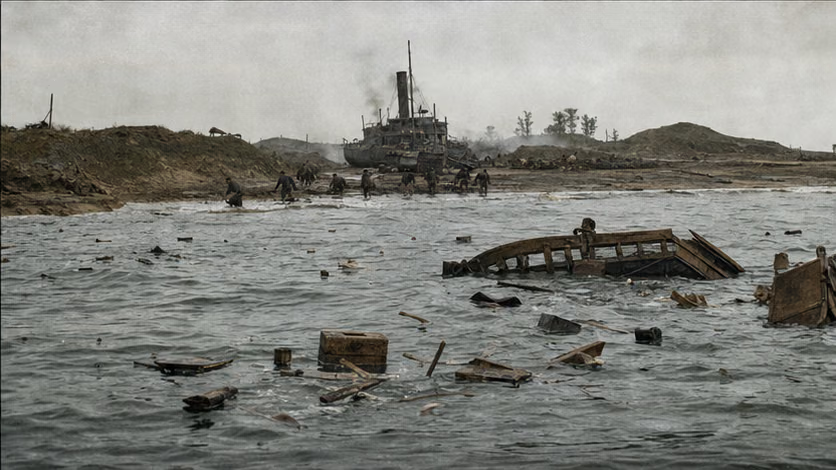
- At sea: Guangyi destroyed herself, Caojiang was captured; more than seven hundred Qing soldiers on Kowshing drowned (the common account gives about 850–870 people, but figures vary by basis of counting; figure disputed), and several dozen more were killed on Guangyi and Jiyuan. The three Japanese ships suffered no sinkings; Yoshino and others were damaged, with slight casualties.
- On land: In the Battle of Seonghwan, Qing casualties were about more than two hundred, and Japanese casualties about several dozen to more than a hundred (both sets of figures remain unverified); losses to illness and hunger during the retreat were not counted.
- Korea: The king was held under duress and the court changed hands; people along Hanseong and the official road had no stable way forward or back between the two guest armies. At the very beginning of the war, this was already the situation of Korean civilians. Korean-side losses and experiences are rarely recorded in detail in Chinese-language sources; Korean court records, such as the Annals of Gojong, are the main point of entry (see the sources section).
Aftermath
- 8.1 declaration of war: China and Japan declared war on the same day. The British and Russian mediation Li Hongzhang counted on had by then fallen through.
- The Kowshing incident and Sino-British negotiations: Kowshing flew the British flag and was a British ship, so the Qing court hoped Britain would hold Japan responsible. British authorities on international law, including Oxford professors of international law, successively endorsed the Japanese action, holding that in a state of war Japan had the right to deal with a transport that refused inspection; the British government ultimately did not demand compensation from Japan, and public opinion shifted away from sympathy for the Chinese side (specific process and turning points of the shift unverified). What the Qing court received was a weak state's first lesson in international law: rules are written by the strong, and interpreted by the strong as well.
- A false report decided the commander-in-chief (the heaviest stroke in this article): Ye Zhichao memorialized the Asan-Seonghwan retreat as "repeated great victories, killing several thousand enemies," and as "striking the many with the few" along the road. The Qing court believed it, awarded 20,000 taels of silver to reward the army, and in August appointed Ye Zhichao to command all armies at Pyongyang. A man who had just lost a battle and falsely reported military affairs thus received command of the next major battle. The outcome of the Battle of Pyongyang forty-five days later was already half written from this moment. (For the Pyongyang fighting, see Battle of Pyongyang (1894).)
- The beginning of command of the sea: After Pungdo, the Beiyang Navy no longer looked south. The Korean west coast from Asan Bay to Incheon belonged to Japan, and Japanese landings and troop transport in Korea thereafter had no further obstacle at sea.
Accounts of Those Present
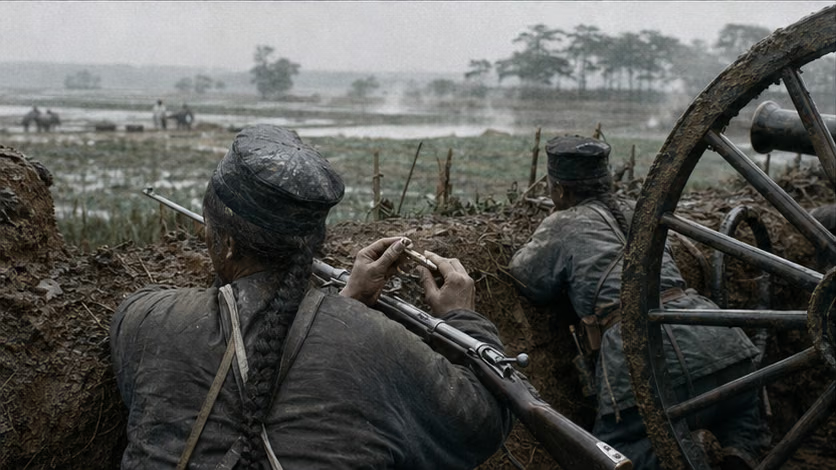
- The four hours aboard Kowshing: Qing assistant commander Gao Shanji pressed his sword and said to the British captain Gao Huiti: "If anyone dares surrender to Japan, he shall stain my blade!"--there were no guns aboard, and more than a thousand army soldiers faced a cruiser with rifles. After four hours of stalemate, the ship sank and the men died (the dialogue was relayed by survivors including the German adviser Hanneken; transmission chain unverified).
- Togo Heihachiro: The order to sink Kowshing was his, and the subsequent dispute first came at him as well. This man, later celebrated as a "war god," had as the first actual combat of his career the shelling of an unarmed troop transport.
- Fang Boqian's battle report: It claimed that Jiyuan "wounded Yoshino with her stern gun and killed its admiral"--Tsuboi Kozo was perfectly alive. This battle report was the first link in the First Sino-Japanese War's chain of false reporting; Fang Boqian later fled first in the Yellow Sea and was executed before the army. His case has been disputed for a century; the overall account is in Battle of the Yalu River (1894), while here only the starting point is involved.
- Nie Shicheng: Seonghwan was his first battle of the First Sino-Japanese War, and also one of the few actions in this phase where Qing forces fought with method--ambushes, mines, and echeloned withdrawal. He then fought through the whole war (for the defense of Motianling in Liaodong, see the second half of the batch) and six years later died for his country at Balitai in the Boxer year.
- The Caojiang prisoners: More than eighty people were captured with the ship and taken to Japan, returning only after the war (numbers and experiences disputed).
The Ground
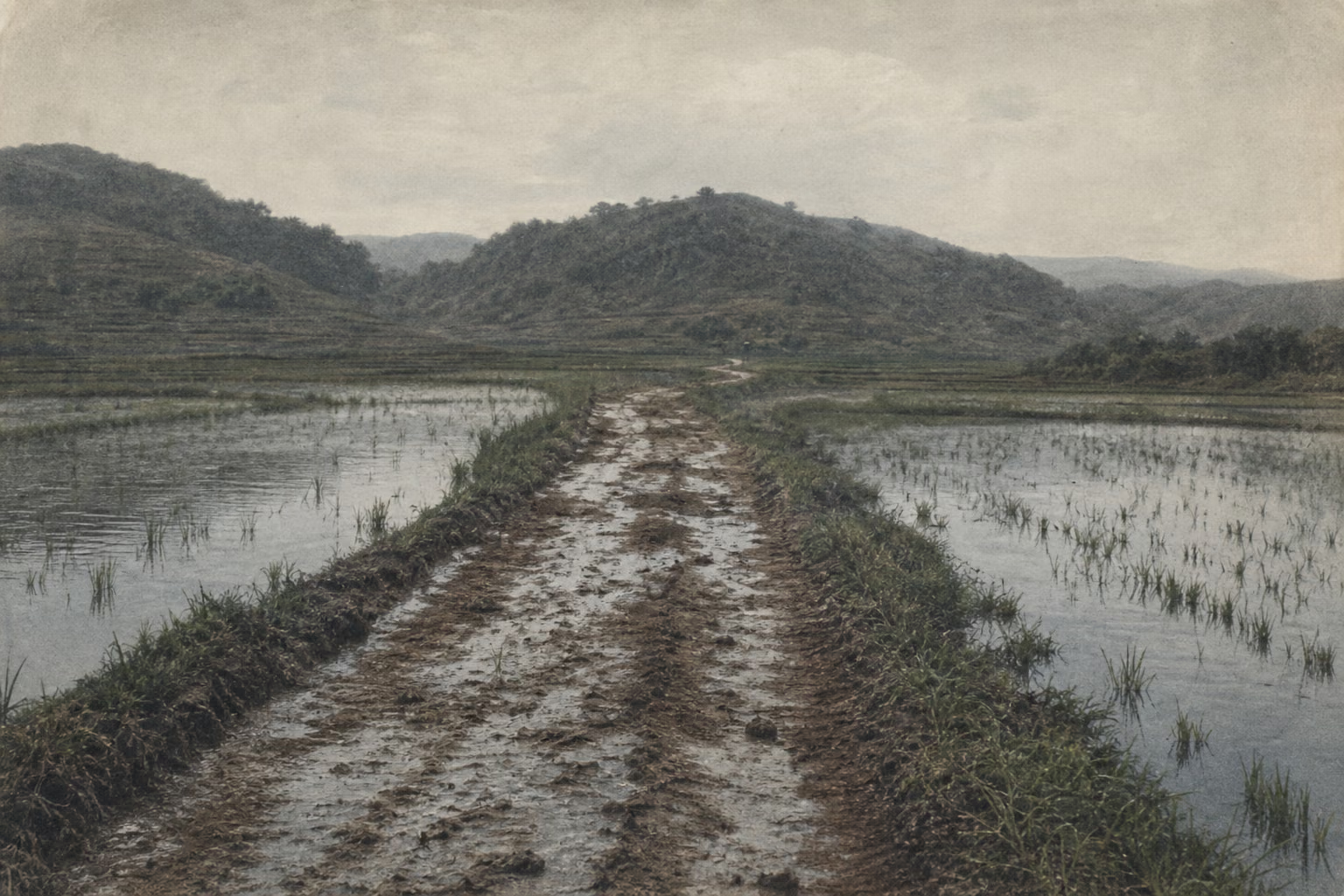
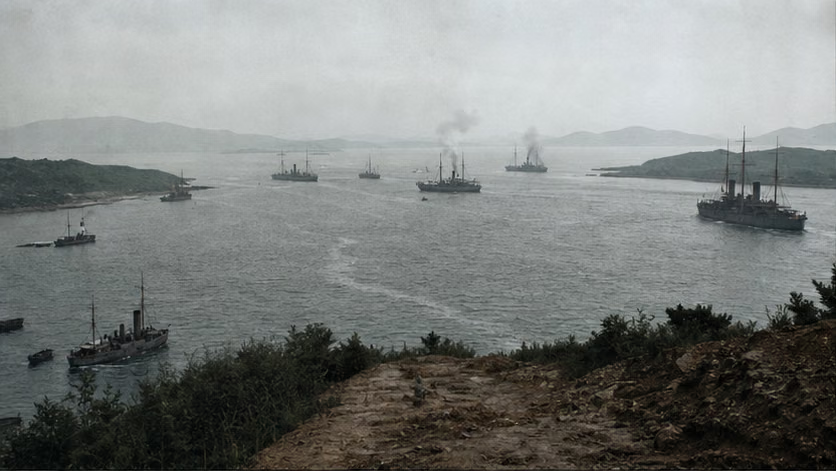
- Pungdo waters: A narrow north-south channel outside the mouth of Asan Bay, with Pungdo controlling its entrance--the necessary passage for escort and return voyages, and a natural interception point.
- Hanseong-Asan official road: Roughly more than a hundred kilometers long; Seonghwan Station, Garyong-ri, and the Anseong crossing were among the few defensible points along it. To control the official road was to control land movement in southern Korea.
- Gyeongbokgung: The royal palace was itself the battlefield. The fighting on 7.23 took place inside and outside the palace gates; its scale was small, but its meaning was the switch for the whole war.
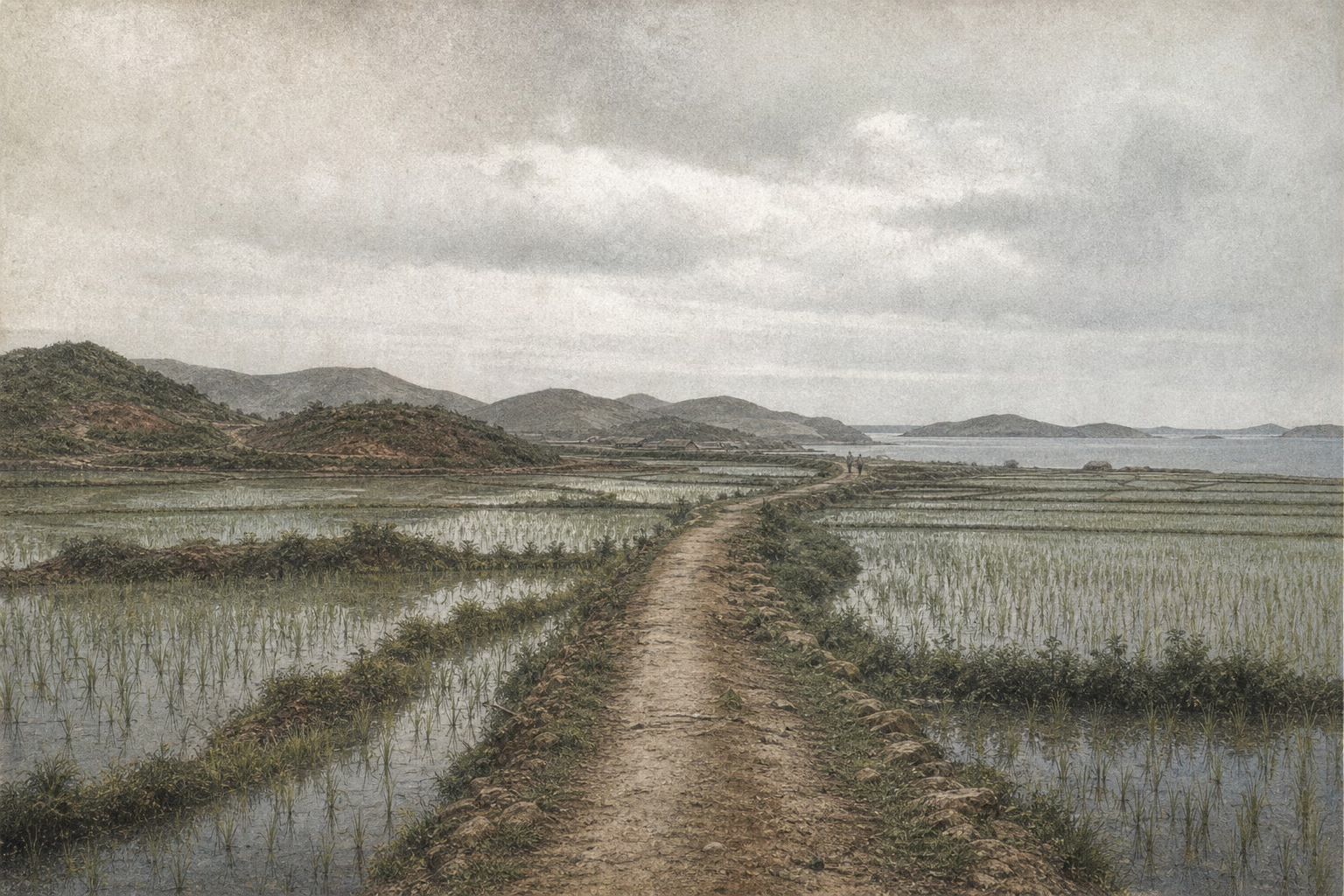
- Seonghwan terrain: Hills and paddy fields alternated on both sides of the station road. Summer water levels rose, and the roads constrained the axis of attack, making the ground suitable for small forces to lay successive ambushes and delay an advance.
How Each Side Records It
- Chinese side: "War without declaration" and "the sinking of Kowshing" are the first-page pillars of shame in the First Sino-Japanese War narrative; Fang Boqian's flight and Ye Zhichao's false report appear in Chinese records as two insider-like figures who ruined the whole situation. The Kowshing incident also entered international-law textbooks: a classic case of a weak state invoking rules, only for the rules to stand with the strong.
- Japanese side: The "Nisshin War" was Meiji Japan's first war of the whole nation, and the "great victory" at Pungdo was the first needle of that mobilization: on the day the "victory report" appeared in print, Tokyo rejoiced; newspaper extras, nishiki-e (ukiyo-e war prints), and military songs emerged in step with the moment, while the sinking of Kowshing was painted as a famous naval scene in the mode of bushido (specific newspaper extras and nishiki-e titles unverified). Japanese war histories also do not conceal Naniwa's shelling of a merchant ship, but they consistently defend it under "wartime legal principles."
- Korean side: The first punch of the war fell on Korea itself: on 7.23 the palace was occupied and the king was held under duress, and for the next half year the whole country became a battlefield. Korea's position--being "entrusted" to expel Qing forces and being "liberated" from the tributary order--was ghostwritten by Japan and the pro-Japanese regime. Korean court records survive in the Annals of Gojong, the Daily Records of the Royal Secretariat, and others, but direct records at the level of the people are extremely scarce; the reachable range of sources on the situation of Korean civilians is limited (unverified).
Disputes and Sensitivities
- Who fired first: Chinese records (postwar statements by Jiyuan's officers and men) say the Japanese ships fired first; some Japanese records imply that Jiyuan fired first or that the Japanese ships were "responding." Both accounts coexist, while mainstream research adopts the view that Japan acted first (war without declaration). This article follows the mainstream record and leaves the disagreement here.
- Fang Boqian in the Battle of Pungdo: The section on false reporting in his battle report is attested by records from both sides; the "white flag/Japanese flag" comes from Japanese records, while Qing archives avoid the matter. The degree to which it should be credited is left for the general discussion of the Yellow Sea case in Battle of the Yalu River (1894).
- The international-law characterization of Kowshing: The British legal community (the mainstream opinion of wartime international law) held Japan's action lawful; the Chinese side and later studies mostly argue that Japan had begun by fighting without declaration, sank an unarmed merchant ship, and abandoned those who fell into the water, leaving the action untenable in law and still more untenable morally. Both accounts coexist.
- Ye Zhichao's "victory report": That he reported defeat as victory is supported by the imperial edict granting rewards and belongs to the settled record; historians have debated the degree of exaggeration in "killing several thousand enemies," and whether the Qing court at the time truly believed it all or knowingly used it anyway (this account unverified).
- The three-sided records of Kowshing: The Kowshing episode involves the perspectives of the British captain, the Japanese ship commander, and the Qing soldiers aboard, and it also carries the ※ side note on the treatment of men in the water as an atrocity. Survivor accounts and negotiation archives corroborate one another in places, but the source levels differ.
Sources and Open Questions
Known main sources:
- Yao Xiguang, Brief Account of the Eastern War (a common Qing-side narrative; many accounts of Seonghwan and Pungdo rely on it)
- Japanese General Staff, History of the Sino-Japanese War of Meiji 27-28 (Japanese official war history)
- Qi Qizhang, History of the First Sino-Japanese War and The First Sino-Japanese War and Modern Society (main reference for modern scholarship)
- Historical Materials on Sino-Japanese Negotiations in the Guangxu Reign of the Qing (Qing archival compilation, including clues on Ye Zhichao's memorial and the reward edict)
- Korea's Annals of Gojong (entry point for the Korean court perspective)
- Recollections related to Naniwa captain Togo Heihachiro, and British investigation and negotiation archives on the Kowshing incident (British-side entry point)
Open questions: personnel carried by Kowshing and figures for drowned men (about 1,100 / 700–870, with multiple accounts); number rescued from Kowshing and the names of the French and German ships; two sets of figures for strength and casualties at Seonghwan; the distance of Ye Zhichao's detour and the date he reached Pyongyang; amount of pay silver carried by Caojiang and the number of prisoners; Qing-side corroboration for the details of Jiyuan's "flags"; names of the British legal authorities who endorsed Japan in the Kowshing case and the turning points in public opinion; data on the Japanese quick-firing-gun rate-of-fire advantage; original text of Togo's memoir; details of the document "entrusting Japanese forces with expelling Qing forces"; the full course by which Guangyi's survivors returned to China; Japanese wartime newspaper extras and nishiki-e titles; details of Nie Shicheng's Motianling defense (to be developed in the second half of the batch); original text and issuing date of Ito Sukeyuki's departure instructions; source for the judgment that chartering British ships would deter Japanese warships; wording of Ye Zhichao's requests for reinforcement and withdrawal and Li Hongzhang's replies; whether records exist of objections among the Asan generals; original text of the Russian reply in July that it was "inconvenient to intervene directly."
All images on this site are AI-generated depictions. They are not historical photographs, not primary sources, and do not depict any real individual.