Engagement Archive · Collapse in Liaodong
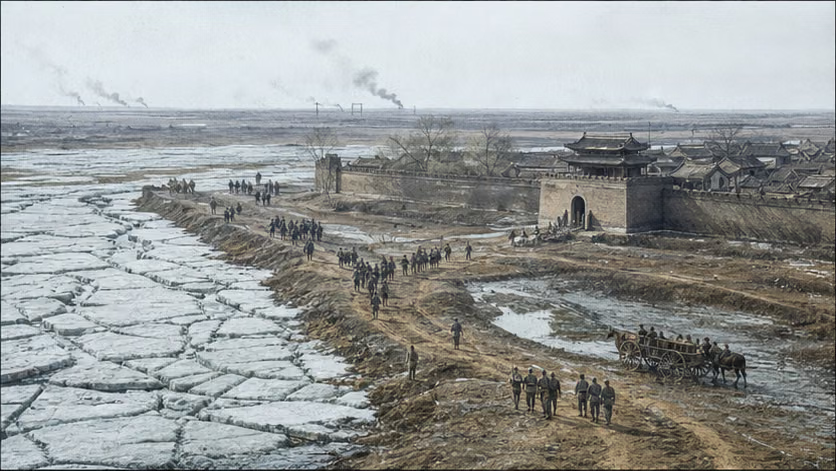
The seesaw battles for Haicheng dragged on into March 1895; Japanese forces turned south and took Niuzhuang, Yingkou, and Tianzhuangtai within six days--the Xiang Army's last battle beyond the Pass became the fiercest street fighting of the First Sino-Japanese War, followed by the final punctuation mark of the war on land: a town burned to the ground.
Engagement Data
| Item | Details |
|---|---|
| Time | 1895.3.4 – 3.9 |
| Place | Fengtian Province (present-day Liaoning), Niuzhuang, Yingkou, and Tianzhuangtai along the lower Liao River line |
| Belongs to | First Sino-Japanese War (for the larger situation, see *First Sino-Japanese War · Overview*; follows *Seesaw Battles for Haicheng*) |
| Defending / retreating side | Wei Guangtao's Wuwei Army and Li Guangjiu's Old Xiang Camp (Niuzhuang); units under Song Qing, Jiang Xiyi, and others (Tianzhuangtai) |
| Attacking side | Divisions of the Japanese First and Second Armies: about two divisions at Niuzhuang, three divisions at Tianzhuangtai |
| Result | 3.4 Niuzhuang fell after a day and night of street fighting; 3.7 Yingkou was lost without a battle; 3.9 Tianzhuangtai collapsed in one day, ※ Japanese forces set fire to the town. The First Sino-Japanese War on land ended here |
Belligerents
| Item | Defending / retreating side | Attacking side |
|---|---|---|
| Strength | Niuzhuang: Wei Guangtao's and Li Guangjiu's two units, about six thousand men, hurried into the city; Tianzhuangtai: more than ten thousand under Song Qing and others | Niuzhuang: about two divisions and twenty thousand men in a converging attack; Tianzhuangtai: three divisions |
| Firepower | Xiang Army units had a patchwork of old and new firearms and few guns | Divisional artillery was complete, with infantry-artillery coordination |
| Posture | The Haicheng counteroffensive had just failed; the troops were exhausted, and redeployments left defenses empty--Yingkou's garrison was drained away and the port was lost without a battle | After the relief of Haicheng, morale was high, and forces were shifted decisively |
Terrain and Conditions
(For the larger situation--Weihai already fallen and peace talks about to begin--see *First Sino-Japanese War · Overview*.)
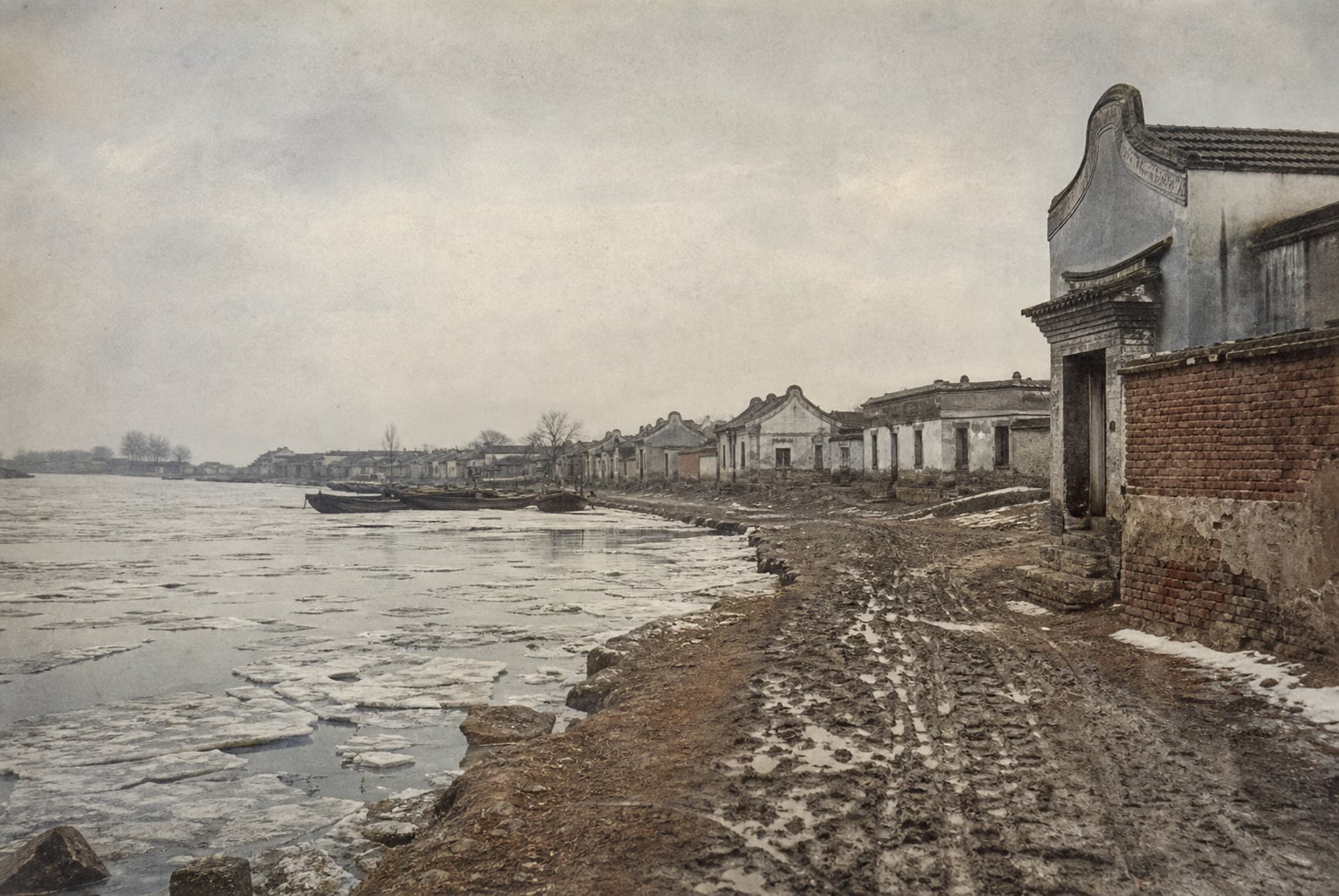
The lower Liao River line: Niuzhuang, Yingkou, and Tianzhuangtai lay in sequence along the lower Liao River--Niuzhuang was an old mercantile city, Yingkou was a treaty-opened trading port, and Tianzhuangtai controlled a Liao River crossing, the throat from southern Liaodong into western Liaoning. It was late winter; the river ice had just begun to break, and the roads were muddy.
Condition of the troops: holding this line were exhausted soldiers just defeated in the Haicheng counteroffensive, together with reserves hastily shifted westward. Yingkou's garrison was first drawn away--the confusion of troop allocation was written directly into the ending of this line.
Why It Was Fought
In Shandong, Weihaiwei fell on February 17, and the Beiyang Navy was destroyed (see *Battle of Weihaiwei*); at court, peace negotiations were already on the agenda. In southern Liaodong, however, the seesaw battles for Haicheng still dragged on--after five months of stalemate, four or five counterattacks had failed to enter the city by even a step, and the Qing army's last field strength was nearly spent.
Peace and war were now running in parallel in Beijing: in early February, Zhang Yinhuan and Shao Youlian went to Hiroshima to negotiate peace, only to be refused entry by the Japanese side on the grounds that their plenipotentiary powers were insufficient; the court then decided to appoint Li Hongzhang instead, and he set out in mid-March. During the same period, Liu Kunyi, as imperial commissioner, was placed in control of all armies inside and beyond the Pass, while Wu Dacheng led the Xiang Army beyond the Pass and stationed it along the Tianzhuangtai-Niuzhuang line (details of positions unverified)--one side was preparing to put brush to paper, while the other was still feeding troops into southern Liaodong. The front did not know the peace-talk timetable; it knew only that Haicheng had not been taken in five months.
Japanese forces therefore reached a judgment: the main Qing strength had been caught in southern Liaodong, and Liaoyang no longer needed to be attacked. At the end of February, they first struck to scatter the pinning forces in the Liaoyang direction, then immediately turned south, shifting the target to the lower Liao River line--Niuzhuang, Yingkou, and Tianzhuangtai. Niuzhuang was an old mercantile city, Yingkou was a treaty-opened trading port, and Tianzhuangtai controlled the Liao River crossing, the throat from southern Liaodong into western Liaoning. Once this line was swept away, the remaining Qing forces in southern Liaodong would be cut off from western Liaoning; farther southwest lay the imagined space of a direct approach toward Shanhaiguan.
The Japanese turn also had its limits: after months of campaigning the manpower was worn down, late-winter mud slowed movement, and all heavy guns, grain, and ammunition had to be hauled along cart roads across the Liao River plain (details unverified). So the three actions were compressed into six days: strike fast, finish fast. In the same month, another Japanese force had already gone south by sea to take Penghu; whether this line of raising the stakes before signing was part of a unified Imperial General Headquarters plan remains unverified. On the Qing side, whether the Haicheng counteroffensives should have stopped, and whether Yingkou's garrison should have been withdrawn, leave no trace in the surviving records of objections by front-line commanders (no dissent recorded); what can be seen is the result of the allocation--Niuzhuang hurried, Yingkou empty, Tianzhuangtai isolated.
Holding this line were exhausted soldiers just defeated below Haicheng and reserves hastily shifted westward; the allocation was chaotic enough that Yingkou's garrison had first been drained away. Inside Niuzhuang, Wei Guangtao's Wuwei Army and Li Guangjiu's Old Xiang Camp, about six thousand men, entered the city in haste--after marching a thousand li beyond the Pass, the Xiang Army had reached its final station.
On March 4, about two Japanese divisions and twenty thousand men attacked Niuzhuang from multiple directions. Late winter had not ended; the ice on the Liao River had only just begun to crack. A little more than half a month later, Li Hongzhang would sit down at Shimonoseki--the peace settlement was already on the road, yet these last six days of fighting were still fought through one battle after another.
Course of the Engagement
| Stage | Time | Key points |
|---|---|---|
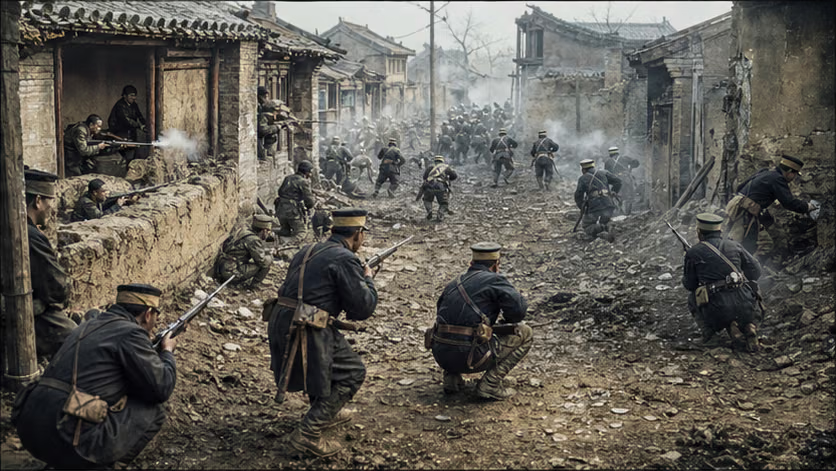
| Battle of Niuzhuang | 3.4 | Wei Guangtao's Wuwei Army and Li Guangjiu's Old Xiang Camp, about six thousand men, hurried into the city to defend it, then faced a converging attack by about two Japanese divisions and twenty thousand men; street fighting lasted a full day and night, with resistance from house to house, and the city fell. Xiang Army casualties exceeded a thousand, with several hundred captured (figures vary by account)--the Xiang Army's last battle beyond the Pass, and the fiercest street fighting of the First Sino-Japanese War on land |
| Loss of Yingkou | 3.7 | The garrison had already been drawn away; once Japanese forces arrived, the port fell immediately, lost without a battle (port customs and foreign merchant activity unverified) |
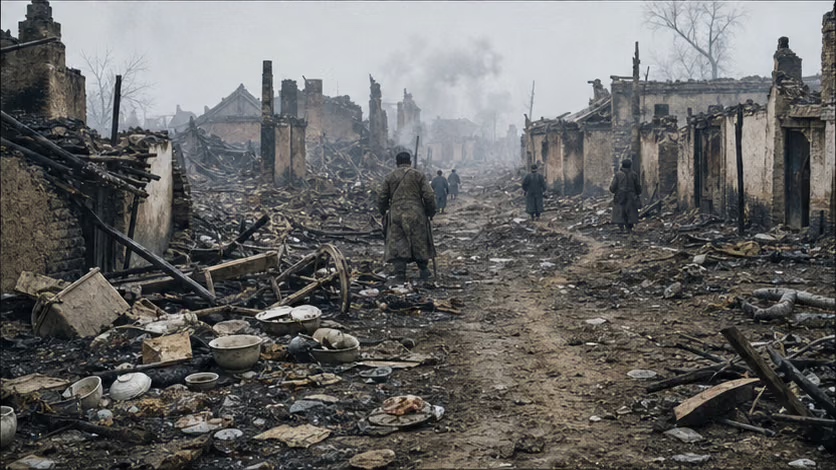
| Battle of Tianzhuangtai | 3.9 | More than ten thousand under Song Qing and Jiang Xiyi defended the important Liao River crossing town; three Japanese divisions attacked together, and it collapsed in one day; ※ Japanese forces set fire to the town, destroying several thousand shops and homes along its streets (the claim that it "burned for three days" is unverified) |
※ The burning of Tianzhuangtai (from 3.9): after Japanese forces broke into the town, they set it on fire, and several thousand shops and homes along its streets burned down; the claim that it "burned for three days" circulated (this claim unverified). The burning of the town, together with the killing of routed soldiers and civilians after the street fighting (details and figures vary by account), formed a node of atrocity at the closing point of the First Sino-Japanese War on land; recorders and Japanese-side accounts (source unverified).
Casualties and Losses
- Defending side: in the Niuzhuang action, Xiang Army casualties exceeded a thousand, with several hundred captured (figure disputed); in the collapse at Tianzhuangtai, military casualties and civilian deaths in the burning of the town (figures vary by account).
- Attacking side: Japanese casualties in the three actions were limited (figure disputed).
- Civilians: Tianzhuangtai was burned in full, with no definite figure for displacement or deaths.
- The First Sino-Japanese War on land ended here: the Qing court no longer had a single land army capable of battle and shifted fully into begging for peace.
Aftermath
- In late March, Li Hongzhang went to Shimonoseki to negotiate peace (see *First Sino-Japanese War · Overview*).
- The Xiang Army's movement beyond the Pass ended with the street fighting at Niuzhuang--the history of this crack force from the Xianfeng-Tongzhi resurgence closed in that single day and night.
- Japanese forces occupied the lower Liao River line and withdrew only after the treaty was signed (for the larger situation, including the Triple Intervention and the retrocession of Liaodong, see *First Sino-Japanese War · Overview*).
Accounts of Those Present
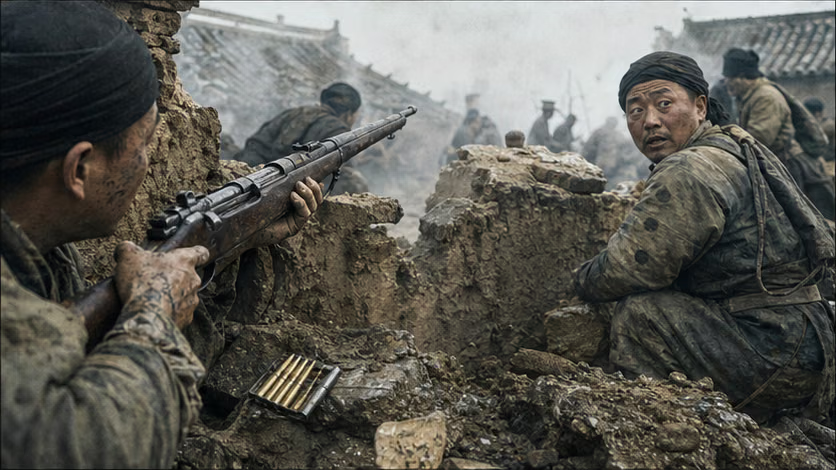
- Wei Guangtao and Li Guangjiu: Xiang Army commanders who fought street by street to the end after Niuzhuang was broken--resisting house by house for a full day and night, they were an exception within the broader color of collapse in the First Sino-Japanese War on land (their breakout and postwar circumstances unverified).
- Empty Yingkou: the garrison was drawn away, and the port fell as soon as the enemy arrived--a loss without combat was more humiliating than defeat in battle, and the responsibility lay in allocation (source of the order to drain the garrison unverified).
- Burned town: a town of several thousand street-front shops and homes was burned off the map. No circulated record from the perspective of resisters survives (source unverified); firelight is all this article can leave for civilians.
The Ground
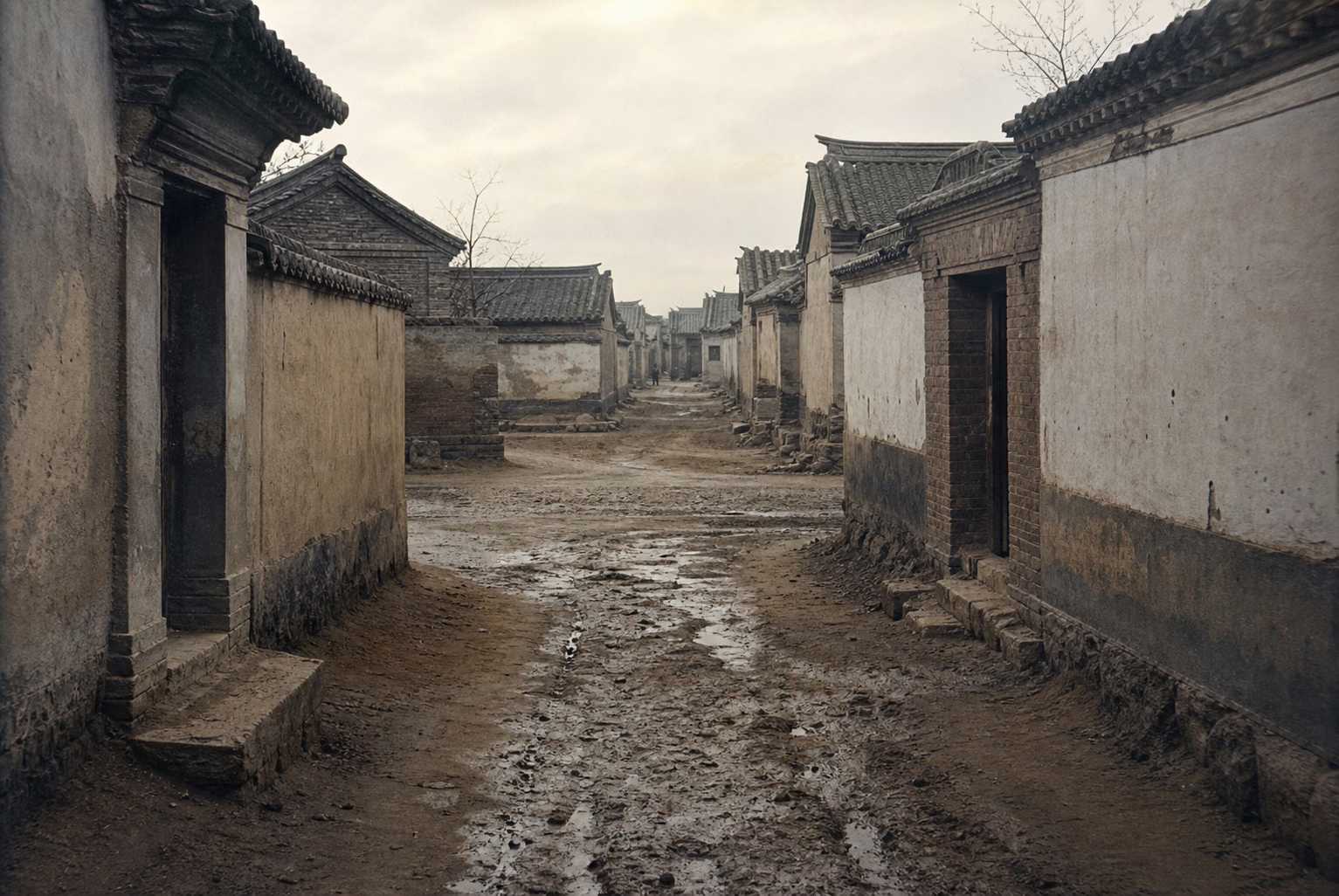
- Niuzhuang: the street-and-lane pattern of an old mercantile city--earthen-walled courtyards and crossroads markets, a space for house-to-house street fighting in which the defenders used courtyards as forts.
- Yingkou: an opened port, with a river harbor and concession-style streets (foreign residents' activity in the city unverified).
- Tianzhuangtai: an important Liao River crossing town; control of the river crossing meant control of the gateway to western Liaoning. Its town streets were contiguous, so fire meant total destruction.
- The spatial sequence was the sequence of collapse: street-fighting defense to the death (Niuzhuang) -> abandonment without battle (Yingkou) -> collapse in one day plus the burning of the town (Tianzhuangtai), three steps in six days.
How Each Side Records It
- Chinese side: the street fighting at Niuzhuang is a tragic page in Xiang Army narratives and Hunan local memory (local-documentary lineage unverified); the burning of Tianzhuangtai is recorded in popular memory and later writings as a Japanese forces atrocity.
- Japanese side: military histories record it as a smooth operation cleaning up southern Liaodong (wording on the burning of the town unverified).
Disputes and Sensitivities
- Record chain for the burning of the town: the source level, witnesses, and Japanese-side wording for the scale of the burning ("several thousand shops and homes," "three days") all require item-by-item checking; it should not be softened because the Japanese side is silent, nor should it be raised beyond the records seen.
- Niuzhuang casualty figures: the sources for more than a thousand casualties and several hundred captured remain unverified.
- Responsibility for Yingkou being "lost without a battle": the chain of orders that drained the garrison remains unverified.
Sources and Open Questions
Known main sources:
- Relevant memorials in *Historical Materials on Sino-Japanese Negotiations in the Guangxu Reign of the Qing* (item titles unverified)
- Japanese official war-history volumes on southern Liaodong operations (item titles unverified)
- Materials related to Wei Guangtao, Li Guangjiu, and Song Qing
- Local gazetteers and local historical materials for Niuzhuang, Yingkou, and Tianzhuangtai (item titles unverified)
Open questions: Niuzhuang order of battle and the basis for casualty and captured figures; Wei Guangtao's and Li Guangjiu's breakout and postwar circumstances; source of the order draining Yingkou and activity by foreign residents; Tianzhuangtai order of battle; scale of the town burning, witnesses, and Japanese-side wording; source level of the claim that it "burned for three days"; civilian death figures; details of Zhang Yinhuan and Shao Youlian being refused in the Hiroshima peace negotiations; Liu Kunyi's appointment and scope of control; Wu Dacheng's troop positions and postwar handling; the decision-making connection between Japanese operations on the Liao River and in Penghu; whether front-line commanders left any recorded dissent over the choice between peace and war; details of transport and supply for the three Japanese actions.
All images on this site are AI-generated depictions. They are not historical photographs, not primary sources, and do not depict any real individual.