Engagement Archive · Defense of the Yalu River Line
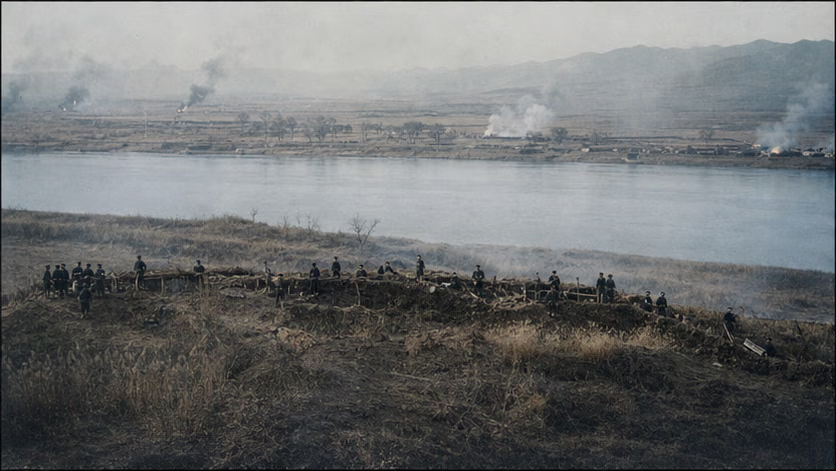
A line of more than 20,000 men spread along a frontier river fought in earnest for only one night on a single hilltop: once Hushan fell, the entire line collapsed without a fight, and from that point the flames of war entered China proper.
Engagement Data
| Item | Details |
|---|---|
| Date | 1894.10.24 – 10.26 |
| Place | West bank of the Yalu River (around present-day Dandong, Liaoning): the Jiuliancheng–Hushan–Andong line |
| Part of | First Sino-Japanese War · Liaodong phase (for the broader situation, see *First Sino-Japanese War · Overview*) |
| Defenders | Qing forces along the Yalu River line (the various armies under the overall command of Sichuan Provincial Commander Song Qing) |
| Attackers | Japanese First Army (commanded by Yamagata Aritomo) |
| Result | On 10.25 Hushan fell, and the various armies collapsed without a fight; on 10.26 Jiuliancheng and Andong were abandoned in succession, and the Yalu River line was pierced within one day and night |
Belligerents
| Item | Defenders | Attackers |
|---|---|---|
| Strength | Approximately more than 20,000 to 28,000 (later narrative basis, unverified): the Yi Army, Ming Army (Liu Shengxiu), Nie Shicheng's detachment, Fengtian forces, the Sheng-character Training Army (Fengsheng'a), and others; upstream from the Anping River mouth to the Changdian River mouth were also Yiketang'a's Zhenbian Army troops (each unit's organization and actual numbers unverified) | About 30,000 in the First Army, with the Third Division (Katsura Taro) and Fifth Division (Nozu Michitsura) as its main force (Japanese order-of-battle basis, actual numbers unverified) |
| Firepower | In the aftermath of the recent defeat, many guns and weapons had been abandoned in the collapse at Pyongyang (details unverified); ditches were dug and land mines buried on the west bank of the Ai River (Qing records) | Divisional field guns and mountain guns; engineer bridging columns |
| Condition | Many of the troops were soldiers who had fled from Pyongyang after its collapse, their morale already broken; although Song Qing bore the title of overall commander, the various routes in practice did not obey his direction | Coming from successive victories at Pyongyang and in the Yellow Sea, morale was high |
| Rear Area | Having retreated into the homeland, supply was instead dislocated (record unverified) | Korea served as the base area, with supply lines extending from Hanseong through Pyongyang to Uiju |
Terrain and Conditions
(For the broader situation in autumn 1894--loss of command of the Yellow Sea and the Japanese two-pronged design on Liaodong--see *First Sino-Japanese War · Overview*.)
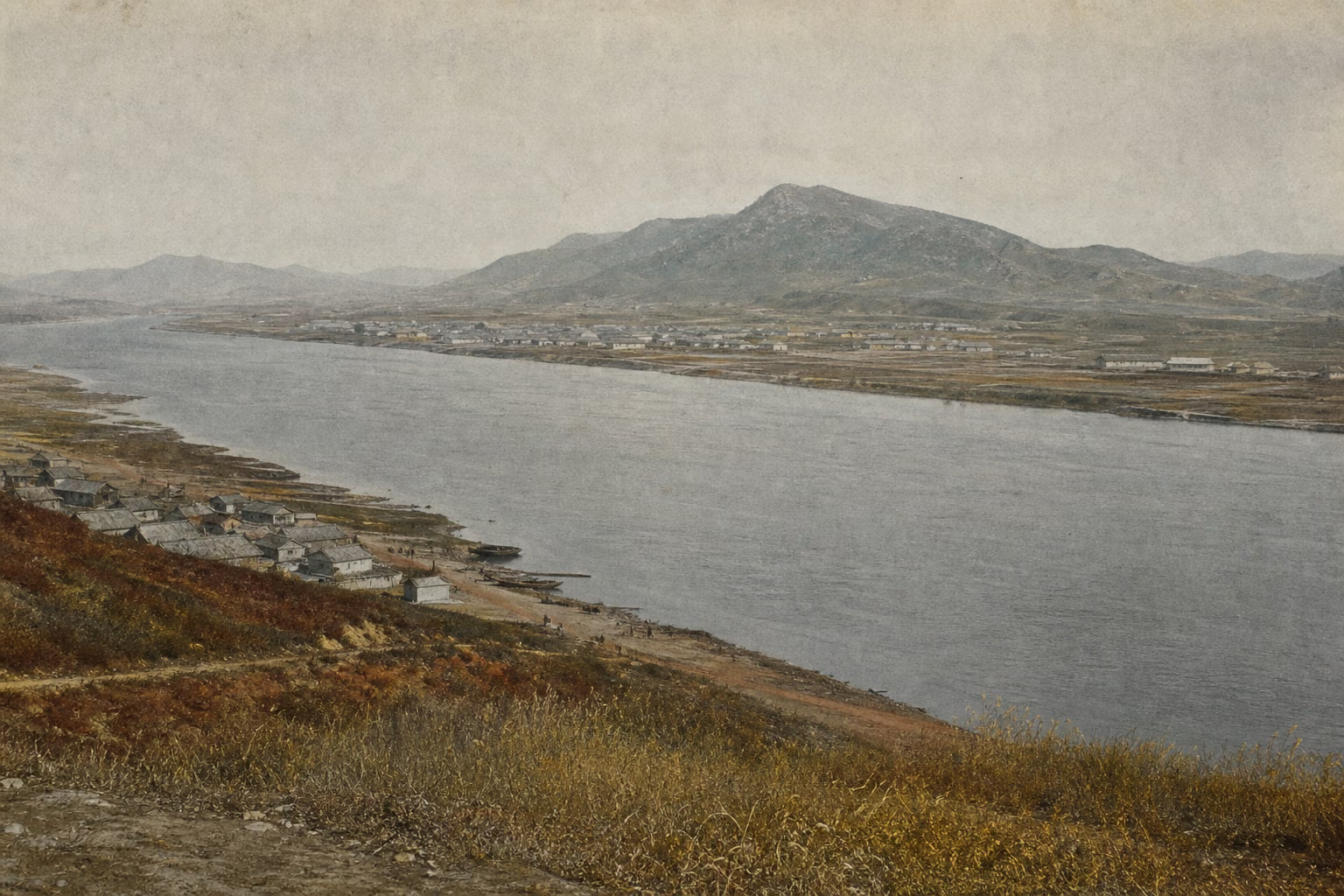
The frontier river. The Yalu River was the boundary between China and Korea. Uiju on the Korean side and Jiuliancheng on the Qing side faced each other across the water: the Japanese forces met not a single soldier as they reached the riverside inside Korea. Barely three months after the war began, all Korean territory had become a Japanese base area and point of departure.
This line. Jiuliancheng was the gateway north of the river. To its southeast, Hushan (Hu'ershan), between the Yalu River and the Ai River, was the high ground controlling the line of crossings (specific orientation unverified); Andong County (present-day Dandong), downstream near the river mouth, was the commercial port of this area. The defense line stretched for dozens of li along the river; once more than 20,000 men were scattered across it, every point was thin.
Morale. The main body of the defending army consisted of defeated troops who, just over a month earlier, had fled more than 500 li in six days from Pyongyang. Before the line had even met the enemy, it had already lost its nerve.
Why It Was Fought
After the Battle of the Yalu River (1894) (see *Battle of the Yalu River*), the remaining Beiyang ships withdrew into Weihai and no longer put to sea, turning the Yellow Sea into Japan's troop-transport corridor. On land, the armies that had collapsed from Pyongyang retreated across the Yalu River in late September, and just over a month later formed up again on the river's west bank. The core of the gateway line was this defeated army that had recently fled more than 500 li in six days, its morale already broken. The Qing court urgently ordered the aged general Song Qing, already past seventy, to take overall command of the various armies and set defenses along the river, but what he commanded were other men's troops, freshly routed forces, and the various routes in practice did not obey his direction.
The Yalu River was a frontier river and also the national gateway: across it lay Shengjing (Fengtian) territory, the Qing dynasty's place of origin and the site of its imperial tombs. Politically, this line had to be held. Jiuliancheng controlled the gateway north of the river; to the southeast, Hushan, caught between the Yalu River and the Ai River, was the high ground controlling the line of crossings; downstream Andong was a commercial port. The defense line stretched for dozens of li along the river; once more than 20,000 men were scattered across it, every point was thin.
Across the river, the base area of the Japanese First Army had already been laid from Hanseong and Pyongyang all the way to Uiju, facing Jiuliancheng across the water. Three months into the war, all Korea had become the point of departure. With command of the sea already in hand, Imperial General Headquarters settled on two routes: the Second Army would land by sea on the Liaodong Peninsula and take Jinzhou, Dalian, and Port Arthur directly (see *Battles of Jinzhou and Port Arthur*); the First Army would cross the Yalu River from Korea and advance in the direction of Fengtian as a holding force. The attacker chose the time and place of the crossing; the defender, arrayed along the river, could only wait.
The resolve to defend the river was set in Beijing, but the resources to defend it did not arrive with the order. After the defeat at Pyongyang, the court dismissed Ye Zhichao, ordered Song Qing to assist in managing Beiyang military affairs and to take overall command of the front-line armies (date and wording of the imperial edict unverified), and sternly ordered him to hold the river. Yet many guns and weapons had been abandoned in the collapse at Pyongyang; replacements depended largely on provincial contributions and newly recruited men raised on the eve of battle, while the Board of Revenue had already scraped repeatedly for war funds (details of wartime financing unverified). A gateway line of tens of thousands of men was pieced together in this way from defeated troops, new recruits, and funds scraped from one side to patch another.
Yamagata Aritomo calculated differently. Once Imperial General Headquarters had set the two-route scheme, the First Army's task was to cross the river and pin Qing forces in the direction of Fengtian; Yamagata read "pin down" as "advance." Without waiting for the Second Army to succeed in landing on the Liaodong Peninsula, he crossed first, and privately planned to push deeper after winter began (the First Army's winter offensive proposal and how Imperial General Headquarters suppressed it are unverified). He held better intelligence than the defenders: Japanese reconnaissance had already crossed the river and learned the substance of Qing deployments (Japanese reconnaissance records unverified). What the defenders lacked was precisely this--they did not know whether the Japanese main attack would point toward Hushan or the upper reaches, and they did not see the bridge raised in the night.
Dissent mostly stayed beneath the surface. There is no record of Qing generals openly opposing the deployment plan--whether no one argued, or arguments simply left no record, the surviving material is insufficient for judgment (no dissenting record seen, unverified). On the Japanese side, dissent was at the highest level: Imperial General Headquarters consistently held down Yamagata's appetite for a deep winter advance. One month after the river crossing succeeded, Yamagata was recalled under the name of illness, and command of the First Army changed hands (accounts differ on the reason for his departure, unverified).
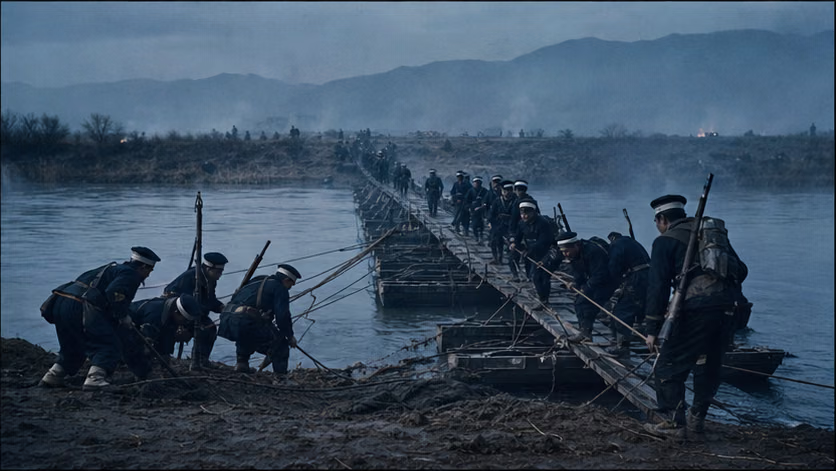
Before noon on October 24, one Japanese detachment swam across from the upstream Anping River mouth, first tearing open the flank. That night, engineers built a pontoon bridge on the section of river opposite Uiju, worked through the night, and completed it; the 20,000 Qing defenders on the west bank failed to detect it (Japanese official war-history narrative; reason for the failure to detect it unverified). The battle for the national gateway began with a bridge no one had seen.
Course of the Engagement
| Phase | Time | Key Points |
|---|---|---|
| Deployment | Early to mid-October | Song Qing was ordered to take overall command of the various armies and deploy along the river; he assembled the generals and asked who could hold Hushan. Ma Jinxu volunteered, selected five or six hundred brave men, and climbed the mountain to build fortifications (sequence and numbers unverified); Nie Shicheng selected elite troops to station beside the mountain, Song Desheng's detachment served as mobile support, and Liu Shengxiu's detachment dug ditches and laid mines on the west bank of the Ai River |
| First upstream crossing | Before noon, 10.24 | One Japanese detachment swam across from the upstream Anping River mouth; Yiketang'a's troops withdrew as soon as they made contact (unit numbers and combat situation unverified) |
| Pontoon bridge built by night | Night of 10.24 | Japanese engineers built a pontoon bridge on the river section opposite Uiju, worked through the night, and completed it; the Qing forces on the west bank failed to detect it (Japanese official war-history narrative; why the defenders failed to detect it unverified) |
| Main attack on Hushan | Dawn, 10.25 (Japanese records say 6 a.m., unverified) | The main force of the Third Division crossed the bridge and stormed Hushan; Ma Jinxu and Nie Shicheng (with only about 700 men under them) led an isolated force in a hard fight, received no reinforcements despite requests, and withdrew after suffering more than half casualties, retreating across the Ai River |
| Collapse along the whole line | 10.25–26 | Once Hushan was lost, the other armies collapsed without fighting; on 10.26 Jiuliancheng and Andong were abandoned in succession |
| Same period | From 10.24 | The Japanese Second Army began landing at Huayuankou on the Liaodong Peninsula and met no resistance from a single soldier for more than ten days (the Jinzhou-Port Arthur campaign belongs to the next batch; cross-reference here) |
Casualties and Losses
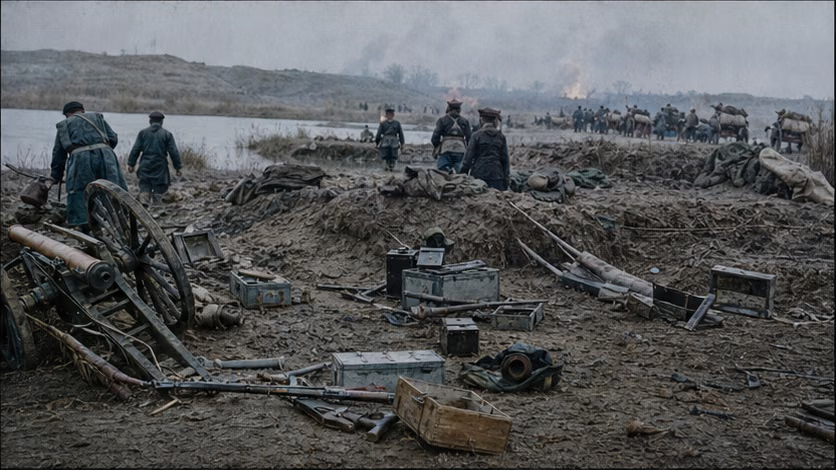
- Defenders: More than half the Hushan defenders became casualties (Qing narrative basis; specific casualties of Ma Jinxu's and Nie Shicheng's detachments unverified). The remaining units largely collapsed with almost no contact; casualties were small, but many weapons were abandoned--the number of guns, weapons, and supplies captured by the Japanese forces is unverified.
- Attackers: The casualties in the Hushan operation recorded in Japanese official war histories range from several dozen to more than a hundred (versions differ; the *Meiji 27-28 War History of the Sino-Japanese War* must be checked again).
- Civilians: Residents around Andong and Jiuliancheng fled on hearing the news, and their displacement was not counted. No clear record has been seen of atrocities against civilians in this engagement; after entering Andong, Japanese forces established a civil administration office and issued notices to reassure the people, deliberately adopting the posture of "not taking so much as a hair or thread" (Japanese occupation narrative, unverified).
Aftermath
- The gateway to Liaodong was thrown open: the First Army advanced in the direction of Fengtian, while the Second Army drove toward Jinzhou and Port Arthur--afterward came the Port Arthur Massacre ※ see the later piece on the Battles of Jinzhou and Port Arthur.
- Song Qing led the remnants back to defend the Motianling (Dagaoling) line, where Nie Shicheng's troops achieved one of the rare effective blocking actions of the First Sino-Japanese War's land fighting (the Battle of Dagaoling should become a separate piece, unverified).
- Yamagata Aritomo soon left office and returned to Japan; Nozu Michitsura succeeded him as commander of the First Army (time and reason unverified).
- The Andong civil administration office was the first occupation administrative institution established by Japan on Chinese soil (this claim unverified). Occupation and "reassuring the people" proceeded together; it was the first rehearsal for later occupation rule.
Accounts of Those Present
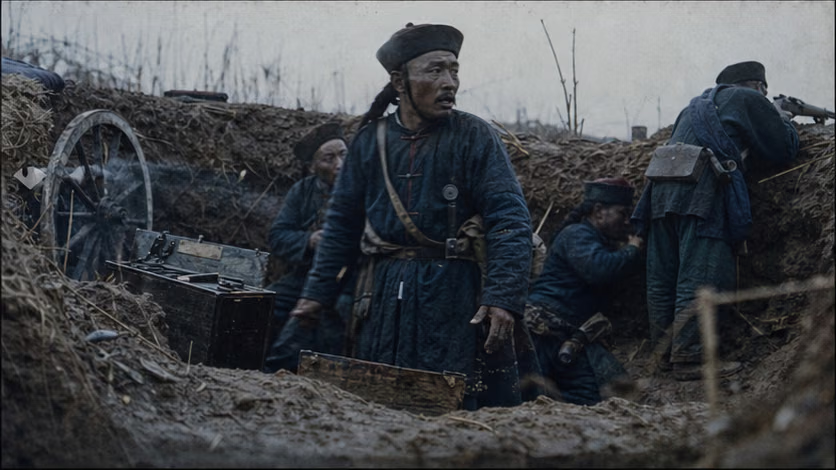
- "Whoever can take on this perilous key position shall receive the highest reward": Song Qing assembled the generals to discuss the defense of Hushan. Ma Jinxu knew it was an assignment of death and volunteered to defend it, "selecting five or six hundred brave men to climb the mountain and build fortifications" (from Qing records; original wording unverified).
- Nie Shicheng's second battle: Three months earlier, at Seonghwan in Korea, he had fought hard with 2,000 men against a Japanese brigade and been defeated. Hushan was his second fight to the death; he had only about 700 men beside him. The dispatch requesting reinforcements was sent out, but no reply came. Six years later, in 1900, Nie Shicheng died in battle against the Eight-Nation Alliance at Balitai in Tianjin during the Boxer Rebellion, and his remains were later desecrated by Boxers (posthumous details unverified).
- The old general Song Qing: When ordered to take overall command, he was already past seventy (aged seventy-four, unverified), and what he commanded were other men's troops and freshly routed forces. He had the name of overall command, but not the substance.
- That bridge: Japanese engineers built a bridge over the river through the night, and none of the 20,000 Qing defenders on the west bank noticed (Japanese narrative). In Japanese engineer war histories, this stroke is a source of pride; in Qing records, it is the most glaring failure of observation in the entire engagement.
The Ground
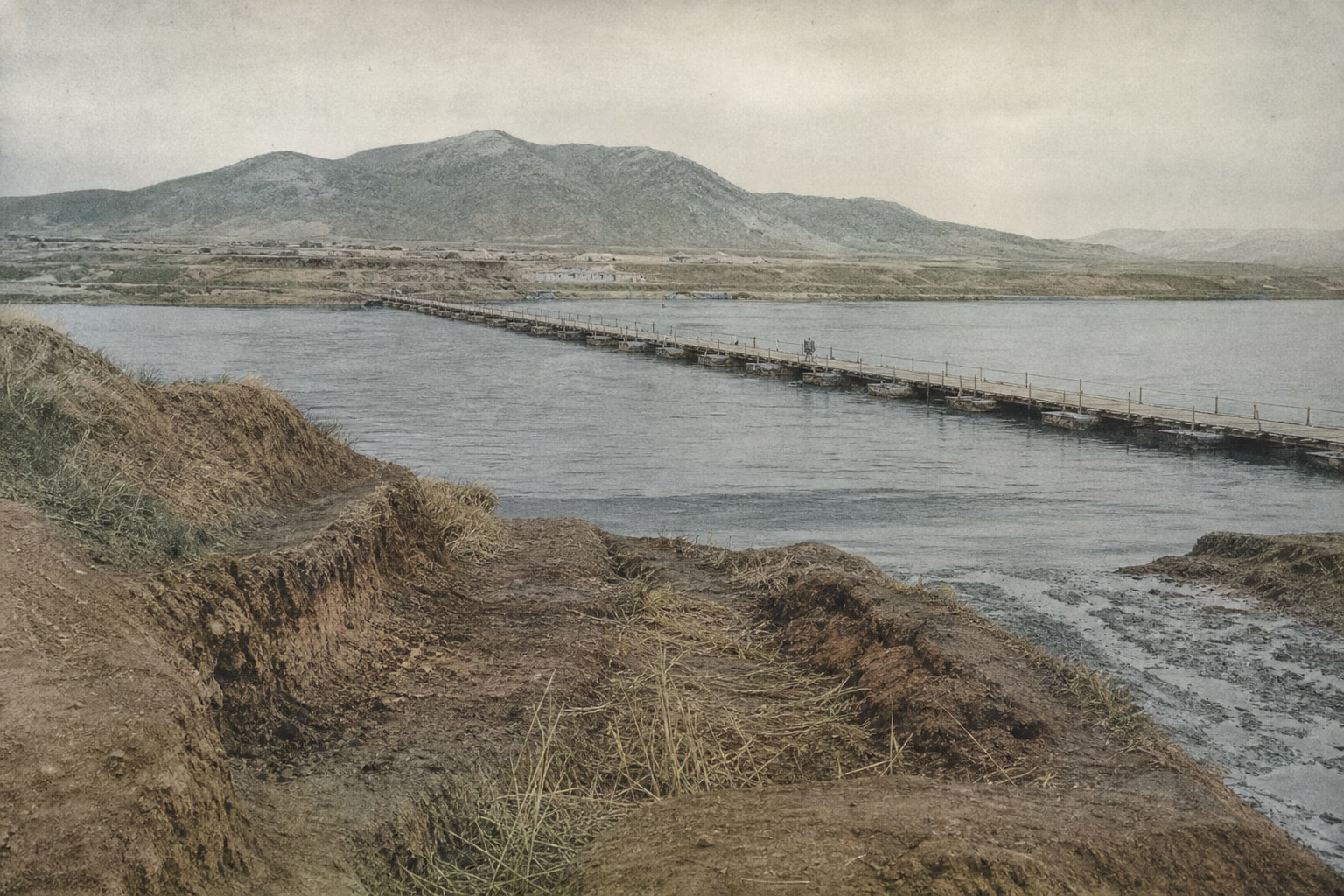
- The Yalu River here was the frontier river: broad water, with Uiju and Jiuliancheng facing each other across it. Crossing the river was the central action of the entire battle.
- Hushan was the key to the whole defense line: southeast of Jiuliancheng, on high ground between the two rivers, it commanded the line of crossings from above (the mountain's orientation and its relation to the Ai River unverified).
- The line ran for dozens of li along the river: a wide frontage, shallow depth, and no second line once a single point was broken.
- The Ai River was the second water line behind Hushan--the collecting line for the routed defenders, and also the place where Liu Shengxiu's detachment had dug ditches and laid mines in advance.
- Upstream there was a separate defensive sector from the Anping River mouth to the Changdian River mouth, which did not coordinate with the main line. The Japanese forces first swam across here to tear open the flank.
How Each Side Records It
- Chinese side: In memory it is the collapse in which "the Yalu River line was pierced within one day and night"--for the defense of the national gateway, only Hushan fought to the death. Nie Shicheng and Ma Jinxu therefore became the only bright spots of the entire campaign. Later accounts often set the isolated force at Hushan beside the whole line's collapse at the mere news of the enemy and Huayuankou's complete lack of defenders, writing it as a case of "no one at the national gateway."
- Japanese side: In the national mobilization narrative of the "Sino-Japanese War," crossing the Yalu River was the first time Japanese forces stepped onto Qing soil. War correspondents and ukiyo-e prints sent large numbers of scenes of the crossing and bridge-building back to Japan (specific works unverified); the nighttime bridge-building went undetected and was written into engineer war histories as a proud example.
- Korea's position: The starting point of this battle was in Korea: Japanese forces assembled, built the bridge, and crossed from the Uiju side. Koreans had no voice in this battle fought on their own frontier. In three months, from the occupation of the Hanseong royal palace on 7.23 to this point, Korea had gone from the nominal protagonist at the war's outbreak to a mere transit ground.
Disputes and Sensitivities
- How to apportion "collapse without fighting": The account of the whole line's collapse mainly comes from Qing memorials and later general histories, but there was contact at the upstream Anping River mouth and a fight to the death at Hushan. The degree to which each unit "collapsed" differed; exactly which unit and which commander the word "collapse" should attach to still requires article-by-article checking.
- The chain of responsibility: Song Qing's ineffective command and the generals' refusal to obey direction belonged to the same chain as Ye Zhichao's false reports and rewards after the Battle of Pyongyang and Wei Rugui's failure to maintain military discipline. Half of this line's collapse had already happened once at Pyongyang.
- Casualty and capture figures follow two different bases from different sources.
- This engagement was not a "great battle," but a line pierced through as soon as it was touched; the main contrast of the engagement is between the isolated Hushan force's fight to the death and the silent collapse of the whole line.
Sources and Open Questions
Known major sources:
- *Meiji 27-28 War History of the Sino-Japanese War* (Japanese official compilation)
- Memorials, impeachments, and front-line reports by Song Qing, Yiketang'a, and others from the Qing Guangxu-period Sino-Japanese correspondence materials (*Qing Guangxu Chao Zhongri Jiaoshe Shiliao*)
- Yao Xiguang, *Dongfang Bingshi Jilue*; Hashimoto Kaikan, *Qing Ri Zhanzheng Shiji*; and other Chinese and foreign war-history narratives (specific volumes unverified)
Open questions: total strength of the Qing defense line and actual numbers of each army; actual numbers of the Japanese First Army engaged; Ma Jinxu's strength at Hushan and the sequence of deployment; number of Nie Shicheng's troops; Japanese unit numbers and combat situation in the Anping River mouth swim crossing; precise location of the pontoon bridge and why the defenders failed to detect it; opening time on 10.25 (Japanese records say 6 a.m.); each account of casualties on both sides; number of guns, weapons, and supplies captured by Japanese forces; history of the Andong civil administration office; Yamagata Aritomo's departure and the timing of Nozu's succession; Song Qing's age at the time; details of what happened to Nie Shicheng's remains after the Boxer fighting; source of quotations such as "Whoever can take on this perilous key position shall receive the highest reward"; date and wording of the imperial edict appointing Song Qing; details of wartime financing; the First Army's winter offensive proposal and how Imperial General Headquarters suppressed it; Japanese reconnaissance records before the river crossing concerning Qing deployments; the various accounts of why Yamagata was recalled; whether there are any records of dissent among the generals.
All images on this site are AI-generated depictions. They are not historical photographs, not primary sources, and do not depict any real individual.