Engagement Archive · Seesaw Battles for Haicheng
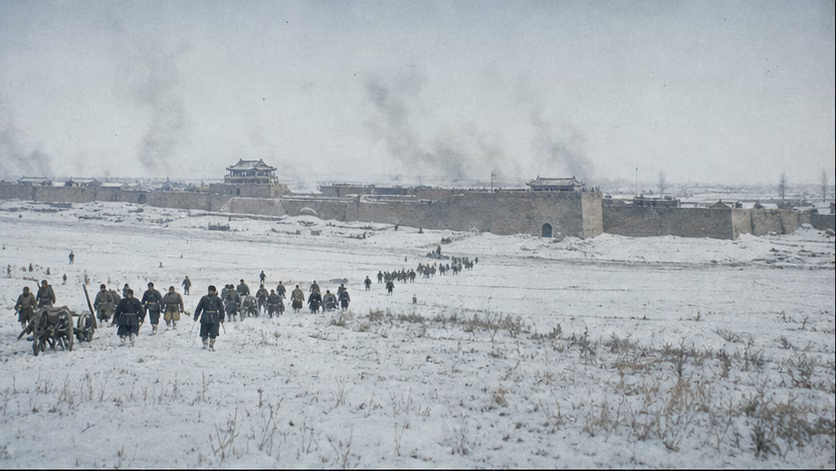
Japanese forces occupied Haicheng, the hub of southern Liaodong; Qing forces counterattacked by four routes, then five, through an entire winter, and never once fought their way in -- the longest stalemate of the First Sino-Japanese War on land, and the Qing army's final active offensive.
Engagement Data
| Item | Details |
|---|---|
| Time | 1894.12 – 1895.3 (12.13 Japanese forces occupied Haicheng; counterattacks concentrated in 1895.1–2) |
| Place | Fengtian Province (present-day Liaoning), Haicheng and the southern Liaodong corridor |
| Belongs to | First Sino-Japanese War (for the larger situation, see *First Sino-Japanese War · Overview*; follows *Battles of Jinzhou and Port Arthur*, followed by *Collapse in Liaodong*) |
| Counterattacking side | Qing forces of several routes: units under Iketangga, Changshun, Wu Dacheng (Xiang Army), Song Qing, and others, not mutually subordinate |
| Defending side | Japanese Third Division (division commander Katsura Taro, unverified) holding Haicheng |
| Result | Four Qing counterattacks (one account says five) all failed; Japanese forces then turned to the offensive and swept south toward Niuzhuang (see *Collapse in Liaodong*) |
Belligerents
| Item | Counterattacking side | Defending side |
|---|---|---|
| Strength | Several tens of thousands across all routes combined, but committed in batches, each fighting its own battle | Third Division held the city, around the ten-thousand-man scale (figures vary by account) |
| Firepower | Short of artillery for assaulting fortifications; older artillery had limited effect against city walls and fieldworks | Relied on city walls and fieldworks, with superior artillery fire |
| Command | Iketangga, Changshun, Wu Dacheng, and Song Qing each obeyed separate orders, with no unified forward command | Unified divisional command; north of Haicheng there were also Japanese forces pinning down the Liaoyang direction |
| Weather | Bitter winter cold; both offensive operations and logistics were dragged down | Waited at ease for an exhausted enemy |
Terrain and Conditions
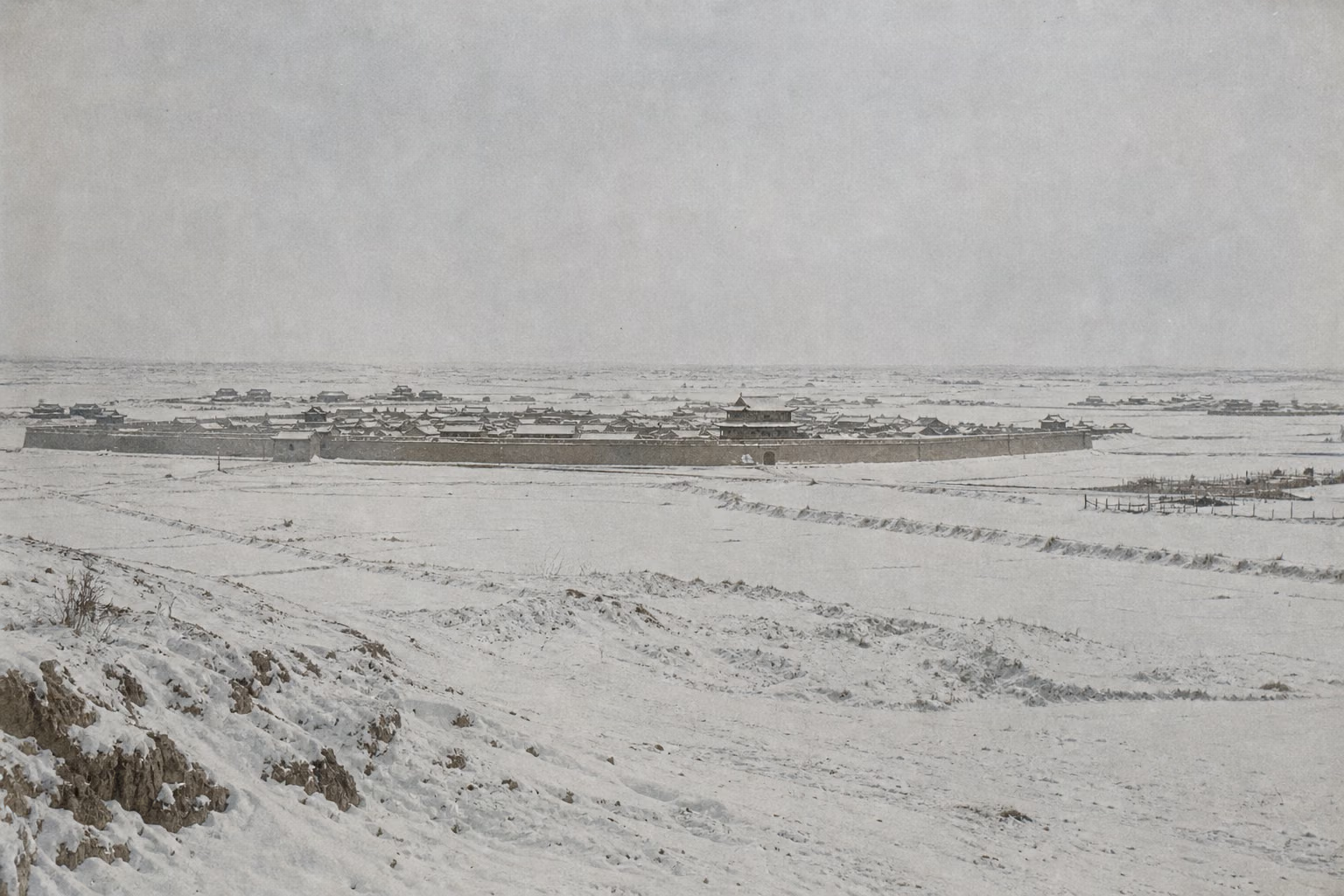
(For the larger situation -- Port Arthur already lost, Weihai under urgent threat, and the court wavering between war and peace -- see *First Sino-Japanese War · Overview*.)
Haicheng's position: Haicheng sat astride the Liaoyang-Gaiping-Yingkou corridor: northward it looked toward Fengtian (Shenyang), and southward it connected to Jinzhou and Port Arthur. Once Japanese forces held it, they had in effect driven a nail between the Qing army's Liaoshen heartland and southern Liaodong; unless Qing forces pulled it out, the gateway of the entire Liaodong province would remain unsettled.
Weather: The turn of 1894-95 was deep winter. Southern Liaodong was bitterly cold, with snow piled to the knees. Many of the counterattacking Qing troops had been hurriedly transferred from inside the Pass, and losses to freezing and hunger were already severe.
Why It Was Fought
Port Arthur fell on November 22, followed by four days of massacre (see *Battles of Jinzhou and Port Arthur*). With the Liaodong Peninsula in hand, Japanese spearheads turned north; the Second Army turned back to coordinate with the First Army pushing in from the Yalu River direction. On December 13, the Japanese Third Division took Haicheng almost without serious resistance.
The city sat astride the Liaoyang-Gaiping-Yingkou corridor, looking north toward Fengtian and connecting south to Jinzhou and Port Arthur. For Japanese forces to occupy it was to drive a nail between the Qing army's Liaoshen heartland and southern Liaodong; unless Qing forces pulled it out, the gateway of the entire Liaodong province would remain unsettled. Moreover Fengtian was no ordinary provincial capital: it was the Qing dynasty's place of origin and the site of imperial tombs. The Qing court was shaken, issued stern edicts urging battle, and hurriedly summoned forces from several routes for a converging attack -- the Jilin and Heilongjiang armies of Iketangga and Changshun, Song Qing's units, and the Xiang Army that Hunan governor Wu Dacheng led beyond the Pass after "volunteering for service." Before the battle, his proclamation boasted that he would "strike them head-on and punish them hard" (original proclamation text unverified), staking along with it the Xiang Army's reputation accumulated since the Xianfeng-Tongzhi years.
The two sides' calculations thus met: Qing forces wanted to pull out the nail and protect Fengtian; Japanese forces wanted to use Haicheng as a pivot and tie down the Qing army's last mobile field strength in southern Liaodong. But the capital each side brought to offense and defense was unequal. The several Qing routes each obeyed its own orders, with no unified forward command; they lacked artillery for assaulting fortifications, and against city walls and fieldworks had only older guns; it was deep winter, snow lay to the knees in southern Liaodong, and troops hurriedly transferred from inside the Pass suffered freezing and hunger losses before they ever began to storm the city. Japanese forces held the city behind walls and works, waiting at ease for an exhausted enemy.
The posture of the converging attack was laid out directly by the court. After Haicheng was lost, edicts came down in succession, ordering Liu Kunyi to go beyond the Pass as imperial commissioner and supervise military affairs for the eastern expedition, with Wu Dacheng and Song Qing assisting (the date and wording of the appointment edicts are unverified). Since the Xianfeng-Tongzhi years, it had been rare for the Qing court to send a senior minister personally to the front; what it displayed was the posture of a decisive battle to recover the city. Wu Dacheng's army came especially fast: as governor of Hunan he telegraphed a memorial volunteering for service, bringing newly recruited Xiang Army braves whose training was insufficient and whose rifles and guns were a patchwork of old and new. What the court could see when it made the decision was the ledger on paper: the defending enemy was no more than a detached force from one division, and reinforcements were several times its number. What it could not see was what tens of thousands of men would eat on the snowy plains of southern Liaodong, and by which road the shells would come forward. From inside the Pass to the front was more than a thousand li; grain, pay, and ammunition all depended on carts and pack transport through ice and snow, and the armies often attacked the city after first falling into pay arrears (records of transport and pay arrears unverified). On the Japanese side, the decision-making level had just undergone an operation that winter: First Army commander Yamagata Aritomo strongly advocated a major winter offensive, but Imperial General Headquarters did not accept it and recalled him to Japan (nominally for illness; internal circumstances unverified). His successor, Nozu Michitsura, drew in the offensive and held the city with caution. The defense of Haicheng was a method chosen by the Japanese side itself, not something produced by being surrounded. As to whether a strong city should be stormed in deep winter, the records show no weighty objection: the generals' disputes were over who would attack first and who would support, not over whether to attack at all (whether there was dissent at the center is unverified). Voices for peace inside the court never ceased, but that winter it was not yet their turn to decide.
The city was lost in mid-December, and the first counterattack began in early January 1895 (dates vary by account). Through the entire winter afterward, four and then five Qing routes took turns throwing themselves at this city. This was the only sustained active offensive by Qing forces in the land war of the First Sino-Japanese War, and also the last.
Course of the Engagement
| Stage | Time | Key points |
|---|---|---|
| Preliminary contacts | 1894.11–12 | Battles at Gangwazhai, Ganwangzhai, and elsewhere (Gangwazhai was Song Qing's November counterattack in the Jinzhou direction, cross-referenced with *Battles of Jinzhou and Port Arthur*); on 12.13 the Japanese Third Division occupied Haicheng |
| First counterattack | Early 1895.1 (dates vary by account) | Iketangga's and Changshun's forces attacked and were defeated |
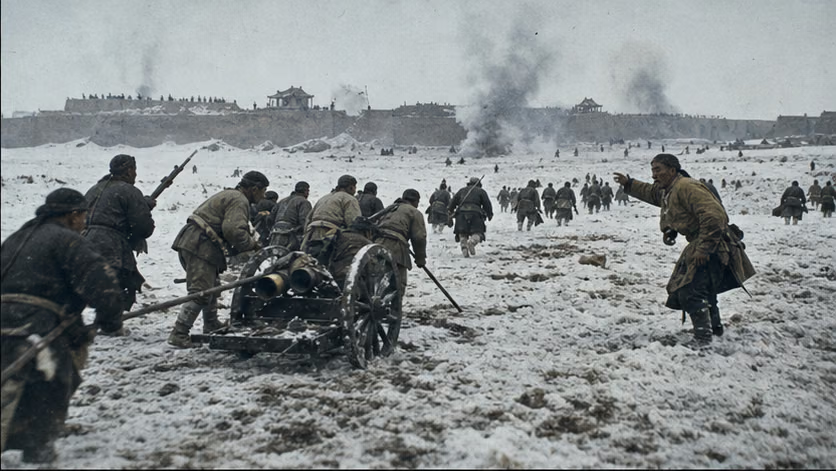
| Second through fourth counterattacks | 1895.1–2 | Wu Dacheng's Xiang Army, Song Qing's units, and others joined in succession; four attacks (one account says five; the counting bases are listed side by side) all failed below the city |
| Japanese turn to the offensive | Late 1895.2–March | Japanese forces no longer sat on the defensive: they first broke the pinning force in the Liaoyang direction, then turned south to sweep Niuzhuang, Yingkou, and Tianzhuangtai (see *Collapse in Liaodong*) |
Wu Dacheng and the Xiang Army beyond the Pass: Hunan governor Wu Dacheng led the Xiang Army beyond the Pass after "volunteering for service," and before the battle his proclamation boasted that he would "strike them head-on and punish them hard" (original proclamation text unverified). The Haicheng actions, and the subsequent defeat at Niuzhuang, lost along with them the reputation the Xiang Army had accumulated since the Xianfeng-Tongzhi years -- after the war Wu Dacheng impeached himself (details of the self-impeachment memorial unverified).
Casualties and Losses
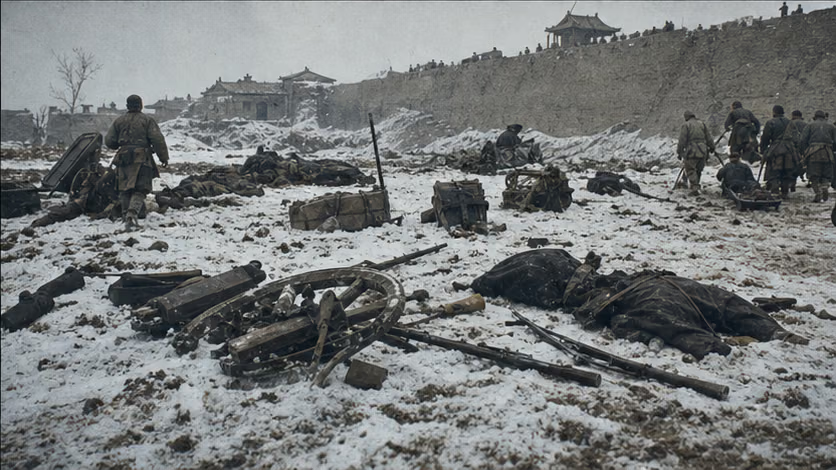
- Counterattacking side: cumulative casualties over the repeated counterattacks reached several thousand (figures vary by account); the damage to the Xiang Army's reputation is hard to count in numbers.
- Defending side: Japanese casualties while holding the city were limited (figures vary by account), but they were pinned along the Haicheng line for the entire winter.
- The attrition of a five-month stalemate consumed the Qing army's last mobile field strength in southern Liaodong.
Aftermath
- Japanese forces turned from defense to offense, and the First Sino-Japanese War on land entered its closing stage of collapse in Liaodong (see *Collapse in Liaodong*).
- The myth of the Xiang Army going beyond the Pass was bankrupted; on the Qing court's list of usable "crack troops," there was no longer a force that had never lost.
- By this point the court's will to fight had in substance collapsed, turning toward begging for peace (for the larger line, see *First Sino-Japanese War · Overview*).
Accounts of Those Present
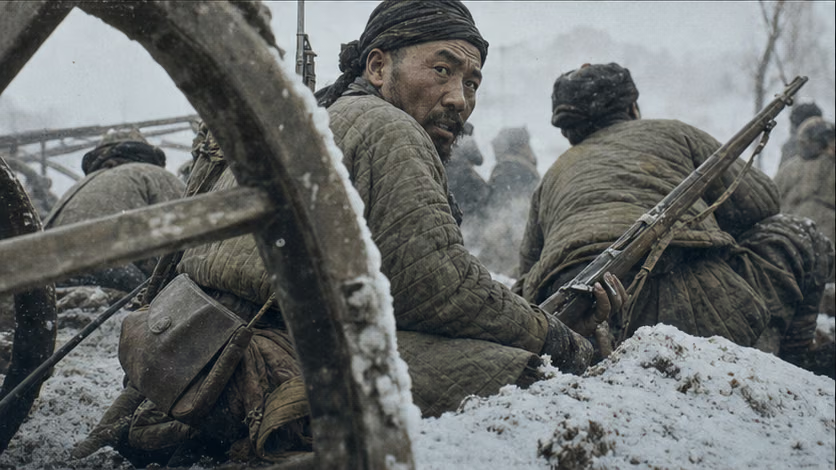
- Wu Dacheng: a high official with a background as an epigrapher, he led the Xiang Army beyond the Pass with a proclamation full of soaring martial spirit, and after the defeat could only impeach himself. The gap between paper and battlefield is the sharpest figure in this article.
- Soldiers in bitter cold: troops transferred from inside the Pass stormed the city in open country around twenty degrees below zero, with frostbite and desertion (specific attrition records unverified) -- winter was the other half of the enemy in this seesaw struggle.
- Each fighting its own battle: records such as Iketangga attacking the city's east side while Changshun held his troops still on the same day are scattered through battle reports from various sides (details unverified). Whether there were "five counterattacks" or "four" is itself a result of the several routes not being subordinate to one another and each reporting its own battle.
The Ground
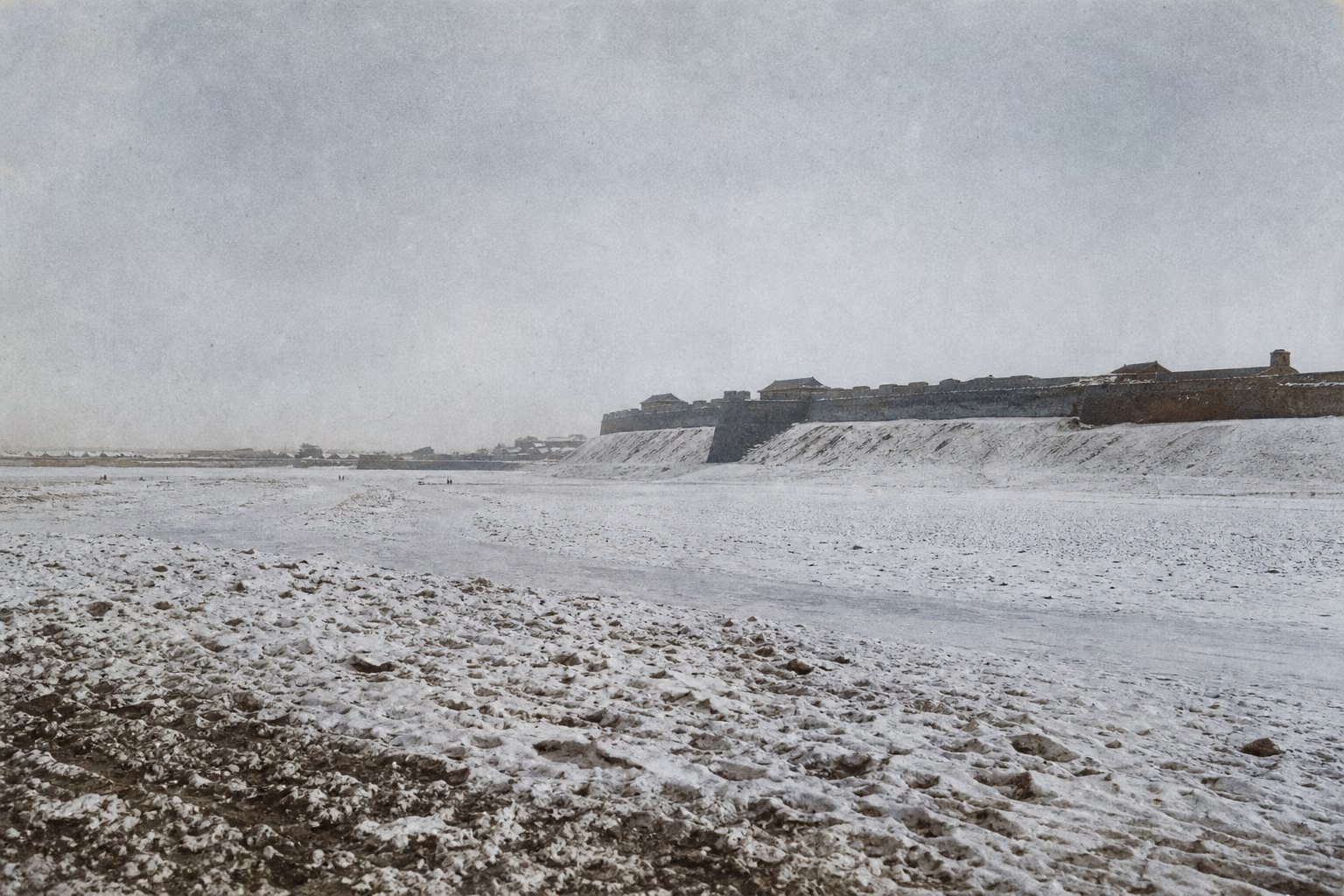
- Haicheng stood isolated on the southern Liaodong plain, with walls around the city; surrounding villages, fortified hamlets, and stockades such as Ganwangzhai and Gangwazhai were support points repeatedly contested by both sides.
- The axes of assault were monotonous: on an open plain without cover, the attackers were exposed to artillery fire from the city. The cause of defeat was written into the ground: lack of artillery for assaulting fortifications, plus terrain that offered no concealment.
- Winter snowfield: extremely long lines of sight, extremely slow movement, and an offensive-defensive posture visible at a glance.
How Each Side Records It
- Chinese side: in memory, this battle is often covered over by the major defeats at Port Arthur and Weihai, but the "four attacks on Haicheng" were the Qing army's only sustained offensive posture in the land war of the First Sino-Japanese War. They fought, and they did not win; this layer, too, forms the memory of the battle.
- Japanese side: military histories record the defense of Haicheng as an example of using the few to control the many (specific wording unverified).
Disputes and Sensitivities
- Number of counterattacks: four and five both exist as counting bases, arising from each route's battle reports counting for itself.
- Wu Dacheng's proclamation and self-impeachment: the original texts appear in scattered quotations and require checking back against the original memorials (original memorials unverified).
- "Bankruptcy of the Xiang Army myth": this is a summary in later narrative; the Xiang Army camps at Haicheng and Niuzhuang did indeed fight to the death (see *Collapse in Liaodong*).
Sources and Open Questions
Known main sources:
- Memorials and battle reports by Iketangga, Changshun, Wu Dacheng, Song Qing, and others (*Historical Materials on Sino-Japanese Negotiations in the Guangxu Reign of the Qing*, etc.; item titles unverified)
- Japanese official war-history volumes on southern Liaodong (item titles unverified)
- Wu Dacheng's related collected writings and chronological biography
Open questions: the name of the Japanese Third Division commander and the strength holding the city; the exact dates and order of battle for the four or five counterattacks; the attribution and sequence of the Battle of Gangwazhai; the original text of Wu Dacheng's pre-battle proclamation; the content of Wu Dacheng's self-impeachment memorial; the casualty bases for each action on both sides; specific records of losses to freezing and hunger; the appointment edict and departure sequence for Liu Kunyi's supervision of eastern-expedition military affairs; the internal circumstances of Yamagata Aritomo's recall; records of Qing grain-and-pay transport and pay arrears in southern Liaodong; whether there was dissent at the center over the decision to counterattack in deep winter.
All images on this site are AI-generated depictions. They are not historical photographs, not primary sources, and do not depict any real individual.