Engagement Archive · Battle of Weihaiwei
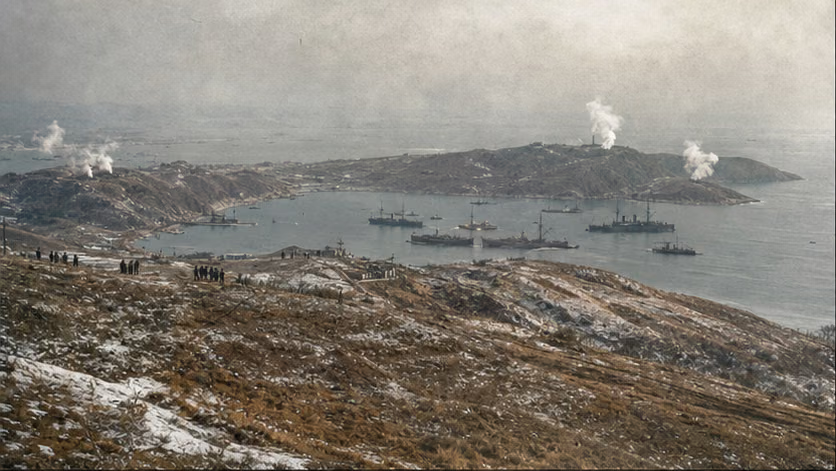
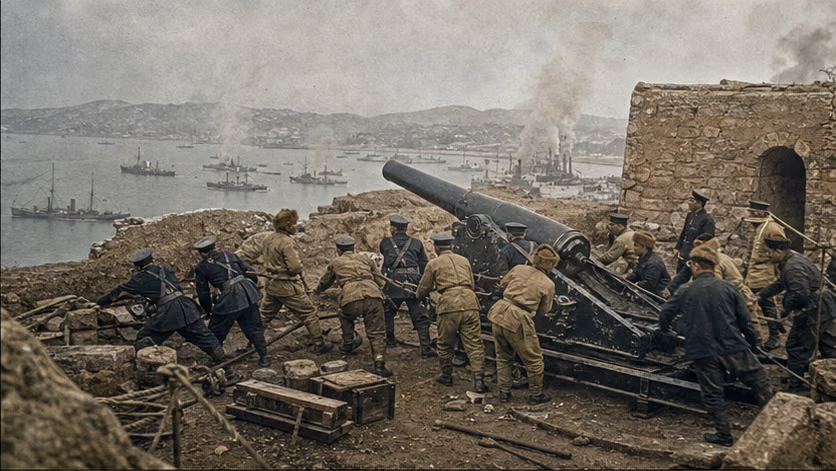
The remnants of the Beiyang Fleet were ordered to sit fast inside Weihai harbor and "preserve the ships to control the enemy"; Japanese forces took the batteries on both shores from landward, turned the Qing forces' own coastal guns around, and bombarded the warships in the harbor--the admiral took his own life, the fleet surrendered in full, and the Beiyang Navy was destroyed.
Engagement Data
| Item | Details |
|---|---|
| Time | 1895.1.20 – 2.17 |
| Place | Weihaiwei, Shandong (Rongcheng Bay, the southern and northern batteries, Liugong Island, and the anchorage inside the harbor) |
| Belongs to | First Sino-Japanese War (for the larger situation, see *First Sino-Japanese War: Overview*) |
| Defending side | Remnants of the Beiyang Fleet (naval admiral Ding Ruchang) + Suigong Army and other Weihaiwei land-defense units |
| Attacking side | Japanese Shandong Operation Army (commander Oyama Iwao) + Combined Fleet (commander-in-chief Ito Sukeyuki) |
| Result | 2.12 Ding Ruchang took his own life; 2.17 Japanese forces entered Liugong Island, the remaining ships surrendered, and the Beiyang Navy was destroyed in full |
Belligerents
| Item | Defending side | Attacking side |
|---|---|---|
| Strength | More than ten vessels (Dingyuan, Zhenyuan, Jiyuan, Pingyuan, Laiyuan, Weiyuan, Kangji, and others; ship list unverified); several thousand Suigong Army land-defense troops | Army landing force of about 20,000 (figures vary by account); the main body of the Combined Fleet blockaded the harbor mouth |
| Firepower | Fleet naval guns + southern and northern coastal batteries, originally designed for fortress and fleet to protect one another | Army field guns + fleet gunfire; after the coastal guns were taken, the direction of fire was reversed |
| Posture | Ordered to sit fast inside the harbor, "preserve the ships to control the enemy," and not sortie actively | Land-sea coordination: the army went around to the rear, the navy blocked the gate |
| Morale | After the recent defeat in the Yellow Sea, isolated on islands, with outside support cut off | An army and navy riding successive victories |
Terrain and Conditions
(For the larger situation--Port Arthur already lost, and calls for peace negotiations rising at court--see *First Sino-Japanese War: Overview*.)
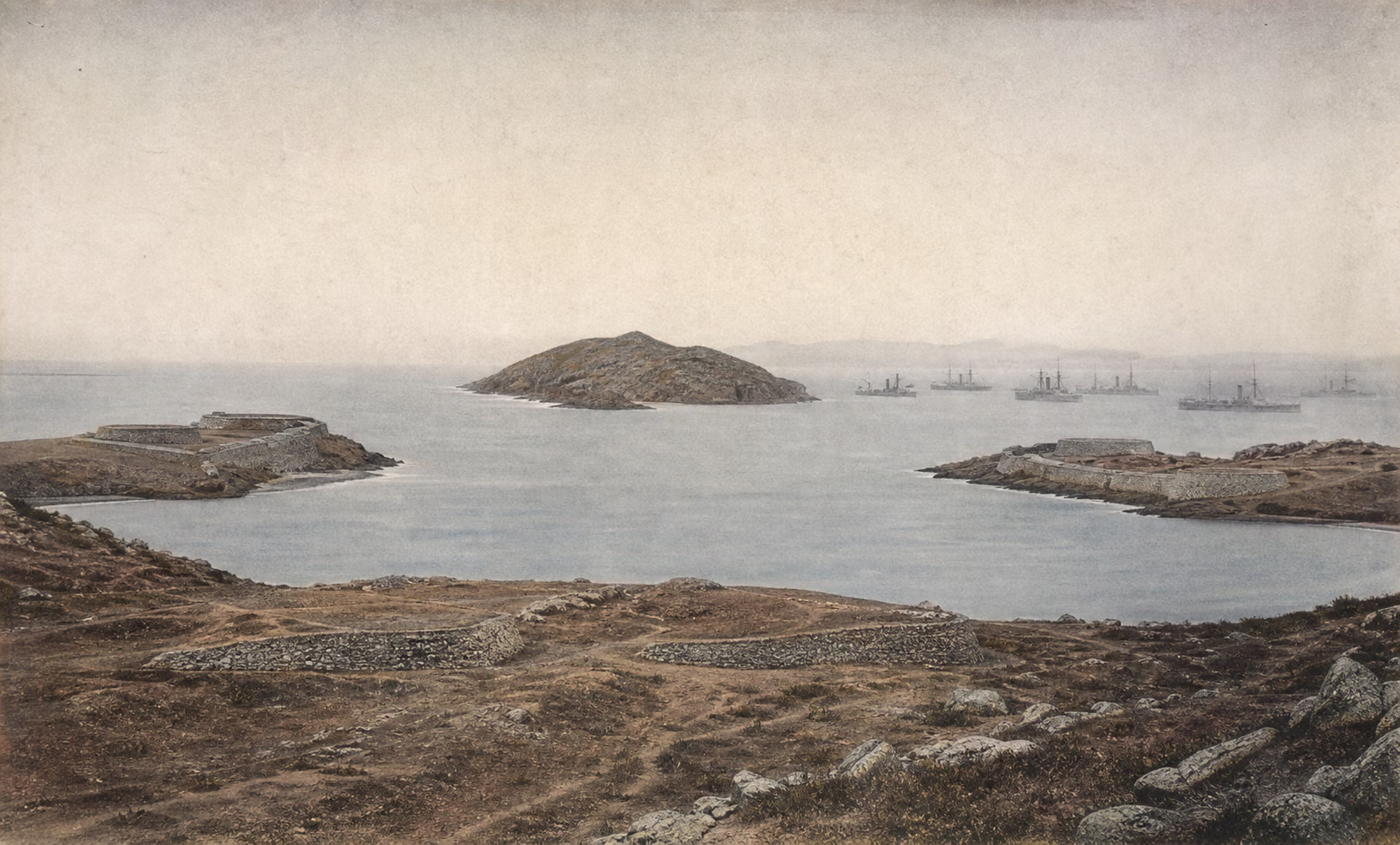
The layout of Weihaiwei: the mouth of the bay was narrow, Liugong Island controlled the entrance, and batteries were built on the southern and northern shores (the southern and northern batteries), forming mutual support with the fleet inside the harbor--by design, this was the Beiyang Navy's final lair. Its vulnerable point was the same as Port Arthur's: the guns faced the sea, and the land route lay behind them.
Shandong in the twelfth lunar month: the Japanese landing was chosen for 1.20, in the twelfth lunar month, at Rongcheng Bay, in deep winter. The defenders judged that Japanese forces would not land in severe winter, and judged wrongly (reasoning process unverified).
Why It Was Fought
In the snowy ground of southern Liaodong, Qing forces were still throwing themselves again and again at Haicheng (see *Seesaw Battles for Haicheng*); while that seesaw fighting pinned the Qing army's last field strength beyond the pass, Japanese forces moved against the Shandong Peninsula. With Port Arthur already lost, the remnants of the Beiyang Fleet had only Weihai as their remaining harbor. After the Yellow Sea they had not put to sea again; Dingyuan and Zhenyuan, with more than ten vessels, lay at anchor inside Liugong Island. By now calls for peace negotiations were rising at court, and this fleet was the Qing court's last remaining bargaining chip at sea.
Weihai's layout was originally Beiyang's final lair: a narrow bay mouth, Liugong Island controlling the entrance, and the southern and northern shore batteries mutually supporting the fleet inside the harbor. Its vulnerable point was exactly the same as Port Arthur's--guns facing the sea, land routes in the rear. The Japanese Imperial Headquarters plan followed the same pattern as at Jinzhou and Port Arthur: the Combined Fleet would seal the harbor mouth, while the army landed and struck the batteries from behind, destroying the fleet in its final anchorage. Of the two great naval bases, Port Arthur had been pulled out; only this one remained.
The Qing court's order to Ding Ruchang was to sit fast inside the harbor and "preserve the ships to control the enemy"--the source and wording of this order became a focus of postwar accountability (source unverified). The defenders also made one judgment: in the depth of winter, in the twelfth lunar month, Japanese forces would not choose a freezing landing (reasoning process unverified). So the fleet waited inside the harbor, while the two sets of batteries and the rear routes were held only by several thousand land-defense troops such as the Suigong Army; across from them, both the Japanese land and sea arms had been freed--southern Liaodong held the Qing army in place, and at sea there was no opponent.
The boundary of sitting fast was drawn by material conditions, not only by an order. With Port Arthur lost, the Beiyang Fleet had lost the only dockyard capable of major repairs to ironclads: the damage Dingyuan and Zhenyuan had taken in the Yellow Sea could not be repaired, shell stocks could not be replenished, and the shortage of explosive shells dragged on from the Yellow Sea all the way into Weihai (ammunition accounts unverified); coal had to be procured elsewhere, and craftsmen had scattered. Each time the fleet put to sea, it ran one more risk of total destruction. Li Hongzhang's calculation was to preserve the fleet as a bargaining chip for peace negotiations; if the chip sank, nothing would remain. Ding Ruchang's proposals to lead the fleet to sea were repeatedly rejected, until in the end he could only nail the fleet into the anchorage (telegrams and correspondence on proposals to sortie unverified).
Land defense was another, narrower boundary. The rear routes of the southern and northern batteries were held only by several thousand Suigong Army troops; the mobile defensive troops under Shandong governor Li Bingheng were already few, and also had to divide their guard among the Dengzhou, Yantai, and Jiaozhou directions. He judged that any Japanese landing must take the main roads, and deployed accordingly--Rongcheng Bay was the square left uncovered (records of Li Bingheng's defensive judgment unverified). The Nanyang Fleet did not come: the court had issued edicts ordering aid, but Nanyang pleaded that it could not look after anything beyond itself (wording of the refusal memorial unverified). From beginning to end, Weihai was an isolated fortress.
There were objections, and they were placed openly on the table. Seeing that the land defenses could not be relied upon, Ding Ruchang argued that if the batteries could not be held, their guns should be destroyed first, lest they furnish the enemy. Dai Zongqian, commander of the Suigong Army, firmly refused, denouncing this as self-abandonment--whether to destroy the guns became the final breach torn open between navy and army (original record of the dispute unverified). After the Japanese landing, the southern batteries did indeed change hands, and the turned-around gun muzzles gave the answer to that dispute. Foreign officers in the harbor and some commanders later proposed breaking out or surrendering, which Ding Ruchang rejected (see recollections by Tyler and other Western officers, source unverified).
On January 20, in the twelfth lunar month, the Japanese Shandong Operation Army landed around Longxu Island in Rongcheng Bay without meeting resistance. From there to the rear of the southern batteries, the whole route was overland.
Course of the Engagement
| Stage | Time | Key points |
|---|---|---|
| Landing at Rongcheng Bay | From 1.20 | The Shandong Operation Army landed around Longxu Island without meeting resistance |
| Battle for the southern batteries | 1.30 | Gong Army troops held Motianling alone and fought hard; Japanese major general Odera Yasuzumi was killed by artillery fire--the highest-ranking Japanese officer killed in the First Sino-Japanese War; the batteries ultimately fell, and defending commander Zhou Jia'en died in battle (details unverified) |
| Abandonment of the northern batteries | 1.30–2.2 | The troops defending the northern batteries collapsed and scattered; by 2.2 Weihaiwei city and the northern batteries were both lost |
| Siege by land and sea | From 2.2 | Japanese ships blockaded the harbor mouth, while Japanese forces ashore turned the Qing forces' own coastal guns around and bombarded the warships inside the harbor--"their own guns firing on their own ships," a scene that concentrated the backlash after the harbor defenses were lost |
| Torpedo-boat night attack | Early morning, 2.5 | Dingyuan was struck by a torpedo and grounded, was converted into a battery, and soon destroyed herself; captain Liu Buchan took his own life (the oath "if I lose my ship, I must take my own life," source unverified); Laiyuan, Weiyuan, and others sank in succession |
| Holding out and calls to surrender | 2.5–2.12 | Ito Sukeyuki sent a letter urging surrender; Ding Ruchang refused to surrender (details of reply / no reply unverified; the surrender-urging letter, "That the Qing state has come to today's defeat..." is a famous transmitted document, original textual version unverified) |
| Surrender | 2.12–17 | On 2.12 Ding Ruchang took opium and killed himself; Niu Changbing, Circuit Intendant of the Operations Office, and others drew up a surrender letter in Ding Ruchang's name; on 2.17 Japanese forces entered Liugong Island, and Zhenyuan and nine other ships surrendered to Japan (ship list unverified) |
Casualties and Losses
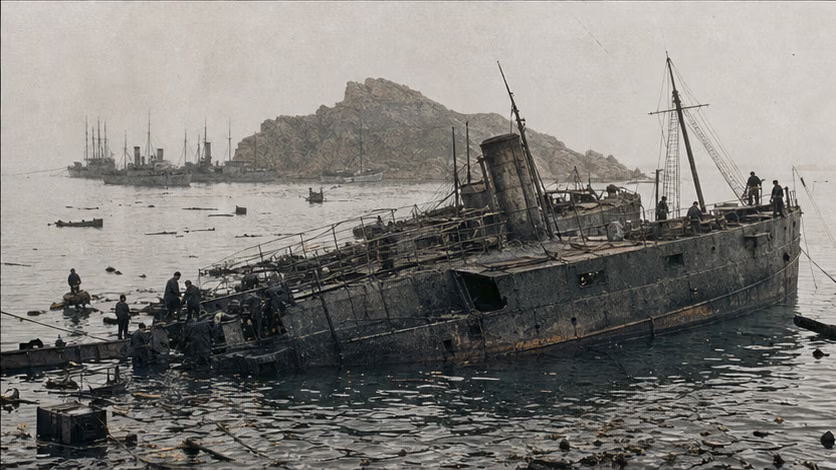
- Defending side: the Beiyang Navy was destroyed in full--sunk, self-destroyed, or surrendered, with not a single vessel remaining; several commanders below the admiral level killed themselves (names unverified).
- Attacking side: Japanese casualties were limited, but they included Odera Yasuzumi, the highest-ranking officer killed in the whole war (major general, posthumous promotion disputed).
- Details of hard fighting such as Sa Zhenbing's defense of Ridao battery for more than ten days (details unverified)--the defending side was not devoid of men who fought to the death.
Aftermath
- Thirty years of work building the Beiyang Navy returned to zero. The Qing court lost its last coastal defense and had no bargaining chip left for the Treaty of Shimonoseki negotiations (see *First Sino-Japanese War: Overview*).
- Ding Ruchang after death: his coffin and remains were punished by the Qing court as those of a man who had "incurred guilt"; the coffin was locked and could not be buried, and rehabilitation came only in the Xuantong reign (details of the handling unverified)--behind the defeated commander after his death was the reappearance, in the First Sino-Japanese War, of "misfocused accountability": the whole system had lost the war, but the guilt fell on a dead man.
- Kangji carrying the coffins: the Japanese side allowed Kangji to carry the coffins of Ding Ruchang and others off the island, while Japanese ships fired salutes in farewell--enemy courtesy and the surrender scene in the same frame.
- The surrendered ship Zhenyuan and others were incorporated into the Japanese navy (subsequent fate of each ship unverified).
Accounts of Those Present
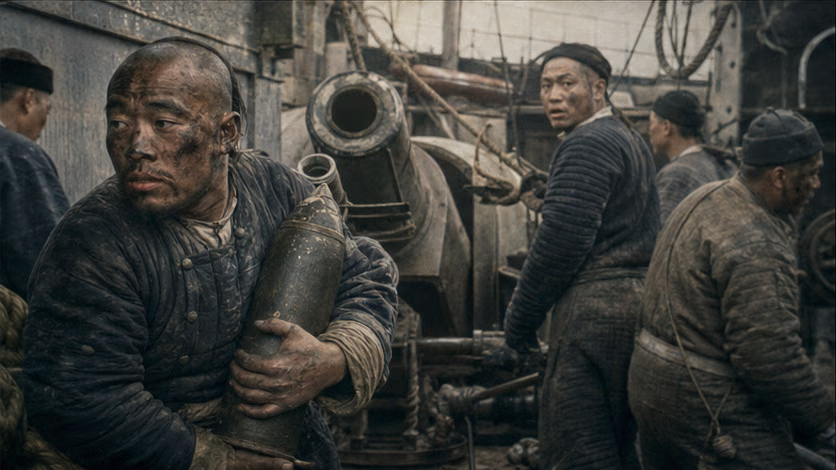
- Ding Ruchang: a fleet admiral from an army background, wounded yet commanding in the Yellow Sea, and at Weihai refusing surrender before taking his own life. After death, his coffin was locked for more than ten years--one man's posthumous treatment became an entire history of accountability.
- Liu Buchan: captain of Dingyuan, who had sworn, "if I lose my ship, I must take my own life," and fulfilled that oath on the day the ship was destroyed (source of oath unverified).
- Odera Yasuzumi: the Japanese major general who died at Motianling--among those Qing coastal guns last killed, the highest in rank was the highest-ranking enemy officer killed in the whole war.
- Niu Changbing: the man who wrote a surrender letter in a dead man's name. When the surrender letter fell under the name "Ding Ruchang," Ding had already killed himself--the right and wrong of that stroke rests on the pair of facts that the surrender letter used his name and that Ding Ruchang was already dead.
- Kangji: of the whole fleet only this training ship remained, carrying coffins and surrendered personnel off the island, while Japanese ships fired salutes. Courtesy and humiliation were aboard the same vessel.
The Ground
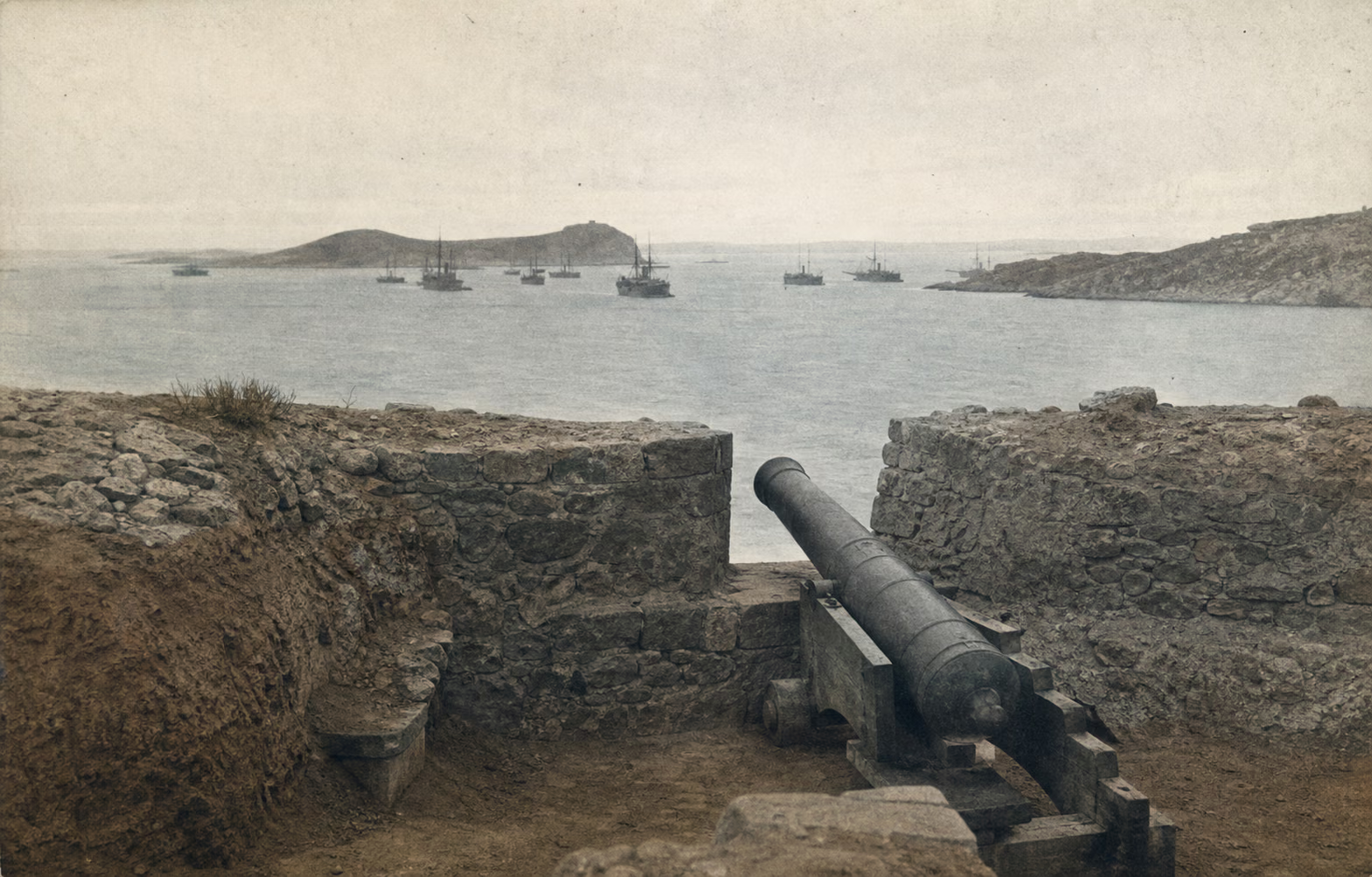
- A pocket-shaped bay: the entrance was narrow, Liugong Island stood in the middle, and batteries on both shores and the fleet protected one another--a designed fortress that became a death ground after the army entered from behind.
- Spatial reversal is the core grammar of this battle: coastal guns changed hands, "their own guns fired on their own ships," and the relationship between fortress and fleet was entirely reversed.
- An isolated anchorage under confinement: the ships inside the harbor could not move, and torpedo boats raided the harbor by night--the static quality of a siege overlaid with the suddenness of a night attack.
- Offshore gun positions such as Ridao and Liugong Island: Sa Zhenbing's defense of Ridao for more than ten days is a sample of small-scale isolated-point defense.
How Each Side Records It
- Chinese side: the destruction of Beiyang is the punctuation mark of national humiliation in the First Sino-Japanese War; debate continues over responsibility for "avoiding battle to preserve the ships" (strict court orders / Li Hongzhang's strategy / Ding Ruchang's execution of it). Ding Ruchang's posthumous punishment and late rehabilitation themselves are remembered as a typical case of misfocused accountability.
- Japanese side: it entered military history as a model of land-sea coordinated annihilation; Ito Sukeyuki's letter urging surrender was repeatedly cited in Japanese war narratives as "samurai courtesy" (Japanese memory lineage unverified).
- International side: Western naval circles treated Weihai as a lesson that "a fleet confined in harbor must perish" (specific comments unverified).
Disputes and Sensitivities
- Responsibility for sitting fast: whose hand issued the order to "preserve the ships to control the enemy" directly determines Ding Ruchang's historical position; the original telegram and edict remain unverified.
- The name on the surrender letter: after Ding Ruchang's death, surrender was presented in his name; accounts of its nature and effect must place the various perspectives side by side.
- The surrender-urging letter: transmitted versions of the text differ, so it is not transcribed here.
- The handling of Ding Ruchang after death: the specific details of the locked coffin and Xuantong-era rehabilitation remain unverified.
Sources and Open Questions
Known main sources:
- Biographical and memorial materials related to Ding Ruchang and Liu Buchan
- Various versions of Ito Sukeyuki's surrender-urging letter (original text unverified)
- Japanese official war-history volumes on the Weihaiwei operation (titles unverified)
- Tyler (W. F. Tyler), *Pulling Strings in China*, and other recollections by Western officers (versions unverified)
Open questions: list of surrendered ships; names of defending-side commanders who killed themselves; details of Odera Yasuzumi's posthumous promotion and death; details of Zhou Jia'en's death in battle; the defenders' reasoning process regarding a Japanese winter landing; source and wording of the "preserve the ships to control the enemy" order; source of the oath "if I lose my ship, I must take my own life"; original text of the surrender-urging letter and whether there was a reply; details of the handling of Ding Ruchang after death; details of Sa Zhenbing's defense of Ridao; subsequent fate of surrendered ships incorporated into the Japanese navy; Japanese memory lineage for the surrender-urging letter; fleet ammunition accounts after the Yellow Sea battle; telegrams and correspondence on Ding Ruchang's proposals to sortie; records of Li Bingheng's defensive judgment; wording of Nanyang's refusal memorial; original record of the dispute over destroying the guns; records of foreign officers' proposals to break out or surrender (Tyler and others).
All images on this site are AI-generated depictions. They are not historical photographs, not primary sources, and do not depict any real individual.