Engagement Archive · Defense of Tianjing
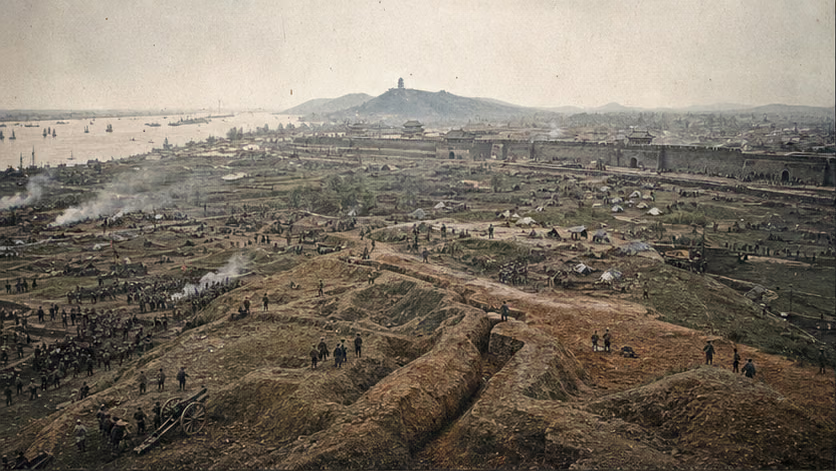
In May 1862, twenty thousand Xiang Army troops established themselves beneath the walls of Tianjing; they besieged the city for two years and two months, withstood Li Xiucheng's relief assault of a claimed several hundred thousand men over forty-six days, and by trenches, forts, the navy, and grain routes starved this capital until its food was gone. On July 19, 1864, a tunnel mine blasted the wall open -- and with that, the Taiping Heavenly Kingdom came to its end.
Engagement Data
| Item | Details |
|---|---|
| Time | 1862.5.30 (Xiang Army encamped at Yuhuatai) - 1864.7.19 (city fell), also including the fall of Suzhou and killing of surrendered troops in 1863.12 |
| Place | In and around Tianjing, Jiangsu (today Nanjing), with relief battlefields including northern Anhui and Suzhou |
| Belongs to | Late phase of the Taiping and Nian Rebellions (for the broader situation, see Taiping Heavenly Kingdom: Overview) |
| Defending side | Taiping Army (Heavenly King Hong Xiuquan; Loyal King Li Xiucheng in chief military command; later Young Heavenly King Hong Tianguifu succeeded) |
| Besieging side | Qing Xiang Army under Zeng Guoquan (Jizi Battalion); Peng Yulin's navy; on the eastern route, Li Hongzhang's Huai Army and Gordon's Ever Victorious Army attacked southern Jiangsu |
| Result | On 1864.7.19 the Xiang Army broke into the city; Hong Xiuquan had earlier died of illness during the siege; Li Xiucheng and the Young Heavenly King were later captured and executed |
Belligerents
| Item | Defending side (Taiping Army) | Besieging side (Qing forces) |
|---|---|---|
| Strength | In the Yuhuatai relief battle, Li Xiucheng's force was claimed to number several hundred thousand (figures vary widely: accounts of more than 200,000, 300,000, and 600,000 coexist, unverified); Tianjing's garrison later shrank sharply, and before the city fell, "there were no more than thirty thousand in the city, and three or four thousand could fight" is the basis in Li Xiucheng's Autobiographical Account (accounts vary) | Zeng Guoquan's force, when it encamped at Yuhuatai in 1862.5, numbered about more than twenty thousand (common account; details unverified), with reinforcements added successively in the later siege (the account of an increase to 50,000 is unverified); naval supply along the Yangtze |
| Firepower | Also had foreign rifles and cannon (purchased through Shanghai), but in the later siege both grain and ammunition ran out | Trench-and-fort methods plus foreign rifles and cannon (purchased continuously through Shanghai); in the later phase, explosive-shell units bombarded the city |
| Supply | Besieged inside the city: after 1863 the grain routes were gradually cut, and after grain was exhausted, wild-grass balls called "sweet dew" were used to stave off hunger | The navy controlled the Yangtze, and grain and ammunition came continuously from upstream and from Shanghai; this was the decisive point |
| Epidemic disease | The great Jiangnan epidemic of 1862 also reached the city | In summer and autumn 1862, a major epidemic struck the camps, with very many deaths from illness; Zeng Guoquan's memorial reported that more than half were sick (original text unverified); Zeng Zhenggan died of illness in camp at this time (1862.11, unverified) |
Terrain and Conditions
(For the fourteen-year broader situation of the Taiping Heavenly Kingdom, see Taiping Heavenly Kingdom: Overview.)
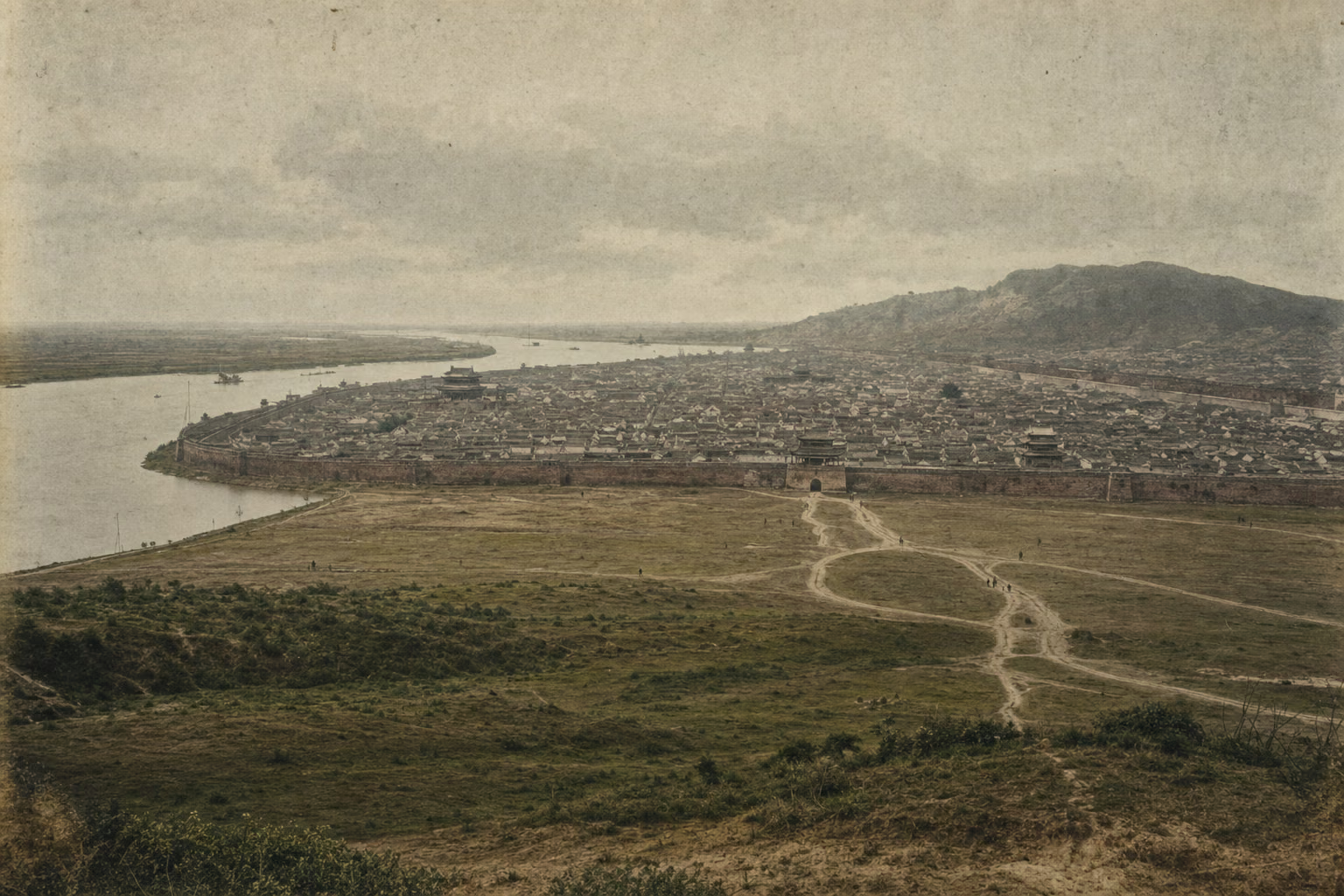
This city: In 1853 the Taiping Army took Jiangning and made it Tianjing; by the time of the siege, it had been the capital for eleven years. The city circuit ran more than ninety li, with an outer wall and inner city; Zijin Mountain commanded the northeast, Yuhuatai faced the southern gate, and the Yangtze curved around the northwest. The city was large and strong, and those who besieged it never had enough men to "surround" it in full; they could only control key points and cut the grain routes.
Morale and grain: In September 1861 Anqing fell (see Defense of Anqing), the upstream gate lay open, and Tianjing from then on became a city slowly being tightened shut. The population inside was increasingly worn down by blockade; in the middle and later siege, grain prices soared and the starving dead gradually multiplied. The great epidemic that swept Jiangnan in 1862 killed people inside and outside the city alike -- the defenders had already been thinned once by disease.
Why It Was Fought
The two attacks on Shanghai had failed, and the flank and rear of Sufu Province remained suspended; but the truly fatal account was upstream -- in September 1861 Anqing fell, and the last gate west of Tianjing was gone. Zeng Guofan immediately set the policy: follow the Yangtze downstream and take Tianjing directly. From Anqing to Tianjing, no strong city remained between them; in May 1862 Luzhou fell, and Chen Yucheng, fleeing to Shouzhou, was lured and seized, so upstream was lost together with its men and ground.
In spring 1862, Zeng Guoquan's force moved with the current and took Chaoxian, Hanshan, Hezhou, and Dangtu in succession. On May 30 (fifth month, third day of the first Tongzhi year; sexagenary-date conversion unverified) it encamped at Yuhuatai, only four or five li from the city. The Xiang Army's usual method was to "build firm camps"; this time it had built them directly under the capital's nose. On arrival it numbered only about more than twenty thousand men (common statistical basis), an isolated force. Zeng Guofan repeatedly ordered withdrawal to avoid the sharp edge; Zeng Guoquan refused (details unverified). He dared stay not because of numbers: Peng Yulin's navy lay on the river, and grain and ammunition flowed steadily from upstream. The besieging side's capital lay in its trenches, forts, and the Yangtze.
This deployment was not confined to the route beneath the city. After Anqing was taken, Zeng Guofan's three-route advance unfolded at the same time: Zeng Guoquan pointed downstream along the Yangtze at Tianjing, Zuo Zongtang entered Zhejiang, and Li Hongzhang led the newly trained Huai Army to aid Shanghai. The eastern and western routes pinned down the Taiping Army's base in Jiangsu and Zhejiang, leaving Li Xiucheng unable to look both ways. Zeng Guoquan dared halt as an isolated force beneath a strong city because he was gambling on two visible things: with the navy on the Yangtze, grain and ammunition would not be cut; with Li Xiucheng dragged down in the Shanghai direction, relief would not return early (this wager is not directly recorded; it is inferred from naval control of the Yangtze and the Taiping Army's force disposition, unverified). In the first year, both parts of the bet proved right -- before September 1862, the Taiping main force never freed its hands.
On the Taiping side, the capital was directly threatened, and Hong Xiuquan issued strict edicts urging Li Xiucheng, then fighting in Jiangsu and Zhejiang, to return in relief. The eastern campaign was only half-fought, and the main force was still pressed toward Shanghai. Yet this city, from the fall of Anqing onward, had already been a city slowly tightening shut: its circuit was more than ninety li; it was large and strong; and those who besieged it never had enough men to "surround" it. All they could do was control key points and cut the grain routes.
The strict edicts came urgently -- the edicts do not survive, and the number and wording come from Li Xiucheng's Autobiographical Account (unverified) -- but Li Xiucheng calculated in the opposite order: first secure Jiangsu and Zhejiang, gather sufficient grain and ammunition, then return for a decisive battle. For this he delayed until September before setting out. In the later siege, a second objection arose, and it was heavier: after Suzhou fell at the end of 1863, he returned to the capital and advised Hong Xiuquan face to face to "let the city go and leave," abandoning the city and feeding the whole army in Jiangxi. Hong Xiuquan refused, answering that heavenly soldiers were more numerous than water (this episode appears only in Li Xiucheng's Autobiographical Account; original text unverified). The last living route inside the siege was blocked there.
The material boundaries drawn for the two sides later became the victory and defeat itself. Twenty thousand Xiang Army troops besieged a great city with a circuit of more than ninety li, and their whole capital lay in the Yangtze: the navy controlled the river, and grain, ammunition, and foreign rifles flowed continuously from upstream and Shanghai, so an isolated army dared sit beneath the city for two years. Li Xiucheng's army, claimed to number several hundred thousand, had to divide grain and pay between the Jiangsu-Zhejiang theater and the foot of Tianjing. In forty-six days of encircling attacks, what was exhausted first was precisely the attacking side's winter clothing, grain, and ammunition. Once Jiufuzhou was lost in 1863, the city had only land routes left, and the grain road was dead from then on.
What the defending side had to preserve was Tianjing, the capital of eleven years; what the besieging side wanted was to complete the whole work in one stroke. More than two years of pulling back and forth began here.
Course of the Engagement
| Stage | Time | Key points |
|---|---|---|
| Isolated army halts beneath the city | 1862.5-9 | Zeng Guoquan's force encamped at Yuhuatai, Zeng Zhenggan took separate command of one detachment, and Peng Yulin's navy lay on the river in support; Li Xiucheng first took the offensive in the Shanghai direction and only in September began leading a large army back in relief |
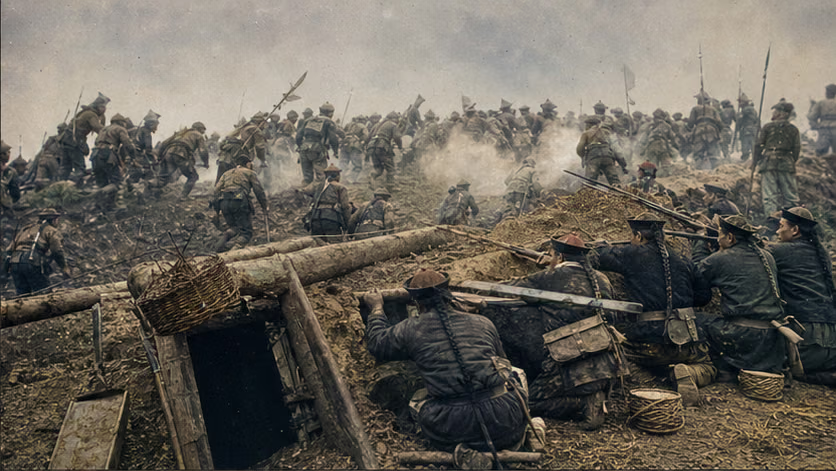
| Yuhuatai relief battle | 1862.10.13-11.26 | Li Xiucheng's force, including more than ten kings, was claimed to number several hundred thousand, and encircled and attacked the Xiang Army's great camp at Yuhuatai for forty-six days (from the twentieth day of the leap eighth month to the fifth day of the tenth month in the first Tongzhi year; a forty-four-day account also exists, unverified); tunnels, foreign rifles, and waves of men were used in turn, while the Xiang Army held with deep ditches and high forts; Zeng Guoquan was wounded by a gunshot to the face; the Taiping Army, short of winter clothing, grain, and ammunition, lifted the siege |
| "Advance north, attack south" | 1862.12-1863.6 | Hong Xiuquan ordered Li Xiucheng to cross the Yangtze westward into northern Anhui, intending to draw the Xiang Army back in relief; famine-stricken northern Anhui had no grain, and after the attack on Liu'an failed in 1863.5, the army returned. While crossing the Yangtze it was intercepted by the navy, and amid famine and epidemic disease suffered severe losses (figures range widely from several tens of thousands to more than one hundred thousand, and accounts differ) |
| Key points all lost | 1863.6-11 | In June, the stone forts outside Yuhuatai and Jubao Gate were all lost; on 6.30 Jiangpu's Jiufuzhou fell, the channel on the river surface at Xiaguan was cut, and Tianjing was left with only land routes outward |
| Fall of Suzhou and killing of surrendered troops | 1863.12 | On the eastern route, the Huai Army and Ever Victorious Army besieged Suzhou; on 12.4, Na King Gao Yongkuan and three other kings and four heavenly generals killed the defending commander, Mu King Tan Shaoguang, offered the city, and surrendered; on 12.6 Li Hongzhang gave a banquet and killed eight surrendered generals ※, while tens of thousands of surrendered soldiers inside the city were slaughtered (accounts of about twenty thousand and several tens of thousands coexist, unverified) ※; Gordon, who had served as guarantor, broke angrily with Li Hongzhang (seeking Li out with a gun to argue, resigning his command, details unverified) |
| Encirclement tightens | Early 1864.2-7 | In February Zijin Mountain's Tianbao Fort fell (dates vary by account); in March the Xiang Army completed the encirclement; on 7.3 Dibao Fort outside Taiping Gate fell, and from Longbozi the Xiang Army held the high ground and began tunneling to attack the city |
| Grain exhausted in the city | Spring-summer 1864 | ※ Inside the city, "sweet dew" (wild-grass balls) was used to stave off hunger, and deaths from starvation grew daily; on 6.1 Hong Xiuquan died of illness, aged fifty-one (long illness; one account says suicide by poison, while the account that "eating sweet dew caused illness" remains doubtful); Young Heavenly King Hong Tianguifu succeeded, aged fourteen (by full years; sixteen by traditional reckoning) |
| City breached | 1864.7.19 | The Xiang Army's tunnel at Taiping Gate blasted down more than twenty zhang of wall, and troops poured in; the defenders fought street battles for about three hours, and the city fell |
Casualties and Losses
- Defending side: when the city fell, the surviving Taiping Army troops who died in combat, burned themselves, or were killed were reported by Zeng Guofan as "more than one hundred thousand bandits killed within three days" (Qing memorial basis, including many non-combat deaths, and long questioned); Li Xiucheng's Autobiographical Account says there were no more than three or four thousand in the city able to fight (Taiping Army basis) -- the two sets of figures differ vastly. There are no statistics for soldiers and civilians who starved or died of epidemic disease during the siege.
- Besieging side: no exact figure exists for Xiang Army combat casualties and deaths from illness over the two-year siege; in the 1862 epidemic alone, "more than half were sick" (Zeng Guoquan memorial basis, original text unverified); in the forty-six days of bloody fighting at Yuhuatai, Zeng Guoquan himself claimed several thousand casualties (figure disputed).
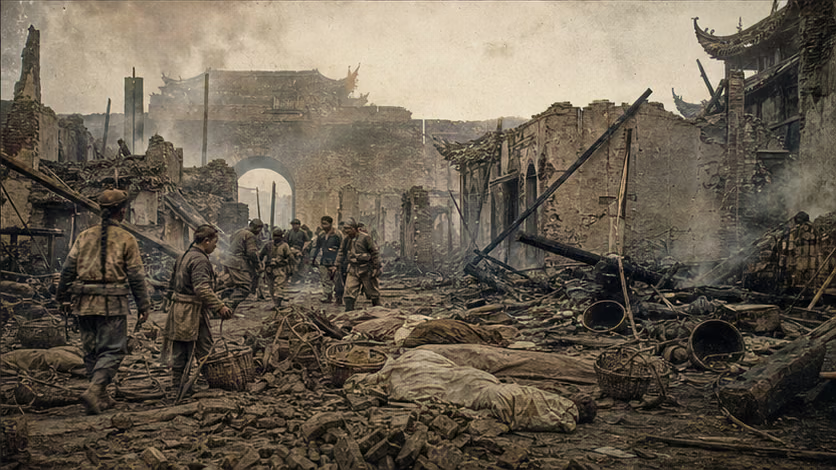
- Civilians: ※ After the city fell, the Xiang Army slaughtered, looted, and burned. Zhao Liewen's Nengjingju Diary (Zeng Guofan staff member, present with the army) records that corpses along the streets were mostly elderly people, that young children were also killed, that women below middle age were almost nowhere to be seen, and that the long Qinhuai River was dense with corpses (this is a core source, original text unverified). The fire spread for several days (the "seven days without ceasing" account is unverified).
- Whichever statistical basis one adopts, this was the endpoint of the Taiping Heavenly Kingdom war; the final act of fourteen years of war closed inside a city emptied by hunger.
Aftermath
- The Taiping Heavenly Kingdom's center was destroyed. Remaining Taiping forces south of the Yangtze (Li Shixian, Wang Haiyang, and others) fought on through Jiangxi, Fujian, and Guangdong until they were destroyed in early 1866; in the north, Lai Wenguang's force merged with the Nian Army, and the war continued until 1868 (see Nian Rebellion).
- After breaking out, Li Xiucheng was soon captured; in prison he wrote the tens-of-thousands-of-characters Li Xiucheng's Autobiographical Account, and on 1864.8.7 Zeng Guofan put him to death, aged forty-two. The account's cuts, revisions, and authenticity became a century-long unresolved case (see "Disputes and Sensitivities").
- Young Heavenly King Hong Tianguifu fled through Guangde and Huzhou, was captured at Shicheng, Jiangxi, in 1864.10, and on 11.18 was executed by lingchi at Nanchang ※, aged sixteen (traditional reckoning; fifteen by full years, two accounts coexist); Hong Rengan was also captured in October and executed by lingchi at Nanchang on 11.23.
- Hong Xiuquan's corpse was dug up by the Xiang Army, mutilated, and burned (details unverified).
- Zeng Guoquan was granted the title of first-rank earl for chief merit, and soon took sick leave from office and returned home (within 1864, dates vary by account); contemporary opinion mocked the wealth his force gained from looting the city (the "glutton" jibe is unverified).
- The Xiang Army reached its height in this battle, and after this battle it also began to be cut back -- military power was heavy and the court was suspicious, so Zeng Guofan voluntarily reduced the army in order to preserve himself. For this episode, see Taiping Heavenly Kingdom: Overview.
Accounts of Those Present
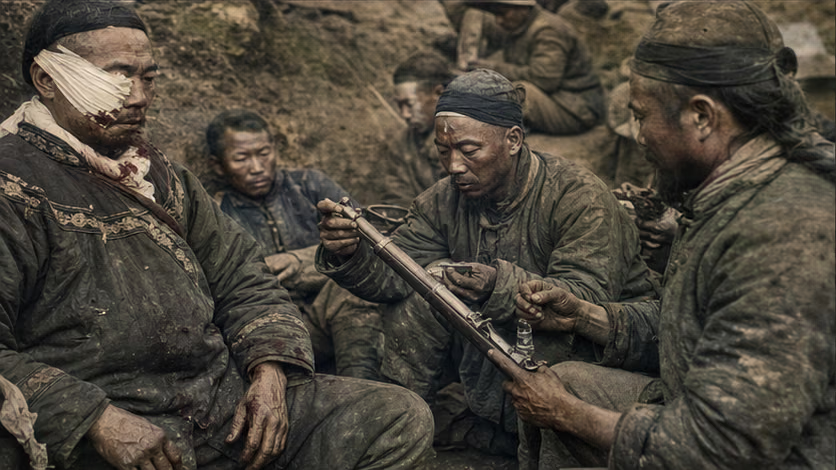
- Zeng Guoquan's wound: During the forty-six days at Yuhuatai, he was struck in the left cheek by a foreign rifle; blood covered his lapel, and he bound the wound and continued directing the battle -- the besieging side's chief commander nearly died in the fortifications four or five li from the wall.
- Siege amid epidemic disease: In the 1862 epidemic, men in the Xiang Army camps were "sick in the morning and dead by evening," and the lines of Zeng Guoquan's memorials nearly read as despair; Zeng Guofan urgently ordered withdrawal from Anqing, but he did not withdraw. The defenders were starving, the besiegers were sick, and both sides were being consumed.
- Hong Xiuquan's last days: He rejected remonstrance, ignored proposals to break out, and led the eating of "sweet dew"; even at the end he still spoke of asking Heaven for heavenly soldiers. Whether this was religious conviction or the speech of a trapped man survives only in enemy retelling.
- Li Xiucheng's horse: During the breakout he gave his own good horse to the Young Heavenly King and rode an inferior horse himself; because of that he fell behind and was captured (this detail circulated widely and comes from the Li Xiucheng's Autobiographical Account system, original text unverified). He was captured at Fangshan in the southern suburbs of the city (dates vary by account).
- Gordon's gun: After the killing of surrendered troops at Suzhou, Ever Victorious Army commander Gordon, in his capacity as guarantor, considered himself dishonored, carried a gun to seek out Li Hongzhang and argue but failed to meet him, and resigned his command; although he later resumed office, the rift did not disappear (details unverified). The killing of surrendered troops became an event in Chinese and foreign public opinion, and the stumble over the word "trust" was larger than the one on the battlefield.
- Zhao Liewen's pen: After the city fell, he wrote in his diary that "old and weak local people who could not carry loads and had no cellars to dig were all killed" (original text unverified). He was Zeng Guofan's staff member and recorded his own side's army -- the hardest evidence for the atrocity came from the victors' own man.
- Lingchi at sixteen: ※ After Hong Tianguifu was captured, his confession was childish and pleaded for mercy, but he was still executed by lingchi at Nanchang. Extending that punishment to the sixteen-year-old final "young ruler" was the Qing court's gesture of cutting the weeds and tearing out the roots.
The Ground
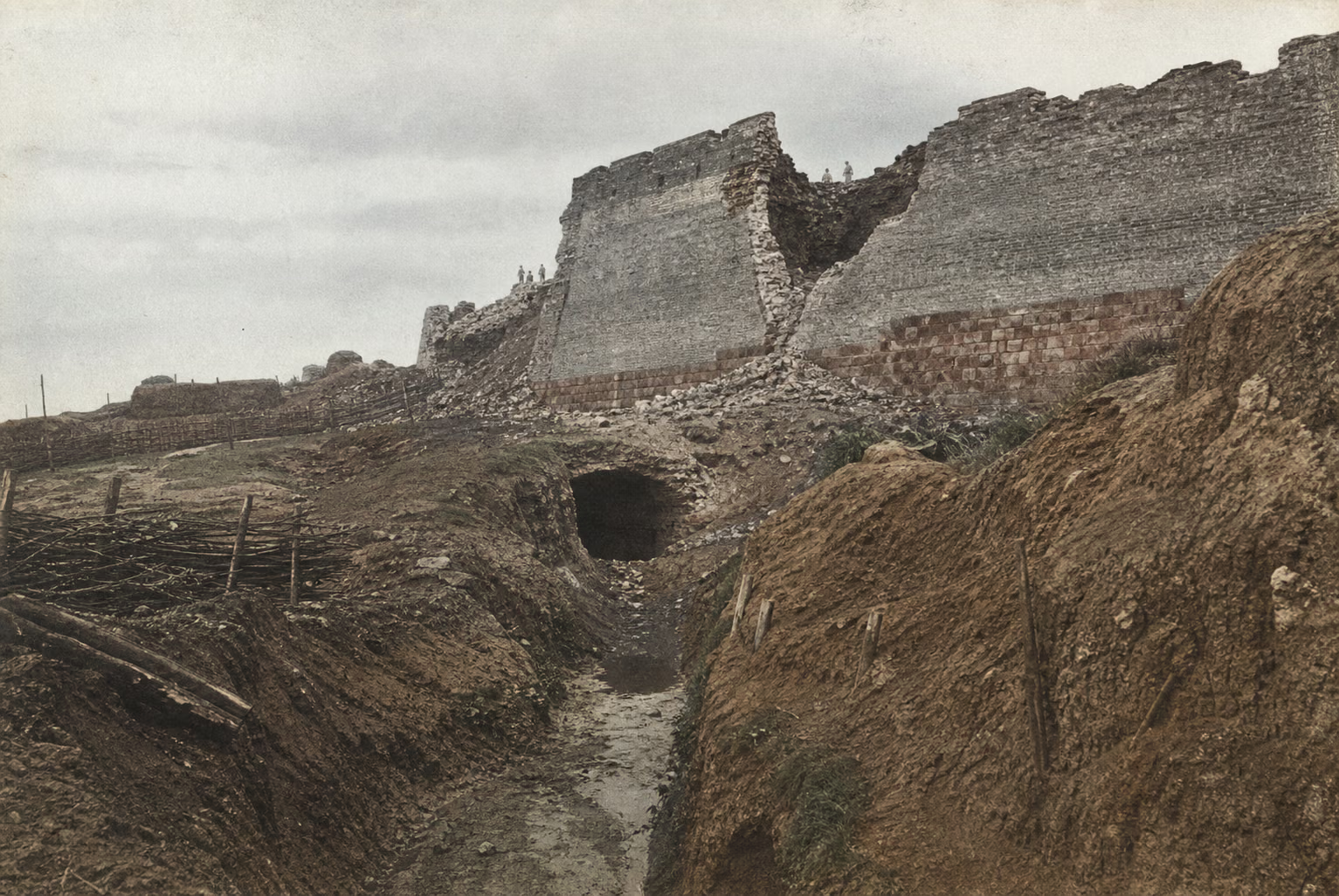
- A large city, thinly besieged: the city circuit was more than ninety li, and the Xiang Army never had enough men to surround it fully. It relied on locking down a few points -- Zijin Mountain's Tianbao Fort, Dibao Fort outside Taiping Gate, Yuhuatai, and the Jiufuzhou river surface -- turning "siege" into "cutting the roads."
- The Yangtze was the besieging side's lifeline: the navy controlled the river, and grain and ammunition did not stop. After the defending side lost Jiufuzhou (1863.6.30), Tianjing became an island.
- Yuhuatai was four or five li from the city: the grinding point of the forty-six-day relief battle, trench against trench and tunnel against tunnel, with the scale measured in zhang.
- The breach came underground: at the Taiping Gate tunnel, explosives brought down more than twenty zhang of wall. The endgame took place in a dark passage dozens of meters underground, not on the parapet.
- After the city fell, spatial order collapsed completely: burning, killing, and looting took place simultaneously across a great city of more than ninety li, and the great fire and corpses in Zhao Liewen's diary were the final state of this city as battlefield space.
How Each Side Records It
- Qing side at the time: the official Compendium of the Pacification of the Yue Bandits and Zeng Guofan's memorial system framed the matter as "pacifying the Yue bandits" and "recovering Jinling" ("Yue bandits" and "bandits" are Qing-side terms from original documents); credit for breaking the city belonged to the Xiang Army, while the gap between the memorials' killing figures ("more than one hundred thousand bandits killed") and the reality of massacre and looting was already given another record at the time in a staff member's diary.
- Taiping Army side: very few surviving accounts exist. The core is Li Xiucheng's Autobiographical Account and Hong Rengan's Autobiographical Account, both written in captivity, cut and published through the victors' hands, and therefore themselves fragmentary and filtered statements from one side. Almost no contemporary writings by Taiping Army officers and soldiers survive for the siege and fall of the city. Augustus F. Lindley's Ti-Ping Tien-Kwoh also exists as the account of a foreign observer sympathetic to the Taiping Army.
- Later narratives: before and after the Xinhai Revolution, revolutionaries used the Taiping Heavenly Kingdom as a narrative of anti-Qing forerunners, and Sun Yat-sen presented himself as carrying forward Hong Xiuquan's will (source unverified); after 1949, mainland historiography long gave a positive account of it as a "peasant uprising," and Xiang Army massacre and looting after the city fell and the killing of surrendered troops at Suzhou entered textbook narratives. In recent decades, as enthusiasm for Zeng Guofan and narratives of "famous ministers of the Restoration" have risen, responsibility for massacre and the rights and wrongs of killing surrendered troops have again become public controversies. The fall of the same city has swung for one hundred and sixty years between the two tellings of "breaking the bandits" and "massacring the city."
Disputes and Sensitivities
- The unresolved case of Li Xiucheng's Autobiographical Account: Zeng Guofan cut and revised it before printing it; the original manuscript remained in the Zeng family and in 1963 was published in facsimile in Taipei by Zeng descendants (year and details unverified). What was cut and why it was cut remain disputed to this day.
- Was Li Xiucheng "begging to live" or "feigning surrender": the self-abasement in the account and the words urging Zeng Guofan to turn against the Qing (whether this episode exists and whether it is authentic are unverified) produced two views, "his final integrity failed" and "he feigned surrender to wait for the time." Luo Ergang argued for feigned surrender -- a sensitive point in judging a historical figure.
- Death figures after the breach and how to define them: the memorial claim of "more than one hundred thousand bandits killed" coexists with Zhao Liewen's diary record of the killing of elderly and young civilians; behind the dispute over numbers is the dispute over whether to define the event as "battle result" or "massacre."
- The killing of surrendered troops at Suzhou: whether responsibility lay with Li Hongzhang personally, Cheng Xueqi's premeditation, or Qing court acquiescence is supported by different sources; afterward the Qing court praised it as "handled with nothing improper" (Qing-side edict basis). The affair touches the red line of "killing those who surrendered brings misfortune" in traditional Chinese war ethics, and is also an early example of conflict between Chinese and Western public opinion.
- Hong Xiuquan's cause of death: accounts of death by illness and suicide by poison coexist, while "eating sweet dew caused illness" is a derived account; none has direct medical evidence.
- The Young Heavenly King's punishment: carrying out lingchi on a sixteen-year-old captive has later been cited as evidence of Qing cruelty; this was the Qing-side execution of an underage prisoner.
Sources and Open Questions
Known main sources:
- Zeng Guofan's memorial drafts; Compendium of the Pacification of the Yue Bandits (Qing official compilation)
- Zhao Liewen, Nengjingju Diary (core first-hand record of massacre and looting after the city fell)
- Li Xiucheng's Autobiographical Account and Hong Rengan's Autobiographical Account (facsimile of original manuscripts)
- Augustus F. Lindley, Ti-Ping Tien-Kwoh
- Luo Ergang, History of the Taiping Heavenly Kingdom and Annotated Original Manuscript of Li Xiucheng's Autobiographical Account
- Jian Youwen, Comprehensive History of the Taiping Heavenly Kingdom
Open questions:
1. Statistical bases for Li Xiucheng's relief force (sources for the accounts of more than 200,000 / 300,000 / 600,000). 2. Number of days in the Yuhuatai relief battle (forty-six days / forty-four days) and conversion of the lunar dates (from the twentieth day of the leap eighth month to the fifth day of the tenth month in the first Tongzhi year). 3. Original records for the date when Zeng Guoquan's force encamped at Yuhuatai (1862.5.30) and for "four or five li from the city." 4. Original text of the Xiang Army memorial on the proportion who died of illness in the great epidemic of 1862; date of Zeng Zhenggan's death from illness (1862.11). 5. Taiping Army loss figures in "Advance north, attack south" (sources for accounts of several tens of thousands / more than one hundred thousand). 6. Number and place of surrendered troops killed at Suzhou (about twenty thousand / several tens of thousands); details of the rupture between Gordon and Li Hongzhang (carrying a gun, resigning, and resuming office). 7. Date Tianbao Fort fell (1864.2); original record for the fall of Dibao Fort on 1864.7.3. 8. Earliest sources for the different accounts of Hong Xiuquan's death (illness / poison / eating sweet dew caused illness). 9. Original text of the memorial after the city fell, "more than one hundred thousand bandits killed" (Zeng Guofan's memorial, The Whole Body of Fierce Rebels at Recovered Jinling Completely Exterminated), and comparison with Li Xiucheng's Autobiographical Account basis of "thirty thousand in the city." 10. Line-by-line checking of Zhao Liewen's Nengjingju Diary records of the city massacre (must be done before quotation). 11. Word count of Li Xiucheng's Autobiographical Account (tens of thousands / more than thirty-six thousand / fifty thousand), year of facsimile publication of the original manuscript (1963 account), and contents of the cuts and revisions. 12. Date and place of Li Xiucheng's capture (Fangshan); source for the detail that he gave his horse to the Young Heavenly King. 13. Date of the Young Heavenly King's capture (1864.10, Shicheng) and age basis (fifteen by full years / sixteen by traditional reckoning); dates of Hong Rengan's capture and execution. 14. Records of the handling of Hong Xiuquan's corpse; date when Zeng Guoquan took leave from office and returned home; source for the "glutton" jibe. 15. Source for Sun Yat-sen's words about carrying forward Hong Xiuquan's will. 16. Source for the number of days the fire burned after the city fell (the "seven days without ceasing" account). 17. Original memorials and letters for Zeng Guofan's three-route advance and his orders for Zeng Guoquan to withdraw. 18. Number and wording of Hong Xiuquan's strict edicts urging relief (original text in Li Xiucheng's Autobiographical Account). 19. Original wording in the autobiographical account for the proposal to "let the city go and leave" and Hong Xiuquan's reply that "heavenly soldiers were more numerous than water." 20. Source records for the exhaustion of winter clothing, grain, and ammunition in Li Xiucheng's returning relief army. 21. Zeng family letters' own account of what Zeng Guoquan relied on when halting as an isolated army beneath the city (naval grain route and Li Xiucheng being divided in Jiangsu and Zhejiang).
All images on this site are AI-generated depictions. They are not historical photographs, not primary sources, and do not depict any real individual.