Engagement Archive · Western Expedition and Hukou (Taiping western campaign vs. the rising Xiang Army)
After fixing their capital at Nanjing, the Taiping Army went upstream on the Yangtze in a western campaign to contend for the upper river; the newly trained Xiang Army came downstream and met it head-on -- three years of seesaw fighting in which the Xiang Army twice nearly died at its debut, until Shi Dakai finally took almost all of Jiangxi and left Zeng Guofan trapped in one corner of Nanchang.
Engagement Data
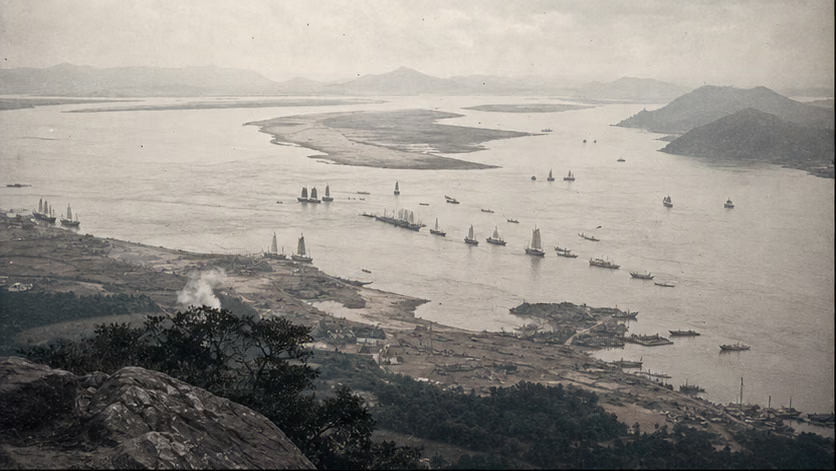
| Item | Details |
|---|---|
| Time | 1853.6 – spring 1856 (Shi Dakai returned to relieve Tianjing in 1856, and the Western Expedition's offensive wound down) |
| Place | Middle Yangtze: Jiangxi, Anhui, Hubei, Hunan (Nanchang, Jiujiang, Hukou, Tianjiazhen, Wuchang, Xiangtan, Jinggang) |
| Belongs to | Taiping and Nian Rebellions (for the larger situation, see Taiping Heavenly Kingdom: Overview) |
| Taiping Army | Western Expedition force; in the early phase Lai Hanying, Hu Yihuang, Zeng Tianyang, Lin Shaozhang, and others; in the later phase under Assistant King Shi Dakai |
| Qing forces | Green Standard, Eight Banners, and Jiang Zhongyuan's Chu Braves; from 1853, the Xiang Army trained by Zeng Guofan under imperial order as militia became the main actor after 1854 |
| Result | Three years of seesaw fighting without a final outcome: the Xiang Army gained a foothold at Xiangtan and pushed its spearhead through Tianjiazhen toward Jiujiang, but after the disastrous defeat at Hukou its navy was paralyzed; Shi Dakai swept through eight prefectures of Jiangxi, while the Xiang Army was trapped in Nanchang |
Belligerents
This article combines several engagements: the siege of Nanchang was attack and defense, the river fighting was a contest between two navies, and the move into Hunan and the management of Jiangxi were maneuver and pursuit-blocking. The comparison table sets the two camps side by side rather than forcing an attacker/defender frame.
| Item | Taiping Western Expedition force | Qing forces (Xiang Army) |
|---|---|---|
| Strength | In 1853 the Western Expedition set out with more than 1,000 boats and several tens of thousands of people (Qing intelligence basis, unverified); while operating in Jiangxi it expanded through coerced incorporation, and the figures fluctuated greatly | When the Xiang Army set out in 1854, its land and naval forces numbered about 17,000 (about 6,500 in 13 land battalions, about 5,000 in 10 naval battalions, plus laborers; common basis, unverified) |
| Naval forces | Several thousand boats, mostly requisitioned civilian and merchant vessels refitted for war; few cannon, mixed craft, relying on numbers and familiarity with the river network | Self-built fast-crab boats, long-dragon boats, and sampans, fitted with foreign cannon bought in Guangdong -- sturdy boats and strong guns were the Xiang navy's capital |
| On land | Old Guangxi comrades formed the core, with many newly attached followers; cold weapons and firearms mixed | Scholars leading mountain peasants, about 500 men to a battalion; above squad-officer level many were scholars; cold weapons and firearms mixed, with heavy emphasis on trenches and forts, "building hard camps and fighting dull battles" |
| Pay sources | Local requisition and "striking the vanguard" (plundering wealthy households, called "striking the vanguard" by the Taiping Army) | Lijin transit taxes, donations, and coordinated pay from other provinces, with arrears year after year |
| System | Kings supervised separate commands, while front-line direction was constrained by Tianjing | Soldiers belonged to their commanders: the commander-in-chief chose battalion officers, battalion officers chose squad officers, and the Xiang Army recognized only the Zeng Guofan system |
Terrain and Conditions
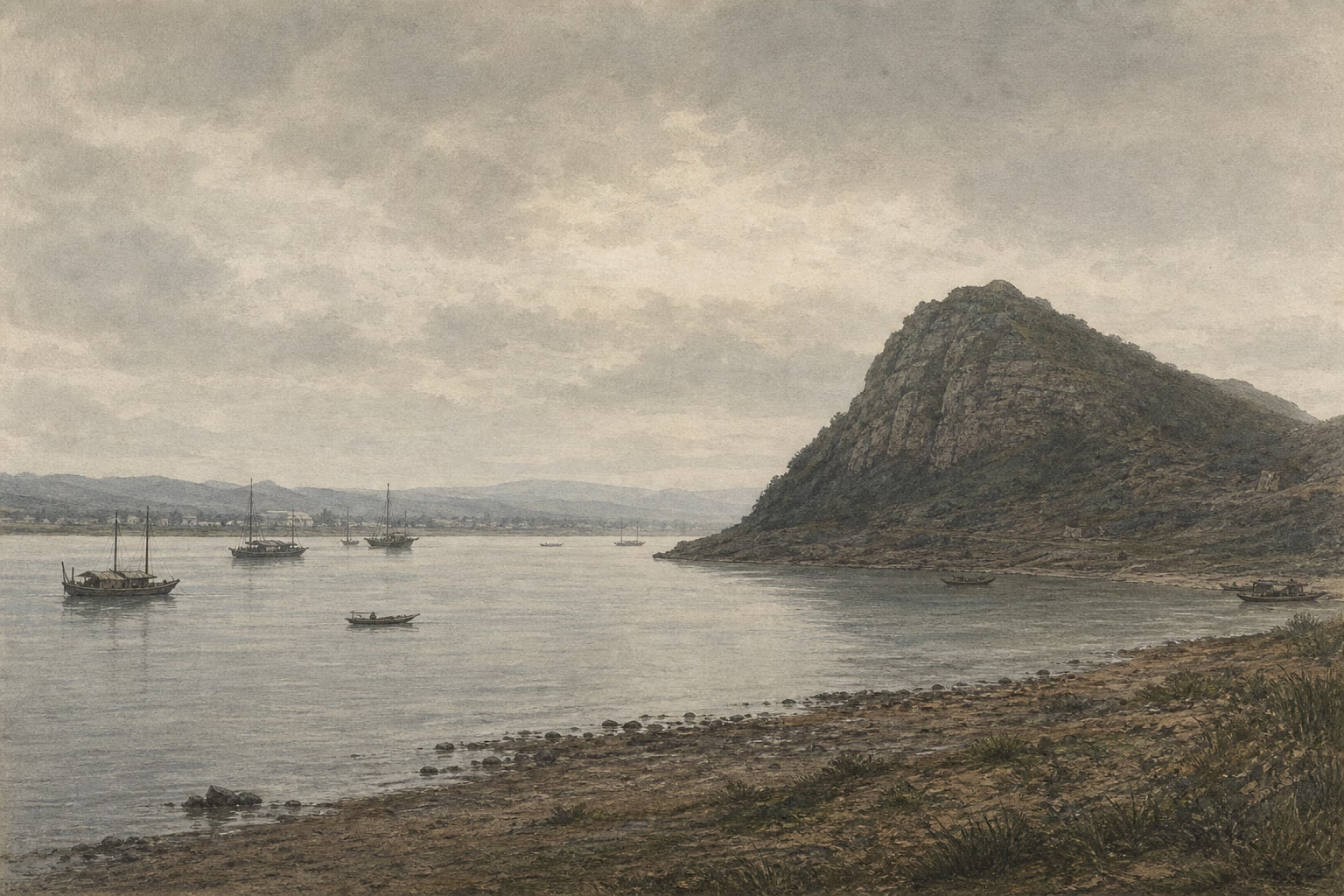
(For the larger situation of the 1850s -- fixing the capital at Nanjing, launching the Northern and Western Expeditions together, Qing troop transfers, and the fiscal predicament -- see Taiping Heavenly Kingdom: Overview.)
The middle Yangtze changed hands again and again over three years. The three towns of Wuchang were first taken by the Taiping Army in early 1853 (before the Western Expedition set out), taken again in 1854, taken by the Xiang Army in 1854.10, and taken a third time in spring 1855 (exact dates vary by account) -- the city fell back and forth three times, and the people inside fell with it three times. ※ In Wuchang's repeated changes of hands, routs among the defenders, entry by the attackers, and civilian deaths overlapped; there is no reliable statistic.
Hunan was the Xiang Army's base. Zeng Guofan organized militia training in Changsha in 1853 and repeatedly clashed with the Green Standard (provincial-command troops once surrounded his residence, an 1853 affair, details unverified), then moved to Hengzhou to train troops. Hunan gentry paid money and sent men into the army, and lijin customs barriers were set along the river -- the Xiang Army was raised on Hunan's commercial taxes.
Jiangxi became the main battlefield. Along the Nanchang-Jiujiang-Hukou line, there was no peace for three years. Both armies needed grain, and the grain came from the countryside. ※ Wherever the Taiping Army went, it coerced able-bodied men into the ranks and made wealthy households "contribute"; the Xiang Army likewise requisitioned laborers and grain as it passed, and records of soldiers being allowed to kill and plunder after cities were taken repeatedly appear in contemporary notes (item-by-item sources unverified). Both sides are recorded here; neither is excused.
Why It Was Fought
One month after the Northern Expedition set out, in June 1853, another fleet lifted anchor from Tianjing and went westward upstream on the Yangtze -- the other half of the same decision had landed. The Northern Expedition was the wager thrown outward; the Western Expedition was the business of making a living. After the capital was fixed, Tianjing and the armies together had several hundred thousand soldiers and civilians who needed food, and the grain lay upstream in Jiangxi, Anhui, and Hubei. The three river cities of Anqing, Jiujiang, and Wuhan were Tianjing's shield to the west. During the advance into Jiangnan, the main army had merely passed through, taking Wuchang once and then abandoning it. Now it had to turn back and hold the upstream cities one by one.
Upstream, the opponents on paper were still the Green Standard and Jiang Zhongyuan's Chu Braves -- the one force that had hurt the Taiping Army on the road of advance. But the real variable lay in Hunan: in 1853 Zeng Guofan, under imperial order, organized militia training in Changsha, clashed repeatedly with the provincial Green Standard, and simply moved to Hengzhou to train troops in earnest. What he trained was no longer village-guard militia; it was a field army with self-built fast-crab and long-dragon boats, cannon bought from Guangdong, and both land and naval forces. On the Western Expedition side were more than 1,000 boats and several tens of thousands of people (Qing intelligence basis, unverified), most of them requisitioned civilian and merchant vessels refitted for war, with few cannon and mixed craft, relying on numbers and familiarity with the river network. The difference in quality between the two navies was already there at the starting point.
In early 1854 the Taiping Army divided off a force into Hunan (Lin Shaozhang's command), aiming to take Hunan and cut off the Xiang Army at its root. In February, Zeng Guofan led about 17,000 land and naval troops out on campaign (common basis, unverified) and issued the Proclamation Against the Yue Bandits, using "defending the teaching" as its banner and saying nothing of anti-Manchu politics. One side wanted to sever the other's root; the other had just formed an army and at once threw the whole force out of the province. So the first collision between the two new armies did not take place on the Yangtze, but beside the Xiang River.
The traces left by the two sides' decisions are of very different thickness. The Western Expedition decision was made in Tianjing, but Taiping Heavenly Kingdom archives are almost entirely lost; the surviving records are insufficient to reconstruct the meetings and arguments over fixing the capital and dividing the forces (records of the decision process unverified). What can be seen clearly is only the layout: the Northern Expedition was thrown toward Zhili, the Western Expedition turned back to take the upper river, the two routes were launched together, and both had thin forces. In early 1855 the Xiang Army reached Jiujiang and Hukou, and Shi Dakai went to Hukou to supervise the army (sequence unverified); the blockade and night attack at Hukou both came from this direction.
On Zeng Guofan's side, memorial drafts can be checked, and what they show is all difficulty. With Wuchang again in danger, the court repeatedly issued stern orders urging the Xiang Army to go east to relieve it (original edict text unverified); Zeng Guofan's account was that the boats were not finished, the guns were not complete, and the volunteers were not yet well trained. His mentor, the Huguang Governor-General Wu Wenrong, exchanged letters with him, and the account he insisted on was the same: train elite troops before going out; do not fight rashly (original letters unverified). In early 1854 Wu Wenrong was defeated at Huangzhou and died; in February Zeng Guofan threw his whole force eastward, and in April it was routed at Jinggang -- the battlefield itself decided the dispute over when to set out. This was the plainly written objection on the table: be cautious and do not go out lightly. It did not prevail, because Wuchang could not wait. On the Taiping side, whether there were objections to the western direction or to the tactics at Hukou cannot be checked in surviving records (no record of dissent seen).
Material lines were narrow for both sides. The Xiang Army did not live on Board of Revenue appropriations; pay came from Hunan lijin, donations, and coordinated pay from other provinces, and arrears were chronic. Its navy's boats had to be built, its foreign cannon had to be bought from Guangdong, and each battalion and boat was put together with money scraped up on the spot. The Taiping Army's boundary lay in boats: civilian vessels had been requisitioned, and after the fire at Tianjiazhen, the fleet that had been burned would take a long time to assemble again.
Course of the Engagement
| Stage | Time | Key points |
|---|---|---|
| Western Expedition and siege of Nanchang | 1853.6–9 | Lai Hanying, Zeng Tianyang, and others went upstream on the Yangtze for the Western Expedition, retook Anqing, and besieged Nanchang for more than ninety days; on the defending side, Jiang Zhongyuan's Chu Braves climbed the parapets and held to the death, while the Taiping Army tunneled under the city and blew down the wall three times, only to have the breaches blocked each time (number of attempts disputed); unable to take the city, it withdrew the siege and turned to attack Anhui and Jiangxi |
| Downstream from the upper river again | 1853.10–early 1854 | The Taiping Army held Jiujiang; Hu Yihuang attacked Luzhou (the city fell in 1854.1, Jiang Zhongyuan died, and dates vary by account); in 1854.6 Wuchang was taken again |
| Taiping move into Hunan, Xiang Army's debut | 1854.2–5 | Zeng Guofan set out in 1854.2 and issued the Proclamation Against the Yue Bandits (using "defending the teaching" as its banner and saying nothing of anti-Manchu politics); April brought the defeat at Jinggang -- Zeng personally led land and naval forces to attack Jinggang, the whole army scattered, and in anger he threw himself into the water before being rescued by attendants (number of attempts and rescuers' names unverified); in the same ten-day period came the great victory at Xiangtan -- Taqibu's land force fought ten days and ten battles, the navy set fires and burned boats, and Lin Shaozhang's force collapsed and fled. The Xiang Army nearly died at its debut, and survived by standing on the battle at Xiangtan |
| Xiang Army moves east | 1854.7–10 | Yuezhou was taken; in the Battle of Chenglingji, the Taiping fierce general Zeng Tianyang was killed in action (1854.7 or 8, details of the battlefield killing unverified); in 1854.10 the Xiang Army took Wuchang by land and water, and the Taiping fleet withdrew to Tianjiazhen |
| Tianjiazhen--Banbishan | 1854.11–12 | Yan King Qin Rigang deployed the defense: Banbishan and Tianjiazhen faced each other across the river, with iron chains stretched across the Yangtze to lock the channel. Luo Zenan and Taqibu broke Banbishan; the navy used great furnaces and heavy axes to cut through the iron chains, then set fires downstream, burning several thousand Taiping boats (Qing memorial basis; "several thousand" unverified). Once the line was broken, the Xiang Army's spearhead pointed straight at Jiujiang |
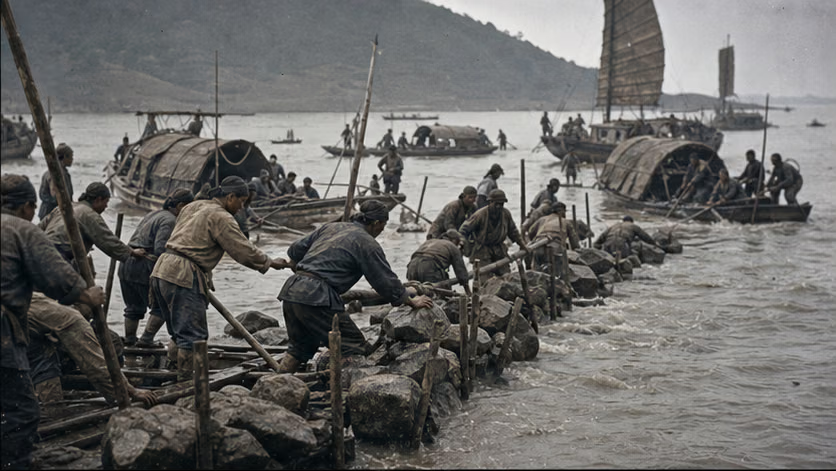
| Hukou--Jiujiang | 1855.1–2 | Shi Dakai went to Hukou to take charge, while Lin Qirong defended Jiujiang and Luo Dagang defended Meijiazhou. The Xiang Army attacked urgently but could not take them; the Taiping Army lured the Xiang Army's light sampans into Poyang Lake, then piled stones and filled the pass to blockade Hukou -- the Xiang navy was split into two sections, the outer river (large ships, no escorts) and the inner lake (light boats, no base). In February, a night attack struck the outer-river naval camp and burned its large ships; Zeng Guofan's command boat was seized, all his papers were lost, and Zeng angrily wanted to kill himself (the two accounts of "throwing himself into the water" and "cutting his throat" coexist, both unverified). The Xiang navy was paralyzed |
| Taiping counteroffensive and management of Jiangxi | 1855.2–spring 1856 | In spring 1855 the Taiping Army took Wuchang for the third time, while Hu Linyi, acting governor of Hubei, besieged it for a year; in winter 1855 Shi Dakai entered Jiangxi from Hubei and took Ruizhou, Linjiang, Yuanzhou, Ji'an, Fuzhou, Jianchang, and other prefectures in succession -- "eight prefectures and more than fifty counties" is the common formulation (number and exact prefecture-county list unverified); in 1856.3, at the Battle of Zhangshu Town, Zhou Fengshan's Xiang Army unit collapsed, and Zeng Guofan was trapped in the corner of Nanchang and Nankang, cut off from communications with Hubei. In mid-1856 Shi Dakai was ordered back to relieve Tianjing, and the offensive wound down |
Casualties and Losses
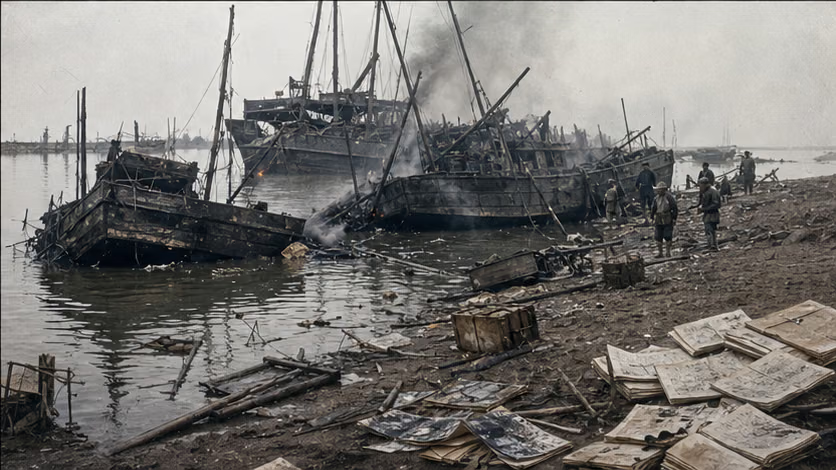
- No total casualty figures for the separate engagements are mutually corroborated by both sides; only one-sided figures survive: in the Battle of Xiangtan, the Xiang side memorials claimed several thousand Taiping killed (figure disputed); at Tianjiazhen, several thousand Taiping boats were burned and personnel losses were claimed in the tens of thousands (Qing basis, unverified); at Hukou, the Xiang navy lost several dozen large ships (figure disputed).
- Commanders: the Taiping Army lost Zeng Tianyang (Chenglingji); the Qing forces lost Jiang Zhongyuan (Luzhou) and Taqibu (after failing to take Jiujiang in a prolonged assault in 1855, he vomited blood and died; dates vary by account).
- Civilians: over three years of seesaw fighting, cities and villages along the Jiangxi-Hubei-Hunan river line were repeatedly hit by armies. ※ Contemporary records exist on both sides: Taiping coerced able-bodied men, and Xiang troops killed and plundered after taking cities; Wuchang changed hands three times, and Nanchang endured a siege of more than ninety days, with no statistics for those who died of hunger inside the city or were killed by soldiers.
Aftermath
- The Xiang Army suffered a disastrous defeat at Hukou but did not die: the inner-lake navy remained trapped in Poyang Lake and trained again, while the outer-river navy returned to Wuhan for repairs. In 1856.12 Hu Linyi and Luo Zenan's former troops retook Wuchang (Luo Zenan had already died in the siege, disputed), and the Xiang Army recovered the upper river.
- Jiangxi thereafter remained a long-term pay source and battlefield for the Xiang Army. Zeng Guofan returned home in 1857 for his father's mourning, then came out again, and the struggle with Jiangxi officials and gentry over control of military pay grew ever sharper (see later articles).
- In 1856.9 came the Tianjing Incident, after which the Taiping Army turned from strength to decline -- the overall turning point belongs in Taiping Heavenly Kingdom: Overview; here it is only noted in one stroke.
- The Xiang Army model of "scholars leading mountain peasants, lijin feeding soldiers" was later copied in the Huai Army and others, and the argument that "soldiers belonged to their commanders" rewrote the power structure of the late Qing belongs in the overview article.
Accounts of Those Present
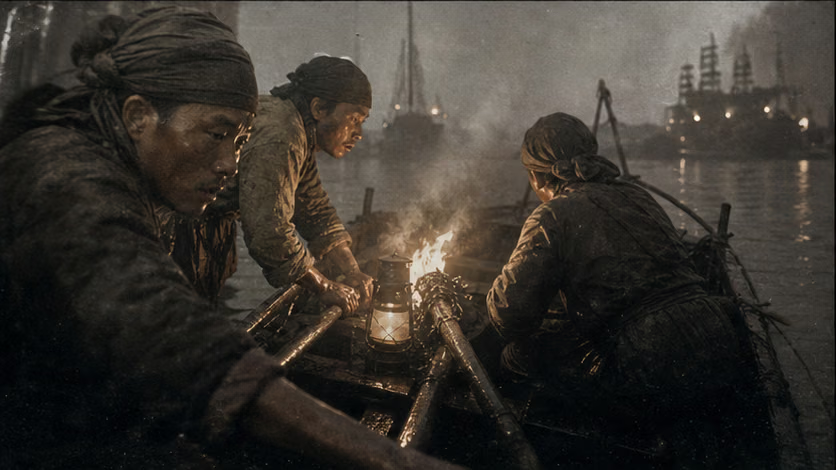
- Jinggang, throwing himself into the water: after Zeng Guofan's defeat, he threw himself into the water and was rescued by staff aides (the name Zhang Shoulin is unverified). When he returned to Changsha, the provincial officials and gentry were ready to watch him become a joke, but the victory report from Xiangtan arrived the same day -- the posthumous memorial had already been written, and was not used.
- Taqibu: at the Battle of Xiangtan, he held a great flag in his hand and rode alone into the enemy line; "in every battle he would climb to the mountaintop and rein in his horse" (Xiang Army-system account, original source unverified). A Manchu serving as a commander in the Xiang Army, he failed for a long time to take Jiujiang after the defeat at Hukou and died in 1855 of vomiting blood in the army.
- The night attack at Hukou: Taiping small boats set fires and drifted downstream; the Xiang Army's large ships could not maneuver easily; the officer commanding Zeng Guofan's own boat was killed, and papers, files, and registers were all lost -- Zeng later admitted in a memorial that the papers on which he had poured his heart's blood were swept away in a single day (original text unverified).
- Shi Dakai in Jiangxi: he opened civil examinations, appointed village officials, and lightened taxes; many Jiangxi people came over to him -- "Shi Dakai won the people's hearts in Jiangxi" is an important strand in later narrative, but few original records of his livelihood measures survive, and the details are unverified.
- Lin Qirong defending Jiujiang: he defended Jiujiang for several years from 1853 onward, and after the Battle of Hukou the city was still in Taiping hands; in 1858, when the city fell, it was massacred (beyond this article's period; see later articles).
The Ground
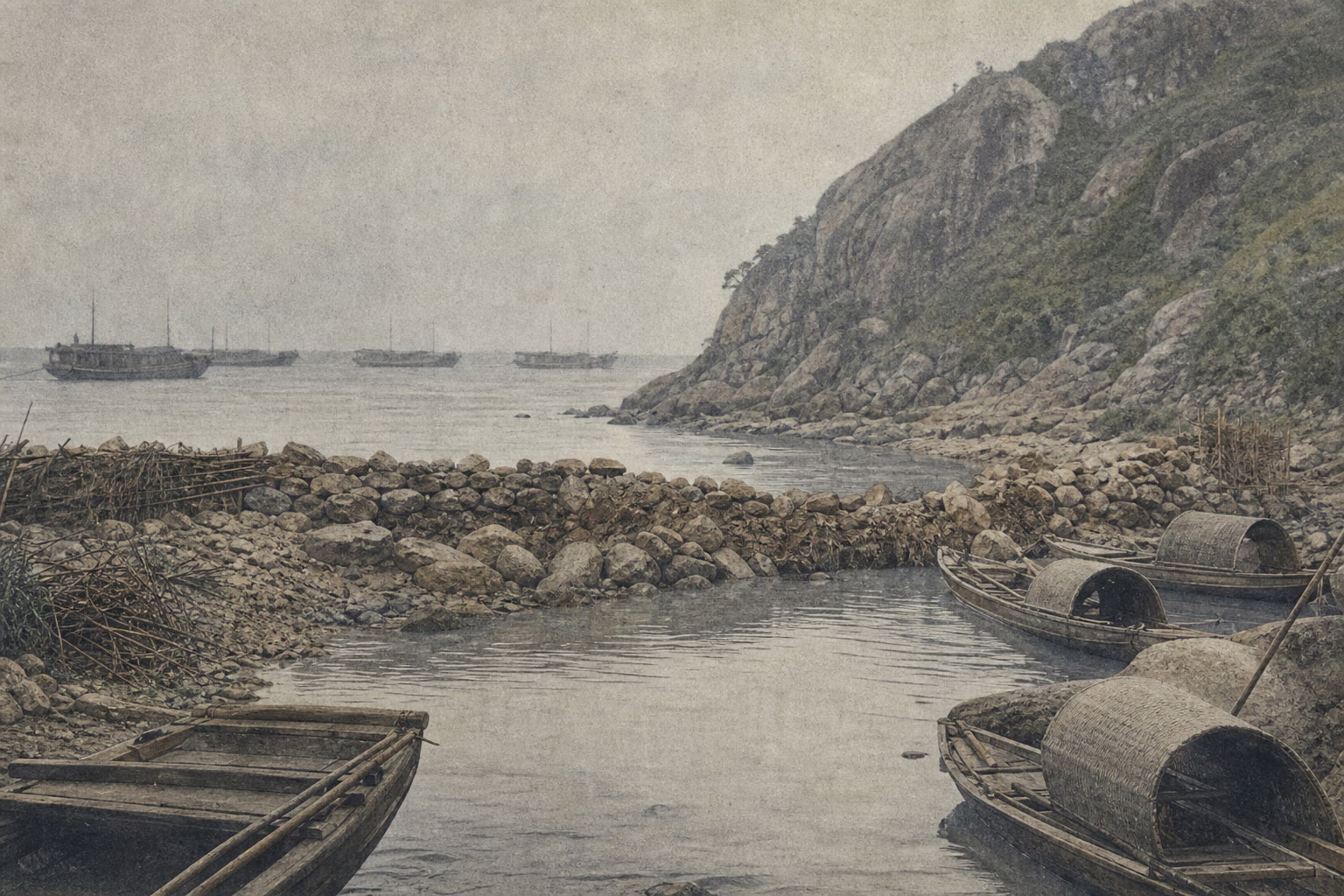
- The whole front unfolded along the Yangtze waterway: Nanchang (mouth of the Gan River) -- Poyang Lake -- Hukou -- Jiujiang -- Tianjiazhen -- Wuchang. Whoever controlled the waterway controlled the battlefield.
- Hukou was the lock and key: at the mouth where Poyang Lake enters the Yangtze, Shizhong Mountain controlled it. Blockading Hukou meant cutting the enemy navy into the "outer river" and "inner lake"; neither section could live -- a natural spatial grammar of division and encirclement.
- Tianjiazhen--Banbishan: at the narrowest part of the river, two hills pinch the Yangtze, iron chains cross the water, and raft-boats form the forts -- a specimen of river-defense works, and also a specimen of how "once works were burned by fire attack, everything was finished."
- Xiangtan and Jinggang: small towns on Xiang River tributaries; the Xiang Army's places of life and death were not famous capitals or great cities, but two dock market-towns.
- The scale of river fighting differed: large ships (fast-crab and long-dragon boats) suited outer-river decisive battle, while sampans suited harbors and side channels -- the defeat at Hukou was, in essence, a spatial trap in which light troops separated from heavy troops.
How Each Side Records It
- Qing side at the time: Zeng Guofan's memorials were unusually realistic -- he reported the two defeats at Jinggang and Hukou truthfully and requested punishment for himself. The anecdote in which "repeated battles, repeated defeats" was changed to "repeated defeats, repeated battles" is widely circulated, but this sentence has not been found in the original memorial drafts (anecdote unverified). Xiang Army-system writings (Account of the Xiang Army and Record of the Xiang Army) write Xiangtan--Tianjiazhen as the meritorious rise of the Xiang Army, with Hukou as a setback. Qing documents without exception called the Taiping Army "Yue bandits" and "long-haired rebels" (all are Qing terms).
- The Taiping Heavenly Kingdom's own record: very few edicts and documents survive, and almost no Taiping-side operational records of the Western Expedition engagements have come down to us. Its military situation must be pieced together mainly from Qing archives, intelligence compilations (such as Zhang Dejian's Compilation on Rebel Conditions, compiled by the Qing side), and later recollections -- the factual base of this article naturally leans toward Qing-side records, and that must be kept in mind when using it.
- Changes in later narratives: Qing official books (Imperially Commissioned Strategies for the Pacification of the Yue Bandits) defined it as "suppressing rebellion"; after the Republic, revolutionary narratives treated the Taiping Army as a forerunner (Sun Yat-sen called himself "the second Hong Xiuquan," source unverified), and the Xiang Army was written as "Han traitors and executioners"; in the 1950s canonization, Shi Dakai's policies in Jiangxi were emphasized; contemporary historiography has reexamined it again -- coercion and destruction, religious factors, and the rise of Xiang Army studies have been reassessed, while "Zeng Guofan fever" has produced another layer of reversal and reflection.
Disputes and Sensitivities
- One-sided records: nearly all numbers in this article (battle results, burned boats, casualties) come from Zeng's memorials and Xiang Army-system literature, with no surviving Taiping-side archives for mutual corroboration.
- Characterizing the Xiang Army: militia or private army, "defending the teaching" or defending the home province -- the Qing Proclamation Against the Yue Bandits and later criticism each hold to their own wording. The dispute over characterization is treated elsewhere in the overview.
- Shi Dakai's livelihood narrative in Jiangxi: many details of the livelihood measures in the canonical narrative come from later retrospective accounts; the original record is thin, and its evidentiary level should be kept in view.
- The sensitivity of recording atrocities on both sides: ※ Xiang Army killing and plunder after taking cities and Taiping massacres and coerced recruitment are recorded together; neither side's later narratives like seeing their own half.
- The "repeated defeats, repeated battles" anecdote: extremely widely circulated, yet absent from the original documents; it is a typical risk point for a falsely attributed famous saying.
Sources and Open Questions
Known main sources:
- Zeng Guofan Quanji: Memorial Drafts (the main Qing-side source base for this article)
- Luo Ergang, History of the Taiping Heavenly Kingdom; Jian Youwen, Comprehensive History of the Taiping Heavenly Kingdom (modern comprehensive studies)
- Wang Ding'an, Account of the Xiang Army; Wang Kaiyun, Record of the Xiang Army (Xiang Army-system writings)
- Zhang Dejian, Compilation on Rebel Conditions (Qing intelligence compilation; its standpoint must be noted when used)
Open questions: number of times Zeng Guofan threw himself into the water after the defeat at Jinggang and who rescued him; schedule and battle-result basis for Xiangtan's "ten days and ten battles"; date and details of Zeng Tianyang's death in action at Chenglingji; number of boats burned at Tianjiazhen; exact date of the night attack at Hukou, details of the seizure of the command boat and the loss of papers, and the two accounts of Zeng Guofan "throwing himself into the water / cutting his throat"; number and list of Shi Dakai's "eight prefectures and more than fifty counties" in Jiangxi; the basis for the 17,000 figure when the Xiang Army formed and set out in 1854; exact number of days in the siege of Nanchang and the number of tunnel attacks; exact dates of Wuchang's second and third changes of hands; dates of death for Taqibu and Jiang Zhongyuan; original text of Zeng Guofan's memorial on the loss of papers; authenticity of the "repeated defeats, repeated battles" anecdote; source for Sun Yat-sen's phrase "the second Hong Xiuquan"; item-by-item contemporary records of Xiang Army killing and plunder after taking cities and Taiping coerced recruitment; surviving records of the decision process for fixing the capital at Tianjing and dividing the army into the Northern and Western Expeditions; sequence of Shi Dakai going to Hukou to supervise the army; original edict texts urging the Xiang Army to go east; original letters exchanged between Zeng Guofan and Wu Wenrong.
All images on this site are AI-generated depictions. They are not historical photographs, not primary sources, and do not depict any real individual.